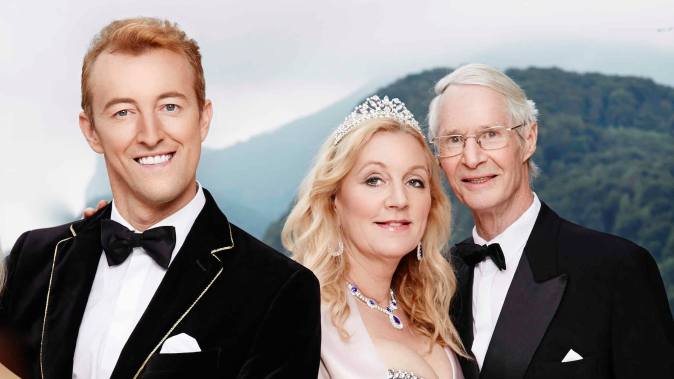
This is not a new story. It is a very old one that keeps getting better. Since 1987, the Broadway Flea Market has raised more than $21 million. And the organization it benefits, Broadway Cares, has granted more than $300 million since 1988 to support people living with HIV/AIDS and other critical illnesses.
Those numbers are almost too big to feel. So think about what they buy: meals, medication, housing, emergency assistance — the practical scaffolding that keeps vulnerable people afloat. Every signed poster and vintage Playbill sold at those 63 market tables converts directly into that kind of help. Eighteen Broadway and Off-Broadway productions showed up this year — Hadestown, The Outsiders, Oh, Mary!, Wicked, and more — turning the event into a reunion of the people who make New York's stages run.
The indoor pivot deserves its own applause. Moving a street-scale event into a ballroom on short notice is the kind of logistical nightmare that usually ends in disappointment. Instead, it became part of the story: the theatre world, famous for the show-must-go-on ethos, simply put on the show. Inside the Hammerstein, warm and dry, the storm outside almost felt like a dare the event accepted.
Broadway Cares has been at this since 1988, and its model is worth understanding. The money goes to the Actors Fund's social services and to hundreds of AIDS and family service organizations across all 50 states. It's one of the most efficient entertainment-industry charities in the country — a rare case where the people performing also do the organizing, the fundraising, and the giving.
The "Lost Boys" table record is a small story that tells the big one. A single table — one show's cast and fans — pulled in over $104,000. That is not a wealthy donor writing a check from a penthouse. That is a community pooling what it has, one signed item at a time, until the pile becomes life-changing.
This matters especially because HIV/AIDS fundraising doesn't get the attention it once did. The crisis has receded from the headlines, but the need hasn't receded from people's lives. Events like the Flea Market keep the pipeline of support flowing — quietly, joyfully, year after year, for four decades now.
The practical takeaway
You don't need a $30,000 London theatre adventure to be part of this. Broadway Cares runs fundraising events all year — the Flea Market in the fall, the Easter Bonnet Competition in the spring, and the iconic red buckets at theatre exits year-round. Every dollar lands where it's needed.
If you missed this year's Flea Market, mark the calendar for next fall's 41st. And if you were one of the thousands who squeezed into the Hammerstein Ballroom as the nor'easter raged outside — congratulations. You were part of the best year yet.
A tradition that keeps earning its keep
Forty years in, the Broadway Flea Market could have become a nostalgic routine. Instead, it keeps breaking its own records. That doesn't happen by accident. It happens because the theatre community treats generosity as part of the job description — and because New Yorkers, faced with a storm and a charity, will always choose the charity.
$1,487,927. Indoors. In a storm. On a Sunday in September. The show went on, and then some.
Don Hershman’s Out of Line brings a focused and refined contemporary art presentation to One Art Space in Tribeca, curated by MaryAnn Giella McCulloh.
Don Hershman’s Out of Line arrives at One Art Space with the kind of clarity that suits a Tribeca setting, direct in its title, disciplined in its presentation, and centered on the expressive possibilities of line, form, and artistic confidence.
Presented at One Art Space, located at 23 Warren Street in New York’s Tribeca neighborhood, the exhibition places Hershman’s work within one of downtown Manhattan’s most active cultural corridors. Tribeca has long held a particular appeal for artists, collectors, curators, and design-minded audiences, drawing together historic architecture, contemporary galleries, and a steady rhythm of creative exchange.
Out of Line suggests an artist interested in boundaries, structure, and the freedom that comes from moving beyond expected limits. The title carries a sense of independence, yet it also points toward discipline. To go out of line is to recognize the line first, to understand its purpose, and then to make a deliberate gesture beyond it.
For Hershman, that phrase feels especially suited to a body of work shaped by personality, observation, and visual decisiveness. The exhibition’s presentation invites viewers to consider how an artist can use restraint without becoming static, and how a composition can feel alive through the simplest elements when handled with authority.
The setting at One Art Space supports that experience. Known for its clean exhibition environment and downtown accessibility, the venue offers a direct encounter between artwork and audience. In a city where visual noise is constant, a focused exhibition like Out of Line creates room for close attention.
A Curated Presentation in Tribeca
Curated by MaryAnn Giella McCulloh, the exhibition carries an editorial sensibility that is both polished and approachable. A strong curatorial hand can give an artist’s work room to breathe while establishing a coherent rhythm from one piece to the next. In Out of Line, the curatorial framing places emphasis on the integrity of Hershman’s visual language and the experience of moving through it with attention.
The collaboration between artist, curator, and venue is central to the strength of the presentation. Hershman brings the work, McCulloh shapes the encounter, and One Art Space provides the architectural and cultural context. Together, they create an exhibition that feels grounded in the city while remaining centered on the artist’s individual vision.
There is a natural elegance in an exhibition that does not need to overexplain itself. Out of Line benefits from that quality. Its title does meaningful work, offering a concise entry point while leaving room for interpretation. The viewer is invited into an experience rather than instructed toward a single conclusion.
The phrase also carries an appealing tension. It can imply rebellion, humor, risk, or movement. It can refer to drawing, behavior, form, or perspective. Within a gallery context, that openness gives the exhibition a layered quality while keeping the presentation accessible to a broad audience.
Hershman’s name is placed prominently at the center of the exhibition identity, and rightly so. This is a presentation anchored in authorship. The show foregrounds an artist with a distinct point of view, one whose work is being invited into conversation with a New York audience in a focused and deliberate way.
Tribeca remains an ideal neighborhood for such an encounter. Its galleries and cultural spaces often reward looking closely. The neighborhood’s scale allows exhibitions to feel personal while still participating in the larger art life of the city. One Art Space, with its Warren Street address, sits comfortably within that environment.
The refinement of the exhibition announcement mirrors the sensibility of the show itself. The design is minimal, balanced, and legible, placing the artist’s name, exhibition title, venue, and curator in a clean hierarchy. That visual restraint gives the presentation a professional tone before the viewer even enters the gallery.
In that way, Out of Line begins before the first artwork is seen. It begins with a name, a title, a place, and a sense of anticipation. The exhibition identity makes clear that this is a considered project, not simply a gathering of works, but a curated occasion shaped for a specific space and audience.
The importance of the title continues to resonate. Lines can divide or connect. They can define a figure, suggest movement, mark a threshold, or record a gesture. In the hands of an artist, a line is never merely a line. It becomes evidence of choice, pressure, rhythm, and intent.
Out of Line therefore becomes a phrase about artistic freedom. It gestures toward work that may depart from convention while remaining grounded in skill. It acknowledges that meaningful departures often come from close engagement with form rather than avoidance of it.
MaryAnn Giella McCulloh’s role as curator brings another layer of context to the exhibition. A curator’s work often exists in the balance between visibility and restraint. The best curatorial presence supports the artist without overwhelming the viewer’s experience. Here, the curatorial credit signals thoughtful organization and a clear belief in the strength of Hershman’s presentation.
One Art Space provides a fitting platform for this kind of exhibition. Its Tribeca location connects the show to an audience that includes collectors, artists, designers, writers, and cultural patrons, while its gallery format allows the work to remain the central focus.
New York has always been a city where line matters. It appears in the geometry of streets, the edges of buildings, the movement of pedestrians, the language of signage, and the energy of drawn and painted forms. In this context, Hershman’s Out of Line feels connected to the urban experience without needing to describe it directly.
The exhibition’s strength lies in its ability to suggest both precision and release. A line can be controlled, and it can also be expressive. It can follow an expected path, or it can break away. That duality gives the show its conceptual appeal.
For audiences visiting One Art Space, the experience promises a focused encounter with an artist working through a clear visual idea. The presentation does not rely on excess. It relies on the enduring power of composition, gesture, and interpretation.
Out of Line also reflects the continuing importance of independent gallery exhibitions in New York. These presentations create vital spaces for artists to meet audiences in direct and immediate ways. They support the city’s cultural ecosystem by giving viewers opportunities to experience work beyond major institutions and commercial fairs.
The exhibition’s polished framing, from venue to curator to visual identity, positions it as a noteworthy cultural moment within the Tribeca art calendar. It is the kind of presentation that benefits from close looking and rewards viewers who allow time for detail, rhythm, and nuance.
There is also something compelling about the simplicity of the invitation. Don Hershman. Out of Line. One Art Space. Tribeca. The essential information is direct, elegant, and memorable. It gives the exhibition a strong identity while preserving a sense of openness around the work itself.
The presence of bubbles and bites in the reception framing adds a social dimension to the occasion without distracting from the art. It recognizes that gallery openings are cultural gatherings as well as visual experiences, places where conversation, community, and artistic appreciation naturally meet.
Still, the heart of the event remains Hershman’s work. The title directs attention back to artistic process and vision. It asks viewers to consider what happens when an artist steps outside a prescribed edge and allows the work to find its own balance.
In a city defined by motion, exhibitions like Out of Line offer a welcome pause. They ask for attention, not spectacle. They invite viewers to enter a room, look carefully, and engage with the decisions embedded in the artwork.
That quality gives the show its quiet confidence. It is grounded in a recognizable art-world tradition, an artist, a curator, a gallery, a clearly framed exhibition, yet it also carries the energy of discovery. It suggests a presentation shaped by care and intended for meaningful encounter.
Don Hershman’s Out of Line stands as a refined addition to Tribeca’s cultural life. With MaryAnn Giella McCulloh curating and One Art Space providing the setting, the exhibition brings together artistic identity, professional presentation, and downtown New York visibility in a manner that feels assured and thoughtfully composed.
For collectors and art enthusiasts, the show offers an opportunity to engage with Hershman’s practice in a focused environment. For general audiences, it provides an accessible entry point into contemporary art through a title and presentation that are immediately clear yet open to interpretation.
Out of Line is ultimately a celebration of artistic direction. It honors the act of moving with intention, of recognizing structure and then making space for individuality. In the setting of One Art Space, that idea becomes more than a phrase. It becomes an exhibition shaped by presence, purpose, and a distinctly New York sense of cultural occasion.
Ten days. Twenty-two countries. More than fifty artists. Zero dollars for a ticket.
The 26th annual World Music Festival Chicago is at its midpoint this week, running September 25 through October 4, and if you are in the city, this is one of those events that makes you glad you live somewhere with a cultural affairs department. Organized by the city’s Department of Cultural Affairs and Special Events, it puts free concerts in the Chicago Cultural Center, Millennium Park, Navy Pier, and neighborhood parks and venues across town.
How it opened
The festival kicked off on September 25 with Ragamala, an overnight celebration of Indian classical music that ran from 6 p.m. Friday to 8 a.m. Saturday in Preston Bradley Hall. If you have never sat in a grand old hall at 3 in the morning listening to a raga unfold at its own pace, it is the kind of experience that rearranges your sense of what a concert can be. Ragamala has been doing this for 14 years now, which tells you something about how seriously Chicago takes this festival.
The lineup spans traditions from Puerto Rico, Japan, Brazil, Pakistan, Morocco, Colombia, South Korea, Ghana, Mexico, and more. Since 1995, the festival has presented more than 750 artists from over 80 countries. That is three decades of making the case, concert by concert, that the city is a crossroads for the world’s music.
How it closes
The finale arrives October 4 with the Global Peace Party, a free all-ages afternoon at the Humboldt Park Fieldhouse running noon to 5 p.m. The lineup features the Mary Hazboun Ensemble, Ghanaian highlife musician Gyedu-Blay Ambolley, and Puerto Rico’s El Laberinto del Coco. A neighborhood fieldhouse, a fall afternoon, music from three continents. It is hard to think of a better way to end a festival.
DCASE Commissioner Kenya K. Merritt has described the festival as a showcase for how the cultural sector brings people together while supporting artists and neighborhoods. That is the official line, but walk through Millennium Park on a festival evening and you can see it working: families who came for one act staying for another from a country they could not have pointed to on a map an hour earlier.
Why free matters
Plenty of cities run music festivals. Fewer make them free, citywide, for ten days. The free part is not a footnote. It is the whole point. It means a teenager from Pilsen can hear a kora player from Mali without checking a ticket price. It means a retiree in Hyde Park can catch a Japanese ensemble on a weeknight without planning around a budget. Great art behind a paywall is still great art, but great art on a public stage belongs to everybody, and Chicago seems to understand that better than most places.
There is a practical takeaway here for anyone visiting or living in the city: check the schedule and just go. The remaining days run through Sunday, and the Global Peace Party needs no reservation and no ticket. Bring a friend who thinks they do not like world music. They will be converted by the second set.
Events like this are a reminder that a city’s cultural life is infrastructure, not decoration. A festival that has run for 26 years, presenting hundreds of artists from dozens of countries, does quiet work: it keeps traditions alive, pays musicians, and gives neighbors a reason to be in the same park at the same time. In a year when so much of public life feels frayed, that is not a small thing.
A practical plan for the final days
The festival runs through Sunday, October 4, so there is still time to catch the back half. The smart move is to check the daily schedule, pick one artist you have heard of and one you have not, and make an evening of it. The venues are spread across the city by design, which means there is probably a show within a short train ride of wherever you are. And the closing Global Peace Party at Humboldt Park Fieldhouse needs nothing from you but your presence.
For families, the all-ages programming is the sleeper highlight. Kids who grow up hearing a djembe or a sitar in a park carry that with them. For visitors, it is a free window into what Chicago sounds like when it is showing off. For musicians, many of whom tour far from home, a festival that pays them and puts them in front of a real audience is worth more than another streamed set ever could be. It is the same spirit you find in grassroots cultural projects everywhere, like a mother and son giving the world’s great books a voice, where the point is simply to make art available to everyone.
Chicago’s autumn calendar is famously generous, and this festival sits comfortably alongside the season’s other public celebrations. But there is something distinct about ten days of free music from 22 countries. It is the city at its best: open doors, loud speakers, no tickets required.
If you are anywhere near Chicago before October 4, go hear something you have never heard before. That is the entire assignment.
Our weekend Cover of Music Legends: From left to right: Wyclef Jean, Michael Bearden, Master P and his daughter cymphonique
At the center of New York’s most dazzling philanthropic evening, N’Kenge emerged as the ultimate triple threat, singer, dancer, actor, and commanding host, transforming the 2026 Music Will Benefit into a defining cultural moment inside the Marriott Marquis in Times Square.
The lights of Times Square have illuminated generations of entertainers, yet only a rare few possess the versatility, discipline, and commanding presence to completely own a room filled with celebrated actors, legendary producers, global musicians, philanthropists, and cultural leaders. During the 2026 Music Will Benefit at the Marriott Marquis, N’Kenge accomplished exactly that. She did not simply host the evening. She became the pulse of it.
Long admired for her extraordinary vocal abilities and magnetic stage command, N’Kenge entered the gala as an established Broadway force and international performer. By the end of the evening, she had elevated herself into something even more significant, a complete entertainment figure whose influence extended seamlessly across music, performance, philanthropy, live hosting, and cultural leadership. In a city that has witnessed every imaginable version of celebrity, N’Kenge stood apart.
Her relationship to the event itself defined its atmosphere. Every artist, executive, actor, and guest moved through an evening shaped by her energy. The Marriott Marquis became a stage for her artistic leadership, and the gala unfolded around her with precision and elegance. From the moment guests arrived on the red carpet until the final applause echoed across the ballroom, N’Kenge guided the evening with authority that felt entirely natural.
Entertainment Royal H.H. Dr. Prince Mario-Max Schaumburg-Lippe described N’Kenge as taking over Manhattan itself, and the statement reflected the mood throughout the evening. Her presence carried the confidence of a seasoned star while remaining deeply connected to the cause of music education that defined the gala’s mission. She embodied glamour and purpose simultaneously.
N’Kenge’s relationship with Music Will CEO Mike Wasserman revealed another dimension of her influence. Their connection was rooted in shared commitment to helping young people gain access to music education. Throughout the evening, Wasserman’s leadership and N’Kenge’s artistry operated in complete harmony. Together they represented the union between organizational vision and cultural visibility that made the gala such a success.
Anzhelika Steen-Olsen, a board member of the N’Kenge Foundation, stood closely aligned with N’Kenge throughout the event, reinforcing the collaborative spirit surrounding her philanthropic work. Their partnership reflected N’Kenge’s larger approach to influence, bringing people together through artistic excellence and charitable commitment. Every conversation surrounding the gala eventually returned to N’Kenge’s ability to unify such an extraordinary collection of personalities.
Inside the sixth-floor ballroom overlooking Broadway, guests witnessed more than celebrity appearances. They witnessed an entertainment leader orchestrating an evening with the instincts of a producer, the charisma of a star vocalist, and the discipline of a seasoned actor. N’Kenge’s years in performance were visible in every transition, every introduction, and every emotional moment throughout the night.
Her relationship to Broadway culture was especially significant. The energy she brought into the room reflected years of stage mastery, where timing, presence, movement, and vocal command are refined at the highest professional level. That theatrical precision distinguished her from traditional gala hosts. N’Kenge did not merely announce names or move through scripted segments. She performed the role of host with dramatic sophistication.
As a singer, she has long demonstrated vocal strength capable of commanding concert halls and theater audiences alike. At Music Will, that gift became the emotional center of the evening. Her voice carried the authority of someone who understands music not simply as entertainment, but as transformation. Every guest understood they were witnessing an artist who lives entirely inside her craft.
As a dancer, her physical command of space shaped the energy around her. Even in moments of conversation and presentation, her movement reflected the elegance and rhythm of a seasoned performer. The confidence with which she carried herself through the ballroom created momentum throughout the event. Her stage instincts never paused.
As an actor, N’Kenge demonstrated another critical dimension of entertainment mastery, emotional intelligence. Hosting an event of this scale requires instinctive awareness of audience emotion, pacing, atmosphere, and tone. She navigated the evening with the same layered control that defines accomplished dramatic performers. Every transition felt polished and alive.
The gala’s extraordinary guest list became part of N’Kenge’s wider narrative rather than overshadowing it. Legendary producer T Bone Burnett entered the evening as one of music’s most respected creative forces, yet his appearance became another thread woven into N’Kenge’s larger cultural moment. Her role connected icons from different artistic worlds into one unified experience.
Bruce Eskowitz’s presence reflected the philanthropic and strategic dimension of the gala, and N’Kenge’s relationship to figures like him demonstrated her ability to move naturally between entertainment and institutional leadership. She operated comfortably among executives, artists, donors, and cultural innovators alike.
Maren Morris brought contemporary music stardom into the ballroom, yet even major recording artists responded to the atmosphere N’Kenge created. The evening never fractured into competing celebrity moments. Instead, N’Kenge unified every appearance into a shared celebration of artistry and education.
Master P contributed entrepreneurial energy and cultural influence to the benefit, and his relationship to the event reflected the broad coalition N’Kenge helped assemble. The evening became a meeting point between music industry leadership, community advocacy, and artistic excellence, with N’Kenge standing firmly at the center.
Honorary Benefit Chair Wyclef Jean added international prestige and humanitarian credibility to the gala. His longstanding dedication to music and global cultural engagement aligned naturally with N’Kenge’s own commitment to using performance as a vehicle for impact. Their presence together reinforced the event’s message that artists can shape society far beyond the stage.
Nile Rodgers, one of music’s most enduring innovators, represented another generation of artistry connected through N’Kenge’s hosting. His legendary status elevated the room, while her command of the evening ensured every legendary figure remained part of a cohesive narrative rather than isolated celebrity appearances.
Recording artist Yola brought artistic depth and musical sophistication to the gala. Her appearance alongside N’Kenge reflected a mutual respect between powerful female performers capable of crossing genres and audiences with authenticity and strength.
Lachi’s participation deepened the evening’s message of inclusion and accessibility, themes that resonated strongly with N’Kenge’s own philanthropic commitments. Throughout the benefit, N’Kenge continuously emphasized the importance of opportunity, representation, and access through the language of performance itself.
Fabrice DuPont represented the technical brilliance behind modern music production, while Joel Coen, Frances McDormand, Oscar Isaac, Maggie Gyllenhaal, Peter Sarsgaard, and Elvira Lind brought cinematic prestige into the ballroom. Yet even among Academy Award-winning talent and internationally recognized performers, N’Kenge remained the defining personality of the evening.
Her relationship to these figures was not one of competition. It was one of connection. She became the bridge between entertainment disciplines, linking film, theater, music, philanthropy, and education into a single cultural event. That rare ability is what separates a performer from a true entertainment leader.
Elvis Costello’s appearance added another legendary dimension to the night. His decades of songwriting excellence and performance history carried immense weight, yet the event’s emotional rhythm continued to flow through N’Kenge’s stewardship. She held the room together with consistency and grace.
One of the most moving elements of the evening came through the presence of student musicians, whose performances reminded guests of the real purpose behind the glamour. N’Kenge’s relationship to these young artists revealed perhaps the clearest portrait of her character. She treated them not as symbolic participants, but as future stars deserving visibility, mentorship, and encouragement.
That commitment to younger generations aligned naturally with the mission of Music Will, which has reached approximately 1.8 million students nationwide and continues expanding its educational influence. N’Kenge’s advocacy transformed those statistics into something personal and immediate.
The live auction reflected the luxury and sophistication expected from a major Manhattan gala. Exclusive experiences involving Concord Nashville Studios, Grammy-winning engineer Paul Blakemore, Gibson guitars, and private culinary experiences curated by Chef Philippe Bertineau created an atmosphere of refinement. Yet throughout the excitement, N’Kenge ensured the focus remained rooted in education and artistic opportunity.
Her relationship to the audience became one of the evening’s defining strengths. She understood how to inspire donors, energize guests, and maintain emotional momentum without losing authenticity. That skill cannot be manufactured. It comes from years spent mastering multiple entertainment disciplines simultaneously.
Perhaps the most remarkable aspect of the evening was how naturally N’Kenge balanced every role she occupied. She moved effortlessly between commanding performer, elegant host, cultural ambassador, philanthropist, and entertainment leader. Very few artists possess the versatility required to succeed in even one of those categories. N’Kenge excelled in all of them at once.
Her daughter’s presence in the audience added another emotional layer to the night, reinforcing the personal dimensions behind her public success. The image of a superstar performer inspiring future generations while sharing the experience with family captured the warmth and humanity that defined her presence throughout the gala.
Under the towering lights of Times Square, surrounded by many of the entertainment industry’s most celebrated names, N’Kenge accomplished something increasingly rare in modern culture. She created a moment where talent, elegance, purpose, and leadership existed in complete balance.
She proved herself beyond comparison.
She proved herself as the ultimate triple threat.
Singer. Dancer. Actor.
And now, unmistakably, one of entertainment’s most compelling hosts and cultural forces.
N’Kenge, Music Will Benefit, Times Square, Broadway, Marriott Marquis, Prince Mario-Max Schaumburg-Lippe, Mike Wasserman, Anzhelika Steen-Olsen, Wyclef Jean, Maren Morris, Nile Rodgers, Master P, T Bone Burnett, Yola, Elvis Costello, Frances McDormand, Oscar Isaac, Maggie Gyllenhaal, Peter Sarsgaard, Joel Coen, Fabrice DuPont, Lachi, music education, philanthropy, entertainment industry, celebrity gala, Manhattan events, Broadway culture, performing arts, New York philanthropy, cultural leadership, red carpet, live performance, arts education, Music Will Foundation
An extraordinary spring performance at the Church of the Blessed Sacrament gathers Taisiya Losmakova, Francisco Vila, and Peter Fancovic for an intimate chamber music program that places Bach and Brahms at the center of one of the season’s most refined cultural events.
New York’s classical music calendar reaches a rare moment of elegance on May 12, when Bach Brahms Afterlight arrives at the Church of the Blessed Sacrament on West 71st Street. Set beneath vaulted ceilings and illuminated by the solemn beauty of stained glass architecture, the evening promises a chamber performance defined by precision, restraint, and emotional depth. In a city crowded with major productions and large-scale performances, this concert embraces intimacy as its defining quality.
Beginning at 7:00 p.m., the event introduces audiences to a carefully assembled program rooted in the enduring legacy of Johann Sebastian Bach and Johannes Brahms. The setting itself shapes much of the evening’s atmosphere. The Church of the Blessed Sacrament, known for its Gothic interior and resonant acoustics, has long served as a fitting home for sacred and classical repertoire. Its soaring nave and historic design create a listening environment where every phrase and harmonic shift acquires unusual clarity.
The presentation is guided by Groupmuse and Art&Musica, organizations that have steadily reshaped how younger and more culturally adventurous audiences engage with classical music in New York. Their approach favors closeness over spectacle, encouraging listeners to experience chamber works in spaces that preserve concentration and emotional immediacy. Bach Brahms Afterlight reflects that philosophy fully, combining distinguished musicianship with an architectural setting that enhances the emotional scale of the repertoire.
At the center of the evening is violinist Taisiya Losmakova, whose performances have earned attention for their balance of technical confidence and lyrical sensitivity. Her stage presence favors refinement over theatricality, allowing the structure of the music itself to guide the emotional experience. In repertoire connected to Bach and Brahms, this interpretive approach carries particular significance. Both composers demand precision, intellectual command, and patience, qualities that resonate deeply in a chamber setting.
Joining her is cellist Francisco Vila, whose work continues to attract admiration for its warmth of tone and expressive control. Chamber music depends upon conversation rather than dominance, and Vila’s style aligns naturally with that tradition. The cello repertoire associated with Brahms especially rewards performers capable of sustaining emotional tension without excess, allowing melody and harmonic architecture to unfold gradually across the performance space.
Peter Fancovic completes the ensemble with a musical sensibility rooted in clarity and balance. In chamber performance, the relationship among musicians becomes visible in real time. Subtle gestures, attentive phrasing, and collective pacing shape the audience’s experience as much as the written score itself. Fancovic’s participation contributes to the sense that this concert is designed not as a showcase for individual display, but as a unified artistic statement.
The phrase “afterlight” in the concert’s title captures much of the evening’s identity. Bach and Brahms represent different periods in European music history, yet their works often seem connected through a shared concern for spiritual weight and structural beauty. Bach’s compositions carry architectural precision and devotional intensity, while Brahms introduces density, introspection, and emotional gravity. Together, their music creates an atmosphere that lingers long after the final notes have faded.
New York audiences continue to demonstrate a growing appetite for experiences that feel personal and carefully curated. Large concert halls remain important cultural landmarks, yet chamber performances in historic venues have gained renewed cultural relevance. Listeners increasingly seek evenings that allow concentration and direct connection to performers. Bach Brahms Afterlight arrives within that broader shift, presenting classical music as something immediate and deeply human rather than distant or ceremonial.
The Church of the Blessed Sacrament contributes significantly to that experience. The visual grandeur of the sanctuary does not overwhelm the performance. Instead, it frames the music with calm dignity. The rose window, stone detailing, and suspended chandeliers create an environment where the audience becomes fully attentive to sound and silence alike. In such spaces, chamber music acquires unusual emotional resonance.
Dress expectations for the evening reflect the event’s polished but welcoming tone. The semi-black tie guidance signals refinement without rigidity, encouraging guests to participate in the elegance of the occasion while maintaining the intimacy that defines the Groupmuse atmosphere. The result is an audience experience that feels socially vibrant while remaining centered on artistic focus.
The programming of Bach and Brahms together remains especially compelling because both composers reward sustained listening. Bach’s contrapuntal writing invites attention to detail, while Brahms develops emotional complexity through layered harmonies and gradual transformation. Performed within a church setting, these compositions often take on an expanded emotional dimension. The acoustics allow resonance to linger naturally, giving each musical line additional depth and presence.
For younger audiences entering the classical world, evenings like this provide an accessible pathway into the tradition. Rather than relying on institutional formality, the concert emphasizes atmosphere, architecture, and personal engagement. This approach has become increasingly influential in New York’s cultural landscape, where audiences value experiences that feel thoughtfully assembled and emotionally authentic.
Groupmuse has played a notable role in that evolution. By presenting chamber performances in distinctive spaces, the organization has helped redefine how classical music circulates through urban cultural life. Concerts become gatherings rather than distant spectacles, encouraging audiences to engage directly with performers and repertoire. Art&Musica complements this vision through programming that prioritizes intimacy, elegance, and artistic seriousness.
The musicians themselves reflect an international sensibility increasingly present in contemporary chamber music. Their collective backgrounds and interpretive styles contribute to performances that feel cosmopolitan while remaining grounded in tradition. This balance is especially effective in works by Bach and Brahms, composers whose music continues to transcend historical period and geographic identity.
The visual identity of Bach Brahms Afterlight reinforces the evening’s atmosphere. The promotional imagery foregrounds the church interior, emphasizing scale, symmetry, and warmth rather than celebrity or theatricality. The performers appear as part of the broader architectural and musical environment, underscoring the collaborative spirit that defines chamber performance.
In a cultural moment increasingly shaped by speed and distraction, chamber concerts offer a rare alternative. They ask audiences to remain still, attentive, and fully present. Bach Brahms Afterlight embraces that tradition fully. The pacing of the evening, the sacred setting, and the repertoire itself encourage sustained concentration and emotional openness.
For longtime classical listeners, the concert represents an opportunity to hear enduring repertoire interpreted within an ideal acoustic environment. For newer audiences, it offers entry into a world where detail, patience, and shared listening remain central values. The evening bridges generations and musical backgrounds through the universal language of live performance.
The Upper West Side has long maintained a distinctive relationship with New York’s artistic life, combining intellectual tradition with architectural beauty and cultural accessibility. Hosting the performance at the Church of the Blessed Sacrament situates the concert within that broader history. The neighborhood’s historic identity as a center for arts and education strengthens the event’s cultural significance.
As spring concerts begin to define the close of the season, Bach Brahms Afterlight stands apart through its clarity of vision. The event does not rely on spectacle or novelty. Its appeal emerges from careful curation, exceptional musicianship, and a setting that honors the emotional seriousness of the repertoire. Every detail, from venue selection to presentation style, reinforces the sense of thoughtful refinement.
The enduring appeal of Bach and Brahms lies partly in their ability to create emotional intensity without excess. Their music rewards close listening, offering complexity that unfolds gradually rather than immediately. In an intimate church environment, those qualities become even more powerful. Audiences hear not only melody, but breath, resonance, and silence shaped into a unified artistic experience.
New York remains one of the world’s great capitals for classical performance because it continues to support events of this scale and character. Alongside major institutions and celebrated orchestras, chamber performances preserve the essential intimacy at the heart of the tradition. Bach Brahms Afterlight demonstrates how meaningful those experiences can become when musicians, venue, and repertoire align with precision.
For one evening in May, the Church of the Blessed Sacrament transforms into a space devoted entirely to listening. Beneath vaulted ceilings and stained glass light, Bach and Brahms return to the center of the city’s cultural imagination through performances shaped by discipline, collaboration, and quiet emotional force.
classical music, chamber music, New York concerts, Bach Brahms Afterlight, Taisiya Losmakova, Francisco Vila, Peter Fancovic, Church of the Blessed Sacrament, Upper West Side, Groupmuse, Art&Musica, Bach concert NYC, Brahms performance, live chamber music, NYC cultural events, spring concerts New York, violin recital, cello performance, sacred architecture, classical performance, luxury culture, music feature, concert season NYC, intimate concerts, Gothic church concerts, New York arts scene, refined events NYC, chamber ensemble, cultural calendar, elegant evenings, classical musicians, concert feature, West 71st Street, music and architecture, fine arts NYC
Mark Seidenfeld inaugurates The Bridgehampton Museum’s newly renovated Tractor Barn with a solo exhibition that brings abstraction, depth, and discovery into a historic Hamptons setting announces PR Powerhouse Norah Lawlor.
Mark Seidenfeld’s new exhibition, Uncharted Waters, arrives with the clarity of an artist entering a defining moment. On view from June 4 through June 21, 2026, the solo presentation marks a significant occasion for Seidenfeld, for The Bridgehampton Museum, and for the East End’s cultural landscape. It inaugurates the museum’s newly renovated Corwith Homestead Tractor Barn at 2368 Montauk Highway, a contemporary exhibition space set within the historic William A. Corwith Homestead campus.
For Seidenfeld, who lives and works in the Hamptons, the exhibition represents a concentrated statement of an evolving abstract practice. His paintings have moved from earlier representational foundations into compositions where landscape is no longer described directly, but transformed into interior structure, sensation, and perception. The resulting works are built through layering, interruption, revision, and instinct.
The title, Uncharted Waters, carries a direct relationship to Seidenfeld’s understanding of painting. His studio practice is rooted in exploration, uncertainty, and the pursuit of a visual language that resists repetition. Each painting becomes an encounter with the unknown, a place where what has already been resolved cannot simply be repeated.
Works such as Time Traveler, painted in oil on panel in 2021, and When Flowers Whisper, an acrylic on canvas from 2026, show an artist deeply engaged with surface, pressure, color, and movement. The paintings do not offer fixed scenes. They open fields of perception, inviting the viewer to enter layered spaces that feel active, shifting, and unresolved in the most compelling way.
Inside the newly renovated Tractor Barn, that sense of expansion gains architectural force. The scale and structure of the barn allow Seidenfeld’s paintings to occupy the space with presence, turning the inaugural exhibition into a dialogue between contemporary abstraction and Bridgehampton’s historic fabric.
Seidenfeld was born in New York City in 1954, and his work reflects a long engagement with painting as a living process. His practice is defined by structure, gesture, spatial depth, and a sustained willingness to revise. In Uncharted Waters, those qualities come together with particular focus.
The Bridgehampton Museum’s opening of the Corwith Homestead Tractor Barn expands its ability to present ambitious, site-responsive exhibitions while continuing its mission of preserving and activating the local history of Bridgehampton and the East End of Long Island. With Seidenfeld’s solo show, the barn begins its new chapter through art that is both deeply personal and broadly resonant.
Uncharted Waters is a fitting inaugural gesture. It honors discovery, embraces uncertainty, and positions abstraction as an act of awareness. For Seidenfeld, painting is not decorative retreat. It is a demanding journey toward a more singular creative voice.
The exhibition stands as a celebration of artistic risk, museum renewal, and the continuing vitality of the Hamptons as a place where history and contemporary culture meet with purpose.
At One Art Space in Tribeca, Chuck Connelly’s 1994 painting The Animals in the Street anchors a vivid exhibition that reintroduces downtown New York through the artist’s charged imagination, its neighborhood characters, and the enduring cultural force of his work. PR Powerhouse Norah Lawlor represents this glamorous art power-team!
Tribeca has always carried two identities at once, one visible and one deeply felt. There is the district of cobblestones, cast-iron buildings, and broad sidewalks that catch the afternoon light. Then there is the inner Tribeca, the one built from memory, encounter, improvisation, and the private mythology of the people who lived and worked there when downtown New York felt raw, intimate, and full of artistic risk. In Chuck Connelly: Tribeca’s Midnight Parade — When Art Runs Wild, One Art Space returns audiences to that interior city, using the late artist’s work to open a world where ordinary street life becomes animated by instinct, theater, and character.
The exhibition, co-curated by Adrienne Connelly and MaryAnn Giella McCulloh, arrives as both tribute and reintroduction. It honors Chuck Connelly through a body of work that reflects the individuality, movement, and emotional force of lower Manhattan at a formative moment in its cultural life. Installed in the very neighborhood that helped shape his vision, the show creates a direct exchange between place and painting, between the streets outside and the transformed urban stage inside the gallery.
Presented at One Art Space, located at 23 Warren Street in Tribeca, the exhibition opens with a private VIP reception before welcoming the public from Friday, April 24 through Sunday, May 3, 2026, with daily viewing hours from 12:00 p.m. to 6:00 p.m. The setting matters. A Chuck Connelly exhibition in Tribeca carries a particular emotional charge because his work does not simply depict downtown New York, it grows from its pressures, its humor, its velocity, and its peculiar mix of anonymity and closeness.
At the center of the exhibition is The Animals in the Street, a 1994 painting made when Connelly was living and working from his loft studio on Franklin Street. It is a picture rooted in neighborhood observation, yet it refuses realism in any narrow sense. Instead, it offers a charged translation of city life, one in which neighbors, artists, and passersby become an urban menagerie, each figure marked by a distinct instinct, posture, and private drama. The painting does not escape reality. It sharpens it.
That is what makes the work so compelling more than three decades later. Connelly takes the endless movement of a New York street and gives it emotional legibility. In his hands, the crowd becomes a parade of types without ever becoming generic. The transformation into animal identities is witty, unsettling, and precise. A judge appears as a fierce lion in a trench coat moving toward Chambers Street. The artist himself enters the composition as a horse, dressed bohemian, standing gently to the side and watching the scene unfold. The effect is theatrical, though never decorative. It is a method of seeing people more exactly by allowing them to become larger than themselves.
In this exhibition, Tribeca is not treated as a luxury backdrop or a nostalgic postcard. It is presented as a living source of tension and invention. The neighborhood of Connelly’s painting is busy, crowded, and psychologically alert. It is filled with acquaintances, social rituals, and fleeting recognitions. Even when the imagery slips toward the surreal, the underlying structure remains deeply local. This is a painter mapping a social ecosystem he knew firsthand, one populated by artists, professionals, friends, and eccentrics sharing the same streets while carrying very different energies.
The title of the exhibition, Tribeca’s Midnight Parade — When Art Runs Wild, captures that spirit with unusual accuracy. There is a sense of procession in Connelly’s work, but not of spectacle for its own sake. The parade is urban, unscripted, and full of friction. It belongs to the city after hours as much as to the city by day, to the private theater that every neighborhood stages when watched by an artist attentive enough to catch it.
Connelly has long occupied a singular place in contemporary American painting, and this exhibition makes that singularity newly visible. His art moves through figuration, symbolism, and emotional intensity without settling into a school or a formula. The paintings are recognizably his because they are committed to feeling as much as to image. They are full of psychological pressure, formal confidence, and a stubborn refusal to flatten human experience into easy categories.
That refusal helps explain why his work continues to attract admiration across different creative fields. Martin Scorsese and Nick Nolte are among those who have responded to the seriousness and force of Connelly’s craft. Their appreciation reflects something broader about the artist’s reach. His paintings speak to people who recognize that visual art can hold narrative, instability, wit, and vulnerability all at once, without surrendering its painterly authority.
The placement of this exhibition within One Art Space gives that authority a highly resonant frame. The gallery has built its identity around presenting both museum-caliber and emerging artists, and in doing so it has become one of Tribeca’s most distinctive cultural venues. Since opening in May 2011, it has maintained a clear commitment to ambitious programming, balancing historical weight with contemporary momentum. That makes it an especially fitting site for a return to Chuck Connelly, whose work feels anchored in art history and alive to the present at the same time.
MaryAnn Giella McCulloh, co-owner and gallerist, stands at the center of that vision alongside Mei Fung. Together they have shaped One Art Space into a gallery where curatorial intelligence and market fluency work in concert. Their stewardship has given the space a recognizable identity in downtown Manhattan, one grounded in seriousness, accessibility, and an understanding that the right exhibition can bring different generations of the art world into the same room.
That sensibility is visible in the breadth of the gallery’s programming. One Art Space has welcomed storied names from New York’s art scene and artists of international recognition, including Al Diaz, Shepard Fairey, Andrew Salgado, and Purvis Young. The variety of those presentations suggests an institution interested less in branding than in vitality. It is a gallery willing to move between street-inflected cultural history, contemporary abstraction, and deeply individual artistic legacies while keeping the focus on the work itself.
The social life around the gallery has reflected that same range. Celebrity attendees at previous exhibitions have included Alec Baldwin, Spike Lee, Ice-T, Tommy Hilfiger, and Marky Ramone. Yet the true significance of those appearances lies less in glamour than in the gallery’s ability to draw people from different creative worlds into sustained contact with art. One Art Space has become a place where cultural visibility and artistic substance meet without diluting each other.
Its physical setting contributes to that identity. The ground-level space at 23 Warren Street, marked by a glass façade and generous natural light, offers the kind of visual openness that can be rare in New York. It invites the street inward while allowing the art to project outward. For an exhibition centered on a painting like The Animals in the Street, that permeability feels especially apt. The city remains present even inside the gallery, and the gallery in turn reframes the city.
The story behind MaryAnn Giella McCulloh’s creative inheritance adds another layer to the cultural texture of the institution. Her father, Joe Giella, is a renowned Batman illustrator whose career connects comic art, popular imagination, and American visual history. His artwork appeared on two United States Postal Service stamps issued in 2006 as part of the DC Comics Superheroes release, honoring The Green Lantern and The Flash. That lineage does not define One Art Space, but it does help illuminate a sensibility that takes visual storytelling seriously across forms and generations.
In Chuck Connelly’s case, storytelling arrives through paint, gesture, and symbolic transformation rather than direct narration. The figures in The Animals in the Street do not explain themselves. They move, appear, and register. The viewer must enter their atmosphere and accept the unstable boundary between portrait and type, between documentary observation and invented emblem. That demand is one reason the work remains so contemporary. It does not offer passive nostalgia. It asks for active looking.
This becomes especially important in a neighborhood like Tribeca, whose image has changed so dramatically over the decades. Connelly’s painting preserves something about an earlier era without turning it into sentiment. It acknowledges a district that once felt freer, less systematized, and more bound to an artistic community that lived close to the work it made. The painting remembers that world by dramatizing it, not by freezing it.
There is an honesty in that choice. Memory is never neutral, and the artist who understands a neighborhood best is often the one willing to distort it in order to tell the truth about its atmosphere. Connelly does exactly that. He captures speed, tension, humor, and recognition, allowing the street to become a site of revelation. Every figure seems to carry a biography, even when reduced to a glance or a posture. Every transformation feels chosen with intent.
The presence of the artist as a horse standing softly to one side is especially moving in that regard. It suggests self-awareness without grandiosity. Connelly inserts himself into the scene as participant and observer, part of the neighborhood’s current while maintaining a slight distance from it. That dual position is familiar to many artists who have made New York their subject. They belong to the city while never fully surrendering the perspective required to interpret it.
That capacity for interpretation helps explain why Connelly’s work has been shown in institutions including the Metropolitan Museum of Art and the Brooklyn Museum. His paintings possess the scale, ambition, and depth that museum audiences recognize immediately. They belong in serious conversation with the visual history of New York and with broader traditions of figurative painting that use distortion and symbolism to reveal psychological truth.
Yet there is something particularly satisfying about seeing such work return to a neighborhood gallery setting. Museums confirm stature, but local exhibitions restore intimacy. They allow audiences to feel the original pulse of an artist’s environment. In this case, that intimacy is intensified by the fact that the exhibition unfolds in Tribeca itself, where the streets outside remain linked, however changed, to the imagination inside the frame.
Adrienne Connelly’s role as co-curator brings an additional level of care to the exhibition’s structure and meaning. A tribute show can easily become static or overly reverential. This presentation appears to aim for something more dynamic, emphasizing the energy and continuing relevance of Chuck Connelly’s vision rather than treating it as closed history. That is the right approach for an artist whose work still feels active, restless, and fully alive.
The title painting is likely to draw the most attention, and understandably so, but the larger body of work matters because it situates The Animals in the Street within a fuller understanding of Connelly’s range. The exhibition invites audiences to see not just a single memorable image, but an entire sensibility. It asks viewers to recognize how consistently Connelly translated emotion, observation, and urban identity into paintings of unusual force.
That invitation is especially meaningful now, when conversations about New York often lean toward simplification, either polished fantasy or exhausted lament. Connelly’s art offers another possibility. It sees the city as crowded with personality and contradiction, abrasive and affectionate at once. It recognizes that neighborhood life is made from countless performances, some conscious and some instinctive, all pressed together in public space.
One Art Space has built a mission around creating a place where the giants of art history and the visionaries of art’s future come together in one setting. This exhibition embodies that mission with uncommon clarity. Chuck Connelly’s work carries historical weight, but it also addresses viewers with present-tense urgency. It feels neither distant nor sealed off. It remains in circulation, still capable of startling people into attention.
The gallery’s longstanding embrace of culturally resonant programming gives the show a wider civic dimension. Tribeca is more than a market category or a real estate label. It is a neighborhood with a layered artistic past, and exhibitions like this one help keep that history visible without reducing it to branding. By foregrounding Connelly’s work in situ, One Art Space affirms that local memory can still be activated through serious curatorial practice.
There is also something generous in the way the exhibition appears to frame access. A museum-caliber artist is being presented in a welcoming downtown gallery environment, open daily for a sustained public run. That matters. It gives regular visitors, neighborhood residents, collectors, students, and curious passersby the chance to encounter work of high emotional and historical value in an immediate, unpretentious context.
For those who have followed Chuck Connelly’s career for years, the exhibition offers recognition and return. For those meeting the work for the first time, it offers a vivid point of entry into an artist who understood how to compress a city’s pressures into unforgettable visual form. For Tribeca itself, it offers a mirror, angled and transformed, but unmistakably its own.
The result is an exhibition that feels rooted, celebratory, and timely. It restores attention to an artist whose paintings continue to matter and places that work in a gallery equipped to honor its complexity. It also reminds viewers that the life of a neighborhood is never contained by architecture alone. It lives in observation, in memory, in artistic invention, and in the images that outlast the moment that first inspired them.
Chuck Connelly: Tribeca’s Midnight Parade — When Art Runs Wild stands as a strong and fitting tribute, shaped by Adrienne Connelly, MaryAnn Giella McCulloh, Mei Fung, and the broader vision of One Art Space. It brings together the legacy of Chuck Connelly, the atmosphere of Franklin Street and Chambers Street, the cultural memory of Tribeca, and the ongoing vitality of downtown New York. In doing so, it makes clear that The Animals in the Street is more than a painting from 1994. It is an enduring act of seeing.
An intimate February 28 performance at Columbus Circle unites Gocha Abuladze and Regina Davidoff for an evening devoted to classical and warm romances.
New York’s cultural calendar welcomes a defining musical moment as Gocha Abuladze and Regina Davidoff present an intimate evening of classical and warm romances in the heart of Manhattan. Announced under the elegant banner Spring Is Coming Soon, the February 28 concert at 7:00 PM promises a refined gathering centered on artistry, friendship, and the enduring resonance of classical music.
Set at Columbus Circle, with the address listed as 205 West 54 Apt 4E, the performance places guests within one of the city’s most distinguished cultural corridors. This area, long associated with music, performance, and patronage, offers an appropriate setting for a concert designed to emphasize closeness, connection, and shared appreciation.
The program is described as An Intimate Evening of Classical and Warm Romances, a title that signals both repertoire and mood. Rather than presenting a grand auditorium spectacle, the evening is structured as a focused and personal encounter between artist and audience. Such concerts have become increasingly valued within New York’s cultural life, where discerning listeners seek experiences defined by proximity and authenticity.
Gocha Abuladze stands at the center of the evening. Known for his expressive presence and dedication to classical repertoire, he brings a depth of interpretation shaped by experience and commitment. His appearance in this setting reflects a conscious choice to meet audiences directly, offering music in a format that allows nuance and emotional clarity to unfold naturally.
At the piano, Regina Davidoff provides the essential foundation for the program. Her role extends beyond accompaniment, shaping the tonal architecture of the evening. Piano and voice operate in close dialogue within classical romances, and Davidoff’s musicianship ensures that each phrase is supported with precision and sensitivity.
The theme of the concert emphasizes the power of friendship and the beauty of standing by one another. This dedication frames the evening with intention, positioning the performance as both artistic presentation and personal tribute. Music becomes a medium through which solidarity and mutual respect are expressed in formal concert form.
The Significance of Spring Is Coming Soon
The title Spring Is Coming Soon reflects a transitional moment in the cultural season. The program invites guests to bid farewell to the cold winter and welcome spring with love in their hearts. Within the classical tradition, such thematic framing aligns with centuries of repertoire that explore renewal, devotion, and emotional openness.
In New York City, late February often marks a turning point in the performing arts calendar. Audiences return to concert spaces with renewed energy, and artists introduce programs that gesture toward brightness and warmth. This event situates itself firmly within that rhythm, offering repertoire that underscores intimacy and sincerity.
Gocha Abuladze’s repertoire for the evening centers on classical romances, a genre historically associated with lyricism and emotional clarity. These works demand control, phrasing, and interpretive restraint. In an intimate setting, such qualities become immediately perceptible, allowing every musical decision to resonate clearly within the room.
Regina Davidoff’s pianistic contribution reinforces this structure. Classical romances require attentive partnership, where tempo, dynamics, and articulation respond fluidly between performers. Her presence ensures cohesion, grounding each selection with careful attention to tonal balance and timing.
The choice of venue at Columbus Circle further elevates the event. Long recognized as a gateway to New York’s artistic institutions, the neighborhood carries cultural weight. Presenting this concert in such a location affirms the seriousness of the program while preserving its private atmosphere.
An Evening Designed for Direct Engagement
Unlike large-scale productions, this concert invites guests into a space where interaction feels immediate. The address, 205 West 54 Apt 4E, signals a refined residential setting adapted for artistic presentation. Such environments foster concentration and respectful listening, qualities central to classical performance.
The intimacy of the evening encourages attentiveness to detail. Vocal shading, breath control, and subtle pianistic color become central components of the experience. In this context, artistry is measured by refinement rather than scale.
The concert also carries a spirit of community support. The invitation extends to those who wish to support Gocha through Venmo and Zelle, reflecting modern methods of patronage that coexist with traditional performance culture. The inclusion of Zelle with the number 347 748 2087 provides a direct channel for contribution.
This approach underscores a contemporary reality within the arts. Independent musicians increasingly cultivate close relationships with their audiences, who in turn participate in sustaining artistic production. The presence of digital payment options within the concert announcement reflects this evolving ecosystem.
The promotional image for the event presents Gocha Abuladze in a poised and confident portrait. His attire is formal yet relaxed, signaling both professionalism and approachability. The visual framing aligns with the concert’s emphasis on warmth and personal connection.
Regina Davidoff’s acknowledgment within the announcement highlights the collaborative nature of the evening. By naming the pianist prominently, the organizers affirm that this is a partnership grounded in mutual respect and shared artistic vision.
Classical Music in an Intimate New York Setting
New York City has long supported chamber performances that prioritize closeness between performer and audience. This concert continues that tradition, offering a curated experience rather than a large public spectacle. Guests can expect a program shaped by thoughtful pacing and careful selection.
The dedication to friendship and steadfastness introduces a thematic unity across the repertoire. Classical romances often explore loyalty, longing, and emotional constancy. Presented together under this banner, they form a cohesive narrative within the evening’s structure.
February 28 at 7:00 PM situates the concert at a time conducive to reflection and engagement. Evening performances in intimate settings allow audiences to transition from the pace of the city into focused listening. The schedule invites guests to conclude their day within a space devoted to culture and shared appreciation.
The title An Intimate Evening of Classical and Warm Romances signals accessibility alongside refinement. The program aims to welcome seasoned classical enthusiasts as well as those newly exploring the genre. Such inclusivity strengthens the broader cultural fabric of the city.
Gocha Abuladze’s presence in New York for this performance affirms the city’s role as an international hub for musicians. Artists from diverse backgrounds converge here to share their interpretations, contributing to a dynamic and continually evolving arts landscape.
Regina Davidoff’s pianism anchors that landscape with disciplined technique and attentive collaboration. Her role ensures that the vocal line remains supported with clarity and balance, reinforcing the concert’s polished character.
The announcement’s invitation to bid farewell to winter and welcome spring with love in our hearts articulates a straightforward message. It positions music as a vehicle for collective renewal and shared optimism, grounded in tradition and presented with sincerity.
As February draws to a close, this concert offers an opportunity for New York audiences to gather in appreciation of classical artistry presented with intimacy and purpose. The union of Gocha Abuladze and Regina Davidoff at Columbus Circle reflects a commitment to excellence, friendship, and the enduring relevance of romantic repertoire within the city’s vibrant cultural life.
A cherished New York holiday tradition returned with warmth, music, and deep cultural pride as Cristina Fontanelli and her foundation presented the 22nd annual Christmas in Italy concert, an evening that once again united Italian heritage, classical artistry, and charitable purpose in the heart of the city. The stunning St. Jean Baptiste Church on 76th Street was the wonderful venue for the show.
We can confidently call it the concert of the year!
For more than two decades, Christmas in Italy has stood as a singular event on New York’s cultural calendar, blending sacred music, beloved Italian songs, and seasonal classics with a sense of personal history and community devotion. This year’s performances continued that legacy with quiet confidence and emotional clarity, reaffirming the concert’s place as a meaningful gathering rather than a spectacle.
The program was presented by the Cristina Fontanelli Foundation, Inc., an organization whose mission is closely tied to education, children, and the preservation of cultural values. Under its guidance, the concert has evolved into a sustained philanthropic effort that channels the power of music into tangible support for young people, particularly students with special needs.
At the center of the evening stood Cristina Fontanelli, host soprano and founder, whose presence shaped every aspect of the performance.
Her role was not limited to singing. She served as curator, storyteller, and guiding voice, weaving together repertoire, memory, and intention with a steady sense of purpose. Her approach remained grounded and sincere, reflecting a lifelong commitment to honoring her Italian roots while embracing the American city that has become her home.
The setting at St. Jean Baptiste Church, located at 76th Street and Lexington Avenue, provided a dignified and resonant space for the performances. The church’s long association with the Italian American community lent additional meaning to the evening, reinforcing the sense that this concert belongs as much to the neighborhood and its history as it does to the stage.
The wonderful St Anthony of Padova is the family saint patron of the Royal H.H. Dr. Prince Mario-Max Schaumburg-Lippe family.
The concert opened with an atmosphere of welcome shaped by emcee Denise Richardson, whose steady presence framed the evening with grace and clarity. Her connection to public broadcasting and cultural advocacy brought a tone of respect and familiarity that set the stage for the music to unfold naturally.
From the first notes, the program moved with thoughtful pacing, balancing traditional Italian songs, classical selections, and Christmas favorites. The repertoire reflected centuries of musical heritage, yet it was presented with accessibility and warmth, inviting listeners of all backgrounds into the experience.
Alexander Chaplinski contributed piano and organ performances that anchored the evening with elegance and restraint. His playing offered both structural support and expressive nuance, allowing the vocalists and instrumentalists to move confidently through the varied program.
The mandolin section, featuring Joyce Balint, Janet Folchetti, and Patricia Foung, brought a distinctive Italian color to the concert. Their performances evoked intimacy and craftsmanship, reminding the audience of the instrument’s deep association with Italian folk and classical traditions. Each player contributed her own musical voice while maintaining a cohesive ensemble sound.
David Galvez on guitar added rhythmic warmth and melodic clarity, complementing the mandolins and vocals with sensitivity. His background in classical and contemporary styles was evident in the way he shaped phrases and supported the singers without drawing attention away from the core of the music.
Accordionist Bill Schimmel provided one of the evening’s most evocative textures. The instrument’s unmistakable voice carried listeners across borders and generations, recalling both street music and concert halls. His performance underscored the accordion’s unique ability to bridge popular and classical traditions.
Tenor Joseph Disalle brought vocal strength and emotional directness to the program. His singing conveyed clarity of line and respect for the text, qualities that resonated deeply within the sacred and traditional repertoire.
A special place in the concert was reserved for young performers, including the students of PS 168X, guided by vocal soloist Evangeline Pabalalan. Their participation reinforced the foundation’s commitment to education and inclusion, reminding the audience that the future of cultural tradition depends on the encouragement and visibility of young voices.
Adding a theatrical element, the concert also featured young actors Arturo Skoda, Mara Carbone, and Timmy Cavanaugh. Their involvement brought a sense of storytelling and continuity, connecting music to narrative and memory.
Throughout the evening, the program reflected a careful balance between performance and remembrance. A printed dedication honored Cristina Fontanelli’s family, including her mother Mamma Francesca, her grandparents Eleonora and Domenico De Candia, Christina and Joseph Fontanelli, her brother John, her father Rocco, and the many supporters who have passed on. This acknowledgment was offered not as sentimentality but as an integral part of the concert’s meaning.
The dedication also extended to the Italian American immigrant experience, specifically honoring those connected to the Italian Food Center on Mulberry and Grand Streets in Little Italy. The recognition of these everyday histories grounded the concert in lived experience, reminding the audience that cultural traditions are sustained by families, labor, and shared memory.
Beyond the music itself, Christmas in Italy has always carried a philanthropic purpose. Proceeds from the concert support children and youth through the foundation’s ongoing initiatives, including programs for students with special needs. This charitable dimension was not presented as an aside but as a core reason for the concert’s continued existence.
The printed program detailed the wide network of sponsors and supporters who contribute to making the event possible, reflecting a community effort rather than a single artistic endeavor. Their involvement underscored the collaborative spirit that has sustained the concert for twenty two years.
The evening concluded without spectacle or excess, staying true to the concert’s character. The final moments felt resolved and complete, shaped by gratitude and continuity rather than finale-driven drama.
Christmas in Italy remains a rare example of a cultural event that has grown steadily while maintaining its original intention. It has not chased trends or expanded beyond recognition. Instead, it has deepened its connection to audience, place, and purpose.
In a city defined by constant change, the concert’s consistency has become one of its greatest strengths. Audiences return not only for the music but for the sense of belonging it fosters, a feeling rooted in tradition and sustained by care.
Cristina Fontanelli’s vision continues to guide the concert with clarity. Her ability to merge artistry with service, and heritage with openness, has shaped Christmas in Italy into a lasting institution rather than a seasonal occasion.
As the final notes faded inside St. Jean Baptiste Church, the concert left behind a quiet affirmation of what holiday music can represent. It offered remembrance without nostalgia, celebration without excess, and generosity without display.
Christmas in Italy once again fulfilled its purpose, blessing New York with the enduring spirit of Italian culture, community devotion, and shared humanity.
Cristina Fontanelli and the Modern Life of Opera
An American soprano with international reach, Cristina Fontanelli has shaped a distinctive career that places classical voice at the center of contemporary cultural life.
Cristina Fontanelli occupies a rare position in American music, one defined by sustained classical discipline and a broad public presence that continues to grow. Trained in the rigor of opera while fluent in the language of popular presentation, she has built a career that respects tradition and remains attentive to modern audiences. Her work reflects a belief that opera can live comfortably within today’s cultural landscape without dilution or spectacle.
Born in New Jersey, Cristina Fontanelli discovered music early and pursued vocal study with a seriousness that would later define her professional path. From her formative years, her voice showed a natural lyric clarity that responded well to classical training. Her development followed a disciplined trajectory that emphasized technique, language, and musical interpretation rather than quick exposure.
Her education brought her into contact with established pedagogical traditions that have shaped operatic voices for generations. She absorbed these methods carefully, refining breath control, tonal balance, and expressive restraint. This foundation became central to her performances, allowing her to navigate demanding repertoire with consistency and control.
Early professional engagements confirmed her readiness for a public career. She appeared in concert settings that favored precision and emotional clarity over theatrical excess. These performances introduced her to audiences who responded to her direct style and clear vocal presence.
As her career expanded, Fontanelli became known for programming that welcomed listeners who might not otherwise attend opera. She curated concerts that combined well known arias with accessible selections, presented in formal settings without intimidation. This approach positioned her as a bridge between traditional opera houses and contemporary cultural venues.
Her voice, a lyric soprano of focused projection, proved especially effective in live concert environments. She maintained vocal integrity while communicating directly with audiences, a balance that remains difficult for many classically trained singers. The result has been a growing base of listeners who follow her work across genres.
Fontanelli’s collaborations have played an important role in shaping her public profile. Her performances alongside Andrea Bocelli introduced her to international audiences and underscored her credibility within the classical community. These appearances reinforced her reputation as a singer capable of sharing the stage with globally recognized artists while maintaining her own artistic identity.
Beyond individual concerts, she has participated in televised performances and large scale public events that brought opera into mainstream view. These appearances were marked by careful repertoire choices and a presentation style that emphasized musical substance. She consistently avoided novelty in favor of clarity and respect for the material.
Her work has also included philanthropic and civic engagements, where music functions as a shared cultural language. In these settings, Fontanelli often emphasizes the emotional accessibility of classical music. She treats opera not as an elite form but as a living tradition meant to be heard and understood.
After years of steady growth, her career reflects longevity rather than acceleration. She has avoided the cycle of constant reinvention, choosing instead to deepen her repertoire and refine her performance practice. This approach has allowed her voice to mature naturally over time.
Her recordings serve as an extension of her live work. They emphasize vocal purity and traditional arrangements, capturing the qualities that define her stage presence. Listeners encounter a consistent artistic voice across formats.
Fontanelli’s presence in American cultural life has contributed to a renewed visibility for opera singers outside conventional institutions. She demonstrates that a classical career can thrive through adaptability rather than compromise. Her performances invite attention without demanding explanation.
Subhead: Building an Audience for Classical Voice
Audience development remains central to her work. Fontanelli understands that many listeners approach opera with uncertainty. Her concerts often include contextual framing through program selection rather than spoken instruction, allowing the music itself to guide the experience.
She maintains a professional aesthetic that reflects the formality of opera while remaining contemporary in presentation. This balance has proven effective in venues that range from concert halls to civic stages. Her visual and musical restraint keeps attention focused on the voice.
Critical reception has emphasized her technical reliability and clear interpretive choices. Reviewers often note her ability to sustain long phrases and maintain tonal focus throughout demanding programs. These qualities support a career built on repeat engagement rather than momentary attention.
Her work has also influenced younger singers who see in her career a model of sustainability. By emphasizing preparation and thoughtful programming, she presents an alternative to rapid exposure through competition or media trends. Her path demonstrates that steady artistry can coexist with public visibility.
Fontanelli remains active in live performance, where her voice continues to evolve within the framework of classical technique. Each appearance reflects accumulated experience rather than departure from form. This continuity reinforces audience trust.
Her career stands as an example of how opera singers can engage contemporary audiences while honoring tradition. She does not frame her work as innovation but as continuation. The result is a body of work that feels grounded and relevant.
As opera continues to seek new listeners, Cristina Fontanelli’s career offers a practical and persuasive model. Through disciplined training, careful collaboration, and consistent public engagement, she has sustained a presence that respects the art form and the audience equally.
Cristina Fontanelli, opera singer, American soprano, classical music, opera concerts, Andrea Bocelli, concert soprano, opera in America, lyric soprano, classical crossover, live performance, vocal performance, opera outreach, televised concerts, orchestral collaboration, New Jersey artists, American opera voices, concert halls, philanthropic performances, classical recordings, vocal training, music education, public concerts, opera accessibility, cultural events.
Two landmark holiday initiatives demonstrate how civic leadership and community organizations deliver tangible support during the winter season.
As winter settles into New York, the season once again reveals its defining contrast, celebration alongside responsibility. Across the city, community leaders and nonprofit partners step forward to ensure that joy, dignity, and care remain accessible to families who need it most. This year, two winter initiatives stand out for their scale, organization, and clarity of purpose, each addressing essential needs through thoughtful collaboration and public service.
The first of these initiatives is Winter Wonderland, a Holiday Toys and Winter Coat Distribution presented under the leadership of New York City Council Member Farah N. Louis. Organized in partnership with Elite Learners Inc., Ede Youth, I Will Graduate, and Brooklyn Sigmas, the event reflects a coordinated effort to meet practical needs while maintaining the spirit of the holiday season.
Fabulous Council Member Farah N. Louis anchors the initiative with a focus on family stability and youth development. Her involvement signals a broader commitment to ensuring that public office remains closely connected to neighborhood realities, particularly during winter when economic pressure intensifies for many households. By convening nonprofit organizations, educators, and community advocates, the event creates a framework for meaningful seasonal support.
Winter Wonderland is scheduled for December 22 at the Flatbush YMCA, located at 1401 Flatbush Avenue in Brooklyn. Doors open at 6:00 PM, with advance registration required to ensure a smooth and equitable distribution process. The setting reflects accessibility and familiarity, reinforcing the YMCA’s longstanding role as a community hub in Brooklyn.
At the heart of the event is the distribution of holiday toys and winter coats, items that address both emotional and physical well being. Toys provide children with a sense of normalcy and celebration, while winter coats address a basic and immediate necessity. Together, they represent a balanced approach to seasonal support that recognizes the full scope of family needs.
The event is strengthened by a wide network of partners and supporters, including FDC, Elite Learners Inc., Kappa Beta Sigma Brooklyn Sigmas, Ede Youth, I Will Graduate, Yeled V’Yalda, and additional community organizations. Their collective presence underscores the importance of collaboration in delivering large scale initiatives effectively.
Corporate and institutional partners such as Anthem MetroPlus Health, Amazon, Citymeals on Wheels, the YMCA, and Mount Sinai contribute to the infrastructure that makes Winter Wonderland possible. Their involvement highlights the role of cross sector partnerships in sustaining community focused programs.
Complementing this large scale distribution is a second initiative that emphasizes direct engagement, celebration, and giving at the neighborhood level. The Annual Toy Drive and Holiday Party taking place at 217-02 Jamaica Avenue in Queens Village brings together families, youth, and local organizations in a setting designed for connection and shared experience.
Scheduled for Saturday, December 20 from 2:00 PM to 5:00 PM, the event invites the community to gather around food, music, games, and fellowship. The atmosphere is intentionally welcoming, reinforcing the idea that support can be both practical and celebratory.
The toy drive component allows attendees to participate directly in the act of giving. Donations collected during the event contribute to a broader effort to ensure children receive gifts during the holiday season. Free produce distribution further expands the scope of support, addressing food access alongside holiday needs.
Ede Youth plays a central role in organizing this event, continuing its mission to empower young people and families through education, mentorship, and community engagement. Partner organizations including Event Parlour, EmblemHealth, A.Y.E.S., Nourishing Hearts, and the New York State Assembly lend their support, creating a layered network of resources and advocacy.
The event also highlights the importance of accessible drop off locations for donations. Contributions are accepted at the Queens Rosedale Library, located at 144-20 243rd Street in Rosedale, New York, extending the reach of the toy drive beyond a single afternoon.
Both initiatives reflect a shared understanding of winter as a period that demands coordinated action. While one operates at a citywide scale under elected leadership, and the other centers on neighborhood connection, together they demonstrate a comprehensive approach to seasonal support.
What distinguishes these activities is their emphasis on dignity. Distribution is handled with care, registration processes are clear, and families are welcomed rather than scrutinized. This approach fosters trust and reinforces the idea that assistance is a right grounded in community responsibility.
Youth engagement remains a central theme across both events. By centering children and young people, organizers acknowledge that winter support is an investment in the city’s future. Toys, coats, and shared experiences contribute to emotional security as much as physical comfort.
The timing of these events, positioned just days apart, creates a sustained rhythm of support throughout the holiday period. Families are not met with a single moment of relief, but with multiple opportunities for connection and assistance.
These initiatives also illustrate how public leadership and grassroots organizing can function in alignment. Council Member Farah N. Louis’s involvement complements the work of nonprofit leaders and volunteers who manage logistics, outreach, and on the ground engagement.
Community trust is reinforced through transparency. Clear information about locations, times, registration requirements, and partner organizations ensures that families know what to expect and how to participate.
The visual identity of both events reflects careful planning, signaling professionalism and respect for the communities they serve. These details matter, as they communicate seriousness of purpose and pride in service.
As winter continues, the impact of these initiatives will extend beyond their scheduled dates. Coats worn throughout the season, toys cherished in homes, and connections formed during these gatherings all contribute to longer term stability and morale.
Support for these events represents support for a broader vision of community care. Donations, volunteer time, and public engagement ensure that these programs remain sustainable and responsive.
In a city defined by scale and diversity, such initiatives remind residents that meaningful change often begins with targeted, well organized action. Winter Wonderland and the Annual Toy Drive and Holiday Party each demonstrate how leadership, partnership, and intention translate into tangible outcomes.
Together, they stand as the most important winter activities of the season, not because of spectacle, but because of their direct and lasting impact on families and youth.