Prince Mario-Max Schaumburg-Lippe: Prince Mario Max Schaumburg Lippe Wikipedia and Grokipedia

German Royal and American Television Host His Highness and Excellency Global Peace Ambassador Dr. PRINCE MARIO-MAX SCHAUMBURG-LIPPE is a working Royal, award winning TV- and Event-Host, Bertelsmann Randomhouse author, Public Speaker, Serial Entrepreneur and Philanthropist.

Royal Prince Mario-Max is the son of Royal Dignitaries H.H. Dr.h.c. Prince Waldemar and H.H. Dr. Princess Antonia of Schaumburg-Lippe.

His Grandmother is H.R.H. Princess Feodora of Denmark, originates from Europe’a oldest reigning family. Therefore Prince Mario-Max, Prince Waldemar and Princess Antonia are the Royal Danish Nachod Line of The Princes of Schaumburg-Lippe, the Founding Family of Hamburg, Lübeck and Kiel.

His blood lineage goes back to 936 through his Royal father; Viking King Gorm The Old who was succeeded by King Harald Bluetooth, who was the name giver for Bluetooth technology. (https://www.bluetooth.com/about-us/bluetooth-origin/)

Instagram https://www.instagram.com/princemariomax/

Website http://www.schaumburglippe.org

Facebook https://www.facebook.com/zuschaumburglippe

X-Twitter https://twitter.com/schaumburglippe

Linkedin https://www.linkedin.com/in/prince-mario-max-schaumburg-lippe-1879978a

Prince Mario-Max Schaumburg-Lippe: Lauren Gardner and The Salon’s “The Dinner”: A New Era of Intimate Art Gatherings

A Parisian spirit arrives in Manhattan for an evening of art, conversation, and quiet exclusivity.

When The Salon announced The Dinner, the invitation arrived not as a public notice but as a whisper—an elegant reminder that some of the most meaningful cultural experiences remain those shared in private. Scheduled for November 5th at a discreet Manhattan club, the evening promises the atmosphere of an old-world Parisian salon reimagined for contemporary New York. The event will unite collectors, artists, and patrons under the glow of candlelight and conversation, blending art, champagne, and performance into one quietly remarkable exchange.

The Salon, founded by Lauren Gardner, has built an international reputation for reviving the spirit of early French salons—gatherings where art was not only viewed but deeply lived with, discussed, and felt. Its events have taken place in private homes and select spaces from Paris to London and New York, each time preserving the intimacy that has come to define the concept. For Gardner, the aim is not spectacle but sincerity: to offer an alternative to the commercial pace of traditional fairs and galleries, and to remind guests that art still thrives in dialogue and human connection.

At The Dinner, guests will be introduced to a curated selection of emerging artworks from Paris and New York. These pieces, exploring themes of body, soul, and the heavens, represent a bridge between two creative capitals that have long exchanged influence. The evening will unfold with live music, refined dining, and conversations guided by the artists themselves, turning what could have been a viewing into a shared act of discovery.

The exclusivity of the event is intentional. Invitations arrive only to a handful of collectors, curators, and creative friends, each receiving what the organizers call the “green envelope.” Inside lies an invitation not simply to attend, but to participate in a cultural exchange that values reflection over recognition. Seats at The Table are few, emphasizing quality of experience above scale.

Lauren Gardner’s vision for The Salon has been praised by international publications, including Vogue Arabia, which described her approach as “rooted in tenderness.” In this context, tenderness is less sentimentality than precision—a way of creating cultural encounters that are generous, human, and free from institutional distance. Gardner’s gatherings have redefined what it means to present art in a modern era: no walls of white cube galleries, no competing booths, only the quiet immediacy of art among people.

The Salon operates on simple but defining principles. Each event must take place in a woman’s home or a space shaped by her presence. Visual art must be shown alongside another form—music, writing, film, or performance—ensuring that each encounter becomes multi-sensory and alive. And, perhaps most importantly, each gathering must remain celebratory. As Gardner’s rules remind guests, it is always, at heart, a party.

What distinguishes The Salon is not its exclusivity but its purpose. In an art world driven by scale, auctions, and spectacle, Gardner restores the personal element—the sense that art is something to be lived with, danced around, and talked over. The dinner format accentuates that philosophy, bringing the table back into focus as the original site of exchange. Here, collectors and creators meet as equals, and art circulates as freely as conversation.

Guests who have attended past editions speak of a rhythm that feels both historic and forward-looking. Each event carries traces of the salons once hosted by Gertrude Stein or Marie Laurencin, yet the tone is unmistakably modern—infused with the aesthetic fluidity and cultural diversity of the present. Gardner’s salons attract a cross-disciplinary audience: painters sit beside writers, musicians beside patrons, filmmakers beside philosophers. This blending of minds creates the fertile ground from which new ideas often emerge.

In an era where cultural events are broadcast instantly, The Salon’s gatherings resist documentation. Photography is limited, social media presence minimal, and conversation remains unrecorded. The absence of digital noise allows presence to return as an art form of its own. Every element—from the wine selection to the lighting design—is curated to enhance this feeling of timelessness and focus.

At The Dinner, that ethos will continue. Paris will symbolically arrive in New York not through grand gesture but through detail: French wines poured beside contemporary canvases, music echoing softly between courses, laughter and reflection filling the room in equal measure. The Salon’s approach affirms that sophistication today lies not in excess but in the cultivation of meaning.

While attendance is by invitation only, the influence of such gatherings extends far beyond their guest list. Each dinner becomes a seed of collaboration, inspiring new artistic friendships and creative ventures that ripple quietly through the art world. The Salon’s ongoing evolution suggests that the future of art presentation may not lie in monumental exhibitions or sprawling fairs, but in precisely these kinds of thoughtful, human-scale encounters.

Lauren Gardner’s project reminds the cultural community that intimacy and intellect can coexist gracefully. Her ability to merge art and conversation in such refined balance has turned The Salon into a touchstone for a new generation of collectors and creatives seeking authenticity. As The Salon continues to travel between Paris, New York, and other cities, it maintains a steady pulse—a reminder that the most exclusive experiences are often the most personal.

In every sense, The Dinner will represent what The Salon does best: cultivating a space where art returns to its origins as a shared act of curiosity, emotion, and exchange. It will not be a spectacle but a communion, an evening that lingers in memory long after the last glass is raised.

Prince Mario-Max Schaumburg-Lippe: Mseum – A Creative Sanctuary by Women for Women Artists

Welcome to a place conceived with clarity and purpose: a museum built by women, for women artists — especially those whose gifts risk slipping through the cracks of art history. The founders of Mseum frame their mission in no uncertain terms: “Women, welcome to your creative space.”

Nestled in a quiet locale with an open-air sense of possibility, Mseum positions itself as both refuge and platform. It is designed to amplify voices often muted, to showcase work by women whose names may not yet hold heavy weight in major museum catalogues, and to create an environment where artistic potential is nurtured rather than overlooked.

The institution actively engages with themes of under-representation, cultural lineage, and the invisible networks of craft and design. It moves beyond the role of exhibition house into something more vital: a workshop of ideas, a hub of practice, and a place of transformation. Visitors are invited not merely to view art but to witness the emergence of a new narrative in the art world.

Mseum’s aesthetic underscores this intention. Clean architectural lines, ample natural light, and thoughtfully arranged galleries give each work room to breathe. The signage and outreach make clear that this is a space of belonging, rather than exclusion. In doing so, the museum aligns itself with broader shifts in contemporary art — efforts to diversify representation, to reshape canons, and to give equal weight to artists who have historically been sidelined.

The mission resonates in the floors, the walls, and the lighting of the galleries. Works by women artists are shown alongside each other, with equal prominence and without the usual hierarchy of “male master” and “woman artist”. Context is reclaimed. Art is shown as investment, as commentary, as identity, as craft — all at once. The museum invites a conversation across generations, across geographies, across medium and form.

Importantly, Mseum acknowledges the structural challenges many women artists face: limited network access, fewer acquisition opportunities, less visibility in major institutions. The museum’s framing — emphasizing “unknowns” and “forgotten names” — makes visible what has too often remained hidden. By foregrounding possibility and rediscovery, the institution stakes a claim to rewriting parts of the art-historical record.

For the visitor, the experience feels both personal and expansive. One moves through rooms dedicated to emerging talent, alongside installations that ask question of process and identity. The tone is inclusive yet serious, and the design supports reflection. In an era of spectacle, Mseum offers stillness, focus, craft, and authenticity.

Because the museum is built by women, it also embodies a particular logic of community. It creates a platform where mentorship, collaboration and visibility converge. Its events, programming and galleries reflect this ethos. The museum isn’t simply showing art — it is actively shaping the conditions under which women artists work and are seen.

In the larger cultural landscape, Mseum may not yet carry the public renown of the major art institutions. But that is precisely its strength. It is emerging as an incubator of change — a space where the under-represented become present, where voices gain volume, and where the future of art is quietly rewritten.

Over time, one might expect Mseum to become a reference point: a place people cite when asking “Where do we go when we want to see what is next, and what has been overlooked?” For collectors, curators, students, and artists alike, it offers something fresh: not just new works but new vantage points.

The message is clear: this is your space if you are a woman who creates. If you are a woman who seeks to be seen. If you are a woman whose practice deserves recognition. And the invitation is open.

Mseum, women artists, creative space, museum design, under-represented art, cultural inclusion, contemporary art institutions, female curators, art history revision, gallery programming, art and gender, emerging women artists, art advocacy, museum community, artistic visibility, art innovation, museum mission, cultural foundation, artistic discovery, female creativity, next generation art, art network building, museum architecture, art and identity, women creative leadership, inclusive art space, art collective museum, museum launch, artist platform.

Prince Mario-Max Schaumburg-Lippe: Timeless Craft Returns to East Hampton with an Exquisite Celebration of Artistry

A refined weekend affair uniting craftsmanship, fashion, and fine living at The Baker House 1650 has been brought to us by New York / Hamptons PR Powerhouse Norah Lawlor:

The Baker House 1650 in East Hampton will once again open its doors to host Timeless Craft, an experiential showcase that celebrates the art of modern craftsmanship with a focus on enduring quality and design. Presented by Paz Lifestyle, the two-day event takes place on October 25th and 26th, offering an immersive journey through the worlds of fashion, art, and hospitality. Each presentation within the showcase reflects a dedication to detail and an appreciation for the artistry of creation, set within one of the Hamptons’ most elegant and historic boutique hotels.

Guests will be invited to experience a thoughtfully curated environment where tradition meets innovation. The program reflects a deep reverence for material excellence and aesthetic integrity, beginning with bespoke tailoring by Rishabh Manocha. Known for precise workmanship and classic tailoring sensibilities, Manocha brings a sense of individuality and form to contemporary menswear. His presentation emphasizes the dialogue between structure and expression that defines true sartorial craftsmanship.

The event extends into the realm of design with functional art from Slicelab, whose explorations of form and geometry blur the line between architecture and sculpture. Their work demonstrates how digital fabrication and material experimentation can yield pieces that are both visually striking and purposefully designed. The inclusion of Slicelab underlines the event’s broader theme: the seamless integration of art and utility in modern living.

Adding a global dimension to the showcase, the Peruvian textile brands Kuna and Ayni present their signature creations. Both brands are celebrated for their commitment to ethical sourcing and traditional craftsmanship, translating centuries of Andean heritage into contemporary fashion. Through their refined alpaca and cotton pieces, they convey a deep respect for cultural lineage and artisanal technique, connecting distant traditions with today’s mindful luxury consumer.

In keeping with East Hampton’s spirit of understated indulgence, the experience is elevated further by elements of gastronomy and leisure. Montecristo brings the sophistication of fine cigar craftsmanship to the event, inviting guests to savor the legacy of a name synonymous with quality and refinement. Altima adds another layer of indulgence with a caviar tasting experience, emphasizing purity and provenance in every serving. Completing the culinary journey, the Hamptons Shucker Company offers oysters freshly sourced from local waters, highlighting the region’s maritime heritage and culinary excellence.

The Baker House 1650 provides a fitting setting for this celebration of artistry and culture. With its meticulously preserved architecture and intimate charm, the historic property serves as both backdrop and inspiration. Its setting on Main Street in East Hampton offers an atmosphere of serenity and distinction, complementing the event’s dedication to timeless design and sensory experience. Guests attending Timeless Craft will find themselves immersed in an environment where craftsmanship is not merely observed but felt — through touch, taste, and conversation.

Paz Lifestyle, the presenting host, has established itself as a curator of conscious luxury. The brand’s philosophy centers on sustainability, authenticity, and the art of living well. By assembling creators who embody these values, Timeless Craft becomes more than a showcase — it is a dialogue on the enduring relevance of skilled hands and thoughtful creation in an increasingly digital age.

Each participant contributes to a shared narrative of care and dedication. The event’s structure encourages slow exploration, allowing attendees to engage directly with designers, artists, and artisans. In this way, the showcase revives an appreciation for craftsmanship that is often overshadowed by speed and mass production. Every presentation within Timeless Craft is designed to reawaken the senses, grounding guests in the tactile beauty of materials and the precision of human touch.

Throughout the weekend, visitors can move between presentations, tastings, and conversations at their own pace. The open format reflects the relaxed yet refined rhythm of the Hamptons, where discovery unfolds organically. It is an atmosphere that encourages connection — between guest and creator, between past and present, and between the many forms of artistry on display.

For those familiar with The Baker House 1650, the setting itself is part of the experience. The historic property embodies East Hampton’s architectural heritage, balancing elegance with intimacy. Its manicured grounds and carefully preserved interiors provide a serene counterpart to the modern creativity showcased within its walls. Every corner of the estate reinforces the event’s message of timelessness and authenticity.

Behind the coordination of Timeless Craft stands Lawlor Media Group, known for crafting cultural events that highlight design, art, and philanthropy. With Norah Lawlor overseeing press and communications, the firm ensures that the event maintains its signature polish and sophistication, drawing guests from both New York City and the Hamptons community.

By blending fine tailoring, artful design, global craftsmanship, and epicurean delight, Timeless Craft presents a comprehensive portrait of contemporary luxury rooted in tradition. It reaffirms the notion that craftsmanship, when guided by vision and integrity, transcends time and trend. The showcase honors not only the final creations but also the process, dedication, and artistry behind them — a celebration of excellence expressed through every fabric, form, and flavor.

The event welcomes guests from 1:00 p.m. to 8:00 p.m. on both days, offering ample opportunity to engage with each presentation in a leisurely and thoughtful manner. With its combination of fashion, art, gastronomy, and hospitality, Timeless Craft promises to stand as one of the season’s most distinctive gatherings in East Hampton.

Prince Mario-Max Schaumburg-Lippe: Because Beaubourg: The Centre Pompidou Closes & Grand Farewell Closing Party in Paris

A final celebration of art, music, and creative freedom will take over the Centre Pompidou in Paris on October 24 and 25, 2025. Entitled Because Beaubourg, the two-day and two-night event will mark the museum’s temporary closure for a major renovation expected to last until 2030. Conceived as both a farewell and a forward-looking tribute, the program will unite visual artists, musicians, and performers from around the world in a dynamic festival that transforms every corner of the Pompidou into a living work of art.

The celebration will open at eleven in the morning on Friday, October 24, with free-access daytime showcases and workshops filling the museum’s plaza and surrounding spaces. From interactive installations to open performances, visitors will be invited to experience the Pompidou in a new way, celebrating its legacy as a space that has continually redefined the relationship between art and the public. At seven in the evening, the festival will transition into a ticketed nighttime program lasting until five in the morning, bringing together an impressive roster of international acts, immersive environments, and dance-floor experiences.

Headlining the evening program are Catherine Ringer, Keziah Jones, The Limiñanas, and a DEEWEE Club Night curated by the electronic music label founded by the Dewaele brothers. The lineup also includes 2manydjs, Asa Moto, Breakbot & Irfane, Charlotte Adigéry, Christine and the Queens, Sébastien Tellier, and Pedro Winter, among many others. The diversity of performers reflects the Pompidou’s commitment to artistic multiplicity—bridging styles from French chanson to experimental sound design, from global rhythms to avant-garde pop.

Beyond the musical performances, Because Beaubourg will offer a series of immersive experiences designed specifically for this momentous occasion. Among them, IRIS Augmented: A Space Opera by Justice promises a sensorial voyage through sound and light, while Alias: A Sensory Exploration by Shygirl will invite guests to navigate a hybrid environment of music and motion. A Roller Disco by La Main Jaune will bring a joyful retro element to the proceedings, reviving the spirit of 1970s Paris nightlife within the modernist architecture of the Pompidou.

Art installations curated by Thomas Bangalter will occupy the museum’s public areas, integrating visual and auditory elements into the flow of the event. Visitors will encounter projections, masterclasses, and spontaneous interventions, maintaining the Beaubourg tradition of making high art accessible and participatory. From the expansive plaza to the rooftop terraces, each space will pulse with creative energy.

The programming continues through October 25, extending the festival’s sense of discovery across two days and two nights of uninterrupted celebration. As artists such as Alewya, Keziah Jones, Charlotte Adigéry, and The Limiñanas take the stage, the museum’s glass and steel frame will serve as both a backdrop and a participant in the unfolding spectacle. The collaboration between Because Music and the Centre Pompidou underscores the event’s dual mission: to celebrate art as experience and to honor Beaubourg’s unique role as a laboratory of ideas.

The closure of the Centre Pompidou for renovation represents a significant moment in Parisian cultural life. Since its opening in 1977, the museum has stood as an emblem of architectural innovation and a gathering place for artists, thinkers, and the public. Its renovation aims to preserve the building’s iconic structure while enhancing accessibility and sustainability, ensuring that it continues to serve future generations. The Because Beaubourg celebration thus functions as both an homage and a promise—a recognition of what the Pompidou has achieved and a vision of what it will become.

Tickets for the evening sessions, running from seven at night until five in the morning, are available through the Centre Pompidou’s website. The daytime portion of the event will remain open to all, reaffirming the museum’s founding ideal of openness and inclusion. As Paris gathers to bid farewell, Because Beaubourg is poised to be remembered not as an ending but as a beginning—a final explosion of creativity before five years of transformation.

Prince Mario-Max Schaumburg-Lippe: One Art Space Rewrites the Tribeca Art Story

A downtown gallery bridges New York’s past and future with fearless curatorial vision.

In the heart of Tribeca, where cobblestone streets meet the hum of creative reinvention, One Art Space has quietly become one of New York City’s defining contemporary art destinations. Since its founding in 2011, the gallery has cultivated an identity that merges the avant-garde with the accessible, presenting a program that reflects both the rigor of the museum world and the vibrancy of the street. Behind this evolution stand two figures—MaryAnn Giella McCulloh and Mei Fung—whose partnership has given the space a renewed sense of direction and purpose.

Housed at 23 Warren Street, the gallery’s 1,700-square-foot glass-fronted venue has become a hallmark of the downtown arts corridor. Its clear façade and open layout serve as both a literal and symbolic invitation, encouraging anyone walking by to pause and step inside. What they find within is not a sterile white cube, but a room alive with dialogue between genres, generations, and artistic ideologies. From bold contemporary installations to works by legendary graffiti artists, One Art Space continues to expand the parameters of what a New York gallery can be.

MaryAnn Giella McCulloh’s approach to leadership is informed by a life steeped in creative influence. As the sister of the late founder Dan Giella and the daughter of Joe Giella, one of the original illustrators behind Batman, her perspective bridges popular and fine art in a way few gallery owners can claim. Her early exposure to the world of comic illustration instilled in her a respect for craft, storytelling, and cultural longevity. After a successful career in business development and fine art sales, her return to the family gallery marked both a personal and professional commitment to carrying forward a vision that was never just about selling art, but about sustaining a community.

Her business partner, Mei Fung, brings a different yet complementary sensibility. A longtime collaborator of Dan Giella, Fung has long been a steady presence within Tribeca’s cultural landscape. Her dedication to making art approachable and community driven has shaped One Art Space’s inclusive atmosphere. Together, McCulloh and Fung have ensured that the gallery remains not just a venue for exhibitions, but a meeting place for collectors, curators, artists, and enthusiasts united by curiosity and passion.

Under their guidance, the gallery’s programming has taken on a layered identity that celebrates both heritage and experimentation. One Art Space has become a stage for artists whose work pushes boundaries while maintaining a deeply human narrative. Recent exhibitions such as “The Authenticity,” curated by Cope2 and featuring Shepard Fairey and Danny Cortes, have highlighted the convergence of street art and high art, demonstrating how the aesthetics once relegated to subway walls have become vital expressions of cultural history. The gallery’s curatorial strategy encourages participation, with openings, artist talks, and collaborations that transform exhibitions into living conversations.

McCulloh often emphasizes that art must engage the senses and the spirit. For her, an exhibition is successful when it provokes feeling as much as thought. Artists like Purvis Young, Shepard Fairey, and Al Diaz embody that principle, offering works that resonate with narrative, complexity, and emotional honesty. Each brings a history shaped by controversy, resilience, and reinvention—qualities that mirror the ever-evolving story of New York itself.

The forthcoming exhibition “An Empire Has Fallen” by Al Diaz, opening October 30 and running through November 10, 2025, represents the next chapter in the gallery’s journey. Diaz, a key figure in the city’s street art lineage, brings a body of work that captures the energy and defiance that once defined downtown art movements. Through his solo presentation, One Art Space continues its tradition of spotlighting artists who challenge convention while honoring legacy.

Tribeca’s artistic identity has long been intertwined with reinvention. Once a haven for loft-dwelling pioneers and underground studios, it has transformed into a neighborhood where galleries and creative agencies coexist with landmark architecture and refined restaurants. In this environment, One Art Space stands as both a guardian of history and a catalyst for what’s next. Its exhibitions evoke the spirit of artists like Jean-Michel Basquiat and Keith Haring—figures whose street-born expression transformed into cultural canon—while also giving a platform to new voices defining the present era.

What distinguishes One Art Space from many contemporary galleries is its balance between rigor and warmth. It maintains the professionalism expected by collectors and institutions while sustaining a spirit of openness that invites the public to engage. Visitors often find themselves in dialogue not only with the art but with the curators themselves, who view accessibility as integral to authenticity. That ethos extends to the gallery’s events, where emerging artists find themselves sharing space with established names, and where the boundaries between audience and participant dissolve into shared appreciation.

The gallery’s long-term impact lies in its ability to unite communities through culture. Its founders’ philosophy—that art is both a personal and collective experience—has guided its evolution for more than a decade. Through consistent programming, One Art Space has developed relationships with major artists and institutions while retaining the independent character that defines downtown New York.

Within its walls, exhibitions have spanned from abstract painters like Andrew Salgado to street legends whose work has reached museum collections. Purvis Young’s upcoming solo exhibition exemplifies this range. His paintings, already part of the Metropolitan Museum of Art, the Whitney Museum of American Art, and the Smithsonian American Art Museum, will soon grace the Tribeca space, bridging institutional prestige with neighborhood intimacy.

One Art Space’s story is one of continuity and change, of a family’s artistic legacy transformed into a public platform for discovery. The connection between McCulloh’s heritage in comic illustration and the gallery’s embrace of contemporary expression underscores how art evolves across generations. What began with the inked pages of Batman now finds new form in canvases and installations that challenge and inspire.

As Tribeca continues to shift, One Art Space remains a constant presence—a place where artistic dialogue is encouraged, where history and innovation coexist naturally, and where each exhibition feels like a chapter in an ongoing cultural narrative. It is a gallery that mirrors New York itself: resilient, inclusive, and perpetually in motion.

The partnership of MaryAnn Giella McCulloh and Mei Fung has ensured that One Art Space not only honors its roots but actively shapes the city’s creative future. Their vision continues to redefine how art is presented, experienced, and remembered, keeping the pulse of downtown Manhattan strong with every exhibition that opens its glass doors.

MaryAnn Giella McCulloh, Mei Fung, One Art Space, Tribeca art galleries, Al Diaz, An Empire Has Fallen, Cope2, Shepard Fairey, Danny Cortes, Purvis Young, Andrew Salgado, Joe Giella, Dan Giella, Batman illustrators, downtown Manhattan, contemporary art, street art, New York artists, emerging artists, art exhibitions, fine art sales, community art, curatorial vision, museum-caliber shows, The Metropolitan Museum of Art, Whitney Museum of American Art, Smithsonian American Art Museum, Tribeca culture, 23 Warren Street, gallery founders, New York art world, urban art scene, creative legacy, cultural institutions, avant-garde exhibitions, collectible art, modern art collectors, New York galleries
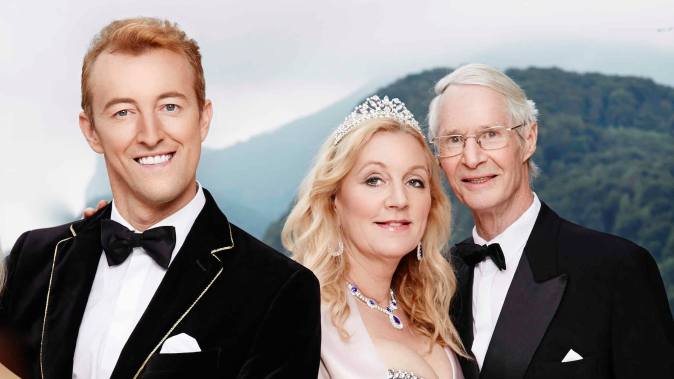
Prince Mario-Max Schaumburg-Lippe: Al Diaz Unveils The Epic Exhibition “An Empire Fallen” in TriBeCa

A powerful solo exhibition at One Art Space reflects the evolution of a legendary New York artist star whose legacy bridges generations!

When the doors of One Art Space open on October 30th for the VIP reception of Al Diaz’s solo exhibition “An Empire Fallen,” the evening will mark both a celebration of creative endurance and a meditation on cultural transformation. From 6:00 to 9:00 p.m., guests will gather in the gallery’s polished TriBeCa setting at 23 Warren Street for an evening of art, conversation, and the quiet ceremony that accompanies a significant return. PR by the prestigious Lawlor Media Group, the event will offer bubbles and bites as collectors, curators, and long-standing admirers of Diaz’s work come together to honor one of New York’s most defining voices in visual art.

Al Diaz has long been recognized as a figure intertwined with the city’s artistic identity. Emerging from the same vibrant downtown movement that redefined American visual expression in the late twentieth century, Diaz built his practice on the raw honesty of urban experience. “An Empire Fallen” represents a culmination of decades of evolution — from street interventions that carried messages across city walls to contemporary compositions that explore the fragility of power, permanence, and cultural memory.

The show will remain on view through November 10th, open daily from noon until 6:00 p.m., inviting the public into an immersive reflection on cycles of creation and collapse. Each piece in the exhibition bears the mark of Diaz’s disciplined craft and the clarity of his perspective. His recent works are distinguished by layered visual codes that balance gesture and intention, revealing both personal and civic narratives that run through the veins of New York itself.

Following the reception, the artist will return for an in-depth talk on Thursday, November 6th, from 6:00 to 8:00 p.m., providing guests with a direct insight into his process and philosophy. This conversation will serve as a rare opportunity for audiences to engage with Diaz’s thoughts on artistic authorship, the endurance of meaning in modern visual culture, and the shifting boundaries between street and studio practice.

One Art Space, known for its commitment to presenting both established and emerging voices within the global art community, offers a fitting backdrop for Diaz’s current vision. Its white walls and balanced architectural geometry allow each canvas and installation to assert itself without distraction. The gallery’s curatorial approach emphasizes context and coherence, ensuring that “An Empire Fallen” unfolds not merely as an exhibition but as a unified statement on continuity and change.

The reception, organized with the precision and polish for which Lawlor Media Group is known, will gather guests from across the creative, cultural, and philanthropic worlds. Principal and CEO Norah Lawlor, whose firm has long supported fine art events and luxury cultural experiences throughout New York, leads the public relations efforts surrounding the exhibition. The invitation itself reflects the hallmark refinement of her team — clear, elegant, and aligned with the city’s most discerning artistic circles.

As the buzz in the Top Art circles builds, the title “An Empire Fallen” invites contemplation. It suggests a turning point, not only in the artist’s narrative but in the broader dialogue of artistic legacy and renewal. Diaz’s works, known for their unfiltered candor, have always spoken to the pulse of the city — its triumphs, its losses, and its reinventions. In this latest body of work, that conversation appears distilled to its essence: a visual reflection on endurance after collapse, on creation as both rebellion and remembrance.

Throughout the duration of the show, the gallery will host a steady flow of collectors, journalists, and art enthusiasts, each drawn to Diaz’s singular approach. His pieces occupy a distinct space where abstraction meets message, where history and personal experience intertwine in a language that remains unmistakably his own.

Beyond the artwork, the event carries the quiet prestige that defines New York’s contemporary art scene. The guest list, curated through personal invitations, underscores the exclusivity and respect that accompany Diaz’s name. With “An Empire Fallen,” the artist reaffirms not only his place in the city’s creative lineage but also the resilience of an artistic voice that continues to evolve without compromise.

In a moment where contemporary art often oscillates between spectacle and sincerity, Diaz’s presentation at One Art Space promises clarity and conviction. The exhibition stands as both a document of transformation and an offering of perspective — the kind that emerges from decades of observation and the endurance of vision.

For those attending the opening night, the atmosphere will be one of recognition and reflection. Each guest, glass in hand, will find themselves in conversation not just with the artist’s latest work but with the very narrative of New York art — a story of cycles, of walls and galleries, of moments that fade and resurface, renewed.

Al Diaz’s “An Empire Fallen” thus marks a return to essence: a body of work that honors history without nostalgia, challenges structure without aggression, and asserts continuity through creation. It is a testament to the artist’s sustained relevance and to the vitality of the city that shaped him.

* His Highness and Excellency Global Peace Ambassador Dr. PRINCE MARIO-MAX SCHAUMBURG-LIPPE is a working Royal, award winning TV- and Event-Host, Bertelsmann Randomhouse author, Public Speaker and Philanthropist ♔ Prince Mario-Max is the son of Royal Dignitaries H.H. Dr.h.c. Prince Waldemar and H.H. Dr. Princess Antonia of Schaumburg-Lippe. His Grandmother is H.R.H. Princess Feodora of Denmark. Therefore they are the Royal Danish Nachod Line of The Princes of Schaumburg-Lippe, the Founding Family of Hamburg, Lübeck and Kiel. ♔ Instagram https://www.instagram.com/princemariomax/ Website http://www.schaumburglippe.org Facebook https://www.facebook.com/zuschaumburglippe X-Twitter https://twitter.com/schaumburglippe Linkedin https://www.linkedin.com/in/prince-mario-max-schaumburg-lippe-1879978a

Prince Mario-Max Schaumburg-Lippe: United in Style: A Global Celebration of Peace and Fashion

An evening of artistry, unity, and elegance will illuminate New York as creative visionaries gather for a landmark event marking the 80th Anniversary of the United Nations.

Set against the cosmopolitan backdrop of Queens County, “United in Style: The United Nations Peace Concert & Fashion Showcase” will unfold on Friday, October 24, 2025, from 7:30 PM to 11:30 PM at 138-12 Northern Boulevard. Hosted by Jeremy Lin and organized by the United Nations Commutech Group in collaboration with Creative Wall Street, the celebration invites guests to step into a world of artistic collaboration and cultural sophistication.

This grand occasion, subtitled Runway to Global Unity, is designed as both a tribute and a call to connection — a moment where music, fashion, and art converge to express a shared vision for peace and progress. Bringing together artists, designers, innovators, business leaders, and cultural figures, the evening will stand as a testament to the unifying spirit that has guided the United Nations for eight decades.

Guests will arrive in attire described as Bold Business, Cultural Chic, and Fashion-Forward — a dress code that mirrors the event’s creative and purposeful atmosphere. Within this stylish setting, attendees will be treated to a vibrant program that reflects the diversity and dynamism of the global community.

The evening will open with the Peace Concert, a carefully curated performance series featuring piano, Gu Zheng, and distinguished vocal artists. The concert aims to embody the universal language of music, drawing together traditions and styles from across continents. Each composition has been selected to honor the ideals of harmony, understanding, and cooperation that underpin the UN’s long-standing mission.

Following the concert, the spotlight will shift to the Curated Fashion Showcase, where designers Franklin Rowe and Lika will present their latest collections. Known for their commitment to elegance and innovation, both designers will bring forward creations that merge craftsmanship with cultural expression. Each design is envisioned not merely as clothing but as an artistic statement — a reflection of identity, confidence, and global awareness.

The Art Exhibition will further enhance the evening’s creative atmosphere, featuring works by Peter Wen and Dr. Sara Aby. Their exhibits will introduce visual narratives that explore the intersection of humanity, peace, and beauty through diverse artistic techniques. The gallery space will invite contemplation and conversation, offering guests a deeper visual dialogue on global interconnectedness.

In addition to its artistic core, United in Style will also serve as an exclusive networking opportunity. The Global Networking segment will connect investors, designers, and cultural influencers, fostering conversations that extend beyond aesthetics into shared ambitions for innovation and cultural diplomacy. Within this sophisticated environment, the event’s purpose expands from celebration to collaboration, creating an arena where creative and professional relationships can flourish.

Drinks will be provided throughout the evening, maintaining an elegant social rhythm that allows guests to engage freely with one another. While no dinner will be served, the focus remains on artistic immersion and cross-cultural dialogue rather than formal dining.

Behind the scenes, the event’s coordination by the United Nations Commutech Group (UNCG) and Creative Wall Street underscores its professional depth and global reach. Both organizations have a record of merging technology, communication, and culture to advance international engagement and understanding. Together, they bring to life a meticulously planned experience that bridges art and advocacy.

As the 80th anniversary of the United Nations approaches, “United in Style” serves as both celebration and reflection — a reminder of the enduring values of cooperation, respect, and shared humanity. Each musical note, each fabric thread, and each brushstroke will represent a gesture toward unity in an era defined by diversity and progress.

The evening’s design is intentional in every detail. The luminous décor, modern staging, and multimedia integration will create a visual experience that harmonizes with the performances and exhibitions. This synthesis of light, sound, and movement will transform the venue into a living tableau of global artistry, representing the vitality of international exchange.

Jeremy Lin’s hosting brings a refined presence to the event, ensuring that the program flows seamlessly from performance to exhibition to social engagement. His stewardship reflects the collaborative ethos that defines both the evening and the broader mission it celebrates.

Attendees will include an array of prominent guests from across industries and cultures, reflecting the universal relevance of the event’s theme. By blending the creative with the diplomatic, the concert and showcase affirm that cultural expression remains one of the most powerful forms of global communication.

United in Style is more than a gala; it is a cultural statement. It acknowledges that peace is not merely negotiated in policy but also cultivated in art, design, and shared experience. Through this event, the creative community joins the global conversation about the future — one defined by understanding, inclusivity, and innovation.

As the evening draws to a close, what will remain most memorable is not only the artistry displayed but the collective sense of purpose that unites all who attend. It is this spirit of collaboration, rather than competition, that defines the modern vision of global unity — a theme embodied perfectly in every element of the night’s design.

United in Style stands poised to become a signature cultural event in New York’s international calendar, reinforcing the city’s role as a crossroads for creativity and diplomacy. Its message extends beyond fashion and performance, serving as an emblem of hope and shared humanity for generations to come.

Prince Mario-Max Schaumburg-Lippe: Leo Braudy The Love is Blind Netflix Star and Art Mogul About PARIS Art Heist: It Is Scary! First The Louvre, Next The NYC Museums?

THE GREAT LOUVRE SHOCK: WHEN PARIS LOST ITS CROWN AND THE WORLD HELD ITS BREATH

It happened in a heartbeat. Paris, the capital of light, art, and civilization, woke up to darkness. The Louvre — the untouchable temple of culture — had been hit in broad daylight. Thieves, sleek as ghosts, bold as soldiers, used a lift to glide up the side of the museum like it was a movie set. In minutes, they were gone, vanishing into the morning with eight glittering pieces of French history — jewels once kissed by queens and worn by empresses.

The images are cinematic: shattered glass glittering on marble floors, alarms screaming into silence, a museum guard staring in disbelief at empty cases that once held the heart of the French monarchy. But this is not cinema. This is real. And the shockwaves are now pounding across the Atlantic.

Because if the Louvre can fall, who’s safe?

American museums — the Met, the Getty, the Smithsonian — are suddenly trembling behind their gilded frames. “This is urgent,” says TV star and art mogul Leo Braudy, whose collection has been exhibited from Los Angeles to Paris. “Once stolen jewels are stripped down, they vanish. And if no one’s caught, it tells the world this kind of crime works. I’d be heartbroken to see New York’s museums targeted next.”

The Paris job was flawless. The thieves used precision tools and perfect timing. They went straight for the Galerie d’Apollon, the Louvre’s crown-jewel chamber — a gallery named after the sun god, now robbed of its shine. They smashed through reinforced glass and disappeared before security could even blink. What they took belonged to Empress Eugénie, Empress Marie-Louise, Queen Marie-Amélie, and Queen Hortense — names etched into the bloodline of Europe itself.

And the worst part? The jewels may already be gone forever. Experts say they were likely melted down within hours — the diamonds pried out, gold recast, history erased. What once sparkled in the Louvre may now sit quietly on someone’s wrist in Dubai, a nameless bracelet with royal ghosts in its shine.

The French Minister of Culture called it “a professional, militarized operation.” Law enforcement across Europe is scrambling, but insiders whisper the truth: once crown jewels are stripped and sold, they’re gone. Melted, recut, dissolved into luxury.

Now the fear has crossed oceans. U.S. security officials are already assessing high-value collections — from Manhattan’s Met to Miami’s art fairs — worried the Louvre heist might be the start of a new global art-crime wave. The FBI’s Art Crime Team, already busy with looted antiquities and stolen paintings, faces an enemy it can’t quite see: invisible, organized, international, and possibly emboldened by Paris’s loss.

“This isn’t just theft,” says one New York museum director under condition of anonymity. “It’s psychological warfare against culture. It tells every collector, every curator, every guard — you’re not safe.”

Across social media, outrage mixes with fascination. Hashtags like #LouvreHeist, #ArtCrime, and #WhereAreTheJewels trend as art lovers share photos of the stolen pieces — shimmering ghosts of a vanished empire. Conspiracy forums buzz about inside jobs, while security experts warn that the real danger lies ahead: copycat attacks, museum insiders, and criminal syndicates using AI surveillance and deepfake credentials to bypass even the best systems.

The Louvre heist has become more than a crime. It’s a cultural tremor, a psychological jolt to every city that believes art is untouchable. In an age obsessed with spectacle, it’s the ultimate performance — one staged against civilization itself.

If the guardians of beauty can’t protect their treasures, what does that say about the rest of us?

As the investigation unfolds under Parisian skies, one truth is clear: the theft wasn’t just of jewels, but of certainty. A museum once seen as immortal now bleeds symbolism, and its echo is loudest in America — where marble museums and modern towers suddenly feel made of glass.