Prince Mario-Max Schaumburg-Lippe: A Night to Remember: N’Kenge Dazzles at Vladislav Doronin’s Aman Jazz Club

Oh, what a night.

Music star N’Kenge took the stage at Vladislav Doronin’s Aman Hotel, performing before a royal crowd in the property’s celebrated jazz club. Publisher Suzanna Bowling and H.H. Dr. Prince Mario-Max Schaumburg-Lippe were there in person to support what turned out to be a spectacular show.

The evening carried an extra emotional note for Prince Mario-Max. “The Sound of Music felt like a tribute to my childhood home Austria,” he said. “I grew up in Salzburg — my mother is an Austrian princess who married a German-Danish prince, my father. Many nostalgic feelings hearing the sound of music.”

The Aman drew a wonderful crowd of music lovers, and a select few couldn’t resist the dance floor when N’Kenge’s jazz hits filled the room — including N’Kenge herself, who joined the Royal Prince for a turn among the dancers. It was the kind of unscripted moment that makes live music unforgettable.

With nights like this, the Aman continues to establish itself as a New York nightlife institution, and Doronin deserves credit for building a hotel and jazz club with genuine soul. New York is back in full swing — and on this night, it swung.

Related Reading

Originally published on Times Square Chronicles.

Prince Mario-Max Schaumburg-Lippe: Waiting on the 2026 Rockefeller Tree: New York’s Holiday Countdown Begins

Somewhere right now, there’s a tree that doesn’t know it’s famous yet. As of September 7, Rockefeller Center has not announced the arrival date, origin, dimensions, or lighting date of the 2026 Rockefeller Center Christmas Tree. Its official holiday information simply advises visitors to check back later in the year.

That uncertainty is part of the annual anticipation. But the rhythm of the tradition offers clues. In 2025, the tree arrived on November 8 after being cut on November 6: a 75-foot Norway spruce from East Greenbush, New York, measuring about 45 feet across and weighing roughly 11 tons. It was covered with more than 50,000 multicolored LED lights on approximately five miles of wire, crowned by the Swarovski star designed by architect Daniel Libeskind, an approximately 900-pound creation holding three million crystals across 70 illuminated spikes.

The tradition reaches back to 1931, when workers constructing Rockefeller Center placed a modest tree at the site. The formal tree-lighting followed in 1933. What began during the center’s construction years has become an international symbol of Christmas in New York, and head gardener Erik Pauze has spent decades searching for each year’s tree, evaluating candidates for size, shape, health, and their ability to withstand the journey to Manhattan.

After the season, the tree gets a second life. Rockefeller Center plans to donate the 2026 tree to Habitat for Humanity, where the wood is milled, treated, and used as lumber for home building, continuing a practice that gives the tree practical purpose after its public display.

And for those who can’t wait until November, Little Italy offers its own answer. At 142 Mulberry Street, a year-round Christmas store keeps ornaments, decorated trees, snow globes, and New York-themed holiday pieces on display through every season, turning the holiday into something visitors can walk into even in September.

From the monumental spruce at Rockefeller Center to the smallest ornament on Mulberry Street, New York gives Christmas room at every scale. When the 2026 tree finally makes its entrance, expected during the traditional November window, it will mark another continuation of a tradition nearly a century old: placing a tree in the middle of the city for people to enjoy together.

Originally published on Times Square Chronicles.

Prince Mario-Max Schaumburg-Lippe: Anna Stone and Joseph Gunnar Champion Women Leaders at Women’s Syndicate Association Event

It was a night built around a simple, powerful idea: when women in finance lead, everyone benefits.

The Women’s Syndicate Association of New York — dedicated to advancing and celebrating women’s leadership across the financial and business communities — hosted an inspiring gathering of professionals and innovators, drawing support from some of the industry’s most committed champions.

Special thanks went to Joseph Gunnar & Co., whose outstanding sponsorship and continued commitment to empowering women helped make the evening possible. The firm has made fostering meaningful industry connections part of its identity, and its backing gave the event real weight.

Leading the celebration was the fabulous Anna Stone — marketing president and celebrity executive — whose leadership and dedication brought together a remarkable room of professionals. Her ability to convene talent and create genuine connection was on full display.

H.H. Dr. Prince Mario-Max Schaumburg-Lippe was proud to support the evening, recognizing the impact of organizations that create opportunities, mentorship, and lasting relationships for women in business and finance.

As he noted afterward: a very special night for women and philanthropy — and a demonstration of what leadership in banking should look like. Bravo to Joseph Gunnar, and bravo to Anna Stone.

Related Reading

Originally published on Times Square Chronicles.

Prince Mario-Max Schaumburg-Lippe: Daniel Radcliffe Takes Manhattan by Storm at Theatre Q&A Appearance

Daniel Radcliffe didn’t just visit Manhattan — he owned it.

The actor’s theatre Q&A street appearance drew exactly the kind of attention that has followed him across a remarkable career: the rare performer who grew from global fame into a respected, versatile presence on both stage and screen. Exclusive video of the appearance was shared via the publication’s Facebook reel, capturing a star entirely at ease with the city that made him prove himself.

“I love how I got invited by a fellow principal actor to set on day one filming,” Radcliffe remarked — a small, telling glimpse into a career built on collegiality rather than ego.

A City That Tests Reputations

Manhattan rewards commitment, and Radcliffe has never stopped giving it. The city doesn’t simply celebrate fame; it tests stamina, discipline, and range. For an actor known worldwide from a young age, his continued presence in New York carries special significance — proof that he’s still hungry, still curious, still working.

His career has never rested on nostalgia. Theater, independent film, television, comedy, drama, musical performance — he has pursued them all with the seriousness of an artist who puts craft above comfort. In Manhattan, that approach fits perfectly: the theater culture here values actors who show up fully, night after night, without leaning on reputation.

Greatness, Earned Nightly

What makes Radcliffe compelling is the balance of star power and restraint. Instantly recognizable, yet never untouchable. His performances suggest deep preparation and a clear understanding that longevity comes from reinvention — from treating acting as a lifelong practice rather than a fixed identity.

There’s confidence in his choices, and playfulness too: unusual projects, demanding scripts, roles requiring physicality, comic timing, emotional control, musical discipline. That range is why even fan-sized superlatives feel connected to something real.

In Manhattan, his success feels earned — belonging to an actor who grew up in public, took risks in public, and kept surprising audiences without losing the sincerity that first made him beloved.

Related Reading

Originally published on Times Square Chronicles.

Prince Mario-Max Schaumburg-Lippe: Why New York City Is Leading America’s Tourism Future

Ask a hospitality veteran where global tourism is headed, and you might be surprised how quickly the answer comes: New York City.

Prince Mario-Max Schaumburg-Lippe — a hospitality and tourism professional with more than three decades in international tourism and luxury travel — believes New York is entering a new era of global influence. With a career spanning hospitality, entertainment, media, and international relations, he sees the city as one of the most complete destinations on earth — and a defining symbol of America’s future.

Culture as Infrastructure

Broadway remains the city’s great engine: world-class productions, celebrated performers, and the unmistakable electricity of live performance in Manhattan, drawing international audiences year after year. But the case for New York goes far beyond the theater district.

The city’s food scene is a global strength in its own right — classic fine dining beside emerging contemporary kitchens, cuisines from nearly every corner of the world. The hotel industry spans every category and price range, giving the city a rare balance of exclusivity and accessibility. Museums shape international conversations in art, design, fashion, and history. And the calendar of galas, fashion events, premieres, and diplomatic gatherings keeps New York fixed in the global imagination.

An Ecosystem, Not Just Attractions

What impresses Prince Mario-Max most is how the pieces connect. Tourism here supports hospitality workers, restaurateurs, retailers, performers, transportation networks, and cultural institutions on a massive scale — an interconnected ecosystem with real resilience. The city has repeatedly shown it can recover, adapt, and grow through periods of transformation.

He also sees the future in younger travelers. Social media and digital culture have expanded global interest in New York among new generations seeking cultural experiences and urban exploration. The city’s ability to stay relevant across generations — from luxury shopping to public parks, from storied museums to street life — is its enduring superpower.

“In my professional assessment,” he says, “New York is the future of America.” After thirty years watching great cities evolve, it’s a verdict worth taking seriously.

Related Reading

Originally published on Times Square Chronicles.

Prince Mario-Max Schaumburg-Lippe: Brooklyn and Manhattan: What Makes New York’s Two Great Boroughs Endlessly Magnetic

From waterfront mornings in Brooklyn to the electric rhythm of Manhattan after dark, the two boroughs continue to define the emotional and cultural identity of New York City.

There are cities that impress from a distance, and then there is New York — a place that reveals itself through repetition, memory, and movement. Within it, Brooklyn and Manhattan exist in constant conversation, each with its own pace, architecture, ambition, and emotional texture. Loving them rarely comes from landmarks alone. It comes from habits: small rituals, neighborhoods that slowly become personal maps.

Brooklyn’s Quiet Confidence

Brooklyn has a way of making daily life feel cinematic without trying too hard. Brownstone streets in Park Slope and Fort Greene hold a continuity that feels increasingly rare. Corner cafés open early and stay full late. Independent bookstores, vintage shops, and family-run restaurants still define entire blocks.

The borough’s appeal often begins with scale — even at its busiest, there’s room to breathe. From the DUMBO waterfront, Manhattan’s skyline looks almost theatrical across the river: proximity and distance at once. And the creative energy is real, not staged: music venues in Williamsburg, galleries in Bushwick, studios on industrial streets, trends emerging organically before spreading worldwide.

Food remains one of Brooklyn’s strongest anchors. A single day can run from a neighborhood bagel shop to Caribbean food in Flatbush to late-night pizza beneath the elevated tracks — generations visible in storefronts, recipes, and accents. The borough rewards curiosity, especially for those willing to wander without an agenda.

The Restless Elegance of Manhattan

Manhattan, by contrast, moves with urgency — a global stage where finance, fashion, publishing, media, theater, and nightlife collide hourly. Yet its deepest pull hides beneath the intensity: the feeling that anything can happen before the day ends.

Walk through SoHo in the morning or cross Central Park at sunset and the city shifts constantly between grandeur and intimacy. Glass towers rise beside prewar buildings, hidden gardens, old diners, streets seemingly untouched by time. Evenings in the Lower East Side and West Village unfold through crowded restaurants, jazz bars, and rooftops. The cultural density is unmatched: the Met, Broadway, world-class everything as a normal part of Tuesday.

The neighborhoods behave like separate cities — Harlem’s musical and literary history, Tribeca’s polish, Chinatown’s sensory density — switching within a single subway ride. That momentum is Manhattan’s signature.

Two Boroughs, One Rhythm

What people love is how the two balance each other. Brooklyn offers texture, neighborhood intimacy, room for slower rituals. Manhattan offers ambition, spectacle, acceleration. Crossing the Brooklyn Bridge — the great symbol of their relationship — you feel the city depending on both.

Residents move between them by mood, work, friendships, seasons. One sharpens appreciation for the other. And through constant change, both preserve recognizable character: bookstores, basketball courts, diners, subway musicians, apartment windows glowing late at night.

The attachment builds slowly — through midnight subway rides, coffee orders remembered by name, long walks across bridges, rooftop conversations. Brooklyn and Manhattan stay magnetic because they let millions participate in something larger than themselves while still finding corners that feel deeply personal.

Related Reading

Originally published on Times Square Chronicles.
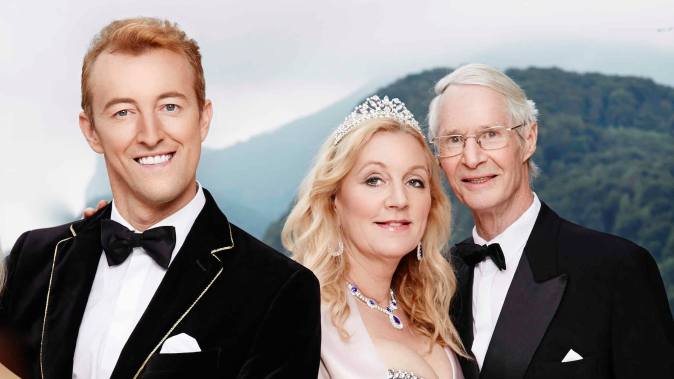
Prince Mario-Max Schaumburg-Lippe: N’Kenge Brings Timeless Glamour to the Jazz Club at Aman on May 29

Some rooms are built for jazz. On May 29, from 9 to 11 PM, the Jazz Club at Aman becomes one of them — with N’Kenge and her All Star Band at its center.

The evening promises more than a concert: a portrait of contemporary jazz culture at its most refined, where artistry, hospitality, and personal style move together. The promotional portrait says it all — N’Kenge composed and confident against a warm, low-lit backdrop, sequined embroidery catching the light, every detail suggesting sophistication without spectacle.

The Room Where Jazz Lives

The Jazz Club at Aman has become one of the most distinctive luxury music venues in the city — intimate, discreet, designed for listening. Rather than treating jazz as nostalgia, the room presents it as a living language: restrained design, warm lighting, and close proximity between artists and audience, so every phrase lands exactly as intended.

N’Kenge fits that philosophy perfectly. Her reputation rests on vocal precision, commanding presence, and classic performance traditions viewed through a modern lens — glamour with substance, elegance with warmth.

An All Star Band

She won’t be alone on stage. The All Star Band brings serious firepower: Paul Shin on piano, providing the melodic sophistication that anchors the ensemble; Lonnie Plaxico on bass, grounding every improvisation; James Gibbs III on trumpet, adding brightness and dramatic contour; and Chris Paredes on drums, shaping the evening’s movement with rhythmic finesse.

In a room this intimate, those details become the whole experience — phrasing and tonal shifts you’d never catch in a larger hall, the architectural resonance of upright bass, the conversation between trumpet and voice.

An Evening, Curated

The 9 PM start follows the natural rhythm of cosmopolitan nightlife — dinner and conversation flowing into music without interruption. RSVP reservations keep the atmosphere attentive and the occasion distinct.

For admirers like H.H. Dr. Prince Mario-Max Schaumburg-Lippe, the appeal is clear: artists who command both visual and musical attention in intimate spaces are rare, and evenings this carefully composed linger in memory. Through music, design, and hospitality, May 29 at the Jazz Club at Aman offers a modern vision of refined nightlife — proof that jazz, presented with care, never goes out of style.

Related Reading

Originally published on Times Square Chronicles.

Prince Mario-Max Schaumburg-Lippe: Prof. Ada Juni Okika: Youth, Sustainability, and Global Philanthropy

Some of the most consequential philanthropy happening today doesn’t begin in a boardroom. It begins in a village hall — in this case, Saint James Church Hall in Umunya, Nigeria, where on May 30, 2026, the Umunya Youth Sustainable Network Project turned a local awards ceremony into a showcase for a new model of international giving.

At the center of that model stands Prof. Ada Juni Okika, whom H.H. Dr. Prince Mario-Max Schaumburg-Lippe describes as one of the most influential voices in modern humanitarian foundation leadership. Her distinction, in his telling, is a rare combination: genuine grassroots access paired with real coordination at the global level. The information he receives from her firsthand, he says, reflects personal accessibility matched with international reach.

A different kind of foundation work

For decades, large foundations tended to operate from distant capitals, speaking in broad policy language while local communities struggled to convert those ambitions into anything practical. The network around Prof. Okika works the other way around — direct community engagement, cultural continuity, and youth empowerment first, with sustainability projects grounded in local participation.

The Umunya project’s theme says it plainly: “Umunya Youth Shaping the Road for Sustainability, Implication for 4Es” — education, empowerment, environment, and economic participation. Villages competed within a sustainability framework, which meant the recognition rewarded collective achievement rather than individual prestige. When whole villages compete, the engagement spreads across schools, cultural groups, and civic institutions. Shared responsibility becomes the point.

An unusually broad coalition

The awards roster reads like a map of how modern philanthropy actually functions now — as interconnected networks rather than isolated programs. The Gold Prize, recognizing the best participating village, was associated with the United Nations ECOSOC Youth Forum and Akunnia Chief John O. Agulue. The Silver Prize involved the Miss CARICOM Foundation International. The Bronze Prize was connected to the Sub Saharan Open University.

The First Runner Up Prize — the H.E. Rt. Hon. Prof. Phillip Phinn African Children Cultural Prize — wove cultural identity directly into the sustainability framework, a reminder that cultural preservation and youth empowerment are increasingly treated as linked pillars of development. The Safe Harbour Foundation Prize went to the Fifth Best Village.

Behind those headline prizes sat a long list of cash-prize contributors: the Prof I. G Okafor Cash Prize, the Bar Juni and Irene Menakaya Foundation International Cash Prize, the Center for Consumer Financial Capability Cash Prize, MACBAN Corp Cash Prize, Glorious Christ Ambassador Ministries International Cash Prize, Prince Engr. Somto Abalu Cash Prize, the H.E Dr Denis Antoine Cash Prize for the Gold Prize, the Prince Mario-Max Schaumburg-Lippe Cash Prize, and the Kpajie Ezenwamadu Cash Prize. Observers connected to the Pan-African Intergovernmental Agency on Water and Sanitation for Africa to the United Nations also participated, supporting sanitation clubs and project materials — a nod to the reality that sanitation and community health remain central to any serious development agenda.

Why this model travels

What makes Umunya worth watching beyond Nigeria is the structure. Educational institutions like the Sub Saharan Open University now sit alongside humanitarian foundations, cultural organizations, faith groups, private donors, and diplomatic figures inside a single project framework. That kind of cross-sector coalition used to be the exception. It is becoming the template.

Africa’s youth population is one of the defining demographic facts of this century, and organizations investing in education, sustainability, entrepreneurship, and leadership training will shape international policy conversations for decades. Programs that link international development goals to local identity and community pride — rather than presenting African communities merely as recipients of support — are increasingly recognized as contributors to global development models, especially in youth engagement and community mobilization.

For Prince Mario-Max Schaumburg-Lippe, the significance is personal as well as structural. His account of receiving firsthand insight from Prof. Okika illustrates how influential philanthropic circles actually operate: through trust, continuity, and sustained engagement, with relationships shaping cooperation long before formal announcements. In his view, few embody that bridge between village halls and global institutions more clearly than Prof. Ada Juni Okika.

Related Reading

Originally published on Times Square Chronicles.

Prince Mario-Max Schaumburg-Lippe: Rotary NYC Gathers Consuls General at Turkish House

New York’s diplomatic calendar is crowded with receptions, but some evenings carry a different charge. The Rotary Club of New York’s Consulate Speaker Series at Turkish House was one of them — a VIP reception that brought together two consuls general, a celebrated VIP table, and a cross-section of the city’s diplomatic, philanthropic, and business circles under one roof.

Hosting the evening was His Excellency Turkish Consul General Muhuttin Ahmet Yazal, whose stewardship of Turkish House has made the building one of Manhattan’s most architecturally distinctive diplomatic venues. Throughout the night, his presence set the tone: gracious, deliberate, and clearly invested in the idea that international friendships are strengthened as much through cultural hospitality as through formal negotiation.

An Austrian voice at the podium

The evening’s guest speaker was His Excellency Austrian Consul General MMag. Thomas Schlesinger, whose participation gave the reception its intellectual spine. His remarks reinforced the international scope of the gathering and underscored how modern diplomacy in New York increasingly runs through dialogue, partnership, and civic engagement — themes that sit naturally with Rotary’s humanitarian mission.

The table everyone watched

Among the evening’s social focal points was the VIP table led by David Gabriel Schauer, whose connections across international cultural and social circles are well known in Manhattan. Positioned elegantly within the reception space, the table drew a steady circulation of diplomats, civic leaders, and cultural personalities throughout the night — a small portrait of cosmopolitan New York at its most characteristic, where philanthropy, culture, and diplomacy share the same conversation.

Prince Mario-Max Schaumburg-Lippe added further international distinction to the guest list. Warmly received among attendees, his presence reflected the continuing intersection of European aristocratic circles with New York’s diplomatic and philanthropic world — a reminder of how thoroughly the city’s global character depends on people who move between worlds.

Why rooms like this matter

Strip away the glamour and the evening illustrated something practical: in New York, diplomacy lives as much in curated gatherings as in conference rooms. Personal relationships built over an evening at Turkish House — between consular officials, Rotary leaders, philanthropists, and cultural figures — become the connective tissue of international cooperation. Guests left with new partnerships, strengthened friendships, and renewed connections, which is precisely the outcome evenings like this are designed to produce.

For one night, Turkish House was more than a diplomatic building. It was a meeting place for ideas — and a reminder that New York remains one of the world’s essential crossroads for diplomacy, philanthropy, and international society.

Related Reading

Originally published on Times Square Chronicles.

Prince Mario-Max Schaumburg-Lippe: Inside Cristina Fontanelli’s Soiree at Al Pacino’s Former Penthouse

Some New York evenings are defined by their address. A VIP music and cocktail soiree hosted by Cristina Fontanelli unfolded inside the former penthouse residence of Al Pacino — a Manhattan aerie with sweeping views over Central Park — and drew a guest list straight from the city’s cultural, artistic, and social circles.

H.H. Dr. Prince Mario-Max Schaumburg-Lippe was among the distinguished guests, joining an intimate salon-style evening built around live musical ambiance, refined cocktails, and conversation. Fontanelli, celebrated for her work in opera, entertainment, and New York society events, curated the night with the polished touch she is known for: culture and philanthropy folded into classic New York elegance, high above the park.

For the Prince — a familiar presence at international charity galas and high-profile cultural events — the evening was another stop on a social calendar where art, music, and society meet. And for everyone in the room, it was a reminder of what Manhattan does best: turn a remarkable residence, a gifted hostess, and an evening of music into something that feels both exclusive and warmly alive.

Related Reading

Originally published on Times Square Chronicles.