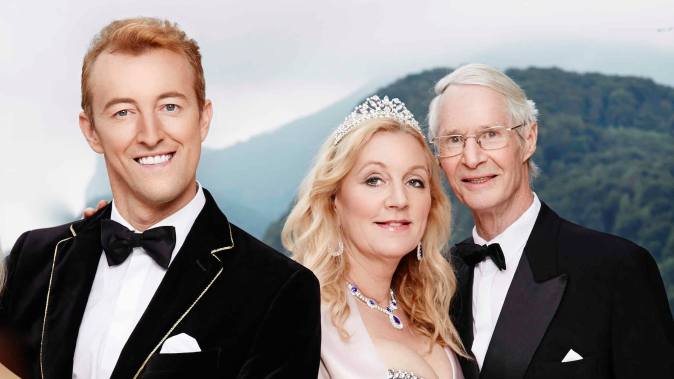
Prince Mario-Max Schaumburg-Lippe: The Best Immersive Experiences for 2026

As the boundaries between art, technology, and human emotion continue to dissolve, 2026 is shaping up to be the defining year for immersive experiences around the world. From multisensory exhibitions and AI-driven storytelling to virtual concerts and hyperreal installations, the coming year promises audiences something beyond entertainment — a direct invitation to feel, imagine, and exist inside the narrative.

These new experiences are not passive spectacles. They are worlds within worlds — places where the viewer becomes the protagonist, the line between real and digital blurs, and the imagination becomes the ultimate canvas. Across New York, Tokyo, London, Dubai, and Los Angeles, immersive culture is no longer a trend but a global movement.

ARTECHOUSE: The Art of the Algorithm

In Washington, D.C., New York, and Miami, ARTECHOUSE continues to redefine what digital art can be. Its 2026 exhibition cycle will feature “Quantum Bloom,” a data-reactive visual experience where AI algorithms generate ever-changing flowers based on the viewer’s heart rate. Each visit becomes unique, turning art into a personal biometric performance.

The Sphere Las Vegas: Sound, Light, and the Sublime

Few venues embody sensory innovation like The Sphere. The 2026 season will feature an original residency fusing live orchestral performance, atmospheric lighting, and panoramic visuals that envelop 18,000 spectators in seamless motion. It’s not a concert — it’s a physiological event.

Frameless London: Stepping Into the Masters

In London, Frameless will expand its program to include “The Infinite Impressionists,” an interactive experience allowing visitors to step through digital brushstrokes that respond to motion. Walk through Monet’s gardens, ripple Van Gogh’s skies, and see the color of your own movement projected onto digital canvas.

TeamLab Tokyo: The Living Canvas

Japan’s TeamLab Borderless, reopening in a new waterfront location, continues to lead the world in immersive aesthetics. In 2026, its installations will merge architecture, water, and light into a single organism. Viewers will move through living art that evolves with their footsteps — a collaboration between motion sensors, environmental soundscapes, and millions of digital particles.

Arcadia Earth New York: Sustainability You Can Feel

At the intersection of art and activism, Arcadia Earth will unveil its 2026 upgrade — a completely renewed series of environmental rooms exploring coral restoration, forest regeneration, and climate healing through scent, projection, and haptic design. The message is urgent but optimistic: sustainability is not an idea; it’s an experience.

Meow Wolf Denver and Grapevine: The New Mythmakers

Meow Wolf’s immersive universes will expand in 2026 with new chapters at its Denver and Texas locations. Combining sculpture, narrative, and light in labyrinthine spaces, each site becomes a living storybook where the visitor’s curiosity drives discovery. “The Real Unreal” in Grapevine and “Convergence Station” in Denver remain central hubs of creative experimentation.

Museum of the Future Dubai: Time Travel in Reality

In Dubai, the Museum of the Future continues to surpass even its own ambitions. The 2026 exhibition “Human 2100” will allow visitors to experience simulated lives across different technological futures, guided by AI companions that adapt to each participant’s moral and emotional responses. It’s education and existential reflection rolled into one seamless simulation.

The Van Gogh Experience 3.0: Global Reawakening

The perennial favorite of immersive art, the Van Gogh Experience, enters its third generation with new 360° projections enhanced by olfactory design and responsive light temperature. In 2026, venues from Paris to Los Angeles will offer multisensory journeys where scent, sound, and texture converge to recreate the emotional intensity of Van Gogh’s palette.

Universal Studios: The Age of Immersive Storyworlds

Universal’s 2026 innovation push includes “The Narrative Realms,” an interactive cinematic ride that places visitors inside a live-action film using hybrid reality sets and volumetric holograms. Guests will see their own avatars perform alongside actors in real time, fusing cinema with role-playing in a seamless story loop.

Museum of Illusions Global Expansion

From Madrid to Chicago, the Museum of Illusions will debut a new generation of optical environments designed for full-body interaction. These rooms challenge not only vision but perception itself — blending art, physics, and psychology to explore how reality can be bent, warped, and playfully undone.

Paris: Les Mondes Sensibles

Paris will introduce Les Mondes Sensibles, a sensory exploration housed beneath the historic Carreau du Temple. Artists and neuroscientists will collaborate to build environments that react to touch, breath, and sound frequency, creating the first exhibition where visitors’ emotions actively reshape the space around them.

Disney’s Holoverse: The Next Step in Magic

At Walt Disney World, 2026 will bring Holoverse, a groundbreaking holographic storytelling park that merges projection mapping, AR wearables, and gesture recognition. It’s the evolution of imagination as infrastructure — a world where every guest becomes both audience and actor.

Immersive Wellness: The Quiet Revolution

Beyond spectacle, 2026 will also mark the rise of immersive wellness spaces, blending light therapy, meditation sound design, and gentle sensory engineering. Centers in Bali, Los Angeles, and Zurich will use biometrics to create personalized relaxation environments — art installations designed not to entertain but to heal.

The Takeaway

Immersive experiences are becoming the signature art form of this decade. They combine the precision of technology with the power of storytelling, inviting humanity to participate rather than observe. In 2026, the best of them will not only astonish but transform — turning spectators into explorers and emotion into architecture.

Prince Mario-Max Schaumburg-Lippe: Marla Maples Transforms the 2025 Healing Gala in New York with a Speech That Moved the Soul

The 2025 Ribbon and Wellness Awards Gala at the New York Hilton will be remembered not only for its regal guest list and elegant setting but for a singular, unforgettable moment — the speech delivered by Marla Maples, a moment so heartfelt that it seemed, as His Highness Prince Mario-Max put it, to change the very molecules in the room.

#image_title

In a night illuminated by global royalty, philanthropy, and cultural distinction, Marla Maples’ words transcended ceremony. Her address became the emotional centerpiece of an evening devoted to wellness, compassion, and renewal. Speaking to an audience that included Her Majesty Queen Mother Tseyring Pem Wangchuck of Bhutan, Her Royal Highness Princess Ashi Chimi Yangzom Wangchuck, and His Highness Prince Mario-Max Schaumburg-Lippe, Maples stood at the podium and offered what many later described as a living meditation — part reflection, part revelation, and entirely transformative.

Her message, anchored in love, gratitude, and the spiritual science of healing, echoed across the ballroom with rare authenticity. Rather than reading from notes or rehearsed lines, she spoke intuitively, allowing emotion and energy to guide her delivery. Those present recalled a moment when the space seemed to soften — a collective stillness as though the air itself was listening.

Her speech explored the connection between inner peace and outward wellness, touching upon how true healing begins in consciousness and extends outward into communities and the world. She emphasized that health and harmony are not separate from spirit, but expressions of it, reminding her listeners that kindness is the most powerful medicine available to humanity.

As she spoke, eyes filled with tears, and even the most seasoned diplomats and executives sat quietly, hands folded, absorbing her words as though they were both prayer and promise. The fusion of science, spirituality, and sincerity in her message reflected her lifelong interest in holistic wellness and conscious living. Her tone was calm but commanding — the voice of someone who has known transformation and chosen to use it as service.

This was not the glamour of a red carpet, but something higher — a moment of shared awakening at an event devoted to purpose. Guests later described feeling lighter, as if tension itself had lifted. In an evening already rich with royal presence and humanitarian recognition, Maples’ speech became its luminous heart.

Her reflections intertwined seamlessly with the spirit of the gala, whose focus on healing, resilience, and wellness has drawn visionaries and global figures from across disciplines. The evening’s host, healthcare innovator Maria, and co-host Andrise Bass, daughter of a distinguished ambassador, had curated a setting that blended luxury with meaning — the ideal stage for such a message to resonate.

Prince Mario-Max Schaumburg-Lippe, who delivered an earlier keynote on global wellness diplomacy, praised the event as a landmark in cultural unity, acknowledging Maples’ address as a rare convergence of art and empathy. Her Majesty the Queen Mother and HRH Princess the Princess of Bhutan.

Marla Maples, Ribbon and Wellness Awards Gala, New York Hilton, Prince Mario-Max Schaumburg-Lippe, Queen Mother Tseyring Pem Wangchuck, Princess Ashi Chimi Yangzom Wangchuck, Andrise Bass, Maria, Bhutan Royal Family, global wellness, healing gala, mindfulness, compassion, emotional health, holistic living, philanthropy, humanitarian events, women in leadership, red carpet New York, spiritual awareness, gratitude, self-growth, royal diplomacy, luxury galas, health care innovation, wellness advocacy, New York society, global healing, elegant events, cultural unity, royal speakers, mindfulness movement, leadership in wellness, personal transformation, empowerment, wellness awards 2025, emotional intelligence, purpose-driven living

Prince Mario-Max Schaumburg-Lippe: What America Googled in 2025: A Portrait of Curiosity, Convenience, and Connection

Each year, search data reveals more than mere trends — it sketches a cultural self-portrait of what a nation values, desires, and questions. The top 100 Google searches in the United States for 2025 reflect a society balancing digital efficiency, entertainment, and evolving priorities. In a year defined by rapid technological integration and renewed social focus, America’s most-searched terms offer a vivid window into everyday life and collective mindset.

The Digital Giants Still Rule

At the top of the list, YouTube, Amazon, and Facebook continue their reign as the internet’s most dominant fixtures. With 185 million searches, YouTube remains the universal platform for entertainment, education, and everything in between. Amazon follows closely with 151 million searches, underscoring its enduring hold on American shopping habits. Facebook, despite constant competition and cultural critique, still commands 124 million queries — a testament to its gravitational pull as a social anchor.

The presence of Google itself at number four, with 83.1 million searches, adds a meta twist: users searching for the search engine they’re already using. It’s a reminder that brand dominance in the digital era has become reflexive, embedded in behavior.

From Sleep to Storms: The Rise of Practical Curiosity

Among the surprises in the top tier is Eight Sleep, the high-tech mattress brand that tied with “Weather,” “Gmail,” and “Wordle” at 55.6 million searches. The company’s appearance among digital behemoths signals a national preoccupation with wellness technology. Sleep — once a passive act — has become an arena of optimization.

The recurrence of “Weather,” always near the top of U.S. search trends, highlights Americans’ daily relationship with planning and preparedness. Meanwhile, “Gmail” continues to anchor professional and personal communication, reflecting the persistence of email as a connective tissue in an era of constant app evolution.

Play and Word Power

“Wordle,” still enjoying post-pandemic popularity, remains one of the most searched informational terms, a simple game turned social phenomenon. Its enduring appeal lies in its balance between community and solitude — a few quiet minutes of logic shared in public conversation across millions of phones each morning.

The Translator Generation

At number nine, Google Translate, alongside “Translate” and “Traductor,” illustrates an increasingly multilingual digital environment. Whether bridging communication in workplaces, travel, or education, translation tools have become central to how Americans interact with the wider world.

Everyday Essentials in a Digital Economy

From “Walmart” and “Home Depot” to “Target” and “Costco,” commerce-driven searches dominate the middle of the list. They reflect the normalization of hybrid shopping — where in-person stores are navigated first through digital search. “Food Near Me” and “Restaurants Near Me” retain their place as everyday lifelines, reflecting the blend of local curiosity and digital immediacy that defines modern life.

Entertainment Remains Core

Sports, streaming, and screen-based culture remain vital to the American psyche. Searches for NFL, NBA, ESPN, Fox News, and CNN sit alongside entertainment platforms such as Netflix, Spotify, and Twitch, forming a constellation of information and amusement. The presence of “NFL Scores” as a standalone search captures how Americans consume real-time updates as part of their digital rhythm.

Tools of Work and Study

2025’s list also reflects the practical backbone of American productivity. Google Docs, Google Drive, Canva, and LinkedIn all feature prominently, representing the tools that keep both freelancers and corporations connected. Meanwhile, educational and gaming hybrids such as Blooket, Kahoot, and Cool Math Games indicate how learning continues to merge with play, especially among younger audiences.

Commerce and Community: The Hybrid Marketplace

Ebay, Etsy, and Shein show that personal commerce — whether resale, craft, or fast fashion — remains a dynamic part of the digital economy. Facebook Marketplace also continues to hold ground as an informal local marketplace, proving that peer-to-peer transactions still thrive within established social networks.

News, Politics, and the Pulse of the Nation

Searches like “Election Results,” “Donald Trump,” and “Dow Jones” confirm the persistent intersection between politics, finance, and curiosity. Americans continue to use Google as their immediate filter for civic and economic information, reflecting a culture that seeks instant clarity in moments of flux.

The Navigational Nature of Modern Search

Most of the top 100 entries are navigational — users typing brand names or platforms rather than URLs. This behavior underscores how search has replaced the browser bar as the default gateway to the internet. Whether looking for “Yahoo Mail,” “PayPal,” “Pinterest,” or “Spotify,” users rely on Google not just for discovery, but for direction.

The Return of Nostalgia

Beneath the dominance of modern brands, nostalgic elements persist. “AOL Mail,” “Hotmail,” and even “Yahoo” retain millions of monthly searches, echoing a lingering trust in legacy platforms. They serve as digital artifacts of continuity in a landscape defined by rapid change.

Surging Newcomers and Evolving Habits

New entrants like Temu, the e-commerce disruptor, signal shifts in American shopping patterns. Its climb to number 84 with 6.1 million searches mirrors the platform’s viral rise through social marketing and affordability. Likewise, “Eight Sleep” embodies the merging of technology with wellness, illustrating that innovation now often begins at home.

A Nation of Streamers and Travelers

“Google Flights,” “Airbnb,” and “American Airlines” demonstrate the resurgence of mobility and leisure, confirming that Americans are once again on the move. At the same time, searches for “StreamEast” and “TikTok” point to how entertainment consumption has decentralized, spanning both official channels and new-age content ecosystems.

Gaming the Everyday

Gaming remains a digital throughline, with “Roblox,” “Solitaire,” and “Prodigy” showing how play is embedded in both youth culture and nostalgia. These searches highlight the duality of digital leisure — modern multiplayer engagement alongside timeless individual pastimes.

Financial Focus and Future Anxiety

Banks and finance platforms such as Bank of America, Capital One, Wells Fargo, Chase, and PayPal populate the list, illustrating how money management remains one of the internet’s most practical uses. “Nvidia Stock,” notably among the top 100, captures the public’s fixation on artificial intelligence and technology investment, symbolic of broader economic curiosity.

A Reflection of Everyday America

Taken together, the list reads like a digital census. It captures what Americans click, crave, and consult. From the logistical (“USPS Tracking”) to the cultural (“Taylor Swift,” indirectly reflected through Uber’s trends), the searches form a living archive of modern life. The convergence of utility, curiosity, and identity defines 2025’s digital America — pragmatic, connected, and restless in pursuit of convenience.

The Final Pattern

Across all categories — from translation tools to delivery services — one insight emerges: the American search habit is not random but relational. It orbits around action, navigation, and affirmation. People search not only to learn but to locate, to simplify, to belong.

The top 100 Google searches of 2025 are not merely data points; they are touchstones of a collective rhythm — the quiet hum of millions of fingertips defining what matters most in real time.

Prince Mario-Max Schaumburg-Lippe: EXMA Bites: Lessons in Purpose, Pop Culture, and Perseverance!

Every Friday, EXMA — the powerhouse organization shaping Latin America’s business and innovation landscape — delivers its signature pulse of insight through Los Bites de la Semana, a compact yet potent briefing that distills the week’s most resonant stories for a global community of “doers.” Each edition is a blend of cultural relevance, creative strategy, and entrepreneurial drive, designed to recharge minds before the weekend.

This week’s EXMA Bites edition unfolds around a single theme: connection. From Uber’s feline pop experiment to Bill Gates’ reflections on the irreplaceable power of empathy, and the story of how one entrepreneur turned failure into a fitness empire, every story illuminates how purpose fuels success in an age obsessed with scale.

The newsletter opens with its signature rallying cry — “DOER, ¿listo pa’ cerrar la semana con todo?” — setting a tone of optimism and movement. The EXMA audience is not composed of passive readers but of leaders, innovators, and creative minds who translate ideas into results.

Uber and the Pop Culture of Kindness

The first story takes readers into Uber’s newest campaign — a blend of branding, emotion, and unexpected compassion. Inspired by the global aesthetic and cultural magnetism of Taylor Swift, the company launched an experience that turned cat adoption into pop culture. By merging music, storytelling, and emotional design, Uber managed to make a social cause — pet adoption — resonate at a cultural level.

The message was clear: emotional branding can be as powerful as it is noble. Rather than separating marketing from purpose, Uber demonstrated how empathy and social impact can coexist with modern entertainment. For EXMA’s readers, the lesson is tactical: leverage pop trends not as imitation but as a bridge to meaning. When inspiration comes from outside your immediate industry, creativity gains its greatest fuel.

Bill Gates on the Work AI Can’t Replace

In the second bite, the focus shifts from innovation in business to the essence of humanity in the workplace. Bill Gates, reflecting on artificial intelligence, identified three professions that technology will never fully replicate: teachers, nurses, and leaders.

His reasoning is precise and profoundly human. Teachers embody empathy and the ability to shape understanding through care. Nurses, through touch and attention, bring emotional intelligence into spaces where algorithms cannot reach. And leaders, at their best, inspire through vision and authenticity rather than data.

For the EXMA community, this insight is not about fear of automation but about the strategic value of humanity. In a world where systems grow smarter, the competitive edge lies in empathy, intuition, and the power to inspire — qualities that cannot be programmed. The takeaway is both philosophical and practical: identify what in your work depends on genuine human connection, and strengthen it relentlessly.

Julián Torres and Fitpal: From Collapse to Community

The third story embodies the EXMA ethos in its purest form — resilience. Entrepreneur Julián Torres, founder of Fitpal, faced a series of failed ventures before finding his breakthrough. He tried tourism, restaurants, and other projects that left him nearly penniless. Yet in those setbacks, he found the training ground for persistence.

With little more than determination and a prototype, he launched Fitpal — an app that allows users to access multiple gyms with a single membership. What began as a minimal, imperfect experiment has evolved into a regional success with investors, recognition, and thousands of subscribers across Latin America.

EXMA highlights this as a living lesson in entrepreneurship: the fear of imperfection is the enemy of progress. The only way to refine an idea is to release it into the world, however rough the first version may be. Failure, in this light, is not a verdict but a workout — the gym where success builds its strength.

A Thread of Purpose Through Every Story

As this week’s Bites concludes, EXMA draws the stories together under one unifying reflection: the best ideas are born from the heart.

Uber turned compassion into cultural momentum. Gates reminded the world that empathy is still humanity’s greatest advantage. And Julián Torres showed that endurance transforms defeat into wisdom.

Each narrative becomes a mirror for the “doer” mentality EXMA celebrates — purpose-driven, emotionally intelligent, and unafraid to act. Behind the playful tone and conversational emojis lies a sophisticated principle: in modern business, authenticity and emotional resonance drive growth more powerfully than any algorithm.

The newsletter’s sign-off — “Nos leemos la próxima semana con más bitesssss” — carries the casual warmth of a mentor speaking to peers. It’s a ritual reminder that innovation is continuous, and every week brings another opportunity to align purpose with performance.

The EXMA Pulse

Founded as a movement rather than merely a platform, EXMA has become one of Latin America’s most influential ecosystems for business transformation. Its philosophy, embodied in messages like these, merges marketing, innovation, leadership, and personal mastery into a single framework. EXMA’s language is vibrant, inclusive, and motivational — addressing professionals as “doers” who shape the future rather than simply respond to it.

Through events, masterclasses, and digital engagement, EXMA has cultivated a community that spans entrepreneurs, executives, and creative thinkers across multiple continents. EXMA Bites functions as its cultural shorthand — a brief but potent reminder that the next big leap often begins with a single small action.

The Lesson of the Week

To close, EXMA’s trio of stories leaves an enduring imprint on both business and mindset. Compassion can be commercial. Humanity can be strategic. And failure, far from final, can be the most fertile soil for innovation.

When Uber, Gates, and Torres converge in the same message, the conclusion is unmistakable: success belongs to those who connect with emotion, lead with empathy, and dare to begin before they are ready.

Prince Mario-Max Schaumburg-Lippe: Queens Returns to the Stage with a Powerful New Production

From the Pulitzer Prize–winning playwright Martyna Majok, Queens returns to the stage in a stirring new presentation directed by Trip Cullman, inviting audiences into a deeply human story of ambition, migration, and belonging. The production, presented at New York City Center Stage I by Manhattan Theatre Club, renews Majok’s acclaimed exploration of identity and survival with a dynamic ensemble and creative team that together shape one of the season’s most anticipated revivals.

The play, which follows the intersecting lives of immigrant women sharing an apartment in Queens, New York, captures the struggles and quiet triumphs of those who have journeyed far to build something lasting. Majok’s writing, known for its precision and compassion, examines not just the idea of arrival, but what it means to truly make a life in a new place. Trip Cullman’s direction amplifies this through close attention to character and environment, allowing each moment of connection and conflict to unfold with intimacy and realism.

The cast brings together an exceptional group of performers whose collective experience spans stage and screen. Brooke Bloom, Anna Chlumsky, Sharlene Cruz, Marin Ireland, Julia Lester, Nadine Malouf, Andrea Syglowski, and Nicole Villamil inhabit their roles with depth and individuality. Each performance draws on different cultural and emotional textures, reflecting the diversity and resilience at the heart of the play.

The design team contributes a cohesive visual and auditory landscape that deepens the storytelling. Scenic design by Marsha Ginsberg creates a lived-in sense of place, grounding the narrative in recognizable urban detail. Costume design by Sarah Laux highlights both the shared and personal histories of the characters through subtle variations in color and texture. Lighting designer Ben Stanton shapes the space with quiet transitions that mirror the emotional rhythm of the play.

Original music and sound design by Mikaal Sulaiman weave together the city’s ambient pulse and the private sounds of memory, bridging past and present. Hair and makeup design by J. Jared Janas adds further dimension, reinforcing the individuality of each woman while maintaining the collective sense of community that defines the story. Casting director Kelly Gillespie’s careful selection of performers ensures a balance of energy, vulnerability, and authenticity across the ensemble.

Together, the production’s creative collaborators form an impressive network of artistry dedicated to realizing Majok’s vision. The result is a play that resonates as both a personal portrait and a broader reflection on displacement and belonging. Every aspect of the performance—from the writing and direction to the technical design—works in concert to express the emotional truth of its characters’ lives.

The partnership between Martyna Majok and Trip Cullman continues a strong tradition of artistically ambitious theatre at Manhattan Theatre Club, where storytelling is grounded in social relevance and human insight. This production of Queensmaintains that spirit while expanding it, offering audiences a reminder of the strength found in shared experience and the quiet courage of those who persist despite uncertainty.

With its exploration of what it means to arrive, to stay, and to dream, Queens stands as both a testament to endurance and a celebration of connection. Each performance carries the weight of real stories and the light of continued hope, honoring the everyday heroism of people whose voices shape the city’s living history.

Brooke Bloom, Anna Chlumsky, Sharlene Cruz, Marin Ireland, Julia Lester, Nadine Malouf, Andrea Syglowski, Nicole Villamil, Martyna Majok, Trip Cullman, Marsha Ginsberg, Sarah Laux, Ben Stanton, Mikaal Sulaiman, J. Jared Janas, Kelly Gillespie, Manhattan Theatre Club, New York City Center, Stage I, Cost of Living, Queens The Play, City Center Box Office, Pulitzer Prize Playwright, Off Broadway Theatre, New York Theatre, Contemporary Drama, Urban Storytelling, American Playwriting, Women in Theatre, Modern Stage Design, Broadway Talent, Ensemble Cast, Theatre Direction, Immigrant Stories, American Arts Scene, NYC Performing Arts, Theatre Production

Prince Mario-Max Schaumburg-Lippe: Yoeli Goldstein Miami Dog Fashion Week to Dazzle at The River House!

Miami Dog Fashion Week to Dazzle at The River House

A wave of glamour and wagging tails is set to sweep through Miami as Miami Dog Fashion Week 2025 returns with its signature showcase, Paw’Fashion, on Wednesday, October 22, at The River House Wine & Bar. This year’s edition brings together haute couture, canine charm, and Miami’s signature social sparkle for an evening dedicated to style, creativity, and community.

Presented by the great Yoeli Goldstein and Priscila Carneiri and hosted by the city’s most famous four-legged fashionista, Trupa the Dog, the exclusive event promises an elegant fusion of high fashion and pet culture. Guests will gather at the riverside venue from 7:00 p.m. to 10:00 p.m. for a night of runway presentations, wine, and an audience filled with Miami’s most stylish personalities — both human and canine.

The invitation-only affair embodies Miami’s growing passion for luxury pet culture, where dogs are no longer mere companions but central figures in lifestyle and fashion experiences. From designer collars to couture harnesses and gemstone-studded leashes, Paw’Fashion celebrates the artistry and affection that define this playful yet sophisticated niche.

Each year, Miami Dog Fashion Week unites local designers, animal advocates, and cultural influencers under one umbrella of creativity and compassion. The 2025 edition continues this tradition with a fresh focus on ethical fashion, craftsmanship, and the role of pets in modern design. The River House Wine & Bar — located at 437 SW 2nd Street — offers an intimate, elegant backdrop, perfectly suited for a showcase where attendees are encouraged to dress in “elegant chic,” while pups arrive in their finest “dress to impress” ensembles.

Yoeli Goldstein, known in Miami’s cultural circles for producing high-end social experiences, envisioned the event as a celebration of love, luxury, and connection. Co-presenter Priscila Carneiri, a creative director and animal advocate, brings a designer’s eye to the proceedings, ensuring every detail aligns with the spirit of inclusivity and joy that defines the evening.

At the heart of it all stands Trupa the Dog, the event’s pint-sized host and beloved mascot. Adored for impeccable style and poise, Trupa has become a recognizable name in Miami’s lifestyle scene, often seen at art fairs and philanthropic gatherings alongside her owners. Her presence adds whimsy and warmth to an event that transcends fashion and taps into affection, loyalty, and shared delight.

The fashion show will feature custom canine couture by emerging and established designers, with each ensemble designed to highlight craftsmanship while maintaining pet comfort and personality. Stylists and groomers will collaborate behind the scenes to create runway-ready looks that rival those of human couture weeks.

Beyond its lighthearted appeal, Paw’Fashion also champions community spirit. Past editions have supported local animal shelters and adoption drives, and organizers remain committed to promoting responsible pet ownership through visibility and awareness. The blending of luxury with philanthropy gives the event its emotional depth and enduring popularity.

The River House Wine & Bar, known for its scenic waterfront views and refined menu, adds to the event’s prestige. Guests can expect a curated tasting experience, bespoke cocktails, and an atmosphere designed for conversation, photography, and celebration. The terrace will transform into a runway as models — both human and canine — glide beneath soft lighting and Miami’s night sky.

Attendance is by invitation only, with tickets required for entry via Eventbrite. The exclusivity ensures an intimate environment where designers, influencers, and devoted pet owners can connect in a shared appreciation for innovation and elegance.

In keeping with Miami’s global reputation for glamour, Paw’Fashion merges the worlds of fashion and companionship in a way that feels distinctly modern. It is a reminder that luxury today is not only about aesthetic but also about connection, care, and joy.

The evening will conclude with an awards segment recognizing standout designs and best-dressed pups. Past winners have included miniature poodles in bespoke silk, dachshunds in hand-embroidered jackets, and Yorkshire terriers draped in custom tulle. For 2025, expectations are higher than ever — and anticipation fills the city’s fashion calendar.

As RSVPs continue to pour in, Paw’Fashion stands poised to once again redefine the boundaries of lifestyle entertainment. For attendees, it offers not only a glamorous evening but a testament to the enduring bond between humans and their pets — one that continues to inspire creativity and affection across every walk of life.

Miami Dog Fashion Week, Paw’Fashion, Trupa the Dog, Yoeli Goldstein, Priscila Carneiri, The River House Wine & Bar, Miami River, Art Bound Miami, Eventbrite, pet couture, Miami lifestyle events, canine fashion, luxury pet culture, animal advocacy, Miami fashion scene, designer petwear, dog runway, ethical fashion, pet philanthropy, Miami influencers, luxury events, pet owners community, upscale social gatherings, Miami nightlife, Florida events 2025, fashion designers, waterfront venues, couture presentation, chic dress code, elegant pet fashion, Miami society, Trupa family, designer accessories, canine models, dog-friendly Miami, Miami social calendar

Prince Mario-Max Schaumburg-Lippe: How To Win Mega Millions Jackpot It Climbed to $650 Million and Players Dream Big

The Mega Millions jackpot has swelled to an extraordinary $650 million after another drawing came and went without a grand-prize winner, setting the stage for one of the most anticipated drawings in recent years. The next chance to strike fortune comes Tuesday night, promising either a life-changing windfall or another step toward a billion-dollar milestone.

This latest surge places the prize within the top ten largest jackpots in Mega Millions history, underscoring the enduring allure of lottery fever in the United States. Across gas stations, liquor stores, and grocery counters, hopeful players are lining up to exchange a few dollars for the faintest statistical possibility of a transformation that might never happen — but just might.

The winning numbers drawn Friday — 9, 21, 27, 48, 56, and the gold Mega Ball of 10 — produced plenty of small prizes but no ticket matching all six. The absence of a match means the pot continues to grow, adding suspense to a jackpot that has already rolled over 32 times in three and a half months.

For the eventual winner, the choice remains between a 30-year annuity of $21.7 million per year before taxes or a single cash payout valued at $304.1 million. Most winners historically take the lump sum, a decision driven by immediacy and control rather than long-term structure. Yet, as lottery experts often note, the bulk of that sum vanishes quickly to taxes.

Federal withholding alone trims 24% from the total instantly, but the top federal tax bracket of 37% applies to nearly all of the winnings. After that, the lump sum would shrink to about $191.6 million, while the annualized payment would yield around $13.7 million per year after taxes.

The impact of state taxation adds another layer of variation. While some jurisdictions, such as California and Texas, exempt lottery income from state tax, most others impose rates that can reach double digits. In places like New York, where state and city levies stack together, a winner could surrender close to half of the prize to combined tax obligations.

Even so, a $191 million take-home check remains the kind of outcome that shifts entire lives, families, and communities. Winners often find themselves facing an unexpected second challenge — managing sudden wealth — which brings financial advisers, lawyers, and accountants into a whirlwind of meetings that can last months.

As the jackpot expands, so does public fascination with the odds. Statistically, the chance of matching all numbers is 1 in 290,472,336. Yet the impossibility is part of the charm, and for most players, the real purchase is a few days of dreaming, the delicious uncertainty of what it might feel like to defy probability itself.

Mega Millions, first introduced in 1996 and renamed in 2002, has produced a steady procession of record-breaking prizes, often sparking short-lived national frenzies. The biggest jackpot to date reached $1.6 billion in August 2023, when a single ticket purchased in Florida claimed the top reward. Just months later, in December 2024, another California player took home $1.3 billion.

Each massive cycle follows the same rhythm: as jackpots grow, participation surges exponentially, inflating the pool faster and faster. With Tuesday’s drawing approaching, lottery officials expect tens of millions of tickets to be sold nationwide, each stamped with its own improbable sequence of hope.

Meanwhile, Powerball — Mega Millions’ longstanding counterpart — continues its parallel climb, with an estimated $295 million jackpot and a cash value of $140.3 million set for Saturday night’s draw. For some, the back-to-back chances at instant fortune create a weekend ritual of small wagers and big dreams.

Economists and statisticians have long analyzed the psychology of lottery play. The ticket, they note, is less a financial instrument than a symbolic one — a sanctioned form of wish fulfillment. For the price of a coffee, a player joins a collective fantasy of abundance, liberation, and reinvention. In times of inflation, uncertainty, or fatigue, the fantasy can feel especially appealing.

Yet the mechanics of the jackpot itself are rigorously designed. Every rollover stems from exact mathematics: the random draw of five numbers between 1 and 70 and one Mega Ball between 1 and 25. The rarity of perfection ensures the pool grows large enough to captivate a nation several times a year.

As the next drawing nears, convenience store counters will again see long lines, small talk about “lucky numbers,” and the quiet ritual of scanning a slip and tucking it away until Tuesday night. Some play family birthdays or anniversaries; others let the system choose for them through quick picks. A handful track past winning patterns as though they held a secret code, though probability remains unmoved.

The broader context of this particular jackpot adds intrigue. The United States has seen a steady increase in mega-lottery participation since the pandemic, as hybrid work and fluctuating consumer confidence shifted spending patterns. For many, lottery play became a small, hopeful distraction in a world increasingly defined by uncertainty.

Still, financial planners urge perspective. The allure of sudden wealth often masks its risks. Past winners have lost fortunes to poor advice, scams, or unsustainable generosity. Experts consistently recommend assembling a trusted team of professionals immediately, securing anonymity where possible, and developing a long-term investment and philanthropic plan before announcing the win.

Lottery officials emphasize transparency and security. Each drawing takes place under strict supervision, using certified machines and ball sets chosen at random. Results are audited and published immediately across broadcast and digital platforms. The integrity of the process, they insist, is paramount — even as the imagination of millions runs wild.

As Tuesday’s drawing approaches, the figure of $650 million sits both as an enticement and a reminder of astronomical odds. The history of Mega Millions suggests that the eventual winner — whether tomorrow or weeks from now — will emerge from a routine purchase, an ordinary errand turned extraordinary by chance.

For everyone else, the anticipation itself becomes a kind of shared national moment, a conversation across break rooms and sidewalks about what one might do with such a windfall. The fantasy of buying freedom, securing family, and rewriting life in an instant remains irresistible, even to those who understand that the odds are almost impossibly long.

By Wednesday morning, a single ticket could transform its owner into the newest name in the lottery’s history. Or, as has happened 32 times already, the numbers may miss again — and the jackpot will continue to climb, carrying with it the enduring dream of the impossible made real.

Prince Mario-Max Schaumburg-Lippe: Daytime Emmys 2025 Winners: Every Winner by Hollywood’s Prince Mario-Max Schaumburg-Lippe

From soaps to talk shows, the 52nd Daytime Emmy Awards crowned a year of standout daytime television with a ceremony in Pasadena that celebrated beloved series, breakout performers, and veteran hosts across the schedule.

The gala unfolded at the Pasadena Civic Auditorium with Mario Lopez guiding the evening, a brisk telecast that delivered both milestones and repeat triumphs as the industry’s top shows and personalities gathered to hear their names called.

General Hospital extended its current run of dominance, securing Outstanding Daytime Drama Series and leading all programs with a seven-trophy sweep that reinforced the production’s creative momentum and deep bench of talent.

Live with Kelly and Mark captured Outstanding Daytime Talk Series, a signature win for the morning staple that anchors conversations for millions of viewers and reflects the show’s polished chemistry and audience rapport.

Drew Barrymore earned her first-ever Emmy, taking Outstanding Daytime Talk Series Host, a personal career milestone for the actor, producer, and entrepreneur who has recast the hour with warmth, curiosity, and a penchant for generous interviews.

Entertainment Tonight prevailed as Outstanding Entertainment News Series, a nod to the show’s sustained authority in entertainment journalism and the quick-turn reporting cadence that has defined its nightly briefings for decades.

Deborah Norville received the Daytime Emmys’ Lifetime Achievement honor, recognition for a long career that spans network news and her tenure at Inside Edition, where she has become one of the genre’s most familiar anchors.

General Hospital’s triumph in the writing and directing categories rounded out its gold-field night, a creative double that underscores the show’s disciplined storytelling and production command under tight daytime schedules.

The culinary field delivered a fresh champion as Delicious Miss Brown took Outstanding Culinary Series, spotlighting chef Kardea Brown’s Gullah Geechee–inspired cooking and her approachable, family-forward television presence.

The performance races reflected a rich cross-section of daytime acting, with veterans returning to the podium and new honorees staking their claim to the medium’s future. Each winner brought a distinct history to the stage and a set of roles that defined why daytime continues to thrive.

Nancy Lee Grahn won Outstanding Lead Performance in a Daytime Drama Series: Actress for General Hospital, honored for her portrayal of Alexis Davis. A fixture of daytime television, she first broke through on Santa Barbara before moving to Port Charles, where her mix of intelligence and vulnerability has anchored major story arcs.

Paul Telfer earned Outstanding Lead Performance in a Daytime Drama Series: Actor for Days of Our Lives. The Scottish-born actor is celebrated for his charismatic, flinty turn as Xander Kiriakis, a character he’s shaped with equal parts edge and wit since joining the Salem canvas.

Susan Walters captured Outstanding Supporting Performance in a Daytime Drama Series: Actress for The Young and the Restless, recognized for her layered work as Diane Jenkins Abbott. Beyond Genoa City, viewers know Walters from prime-time roles that have showcased her cool precision and emotional control.

Jonathan Jackson won Outstanding Supporting Performance in a Daytime Drama Series: Actor for General Hospital, returning to the winner’s circle as Lucky Spencer. A multi-hyphenate performer who also records and tours as a musician, Jackson’s history with the role stretches back to his teen years, giving his performances uncommon depth.

Alley Mills took Outstanding Guest Performance in a Daytime Drama Series for General Hospital as Heather Webber. The veteran actor—beloved to many for her long run on The Wonder Years—has brought a sharp, mercurial energy to Port Charles in appearances that instantly raise the temperature of any scene.

Live with Kelly and Mark’s victory in Outstanding Daytime Talk Series arrived even as cohosts Kelly Ripa and Mark Consuelos were away visiting family, a charming footnote for an edition that recognized the show’s well-tuned rhythm and conversational ease.

Drew Barrymore’s hosting win stood apart as a landmark for the star who transitioned from film to daytime with a format that blends laughter, candor, and a gift for turning interviews into affirming conversations. The Emmy places her alongside the genre’s signature personalities of the past decade.

Entertainment Tonight’s newsroom team was honored for Outstanding Daytime Personality – Daily, a category that cited correspondents Cassie DiLaura, Denny Directo, Kevin Frazier, Rachel Smith, and Nischelle Turner. Each brings deep reporting experience and on-camera fluency to a nightly program that moves quickly from studio to red carpet to breaking news.

In a forward-looking addition to the roster, Lisa Yamada received the first-ever Outstanding Emerging Talent award for The Bold and the Beautiful, a historic designation that signals the Academy’s commitment to spotlighting rising performers at pivotal early moments in their careers.

General Hospital’s writing team collected the Emmy for Outstanding Writing Team for a Daytime Drama Series, a win that celebrates continuity, character, and the intricate plotting required to deliver five episodes a week without sacrificing clarity or heart.

The show’s directing team earned Outstanding Directing Team for a Daytime Drama Series, a craft award that acknowledges the orchestration of complex sets, live-to-tape constraints, and the visual language that keeps long-running narratives cinematic.

Culinary television’s new champion, Delicious Miss Brown, arrived at the podium with a series built on regional heritage and contemporary technique, offering a window into Lowcountry flavors through home-kitchen storytelling and careful instruction. The Emmy recognizes a chef-host whose voice is distinct and whose table is generous.

The Entertainment News Series victory for Entertainment Tonight reflected the program’s consistency across hosts, correspondents, and producers, a newsroom architecture that can scale from quick hits to extended coverage while keeping the emphasis on verified reporting and access.

At the center of the night’s dramatic storylines, General Hospital’s cast and crew took a curtain call that mapped to the show’s recent momentum, with performance, writing, and directing trophies forming a cohesive statement about a team working in creative lockstep.

The ceremony’s staging kept the focus on accomplishments while allowing room for reflection. Deborah Norville’s career tribute threaded through her years in national news and the longevity of Inside Edition, a reminder that daytime journalism can be both durable and adaptable in the face of changing platforms.

Mario Lopez’s hosting return added continuity to the series, linking this edition to earlier ceremonies and offering an easy rapport with nominees who move across the same red carpets he covers nightly.

The year’s talk landscape proved especially competitive. Live with Kelly and Mark’s series win, alongside Drew Barrymore’s individual triumph, illustrated how audiences reward distinct tones: the live-wire spontaneity of a morning pair and the empathetic, curiosity-driven approach of a solo host building a community over time.

Scripted daytime continued to be a proving ground for actors across generations. Paul Telfer’s lead-actor moment underlined how a well-drawn antihero can power story after story, and Nancy Lee Grahn’s lead-actress recognition honored a performer who has sustained character complexity through shifting eras of the genre.

Supporting honors captured the value of ensemble. Susan Walters’ Diane Jenkins Abbott threads family, business, and rivalry with a steady hand, while Jonathan Jackson’s return as Lucky Spencer shows how a performance can mature alongside the character, enriching long-remembered histories with new notes.

Guest performances often deliver the year’s sharpest spikes of energy, and Alley Mills’ work as Heather Webber fit that profile perfectly, arriving with the authority of decades on screen and applying it to a role that demands volatility and precision in equal measure.

Daytime’s newsrooms also took a bow. The Entertainment Tonight on-air team’s daily recognition framed a production that remains nimble in a fast-shifting media environment, balancing celebrity interviews with the accountability that comes from experienced journalists asking informed questions.

In lifestyle programming, Delicious Miss Brown’s culinary win captured an appetite for regional storytelling presented with technique viewers can bring home. It marked a deserved expansion of the show’s influence and a bright signal for future seasons.

The Academy’s new Emerging Talent award, bestowed on Lisa Yamada, served as a forward tilt for the ceremony, ensuring that the conversation about excellence includes artists still mapping the early chapters of their daytime careers.

As the credits rolled, General Hospital’s seven-win haul stood as the statistical headline, but the broader picture told a richer story about daytime’s adaptability, its space for new voices, and its reliance on veteran stewards who sustain quality day after day.

The complete slate of winners forms a map of a medium that remains distinctly communal: writers’ rooms building arcs that unfurl over months, directors threading pace through tight production windows, hosts shaping hours that welcome viewers into conversation, and reporters packaging the latest from Hollywood with a steady hand.

In every category, the honorees displayed the discipline and craft that define daytime television at its best. The Emmy recognizes not only a performance or an episode but the accumulation of work that meets audiences where they live—morning after morning, afternoon after afternoon—and keeps them coming back.

General Hospital, Live with Kelly and Mark, Drew Barrymore, Entertainment Tonight, Deborah Norville, Mario Lopez, Nancy Lee Grahn, Paul Telfer, Susan Walters, Jonathan Jackson, Alley Mills, Cassie DiLaura, Denny Directo, Kevin Frazier, Rachel Smith, Nischelle Turner, Delicious Miss Brown, Kardea Brown, The Young and the Restless, Days of Our Lives, The Bold and the Beautiful, Lisa Yamada, Pasadena Civic Auditorium, National Academy of Television Arts and Sciences, Daytime Drama Writing Team, Daytime Drama Directing Team, ABC, CBS, People magazine winners list, Vulture winners recap, Pasadena California, Inside Edition, Access Hollywood, Entertainment News Series, Culinary Series, Emerging Talent Award

Prince Mario-Max Schaumburg-Lippe: Who Stole The French Crown Jewels From Louvre Paris? Inside the Seven-Minute Raid!

An audacious daylight robbery at the Louvre has triggered a sweeping Paris manhunt after a masked gang breached the Apollo Gallery and fled with Napoleonic jewels in a choreographed strike that lasted seven minutes.

The operation began shortly after 9.30am local time, when several scooters drew up beside the museum’s River Seine frontage at the Galerie d’Apollon, the jewel-box wing opened under King Louis XIV and home to treasures of Napoleon Bonaparte, Empress Joséphine, and their imperial successors.

The gang arrived equipped for precision. A flat-bed truck carried a telescoping freight elevator that unfurled like a ladder against the gallery wall, a temporary staircase to the collection housed in Salle 705. The targeted wing was undergoing construction, an environment of scaffolds and service access that the intruders understood and exploited.

At the top of their ad hoc ascent, a handheld angle grinder met the external window. Within moments, the glass gave way and the thieves crossed the threshold into the room that displays the Napoleon and Josephine Bonaparte collection, one of the museum’s most visited showcases.

Investigators have reconstructed a brisk sequence. Two vitrines were forced open. Nine objects from a 23-piece ensemble disappeared into bags carried by the intruders. The selection suggests prior study of case positions, alarm responses, and the fastest route to specific jewels.

Among the pieces targeted was the famed Eugénie Crown, created for Empress Eugénie in the reign of Napoleon III and glittering with diamonds and emeralds. It was recovered broken beneath the window soon after the gang escaped, a bruised icon whose rescue only emphasized the ruthlessness of the raid.

The gallery’s other gems included a necklace and a brooch believed to have been lifted during the incursion. In a point as chilling as it was curious, the Regent diamond, widely considered one of the most beautiful stones ever set, remained untouched in its display.

By approximately 9.40am, the thieves retraced their steps to the elevator, slid to the pavement, mounted scooters, and vanished into morning traffic. Police converged on the courtyard as museum security initiated a mass evacuation that emptied the pyramid and galleries in a tense but orderly flow.

The machine left behind told its own story. Forensics officers photographed the truck’s cab, where a disc cutter lay on the seat, and studied the elevator’s framework for prints and residue. Outside, the busy Quai François-Mitterrand was sealed and remained closed to traffic until late afternoon.

Inside the museum, investigators and curators moved methodically through Salle 705 to document the forced vitrines and the cut window. The Apollo Gallery, a baroque corridor of gilded panels and sky-lit arches, abruptly shifted from showcase to crime scene, its silence broken only by the work of the forensic teams.

France’s Interior Minister Laurent Nuñez confirmed that a criminal inquiry for theft and conspiracy by an organized gang had been opened. The Banditism Repression Brigade of the Judicial Police, known as the BRB, assumed the lead, working alongside the Central Office for Combating Trafficking in Cultural Property.

From the Élysée Palace, the office of President Emmanuel Macron signaled that he was being updated in real time. The country’s cultural leadership converged on the museum, including Culture Minister Rachida Dati, who coordinated with Louvre officials to balance investigative needs with institutional continuity.

The Louvre’s spokesperson cited exceptional reasons for the closure, an unambiguous acknowledgment of the scale of the attack on the museum’s integrity. Staff had staged protests in June over understaffing and overcrowding, concerns that may now be scrutinized as the investigation maps the vulnerabilities exploited.

Appraisals began almost as soon as the alarms ceased. Jewelry expert Josie Goodbody placed the potential value of the Eugénie Crown in the tens of millions of dollars, reflecting the historic, aesthetic, and cultural significance of imperial French regalia housed in the Apollo Gallery.

The selection of objects suggests the perpetrators had studied not only the room but also the narrative of the collection. Napoleon and Joséphine assembled jewels that embodied a new empire’s ambition. The crown for Empress Eugénie, created decades later, extended that story of power through exquisite craftsmanship.

What was not taken also spoke volumes. The Regent diamond’s survival, despite its global fame, may indicate a preference for pieces perceived as easier to move, or a tightly limited timetable that forced abrupt choices as the seven-minute window closed.

The daylight aspect of the heist added a jarring layer. Thousands of visitors were already inside the museum or gathering at the pyramid entrance, a crush of weekend tourism that turned evacuation into a logistical test. Photos later showed officers on the spiral staircase beneath I. M. Pei’s glass canopy, shepherding patrons out.

As the afternoon advanced, Paris returned to a familiar rhythm of sirens and traffic diversions near the museum’s riverfront facades. The elevator remained fixed to the wall for hours, a stark reminder that the breach had begun with a truck parked on a public quay under the scrutiny of a city that usually notices everything.

Collectors and criminologists traced the likely afterlife of the stolen jewels. Objects of such notoriety rarely move through conventional black markets. The more plausible fate involves private retention by whoever commissioned the theft, with the pieces admired in secrecy, their provenance both prized and poisonous.

The investigation’s international dimension is inevitable. The BRB and the Central Office for Combating Trafficking in Cultural Property maintain networks across Europe and beyond, and the distinctive profile of Napoleonic jewels will activate watchlists at borders, auction houses, and specialized dealers.

Museums across Paris know the lore of audacious thefts. The city’s institutions have long balanced openness with security, allowing art to be seen and studied while resisting the ingenuity of those who wish to steal it. Each generation refines the calculus, and each theft forces the equation to be solved again.

The Louvre, which opened in 1793 after centuries as a royal palace, carries a memory of earlier losses that shaped its operating philosophy. The most famous episode remains the 1911 removal of the Mona Lisa by Vincenzo Peruggia, an internal betrayal that inadvertently transformed Leonardo da Vinci’s panel into a global icon.

More recently, in 1998, Camille Corot’s Le Chemin de Sèvres disappeared from the Louvre and has never been recovered. In 2010, the Paris Museum of Modern Art suffered a devastating burglary in which works by Pablo Picasso and Henri Matisse were among those taken, a case that reverberates in every security briefing.

Another blow came in 2024 at the Musée Cognacq-Jay, where axe-wielding thieves took miniature treasures, including seven prized snuffboxes, two on loan from the British Crown. The aftermath included a multimillion-pound insurance payout to the Royal Collection Trust and a renewed call for reinforced protections.

In this latest case, the thieves appear to have rehearsed the choreography of entry, removal, and escape, using noise and speed as tools rather than liabilities. The grinder’s scream would have been heard, yet the operation finished before a meaningful response could intercept it.

Curators now face a parallel task to the police. Catalogs must be updated to reflect what is missing and what was damaged. Conservators will assess the recovered Eugénie Crown, documenting fractures and dislodged stones. The museum’s public promise to display and safeguard history will be measured against the repairs.

For the public, the theft reorients attention to the Apollo Gallery’s narrative. The jewels of Napoleon, Joséphine, Napoleon III, and Empress Eugénie were designed as declarations of state, rendered in diamonds, emeralds, and gold. Their theft is not simply the loss of valuables but a disruption of a historical arc.

The museum’s educational mission will also adapt. The story of this collection now includes a seven-minute interlude that recast how visitors will read the labels and study the cases. The context of imperial France, revolution, and the sweep of the 19th century joins a contemporary chapter of criminal strategy and cultural risk.

Security analysis will occupy the coming weeks. Construction zones alter routines and create blind spots, and the investigators will map how scaffolding, staffing levels, and external access points intersected with the thieves’ plan. The results will inform protocols across Paris and other capitals.

Public confidence depends on visible change. Barriers may multiply on the river side. Window treatments may be strengthened. Vitrine locks and alarms may be recalibrated for forced-entry tools. The cost of layered defense will be weighed against the duty to keep galleries open and welcoming.

The Louvre’s leadership will also consider visitor experience as the museum reopens. Evacuation procedures worked, and reports indicated no injuries; yet the suddenness of the alarm and the closure shaped the memories of thousands who came to see the Mona Lisa, the Regent diamond, and the Apollo Gallery’s glittering display.

The museum’s mission endures amid disruption. Leonardo da Vinci’s painting remains the city’s lodestar. The Regent diamond still throws its cold fire across its case. The corridor that bears Apollo’s name will again guide visitors from gilded ceilings to glass cases where the past is arranged in a sequence of stones and settings.

Attention will remain fixed on the police investigation. The scooters, the truck, and the elevator offer a chain of evidence that can be traced through cameras, tolls, and workshops. The angle grinder, recovered in situ, may yield fingerprints, DNA, or a purchase trail that narrows the field.

The Élysée’s engagement ensures that national resources will support the chase. Emmanuel Macron’s interest elevates the case from a museum incident to a cultural-security priority, a frame that often accelerates cooperation across agencies and borders.

In the cultural sector, institutions will quietly re-run their risk assessments. Loan agreements will be revisited. Insurance valuations will shift. Exhibitions that depend on borrowed jewels or small portable objects may adopt stricter display requirements or limited viewing hours.

Beyond bureaucracy, the city’s dialogue about public access to heritage will grow sharper. Paris carries an expectation that beauty is close at hand, that art belongs to the street as much as to the gallery. This theft challenges that ethos without breaking it, urging vigilance while refusing to retreat from openness.

The Apollo Gallery’s story now includes the image of a crown on the ground, rescued but harmed, a symbol of fragility within strength. The recovered Eugénie Crown will, after conservation, carry the scar of its fall as proof of survival and a reminder of the vigilance required to preserve history.

Curators, conservators, and police form an unusual alliance in moments like this, each with a craft that defends memory. The BRB’s case files, the Central Office’s watchlists, and the Louvre’s conservation reports will converge in a single objective: the return of objects that belong to everyone.

The names threaded through the day reflect a broad coalition. Laurent Nuñez steers the national response. Rachida Dati stands with the museum’s staff. The Louvre’s curators tend to the collection. The Élysée keeps the case in focus. Journalists including Sam Lawley and outlets from Le Parisien to the Daily Mail trace the narrative for a global audience.

Experts and historians add depth. Josie Goodbody provides the context of valuation and craftsmanship. Scholars of imperial France situate the jewels in a lineage that runs from Napoleon and Joséphine to Napoleon III and Empress Eugénie, and through civic history to a gallery visited by millions.

The past intrudes on the present in other names that return whenever Paris confronts art crime. Vincenzo Peruggia remains shorthand for museum vulnerability. Pablo Picasso and Henri Matisse anchor the memory of a later theft that shaped policy. These references are not digressions but guideposts.

Even the setting informs the aftermath. The Quai François-Mitterrand, frozen for hours, reminded Parisians how closely their daily routes trace the edges of world heritage. The glass pyramid, emptied during evacuation, illustrated how modern architecture and ancient collections share a single heartbeat.

The Louvre will reopen with renewed attention to thresholds, sightlines, and display cases. The museum’s teams will translate lessons into action, while the public’s sustained desire to stand before history will supply the clearest argument for resilience.

What remains is the chase, and with it the hope that the nine objects taken from Salle 705 will return. The museum has recovered from loss before. The city has solved heists that once seemed unsolvable. The pursuit is underway, and the seven minutes that stunned Paris now meet a response measured in persistence.