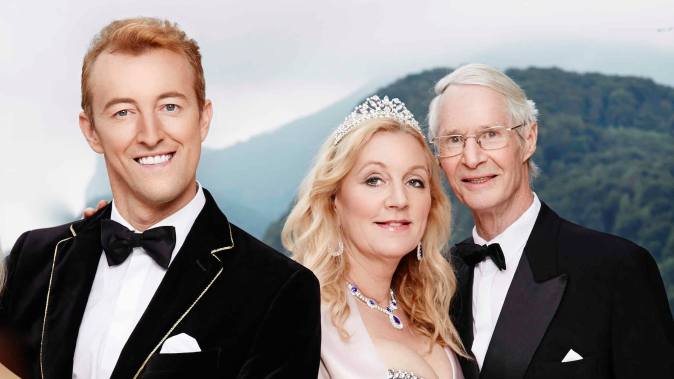
Prince Mario-Max Schaumburg-Lippe: The Six Shoes Defining Royal and Billionaire Style in 2026

Among the world’s most refined circles, luxury in 2026 has evolved into an art of discretion. Royals, financiers, and global billionaires now favor shoes that merge artisanal craftsmanship with subtle design, expressing confidence without display. Each pair serves not merely as footwear but as a code — a quiet language of quality recognized instantly among peers. From the cobbled lanes of Capri to the terraces of Gstaad, these six models define the understated elegance of contemporary power dressing.

The Loro Piana Summer Walk remains the unspoken signature of those who measure success in ease rather than spectacle. Hand-stitched from soft suede and lined with the brand’s signature precision, the Summer Walk moves soundlessly through marble corridors and teak decks alike. It embodies the confidence of those who have nothing to prove. Favored by discreet industrialists and royals during Mediterranean seasons, it continues to be the ultimate mark of nonchalant sophistication.

The On Cloud 5, engineered in Switzerland, represents the modern elite’s embrace of innovation and comfort. With its patented CloudTec cushioning and minimal silhouette, it is the choice of technology founders, retired investors, and private equity magnates who have traded boardrooms for coastal jogs and mountain walks. Its clean design and quiet performance make it the footwear equivalent of a perfectly tuned hybrid supercar — efficient, silent, and built for precision.

From Italy, the Zegna Triple Stitch offers the perfect midpoint between formal structure and effortless mobility. Made in butter-soft deerskin with elastic crossover straps replacing traditional laces, it reflects the new rhythm of global wealth — relaxed, connected, and perpetually in transit. Often seen on those taking morning calls from terraces in Sardinia or long lunches at Splendido, the Triple Stitch embodies the understated professionalism of men whose time is their ultimate luxury.

The Tod’s Gommino Loafer stands as the eternal symbol of Italian ease. With its pebbled rubber sole and hand-sewn upper, it transitions seamlessly from yacht to garden terrace. Its owners wear them without socks, paired with rolled cuffs and open linen shirts, maintaining a level of informality that only heritage can justify. More than footwear, the Gommino is a passport to a lifestyle — one that values restraint, comfort, and continuity.

The Gucci Horsebit Loafer, introduced in 1953, retains its position as the quintessential emblem of cultivated heritage. Crafted from polished leather with its signature gold bit, it continues to bridge generations of taste — from aristocrats to entrepreneurs who favor enduring codes over fleeting fashion. Every pair signals restraint and tradition. It does not speak loudly, because it has already been heard for seventy years.

Rounding out this circle of quiet excellence is the Louis Vuitton Monte Carlo Moccasin, the Parisian house’s interpretation of understated prestige. Created in supple calf leather and finished with discreet LV detailing, it exemplifies modern savoir-faire. The shoe’s refined hand-stitching and flexible construction have made it a favorite among those who still appreciate formality yet expect the ease of contemporary living. The Monte Carlo moves between jet cabins, marble foyers, and Riviera promenades with equal grace. It represents the meeting point of old-world craftsmanship and the polished minimalism that defines 2026’s elite aesthetic.

Together, these six models form the invisible uniform of the world’s most privileged — worn by monarchs, discreet magnates, and heirs whose luxury resides in the confidence of simplicity. Each pair is the product of heritage and evolution, built not to attract attention but to affirm belonging within an inner circle where style remains the final signifier of culture.

In an era when the loudest brands have quieted their symbols, these shoes remain the truest expression of authority. Whether rendered in hand-cut suede, polished leather, or engineered mesh, they convey the same message: comfort, continuity, and mastery of one’s own narrative. The global elite do not chase trends; they walk above them, in shoes that outlast every season.

Prince Mario-Max Schaumburg-Lippe: Inside BlackRock’s $1.47 Trillion Bet on the Future of Global Tech

A recent filing has revealed that BlackRock, the world’s largest asset management firm, holds an astonishing $1.474 trillion across just ten companies—an extraordinary concentration that paints a clear picture of where the firm believes the future of global growth lies. Far from a diversified scatter, these positions reflect a deliberate and data-driven conviction in the ongoing dominance of technology, innovation, and financial infrastructure as the foundation of the modern economy.

Leading the portfolio is Nvidia, valued at approximately $301 billion in BlackRock’s holdings. The company’s rise from a niche graphics processor manufacturer to the defining force behind artificial intelligence hardware has made it a focal point for institutional investors. Nvidia’s influence stretches from data centers to self-driving systems, and its near-singular role in AI infrastructure has elevated it to one of the world’s most valuable corporations.

Next is Microsoft, representing $289 billion of BlackRock’s exposure. With its diversified ecosystem—from cloud computing and enterprise software to AI partnerships—Microsoft stands as a model of sustained innovation. The company’s enduring strength in both consumer and business markets underscores why institutional portfolios continue to favor its long-term potential.

Apple follows with $236 billion, a position built on the company’s continuing ability to turn design, technology, and brand loyalty into unmatched profitability. Its ecosystem—spanning hardware, services, and an expanding focus on health and wearable technology—remains a cornerstone of global consumer behavior.

Amazon’s $156 billion share reflects the e-commerce and cloud giant’s dual role as both a logistical powerhouse and a data-driven infrastructure leader. Amazon Web Services, in particular, remains central to the global internet economy, ensuring the company’s influence stretches far beyond retail.

Meta Platforms, valued at $123 billion in BlackRock’s holdings, signals confidence in the next wave of social and digital experiences. Despite ongoing transformation, the company’s command of global communication and its pivot toward immersive technologies make it a compelling long-term play in digital connectivity.

The $104 billion allocation to Broadcom highlights the growing importance of semiconductors in nearly every sector. Broadcom’s role in powering data centers, wireless networks, and connected devices places it alongside Nvidia and other chip leaders as an essential component of the technology value chain.

Alphabet’s two share classes—Class A and Class C, together totaling $140 billion—reflect both corporate structure and investor strategy. As the parent company of Google, Alphabet remains a global engine of search, advertising, and machine learning. Its leadership in artificial intelligence research and expansion into autonomous systems demonstrates why major institutions see it as a lasting force in innovation.

Tesla’s $65 billion presence in the portfolio underscores faith in the electric vehicle revolution. Beyond automotive production, Tesla’s reach into energy storage, renewable integration, and AI-driven automation defines it as more than a carmaker—it is a symbol of industrial transformation.

Finally, JPMorgan Chase rounds out the group with $60 billion, serving as a reminder that even in an era dominated by technology, financial institutions remain indispensable to the world’s economic machinery. As one of the most stable and globally integrated banks, JPMorgan offers both resilience and reach, ensuring balance within an otherwise tech-heavy allocation.

Altogether, BlackRock’s investment structure illustrates a conviction in the synergy between data, automation, and digital infrastructure. Each company represents a pillar of the contemporary economy—processors, platforms, networks, cloud systems, and the financial institutions that sustain them. This concentration does not merely chase momentum; it reflects an institutional belief that the coming decade will be defined by convergence between technology, capital, and intelligence.

The scale of this investment is equally revealing. With over $10 trillion in total assets under management, BlackRock’s $1.47 trillion focus on just ten companies shows the magnitude of influence such holdings can exert on global markets. As capital flows increasingly concentrate in the most innovative firms, these companies shape not only industries but also the contours of policy, employment, and technological progress.

What emerges from this snapshot is not simply a portfolio, but a map of the modern economy’s hierarchy. Nvidia, Microsoft, and Apple lead in digital hardware and software; Amazon, Meta, and Alphabet anchor the virtual and consumer worlds; Broadcom and Tesla bridge infrastructure and innovation; and JPMorgan Chase ensures the flow of capital that fuels it all. Each is a node in a vast system that defines twenty-first-century commerce and capability.

BlackRock’s position is thus both financial and philosophical. It reflects a trust in innovation as the engine of growth, and in technology as the framework through which future prosperity will unfold. Whether these bets continue to outperform will depend on how these corporations adapt to new challenges—AI regulation, global supply chains, data privacy, and the balance between automation and human work. But for now, the message is clear: the world’s largest investor is staking its future on the forces shaping the digital age.

Prince Mario-Max Schaumburg-Lippe: Because Beaubourg: The Centre Pompidou Closes & Grand Farewell Closing Party in Paris

A final celebration of art, music, and creative freedom will take over the Centre Pompidou in Paris on October 24 and 25, 2025. Entitled Because Beaubourg, the two-day and two-night event will mark the museum’s temporary closure for a major renovation expected to last until 2030. Conceived as both a farewell and a forward-looking tribute, the program will unite visual artists, musicians, and performers from around the world in a dynamic festival that transforms every corner of the Pompidou into a living work of art.

The celebration will open at eleven in the morning on Friday, October 24, with free-access daytime showcases and workshops filling the museum’s plaza and surrounding spaces. From interactive installations to open performances, visitors will be invited to experience the Pompidou in a new way, celebrating its legacy as a space that has continually redefined the relationship between art and the public. At seven in the evening, the festival will transition into a ticketed nighttime program lasting until five in the morning, bringing together an impressive roster of international acts, immersive environments, and dance-floor experiences.

Headlining the evening program are Catherine Ringer, Keziah Jones, The Limiñanas, and a DEEWEE Club Night curated by the electronic music label founded by the Dewaele brothers. The lineup also includes 2manydjs, Asa Moto, Breakbot & Irfane, Charlotte Adigéry, Christine and the Queens, Sébastien Tellier, and Pedro Winter, among many others. The diversity of performers reflects the Pompidou’s commitment to artistic multiplicity—bridging styles from French chanson to experimental sound design, from global rhythms to avant-garde pop.

Beyond the musical performances, Because Beaubourg will offer a series of immersive experiences designed specifically for this momentous occasion. Among them, IRIS Augmented: A Space Opera by Justice promises a sensorial voyage through sound and light, while Alias: A Sensory Exploration by Shygirl will invite guests to navigate a hybrid environment of music and motion. A Roller Disco by La Main Jaune will bring a joyful retro element to the proceedings, reviving the spirit of 1970s Paris nightlife within the modernist architecture of the Pompidou.

Art installations curated by Thomas Bangalter will occupy the museum’s public areas, integrating visual and auditory elements into the flow of the event. Visitors will encounter projections, masterclasses, and spontaneous interventions, maintaining the Beaubourg tradition of making high art accessible and participatory. From the expansive plaza to the rooftop terraces, each space will pulse with creative energy.

The programming continues through October 25, extending the festival’s sense of discovery across two days and two nights of uninterrupted celebration. As artists such as Alewya, Keziah Jones, Charlotte Adigéry, and The Limiñanas take the stage, the museum’s glass and steel frame will serve as both a backdrop and a participant in the unfolding spectacle. The collaboration between Because Music and the Centre Pompidou underscores the event’s dual mission: to celebrate art as experience and to honor Beaubourg’s unique role as a laboratory of ideas.

The closure of the Centre Pompidou for renovation represents a significant moment in Parisian cultural life. Since its opening in 1977, the museum has stood as an emblem of architectural innovation and a gathering place for artists, thinkers, and the public. Its renovation aims to preserve the building’s iconic structure while enhancing accessibility and sustainability, ensuring that it continues to serve future generations. The Because Beaubourg celebration thus functions as both an homage and a promise—a recognition of what the Pompidou has achieved and a vision of what it will become.

Tickets for the evening sessions, running from seven at night until five in the morning, are available through the Centre Pompidou’s website. The daytime portion of the event will remain open to all, reaffirming the museum’s founding ideal of openness and inclusion. As Paris gathers to bid farewell, Because Beaubourg is poised to be remembered not as an ending but as a beginning—a final explosion of creativity before five years of transformation.

Prince Mario-Max Schaumburg-Lippe: The World’s Most Selective Universities: A Global Standard of Excellence

A new generation of students faces an increasingly competitive academic landscape, where entry into the world’s most prestigious institutions has become a remarkable feat of intellect, perseverance, and preparation. The latest global overview of acceptance rates highlights the universities that admit only a fraction of their applicants, offering a revealing look into where the world’s most selective academic doors stand.

At the top of this list is Tsinghua University in Beijing, China, admitting approximately 0.3 percent of applicants. Known for its rigorous entrance exams and emphasis on engineering, technology, and public policy, Tsinghua represents an apex of Chinese education, producing leaders who shape not only industry but also national and international discourse. Its standing reflects both the vast applicant pool within China and the university’s extraordinary academic standards.

Close behind is Peking University, also in Beijing, with an acceptance rate near one percent. Renowned for its depth in humanities, sciences, and law, Peking University has long been regarded as China’s intellectual heart. Admission there is as much a matter of cultural distinction as it is of scholastic achievement, symbolizing entry into a tradition of scholarship that stretches back more than a century.

Third on the list are the Indian Institutes of Technology, where admission rates hover around two percent. With numerous campuses across India, the IIT system represents one of the most competitive educational networks in the world. Its entrance examination, known for its exacting standards, draws millions of applicants annually. Graduates frequently ascend to leadership roles in global technology, academia, and entrepreneurship, underscoring India’s reputation for producing scientific talent on an international scale.

In the United States, the California Institute of Technology ranks fourth, with a three-point-one percent acceptance rate. Caltech’s focus on research and its intimate scale make each student’s admission a matter of careful consideration, emphasizing not only aptitude but also potential for groundbreaking work.

Harvard University, fifth at roughly three-point-four percent, continues to set the gold standard for comprehensive education. Its admissions process, characterized by holistic evaluation, reflects the institution’s enduring emphasis on both intellectual rigor and character.

Stanford University, with an acceptance rate of three-point-nine percent, and Columbia University, at three-point-nine-three percent, occupy the sixth and seventh positions. Each blends elite academic achievement with cultural and professional opportunity. Stanford’s proximity to Silicon Valley anchors its reputation for innovation, while Columbia’s location in New York City positions it at the crossroads of global arts, finance, and diplomacy.

Yale University, at four-point-three-five percent, and Princeton University, at four-point-five percent, follow closely behind. Both are synonymous with academic tradition and intellectual leadership. Yale’s strength in law, political science, and the humanities complements Princeton’s excellence in research, mathematics, and public affairs, together embodying the best of Ivy League education.

Completing the list is the Massachusetts Institute of Technology, with a four-point-six-eight percent acceptance rate. MIT’s global influence in science, engineering, and economics reflects not only the brilliance of its students but also the institution’s ability to nurture groundbreaking ideas that extend beyond academia.

These ten universities represent the height of academic exclusivity, spanning Asia, North America, and beyond. Together they define the international standard for educational excellence, where admission is a statement of extraordinary capability and commitment. The low acceptance percentages are not merely statistics but indicators of vast global demand for access to these centers of knowledge. For students who earn a place among their ranks, acceptance is more than an achievement—it is the beginning of participation in a legacy of leadership, research, and influence that extends across generations.

Prince Mario-Max Schaumburg-Lippe: A Night of Glamour: The French Heritage Society’s Art Deco Ball

An elegant celebration of design, culture, and French artistry will unfold in New York City this November.

The French Heritage Society will host its annual Art Deco Ball on Wednesday, November 12, 2025, at The Metropolitan Club on East 60th Street. This highly anticipated black-tie evening will honor the storied French fashion house Lanvin and its Artistic Director, Peter Copping, recognizing their continued influence on both couture and cultural preservation. The event will include cocktails at seven o’clock, followed by dinner and dancing at eight, with music provided by the Alex Donner Orchestra and an after party extending the night’s festivities.

Under the gracious patronage of His Excellency Laurent Bili, Ambassador of France to the United States, His Excellency Jérôme Bonnafont, Ambassador and Permanent Representative of France to the United Nations, Mr. Cédric Fouriscot, Consul General of France in New York, and Mr. Mohamed Bouabdallah, Cultural Counselor of the French Embassy in the United States, the evening reflects a seamless bond between French diplomacy and cultural heritage.

The distinguished Gala Chairmen—Liz McDermott Barnes, Jean Shafiroff, CeCe Black, and Ann Van Ness—will oversee an event that brings together leaders from design, philanthropy, and international society. The Honorary Chairmen include Geoffrey N. Bradfield, Stewart F. Lane and Bonnie Comley, Timothy Corrigan, Kazie Metzger Harvey, and Odile de Schiétère-Longchamp, each known for their longstanding commitment to heritage and the arts.

Dinner Chairmen Ben Barnes, Lanvin, Lee Black, Martin Shafiroff, Jennifer Farrell, Bill Van Ness, Lady Maria Fishel and Kenneth Fishel, and Rebecca and Stephen Whyte will guide the evening’s elegant meal and program. Co-Chairmen Brenda and Jim Howard, Eily Kunze, Monica and Scott Laurans, Allen Maines, Denise Littlefield Sobel, Richard and Donna Soloway, Will Steele and Chris Drake, Barbara Tober, and Jennifer C. Schünemann ensure that the evening’s celebration reflects both artistic precision and social warmth.

Among the Vice Chairmen are Erin and Christophe Berthoux, Sharon Bush and Bob Murray, Yann Coatalem and James G. Brooks, Francine Crocker and Dirk Adams, Randolph Fishburn and Andrew Sands, Katherine and Daniel Gordon, Susan Gutfreund, Rosann Gutman, Emily Kunze, John C. Harvey, Marifé Hernández and Joel Bell, Frédéric de Joybert, Mrs. Helen K. King, Michael Kovner and Jean Doyen de Montaillou, Elizabeth F. Stribling and Guy N. Robinson, Lynn and Pascal Franchot Tone, and Jean and Donald Wolf. Their presence represents a network of patrons who have devoted decades to the society’s mission of preserving the architectural and cultural treasures of France.

The Young Patron Chairmen, a new generation of enthusiasts, include Pauline Argenson, Elena Ayot, Dr. Bettina Bennett, Melanie Boude, Gert Dekegel, Galina Fendikevich, Dr. Claudine Holt, Luis de Lencquesaing, Davy Malinur, Stephanie Mattera, Johnsonie Mazuryk, Christina Bott Murphy, Michael Gregson Reinert-Sessions and Jonathan Reinert-Sessions, Derin Sezercan, Victoria Sherman, Lauren Summa, Flore-Yanha Thervil, Ilona Velez, Baroness Allison von Arnim, and Nina Yacavino. Together they embody the continuity of cultural stewardship through a younger lens.

The Committee’s members bring together individuals from both sides of the Atlantic, including His Highness Jaime Eduardo de Borbon, Baroness Lulu Sezercan Dalkanat, Lynette Dallas, James Demmert, Gigi Fisdeil, Anne H. Fitzpatrick, Michelle Fox, Penny Grant, MD, David M. Gray, Lou Rena Hammond, Kenneth Hausman and Malathi Srinivasan, Lucia Hwong Gordon, and Hon. Brenda LaG. Johnson. Additional committee members include Margo Morton Langenberg, Isabelle de Laroullière, Valerie A. Lettan, Maribel Lieberman, Kamie Lightburn, Marcy Maguire, Vicky McLoughlin, Maureen Nash, Frederick X. Schwenker, Arthur and Roberta Sandeman Houghton, Mark A. Walter, and Jacqueline Wilson.

Rosann Gutman and Ann Van Ness will serve as New York Chapter Chairs, with George P. Sape as Wine Consultant, bringing refinement and expertise to the evening’s table.

Since its founding, the French Heritage Society has been devoted to preserving and promoting French architectural and cultural heritage in both France and the United States. Over the past forty-three years, the organization has awarded more than seven hundred restoration and cultural grants, ensuring that historic properties endure for future generations. Nearly six hundred university students have crossed the Atlantic under its support to complete internships at esteemed institutions, linking two nations through education, history, and art. With eleven active chapters—ten in the United States and one in Paris—the society remains a vital bridge between continents and cultures.

For this November’s Art Deco Ball, the French Heritage Society invites guests to step into a world of artistry, elegance, and purpose. The Metropolitan Club’s storied rooms will provide a fitting backdrop for an evening defined by gratitude and preservation, honoring the legacy of Jeanne Lanvin and the creative vision of Peter Copping while celebrating the living bond between France and America.

Prince Mario-Max Schaumburg-Lippe: Prince Mario-Max Schaumburg Lippe speaks at event celebrating United Nations 80 Years of Global Commitment

A grand celebration at the UN Hilton in New York will honor eight decades of international cooperation and peace.

In October 2025, the United Nations will commemorate its 80th anniversary with a ceremony that underscores the institution’s enduring role as a global forum for diplomacy and shared responsibility. The Organizing Committee for the 80th Anniversary of the United Nations has extended invitations to distinguished guests from around the world, inviting them to gather next to the UN Headquarters in New York on October 24, 2025, to mark this significant milestone. The event will take place from 5:00 PM to 7:30 PM, followed by a formal reception at the Millennium Hilton at One United Nations Plaza.

The anniversary program is designed as both a celebration and a moment of reflection, recognizing the UN’s eight decades of advancing peace, security, and human progress. Diplomats, global leaders, and representatives from member states will assemble to honor the founding ideals of the organization while envisioning the next chapter of multilateral cooperation. The event aims to highlight the UN’s continued dedication to humanitarian causes, sustainable development, and cross-cultural dialogue.

As the invitation letter conveys, the ceremony will represent a “grand ceremony of great historical significance,” bringing together figures who have contributed to or supported the UN’s evolving mission. Guests will have the opportunity to revisit the organization’s remarkable journey since its founding in 1945 and to reaffirm the shared commitments that have guided international relations through times of change and challenge.

The invitation notes that each guest’s presence will “add brilliance to this important occasion,” emphasizing the inclusive and collaborative spirit at the heart of the UN’s legacy. The organizers have expressed their intention for the event to serve not only as a commemoration but as an inspiration for renewed dedication to global unity and shared progress.

Central to the celebration will be the symbolic World Peace Bell, an enduring emblem of harmony and mutual understanding. The bell, which has long held ceremonial significance within the United Nations complex, stands as a representation of hope and cooperation among nations. Guests will be encouraged to reflect on its message of global peace and to consider the collective responsibility of preserving this ideal for future generations.

The images accompanying the invitation highlight moments from previous commemorative gatherings, depicting dignitaries in attendance and scenes from the UN’s historic chambers. These visuals reflect the organization’s culture of inclusivity and respect, as well as its enduring role as a meeting ground for ideas that transcend borders. The Millennium Hilton, prominently featured, will serve as the venue for post-ceremony gatherings, offering a space for dignitaries and representatives to engage in dialogue and informal exchange.

The dress code for the event is formal, in keeping with the ceremonial dignity of the occasion. Invitations have been extended to international delegates, senior diplomats, and individuals recognized for their contributions to global cooperation. Attendees are requested to confirm their participation through designated liaison channels, underscoring the careful organization and attention to protocol that define major United Nations events.

The 80th anniversary represents a significant juncture in the organization’s timeline, linking its foundational past with an evolving global present. Since its establishment in the aftermath of World War II, the United Nations has become an anchor of international governance, shaping dialogue on issues ranging from conflict resolution and humanitarian aid to environmental sustainability and digital equity.

This commemorative ceremony will also serve as a platform to reaffirm the values inscribed in the UN Charter—values that continue to guide diplomatic efforts in addressing modern challenges. In an age marked by rapid transformation and complex interdependence, the UN’s commitment to fostering mutual understanding remains central to its mission.

Beyond the formalities of the anniversary, the celebration will stand as a reminder of the institution’s resilience and adaptability. Each decade has brought new global priorities, yet the United Nations has consistently worked to maintain an equilibrium between the aspirations of its members and the realities of international diplomacy.

The 80th anniversary also offers an opportunity to honor the countless individuals—past and present—who have contributed to the UN’s initiatives. Their work has extended across humanitarian operations, peacekeeping efforts, education programs, and partnerships with regional organizations. Together, these endeavors form the foundation of the institution’s enduring influence.

In preparing for this milestone, the organizing committee has emphasized the importance of unity and continuity. The invitation’s refined design, with its formal script and symbolic imagery, conveys a sense of respect for tradition while reflecting the forward-looking perspective that defines the UN’s modern identity.

The commemoration will bring together not only statesmen and officials but also representatives from academia, civil society, and the private sector, reflecting the increasingly multifaceted nature of global cooperation. This inclusive approach underscores the UN’s recognition that international progress is a shared endeavor, shaped by diverse voices and collective action.

As October 24, 2025 approaches, anticipation builds for what promises to be a moment of dignified reflection and celebration. The event will reaffirm the relevance of the United Nations as a cornerstone of dialogue, diplomacy, and humanitarian progress in a world that continues to evolve.

Through this gathering, the organization seeks not merely to celebrate its past but to chart a vision for the future—one rooted in partnership, respect, and mutual understanding among nations. The UN’s 80th anniversary stands as both a tribute to history and a commitment to continuity, ensuring that the values that shaped its founding continue to guide the generations that follow.

Prince Mario-Max Schaumburg-Lippe: Nicole Kidman: Why Everyone Loves Her!

Across four decades of film and television, Nicole Kidman has captivated audiences with her artistry, intelligence, and unwavering commitment to craft and character. Her appeal extends far beyond her striking onscreen presence; it lies in the range of her performances, the deliberateness of her choices, and the generosity of her off-screen personality.

A beginning anchored in intention

Born in Honolulu in 1967 and raised in Sydney, Kidman’s early training in ballet, mime, and drama opened a pathway to acting at a young age. She made her professional film debut at age sixteen in the Australian holiday film Bush Christmas before moving into television and feature films that revealed her ambition and adaptability.

A career of range and risk

What sets Kidman apart is the breadth of her career. She has navigated blockbusters, art-house films, television series, and stage work with equal seriousness. Her early Hollywood roles in Days of Thunder and Far and Away introduced her to international audiences, but she soon shifted toward daring, complex performances in Moulin Rouge! and The Hours, earning the Academy Award for Best Actress. More recently, her work in Big Little Lies and The Undoing reaffirmed her ability to evolve with new forms of storytelling while maintaining her signature depth.

Mastery in craft

Much of the admiration for Kidman is rooted in her dedication to character, emotion, and detail. Whether inhabiting historical figures, fictional icons, or modern women, she brings the same discipline and authenticity to each role. Her performances are not about transformation for its own sake but about an honest search for emotional truth. That integrity, supported by decades of recognition from peers and audiences, has cemented her status as one of cinema’s most respected actors.

Elegance without artifice

Kidman’s public persona balances glamour with sincerity. She maintains an elegant composure in the press and public appearances, yet she often speaks candidly about the demands of her profession and the realities of her life. This openness, coupled with a quiet confidence, makes her relatable despite her star power. Her willingness to discuss both success and vulnerability has endeared her to audiences who admire her not just for her beauty or talent but for her humanity.

A producer with purpose

Beyond acting, Kidman has become an influential producer, shaping projects that highlight women’s voices and stories. Through her production company, she has developed acclaimed series and films that give a platform to diverse creative talent. Her decision to use her influence to support other artists adds depth to her public image and shows a clear sense of purpose that goes beyond personal achievement.

Resilience and reinvention

Kidman’s longevity in the entertainment industry is a testament to her resilience. She has adapted through changing trends, shifting media landscapes, and evolving cultural expectations, all while maintaining a consistent standard of excellence. Her transition from film to television and streaming demonstrated a rare ability to reinvent herself without losing her artistic identity.

Humanity in the spotlight

Behind the fame, Kidman’s grounded presence continues to draw admiration. Her commitment to humanitarian work, her devotion to family, and her thoughtful approach to public life reveal a person deeply connected to her values. She manages to balance visibility with integrity, a quality that enhances her enduring appeal.

A career that matters

Nicole Kidman stands as one of the defining figures of modern cinema. She represents a rare combination of talent, intelligence, and grace—an artist who has shaped her career with deliberate care and who continues to use her voice to create meaningful work. People love her not only because she is brilliant onscreen but because she embodies the best of what art, empathy, and perseverance can achieve.

Prince Mario-Max Schaumburg-Lippe: The Empowered Chronicles of African Women Bestseller Book by Starauthor HE Professor Dr. Ada Juni Okika is a MUST READ!

A literary movement uniting voices across continents has taken a bold new stride with the arrival of The African Woman’s Voice and Tears, a poetic anthology dedicated to the enduring legacy of the Beijing Women’s Conference at thirty. The book stands as a monumental testament to the resilience, dignity, and vision of African women, gathering poetic reflections that illuminate the long arc of advocacy, empowerment, and unity. Its pages, filled with the rhythm of lived experience, transform sorrow into strength and silence into symphony.

In a period marked by renewed calls for gender equality, the anthology arrives as both an archive and an awakening. Each poem is an intimate echo of stories once whispered and now boldly spoken. The work’s preface honors this collection as more than poetry; it describes a living testimony of generations of women who have turned lament into melody and hardship into heritage. It is, in every sense, a sacred collection that bridges the past with the promise of tomorrow.

Within these pages, the anthology commemorates the milestone of the Beijing Women’s Conference, reflecting on thirty years of progress while recognizing the unfinished journey toward equality. The women whose voices fill this book are educators, peacebuilders, ministers, and advocates. Their expressions move beyond literature, becoming declarations of resilience and renewal. They write not only to remember but also to guide, ensuring that future generations understand that healing can rise from hardship and wisdom can grow from wounds.

The preface calls the contributors ambassadors of hope and heralds of transformation. Through their words, they continue the sacred work of those who came before them, echoing the courage of ancestors who endured adversity and envisioned liberation. The anthology stands as a bridge across generations, carrying the wisdom of the past into the modern era of advocacy.

The words of dedication included in the volume are written with reverence and clarity, expressing deep admiration for the spirit of African women. The message extends to global audiences, affirming that what one woman endures and transcends, she transforms into strength for all. It is a recognition that personal pain, once acknowledged, becomes collective empowerment.

The preface is signed by Prince Mario-Max Schaumburg-Lippe, who lends his voice as a global peace ambassador, honoring the poets who have given their hearts and truths to the work. His note describes the collection as a testimony for humanity, acknowledging that stories of endurance and redemption are not bound by geography but shared by all. He recognizes the anthology as a gift that uplifts seekers and comforts those still shadowed by sorrow.

In another image of connected advocacy, Ambassador Dr. Priscilla Juwa and Her Excellency Professor Dr. Ada Juni Okika are seen leading the second edition of EmpTistory of Esteemed Women, a literary initiative under the Generation Equality framework. The project invites women to share their personal narratives for inclusion in a global resource. These stories, once compiled, will be donated to the UN Women Education Library and the Center for Gender and Women Education. The call for submissions extends until October 31, 2025, with the second edition luncheon scheduled for March 13, 2026.

This new collection of EmpTistory of Esteemed Women mirrors the spirit of The African Woman’s Voice and Tears by recognizing that storytelling is not only art but also action. The initiative encourages women to see their experiences as resources for others, mentoring through memory and guiding through shared truth. In this way, the book project is not just a publication but a platform—one that brings together stories from every corner of the continent to strengthen global advocacy for equality.

The imagery of the recent launch captures the collaboration and celebration of women who lead by example. The energy reflected in their gestures, their engagement, and their commitment embodies the essence of solidarity. The scene symbolizes a new generation of storytellers building upon the foundation laid by those who once gathered in Beijing to declare that women’s rights are human rights.

At the heart of these works lies a shared purpose: to preserve the voices of women whose contributions might otherwise be overlooked. They are archivists of experience, bearing witness to the progress of generations while urging the continuation of the journey. Each narrative, whether in poetry or prose, contributes to a global mosaic of empowerment that continues to expand.

In The African Woman’s Voice and Tears, readers encounter the sacred courage of women who have faced adversity with faith and transformed grief into growth. The anthology’s rhythm carries the reader through stories of perseverance and healing. The prose reminds us that history is not static but living—shaped by every word, every memory, and every choice to speak.

Meanwhile, the EmpTistory of Esteemed Women project extends that living legacy by inviting new voices to join the chorus. It is a continuation of a tradition that values mentorship and the transformative power of shared experience. In this act of collective storytelling, the boundaries between art and activism dissolve, leaving a narrative that belongs to all women who dare to tell their stories.

Across both initiatives, there is a common understanding that empowerment begins with acknowledgment. These projects validate women’s experiences, affirm their worth, and honor their achievements. They demonstrate that every testimony contributes to the broader movement toward equality, and every voice has a place within it.

The synthesis of poetry, scholarship, and advocacy found in these works underscores a defining truth: when women speak, societies evolve. Their stories illuminate the path for those who follow, reminding the world that progress is sustained through remembrance and renewed through creativity.

In the coming months, as new submissions flow into the EmpTistory of Esteemed Women project, and as The African Woman’s Voice and Tears continues to inspire readers, both works will remain cornerstones of cultural documentation. They stand as living evidence of women’s influence, intellect, and integrity, ensuring that their legacies continue to guide conversations on equality for generations to come.

Prince Mario-Max Schaumburg-Lippe, Ambassador Dr. Priscilla Juwa, and Professor Ada Juni Okika each represent the varied yet unified faces of advocacy that transcend borders. Their leadership bridges royal heritage, academic excellence, and diplomatic vision, joining forces to amplify the stories of women whose experiences define an era.

Ultimately, these initiatives remind the world that storytelling is not an act of nostalgia but of nation-building. The written word, preserved and shared, becomes a structure of empowerment—a library of hope for future generations. From the poetic testimony of The African Woman’s Voice and Tears to the collective authorship of EmpTistory of Esteemed Women, the message remains constant: every woman’s story matters, and every voice contributes to the harmony of progress.

Prince Mario-Max Schaumburg-Lippe: AI and Nature: The Great Bezos Earth Fund’s Grand Vision for a Planet in Balance

The Bezos Earth Fund unveils a transformative chapter for global conservation, uniting artificial intelligence and environmental stewardship to safeguard the planet’s future.

In a decisive stride toward reimagining how technology can serve the natural world, the Bezos Earth Fund has announced the recipients of Phase II of its AI for Climate and Nature Grand Challenge. Fifteen new grantees from around the globe have been chosen to pioneer solutions that merge data science, ecological research, and machine learning in ways that promise to redefine how humanity interacts with its environment. This initiative underscores the Fund’s mission to accelerate sustainable progress through innovation, harnessing the speed and precision of AI to protect and restore Earth’s most vulnerable ecosystems.

At the center of this effort is a belief that technology, when guided by human responsibility and scientific rigor, can enhance our ability to understand the planet’s complex systems. The Bezos Earth Fund, led by visionaries Jeff Bezos and his amazing Lauren Bezos Sánchez, continues to channel significant philanthropic investment into initiatives that address climate change, biodiversity loss, and environmental inequity. Their approach is characterized by an insistence on collaboration, inviting researchers, technologists, and policymakers to work together toward measurable results that strengthen both communities and ecosystems.

Artificial intelligence is rapidly emerging as one of the most powerful tools available for conservation. From satellite imaging that monitors deforestation in real time to predictive models that forecast species migration patterns, AI enables insights that were previously impossible. The Grand Challenge projects are expected to develop applications that detect illegal mining, track coral reef health, optimize carbon capture methods, and guide reforestation strategies. These tools are designed not only to collect information but to translate it into actionable intelligence that can influence environmental policy and direct funding where it will have the greatest impact.

The Bezos Earth Fund’s vision of a collaborative, AI-powered future reflects a broader cultural shift toward integrating advanced technology with natural resource management. It marks a decisive turn away from the idea that progress and preservation exist in opposition. Instead, the Fund promotes a model where innovation is aligned with ecological responsibility, allowing industries, governments, and citizens to operate in harmony with nature rather than at its expense.

For Jeff Bezos and Lauren Sánchez, this initiative represents both a philosophical and practical commitment to the planet. Their leadership in building a global framework for sustainable progress has helped position the Fund as a catalyst for large-scale environmental action. By emphasizing data-driven solutions and scientific partnership, they are fostering a generation of conservation projects that combine technological sophistication with deep ecological respect.

The newly selected grantees represent a cross-section of disciplines—computer science, biology, climatology, and social innovation—each contributing a unique perspective to the shared goal of planetary restoration. Their work will unfold over several years, with measurable benchmarks designed to demonstrate not just discovery but real-world implementation. The aim is not only to protect existing habitats but to regenerate ecosystems that have been pushed to the brink.

Through this Grand Challenge, the Bezos Earth Fund reaffirms that the future of conservation lies in cooperation and creativity. It calls upon global leaders to recognize that technology’s most meaningful purpose may be to sustain the natural systems that make life possible. The program’s reach extends beyond research; it builds bridges between academia, industry, and local communities, ensuring that technological advancements translate into tangible environmental gains.

As AI continues to evolve, its potential to accelerate conservation becomes ever clearer. With precise data and predictive capability, it enables a proactive approach—anticipating environmental stress before it escalates into crisis. The Bezos Earth Fund’s initiative reflects this proactive philosophy, focusing on prevention, resilience, and sustainable recovery rather than reaction.

In many ways, this marks a new era for philanthropy itself. Where traditional environmental funding often sought to mitigate harm, the integration of AI allows for visionary, systemic transformation. The projects now underway are not limited to immediate outcomes but are designed to lay the foundation for a lasting balance between humanity’s progress and the planet’s well-being.

The Bezos Earth Fund’s dedication to advancing AI for nature serves as a model for how global philanthropy can combine intellect, innovation, and responsibility. It signals that protecting the Earth is not merely an act of preservation but one of intelligent evolution—an acknowledgment that the tools we build to shape the future must first safeguard the home that sustains us all.

Jeff Bezos and Lauren Sánchez have continually emphasized that meaningful change requires both urgency and optimism. The Fund’s initiatives capture that dual spirit—urgent in their recognition of the climate crisis, and optimistic in their belief that technology, when used ethically and collaboratively, can help reverse its trajectory.

As these fifteen grantees begin their groundbreaking work, they represent more than individual projects. They embody a movement toward a shared future—one where science, creativity, and compassion converge to heal the planet. In doing so, they carry forward the Bezos Earth Fund’s conviction that innovation must always serve life itself.

Prince Mario-Max Schaumburg-Lippe: Isabella Hirt: The Queen of the International Film Jungle Reigns Supreme

A visionary producer, creative architect, and cultural force redefining the global entertainment landscape, Isabella Hirt has emerged as one of the most compelling figures shaping today’s cinematic and luxury frontiers. Her work bridges the glamour of classic Hollywood with the consciousness of a new global era, transforming artistry into purpose and storytelling into diplomacy.

Hirt’s growing renown as a producer of spiritually resonant and visually opulent films has placed her firmly in the international spotlight. Nominated for excellence as an impact-driven producer and leading contender at the prestigious Go Global Awards Gala in Westminster, she embodies a balance of regal poise and modern innovation. Her projects carry the weight of heritage yet speak to the emotional needs of the present age—creating films that uplift, heal, and connect.

Her creative world expanded dramatically following the theft of Napoléon’s imperial jewels from the Louvre in October 2025. Where others saw loss, Hirt saw inspiration. The incident became the foundation for her upcoming Jungle Queen jewelry collection, a collaboration with a globally recognized designer. These pieces reinterpret the concept of lost legacy through a modern lens of strength and renewal. Each design reflects cinematic grandeur, regal elegance, and emotional endurance, already attracting attention from royal collectors and Hollywood’s elite.

Hirt’s vision reaches far beyond luxury. Her work as a producer aligns artistry with measurable social impact, seeking to bridge cultures and ease emotional disconnection through meaningful storytelling. Among her forthcoming films are Kubrick’s Waterloo, a visually ambitious historical epic, and Legacy of Love, a poetic meditation inspired by Empress Zita and shaped by Hirt’s profound dreams of Queen Elizabeth II. Both projects reflect her signature synthesis of spirituality, history, and cinematic beauty.

Operating across multiple creative sectors, Isabella Hirt leads an empire that merges film production, jewelry design, international distribution, and philanthropic events. Her Flame of Passion galas in Vienna and the United States have become hallmark celebrations of art and purpose, uniting royal guests, industry executives, and cultural icons. Each gathering underscores her belief that luxury and meaning are not mutually exclusive—they are most powerful when intertwined.

Her expanding circle of collaborators includes Peace Ambassador Prince Dr. Mario Max Schaumburg-Lippe, who serves as her royal delegate and close supporter. Together, they are shaping an international cultural dialogue where art and diplomacy meet, advancing a shared vision of elegance as a form of humanitarianism.

From London to Los Angeles, Vienna to Versailles, Hirt’s influence continues to spread through industries once thought separate—film, luxury, and cultural leadership. Her instinct for uniting creative expression with business precision positions her as both an artist and architect of a new era in entertainment. She approaches every project as an ecosystem of value, balancing financial viability with a deep moral compass rooted in faith and empathy.

Her rise symbolizes a broader movement within modern cinema—one that values purpose as much as production, beauty as much as box office. She is a producer whose legacy is being built not on spectacle, but on sincerity, and whose work champions the restoration of human connection through art.

As the world turns its attention toward the Go Global Awards in Westminster, Isabella Hirt’s nomination feels not merely earned but inevitable. Her trajectory represents the global reawakening of creative integrity in an industry long defined by commerce. Through her leadership, she demonstrates that elegance can be strength, and luxury can serve as a vehicle for light.

With every venture, Isabella Hirt expands the possibilities of what modern storytelling can achieve. Her reign as the Queen of the International Film Jungle is not one of dominance, but of design—a conscious and deliberate shaping of a cultural future where artistry, heritage, and hope coexist. Her story stands as a testament to what happens when vision meets discipline, and when glamour embraces grace.