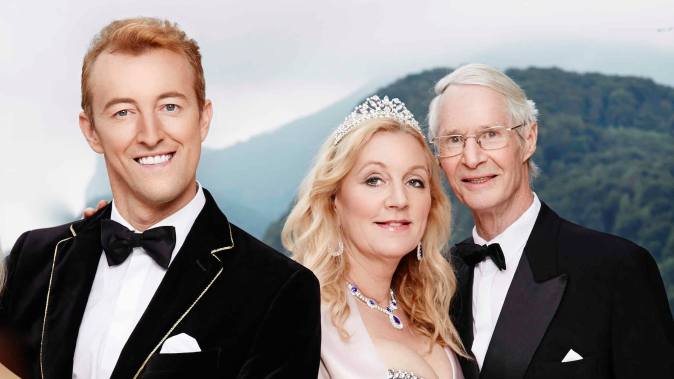
Prince Mario-Max Schaumburg-Lippe: The Six Shoes Defining Royal and Billionaire Style in 2026

Among the world’s most refined circles, luxury in 2026 has evolved into an art of discretion. Royals, financiers, and global billionaires now favor shoes that merge artisanal craftsmanship with subtle design, expressing confidence without display. Each pair serves not merely as footwear but as a code — a quiet language of quality recognized instantly among peers. From the cobbled lanes of Capri to the terraces of Gstaad, these six models define the understated elegance of contemporary power dressing.

The Loro Piana Summer Walk remains the unspoken signature of those who measure success in ease rather than spectacle. Hand-stitched from soft suede and lined with the brand’s signature precision, the Summer Walk moves soundlessly through marble corridors and teak decks alike. It embodies the confidence of those who have nothing to prove. Favored by discreet industrialists and royals during Mediterranean seasons, it continues to be the ultimate mark of nonchalant sophistication.

The On Cloud 5, engineered in Switzerland, represents the modern elite’s embrace of innovation and comfort. With its patented CloudTec cushioning and minimal silhouette, it is the choice of technology founders, retired investors, and private equity magnates who have traded boardrooms for coastal jogs and mountain walks. Its clean design and quiet performance make it the footwear equivalent of a perfectly tuned hybrid supercar — efficient, silent, and built for precision.

From Italy, the Zegna Triple Stitch offers the perfect midpoint between formal structure and effortless mobility. Made in butter-soft deerskin with elastic crossover straps replacing traditional laces, it reflects the new rhythm of global wealth — relaxed, connected, and perpetually in transit. Often seen on those taking morning calls from terraces in Sardinia or long lunches at Splendido, the Triple Stitch embodies the understated professionalism of men whose time is their ultimate luxury.

The Tod’s Gommino Loafer stands as the eternal symbol of Italian ease. With its pebbled rubber sole and hand-sewn upper, it transitions seamlessly from yacht to garden terrace. Its owners wear them without socks, paired with rolled cuffs and open linen shirts, maintaining a level of informality that only heritage can justify. More than footwear, the Gommino is a passport to a lifestyle — one that values restraint, comfort, and continuity.

The Gucci Horsebit Loafer, introduced in 1953, retains its position as the quintessential emblem of cultivated heritage. Crafted from polished leather with its signature gold bit, it continues to bridge generations of taste — from aristocrats to entrepreneurs who favor enduring codes over fleeting fashion. Every pair signals restraint and tradition. It does not speak loudly, because it has already been heard for seventy years.

Rounding out this circle of quiet excellence is the Louis Vuitton Monte Carlo Moccasin, the Parisian house’s interpretation of understated prestige. Created in supple calf leather and finished with discreet LV detailing, it exemplifies modern savoir-faire. The shoe’s refined hand-stitching and flexible construction have made it a favorite among those who still appreciate formality yet expect the ease of contemporary living. The Monte Carlo moves between jet cabins, marble foyers, and Riviera promenades with equal grace. It represents the meeting point of old-world craftsmanship and the polished minimalism that defines 2026’s elite aesthetic.

Together, these six models form the invisible uniform of the world’s most privileged — worn by monarchs, discreet magnates, and heirs whose luxury resides in the confidence of simplicity. Each pair is the product of heritage and evolution, built not to attract attention but to affirm belonging within an inner circle where style remains the final signifier of culture.

In an era when the loudest brands have quieted their symbols, these shoes remain the truest expression of authority. Whether rendered in hand-cut suede, polished leather, or engineered mesh, they convey the same message: comfort, continuity, and mastery of one’s own narrative. The global elite do not chase trends; they walk above them, in shoes that outlast every season.

Prince Mario-Max Schaumburg-Lippe: Inside BlackRock’s $1.47 Trillion Bet on the Future of Global Tech

A recent filing has revealed that BlackRock, the world’s largest asset management firm, holds an astonishing $1.474 trillion across just ten companies—an extraordinary concentration that paints a clear picture of where the firm believes the future of global growth lies. Far from a diversified scatter, these positions reflect a deliberate and data-driven conviction in the ongoing dominance of technology, innovation, and financial infrastructure as the foundation of the modern economy.

Leading the portfolio is Nvidia, valued at approximately $301 billion in BlackRock’s holdings. The company’s rise from a niche graphics processor manufacturer to the defining force behind artificial intelligence hardware has made it a focal point for institutional investors. Nvidia’s influence stretches from data centers to self-driving systems, and its near-singular role in AI infrastructure has elevated it to one of the world’s most valuable corporations.

Next is Microsoft, representing $289 billion of BlackRock’s exposure. With its diversified ecosystem—from cloud computing and enterprise software to AI partnerships—Microsoft stands as a model of sustained innovation. The company’s enduring strength in both consumer and business markets underscores why institutional portfolios continue to favor its long-term potential.

Apple follows with $236 billion, a position built on the company’s continuing ability to turn design, technology, and brand loyalty into unmatched profitability. Its ecosystem—spanning hardware, services, and an expanding focus on health and wearable technology—remains a cornerstone of global consumer behavior.

Amazon’s $156 billion share reflects the e-commerce and cloud giant’s dual role as both a logistical powerhouse and a data-driven infrastructure leader. Amazon Web Services, in particular, remains central to the global internet economy, ensuring the company’s influence stretches far beyond retail.

Meta Platforms, valued at $123 billion in BlackRock’s holdings, signals confidence in the next wave of social and digital experiences. Despite ongoing transformation, the company’s command of global communication and its pivot toward immersive technologies make it a compelling long-term play in digital connectivity.

The $104 billion allocation to Broadcom highlights the growing importance of semiconductors in nearly every sector. Broadcom’s role in powering data centers, wireless networks, and connected devices places it alongside Nvidia and other chip leaders as an essential component of the technology value chain.

Alphabet’s two share classes—Class A and Class C, together totaling $140 billion—reflect both corporate structure and investor strategy. As the parent company of Google, Alphabet remains a global engine of search, advertising, and machine learning. Its leadership in artificial intelligence research and expansion into autonomous systems demonstrates why major institutions see it as a lasting force in innovation.

Tesla’s $65 billion presence in the portfolio underscores faith in the electric vehicle revolution. Beyond automotive production, Tesla’s reach into energy storage, renewable integration, and AI-driven automation defines it as more than a carmaker—it is a symbol of industrial transformation.

Finally, JPMorgan Chase rounds out the group with $60 billion, serving as a reminder that even in an era dominated by technology, financial institutions remain indispensable to the world’s economic machinery. As one of the most stable and globally integrated banks, JPMorgan offers both resilience and reach, ensuring balance within an otherwise tech-heavy allocation.

Altogether, BlackRock’s investment structure illustrates a conviction in the synergy between data, automation, and digital infrastructure. Each company represents a pillar of the contemporary economy—processors, platforms, networks, cloud systems, and the financial institutions that sustain them. This concentration does not merely chase momentum; it reflects an institutional belief that the coming decade will be defined by convergence between technology, capital, and intelligence.

The scale of this investment is equally revealing. With over $10 trillion in total assets under management, BlackRock’s $1.47 trillion focus on just ten companies shows the magnitude of influence such holdings can exert on global markets. As capital flows increasingly concentrate in the most innovative firms, these companies shape not only industries but also the contours of policy, employment, and technological progress.

What emerges from this snapshot is not simply a portfolio, but a map of the modern economy’s hierarchy. Nvidia, Microsoft, and Apple lead in digital hardware and software; Amazon, Meta, and Alphabet anchor the virtual and consumer worlds; Broadcom and Tesla bridge infrastructure and innovation; and JPMorgan Chase ensures the flow of capital that fuels it all. Each is a node in a vast system that defines twenty-first-century commerce and capability.

BlackRock’s position is thus both financial and philosophical. It reflects a trust in innovation as the engine of growth, and in technology as the framework through which future prosperity will unfold. Whether these bets continue to outperform will depend on how these corporations adapt to new challenges—AI regulation, global supply chains, data privacy, and the balance between automation and human work. But for now, the message is clear: the world’s largest investor is staking its future on the forces shaping the digital age.

Prince Mario-Max Schaumburg-Lippe: A Night of Glamour: The French Heritage Society’s Art Deco Ball

An elegant celebration of design, culture, and French artistry will unfold in New York City this November.

The French Heritage Society will host its annual Art Deco Ball on Wednesday, November 12, 2025, at The Metropolitan Club on East 60th Street. This highly anticipated black-tie evening will honor the storied French fashion house Lanvin and its Artistic Director, Peter Copping, recognizing their continued influence on both couture and cultural preservation. The event will include cocktails at seven o’clock, followed by dinner and dancing at eight, with music provided by the Alex Donner Orchestra and an after party extending the night’s festivities.

Under the gracious patronage of His Excellency Laurent Bili, Ambassador of France to the United States, His Excellency Jérôme Bonnafont, Ambassador and Permanent Representative of France to the United Nations, Mr. Cédric Fouriscot, Consul General of France in New York, and Mr. Mohamed Bouabdallah, Cultural Counselor of the French Embassy in the United States, the evening reflects a seamless bond between French diplomacy and cultural heritage.

The distinguished Gala Chairmen—Liz McDermott Barnes, Jean Shafiroff, CeCe Black, and Ann Van Ness—will oversee an event that brings together leaders from design, philanthropy, and international society. The Honorary Chairmen include Geoffrey N. Bradfield, Stewart F. Lane and Bonnie Comley, Timothy Corrigan, Kazie Metzger Harvey, and Odile de Schiétère-Longchamp, each known for their longstanding commitment to heritage and the arts.

Dinner Chairmen Ben Barnes, Lanvin, Lee Black, Martin Shafiroff, Jennifer Farrell, Bill Van Ness, Lady Maria Fishel and Kenneth Fishel, and Rebecca and Stephen Whyte will guide the evening’s elegant meal and program. Co-Chairmen Brenda and Jim Howard, Eily Kunze, Monica and Scott Laurans, Allen Maines, Denise Littlefield Sobel, Richard and Donna Soloway, Will Steele and Chris Drake, Barbara Tober, and Jennifer C. Schünemann ensure that the evening’s celebration reflects both artistic precision and social warmth.

Among the Vice Chairmen are Erin and Christophe Berthoux, Sharon Bush and Bob Murray, Yann Coatalem and James G. Brooks, Francine Crocker and Dirk Adams, Randolph Fishburn and Andrew Sands, Katherine and Daniel Gordon, Susan Gutfreund, Rosann Gutman, Emily Kunze, John C. Harvey, Marifé Hernández and Joel Bell, Frédéric de Joybert, Mrs. Helen K. King, Michael Kovner and Jean Doyen de Montaillou, Elizabeth F. Stribling and Guy N. Robinson, Lynn and Pascal Franchot Tone, and Jean and Donald Wolf. Their presence represents a network of patrons who have devoted decades to the society’s mission of preserving the architectural and cultural treasures of France.

The Young Patron Chairmen, a new generation of enthusiasts, include Pauline Argenson, Elena Ayot, Dr. Bettina Bennett, Melanie Boude, Gert Dekegel, Galina Fendikevich, Dr. Claudine Holt, Luis de Lencquesaing, Davy Malinur, Stephanie Mattera, Johnsonie Mazuryk, Christina Bott Murphy, Michael Gregson Reinert-Sessions and Jonathan Reinert-Sessions, Derin Sezercan, Victoria Sherman, Lauren Summa, Flore-Yanha Thervil, Ilona Velez, Baroness Allison von Arnim, and Nina Yacavino. Together they embody the continuity of cultural stewardship through a younger lens.

The Committee’s members bring together individuals from both sides of the Atlantic, including His Highness Jaime Eduardo de Borbon, Baroness Lulu Sezercan Dalkanat, Lynette Dallas, James Demmert, Gigi Fisdeil, Anne H. Fitzpatrick, Michelle Fox, Penny Grant, MD, David M. Gray, Lou Rena Hammond, Kenneth Hausman and Malathi Srinivasan, Lucia Hwong Gordon, and Hon. Brenda LaG. Johnson. Additional committee members include Margo Morton Langenberg, Isabelle de Laroullière, Valerie A. Lettan, Maribel Lieberman, Kamie Lightburn, Marcy Maguire, Vicky McLoughlin, Maureen Nash, Frederick X. Schwenker, Arthur and Roberta Sandeman Houghton, Mark A. Walter, and Jacqueline Wilson.

Rosann Gutman and Ann Van Ness will serve as New York Chapter Chairs, with George P. Sape as Wine Consultant, bringing refinement and expertise to the evening’s table.

Since its founding, the French Heritage Society has been devoted to preserving and promoting French architectural and cultural heritage in both France and the United States. Over the past forty-three years, the organization has awarded more than seven hundred restoration and cultural grants, ensuring that historic properties endure for future generations. Nearly six hundred university students have crossed the Atlantic under its support to complete internships at esteemed institutions, linking two nations through education, history, and art. With eleven active chapters—ten in the United States and one in Paris—the society remains a vital bridge between continents and cultures.

For this November’s Art Deco Ball, the French Heritage Society invites guests to step into a world of artistry, elegance, and purpose. The Metropolitan Club’s storied rooms will provide a fitting backdrop for an evening defined by gratitude and preservation, honoring the legacy of Jeanne Lanvin and the creative vision of Peter Copping while celebrating the living bond between France and America.

Prince Mario-Max Schaumburg-Lippe: Nicole Kidman: Why Everyone Loves Her!

Across four decades of film and television, Nicole Kidman has captivated audiences with her artistry, intelligence, and unwavering commitment to craft and character. Her appeal extends far beyond her striking onscreen presence; it lies in the range of her performances, the deliberateness of her choices, and the generosity of her off-screen personality.

A beginning anchored in intention

Born in Honolulu in 1967 and raised in Sydney, Kidman’s early training in ballet, mime, and drama opened a pathway to acting at a young age. She made her professional film debut at age sixteen in the Australian holiday film Bush Christmas before moving into television and feature films that revealed her ambition and adaptability.

A career of range and risk

What sets Kidman apart is the breadth of her career. She has navigated blockbusters, art-house films, television series, and stage work with equal seriousness. Her early Hollywood roles in Days of Thunder and Far and Away introduced her to international audiences, but she soon shifted toward daring, complex performances in Moulin Rouge! and The Hours, earning the Academy Award for Best Actress. More recently, her work in Big Little Lies and The Undoing reaffirmed her ability to evolve with new forms of storytelling while maintaining her signature depth.

Mastery in craft

Much of the admiration for Kidman is rooted in her dedication to character, emotion, and detail. Whether inhabiting historical figures, fictional icons, or modern women, she brings the same discipline and authenticity to each role. Her performances are not about transformation for its own sake but about an honest search for emotional truth. That integrity, supported by decades of recognition from peers and audiences, has cemented her status as one of cinema’s most respected actors.

Elegance without artifice

Kidman’s public persona balances glamour with sincerity. She maintains an elegant composure in the press and public appearances, yet she often speaks candidly about the demands of her profession and the realities of her life. This openness, coupled with a quiet confidence, makes her relatable despite her star power. Her willingness to discuss both success and vulnerability has endeared her to audiences who admire her not just for her beauty or talent but for her humanity.

A producer with purpose

Beyond acting, Kidman has become an influential producer, shaping projects that highlight women’s voices and stories. Through her production company, she has developed acclaimed series and films that give a platform to diverse creative talent. Her decision to use her influence to support other artists adds depth to her public image and shows a clear sense of purpose that goes beyond personal achievement.

Resilience and reinvention

Kidman’s longevity in the entertainment industry is a testament to her resilience. She has adapted through changing trends, shifting media landscapes, and evolving cultural expectations, all while maintaining a consistent standard of excellence. Her transition from film to television and streaming demonstrated a rare ability to reinvent herself without losing her artistic identity.

Humanity in the spotlight

Behind the fame, Kidman’s grounded presence continues to draw admiration. Her commitment to humanitarian work, her devotion to family, and her thoughtful approach to public life reveal a person deeply connected to her values. She manages to balance visibility with integrity, a quality that enhances her enduring appeal.

A career that matters

Nicole Kidman stands as one of the defining figures of modern cinema. She represents a rare combination of talent, intelligence, and grace—an artist who has shaped her career with deliberate care and who continues to use her voice to create meaningful work. People love her not only because she is brilliant onscreen but because she embodies the best of what art, empathy, and perseverance can achieve.

Prince Mario-Max Schaumburg-Lippe: Isabella Hirt: The Queen of the International Film Jungle Reigns Supreme

A visionary producer, creative architect, and cultural force redefining the global entertainment landscape, Isabella Hirt has emerged as one of the most compelling figures shaping today’s cinematic and luxury frontiers. Her work bridges the glamour of classic Hollywood with the consciousness of a new global era, transforming artistry into purpose and storytelling into diplomacy.

Hirt’s growing renown as a producer of spiritually resonant and visually opulent films has placed her firmly in the international spotlight. Nominated for excellence as an impact-driven producer and leading contender at the prestigious Go Global Awards Gala in Westminster, she embodies a balance of regal poise and modern innovation. Her projects carry the weight of heritage yet speak to the emotional needs of the present age—creating films that uplift, heal, and connect.

Her creative world expanded dramatically following the theft of Napoléon’s imperial jewels from the Louvre in October 2025. Where others saw loss, Hirt saw inspiration. The incident became the foundation for her upcoming Jungle Queen jewelry collection, a collaboration with a globally recognized designer. These pieces reinterpret the concept of lost legacy through a modern lens of strength and renewal. Each design reflects cinematic grandeur, regal elegance, and emotional endurance, already attracting attention from royal collectors and Hollywood’s elite.

Hirt’s vision reaches far beyond luxury. Her work as a producer aligns artistry with measurable social impact, seeking to bridge cultures and ease emotional disconnection through meaningful storytelling. Among her forthcoming films are Kubrick’s Waterloo, a visually ambitious historical epic, and Legacy of Love, a poetic meditation inspired by Empress Zita and shaped by Hirt’s profound dreams of Queen Elizabeth II. Both projects reflect her signature synthesis of spirituality, history, and cinematic beauty.

Operating across multiple creative sectors, Isabella Hirt leads an empire that merges film production, jewelry design, international distribution, and philanthropic events. Her Flame of Passion galas in Vienna and the United States have become hallmark celebrations of art and purpose, uniting royal guests, industry executives, and cultural icons. Each gathering underscores her belief that luxury and meaning are not mutually exclusive—they are most powerful when intertwined.

Her expanding circle of collaborators includes Peace Ambassador Prince Dr. Mario Max Schaumburg-Lippe, who serves as her royal delegate and close supporter. Together, they are shaping an international cultural dialogue where art and diplomacy meet, advancing a shared vision of elegance as a form of humanitarianism.

From London to Los Angeles, Vienna to Versailles, Hirt’s influence continues to spread through industries once thought separate—film, luxury, and cultural leadership. Her instinct for uniting creative expression with business precision positions her as both an artist and architect of a new era in entertainment. She approaches every project as an ecosystem of value, balancing financial viability with a deep moral compass rooted in faith and empathy.

Her rise symbolizes a broader movement within modern cinema—one that values purpose as much as production, beauty as much as box office. She is a producer whose legacy is being built not on spectacle, but on sincerity, and whose work champions the restoration of human connection through art.

As the world turns its attention toward the Go Global Awards in Westminster, Isabella Hirt’s nomination feels not merely earned but inevitable. Her trajectory represents the global reawakening of creative integrity in an industry long defined by commerce. Through her leadership, she demonstrates that elegance can be strength, and luxury can serve as a vehicle for light.

With every venture, Isabella Hirt expands the possibilities of what modern storytelling can achieve. Her reign as the Queen of the International Film Jungle is not one of dominance, but of design—a conscious and deliberate shaping of a cultural future where artistry, heritage, and hope coexist. Her story stands as a testament to what happens when vision meets discipline, and when glamour embraces grace.

Prince Mario-Max Schaumburg-Lippe: Sundance 2026 Tickets Released: A Celebration of Independent Vision Last Time In Park City Utah moving to Boulder CO!

The Sundance Film Festival invites audiences to step into the future of independent cinema with its 2026 edition, promising a dynamic mix of in-person premieres, online screenings, and a heartfelt celebration of its historic roots in Utah. From exclusive passes offering first access to new works to a commemorative program honoring the festival’s legacy and the enduring vision of Robert Redford, this year’s gathering will unite filmmakers, artists, and audiences in an expansive experience designed for discovery and connection.

The festival continues to serve as a cornerstone for artistic innovation, giving both returning visitors and first-time attendees a range of ways to participate. Festivalgoers can now secure their passes or packages to ensure their place within the most anticipated events of the independent film calendar. Early access to ticket selection, expedited theater entry, and unlimited screenings are among the coveted perks available for those planning to immerse themselves in the festival’s offerings.

For Utah locals and young attendees between the ages of eighteen and twenty-five, special pricing adds an extra layer of accessibility to the experience, reflecting Sundance’s ongoing commitment to nurturing its home community and the next generation of storytellers. Beyond the screenings themselves, audiences can look forward to filmmaker Q&As, series showcases, and the lively in-person energy that has always defined the festival.

A hallmark of Sundance has long been its flexible approach to how audiences engage with film. The 2026 edition continues this tradition with options tailored for every preference. The Express Pass Second Half: In Person offers guests the chance to be among the first to enter theaters during the latter half of the festival, running from January 28 through February 1. This pass ensures priority access to screenings and unlimited in-person viewings, giving dedicated attendees an efficient and immersive way to experience the festival’s most anticipated titles.

For those seeking the freedom to curate their own journey from home, the Festival Package: Online offers ten digital tickets and early selection privileges, with full access to a curated array of films from January 29 through February 1. This package allows participants to enjoy the lineup at their own pace, ensuring that distance never diminishes engagement with the work on screen.

New in 2026, the Single Film and Short Films Bundle: Online provides a combined offer for those who wish to explore both features and shorts. The bundle comes with advance ticket selection and early access before general availability, reinforcing Sundance’s ethos of inclusivity and opportunity for discovery.

For audiences who prefer the full digital experience, the Festival Pass: Online opens doors to an on-demand library of feature films, documentaries, shorts, and episodic projects. Running from January 29 through February 1, this pass transforms any space into a personal screening room, extending the spirit of the festival beyond geographic boundaries.

Perhaps the most poignant element of the 2026 program is the Park City Legacy initiative, which pays tribute to Sundance’s origins and evolution. Taking place during the second half of the festival, from January 27 through January 30, this celebratory program revisits the milestones that shaped independent cinema. With restored presentations of landmark films including Little Miss Sunshine, House Party, Half Nelson, American Dream, Mysterious Skin, Saw, and Humpday, the series revisits the stories that once defined the indie landscape and the creators who brought them to life.

Each restoration serves as both an homage and a reminder of how far the festival and its community have come. Directors such as Jonathan Dayton, Valerie Faris, Barbara Kopple, Gregg Araki, James Wan, Reginald Hudlin, and Ryan Fleck will join the celebrations, bringing insight into the making of their seminal works. Their return marks a reunion of voices that helped shape Sundance into a global platform for authentic storytelling.

In addition to screenings, alumni artists will gather for discussions that explore the evolution of independent filmmaking, while a curated retrospective of short films will highlight the festival’s dedication to discovering emerging talent. The Park City Legacy celebration will culminate in a closing event on January 30, honoring more than four decades of cinematic innovation and expressing deep gratitude to the Utah community that has sustained and embraced Sundance since its earliest days.

Throughout its history, the Sundance Film Festival has stood as a meeting point for art, dialogue, and the exploration of new perspectives. Its combination of in-person vibrancy and digital accessibility continues to define how audiences engage with film, blending tradition with technology to expand the reach of independent voices. The 2026 edition extends this balance even further, offering every type of attendee—local or remote, seasoned or new—a way to participate in the ongoing story of independent film.

As audiences prepare to step once again into theaters or log in from home, the essence of Sundance remains clear: to champion the power of storytelling, to support the creativity of filmmakers, and to preserve the communal experience that comes from sharing a screen. Each program, from the premiere lineup to the legacy screenings, builds upon the foundation of authenticity and vision that has guided the festival for more than forty years.

The 2026 Sundance Film Festival is more than a collection of premieres and panels; it is a living tribute to the enduring spirit of independent art. By honoring the past and embracing the future, Sundance continues to provide a platform for stories that challenge, inspire, and connect audiences across borders. The invitation is open—to watch, to learn, to celebrate, and to be part of the continuing evolution of independent cinema.

* His Highness and Excellency Global Peace Ambassador Dr. PRINCE MARIO-MAX SCHAUMBURG-LIPPE is a working Royal, award winning TV- and Event-Host, Bertelsmann Randomhouse author, Public Speaker and Philanthropist ♔ Prince Mario-Max is the son of Royal Dignitaries H.H. Dr.h.c. Prince Waldemar and H.H. Dr. Princess Antonia of Schaumburg-Lippe. His Grandmother is H.R.H. Princess Feodora of Denmark. Therefore they are the Royal Danish Nachod Line of The Princes of Schaumburg-Lippe, the Founding Family of Hamburg, Lübeck and Kiel. ♔ Instagram https://www.instagram.com/princemariomax/ Website http://www.schaumburglippe.org Facebook https://www.facebook.com/zuschaumburglippe X-Twitter https://twitter.com/schaumburglippe Linkedin https://www.linkedin.com/in/prince-mario-max-schaumburg-lippe-1879978a

Prince Mario-Max Schaumburg-Lippe: Dawn Derow Brings ‘Sing Happy’ to Life at the Triad Theater

A luminous celebration of the women of Kander and Ebb comes to New York’s intimate Triad Theater this season as Dawn Derow unveils her cabaret concert Sing Happy, an evening devoted to the music and legacy of Broadway’s most iconic songwriting duo.

The production, directed by David Sabella with musical direction by Ian Herman and choreography by Jason Reiff, gathers a constellation of talent around Derow’s commanding voice. Performances take place on Tuesday, November 18 with guest Aisha de Haas, and Monday, December 1 with Karen Mason, both at 7 PM, with doors opening at 6:30 PM. Tickets are $30 with a two-drink minimum per person, continuing the Triad’s long tradition of welcoming audiences into a relaxed yet refined cabaret setting.

Derow’s name has become synonymous with musical precision and expressive warmth. A seasoned singer, actor, and producer, she brings a versatility that bridges the world of classic Broadway, jazz, and contemporary storytelling. Her artistry has been praised for its tonal depth and clarity, qualities that have carried her across a wide range of stages and genres. Each performance is shaped with the confidence of an artist who understands the nuance of phrasing and the emotional contours of a lyric.

Sing Happy unfolds as both homage and rediscovery. The evening centers on the women who defined Kander and Ebb’s unforgettable scores, illuminating their voices through Derow’s contemporary lens. The repertoire promises both energy and reflection, spanning moments of humor, defiance, and heartfelt emotion that reveal the brilliance of the composers’ partnerships with Broadway’s most dynamic female performers.

Within the cozy ambiance of the Triad Theater, Derow’s program finds an ideal home. The space has become a cornerstone for New York’s cabaret scene, known for its balance of intimacy and polish. The Triad’s setting encourages a connection between performer and audience that mirrors the conversational quality of Kander and Ebb’s songs, where each lyric feels direct, personal, and immediate.

Behind the scenes, Ian Herman shapes the musical architecture with the sensitivity of an experienced conductor, ensuring that every arrangement complements Derow’s vocal phrasing. David Sabella, who brings an actor’s insight to his direction, refines the show’s pacing to maintain its natural rhythm. Jason Reiff’s choreography infuses the evening with movement that feels both theatrical and spontaneous, expanding the story without overpowering the songs themselves.

Derow’s creative reach extends far beyond performance. As a fitness coach and producer, she approaches her work with discipline and a sense of purpose that translates seamlessly into her stage presence. Her artistic foundation is grounded in continuous growth, and her production of Sing Happy reflects a full-circle moment in a career defined by precision, elegance, and resilience.

The collaboration with Aisha de Haas and Karen Mason adds a layer of celebration to the event, uniting three generations of musical experience. Each brings her own artistry to the stage, contributing to the broader theme of female empowerment and creative legacy. Together, they embody the spirit of Kander and Ebb’s work, which has always honored strength, individuality, and emotional honesty.

Audiences attending Sing Happy can expect a program that intertwines narrative and song, guiding them through familiar Broadway landmarks while introducing fresh interpretations. Derow’s connection to her material is palpable, informed by years of vocal study and an instinctive understanding of character-driven music.

Every note of the show serves as a reminder of the collaborative spirit that defines cabaret. Unlike the grand gestures of Broadway, cabaret thrives on directness and authenticity, and Derow’s artistry is perfectly attuned to that scale. Her voice, at once refined and expressive, captures the essence of each lyric with clarity that resonates long after the final song.

The Triad Theater’s history as a launching ground for distinguished performers adds weight to the event’s significance. The venue’s acoustics and layout allow for an immersive listening experience, ensuring that each performance feels personal even from the farthest seat. For many in the audience, Sing Happy represents not just a concert but a living conversation between tradition and renewal.

Derow’s professionalism and composure define her public persona. Her personal outreach to audiences, visible through her contact and online presence, underscores her commitment to accessibility and connection. Through her platforms, she continues to share her evolving projects and performances, maintaining an open dialogue with her community of supporters.

As a multifaceted artist, Derow exemplifies the modern performer’s role: adaptable, grounded, and continually engaged with her craft. Her interpretation of Kander and Ebb’s legacy reflects both historical reverence and contemporary relevance, offering audiences a reminder of how timeless these songs remain.

Each performance of Sing Happy is expected to highlight Derow’s distinctive blend of technical excellence and genuine emotion. The show stands not as a retrospective but as a living, breathing tribute to the women who gave voice to Kander and Ebb’s most memorable creations.

The Triad engagement positions Derow within a long line of cabaret artists who have transformed New York’s nightlife into an arena of sophisticated artistry. It is a continuation of her dedication to preserving and expanding the musical traditions that define the American songbook.

Sing Happy is more than a concert; it is a reflection of artistic continuity. In its celebration of the women who shaped the Kander and Ebb canon, it also reveals the ongoing vitality of those stories in the hands of a performer who understands their lasting emotional truth. For audiences seeking an evening of clarity, warmth, and musical intelligence, Dawn Derow’s performance promises a rare and memorable experience.

Prince Mario-Max Schaumburg-Lippe: Leo Braudy The Love is Blind Netflix Star and Art Mogul About PARIS Art Heist: It Is Scary! First The Louvre, Next The NYC Museums?

THE GREAT LOUVRE SHOCK: WHEN PARIS LOST ITS CROWN AND THE WORLD HELD ITS BREATH

It happened in a heartbeat. Paris, the capital of light, art, and civilization, woke up to darkness. The Louvre — the untouchable temple of culture — had been hit in broad daylight. Thieves, sleek as ghosts, bold as soldiers, used a lift to glide up the side of the museum like it was a movie set. In minutes, they were gone, vanishing into the morning with eight glittering pieces of French history — jewels once kissed by queens and worn by empresses.

The images are cinematic: shattered glass glittering on marble floors, alarms screaming into silence, a museum guard staring in disbelief at empty cases that once held the heart of the French monarchy. But this is not cinema. This is real. And the shockwaves are now pounding across the Atlantic.

Because if the Louvre can fall, who’s safe?

American museums — the Met, the Getty, the Smithsonian — are suddenly trembling behind their gilded frames. “This is urgent,” says TV star and art mogul Leo Braudy, whose collection has been exhibited from Los Angeles to Paris. “Once stolen jewels are stripped down, they vanish. And if no one’s caught, it tells the world this kind of crime works. I’d be heartbroken to see New York’s museums targeted next.”

The Paris job was flawless. The thieves used precision tools and perfect timing. They went straight for the Galerie d’Apollon, the Louvre’s crown-jewel chamber — a gallery named after the sun god, now robbed of its shine. They smashed through reinforced glass and disappeared before security could even blink. What they took belonged to Empress Eugénie, Empress Marie-Louise, Queen Marie-Amélie, and Queen Hortense — names etched into the bloodline of Europe itself.

And the worst part? The jewels may already be gone forever. Experts say they were likely melted down within hours — the diamonds pried out, gold recast, history erased. What once sparkled in the Louvre may now sit quietly on someone’s wrist in Dubai, a nameless bracelet with royal ghosts in its shine.

The French Minister of Culture called it “a professional, militarized operation.” Law enforcement across Europe is scrambling, but insiders whisper the truth: once crown jewels are stripped and sold, they’re gone. Melted, recut, dissolved into luxury.

Now the fear has crossed oceans. U.S. security officials are already assessing high-value collections — from Manhattan’s Met to Miami’s art fairs — worried the Louvre heist might be the start of a new global art-crime wave. The FBI’s Art Crime Team, already busy with looted antiquities and stolen paintings, faces an enemy it can’t quite see: invisible, organized, international, and possibly emboldened by Paris’s loss.

“This isn’t just theft,” says one New York museum director under condition of anonymity. “It’s psychological warfare against culture. It tells every collector, every curator, every guard — you’re not safe.”

Across social media, outrage mixes with fascination. Hashtags like #LouvreHeist, #ArtCrime, and #WhereAreTheJewels trend as art lovers share photos of the stolen pieces — shimmering ghosts of a vanished empire. Conspiracy forums buzz about inside jobs, while security experts warn that the real danger lies ahead: copycat attacks, museum insiders, and criminal syndicates using AI surveillance and deepfake credentials to bypass even the best systems.

The Louvre heist has become more than a crime. It’s a cultural tremor, a psychological jolt to every city that believes art is untouchable. In an age obsessed with spectacle, it’s the ultimate performance — one staged against civilization itself.

If the guardians of beauty can’t protect their treasures, what does that say about the rest of us?

As the investigation unfolds under Parisian skies, one truth is clear: the theft wasn’t just of jewels, but of certainty. A museum once seen as immortal now bleeds symbolism, and its echo is loudest in America — where marble museums and modern towers suddenly feel made of glass.

Prince Mario-Max Schaumburg-Lippe: The Best Immersive Experiences for 2026

As the boundaries between art, technology, and human emotion continue to dissolve, 2026 is shaping up to be the defining year for immersive experiences around the world. From multisensory exhibitions and AI-driven storytelling to virtual concerts and hyperreal installations, the coming year promises audiences something beyond entertainment — a direct invitation to feel, imagine, and exist inside the narrative.

These new experiences are not passive spectacles. They are worlds within worlds — places where the viewer becomes the protagonist, the line between real and digital blurs, and the imagination becomes the ultimate canvas. Across New York, Tokyo, London, Dubai, and Los Angeles, immersive culture is no longer a trend but a global movement.

ARTECHOUSE: The Art of the Algorithm

In Washington, D.C., New York, and Miami, ARTECHOUSE continues to redefine what digital art can be. Its 2026 exhibition cycle will feature “Quantum Bloom,” a data-reactive visual experience where AI algorithms generate ever-changing flowers based on the viewer’s heart rate. Each visit becomes unique, turning art into a personal biometric performance.

The Sphere Las Vegas: Sound, Light, and the Sublime

Few venues embody sensory innovation like The Sphere. The 2026 season will feature an original residency fusing live orchestral performance, atmospheric lighting, and panoramic visuals that envelop 18,000 spectators in seamless motion. It’s not a concert — it’s a physiological event.

Frameless London: Stepping Into the Masters

In London, Frameless will expand its program to include “The Infinite Impressionists,” an interactive experience allowing visitors to step through digital brushstrokes that respond to motion. Walk through Monet’s gardens, ripple Van Gogh’s skies, and see the color of your own movement projected onto digital canvas.

TeamLab Tokyo: The Living Canvas

Japan’s TeamLab Borderless, reopening in a new waterfront location, continues to lead the world in immersive aesthetics. In 2026, its installations will merge architecture, water, and light into a single organism. Viewers will move through living art that evolves with their footsteps — a collaboration between motion sensors, environmental soundscapes, and millions of digital particles.

Arcadia Earth New York: Sustainability You Can Feel

At the intersection of art and activism, Arcadia Earth will unveil its 2026 upgrade — a completely renewed series of environmental rooms exploring coral restoration, forest regeneration, and climate healing through scent, projection, and haptic design. The message is urgent but optimistic: sustainability is not an idea; it’s an experience.

Meow Wolf Denver and Grapevine: The New Mythmakers

Meow Wolf’s immersive universes will expand in 2026 with new chapters at its Denver and Texas locations. Combining sculpture, narrative, and light in labyrinthine spaces, each site becomes a living storybook where the visitor’s curiosity drives discovery. “The Real Unreal” in Grapevine and “Convergence Station” in Denver remain central hubs of creative experimentation.

Museum of the Future Dubai: Time Travel in Reality

In Dubai, the Museum of the Future continues to surpass even its own ambitions. The 2026 exhibition “Human 2100” will allow visitors to experience simulated lives across different technological futures, guided by AI companions that adapt to each participant’s moral and emotional responses. It’s education and existential reflection rolled into one seamless simulation.

The Van Gogh Experience 3.0: Global Reawakening

The perennial favorite of immersive art, the Van Gogh Experience, enters its third generation with new 360° projections enhanced by olfactory design and responsive light temperature. In 2026, venues from Paris to Los Angeles will offer multisensory journeys where scent, sound, and texture converge to recreate the emotional intensity of Van Gogh’s palette.

Universal Studios: The Age of Immersive Storyworlds

Universal’s 2026 innovation push includes “The Narrative Realms,” an interactive cinematic ride that places visitors inside a live-action film using hybrid reality sets and volumetric holograms. Guests will see their own avatars perform alongside actors in real time, fusing cinema with role-playing in a seamless story loop.

Museum of Illusions Global Expansion

From Madrid to Chicago, the Museum of Illusions will debut a new generation of optical environments designed for full-body interaction. These rooms challenge not only vision but perception itself — blending art, physics, and psychology to explore how reality can be bent, warped, and playfully undone.

Paris: Les Mondes Sensibles

Paris will introduce Les Mondes Sensibles, a sensory exploration housed beneath the historic Carreau du Temple. Artists and neuroscientists will collaborate to build environments that react to touch, breath, and sound frequency, creating the first exhibition where visitors’ emotions actively reshape the space around them.

Disney’s Holoverse: The Next Step in Magic

At Walt Disney World, 2026 will bring Holoverse, a groundbreaking holographic storytelling park that merges projection mapping, AR wearables, and gesture recognition. It’s the evolution of imagination as infrastructure — a world where every guest becomes both audience and actor.

Immersive Wellness: The Quiet Revolution

Beyond spectacle, 2026 will also mark the rise of immersive wellness spaces, blending light therapy, meditation sound design, and gentle sensory engineering. Centers in Bali, Los Angeles, and Zurich will use biometrics to create personalized relaxation environments — art installations designed not to entertain but to heal.

The Takeaway

Immersive experiences are becoming the signature art form of this decade. They combine the precision of technology with the power of storytelling, inviting humanity to participate rather than observe. In 2026, the best of them will not only astonish but transform — turning spectators into explorers and emotion into architecture.

Prince Mario-Max Schaumburg-Lippe: Marla Maples Transforms the 2025 Healing Gala in New York with a Speech That Moved the Soul

The 2025 Ribbon and Wellness Awards Gala at the New York Hilton will be remembered not only for its regal guest list and elegant setting but for a singular, unforgettable moment — the speech delivered by Marla Maples, a moment so heartfelt that it seemed, as His Highness Prince Mario-Max put it, to change the very molecules in the room.

#image_title

In a night illuminated by global royalty, philanthropy, and cultural distinction, Marla Maples’ words transcended ceremony. Her address became the emotional centerpiece of an evening devoted to wellness, compassion, and renewal. Speaking to an audience that included Her Majesty Queen Mother Tseyring Pem Wangchuck of Bhutan, Her Royal Highness Princess Ashi Chimi Yangzom Wangchuck, and His Highness Prince Mario-Max Schaumburg-Lippe, Maples stood at the podium and offered what many later described as a living meditation — part reflection, part revelation, and entirely transformative.

Her message, anchored in love, gratitude, and the spiritual science of healing, echoed across the ballroom with rare authenticity. Rather than reading from notes or rehearsed lines, she spoke intuitively, allowing emotion and energy to guide her delivery. Those present recalled a moment when the space seemed to soften — a collective stillness as though the air itself was listening.

Her speech explored the connection between inner peace and outward wellness, touching upon how true healing begins in consciousness and extends outward into communities and the world. She emphasized that health and harmony are not separate from spirit, but expressions of it, reminding her listeners that kindness is the most powerful medicine available to humanity.

As she spoke, eyes filled with tears, and even the most seasoned diplomats and executives sat quietly, hands folded, absorbing her words as though they were both prayer and promise. The fusion of science, spirituality, and sincerity in her message reflected her lifelong interest in holistic wellness and conscious living. Her tone was calm but commanding — the voice of someone who has known transformation and chosen to use it as service.

This was not the glamour of a red carpet, but something higher — a moment of shared awakening at an event devoted to purpose. Guests later described feeling lighter, as if tension itself had lifted. In an evening already rich with royal presence and humanitarian recognition, Maples’ speech became its luminous heart.

Her reflections intertwined seamlessly with the spirit of the gala, whose focus on healing, resilience, and wellness has drawn visionaries and global figures from across disciplines. The evening’s host, healthcare innovator Maria, and co-host Andrise Bass, daughter of a distinguished ambassador, had curated a setting that blended luxury with meaning — the ideal stage for such a message to resonate.

Prince Mario-Max Schaumburg-Lippe, who delivered an earlier keynote on global wellness diplomacy, praised the event as a landmark in cultural unity, acknowledging Maples’ address as a rare convergence of art and empathy. Her Majesty the Queen Mother and HRH Princess the Princess of Bhutan.

Marla Maples, Ribbon and Wellness Awards Gala, New York Hilton, Prince Mario-Max Schaumburg-Lippe, Queen Mother Tseyring Pem Wangchuck, Princess Ashi Chimi Yangzom Wangchuck, Andrise Bass, Maria, Bhutan Royal Family, global wellness, healing gala, mindfulness, compassion, emotional health, holistic living, philanthropy, humanitarian events, women in leadership, red carpet New York, spiritual awareness, gratitude, self-growth, royal diplomacy, luxury galas, health care innovation, wellness advocacy, New York society, global healing, elegant events, cultural unity, royal speakers, mindfulness movement, leadership in wellness, personal transformation, empowerment, wellness awards 2025, emotional intelligence, purpose-driven living