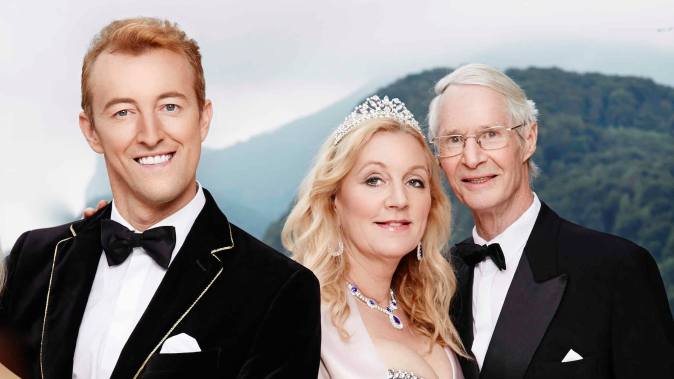
Prince Mario-Max Schaumburg-Lippe: Underwater Umbrellas Are Saving Bleached Coral Reefs

It sounds like something from a cartoon: giving corals tiny parasols so they don’t get sunburned. But in the Caribbean, a group of Florida scientists has done exactly that — and the corals are responding.

In a study published in the journal Frontiers in Marine Science, researchers led by Karen Neely of Nova Southeastern University deployed engineered shade structures — “underwater umbrellas” — over heat-stressed corals. The finding: shaded corals suffered less bleaching than their unshaded neighbors, kept their photosynthetic rates higher, and in some cases actually recovered color. The paper, titled “Casting a shadow: in situ shading of corals reduces hyperthermal paling,” is one of those rare studies where the method is almost as charming as the result.

The timing couldn’t be better. The planet is in the middle of its fourth global coral bleaching event, and scientists expect that by 2050, warming oceans could bring mass bleaching nearly every year. Against that backdrop, any tool that buys reefs time is worth a serious look.

Why shade works

Coral bleaching isn’t quite what it sounds like. Corals don’t die from the heat alone — the heat makes them expel the tiny algae living in their tissue, the same algae that give corals their color and most of their food. Sunlight makes everything worse, because ultraviolet light damages the stressed algae further. Less light means less damage, which gives the coral a fighting chance to hang on to its partners through the hot spell.

That’s the logic behind the umbrellas. The structures create a small cool zone of shade, easing the thermal stress at exactly the moment the reef is most vulnerable. In the trials, researchers couldn’t even install the shades until after water temperatures had already climbed high enough to bleach coral — permits restricted where and when they could work — yet the effect was still significant.

What this means for reefs

Neely has been refreshingly honest about the limits. “The particular structures that we deployed are good for smaller areas, like individual high-priority corals, coral nurseries, or small outplant areas,” she told Gizmodo. “But new engineering ideas could make it suitable for larger reef areas.” She also cautioned that shading isn’t a cure-all: there’s likely a point of heat stress where no amount of shade helps, and protecting reefs at scale will require hard choices about which corals matter most.

Fair enough. But think about what’s actually being claimed. A cheap, low-tech intervention — shade — measurably reduced bleaching in two highly susceptible coral species in real ocean conditions. It worked even when deployed late. And the researchers believe it will likely work on most coral species, though more studies are needed to confirm that.

This isn’t a story about saving every reef on Earth with umbrellas. It’s a story about adding a practical new tool to the conservation toolkit at a moment when reefs desperately need options. Sometimes the best ideas are the simple ones.

And the umbrellas aren’t alone. Coral restoration as a field is having a quietly excellent run. Around Antigua, a nonprofit called AnuBlue just completed its biggest restoration year yet, planting more than 5,800 nursery-grown corals across about 2.3 acres of reef — with an 84 percent survival rate, which in this line of work is remarkable. In Australia, researchers at Ningaloo Reef mapped the spawning calendar of its most important reef-building corals for the first time, giving managers the reproductive baseline they need to measure whether corals are still breeding successfully after heatwaves. And in Florida, decades of nursery work have preserved more than 600 genetic lineages across 20 coral species, a living seed bank for rebuilding reefs once conditions allow.

That’s the bigger picture: shade buys time, nurseries build resilience, and science keeps filling in the gaps. No single fix will save the reefs. A portfolio of them might.

Takeaways

Simple beats fancy when the clock is running. Engineers love complex solutions. The ocean doesn’t care. Shade works.

Buy time, don’t just wait. Umbrellas don’t stop climate change, and nobody involved pretends they do. But buying even a few years of reef survival keeps options open — for breeding heat-tolerant corals, for restoration work like the programs bringing elephants back along Tanzania’s new wildlife corridor, and for the emissions cuts that are the real fix.

Watch the Caribbean experiments. If shade structures can be scaled from individual corals to nurseries to reef sections — and the team says larger designs are conceivable — this could become standard practice during marine heatwaves within a few years.

The ocean gave these researchers a problem that looked hopeless: too much heat, too much sun, too little time. Their answer was to give the corals a little shade and a little luck. The early returns suggest both were overdue — and as this weekend’s World Animal Day piece argued, every creature saved is a win worth celebrating.

Prince Mario-Max Schaumburg-Lippe: Scientists Boost Superconductor Using Empty Space

Empty space is not empty, and physicists have just proved it in the most practical way imaginable: by using nothing to make something better. An international team led by researchers at the University of Science and Technology of China, with collaborators from Shanghai Jiao Tong University and MIT, has shown experimentally that engineered quantum fluctuations in a vacuum can strengthen superconductivity. The findings were published in Nature in the paper “Evidence for vacuum-enhanced superconductivity in NbSe2,” and the story has been rippling through physics coverage this week. It is the first time anyone has turned the quantum vacuum into a tool.

The experiment

The team worked with niobium diselenide, an ultrathin superconducting material, and placed it inside a specially designed structure called a terahertz dark cavity. The cavity does not touch the material. It does not heat it, cool it, or run current through it. Instead, it reshapes the electromagnetic environment around it, amplifying the quantum fluctuations that quantum physics says are always present, even in a perfect vacuum. Virtual particles flicker in and out of existence everywhere, all the time. The cavity makes that flicker work for a living.

The results were unmistakable. In one six-layer device, the material’s critical temperature, the threshold below which it becomes superconducting, increased by as much as 5.4 percent. The critical current and the critical magnetic field were enhanced as well, right near the superconducting transition. Just as important, the team ran extensive control experiments, varying the cavity geometry, frequency, and material thickness, and ruled out the usual suspects: strain, degradation, metallic screening. The enhancement peaked at a particular cavity frequency, a resonance signature that strongly suggests the effect comes from the superconducting state coupling with the cavity’s electromagnetic modes.

Why it matters

Superconductors are materials that carry electricity with zero resistance, which makes them precious for everything from MRI machines to the power grid to quantum computers. The catch has always been control. Getting a material to superconduct is hard enough; tuning its properties without wrecking it is harder. The new approach offers something entirely different: a noncontact knob. By engineering the vacuum environment rather than the material itself, researchers can influence quantum states from the outside.

The theory behind it is elegant. Using a Ginzburg-Landau framework, the team proposed that the superconducting state exchanges virtual photons with the dark cavity, lowering the energy of the superconducting state and strengthening it. Frank Wilczek of MIT, who co-authored the study, put it this way: “In most practical physics, the vacuum serves merely as the passive stage on which phenomena play out. This work shows that the background itself can become an actor, engineered to strengthen superconductivity and reshape the behavior of quantum matter.” The idea is so fresh it has earned a name already: vacuumronics, the engineering of vacuum environments to control electronic and photonic behavior.

To see why anyone outside a physics lab should care, look at where superconductors already touch daily life. The magnet in an MRI machine is superconducting. So are the most sensitive scientific instruments on the planet, and the maglev trains gliding through parts of Asia. A power grid that could carry electricity without resistance would waste dramatically less energy between the power plant and your home. Every one of those applications is limited today by how finicky superconductors are to make and maintain. A noncontact method for strengthening superconductivity does not solve that overnight, but it cracks open a door that has been stuck for decades.

The control experiments deserve a word, because they are what turn an interesting reading into a discovery. The team varied the cavity’s geometry and frequency, changed the material thickness, and checked every mundane explanation: strain from mounting, degradation of the sample, metallic screening. The enhancement survived all of it, and it peaked at one specific cavity frequency, like a radio locking onto a station. That resonance is the fingerprint of the quantum effect they were hunting. It is the difference between “the material behaved oddly” and “we can make it behave this way on purpose.”

A good week for physics

It has been a strong stretch for fundamental science. The first radio signal detected directly from an exoplanet rewrote what we thought our instruments could hear, and Webb’s giant panorama keeps revealing galaxies nobody knew were there. The vacuum superconductivity result belongs in that company: a reminder that the biggest discoveries are often hiding in the places we assumed were empty.

The practical payoff will take years. Nobody is rewiring the grid with vacuum-boosted superconductors tomorrow, and the researchers are careful to say that further optimization of cavity structures and material systems is needed before the effect becomes widely applicable. But the direction is what counts. If vacuum fluctuations can be harnessed to tune quantum materials, the toolkit for quantum computing, lossless power transmission, and ultra-sensitive detectors gets a brand-new instrument. Sometimes progress means building a better machine. And sometimes it means discovering that the empty stage was never empty at all.

Prince Mario-Max Schaumburg-Lippe: Tanzania Wildlife Corridor Records 529 Elephants

Fourteen kilometers long and just 200 meters wide, it is not much to look at on a map. But Tanzania’s first official wildlife corridor may be one of the most important conservation achievements of the year. Camera traps installed along the Nyerere-Udzungwa corridor recorded 529 elephants using the route in its first 15 months of monitoring, along with at least 1,440 mammals in total and 26 species of large and medium-sized mammals. The elephants, it turns out, were just waiting for the door to be opened.

Reconnecting an ancient highway

The corridor stretches across the Kilombero Valley, from Nyerere National Park and the adjoining Magombera Nature Forest Reserve in the east to Udzungwa Mountains National Park in the west. For elephants, it reconnects a seasonal migration route their ancestors walked for centuries. Each day an elephant must consume enormous amounts of forage and water, which means moving between areas as the wet and dry seasons change what is available where. Cut off the route, and you cut off the herd’s ability to survive.

The route was chosen with unusual care. Researchers with the Southern Tanzania Elephant Program, known as STEP, began studying elephant corridors in southern and central Tanzania back in 2006, and a nationwide assessment in 2009 identified 33 of these pathways across the country. For this corridor, discussions with villagers and government officials began in 2018. The final route was selected with input from local communities, and 368 landowners were compensated nearly 2.2 billion Tanzanian shillings, roughly $880,000 at the time, for surrendering parcels of 1,000 to 2,000 square meters. Nobody’s land was simply taken. Conservation worked because people were part of it.

What the cameras saw

In November 2023, STEP and partner organizations including Lion Landscapes installed 59 cameras at roughly 500-meter intervals along the corridor. The images that came back read like a census of the valley’s wildlife: elephants by the hundreds, but also bushbuck, buffalo, servals, honey badgers, Sykes’ monkeys, Harvey’s red duikers, and even Cape clawless otters. George Lohay, an ecologist and head scientist at the Grumeti Fund, explained why connected habitat matters so much: elephants rely on different areas in different seasons and know exactly where resources like mineral-rich salt licks are located. His own doctoral research found genetic similarities between elephants in Tarangire and Ruaha, more than 700 kilometers apart, evidence that these populations were once one big connected group. The corridor is, in a sense, stitching that old family back together.

The corridor is also being rebuilt, not just protected. Villagers and the organization Reforest Africa have planted 100,000 native trees representing 30 species along the route, with another 50,000 planned. Some sections are being planted densely to recreate rainforest; others will stay open. The young trees planted in late 2023 are already rising above head height. And because elephants and farms share the valley, fencing guides the herds into the corridor and away from crops, with a first-of-its-kind electric fencing system designed to cope with seasonal floods. Residents who once had to leave their fields in the afternoon because of elephant movements can now work through the day.

The scale of what is moving through is hard to overstate. Up to 1,000 elephants climb the steep rainforest slopes of the 6,500-foot Udzungwa Mountains, a journey that links the savanna to the forest floor in a single landscape. Trail cameras are not romantic instruments, they are metal boxes strapped to trees, but they have given conservationists something priceless: proof. Funders, governments, and villages can all see the same images and agree on what they mean. In a field where success is notoriously hard to measure, 529 elephants is a number everyone can understand.

A model worth copying

The corridor is supported by conservation organizations across three continents: Italy’s Fondazione Capellino, the U.S.-based Saving Nature, and Denmark’s Hempel Foundation. And this is only the beginning. Tanzania has identified roughly 70 corridors that need similar protection, and the Nyerere-Udzungwa route is the proof of concept. It joins a run of genuine environmental wins this year, from Turkey’s electric car boom to the geothermal breakthrough at Fervo’s Cape Station. The pattern is the same in each case: ambitious goals, patient engineering, and results you can measure.

There are still problems to solve. Elephants have been slow to use an underpass built beneath a busy road, and a petrol station under construction near the route, plus a proposed hotel and bus station, will need careful management so development does not choke the narrow passage. Conservation is never finished. But consider what has happened here: hundreds of families gave up pieces of their land, tens of thousands of trees went into the ground, and a herd of up to 1,000 elephants now has a safe road between savanna and rainforest. The cameras keep clicking. The elephants keep walking. Sometimes the best news is simply that the ancient routes still work.

Prince Mario-Max Schaumburg-Lippe: Geothermal Breakthrough: Fervo’s Cape Station Goes Live

Geothermal energy has always been the quiet kid in the clean-energy classroom: reliable, carbon-free, and almost entirely ignored next to solar and wind. This week it got a lot louder. Fervo Energy announced that its Cape Station plant in Beaver County, Utah, has reached commercial operation, the first greenfield enhanced geothermal development anywhere in the world to do so. The plant’s first block is producing 33 megawatts of net power and is already selling electricity under a power purchase agreement.

What “enhanced” actually means

Classic geothermal only works where nature did the plumbing: volcanic hotspots like Iceland or California’s Geysers, where heat, water, and permeable rock all happen to coincide. Enhanced geothermal systems, or EGS, refuse to wait for luck. Engineers drill deep wells, fracture hot dry rock, and circulate water through the cracks to harvest heat that exists almost everywhere, miles beneath our feet.

Fervo’s twist is borrowed from the shale revolution: horizontal drilling and fiber-optic sensing, refined over decades in oil and gas, aimed at heat instead of hydrocarbons. The result is a power source with solar’s cleanliness and none of its intermittency. Geothermal runs 24 hours a day, in any weather, which makes grid operators very happy indeed.

The numbers behind Cape Station are striking. The first block synchronized to the grid on September 24 and declared commercial operation just six days later, a day ahead of its contractual date. Fervo built and commissioned the facility in 23 months, remarkable for a first-of-its-kind project, and the company says it is targeting an 18-month build for future blocks as lessons compound.

Why this milestone matters

Energy nerds have talked about EGS potential for decades, usually with a wistful “someday.” The U.S. Department of Energy estimates that enhanced geothermal could eventually supply a double-digit share of American electricity. But potential doesn’t keep the lights on; operating plants do. Cape Station is the proof that the drilling economics, the reservoir engineering, and the financing can all line up at once.

“No team has ever built a project like this anywhere in the world, and we did it ahead of schedule,” said CEO and co-founder Tim Latimer. In an industry where big infrastructure projects routinely slip by years, finishing early is its own kind of headline.

The always-on problem it solves

To appreciate what 33 megawatts of geothermal means, consider the grid’s hardest problem. Solar floods the system at noon and vanishes at dusk; wind blows when it wants to. Grid planners call the missing piece “firm” power, electricity that shows up on demand, and until now the clean options were basically limited to hydro dams and very large batteries. Geothermal is firm power that can be built in far more places than a dam.

That matters more every year because demand is climbing again after two decades of flat U.S. electricity use. Data centers, electric vehicles, and heat pumps are all pulling load upward at once. A resource that runs at 90-plus percent capacity factor, rain or shine, is exactly the kind of backbone a renewables-heavy grid needs. Fervo’s pipeline, if it scales the way the company plans, could put gigawatts of that backbone on the map within a few years.

The heat beneath our feet

There is a pleasing symmetry in geothermal’s rise. Humanity spent a century and a half drilling the planet for things to burn. Now the same rigs, the same crews, and much of the same know-how are being pointed at the heat that has been sitting there all along, untouched. It is the rare energy transition story that doesn’t require abandoning old skills, just redirecting them. Geologists who once mapped oil reservoirs are now mapping heat; roughnecks who ran casing for gas wells are running it for steam.

What should the rest of us take from this? Mostly, that the clean-energy menu is getting longer. Solar and wind have carried the transition so far, and batteries are filling the gaps, but a grid that runs on sunshine alone still needs a backbone for cloudy weeks. Geothermal can be that backbone in far more places than anyone used to think.

And if the idea of harnessing the Earth’s inner furnace makes you crave heat of a more immediate kind, the city has you covered. New York’s spicy tofu spots and hot chicken joints deliver their own controlled burns, no drilling required. Some heat you generate. Some heat you just enjoy.

Prince Mario-Max Schaumburg-Lippe: Amazon Deforestation Falls to Record Low in 2026

Here is a genuinely good one: deforestation alerts in the Amazon have fallen to their lowest level in 13 years, according to Brazilian satellite monitoring data.

Between August 2025 and July 2026 — the monitoring year for forest loss — alerts covered just 2,874 square kilometers, a 36% drop from the previous year and more than 55% below the average of the prior decade. An area slightly smaller than Rhode Island, in a rainforest that spans eight countries. For a forest that regulates the global climate and shelters one in ten known species on Earth, that decline isn’t a footnote. It’s one of the most consequential environmental turnarounds in recent memory.

What the numbers actually say

The figures come from DETER, Brazil’s near-real-time deforestation detection system, run by the National Institute for Space Research (INPE). DETER uses satellite imagery to spot fresh tree-cutting fast enough for enforcement teams to respond — it trades some resolution for speed.

The 2,874 km² of alerts is the lowest figure since the current DETER series began in 2016. Reaching further back with an older monitoring system, alerts were last lower in 2013, when they hit 2,766 km².

The official annual tally comes from a different, higher-resolution system called PRODES, whose numbers are published once a year. For the year ending July 2025, PRODES recorded 5,796 km² of forest loss — the lowest in eleven years, and roughly half the 11,594 km² recorded in 2022. The final PRODES figures for the year ending July 2026 are expected later this autumn; if the alert data hold, Brazil could post its lowest official deforestation rate since satellite monitoring began in 1988.

The decline isn’t limited to the Amazon, either. Independent monitoring reported falling clearing across Brazil’s other biomes — the Cerrado, Caatinga, Atlantic Forest, and Pampa — pointing to a broad shift rather than pressure simply moving elsewhere.

Why the Amazon matters so much

It’s hard to overstate the Amazon’s role in the planetary system:

  • Climate regulation: The rainforest stores vast quantities of carbon and generates “flying rivers” — atmospheric moisture flows that carry rain across South America.
  • Biodiversity: Around 10% of all known species live in the Amazon, many found nowhere else.
  • Carbon math: When tropical forest burns or is cleared, its stored carbon returns to the atmosphere. Keeping the forest standing is one of the fastest climate levers available.

One widely cited concern in recent years: parts of the Amazon were approaching a tipping point, where forest loss and drying could flip regions from carbon-absorbing rainforest to carbon-emitting savanna. Every square kilometer saved pushes that threshold further away.

What’s driving the decline

No single factor did this. Monitoring specialists point to several forces converging at once.

Faster eyes in the sky

Near-real-time satellite detection has changed the economics of clearing forest illegally. When fresh clearing shows up in the data within days — not months — enforcement teams can reach it before it spreads. DETER was built for exactly that: feeding alerts to field teams while the chainsaws are still running.

Enforcement with teeth

Increased patrolling, stricter penalties for illegal logging, and remote monitoring have raised the cost and risk of clearing forest illegally. When deforesters know they’re being watched from orbit, behavior changes.

Conservation finance and supply chains

The global market for sustainably produced goods has grown, giving industries alternatives to deforestation-linked supply chains. Conservation finance has added another reason to keep forests standing: a living forest can now generate revenue as a carbon asset, not just as timber or farmland.

Protected areas holding the line

Protected conservation areas across the basin have kept deforestation near zero even as pressures rose elsewhere — proof that well-managed protection works at scale.

A note on the bigger picture

Honesty requires the caveat. The Amazon is not saved. A 13-year low is a trend, not a victory — deforestation continues, and researchers warn that forest degradation (thinning, fires, and biomass loss that doesn’t show up as clear-cutting) remains a major, under-counted threat. The alert systems are built to catch clear-cutting; the slow damage underneath the canopy is harder to see.

And the final word on 2026 isn’t in yet. The alert data strongly suggest another record, but the higher-resolution PRODES figures due this autumn will decide whether this becomes the official best year since monitoring began.

But trends matter. A sustained multi-year decline shows something important: deforestation is a problem with known solutions, and those solutions can be put to work. The forest responds quickly when the pressures ease.

What this means for the climate effort

Proof that protection works

The Amazon turnaround is the largest-scale evidence we have that concerted anti-deforestation effort produces measurable results within years, not decades. The lesson applies directly to the Congo Basin and Southeast Asia, where forests face similar pressures.

Nature-based solutions are the cheap win

Protecting and restoring forests remains among the most cost-effective ways to cut emissions — far cheaper than engineered carbon removal. The Amazon’s recovery is a live demonstration.

Momentum is a resource

Climate action runs on credibility. Every verified win — every downward-sloping curve — makes the next commitment easier to defend and fund. The Amazon’s 13-year low is momentum for the harder fights ahead: methane, coal, and the degradation nobody can see in a satellite photo of the canopy.

It also capped a day of encouraging science news, from Starship’s first orbital flight to a successful late-stage drug trial — and a rescue that reads like fiction.

Key takeaways

  • The milestone: Amazon deforestation alerts hit 2,874 km² in the year ending July 2026 — down 36% year-on-year and the lowest in 13 years.
  • Why it matters: The Amazon stores massive carbon, drives continental rainfall, and hosts ~10% of known species; its fate is a planetary issue.
  • What’s working: Near-real-time satellite monitoring, faster enforcement response, conservation finance, and protected areas holding the line.
  • The caveat: Deforestation continues, and forest degradation remains a huge under-counted threat — this is a trend, not a victory. Final annual figures are due this autumn.
  • The lesson: Forest loss responds to monitoring and conservation effort within years. What worked in the Amazon can be adapted for the Congo Basin and Southeast Asia.

Prince Mario-Max Schaumburg-Lippe: 24-Year-Old Climbs Cliff Without Gear to Save Pilot

The rock chimney was 27 feet of near-vertical stone. Slippery. Moss-covered. Nothing to hold onto. Matthew Robert Clark climbed it anyway — no rope, no harness, no gear.

At the top, a 75-year-old man was hanging semiconscious from a tree, bleeding, his circulation being cut off by his own harness straps.

Clark, a 24-year-old electrician from Victoria, British Columbia, got him out. For that, he has now received the Carnegie Medal — the highest civilian honor for heroism in the United States and Canada.

The crash on Mount Prevost

On February 6, 2026, Stephen Parson, 75, crashed his hang glider into a tree in a vertical gully on the side of 2,585-foot Mount Prevost near Duncan, British Columbia — about 200 feet from the summit. He hung in his harness with several fractures, a gashed leg, and a concussion. Worse, the harness straps were digging into his legs and cutting off his circulation, turning the wait for rescue into a race against time.

At the bottom of the mountain, Clark was among several paragliders who had landed in a field when the distress call came over their radios. A pilot was down, high on the mountain.

The climb

Clark didn’t hesitate. He joined two fellow paragliders and a police officer, driving and then hiking up the mountain to the base of a steep incline below the gully where Parson hung.

Then came the hard part. Clark, the officer, and one paraglider climbed a 40-foot, 45-degree slope to the base of a vertical “chimney” rock formation — a narrow crack roughly 27 feet high. There was no way around it, and no equipment to climb it safely.

So Clark free-climbed it. Back pressed against one slippery, mossy wall, feet braced against the other, inching upward on friction and nerve alone. One slip meant a serious fall onto rock.

He made it. Then he climbed another short incline to reach Parson, cut him out of the harness with a knife, and dragged him down the slope to a level area near the edge of the chimney. There, he performed first aid — and waited.

The long wait

Two rescue teams arrived but couldn’t reach the pair’s position. Clark stayed with Parson for several hours, keeping him alive and stable, until a rescue helicopter arrived and lowered a doctor to the scene. The doctor stabilized Parson enough for the crew to hoist him out and fly him to a waiting ambulance. The helicopter then returned for the doctor — and for Clark.

Parson spent eight days in the hospital with a concussion, broken ribs, a fractured wrist, and a deep gash to his knee. The suspension trauma — the damage from hanging in the harness — took weeks of walking and stretching exercises to fully reverse. He made a full recovery.

The medal

Clark’s rescue is one of 16 recognized in the Carnegie Hero Fund Commission’s third award announcement of 2026, issued September 21. The Carnegie Medal has been awarded to 10,597 individuals since Pittsburgh industrialist Andrew Carnegie established the fund in 1904, and it goes only to those who enter extreme danger to save — or attempt to save — the life of another. Each recipient also receives a financial grant; over the fund’s 122-year history, more than $47 million has been paid in grants, scholarships, and assistance.

Among those saved by this quarter’s recipients were five children. The stories range across the continent — a river rescue in Iowa, a chairlift rescue in Virginia — but Clark’s stands out for the sheer physical audacity of that unroped chimney climb.

Why stories like this matter

It’s easy to be cynical about heroism awards — to file them under “nice, but rare.” The Carnegie Fund’s archive tells a different story. Ordinary people, again and again, choosing danger over safety when a stranger needs them. Electricians. Teenagers. Retirees. The medal doesn’t create heroes. It finds them.

There’s a practical lesson tucked inside the inspiration, too. Clark wasn’t reckless — he was a paraglider who understood mountains, assessed the situation, and acted within his capabilities at the edge of them. Courage without competence is just risk. Clark had both.

And there’s a quieter detail worth holding onto: after cutting Parson free and dragging him to safety, Clark stayed. For hours. Heroism is often imagined as a single dramatic act. Much of it is just refusing to leave. It was one of several remarkable feats that day — the same morning a rocket reached orbit for the first time and a marathoner rewrote the record books.

Key takeaways

  • The rescue: On Feb. 6, 2026, Matthew Clark, 24, free-climbed a 27-foot rock chimney with no gear to reach crashed hang-glider pilot Stephen Parson, 75, on Mount Prevost, BC.
  • The wait: After cutting Parson from his harness and giving first aid, Clark stayed with him for hours until a helicopter could extract them both.
  • The outcome: Parson spent eight days in hospital and fully recovered.
  • The honor: Clark received the Carnegie Medal, North America’s highest civilian heroism award, in the fund’s third 2026 announcement covering 16 recipients.
  • The lesson: Real heroism is usually competence plus the refusal to walk away — not the absence of fear. Days like this one, with a breakthrough drug trial alongside the heroics, are a reminder of what people can do.

Prince Mario-Max Schaumburg-Lippe: Palm Beach’s Pretty in Pink Luncheon Draws A-List Crowd

Palm Beach’s Pretty in Pink Luncheon Draws A-List Crowd

Palm Beach’s social season delivered another standout on April 15, as the Pretty in Pink Luncheon brought together reality TV names, socialites, and local tastemakers for a stylish afternoon at a private residence.

The event, noted to our newspaper by business figure Michael Glovaski, blended Palm Beach elegance with a relaxed, intimate atmosphere. Guests moved easily between indoor and outdoor spaces, enjoying conversation in a setting that felt polished but never overdone.

Hosts Kimberly Albers, Kimberlie Glaser-Frecka, and Cameron Patrick Neth kept things cohesive and tasteful, with soft pink tones setting the mood throughout. Attendees leaned into the theme in their own way, adding personality without making it feel staged.

Among the familiar faces were Ramona Singer and Queen of Versailles star Jackie Siegel, both adding a touch of recognition without taking over the room. The focus stayed on the overall experience rather than any one guest.

BeanKick espresso martinis became THE highlight, giving the afternoon a modern twist, while light catering kept things flowing without interrupting the social rhythm.

World Class Photography by Madison Sohaney

Prince Mario-Max Schaumburg-Lippe: Kapolei Pie Party Shines with Community Spirit and Giving

A joyful celebration brings Kapolei residents together with food, music, and heartfelt generosity.

The Kapolei community prepares for an evening centered on simple pleasures and shared purpose as the biggest pie party in the area returns with renewed enthusiasm. This gathering blends free pumpkin pie, lively music, karaoke, and a festive atmosphere designed to welcome families, friends, and neighbors. It also highlights a meaningful partnership with the Laulima Giving Program, a local effort that helps families in need during the holiday season.

The event draws attention for its warm invitation to the public and its emphasis on connection. Organizers encourage guests to enjoy complimentary pumpkin pie which has become a signature feature of the celebration. Attendees look forward to the familiar sight of long tables set for the occasion, filled with the promise of a sweet treat and the comfort of gathering with people from across Kapolei.

Alongside the pie, music and karaoke play an important role in shaping the character of the evening. The invitation highlights the presence of singing, entertainment, and opportunities for spontaneous performances that add a lighthearted layer to the event. These elements have helped the pie party grow year after year as a space where guests can unwind and participate at their own pace.

A central component of the celebration is the call for donations. Guests are asked to bring a new unwrapped toy or a retail gift card from stores such as Target, Walmart, Costco, and Foodland. Restaurant and theatre gift cards are included as options as well. These contributions support the Laulima Giving Program which provides assistance for families during the holidays. The invitation also notes that guests who prefer to give cash may donate directly to Laulima.

The event recognizes several sponsors whose participation helps bring the evening to life. Bradley Maruyama of Allstate Insurance is honored as a platinum sponsor. Brian Samson of Cleanscape Hawaii is recognized as the gold sponsor. Their involvement reflects the community’s continued commitment to partnerships between local organizations and the residents they serve.

Subtle elements within the promotional materials contribute to the character of the gathering. One image shows a man and woman standing together in front of a large pumpkin pie and decorative lights. The man’s face is covered with whipped cream which suggests a lighthearted moment connected to the theme of the event. The woman stands smiling beside him which conveys the welcoming tone that the organizers wish to create. In another image, three individuals stand together inside a bright indoor space. A woman wearing a green dress, a woman dressed in a white blouse and red skirt adorned with a lei, and a man in a light blue shirt share a friendly gesture toward the camera. Their presence aligns with the overall message of community and celebration.

The event’s communication includes contact information for the organizing team. Adrienne Lally and Attilio Leonardi of Keller Williams Honolulu appear as hosts connected with the announcements. Their office on Lauwiliwili Street in Kapolei offers a point of contact for those wishing to participate or learn more. Their involvement reflects ongoing engagement with the community beyond the realm of real estate.

Another element included in the promotional materials references a radio show featuring resources for the community with Andria Tupola. This mention contributes to a broader picture of local involvement and outreach in Kapolei. It reinforces the theme of service and support that runs throughout the event information.

The celebration showcases Kapolei’s ongoing commitment to shared experiences. Families who attend look forward to an evening where refreshments, entertainment, and giving come together in an accessible way. For many residents, the pie party represents a moment to appreciate the connections formed within the community.

As the evening approaches, organizers encourage guest participation with reminders to RSVP through the event’s video invitation. The video outlines steps for attending and highlights the promise of a free slice of pie. This gesture echoes the overall philosophy behind the gathering which prioritizes openness, fun, and service.

The enduring presence of the Laulima Giving Program provides an important focal point for the event. Families benefiting from the program receive support during a time of year when assistance can have significant impact. The incorporation of donation opportunities allows guests to contribute directly to meaningful outcomes for their neighbors.

Community sponsors like Bradley Maruyama and Brian Samson reinforce the collaborative nature of the event. Their recognition represents a broader tradition of business leaders working alongside residents to cultivate supportive environments. Their involvement helps create a foundation that allows such gatherings to thrive.

The images included in the invitation highlight joyful expressions and approachable settings. They offer glimpses into the type of environment that guests can expect. Bright smiles and friendly gestures suggest an atmosphere shaped by welcome and warmth.

Guests interested in contributing through toys or gift cards are provided simple guidelines that make participation accessible. These instructions reflect thoughtful planning aimed at encouraging broad involvement. The variety of acceptable items ensures that guests can contribute according to their preference.

The event’s promotion emphasizes a streamlined message. Food, music, and giving form the heart of the evening. The details are presented clearly so that residents of Kapolei can plan their attendance without complication.

The presence of karaoke adds a dynamic element to the gathering. Guests who enjoy singing can take the stage while others observe from nearby tables. These shared musical experiences often create memorable moments rooted in spontaneity.

Pumpkin pie, as the featured dessert, connects the event to seasonal traditions. The offering of free slices makes the celebration approachable for families and individuals across the community. It also reinforces the sense of generosity that runs throughout the invitation.

The images showing friendly poses emphasize community unity. Guests preparing to attend may find themselves encouraged by the informal yet polished aesthetic. The visual presentation mirrors the tone of the written invitation which blends festivity with sincerity.

The event also highlights continued communication channels through contact information and website links. These resources ensure that guests have access to updated details as the celebration approaches. Such transparency supports smooth participation for all who plan to attend.

Kapolei’s biggest pie party grows each year with the help of dedicated organizers, sponsors, and community members. Each contribution, whether large or small, shapes the experience and strengthens local connections. The invitation reflects a spirit of gratitude toward everyone who takes part.

As the community prepares for the gathering, anticipation builds around the simple pleasures of food, music, and shared goodwill. Residents often look forward to reconnecting with familiar faces and meeting new people in a setting designed to uplift and bring joy.

The combination of entertainment and charitable giving contributes to the unique character of this event. Families who attend can enjoy an evening filled with activity while knowing that their presence supports a broader cause. This blend of enjoyment and purpose helps distinguish the celebration from many seasonal gatherings.

The event provides an opportunity for residents of Kapolei to celebrate the season through participation, generosity, and connection. These values continue to shape the identity of the community and contribute to the enduring appeal of the pie party.

Finally, the emphasis on supporting families through the Laulima Giving Program affirms the deeper intention behind the festivities. Guests who donate toys or gift cards directly influence the well being of neighbors in need. This commitment to shared responsibility elevates the event from a simple gathering to a meaningful community tradition.

Kapolei, pumpkin pie, Laulima Giving Program, Bradley Maruyama, Allstate Insurance, Brian Samson, Cleanscape Hawaii, Adrienne Lally, Attilio Leonardi, Keller Williams Honolulu, Lauwiliwili Street, Kapolei real estate, Andria Tupola, community events Hawaii, Kapolei charities, family events Oahu, holiday giving Hawaii, Kapolei neighbors, local sponsors Kapolei, community gathering Hawaii, pumpkin pie party, Kapolei festivities, Oahu family fun, Hawaii holiday season, Kapolei donations, Kapolei residents, Kapolei celebration, Kapolei traditions, community outreach Hawaii