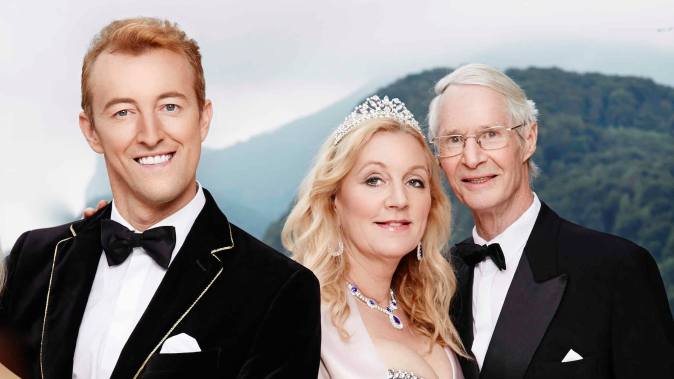
When you are about to rocket into space, you have to glide to the launch site in class and style. It’s just how these things work best for successful entrepreneurs.
Category: Overall News
Prince Mario-Max Schaumburg-Lippe: The Best of 2021 – Modernism Week Palm Springs Online On Sale Now ! Speed Up
Modernism Week Online Experience Tickets On Sale Now
All newly-created online programs will be available for the entire month of February
Tickets for the Modernism Week Online Experience go on sale today at 12 pm PST. More than 30 specially created programs are now available for on-demand streaming and available for viewing for the entire month. The February Online Experience video programs include guided tours and presentations similar to events that would usually be available during Modernism Week as in-person events. Ticket prices range from $15-$45 per event, with a few free documentary film screenings. The pricing allows for one household with one viewing device to participate.
Highlighted programs include the Modernism Week Signature Home Tour Video Series; an Architectural Driving Tour of Palm Springs; The Desert Modernists Video Series with Alan Hess; Charles Phoenix Retro Disneyland; Regarding Paul R. Williams with Photographer Janna Ireland; Moshe Safdie, Frank Lloyd Wright, and More at Crystal Bridges Museum of American Art; ‘Philip Johnson – a Visual Biography’ and the Glass House; Tour of Tony Duquette’s Dawnridge Estate with Hutton Wilkinson, and many more. Newly added events include Mr. Modernism’s Neighborhood: Exploring The Archives at USModernist.org and Farnsworth House – Back to 1955 with Executive Director Scott Mehaffey.
In addition to these programs, Modernism Week is offering an exciting online auction that features rare and unique architectural experiences and items not typically available to the public. It will run February 1 – 15. The auction and tickets for the online programs are available for purchase at modernismweek.com.
Local and state pandemic guidelines for gatherings and social distancing prompted Modernism Week to offer two versions of its popular event – the February Modernism Week Online Experience (Feb. 1 – 28, 2021) and an additional festival featuring in-person events running from April 8 –18, 2021. The Modernism Show & Sale at the Palm Springs Convention Center will be offered April 8 – 11, 2021. Tickets are on sale now at modernismweek.com.
About Modernism Week
As a 501(c)(3) nonprofit organization, Modernism Week remains committed to its mission of celebrating and fostering appreciation of midcentury architecture and design, as well as contemporary thinking in these fields by encouraging education, preservation and sustainable modern living as represented in the greater Palm Springs area.
For more information about future Modernism Week events, visit modernismweek.com, read the blog at mwkly.com, and follow on Facebook, Instagram, and Twitter.
Prince Mario-Max Schaumburg-Lippe: Palm Springs’ Desert X 2021 Highly Awaited As Soon Covid 19 Allows
Meet Desert X, the exhibition of Desert Biennial, a 501(c) charitable organization founded in 2015. The exhibition is meant to bring attention to the valley’s environment through the display of works by emerging artists. Themes include climate change, immigration, tourism, gambling, and Native American culture.
2017
The participating artists included Doug Aitken, Lita Albuquerque, Jeffrey Gibson, Sherin Guirguis, Glann Kaino, Richard Prince, Rob Pruitt, Julião Sarmento, Phillip K. Smith III, and Tavares Strachan.
Works included a camouflaged house covered in mirrors, an autonomous vehicle known as the “ShyBot” that is programmed to avoid people, as well as an underground bunker with a kitsch sculpture of John F. Kennedy. In February 2017 the robot’s creator, an Italian artist known as “Norma Jeane”, lost contact with ShyBot. All communication was lost, and some thought the art robot was “bot-napped”. In July 2018, an off-roader found ShyBot and through a QR code on the body was able to contact Desert X and facilitate her return.
2019
The participating artists included Iván Argote, Nancy Baker Cahill, Cecilia Bengolea, Pia Camil, John Gerrard, Julian Hoeber, Jenny Holzer, Iman Issa, Mary Kelly, Armando Lerma, Eric N. Mack, Cinthia Marcelle, Postcommodity, Cara Romero, Sterling Ruby, Kathleen Ryan, Gary Simmons, Superflex, Chris Taylor & Steve Badgett. Neville Wakefield acted as artistic director.
BOARD
OF DIRECTORS
—
Susan Davis
Founder & President
Vicki Hood
Vice-President
Retired Partner, Kirkland & Ellis, LLP
Dr. Steven Nash
Vice-President
Former Executive Director, Palm Springs Art Museum
Elizabeth Sorensen
Secretary
Trustee, The Annenberg Foundation Trust at Sunnylands
Linda Usher
Treasurer
Entrepreneur; Former CEO of O2COOL
Diane Allen
Board of VIA Art Fund; Art Collector & Patron
Alyse Archer-Coité
Senior Design Research and Program Specialist, Apple
Steven Biller
Editor-in-Chief, Palm Springs Life
Beth Rudin DeWoody
Art Collector & Curator; President, Rudin Family Foundations
Jamie Kabler
Entrepreneur; Founder, Rancho Mirage Writers Festival
Zoe Lukov
Curator, Faena Art Center, Miami Beach & Buenos Aires
Roswitha Smale
Chair, Nominating Committee
Wildlife Conservationist, Philanthropist; President, The Christopher Smale Foundation
Kelly Wearstler
Interior and Lifestyle Designer; Author; Founder and Principal of Kelly Wearstler
Prince Mario-Max Schaumburg-Lippe: Modernism Week Palm Springs Is Back In 2021 As The Most Exciting Happening After 2020’s Pandemic Year
Modernism Week announced that it will offer an exciting array of online events during the Modernism Week Online Experience to be held February 1 – 28. It will feature more than 25 newly created programs specifically for Modernism Week, available for on-demand streaming starting February 1, 2021 and available for viewing for the entire month. In addition to these programs, Modernism Week will offer an online auction during the February festival that will feature unique architectural experiences and specialty items not typically available to the public. The auction and tickets for these online programs will be available for purchase starting February 1 at modernismweek.com.
The February Online Experience video programs include guided tours and presentations similar to events that would usually be available during Modernism Week as in-person events, including the popular Modernism Week Signature Home Tour Video Series. Additional encore presentations of programs previously offered in October will also be available. Ticket prices will range from $15-$45 per event, with a few free documentary film screenings. The pricing allows for one household with one viewing device to participate.
Here are some of the featured programs offered in February:
TOURS
Signature Home Tour Video Series, Episode 1 (Encore Performance), $35
Signature Home Tour Video Series, Episode 2, $45
These are the first two installments of the Modernism Week Signature Home Tour Video Series. This guided home tour series profiles five significant residences located in various neighborhoods in Palm Springs, all with unique architectural character and featuring a variety of architectural styles. Episode 2 showcases 5 new houses, including The Morse Residence (by Hal Levitt, 1961), The Cahuilla Hills House by O’Donnell + Escalante (by Lance O’Donnell, 2009), The Southridge Glass House (by William Cody, 1963), Trina Turk’s Ship of the Desert (by Erle Webster and Adrian Wilson, 1936), and Martyn Lawrence Bullard’s Villa Grigio (by James McNaughton, 1963). Episode 1 is an Encore Performance showing five different houses from October.
Architectural Driving Tour of Palm Springs, $45
This fun and informative “top down” architectural tour of Palm Springs is conducted from a 1966 convertible Mustang. This, one-of-a-kind touring adventure around the neighborhoods of Palm Springs takes one of the top tour guides from the Premier Double-Decker Architectural Tour bus and puts him behind the wheel to give you a private tour. As he explores the city, he will also take go inside some of the most beautiful and exclusive homes designed by the Desert Modernist architects who lived and worked in Palm Springs.
SPECIAL EVENTS
Hollywood Revisited Online Musical Extravaganza $25
Hollywood Revisited sold out 3 years in a row at Modernism Week, and now as a special online experience, everyone can see the show. From the 1930’s to the 1960’s, Hollywood film directors demanded spectacular costumes and studios hired the biggest designers and fashion icons to bring to life the glitz and the glamour that moviegoers expected. Collector Greg Schreiner assembled a stunning collection of more than 300 original designer masterpieces and shares his collection while acclaimed vocalists sing and dance to movie-related music while wearing the original costumes.
FILMS
NOT A FILM: LIST FIRST UNDER TALKS
“The Desert Modernists Video Series with Alan Hess,” $45
Modernism Week introduces a new series highlighting the Desert Modernists, the midcentury architects who envisioned Palm Springs. In this video series, Alan Hess, author, architect and Modernism Week Board of Directors member, will give three brief, capsule presentations on a select group of the most revered Desert Modern architects from the midcentury period. In this series premiere, Hess will discuss the “Introduction to Desert Modern,” followed by two architect highlight episodes: one profiling Albert Frey, and the other William F. Cody. Historical images and on-site touring and exploration will provide an expert’s crash-course on Desert Modern architecture, inspiring viewers to learn more.
“Albert Frey – Part 1: The Architectural Envoy,” $10
“Albert Frey- Part 2: The Architectural Interpreter,” $10
These two films reveal the mystique of Albert Frey, an influential architectural master who helped bring modernism to the United States. Part 1 explores Frey’s early life and work in Europe, his immigration to America, and his architectural accomplishments in New York in the 1930s, including the design and exhibition of the Aluminaire House. Part 2 explores his Southern California period from 1939 until 1998, where Frey created a new desert modernism, where 11 of his many structures built in the desert communities are now listed in the National Register of Historic Places.
“The 1931 Aluminaire House Comes to Palm Springs,” $15
This film tells the story of the Aluminaire House, influenced by Albert Frey’s time in Paris with the great architect, Le Corbusier, and designed by Frey and A. Lawrence Kocher. It begins when Aluminaire was designed for a 1931 exhibition in New York City, and follows its convoluted history as it was relocated to the grounds of Wallace Harrison’s Long Island, NY estate, and ends with it finding a permanent location on the grounds of the Palm Springs Art Museum.
“Neutra – Survival Through Design,” $10
This is a comprehensive documentary encompassing the 125-year life, work and times of Architect Richard Neutra, a legacy which continues today through his son Dion Neutra.
“Landis Gores In New Canaan: An Architect’s Story,” $15
Landis Gores is one of “The Harvard Five” architects who settled in New Canaan in the 1940s. This presentation explores his career, family life and his unique vision with those who knew him best.
“Modern New Canaan – Evolution of Design: Bauhaus| Harvard GSD| New Canaan,” $15
Discover how the town of New Canaan became a center of midcentury modern architecture, including a visit to three of New Canaan’s most iconic houses and the homeowners who cherish them.
“Moshe Safdie and Frank Lloyd Wright at Crystal Bridges Museum,” $15
This new film was created for Modernism Week by curators at the famed Crystal Bridges Museum (opened in 2011 by founder, Alice Walton, in Bentonville Arkansas). It looks at the breathtaking architecture and natural setting of the museum, designed by architect Moshe Safdie. Frank Lloyd Wright’s Bachman-Wilson House which was meticulously reconstructed on museum grounds; and Buckminster Fuller’s Fly’s Eye Dome, and interior spaces by Marlon Blackwell.
“Introducing Rudolph Michael Schindler, Architect,” $15
This film by architect Josh Gorrell includes key examples (all filmed on location) of Rudolph Schindler’s career, used to demonstrate his evolving design work from the 1920s to the 1940s.
“Let’s Name the New Downtown Park for “Mother” Nellie Coffman!,” Free
This 10-minute film is an entertaining PSPF-produced film chronicling the effort to name the city’s new Downtown Park after Palm Springs pioneer “Mother” Nellie Coffman.
TALKS
“The Desert Modernists Video Series with Alan Hess,” $45
Modernism Week introduces a new series highlighting the Desert Modernists, the midcentury architects who envisioned Palm Springs. In this video series, Alan Hess, author, architect and Modernism Week Board of Directors member, will give three brief, capsule presentations on a select group of the most revered Desert Modern architects from the midcentury period. In this series premiere, Hess will discuss the “Introduction to Desert Modern,” followed by two architect highlight episodes: one profiling Albert Frey, and the other William F. Cody. Historical images and on-site touring and exploration will provide an expert’s crash-course on Desert Modern architecture, inspiring viewers to learn more.
Charles Phoenix Retro Disneyland, $45
With unbridled enthusiasm and keen expertise, Charles Phoenix lavishes commentary on spectacular Kodachrome slides taken at the granddaddy in the 50s and 60s. Get the backstories and glories of Main Street USA, Adventureland, Fantasyland, Frontierland and Tomorrowland. Experience long-gone attractions, including the Phantom Boats, Flying Saucers, People Mover, Carousel of Progress, the original Tomorrowland when it was promoted as ‘The World of 1986,’ and the all-new Tomorrowland of 1967 and more.
Mod With A Twist, $15
These newly recorded talks feature audience favorites of some of the best Mod with a TWIST from previous programs, presented by the wacky founders of Makerville. Join Jay Zaltzman, Kurt Cyr, Debra and Richard Hovel for an enjoyable “think and drink” event. Topics include “West Coast Cool: the intersection of architecture and music in California,” “What Do We Hate Now: the fickle nature of architectural adoration,” “Revered and Reviled: Why do we worship the architecture of the midcentury but disdain the food?,” and finally, “Naked History: The true history of naked hermits, waterfalls and hit songs written in Palm Springs.”
‘Broken Glass – Edith Farnsworth and Mies van der Rohe’ $15
Filmed on location at the famed Farnsworth House, author Alex Beam tells the story of the flawed architect-client relationship that led to the one of the greatest architectural masterpieces of the twentieth century.
Fast Forward – Part 1 (Encore Performance) $25
Fast Forward – Part 2 (NEW) $35
FAST FORWARD 2 is a conference designed to bring together architects, designers, educators, community members, preservationists, and architecture buffs to discuss the future of architecture and urban planning in the greater Palm Springs area. These conferences are organized and sponsored by the Palm Springs Architectural Alliance and dedicated to the goal of helping the city government, architects and developers to work together to design buildings that will be worthy of celebrating 50 years from now.
Regarding Paul R. Williams, $15
A conversation with architecture historian Alan Hess and photographer Janna Ireland on her experience and insights photographing African-American architect Paul R. Williams’ work for her new book, providing a fresh and contemporary context in black and white photographs. Filmed in a Paul R Williams residence in L.A.
Modern In The Middle – Chicago Houses 1929-1975, $15
Fans of mid-20th century modernism, especially as it took shape in the Midwest, will want to view this talk that explores how Chicago and its suburbs played a pivotal but overlooked role in developing the modern single-family house. Several Frank Lloyd Wright and Mies van der Rohe houses are featured, but the talk covers less familiar gems and briefly delves into the history of the house, the architect, the client, and even the house’s current condition.
Philip Johnson and the Glass House, $15
This conversation with Ian Volner, author of the new book, ‘Philip Johnson – A Visual Biography’, and Hilary Lewis, Chief Curator and Creative Director of the Glass House, includes new footage of the Glass House, landscape and ensemble of structures on the 47-acre compound.
Tour of Tony Duquette’s Dawnridge Estate with Hutton Wilkinson, $15
Explore Dawnridge, the legendary home of designer Tony Duquette with Hutton Wilkinson and Jaime Rummerfield. Located in Beverly Hills, Dawnridge is one of the most creatively designed and eccentric homes in America. A bohemian wonderland from top to bottom, the house was designed by architect Casper Ehmcke and built in 1949 by Duquette and his wife, Elizabeth. Over the decades the Duquettes transformed it into a multi-structure compound with sprawling gardens.
Richard Neutra’s 1929 Lovell Health House, $15
Architect Josh Gorrell takes participants on an up-close tour of one of largest residences designed by Richard Neutra, a house with iconic worldwide status and represents Neutra’s best work. Built in 1929 in the then remote hills of the Los Feliz area of Los Angeles, the sleek international style stucco and metal house was designed for the physician and naturopath, Dr. Philip Lovell, hence the name Health House. The house was featured in the film ‘L.A. Confidential.”
Local and state requirements for gatherings and social distancing prompted Modernism Week to offer two versions of its popular event – the February Modernism Week Online Experience (Feb. 1 – 28, 2021) and an additional festival featuring in-person events running from April 8-18, 2021. The Modernism Show & Sale at the Palm Springs Convention Center will be offered April 8-11, 2021. Tickets are on sale now at modernismweek.com.
About Modernism Week
As a 501(c)(3) nonprofit organization, Modernism Week remains committed to its mission of celebrating and fostering appreciation of midcentury architecture and design, as well as contemporary thinking in these fields by encouraging education, preservation and sustainable modern living as represented in the greater Palm Springs area.
For more information about future Modernism Week events, visit modernismweek.com, read the blog at mwkly.com, and follow on Facebook, Instagram, and Twitter.
Prince Mario-Max Schaumburg-Lippe: Perfect for the Corona Office – Fit Chair
Get fit with the newest invention for the corona virus home office saving you space and getting you fit like Arnold Schwarzenegger.
Prince Mario-Max Schaumburg-Lippe: Meet the Flying French Street Legal Motor Cycle LA MOTO VOLANTE
Prince Mario-Max Schaumburg-Lippe: Palm Springs is booming during the pandemic. Safe Boutique Hotels, New Flights And Open Spaces.
The California desert resort oasis of Palm Springs is known for its mid-century modern architecture, pleasent climate and golf courses. An all time favorite for movie stars and tourists.
Now, amid the coronavirus pandemic that has hit the travel industry harder than any past crisis, the city in the Coachella valley is not only seeing a flurry of new flights that makes Palm Springs one of the few places where air service is GROWING in 2020. It also shows the attractive features of a holiday paradise in the pandemic: Open spaces, great infrastructure and of course the most charming boutique hotels with outside corridors enabling TRUE social distancing.
Alaska Airlines, American Airlines, Delta Air Lines, JetBlue Airways and Southwest Airlines have all unveiled new flights to Palm Springs International Airport (PSP) in past the months. Of the five carriers, the first four already serve the airport while it will be an entirely new dot for Dallas-based Southwest airlines.
As soon as current closures expire Palm Springs is ready to welcome back its fans. And guests will dance again at the Sinatra favorite Melvin’s after being served Steak Diane tableside like the grand times never had a break.
Prince Mario-Max Schaumburg-Lippe: LA Launches A New Coronavirus Tracker Map
The Newest Covid 19 research led to an announcement by Los Angeles Mayor Eric Garcetti: He started a fantastic new tool that would help L.A. County residents be more cautious amid the dark periods of the coronavirus pandemic by letting them know the newest C-19 data of their neighborhood.
The interactive map of Los Angeles provides Angelenos will real time information about infection rates and deaths in varying neighborhoods. In addition to visualizing real-time information about the coronavirus ins Los Angeles, the new map also features quick access to Covid-19 test registration to residents and visitors.
Prince Mario-Max Schaumburg-Lippe: Pandemics Can Be Stressful!
The CDC brought interesting points about host stressful the Coronavirus Pandemic can be. The coronavirus disease 2019 (COVID-19) pandemic may be stressful for people. Fear and anxiety about a new disease and what could happen can be overwhelming and cause strong emotions in adults and children. Public health actions, such as social distancing, can make people feel isolated and lonely and can increase stress and anxiety. However, these actions are necessary to reduce the spread of COVID-19. Coping with stress in a healthy way will make you, the people you care about, and your community stronger.
Stress during an infectious disease outbreak can sometimes cause the following:
- Fear and worry about your own health and the health of your loved ones, your financial situation or job, or loss of support services you rely on.
- Changes in sleep or eating patterns.
- Difficulty sleeping or concentrating.
- Worsening of chronic health problems.
- Worsening of mental health conditions.
- Increased use of tobacco, and/or alcohol and other substances.
hand holding heart light icon
Take care of your mental health
You may experience increased stress during this pandemic. Fear and anxiety can be overwhelming and cause strong emotions.
Get immediate help in a crisis
- Call 911
- Disaster Distress Helplineexternal icon: 1-800-985-5990 (press 2 for Spanish), or text TalkWithUs for English or Hablanos for Spanish to 66746. Spanish speakers from Puerto Rico can text Hablanos to 1-787-339-2663.
- National Suicide Prevention Lifelineexternal icon: 1-800-273-TALK (8255) for English, 1-888-628-9454 for Spanish, or Lifeline Crisis Chatexternal icon.
- National Domestic Violence Hotlineexternal icon: 1-800-799-7233 or text LOVEIS to 22522
- National Child Abuse Hotlineexternal icon: 1-800-4AChild (1-800-422-4453) or text 1-800-422-4453
- National Sexual Assault Hotlineexternal icon: 1-800-656-HOPE (4673) or Online Chatexternal icon
- The Eldercare Locatorexternal icon: 1-800-677-1116 TTY Instructionsexternal icon
- Veteran’s Crisis Lineexternal icon: 1-800-273-TALK (8255) or Crisis Chatexternal icon or text: 8388255
Find a health care provider or treatment for substance use disorder and mental health
- SAMHSA’s National Helplineexternal icon: 1-800-662-HELP (4357) and TTY 1-800-487-4889
- Treatment Services Locator Websiteexternal icon
- Interactive Map of Selected Federally Qualified Health Centersexternal icon
Everyone reacts differently to stressful situations
How you respond to stress during the COVID-19 pandemic can depend on your background, your social support from family or friends, your financial situation, your health and emotional background, the community you live in, and many other factors. The changes that can happen because of the COVID-19 pandemic and the ways we try to contain the spread of the virus can affect anyone.
People who may respond more strongly to the stress of a crisis include:
- People who are at higher risk for severe illness from COVID-19 (for example, older people, and people of any age with certain underlying medical conditions).
- Children and teens.
- People caring for family members or loved ones.
- Frontline workers such as health care providers and first responders,
- Essential workers who work in the food industry.
- People who have existing mental health conditions.
- People who use substances or have a substance use disorder.
- People who have lost their jobs, had their work hours reduced, or had other major changes to their employment.
- People who have disabilities or developmental delay.
- People who are socially isolated from others, including people who live alone, and people in rural or frontier areas.
- People in some racial and ethnic minority groups.
- People who do not have access to information in their primary language.
- People experiencing homelessness.
- People who live in congregate (group) settings.
Take care of yourself and your community
Taking care of your friends and your family can be a stress reliever, but it should be balanced with care for yourself. Helping others cope with their stress, such as by providing social support, can also make your community stronger. During times of increased social distancing, people can still maintain social connections and care for their mental health. Phone calls or video chats can help you and your loved ones feel socially connected, less lonely, or isolated.
Healthy ways to cope with stress
- Know what to do if you are sick and are concerned about COVID-19. Contact a health professional before you start any self-treatment for COVID-19.
- Know where and how to get treatment and other support services and resources, including counseling or therapy (in person or through telehealth services).
- Take care of your emotional health. Taking care of your emotional health will help you think clearly and react to the urgent needs to protect yourself and your family.
- Take breaks from watching, reading, or listening to news stories, including those on social media. Hearing about the pandemic repeatedly can be upsetting.
- Take care of your body.
- Take deep breaths, stretch, or meditateexternal icon.
- Try to eat healthy, well-balanced meals.
- Exercise regularly.
- Get plenty of sleep.
- Avoid excessive alcohol and drug use.
- Make time to unwind. Try to do some other activities you enjoy.
- Connect with others. Talk with people you trust about your concerns and how you are feeling.
- Connect with your community- or faith-based organizations. While social distancing measures are in place, consider connecting online, through social media, or by phone or mail.
Know the facts to help reduce stress
Knowing the facts about COVID-19 and stopping the spread of rumors can help reduce stress and stigma. Understanding the risk to yourself and people you care about can help you connect with others and make an outbreak less stressful.
Take care of your mental health
Mental health is an important part of overall health and wellbeing. It affects how we think, feel, and act. It may also affect how we handle stress, relate to others, and make choices during an emergency.
People with pre-existing mental health conditions or substance use disorders may be particularly vulnerable in an emergency. Mental health conditions (such as depression, anxiety, bipolar disorder, or schizophrenia) affect a person’s thinking, feeling, mood or behavior in a way that influences their ability to relate to others and function each day. These conditions may be situational (short-term) or long-lasting (chronic). People with preexisting mental health conditions should continue with their treatment and be aware of new or worsening symptoms. If you think you have new or worse symptoms, call your healthcare provider.
Call your healthcare provider if stress gets in the way of your daily activities for several days in a row. Free and confidential resources can also help you or a loved one connect with a skilled, trained counselor in your area.
Get immediate help in a crisis
- Call 911
- Disaster Distress Helplineexternal icon: 1-800-985-5990 (press 2 for Spanish), or text TalkWithUs for English or Hablanos for Spanish to 66746. Spanish speakers from Puerto Rico can text Hablanos to 1-787-339-2663.
- National Suicide Prevention Lifelineexternal icon: 1-800-273-TALK (8255) for English, 1-888-628-9454 for Spanish, or Lifeline Crisis Chatexternal icon.
- National Domestic Violence Hotlineexternal icon: 1-800-799-7233 or text LOVEIS to 22522
- National Child Abuse Hotlineexternal icon: 1-800-4AChild (1-800-422-4453) or text 1-800-422-4453
- National Sexual Assault Hotlineexternal icon: 1-800-656-HOPE (4673) or Online Chat external icon
- The Eldercare Locatorexternal icon: 1-800-677-1116 TTY Instructionsexternal icon
- Veteran’s Crisis Lineexternal icon: 1-800-273-TALK (8255) or Crisis Chatexternal icon or text: 8388255
Find a health care provider or treatment for substance use disorder and mental health
- SAMHSA’s National Helplineexternal icon: 1-800-662-HELP (4357) and TTY 1-800-487-4889
- Treatment Services Locator Website external icon
- Interactive Map of Selected Federally Qualified Health Centersexternal icon
Suicide
Different life experiences affect a person’s risk for suicide. For example, suicide risk is higher among people who have experienced violence, including child abuse, bullying, or sexual violence. Feelings of isolation, depression, anxiety, and other emotional or financial stresses are known to raise the risk for suicide. People may be more likely to experience these feelings during a crisis like a pandemic.
However, there are ways to protect against suicidal thoughts and behaviors. For example, support from family and community, or feeling connected, and having access to in-person or virtual counseling or therapy can help with suicidal thoughts and behavior, particularly during a crisis like the COVID-19 pandemic.
Learn more about CDC’s work in suicide prevention.
Other Resources:
- National Suicide Prevention Lifelineexternal icon: 1-800-273-TALK (8255) for English, 1-888-628-9454 for Spanish, or Lifeline Crisis Chatexternal icon.
- SAMHSA Suicide Preventionexternal icon
- Suicide Risk Factors and Warning Signsexternal icon
- Five Action Steps for Communicating with Someone Who May Be Suicidalexternal icon
Recovering from COVID-19 or ending home isolation
It can be stressful to be separated from others if you have or were exposed to COVID-19. Each person ending a period of home isolation may feel differently about it.
Emotional reactions may include:
- Mixed emotions, including relief.
- Fear and worry about your own health and the health of your loved ones.
- Stress from the experience of having COVID-19 and monitoring yourself, or being monitored by others.
- Sadness, anger, or frustration because friends or loved ones have fears of getting the disease from you, even though you are cleared to be around others.
- Guilt about not being able to perform normal work or parenting duties while you had COVID-19.
- Worry about getting re-infected or sick again even though you’ve already had COVID-19.
- Other emotional or mental health changes.
Children may also feel upset or have other strong emotions if they, or someone they know, has COVID-19, even if they are now better and able to be around others again.
Prince Mario-Max Schaumburg-Lippe: Sponge On The Run – So Much Fun !
The SpongeBob Movie: Sponge on the Run is the 2020 American live-action/computer-animated adventure comedy film based on the animated television series SpongeBob SquarePants.
Directed and written by series developer and former series writer Tim Hill, who co-wrote the story with Jonathan Aibel and Glenn Berger, it is the first film in the franchise to be fully animated in stylized CGI rather than traditional 2D animation. The regular voice cast of the series reprise their respective roles from the series and the previous films, and the plot follows the origin of how SpongeBob met Gary the Snail, and SpongeBob’s quest to rescue him after he is kidnapped.
It is the third theatrical film based on the series, following the first in 2004 and second in 2015. The film is dedicated to creator Stephen Hillenburg, who died in 2018.
The film was produced by Paramount Animation, Nickelodeon Movies, and United Plankton Pictures, with animation provided by Mikros Image. Originally slated for a worldwide theatrical release by Paramount Pictures, plans were changed due to the COVID-19 pandemic.
The film was released theatrically in Canada on August 14, 2020, while it will have a premium video-on-demand and CBS All Access release in the United States in early 2021, and digitally on Netflix in other territories.

