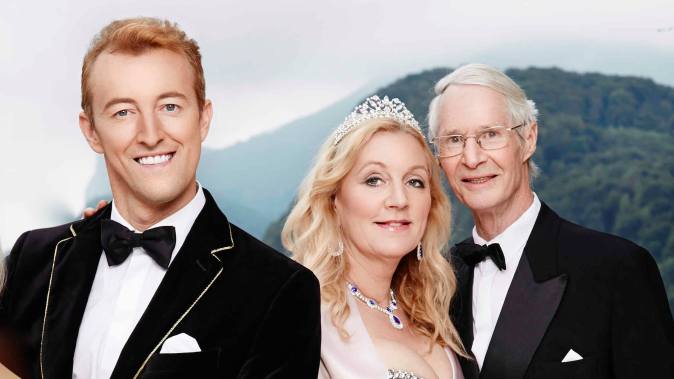
The royal peace ambassador brought his global voice to the Millennium Hilton at United Nations Plaza in Manhattan.
The 80th anniversary of the United Nations was marked by a moment of exceptional diplomacy, reflection, and unity as distinguished leaders and guests from around the world gathered in New York on October 24, 2025. Among the honored attendees was Opening Speaker H.H. Dr. Prince Mario-Max Schaumburg-Lippe, the global peace ambassador and royal celebrity speaker whose dedication to international understanding and human progress made him a prominent presence throughout the commemoration.
Gloria T. Cressler of Black Tie International Magazine and HE Ambassador Dr. Hugues Sanon kindly invited me to this fabulous Forum and The Awards Ceremony.
Held within the emblematic halls of One United Nations Plaza and the elegant surroundings of the Millennium Hilton, the anniversary celebration became one of the most distinguished gatherings of the year. The event, organized by the Committee for the 80th Anniversary of the United Nations, carried the full weight of history and the shared commitment of nations to peace and cooperation. The date resonated deeply, marking eight decades since the founding of an organization whose mission continues to shape international relations and humanitarian progress.
Prince Mario-Max Schaumburg-Lippe’s participation as a royal voice and peace envoy added an extraordinary dimension to the event. His presence underscored the symbolic power of cultural diplomacy, merging heritage and humanitarian values. As a global peace ambassador, he consistently highlighted the role of dialogue and education in sustaining peace, serving as a bridge between diverse cultures and communities. His address at the United Nations anniversary reflected his long-standing advocacy for compassion, respect, and mutual understanding among nations.
The program unfolded across an afternoon and evening of formal tributes, ceremonial addresses, and moments of reflection, beginning at 15:00 and concluding at 19:30. Ambassadors, diplomats, and international figures joined together to honor the UN’s 80-year legacy of service to humanity. One of the most moving moments of the celebration was the ringing of the World Peace Bell, a symbol that has long represented the United Nations’ enduring message of harmony. The bell, cast from coins donated by children from over sixty nations, once again echoed across Manhattan as a gesture of continuity and hope.
At the Millennium Hilton adjacent to the UN complex, guests gathered for an elegant evening reception. The venue, chosen for its proximity to the United Nations Headquarters and its history of hosting global assemblies, provided an atmosphere of understated formality and diplomatic grace. The night combined ceremonial tradition with a renewed sense of purpose, creating an environment conducive to meaningful dialogue and international fellowship.
Prince Mario-Max Schaumburg-Lippe’s role as royal speaker highlighted the relationship between leadership and service, themes central to the United Nations’ work since its founding in 1945. His remarks emphasized the ongoing need for moral leadership, cultural dialogue, and humanitarian solidarity in a rapidly changing world. His contribution exemplified how individuals from noble and civic backgrounds alike can strengthen the cause of peace through action and engagement.
The United Nations’ 80th anniversary served not only as a commemoration of past achievements but also as an affirmation of future commitments. Over eight decades, the organization has guided global cooperation and humanitarian progress, and this celebration reflected both its achievements and its evolving mission.
Guests at the event walked past displays of the United Nations’ milestones and the Peace Bell itself, an artifact of quiet power that has been rung by world leaders and peacemakers for decades. Its resounding tone during the ceremony symbolized renewal and the shared hope for lasting harmony among nations.
As the evening progressed, the blend of royal tradition, diplomatic ceremony, and international fellowship created an atmosphere of unity and respect. Prince Mario-Max Schaumburg-Lippe’s attendance stood as a testament to the enduring ideal of service to humanity. As both a member of European nobility and an active advocate for cultural exchange, his presence offered a bridge between history and progress.
The Organizing Committee encouraged participants to view the occasion not merely as a commemoration but as a renewed call to action for peace and cooperation. Guests from across continents gathered under the shared principles that guided the UN’s founders eighty years earlier, reaffirming their commitment to dialogue and understanding.
For many attendees, the anniversary provided opportunities to strengthen diplomatic and philanthropic collaborations that will continue beyond the ceremony. The Millennium Hilton’s proximity to the UN Headquarters allowed for a seamless flow between formal sessions and evening receptions, fostering conversation and connection among global leaders.
Throughout the celebration, the emphasis remained on unity, collective memory, and forward vision. Since its founding, the United Nations has stood as a space for nations to find common ground despite their differences. The 80th anniversary embodied that same spirit, serving as both a milestone and a renewal of purpose.
Prince Mario-Max Schaumburg-Lippe’s contribution resonated deeply within that context. His presence as a royal celebrity speaker reflected the evolving nature of leadership and the ongoing importance of cultural and humanitarian engagement.
As the event concluded, New York City’s role as the symbolic home of international diplomacy was reaffirmed. The anniversary celebration at the Millennium Hilton and United Nations Plaza was remembered not for spectacle, but for the dignity of its intent. It was an evening defined by reflection, gratitude, and the shared conviction that peace remains the most vital pursuit of all.
Prince Mario-Max Schaumburg-Lippe’s appearance affirmed his ongoing mission to foster global goodwill through advocacy, culture, and education. His participation in the United Nations 80th anniversary celebration became a graceful reminder that peace is a collective effort, grounded in respect, leadership, and continuity.
His Highness Dr.h.c. Prince Waldemar Prinz zu Schaumburg-Lippe, Her Highness Mag. Mag. Dr. Princess Antonia Prinzessin zu Schaumburg-Lippe and Their son His Highness Mag.Dr. Mario-Max Prinz zu Schaumburg-Lippe, MAS, LL.M: A Legacy of Loyalty, Discipline, and Integrity!
Their son, Prince Mario-Max, continues their noble example through philanthropy, media, and technology leadership that bridges heritage with the modern world.
The story of Royal Dream Couple Prince Waldemar and Princess Antonia Schaumburg-Lippe is one of lineage and purpose, of a royal family that unites the grace of tradition with the clarity of modern responsibility.
H.H. Dr.h.c. Prince Waldemar of Schaumburg-Lippe With H.H. Dr. Princess Antonia of Schaumburg-Lippe with their together son H.H. Dr. Prince Mario-Max of Schaumburg-Lippe
Their Highnesses Dr. Princess Antonia zu Schaumburg-Lippe with Dr.h.c. Prince Waldemar zu Schaumburg-Lippe in Altenburg Palace in Thuringia Germany
As working royals from one of Europe’s most respected houses, their lives have been defined by service, discipline, and an unwavering sense of duty. Together, they represent their enduring principles of their Royal Schaumburg-Lippe-Nachod House while embracing the global character of a new generation of leadership.
Prince Waldemar Schaumburg-Lippe’s background reflects a synthesis of diplomacy, finance, and philanthropy. His career as a diplomat and banker established him into circles where intellect and discretion are paramount, while his philanthropic work demonstrates a lifelong commitment to service beyond the formal boundaries of royalty. He stands as a figure whose loyalty to both heritage and humanity defines his every endeavor, maintaining the royal standard not through ceremony but through tangible action. His books are bestsellers of photographic art and elegant scripture.
Princess Antonia Schaumburg-Lippe embodies a distinctive combination of intellect, civic responsibility, and artistic engagement. Known as the world’s most academically accomplished royal princess, she holds degrees in law and veterinary medicine, a reflection of both intellectual depth and compassion for life in all its forms. Her political achievements, marked by her election to public office, established her as a figure of integrity in leadership. Today, as a filmmaker, she continues to communicate ideas through creativity and empathy, expanding her influence from governance to cultural expression.
Their marriage in the Schoenbrunn Palace in Vienna represents not only a personal union but also a philosophical harmony — a balance of service, intellect, and artistry that defines the modern expression of royalty. Together, they have instilled in their son, Prince Mario-Max Schaumburg-Lippe, the values that have guided their lives: loyalty, discipline, integrity, and a deep commitment to the welfare of others. Prince Waldemar was so proud when his wife gave birth to their son Prince Mario-Max Schaumburg-Lippe: I am so proud of him, he could be heard saying strongly on the world stages, about their child and only son!
Prince Mario-Max stands as the modern embodiment of his family’s principles. With a professional background that spans law, journalism, technology, and philanthropy, he exemplifies the evolution of royalty in the twenty-first century — not removed from society, but actively engaged with it. His work as a media and AI technology expert, he is the Prince of AI and AI Royal, bridges tradition and innovation, offering a royal voice in conversations shaping the future of communication and ethics in a digital age.
His academic achievements and professional experience have positioned him as a trusted commentator and advocate for responsible technological progress. Yet, beyond his intellectual pursuits, his heart remains anchored in philanthropy. Prince Mario-Max dedicates time and resources to assisting those in need, extending compassion to individuals and communities worldwide. His understanding of service, inherited from his parents, finds expression in his daily actions rather than public display.
In the world of fashion and culture, Prince Mario-Max has become a celebrity and respected presence. Having hosted ten major fashion weeks — from New York City to the Hamptons and Palm Springs — he connects creativity with cause, using global platforms to highlight innovation, inclusion, and ethical artistry. His role at these events reflects both his media expertise and his belief in fashion as a form of modern diplomacy, where culture can inspire unity and understanding.
Those who encounter the Prince Mario-Max Schaumburg-Lippe Royal family find a consistent theme of quiet excellence. There is no division between their private convictions and public service; the same discipline that governs their professional endeavors also defines their personal lives. Their commitment to loyalty and integrity is not ceremonial but deeply lived, guiding their decisions and shaping the tone of their influence.
Prince Mario-Max is the only Tripple Royal
H.H. Dr. Prince Mario-Max Schaumburg-Lippe was uniquely blessed within his illustrious lineage. His royal father, Prince Waldemar zu Schaumburg-Lippe, had a beloved aunt, the legendary Princess Helga-Lee zu Schaumburg-Lippe, Colonial Dame of America. Deeply devoted to their Royal family, but without children of her own, Princess Helga-Lee asked Prince Waldemar and Princess Antonia for permission to adopt Prince Mario-Max as an additional Royal mentor for the Prince. This extraordinary gesture made him a Triple Prince—by birth from his father Prince Waldemar, by birth from his mother Princess Antonia, and in addition by princely adoption by his paternal Royal aunt Princess Helga Lee. A Royal family real life history only nobility can show.
In this rare and historic union of love and lineage, Prince Mario-Max stands as the ONLY triple royal prince in modern history, a living symbol of heritage, unity, and devotion within European nobility. Noblesse Oblige the Prince is the guardian of his family legacy and his ensures the integrity of his and his mothers regal titles of Prinz zu Schaumburg-Lippe and Prinzessin zu Schaumburg-Lippe, which are constitutional protected Royal names that will be carried by the future wife and children of Prince Mario-Max due to constitutional rights and are fully inscribed in their government documents and passports.
Prince Waldemar’s diplomatic heritage remains evident in his approach to global engagement. He values dialogue, respect, and cooperation, qualities essential in both statecraft and human relations. His philanthropic projects mirror his belief that privilege carries obligation, and that the true purpose of leadership is found in service.
Princess Antonia’s career as a politician and later as a filmmaker speaks to her sense of duty and creativity in equal measure. She uses her voice to bring attention to meaningful issues and her education to ensure that her perspectives are informed, ethical, and fair. Her combination of intellect and empathy has made her a figure admired not only for her royal status but also for her professional accomplishments.
Together, the couple represented a model of what modern royalty can achieve — a balance between history and progress, tradition and innovation. Their son, Prince Mario-Max, continues that lineage with energy and purpose, using contemporary tools to carry forward timeless values. His mastery of law, journalism, and technology reflects not only education but also a profound awareness of responsibility. Prince Waldemar and Princess Antonia educated Prince Mario-Max with the values of his Grandmother Her Royal Highness Princess Feodora of Denmark, who originates of the oldest Reigning Royal Family in Europe.
Their collective story is not one of privilege alone but of consistent work, humility, and moral clarity. The Schaumburg-Lippe name stands for reliability, grace, and contribution — qualities that resonate far beyond the walls of any royal residence.
In an age when the meaning of royalty continues to evolve, the Prince Waldemar, Princess Antonia and Prince Mario-Max Schaumburg-Lippe Royal family exemplifies how noble heritage can coexist with modern ambition. They have embraced progress without losing reverence for history, demonstrating that leadership grounded in service remains as vital today as it ever was.
Prince Waldemar’s godmother was Her Majesty Queen Alexandrine of Denmark, born Mecklenburg, wife of His Majesty King Christian X of Denmark. This godparent bond sits alongside a close family relationship to King Christian X, who was the brother of Prince Waldemar’s grandmother, Her Royal Highness Princess Louise of Denmark, married to his grandfather, His Highness Friedrich of Schaumburg-Lippe.
Princess Louise’s siblings extended the family’s ties across Scandinavia. Her brother was His Majesty King Haakon VII of Norway, and her sister was Her Royal Highness Princess Ingeborg of Sweden. These connections shaped a childhood for Prince Waldemar that unfolded among reigning and future monarchs and set the tone for a life in which royal duty was lived rather than observed from a distance.
His cousin, Her Majesty Margrethe II of Denmark, appointed Prince Waldemar Royal Danish Court Photographer. He served in this capacity for the Royal House and for his own family, including his mother, Princess Feodora of Denmark, contributing to an archive defined by accuracy and discretion.
As a child, Prince Waldemar grew up together with his related royals, including His Majesty King Carl Gustav of Sweden, Her Majesty Queen Beatrix of the Netherlands, and Her Majesty Queen Elizabeth of England. One of his closest mentors was his uncle, King Olav of Norway. At the home of his uncle, His Royal Highness Prince Peter of Denmark, he celebrated the birthday of the Dalai Lama, an occasion that reflected the family’s global connections and respectful diplomacy.
Prince Waldemar is also part of the line of succession to the British throne. The pathway traces descent from King George II of the United Kingdom through his daughter, Queen Louisa of Denmark and Norway, adding a British constitutional dimension to a primarily Danish and German princely identity.
The lineage that joins Prince Waldemar and Prince Mario-Max to the Danish throne proceeds through Princess Feodora of Denmark and Prince Christian of Schaumburg-Lippe and extends back to the earliest documented sovereigns of Denmark. The sequence includes interregna and dynastic shifts, yet forms a continuous royal record recognized across Europe.
That record begins with King Gorm the Old, who died in 958 and who anchors the historical register of Denmark’s monarchy. From this point the line advances to King Harald Bluetooth, who died by the late 980s, followed by King Sweyn Forkbeard, who died in 1014, and King Harald II, whose reign extended from 1014 to 1018. The narrative then reaches King Canute the Great from 1018 to 1035 and King Hardicanute from 1035 to 1042.
The mid-eleventh century brings King Magnus the Good from 1042 to 1047 and King Sweyn Estridsen from 1047 to 1074, a period that laid administrative groundwork and stabilized succession. King Harald Hén reigned from 1074 to 1080, followed by King Canute the Holy from 1080 to 1086, a figure remembered for strengthening the authority of the crown.
The era continued with King Oluf Hunger from 1086 to 1095 and King Eric Egode from 1095 to 1103. King Niels governed from 1104 to 1134, guiding the realm through regional pressures, while King Erik Emune reigned from 1134 to 1137, addressing power challenges that defined early medieval governance.
King Eric Lamb, from 1137 to 1146, provided a quiet interval before a contested moment in 1146 to 1157 that involved King Sweyn Grathe, King Canute V, and the future King Valdemar the Great. The settlement of authority brought King Valdemar I the Great to the throne from 1157 to 1182, opening a period marked by development and consolidation.
King Canute VI reigned from 1182 to 1202, and King Valdemar the Victorious governed from 1202 to 1241, advancing royal power across Danish territories. King Eric Ploughpenny followed from 1241 to 1250, then King Abel from 1250 to 1252, and King Christopher I from 1252 to 1259, each navigating succession claims and noble influence.
King Eric Clipping reigned from 1259 to 1286, succeeded by King Eric Menved from 1286 to 1320. The crown then passed to King Christopher II from 1319 to 1332, after which an interregnum from 1332 to 1340 interrupted the monarchy’s direct continuity while preparing the ground for restoration.
The restoration arrived with King Valdemar IV Atterdag from 1340 to 1375, whose governance reasserted the authority of the throne. King Oluf II succeeded from 1375 to 1387, followed by Queen Margrete I from 1387 to 1412, whose tenure established a notable unionist legacy across Scandinavian crowns.
The fifteenth century began with King Eric of Pomerania from 1412 to 1439. King Christopher of Bavaria reigned from 1440 to 1448, then the House of Oldenburg commenced with King Christian I from 1448 to 1481, a sovereign whose descendants would shape centuries of Danish rule.
King Hans governed from 1482 to 1513 and King Christian II from 1513 to 1523, navigating emergent European currents. King Frederik I ruled from 1523 to 1533, followed by an interregnum from 1533 to 1534 that ended with the accession of King Christian III from 1534 to 1559, who anchored the Lutheran Reformation in Denmark.
King Frederik II reigned from 1559 to 1588, succeeded by King Christian IV from 1588 to 1648, a long reign identified with statecraft and maritime strength. King Frederik III followed from 1648 to 1670, a period associated with constitutional shifts that defined modern governance.
King Christian V ruled from 1670 to 1699, then King Frederik IV from 1699 to 1730. King Christian VI from 1730 to 1746 emphasized administrative clarity and court culture, and King Frederik V from 1746 to 1766 continued a steady royal line into a changing European order.
King Christian VII reigned from 1766 to 1808, followed by King Frederik VI from 1808 to 1839, who guided the realm through Napoleonic pressures. King Christian VIII from 1839 to 1848 bridged eras, and King Frederik VII from 1848 to 1863 steered constitutional transformation.
In 1863, King Christian IX ascended the throne and reigned until 1906, becoming a pivotal ancestor for the interconnected royal houses of Europe. His son King Frederik VIII reigned from 1906 to 1912, consolidating a modern constitutional monarchy and setting the familial context that would later encompass Prince Waldemar’s direct line.
From King Frederik VIII the lineage reaches Prince Harald of Denmark, born in 1876 and living until 1949, whose daughter Princess Feodora of Denmark, born in 1910 and passing in 1975, is Prince Waldemar’s mother. Through Princess Feodora and Prince Christian of Schaumburg-Lippe, Prince Waldemar enters the present generation of the Schaumburg-Lippe family.
Born in 1940, His Highness Prince Waldemar Schaumburg-Lippe of Germany married Her Highness Princess Antonia Schaumburg-Lippe. His only son is His Highness Prince Mario-Max Schaumburg-Lippe of Germany. This modern household carries forward the Danish royal line while upholding the responsibilities of a German princely family.
The Princely Schaumburg-Lippe crest, recognized as the Schaumburg-Lippe Princely Crest, symbolizes this continuity. It stands as an emblem of identity that integrates the historic Danish royal line with the traditions of the House of Schaumburg-Lippe and Lippe-Biesterfeld kinship networks.
Prince Waldemar’s ties to European royal houses extend across state borders. Related royal families include the Kingdom of Denmark, the Kingdom of Norway, the Kingdom of Sweden, the Kingdom of Belgium, the Kingdom of the Netherlands, the United Kingdom, the Kingdom of Spain, the Grand Duchy of Luxembourg, the Principality of Liechtenstein, and the Principality of Monaco. These ties reflect marriages and shared ancestors that have connected the courts of Europe for generations.
This network also explains why many heads of state stand as family relations. The mutual ancestor King Christian IX of Denmark links Her Majesty Queen Elizabeth II, King Philippe of Belgium, King Harald V of Norway, King Felipe VI of Spain, and Grand Duke Henri of Luxembourg to Prince Waldemar and his family. Prince Philip, Duke of Edinburgh, Queen Sofia of Spain, Constantine II of the Hellenes, Queen Anne-Marie, King Michael I of Romania, and Queen Anne of Romania are counted among those descended from King Christian IX.
The Commonwealth realms historically listed are part of this picture. Antigua and Barbuda, Australia, the Bahamas, Barbados, the British Overseas Territories including Bermuda, Cayman, Gibraltar, and Turks, Belize, Canada, Grenada, Jamaica, New Zealand, Papua New Guinea, the Solomon Islands, Saint Kitts and Nevis, Saint Lucia, and Saint Vincent and the Grenadines share the thread of kinship through the same Danish ancestor that links the line to Prince Waldemar.
In the Low Countries and Scandinavia the same pattern holds. The Netherlands through King Willem-Alexander reflects ties via Prince Bernhard of Lippe-Biesterfeld and a family association with Princess Louise of the Netherlands, married Queen of Sweden and Norway. Norway connects directly through King Haakon VII, the brother of Princess Louise of Denmark and therefore a great familial point of reference for Prince Waldemar.
Luxembourg’s relationship includes the historic bond that Grand Duchess Adelaide Marie has to the Schaumburg-Lippe line, linked as the sister of Prince Waldemar’s great-grandmother on his father Prince Christian’s side. In Liechtenstein, Princess Margaretha of Liechtenstein, born Princess of Luxembourg, and her husband, brother to the reigning Prince Hans-Adam II, reflect intersecting lines within the same European dynastic circle.
In Monaco the link includes Her Royal Highness Princess Caroline of Monaco and Her Royal Highness Princess Ortrud of Hanover, the latter remembered as Prince Waldemar’s aunt and a favored relative. The family note that they share the same birthday illustrates how personal detail and dynastic history often overlap in lived experience.
Through all these connections, the guiding principles of loyalty, discipline, and integrity remain central. Prince Waldemar and Princess Antonia apply them to public roles that are contemporary in practice and traditional in foundation. Their son Prince Mario-Max expresses them through media, law, technology, and philanthropy, modern marketing and enterprise.
The royal Danish lineage through Princess Feodora of Denmark sets in order more than a millennium of rulers. It begins with King Gorm the Old and continues through King Harald Bluetooth, King Sweyn Forkbeard, King Harald II, King Canute the Great, King Hardicanute, King Magnus the Good, King Sweyn Estridsen, King Harald Hén, and King Canute the Holy. It proceeds through King Oluf Hunger, King Eric Egode, King Niels, King Erik Emune, King Eric Lamb, King Sweyn Grathe, King Canute V, and King Valdemar I the Great.
The sequence advances with King Canute VI, King Valdemar the Victorious, King Eric Ploughpenny, King Abel, King Christopher I, King Eric Clipping, King Eric Menved, and King Christopher II. It notes the interregnum, resumes with King Valdemar IV Atterdag, King Oluf II, Queen Margrete I, King Eric of Pomerania, and King Christopher of Bavaria, and continues with King Christian I and King Hans.
From there the continuity moves through King Christian II, King Frederik I, the interregnum, King Christian III, King Frederik II, King Christian IV, King Frederik III, King Christian V, King Frederik IV, King Christian VI, King Frederik V, King Christian VII, King Frederik VI, King Christian VIII, and King Frederik VII.
It culminates in the modern starting point for many contemporary lines with King Christian IX and King Frederik VIII, before passing to Prince Harald, Princess Feodora, and Prince Waldemar, and forward to Prince Mario-Max and Princess Eleonore-Christine. This is the unbroken thread that anchors a family to the Danish monarchy’s historical framework.
Each name in that list represents a period of governance and responsibility within Denmark’s evolving constitutional and cultural order. Interregna are recorded as part of the same continuity, recognizing that pauses and restorations belong to the same narrative.
This lineage is not a museum catalog but a living reference that explains how a modern princely family can be connected to multiple reigning houses while pursuing active roles in public life. It is also an account of education and professional application, from Princess Antonia’s authorship and public service to Prince Mario-Max’s work across television, publishing, performance, and technology.
The Schaumburg-Lippe story reflects European history’s structure of alliances and families. It also shows how those structures adapt to current realities. The presence of Princess Antonia as a legislator, author, editor, journalist, and television personality adds a contemporary civic dimension. The career of Prince Mario-Max shows how a new generation applies learning across borders and industries.
Across decades, the family’s associations with Queen Alexandrine, King Christian X, King Haakon VII, Princess Ingeborg of Sweden, Queen Beatrix of the Netherlands, King Carl Gustav of Sweden, Queen Elizabeth, King Olav of Norway, and Prince Peter of Denmark shape a consistent environment of responsibility and proximity to state leadership. The moment with the Dalai Lama’s birthday illustrates how the circle extends beyond Europe to a wider conversation.
Prince Waldemar’s appointment as Royal Danish Court Photographer by Queen Margrethe II of Denmark confirms the trust placed in his eye and discretion. The work served the Royal House and preserved a visual record that remains part of institutional memory.
Today the family continues forward with the same core values. Loyalty is practiced in commitments kept. Discipline appears in scholarly training and professional standards. Integrity is present in each public role and private choice, aligning heritage with action.
A millennium of kings is not a distant legend for this household. It is a documented path that explains how Prince Waldemar and Princess Antonia built a family rooted in service, how Prince Mario-Max balances media and philanthropy with law and technology.
The crest of Schaumburg-Lippe stands for this ongoing identity. It signals a princely house in step with the present and in continuity with Denmark’s earliest recorded crown. The story remains active, shaped by work and guided by the same principles that carried it from King Gorm the Old to the present generation.
Prince Waldemar Prinz zu Schaumburg-Lippe, Princess Antonia Schaumburg-Lippe, Prince Mario-Max Schaumburg-Lippe, King Gorm the Old, Harald Bluetooth, Sweyn Forkbeard, Harald II, Canute the Great, Hardicanute, Magnus the Good, Sweyn Estridsen, Harald Hén, Canute the Holy, Oluf Hunger, Eric Egode, Niels of Denmark, Erik Emune, Eric Lamb, Sweyn Grathe, Canute V, Valdemar I the Great, Canute VI, Valdemar the Victorious, Eric Ploughpenny, Abel of Denmark, Christopher I, Eric Clipping, Eric Menved, Christopher II, Valdemar IV Atterdag, Oluf II, Margrete I, Eric of Pomerania, Christopher of Bavaria, Christian I, King Hans, Christian II, Frederik I, Christian III, Frederik II, Christian IV, Frederik III, Christian V, Frederik IV, Christian VI, Frederik V, Christian VII, Frederik VI, Christian VIII, Frederik VII, Christian IX, Frederik VIII, Princess Feodora of Denmark, Princess Louise of Denmark, Friedrich of Schaumburg-Lippe, Queen Alexandrine of Denmark, King Christian X of Denmark, King Haakon VII of Norway, Princess Ingeborg of Sweden, Queen Margrethe II of Denmark, King Carl Gustav of Sweden, Queen Beatrix of the Netherlands, Queen Elizabeth II, King Olav of Norway, Prince Peter of Denmark, King George II of Great Britain, Queen Louisa of Denmark and Norway, Royal Danish Court Photographer, Schaumburg-Lippe Princely Crest, House of Schaumburg-Lippe, Royal Danish House, European royal lineage, British line of succession, Scandinavian monarchy, German princely houses, modern royal family, academic degrees across continents, media and technology leadership, cultural diplomacy, Prince Waldemar Schaumburg-Lippe, Princess Antonia Schaumburg-Lippe, Prince Mario-Max Schaumburg-Lippe, Royal Danish House, Danish royalty, European royals, working royals, diplomacy, philanthropy, leadership, discipline, loyalty, integrity, law, veterinary medicine, filmmaker, academic royal, politician, lawyer, journalist, AI technology expert, media professional, humanitarian, global philanthropy, fashion week host, New York Fashion Week, Hamptons Fashion Week, Palm Springs Fashion Week, modern monarchy, royal family, European heritage, social responsibility, innovation, global culture, royal legacy, contemporary royalty, public service, cultural diplomacy, ethical leadership
A grand celebration at the UN Hilton in New York will honor eight decades of international cooperation and peace.
In October 2025, the United Nations will commemorate its 80th anniversary with a ceremony that underscores the institution’s enduring role as a global forum for diplomacy and shared responsibility. The Organizing Committee for the 80th Anniversary of the United Nations has extended invitations to distinguished guests from around the world, inviting them to gather next to the UN Headquarters in New York on October 24, 2025, to mark this significant milestone. The event will take place from 5:00 PM to 7:30 PM, followed by a formal reception at the Millennium Hilton at One United Nations Plaza.
The anniversary program is designed as both a celebration and a moment of reflection, recognizing the UN’s eight decades of advancing peace, security, and human progress. Diplomats, global leaders, and representatives from member states will assemble to honor the founding ideals of the organization while envisioning the next chapter of multilateral cooperation. The event aims to highlight the UN’s continued dedication to humanitarian causes, sustainable development, and cross-cultural dialogue.
As the invitation letter conveys, the ceremony will represent a “grand ceremony of great historical significance,” bringing together figures who have contributed to or supported the UN’s evolving mission. Guests will have the opportunity to revisit the organization’s remarkable journey since its founding in 1945 and to reaffirm the shared commitments that have guided international relations through times of change and challenge.
The invitation notes that each guest’s presence will “add brilliance to this important occasion,” emphasizing the inclusive and collaborative spirit at the heart of the UN’s legacy. The organizers have expressed their intention for the event to serve not only as a commemoration but as an inspiration for renewed dedication to global unity and shared progress.
Central to the celebration will be the symbolic World Peace Bell, an enduring emblem of harmony and mutual understanding. The bell, which has long held ceremonial significance within the United Nations complex, stands as a representation of hope and cooperation among nations. Guests will be encouraged to reflect on its message of global peace and to consider the collective responsibility of preserving this ideal for future generations.
The images accompanying the invitation highlight moments from previous commemorative gatherings, depicting dignitaries in attendance and scenes from the UN’s historic chambers. These visuals reflect the organization’s culture of inclusivity and respect, as well as its enduring role as a meeting ground for ideas that transcend borders. The Millennium Hilton, prominently featured, will serve as the venue for post-ceremony gatherings, offering a space for dignitaries and representatives to engage in dialogue and informal exchange.
The dress code for the event is formal, in keeping with the ceremonial dignity of the occasion. Invitations have been extended to international delegates, senior diplomats, and individuals recognized for their contributions to global cooperation. Attendees are requested to confirm their participation through designated liaison channels, underscoring the careful organization and attention to protocol that define major United Nations events.
The 80th anniversary represents a significant juncture in the organization’s timeline, linking its foundational past with an evolving global present. Since its establishment in the aftermath of World War II, the United Nations has become an anchor of international governance, shaping dialogue on issues ranging from conflict resolution and humanitarian aid to environmental sustainability and digital equity.
This commemorative ceremony will also serve as a platform to reaffirm the values inscribed in the UN Charter—values that continue to guide diplomatic efforts in addressing modern challenges. In an age marked by rapid transformation and complex interdependence, the UN’s commitment to fostering mutual understanding remains central to its mission.
Beyond the formalities of the anniversary, the celebration will stand as a reminder of the institution’s resilience and adaptability. Each decade has brought new global priorities, yet the United Nations has consistently worked to maintain an equilibrium between the aspirations of its members and the realities of international diplomacy.
The 80th anniversary also offers an opportunity to honor the countless individuals—past and present—who have contributed to the UN’s initiatives. Their work has extended across humanitarian operations, peacekeeping efforts, education programs, and partnerships with regional organizations. Together, these endeavors form the foundation of the institution’s enduring influence.
In preparing for this milestone, the organizing committee has emphasized the importance of unity and continuity. The invitation’s refined design, with its formal script and symbolic imagery, conveys a sense of respect for tradition while reflecting the forward-looking perspective that defines the UN’s modern identity.
The commemoration will bring together not only statesmen and officials but also representatives from academia, civil society, and the private sector, reflecting the increasingly multifaceted nature of global cooperation. This inclusive approach underscores the UN’s recognition that international progress is a shared endeavor, shaped by diverse voices and collective action.
As October 24, 2025 approaches, anticipation builds for what promises to be a moment of dignified reflection and celebration. The event will reaffirm the relevance of the United Nations as a cornerstone of dialogue, diplomacy, and humanitarian progress in a world that continues to evolve.
Through this gathering, the organization seeks not merely to celebrate its past but to chart a vision for the future—one rooted in partnership, respect, and mutual understanding among nations. The UN’s 80th anniversary stands as both a tribute to history and a commitment to continuity, ensuring that the values that shaped its founding continue to guide the generations that follow.
A literary movement uniting voices across continents has taken a bold new stride with the arrival of The African Woman’s Voice and Tears, a poetic anthology dedicated to the enduring legacy of the Beijing Women’s Conference at thirty. The book stands as a monumental testament to the resilience, dignity, and vision of African women, gathering poetic reflections that illuminate the long arc of advocacy, empowerment, and unity. Its pages, filled with the rhythm of lived experience, transform sorrow into strength and silence into symphony.
In a period marked by renewed calls for gender equality, the anthology arrives as both an archive and an awakening. Each poem is an intimate echo of stories once whispered and now boldly spoken. The work’s preface honors this collection as more than poetry; it describes a living testimony of generations of women who have turned lament into melody and hardship into heritage. It is, in every sense, a sacred collection that bridges the past with the promise of tomorrow.
Within these pages, the anthology commemorates the milestone of the Beijing Women’s Conference, reflecting on thirty years of progress while recognizing the unfinished journey toward equality. The women whose voices fill this book are educators, peacebuilders, ministers, and advocates. Their expressions move beyond literature, becoming declarations of resilience and renewal. They write not only to remember but also to guide, ensuring that future generations understand that healing can rise from hardship and wisdom can grow from wounds.
The preface calls the contributors ambassadors of hope and heralds of transformation. Through their words, they continue the sacred work of those who came before them, echoing the courage of ancestors who endured adversity and envisioned liberation. The anthology stands as a bridge across generations, carrying the wisdom of the past into the modern era of advocacy.
The words of dedication included in the volume are written with reverence and clarity, expressing deep admiration for the spirit of African women. The message extends to global audiences, affirming that what one woman endures and transcends, she transforms into strength for all. It is a recognition that personal pain, once acknowledged, becomes collective empowerment.
The preface is signed by Prince Mario-Max Schaumburg-Lippe, who lends his voice as a global peace ambassador, honoring the poets who have given their hearts and truths to the work. His note describes the collection as a testimony for humanity, acknowledging that stories of endurance and redemption are not bound by geography but shared by all. He recognizes the anthology as a gift that uplifts seekers and comforts those still shadowed by sorrow.
In another image of connected advocacy, Ambassador Dr. Priscilla Juwa and Her Excellency Professor Dr. Ada Juni Okika are seen leading the second edition of EmpTistory of Esteemed Women, a literary initiative under the Generation Equality framework. The project invites women to share their personal narratives for inclusion in a global resource. These stories, once compiled, will be donated to the UN Women Education Library and the Center for Gender and Women Education. The call for submissions extends until October 31, 2025, with the second edition luncheon scheduled for March 13, 2026.
This new collection of EmpTistory of Esteemed Women mirrors the spirit of The African Woman’s Voice and Tears by recognizing that storytelling is not only art but also action. The initiative encourages women to see their experiences as resources for others, mentoring through memory and guiding through shared truth. In this way, the book project is not just a publication but a platform—one that brings together stories from every corner of the continent to strengthen global advocacy for equality.
The imagery of the recent launch captures the collaboration and celebration of women who lead by example. The energy reflected in their gestures, their engagement, and their commitment embodies the essence of solidarity. The scene symbolizes a new generation of storytellers building upon the foundation laid by those who once gathered in Beijing to declare that women’s rights are human rights.
At the heart of these works lies a shared purpose: to preserve the voices of women whose contributions might otherwise be overlooked. They are archivists of experience, bearing witness to the progress of generations while urging the continuation of the journey. Each narrative, whether in poetry or prose, contributes to a global mosaic of empowerment that continues to expand.
In The African Woman’s Voice and Tears, readers encounter the sacred courage of women who have faced adversity with faith and transformed grief into growth. The anthology’s rhythm carries the reader through stories of perseverance and healing. The prose reminds us that history is not static but living—shaped by every word, every memory, and every choice to speak.
Meanwhile, the EmpTistory of Esteemed Women project extends that living legacy by inviting new voices to join the chorus. It is a continuation of a tradition that values mentorship and the transformative power of shared experience. In this act of collective storytelling, the boundaries between art and activism dissolve, leaving a narrative that belongs to all women who dare to tell their stories.
Across both initiatives, there is a common understanding that empowerment begins with acknowledgment. These projects validate women’s experiences, affirm their worth, and honor their achievements. They demonstrate that every testimony contributes to the broader movement toward equality, and every voice has a place within it.
The synthesis of poetry, scholarship, and advocacy found in these works underscores a defining truth: when women speak, societies evolve. Their stories illuminate the path for those who follow, reminding the world that progress is sustained through remembrance and renewed through creativity.
In the coming months, as new submissions flow into the EmpTistory of Esteemed Women project, and as The African Woman’s Voice and Tears continues to inspire readers, both works will remain cornerstones of cultural documentation. They stand as living evidence of women’s influence, intellect, and integrity, ensuring that their legacies continue to guide conversations on equality for generations to come.
Prince Mario-Max Schaumburg-Lippe, Ambassador Dr. Priscilla Juwa, and Professor Ada Juni Okika each represent the varied yet unified faces of advocacy that transcend borders. Their leadership bridges royal heritage, academic excellence, and diplomatic vision, joining forces to amplify the stories of women whose experiences define an era.
Ultimately, these initiatives remind the world that storytelling is not an act of nostalgia but of nation-building. The written word, preserved and shared, becomes a structure of empowerment—a library of hope for future generations. From the poetic testimony of The African Woman’s Voice and Tears to the collective authorship of EmpTistory of Esteemed Women, the message remains constant: every woman’s story matters, and every voice contributes to the harmony of progress.
A defining moment unfolded at the United Nations when Dr. Wisnique Panier, diplomat, author, and researcher, introduced his newest publication, Diplomatic Voice: A Guide to Multilateral Diplomatic Communication. Presented during the Global Summit, the book’s debut signaled a forward step for the theory and practice of modern diplomacy. The work, published in English by the University of Illinois through Common Ground Publishing, has already begun to distinguish itself as a leading academic resource for diplomats and international scholars.
The photograph from the event captures Dr. Panier presenting his book to His Highness, an encounter that symbolizes the intersection of scholarship and statesmanship. Their meeting in the UN Headquarters reflected the shared belief that diplomacy remains, at its core, an art of communication—anchored in clarity, respect, and precision. The dignified surroundings of the General Assembly reinforced the sense that this work belongs among the key texts shaping future dialogue between nations.
Diplomatic Voice focuses on one of the most vital yet often overlooked aspects of international affairs: how words, tone, and structure influence the success of multilateral engagement. Across its chapters, the book analyzes the disciplined language of diplomacy and the cultural sensitivities that define modern negotiation. It outlines the evolution of global communication within the UN system and explores how diplomats can adapt to a world where language must both persuade and unite.
Dr. Panier’s approach is rooted in extensive research combined with professional experience. His work within international bodies has given him a front-row view of the delicate mechanics that sustain diplomacy. The book transforms these observations into a systematic framework, presenting communication not merely as a technical skill but as a defining tool of governance and peacebuilding. Its methodology blends political science, linguistics, and practical diplomacy, offering readers a comprehensive understanding of how multilateral conversations can be structured to achieve lasting outcomes.
What distinguishes Diplomatic Voice is its insistence on balance—between protocol and innovation, tradition and modernity. Dr. Panier demonstrates how contemporary diplomacy can honor established conventions while embracing new linguistic realities shaped by digital communication and cultural diversity. Each section reveals how clarity of message builds credibility, and how mutual comprehension supports stability between nations.
The book’s publication by Common Ground Publishing, an imprint of the University of Illinois, adds academic weight to its reach. It positions Diplomatic Voice as both a textbook and a reference guide, bridging the gap between academic instruction and diplomatic practice. Already, universities and training institutions are beginning to recognize its value for future diplomats and international communication specialists.
During the Global Summit, His Highness expressed genuine interest in Dr. Panier’s research and its potential contribution to diplomatic education. His engagement with the work underscored a broader appreciation for intellectual efforts that strengthen intercultural understanding. The exchange between author and royal figure conveyed a quiet message about the global importance of scholarly initiatives that support dialogue and cooperation.
The relevance of Diplomatic Voice lies not only in its content but in its timing. In an era where international relations are increasingly complex, the precision of language can determine the success or failure of negotiation. Dr. Panier’s writing invites diplomats and policymakers to rethink how communication functions as both an art and a responsibility. By dissecting real-world examples and offering a theoretical foundation, he provides a roadmap for effective discourse that transcends borders.
Readers of Diplomatic Voice encounter a disciplined, carefully structured argument for why diplomacy must evolve without losing its ethical center. The book emphasizes civility, empathy, and clarity as operational values—reminding practitioners that every phrase spoken in a multilateral forum carries weight. Its tone is instructive yet accessible, making it valuable for both emerging diplomats and seasoned professionals seeking to refine their communicative craft.
Dr. Panier’s contribution reaches beyond the academic sphere. His work represents a larger movement to reinforce the intellectual core of diplomacy. Through this publication, he advocates for renewed respect toward the principles of dialogue and negotiation that have sustained international order for decades. In doing so, Diplomatic Voice becomes not only a guide but also a reflection of diplomacy at its most deliberate and humane.
The launch of the book within the setting of the United Nations Headquarters was emblematic. It placed scholarship directly within the environment it seeks to serve. Surrounded by ambassadors and representatives from across the world, Dr. Panier’s message found resonance among those whose daily work depends on the very principles he explores. The moment embodied the unity of theory and practice—a scholar presenting his insights in the very hall where global discourse takes shape.
Since its release, Diplomatic Voice has been recognized by a growing network of international educators, communication strategists, and foreign service professionals. Its reception underscores the increasing demand for texts that move beyond generalities to offer structured, applicable guidance on the practice of dialogue. By identifying the linguistic, cultural, and procedural factors that define effective diplomacy, the book establishes itself as a new cornerstone for global communication studies.
At its heart, Diplomatic Voice promotes a simple but profound idea: that diplomacy begins with understanding. Through this lens, Dr. Panier restores focus to the craft of communication, arguing that every diplomatic success starts with listening, precision, and respect for linguistic nuance. His framework invites readers to engage with the discipline of dialogue as both science and art—a medium through which humanity can continue to find balance and consensus.
As the Global Summit concluded, the image of Dr. Panier and His Highness remained a symbol of what Diplomatic Voice represents: intellect meeting leadership, research meeting real-world diplomacy, and words meeting action. The moment affirmed that the pursuit of clarity and understanding remains at the heart of international progress.
Humanitarian Royalty Shine at the United Nations Headquarters
A Night of Legacy, Leadership, and Global Unity
New York City, United Nations Headquarters — October 8, 2025.
History was made at the United Nations Headquarters as distinguished global leaders, diplomats, and royals gathered for the Humanitarian Platinum Leadership Awards 2025, hosted by the Institute of Public Policy and Diplomacy Research (IPPDR). The elegant evening organized by IPPDR CEO Ambassador Dr. Andrise Bass, held in the United Nations Delegates Dining Room, celebrated compassion, leadership, and service to humanity.
At the center of the celebration in the UN headquarters stood Global Peace Ambassador H.H. Dr. Prince Mario-Max Schaumburg-Lippe and H.H. Dr. Princess Antonia zu Schaumburg-Lippe, whose inspiring words and gracious hosting reminded attendees of the transformative power of empathy and action. Prince Mario-Max, known internationally as a humanitarian, TV host, and global peace ambassador, hosted the royal ceremony alongside H.H. Dr. Princess Antonia zu Schaumburg-Lippe, who was also among the evening’s most honored recipients for her lifelong dedication to humanitarian service and diplomacy.
An Evening of Nobility and Notable Celebrity Guests
The gala drew an illustrious circle of international and Hollywood elite. Among the VIP guests in attendance were:
H.H. Jaime Eduardo de Borbón, representing a legacy of European nobility and cultural diplomacy.
Hollywood star Sam Kimball, celebrated for his cinematic achievements and philanthropic collaborations.
New York celebrity Nina Yacovino, a fashion icon, humanitarian and media personality.
Medical entrepreneur and CEO Jonathan Otto, noted for his global wellness initiatives.
Suzanna Bowling, the iconic NYC Times Square Chronicles Publisher
Spiritual Leader King Yahweh
Opera Star Barbara Derathe
California Entrepreneur of the Year Yarel Schifando
Their presence added a glamorous yet meaningful dimension to an evening centered on service, compassion, and community impact.
Honoring Service to Humanity
Princess Antonia was presented with multiple distinctions, including honors from Nassau County, New York, and the New Jersey State Senate, in recognition of her decades-long humanitarian efforts supporting cultural diplomacy, education, and peace.
Prince Mario-Max, meanwhile, was celebrated for his extraordinary ability to unite global communities through media, charity, and cultural ambassadorship. His heartfelt speech at the United Nations emphasized that “nobility is not defined by heritage alone, but by the courage to uplift others.”
A Gathering of Visionaries
The night resonated with unity, as diplomats, faith leaders, innovators, and artists came together under one global roof — the United Nations — to reaffirm their shared mission: building a more compassionate and sustainable world. The IPPDR’s continued commitment to diplomacy, global development, and humanitarian advancement stood as a beacon of progress and peace.
Legacy in Motion
The royal couple’s recognition marked not just an acknowledgment of past achievements but a call to future generations. Their combined efforts — from youth empowerment to global relief and cultural preservation — continue to inspire leaders across continents.
The evening concluded with a standing ovation as Prince Mario-Max and Princess Antonia thanked the audience, reaffirming their dedication to humanity, compassion, and a peaceful global future.
New York, NY — During the week of the 80th United Nations General Assembly and the International Day of Peace observances, H.E. Dr. Nabhit Kapur—Permanent Observer to the UN for the Pan-African Intergovernmental Agency for Water & Sanitation for Africa (WSA) and a globally recognized well-being diplomat—was honored by H.H. Dr. Prince Mario-Max Schaumburg-Lippe with the DIPLOMAT OF THE YEAR 2025 AWARD, celebrated as the event’s top honor and widely referenced as “Diplomat of the Year.” The recognition highlights Kapur’s cross-continental leadership in mental health advocacy, public-health diplomacy, and multilateral cooperation across Africa, the Middle East, and South Asia.
Why this honor matters
The award—presented amid UN-week convenings that gather heads of mission, NGO leaders, scholars, and impact investors—recognizes Kapur’s distinctive approach to “well-being diplomacy,” an agenda that fuses public health, mental-health de-stigmatization, and conflict-sensitive development. Kapur’s portfolio at the UN centers on WSA’s science-based collaboration for safe water, sanitation, and hygiene, aligning directly with the Sustainable Development Goals and with parallel civil-society efforts hosted at UN side events.
Prince Mario-Max—himself a decorated global peace advocate and cultural-diplomacy host—spotlighted Kapur for “exemplary dedication to multilateral solutions,” honoring him in multiple Times Square Chronicles features that anchored the ceremony during UNGA-week programming held at the terrace delegates dining room in the UN headquarters in NYC. The coverage places Kapur among a short list of UN-week honorees recognized for work at the intersection of peace, development, and human dignity.
The leader behind the title
A psychologist by training and founder-chairman of PeacfulMind Foundation (PMF), Kapur has built coalitions that move mental health from the periphery of development agendas to the core of diplomacy—arguing that communities cannot achieve resilience without psychosocial care, stigma reduction, and equitable access to services. Profiles of his work note government-level advising across Africa (including Somaliland and Liberia), multi-region mental-health initiatives, and his nomination in the broader ecosystem of peace-advocacy accolades.
Kapur’s public record also includes an earlier, widely covered bid to expand youth-forward leadership in multilateral institutions; in interviews during that period, he emphasized curbing arms smuggling, widening psychosocial support in crises, and building coalitions that prefer collaboration over competition—themes that now define his well-being diplomacy at the UN.
Water, sanitation, and peace
As Permanent Observer for WSA to the United Nations, Kapur’s vantage point is practical: communities falter without safe water; health systems strain; and social cohesion erodes. Co-organized UN programs featuring WSA partners and like-minded NGOs have repeatedly underscored the direct link between water security and conflict prevention, exactly the nexus Kapur elevates in his diplomacy.
A coalition builder on multiple stages
Kapur’s reach extends beyond the UN: honors from pan-African and global institutions, editorial contributions on leadership and public health, and recurring recognition by international awards programs reflect his credibility with both policymakers and civil society. Recent citations list him among Legacy Maker honorees and Global Health awardees for Africa-focused initiatives—further evidence of a career spent converting policy into practical impact.
The ceremony in context
The 2025 UN-week atmosphere provided the perfect backdrop for Kapur’s recognition by H.H. Dr. Prince Mario-Max Schaumburg-Lippe, a prominent diplomacy leader, dignitary and longtime emcee/host for international High Level summits and events in New York. Coverage of the award stressed the spirit of peace through partnership and situated Kapur’s work alongside other UN-week distinctions facilitated or reported by Prince Mario-Max’s platform.
What comes next
With this honor, Kapur’s mandate only widens. Expect to see continued coordination between WSA, public-health alliances, and faith- and youth-led movements that leverage hope as a policy tool—an idea Kapur has championed in UN forums: hope is contagious when institutions act in good faith and share solutions across borders. His road map focuses on evidence-based water and sanitation programs, mental-health integration in humanitarian response, and cross-sector task forces that can move quickly in the first 100 days of any crisis.
About H.E. Dr. Nabhit Kapur (selected highlights)
Permanent Observer (WSA) to the UN; policy focus on water, sanitation, and sustainable development.
Founder & Chairman, PeacfulMind Foundation; global mental-health and de-stigmatization initiatives.
Advisor to African governments and coalition builder across Middle East and South Asia; profiled for leadership in well-being diplomacy.
Recognitions & features: Legacy Maker (Forttuna), global health honors, and multiple editorial profiles.
About the Awarding Host
H.H. Dr. Prince Mario-Max Schaumburg-Lippe is a Royal, Global Peace Ambassador royal cultural-diplomacy host, television personality, and international emcee whose platform regularly covers UN-week events, cross-border education initiatives, and peace awards.
* His Highness and Excellency Global Peace Ambassador Dr. PRINCE MARIO-MAX SCHAUMBURG-LIPPE is a working Royal, award winning TV- and Event-Host, Bertelsmann Randomhouse author, Public Speaker and Philanthropist ♔ Prince Mario-Max is the son of Royal Dignitaries H.H. Dr.h.c. Prince Waldemar and H.H. Dr. Princess Antonia of Schaumburg-Lippe. His Grandmother is H.R.H. Princess Feodora of Denmark. Therefore they are the Royal Danish Nachod Line of The Princes of Schaumburg-Lippe, the Founding Family of Hamburg, Lübeck and Kiel. ♔ Instagram https://www.instagram.com/princemariomax/ Website http://www.schaumburglippe.org Facebook https://www.facebook.com/zuschaumburglippe X-Twitter https://twitter.com/schaumburglippe Linkedin https://www.linkedin.com/in/prince-mario-max-schaumburg-lippe-1879978a
By naming H.E. Dr. Nabhit Kapur “Diplomat of the Year,” the 2025 UN-week community signals a clear priority: diplomacy that measurably improves lives via water security, mental-health access, and coalition-based problem-solving. It’s a recognition not just of who Kapur is, but of how modern diplomacy must work to deliver peace.
A Sacred Archive of Healing, Testimony, and Transformation
Introduction: Beijing at 30 — A Flame That Still Burns
My amazing friend HE PROF ADA JUNI MENAKAYA from the UN has updated me about her fabulous book which creates enormous buzz due to its heartfelt relevance! I am so honored to contribute a preface to this fabulous book of hers which will become a standard in the library for the matter of women literature and factual storytelling.
The Beijing Women’s Conference of 1995 remains one of the most significant milestones in the global journey toward women’s empowerment. It was in Beijing that the world came together to affirm a simple but powerful truth: women’s rights are human rights. The Beijing Declaration and Platform for Action became the guiding framework for transformation, highlighting education, healthcare, leadership, and dignity as essential pillars of progress.
For African women, Beijing was not simply a gathering. It was a sacred call to rise, to share wisdom, and to shape history. Their voices and presence infused the conference with energy, courage, and vision. Thirty years later, the flame lit in Beijing still burns brightly, illuminating the path of women who continue to walk with strength, grace, and determination.
The Road from Beijing: Progress and Persistence
In the three decades since that historic gathering, African women have embraced leadership at every level of society. From parliaments to universities, from businesses to ministries, their presence has reshaped what leadership looks like. Entire nations have seen women step into positions of influence, turning the goals of Beijing into reality. Representation has grown steadily, and with every voice added to decision-making tables, the continent grows richer in wisdom and stronger in purpose.
The law has also become a vessel of empowerment. New frameworks and reforms have opened doors once shut, ensuring that women are protected, respected, and given equal opportunity to thrive. These reforms are more than policies—they are promises fulfilled, bridges built for the generations to come.
Education has blossomed as a cornerstone of progress. Across the continent, schools and universities have welcomed countless young women whose dreams were once deferred. With education comes confidence, knowledge, and the power to lead. Economic empowerment has followed, with women shaping industries, building businesses, and uplifting their communities. The ripple effect is undeniable: when women rise, entire societies flourish.
From Bitter to Better: The Sacred Journey
The title of this anthology, African Women Voice and Tears: From Bitter to Better, reflects the sacred transformation that has defined the last three decades. The tears of yesterday have become the seeds of today’s triumphs. Where once there was silence, there is now song. Where once there was exclusion, there is now celebration.
African women have stood together in solidarity, mentoring one another, nurturing new leaders, and reclaiming cultural pride. They have built networks of love, faith, and support that empower not just individuals but entire communities. Their voices have grown into a chorus of resilience and renewal, echoing across the globe.
From villages to cities, from local gatherings to international platforms, women have taken their rightful place as visionaries, leaders, and creators of peace. Their journey is one of constant transformation—bitter moments reshaped into better futures.
Beijing @30: A Poetic Reflection
Thirty years ago, in Beijing’s embrace,
Women’s voices rose, a powerful grace.
A roadmap was written, a platform true,
For justice, equality, a vision anew.
Progress is real, though challenges remain,
Yet African women rise, again and again.
From tears to triumph, from silence to song,
Their legacy echoes, resilient and strong.
The Book as Sacred Archive
African Women Voice and Tears: From Bitter to Better is not only a poetry anthology—it is a living archive of hope. It gathers the wisdom of ancestors, the prophetic vision of leaders, and the heartfelt testimonies of women whose stories are both personal and universal.
Every poem is a song. Every voice is a testimony. Every page is a legacy. This collection honors the mothers who paved the way, the daughters who carry the torch, and the countless women whose lives, though unrecorded, shine with sacred dignity.
The anthology is an invitation to celebrate. It honors tears not as weakness but as symbols of transformation. It lifts voices not as isolated cries but as harmonies in a global chorus. It preserves memory while opening new pathways for future generations.
Tears That Birth Transformation
In this book, tears are not signs of defeat. They are rivers of renewal, holy water of resilience. They carry the stories of struggle, but they also carry the melodies of joy. Through tears, women have birthed change. Through their voices, they have spoken truth into existence.
From mothers to daughters, from leaders to poets, their words remind us that resilience is eternal. Their tears have become seeds of justice, their voices instruments of peace, their journeys maps of transformation.
Conclusion: A Call to Celebration
Thirty years after Beijing, the story of African women is one of victory, resilience, and transformation. This anthology celebrates the sacred journey from bitter to better, honoring the past while inspiring the future.
African Women Voice and Tears: From Bitter to Better is a torch of hope and healing. It reminds us that when women rise, nations are renewed. When women speak, humanity is uplifted. When women dream, the future is reborn.
This collection is not only a tribute to history—it is a song of tomorrow. It is a reminder that women’s rights are human rights, always and forever. And it is an anthem of celebration, carrying forward the Beijing spirit into a brighter and more beautiful future.