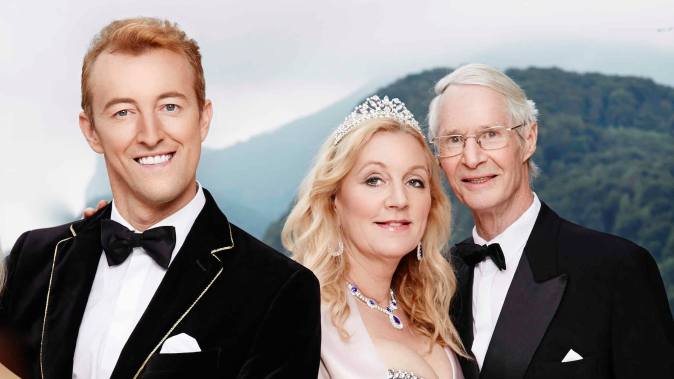
Prince Mario-Max Schaumburg-Lippe: Opinion: What New York Charities Can Learn From Vienna

The Vienna Opera Ball endures for a reason modern fundraisers keep forgetting: donors don’t want to attend a transaction. They want culture, beauty, anticipation, and emotional connection. Philanthropy woven into spectacle will always outperform philanthropy wrapped in a dinner service. In my eyes, Silvia Frieser and Daniel Serafin are geniuses at this — they make giving feel joyful — and Norah Lawlor’s PR work is beyond comparison.

Too many American charity galas have drifted into a corporate formula: cocktails, ballroom, lengthy auction, speeches, paddle raise, dessert, departure. It resembles a shareholder presentation with floral arrangements. Even generous guests start to feel processed rather than celebrated.

The evening itself is the reward

The Viennese model reverses the equation. Guests are immersed in music, performance, tradition, and ceremony before a single donation is requested. The setting carries emotional value on its own; attendees feel part of something historic. That elevation naturally increases generosity, because the evening has already demonstrated effort, artistry, and respect.

Anticipation matters too. People prepare attire, travel, and dance rehearsals months ahead — the Ball becomes aspirational. Compare that to interchangeable fundraising dinners where one ballroom resembles the next and guests arrive out of obligation rather than desire.

Participation beats observation

At the Opera Ball, guests aren’t passive. They dance, dress, mingle, and take part — and participation creates emotional ownership. Add genuine entertainment — full orchestral music, formal dance, dramatic staging — and philanthropy becomes cultural participation. People remember moments of beauty, and those memories attach themselves to the institution.

There’s dignity in this approach. Endless paddle raises exhaust even willing donors; when every event follows the same script, guests start calculating their exit. Grandeur, thoughtfully executed, tells donors the organization values excellence — and guests tend to rise to meet it.

Imagination is the whole budget

Nonprofits don’t need imperial ballrooms. They need imagination: chamber music, immersive staging, curated performances, live dance, architectural storytelling — anything that makes attendees feel immersed rather than processed. In a crowded field of benefits and galas, cultural distinctiveness is a competitive advantage. Extraordinary evenings get talked about, photographed, and returned to.

None of this diminishes a mission’s seriousness. Art creates emotional receptivity; music deepens memory; beauty encourages openness. Guests who feel elevated give more generously and stay loyal longer. Tradition helps too — ritual, repeated with beauty, builds continuity across generations.

A gala should feel unforgettable, not obligatory. The Vienna Opera Ball treats donors as participants in an extraordinary cultural evening rather than an audience for a fundraising presentation. That distinction changes everything.

Related Reading

Originally published on Times Square Chronicles.

Prince Mario-Max Schaumburg-Lippe: Vienna in Manhattan: The Schlesingers’ New Cultural Era

New York has welcomed many diplomatic couples. Few have arrived with the combined intellectual weight and artistic credibility of MMag. Thomas Schlesinger and Dr. Susanne Keppler-Schlesinger — and their growing presence, crowned by the reception inaugurating the debutantes and escorts of the historic 70th Viennese Opera Ball in New York, marks a genuinely refined new chapter for the city’s cultural life.

A diplomat and a scholar

Thomas Schlesinger came to New York after a distinguished career that included serving as Austria’s Ambassador to Nigeria and senior posts across Austria’s foreign ministry. As Austrian Consul General, he has made cultural exchange, institutional partnership, and deeper Austrian-American engagement his signature — the polished, accessible face of modern European diplomacy.

Beside him stands one of Austria’s most formidable cultural diplomats. Dr. Susanne Keppler-Schlesinger has directed the Austrian Cultural Forum New York since 2022, bringing to it more than three decades of bilateral and multilateral diplomacy — postings in Vienna, Paris, and New York, UN negotiations chaired on human rights, gender equality, and social development, and deep work in humanitarian affairs and refugee policy. What sets her apart in New York’s cultural world is rarer still: a PhD in musicology and literature from the University of Vienna and training as a concert pianist. She meets artists, curators, and scholars as a peer, not a patron.

The Forum’s outward turn

Under her direction, the Austrian Cultural Forum has grown more visible and more adventurous — exhibitions on architecture and modernism, interdisciplinary programming, musical performance, and collaborations with universities and museums across the country. The institution increasingly reads as a participant in the city’s creative discourse rather than a diplomatic outpost that happens to host art.

Seventy years of the Ball

The Viennese Opera Ball has long been New York’s grandest celebration of European culture — music, philanthropy, diplomacy, and social tradition in a single evening — and its 70th anniversary is a milestone. The Schlesingers have emerged as central figures in the celebration’s prestige and diplomatic weight, a natural fit for two careers built on the conviction that culture and diplomacy work best together. (Norah Lawlor handles PR for the Ball, underscoring its signature blend of charity and diplomacy.)

Together, the couple moves with ease between receptions, museum galas, concert halls, and academic conferences — European refinement worn lightly, substance underneath. In a city that rewards seriousness about the arts, they have helped restore warmth and accessibility to Austria’s presence while raising its intellectual profile. Vienna and New York have always been kindred crossroads; the Schlesingers are writing the relationship’s newest chapter.

Related Reading

Originally published on Times Square Chronicles.

Prince Mario-Max Schaumburg-Lippe: Seventy Years of Splendor: The Viennese Opera Ball’s Best Night

Seventy years in, the Viennese Opera Ball in New York just had its finest night. On Friday, May 8, 2026, Cipriani 42nd Street filled with white tie, long gowns, and the particular electricity of a milestone — and by evening’s end, the verdict around the room was unanimous: of all seventy editions, this was the best.

The credit belongs to Ball President and Executive Director Silvia Frieser, whom the evening effectively coronated as the undisputed Queen of the Opera Ball. She orchestrates this vast charitable undertaking all year and makes it look effortless — a real-world superwoman, as the evening’s admirers put it. Beside her, Artistic Director Daniel Serafin curated a program of genuine operatic weight, while PR powerhouse Norah Lawlor made sure the night shone far beyond the ballroom: best cause, best music, best dance floor, best guests.

A triple anniversary

The 2026 Ball carried historic resonance beyond its own milestone. The evening commemorated 270 years of Wolfgang Amadeus Mozart alongside the 250th anniversary of the United States — a cultural convergence of Austria and America — under the theme “A Magical Night, a Fairy Masquerade.” The whole affair unfolded under the gracious patronage of the Federal President of Austria, H.E. Alexander Van der Bellen.

Diplomatic gravitas was everywhere: Ambassador H.E. DDr. Petra Schneebauer, Consul General H.E. MMag. Thomas Schlesinger, and Dr. Susanne Keppler-Schlesinger of the Austrian Cultural Forum attended as shining representatives of the US-Austrian relationship. The Honorary Gala Chair was Vienna’s Governor and Mayor Michael Ludwig, with Jean Shafiroff as Gala Chair and Peter Thomas Roth as Vice Chair.

An evening of genuine artistry

The opening ceremony featured the Presentation of the Debutantes, choreographed by Sandra Stockmayer of Dancing School Svabek, with Roman Svabek and Stockmayer serving as masters of ceremony — and the Svabeks delighted the room with a mid-evening Broadway-style dance tribute to Austria and its balls, a Fred Astaire-and-Ginger-Rogers moment all its own. Officers of the United States Army presented the colors; the Viennese Opera Ball Orchestra performed under Maestro Rainer Sulzgruber.

The artistic centerpiece belonged to the voices. Guests of honor included soprano Angel Blue, tenor Lawrence Brownlee, soprano Hera Hyesang Park, tenor Adam Smith, and soprano Golda Zahra — each earning standing ovations in selections from Lehár’s Giuditta and Das Land des Lächelns, Puccini’s La Bohème and Tosca, and Verdi’s Rigoletto and La Traviata. Principal dancer Liudmila Konovalova of the Vienna State Opera brought Viennese authenticity to the ballet program, set to the overture of Mozart’s Così fan tutte, K.588.

Philanthropy in white tie

Beneath the glamour runs a serious charitable engine. Across its history the Ball has supported Gabrielle’s Angel Foundation, Carnegie Hall, the Feed Foundation, the Central Park Conservancy, the United Nations Foundation, SOS Children’s Villages, CARE, Special Olympics, and Memorial Sloan Kettering Cancer Center — with the anniversary edition continuing that mission with exceptional force, supporting young musicians and emerging artists on both sides of the Atlantic.

The night closed as Viennese nights do: the Midnight Quadrille, Austrian late-night dining, and a ballroom transformed into an extension of Vienna itself. And a final note of remembrance — for the late legendary Harald Serafin, whose musical gifts live on in his son Daniel, who inherited all the talent and none of the complacency, working tirelessly to put magical moments into the world. Bravo, Silvia. Thank you, Daniel. Seventy years, and still ascending.

Related Reading

Originally published on Times Square Chronicles.

Prince Mario-Max Schaumburg-Lippe: Voices of Vienna: An Intimate Chelsea Concert for MSK

Some evenings prove that the most exclusive experiences in New York aren’t the biggest — they’re the most intimate. The Viennese Opera Ball’s Junior Committee hosted “Voices of Vienna,” a private charity recital in Chelsea that blended classical mastery with genuine philanthropic purpose in support of the MSK Food Program.

The invitation — warm gradient shifting from coral to gold, clean and contemporary — set the tone: tradition, thoughtfully modernized. The venue was a breathtaking Chelsea penthouse belonging to Jonathan De Peri, centered around a Carnegie Hall Grand Steinway. Doors opened at five; by six, a hand-selected audience in cocktail attire had settled into a room where every note would be heard with crystalline clarity.

Mozart, Haydn, Beethoven — up close

The repertoire drew from the foundations of Western music: Wolfgang Amadeus Mozart, Joseph Haydn, Ludwig van Beethoven. Soprano Clara Regina Heupgen led the evening, her voice carrying immediacy and nuance through works that feel entirely different at arm’s length than from a concert hall’s back row. At the piano, Philip Huber provided structure and dialogue — the interplay between voice and keys sustaining the room’s attention from first phrase to last.

Emily Mohr, a celebrated A-list fixture of Manhattan, welcomed guests to the penthouse, and the Junior Committee’s curatorial hand was evident throughout: this was classical music presented as living culture, accessible and relevant, not museum-bound.

Music that feeds

The philanthropic mission was clearly defined. Ticket proceeds — structured as minimum donations, with donor options for those unable to attend — support the MSK Food Program, connected to Memorial Sloan Kettering Cancer Center, providing nourishment to patients and their families. Artistry and social responsibility, in one room.

The concert also offered a preview of what PR powerhouse Norah Lawlor promised would be a splendid Viennese Opera Ball 2026 at Cipriani’s — and if the Junior Committee’s recital was any indication, that anticipation was well placed. (To support the Ball’s charitable work: vienneseoperaball.com.)

Originally published on Times Square Chronicles.

Prince Mario-Max Schaumburg-Lippe: Viennese Opera Ball Celebrates 70th Anniversary in New York: All the Details Inside

Seventy years of waltzes, white tie, and cultural diplomacy come to a head on Friday, May 8, 2026, when the Viennese Opera Ball marks its 70th anniversary at Cipriani 42nd Street — held under the gracious patronage of the President of Austria, H.E. Alexander Van der Bellen. Exclusive in T2C: all details, all inside.

As a journalist, I put my spotlight on charities — and this ball does genuine good, supporting musicians, artists, and cultural causes while standing, as PR guru Norah Lawlor says, as a staple of New York City.

From the Waldorf to Cipriani

An archival photograph from January 17, 1959 — the fifth Viennese Opera Ball at the Waldorf Astoria — shows a candlelit ballroom of sweeping drapery and elegant crowds. That image isn’t just history; it’s the foundation the 70th anniversary stands on.

This year’s edition doubles as a double milestone: the 270th anniversary of Mozart’s birth and the 250th anniversary of the United States — music, history, and international friendship in a single evening.

The artistic program

Guests of honor and opera stars include Angel Blue (appearing courtesy of the Metropolitan Opera), Lawrence Brownlee, Hera Hyesang Park, Adam Smith, and Golda Zahra. The evening opens with the presentation of the debutantes, choreographed by Sandra Stockmayer of Dancing School Svabek, followed by a ballet performance from Liudmila Konovalova, principal dancer of the Vienna State Opera. The Viennese Opera Ball Orchestra plays under Maestro Rainer Sulzgruber.

The night runs like clockwork: reception 7 to 8, opening performances at 8:15, formal dinner and dance with opera and ballet, live and silent auctions — then the traditional midnight quadrille, Tanzbar, and DJ Olivier into the early hours. Dress code: white tie and tails, long ball gowns, decorations, masks encouraged.

Diplomacy in evening dress

Held under the auspices of the U.S. Austrian Chamber of Commerce, the ball’s honorary committee spans continents: Archduke Géza von Habsburg and Archduchess Elizabeth von Habsburg, Federal Chancellor Christian Stocker, former Chancellor Alexander Schallenberg, Ambassador Petra Schneebauer, UN Ambassador Gregor W. Koessler, Met Museum director Max Hollein, Met Opera chairman Ann Ziff, and Trapp Family Singers alumnus Johannes von Trapp, among dozens more.

Honorary Gala Chair: Vienna’s Mayor Michael Ludwig. Gala Chair: Jean Shafiroff, with Peter Thomas Roth as Vice Chair. The board is led by President and Executive Director Silvia Frieser, with Treasurer Stefan Oehner, Secretary Elisabeth Kovac, and Artistic Director Daniel Serafin.

Why it matters

The ball’s mission — preserving Austrian cultural heritage in America — has channeled support over the years to Gabrielle’s Angel Foundation, Carnegie Hall, the Central Park Conservancy, the United Nations Foundation, SOS Children’s Villages, CARE, Special Olympics, and Memorial Sloan Kettering Cancer Center, among others.

Seventy years on, the formula holds: tradition and modernity in balance, music and dance doing the quiet work of cultural exchange. Vienna’s mayor calls his city a world capital of music defined by joie de vivre — on May 8, New York gets to borrow it for a night.

Related Reading

Originally published on Times Square Chronicles.

Prince Mario-Max Schaumburg-Lippe: Silvia Frieser and Guerlain Kick Off the 2026 Viennese Opera Ball Season at the Waldorf Astoria

The 2026 white tie season began the way it should: quietly, elegantly, and with exceptional fragrance. At the Guerlain Wellness Spa & Boutique inside Manhattan’s storied Waldorf Astoria, Silvia Frieser welcomed New York’s cultural set to the official VIP kickoff of the Viennese Opera Ball season.

The invitation had arrived with ceremony, and the evening honored it. Guests moved through a sip, nibble, and shop experience at a measured pace — discovering Guerlain’s offerings, trading conversation, easing into spring and into the formal calendar ahead. PR mogul Norah Lawlor and her Lawlor Media Group underscored the communications with characteristic precision.

Heritage meets heritage

The pairing made sense on every level. Guerlain — the historic French fragrance house with deep ties to European courts — inside the Waldorf Astoria, itself a monument of New York sophistication. Legacy brands, timeless venue, one harmonious conversation.

Frieser’s presence gave the night its continuity. Her leadership of the Viennese Opera Ball’s New York chapter has always balanced European tradition with the city’s contemporary rhythm, and her curation here — careful, detailed, never showy — showed why.

Purpose behind the polish

A portion of the evening’s proceeds supported the Opera Ball’s mission, a reminder that in this world elegance and generosity travel together. The guest list — fashion, arts, philanthropy, longtime ball supporters — left with a shared sense of momentum toward the season ahead.

As the Waldorf’s doors closed on the night, the message lingered: the 2026 season begins with clarity and confidence, anchored by tradition and lifted by thoughtful collaboration. The ball is coming. New York is ready.

Related Reading

Originally published on Times Square Chronicles.