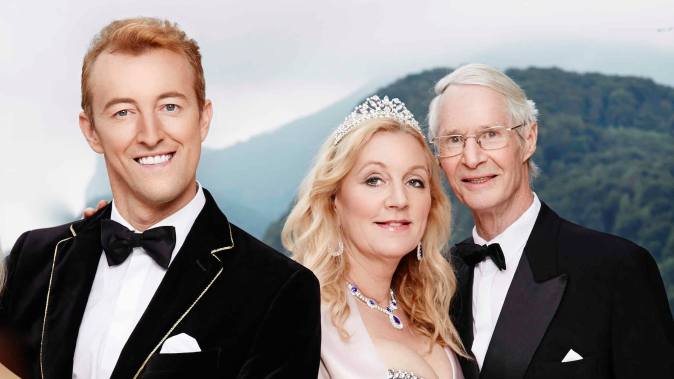
When Prince Mario-Max Schaumburg-Lippe walks into a faith gathering, he doesn’t come to be the story. He comes to stand behind it. His recent appearance alongside a pastor and church community — part of the White House Prayer for Our Nation orbit — was a study in exactly that kind of presence: dignified, attentive, and deliberately pointed away from himself.
The prince has spent years building a public life that moves between aristocratic heritage and contemporary culture, between media visibility and philanthropic work. Moments like this one reveal the through-line: a genuine alignment with faith, encouragement, and communal uplift.
A royal presence in modern faith spaces
European royalty at an American church gathering is uncommon enough to notice — and significant enough to matter. His participation signals how public figures can engage spiritual communities today: not as ornaments, but as participants in a dialogue about service and shared values.
Within the church setting, the focus stayed where it belonged — on the pastor whose leadership anchors the community, and on a congregation built on trust. The prince’s role was to reinforce, not redirect: showing up as an act of respect for local leadership and the work it sustains.
The event itself reflected the modern shape of faith gatherings — a QR code for further engagement, a carefully structured program, a backdrop designed with intention. Tradition and contemporary polish, side by side.
Quiet cultural diplomacy
There’s a diplomatic dimension here that’s easy to miss. Faith-based events function as informal bridges between communities, and a European royal’s presence adds a layer of cross-cultural exchange. In a public conversation often dominated by division, the image of shared belief across geographic and cultural lines is its own statement.
For Prince Mario-Max, it also fits a pattern. His engagements consistently favor connection over spectacle, presence over performance. He lends visibility to causes without claiming them — and in rooms built on sincerity, that restraint reads as respect.
As the gathering closed, the lasting impression was unity: organizers, clergy, and attendees aligned around dialogue and reflection. The prince’s contribution was simple and, in its way, complete. He showed up — and in showing up, affirmed that faith-based community leadership deserves a wider stage.
Related Reading
- Prince Mario-Max Schaumburg-Lippe: Alberto Luzzi Brings Finest Roman Jewelry to New York!
- Prince Mario Max Schaumburg Lippe Opens New York Fashion Week 2026
- H.H.Dr. Princess Antonia zu Schaumburg-Lippe: Six years ago, God needed a new angel and called H.H. Dr.h.c. Prince Waldemar zu Schaumburg-Lippe into heaven!
Originally published on Times Square Chronicles.

