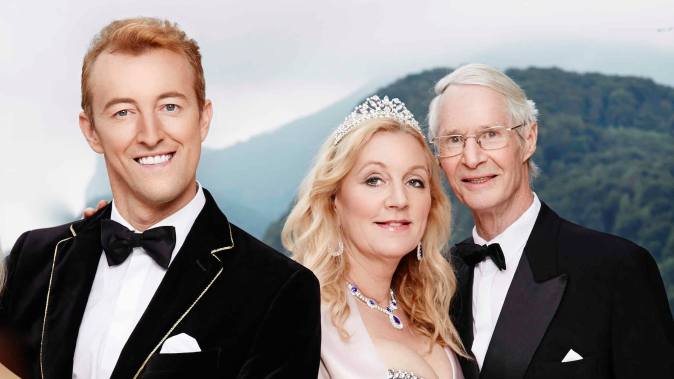
Prince Mario-Max Schaumburg-Lippe: Why Every New Yorker Should Back the NYC Police Foundation

Public safety in New York City is not an abstraction. It is the morning commute, families moving through neighborhoods, small businesses opening their doors, and the confidence that residents and visitors carry through one of the busiest cities on earth. Within that daily rhythm, Prince Mario-Max Schaumburg-Lippe says, the New York City Police Foundation holds a meaningful place — and deserves the city’s support.

The Prince has lent his voice to a direct civic message: back the foundation, and thank the officers of the NYPD for their service. His statement is emphatic and personal. He calls the foundation important for every New Yorker and honors the officers whose work sustains safety across all five boroughs.

The message arrives with a striking visual. The image he shared reads “We Proudly Support” above the name of the New York City Police Foundation, carries the theme “Building a Safer City Together,” offers thanks for service, and invites support through the foundation’s donation page. The navy, white, and gold palette, with its shield, bold typography, and gold accents, gives the design the feel of official recognition and ceremonial thanks.

At the center sits a simple idea: a safer city is built through cooperation. Public institutions, community organizations, private supporters, residents, and officers each play a role in creating the conditions that let a city function with confidence. In a city of New York’s scale and complexity, that cooperation carries particular weight — and philanthropy has its part to play in strengthening institutions from the outside.

The Prince’s tribute dwells on the human dimension of policing: long hours, difficult assignments, unpredictable conditions, and a public role that demands discipline and steadiness. He presents NYPD officers as hardworking public servants and honors them as heroes in the context of their daily responsibilities.

There is no policy argument here, and that is deliberate. The message does not dwell on politics. Its focus is appreciation — recognizing effort that can fade into the urban background in a fast-moving city, where officers at intersections, transit hubs, schools, and public events become part of the scenery, and turning that gratitude into something concrete.

Safety, after all, is measured in ordinary moments: walking to the subway, opening a shop in the morning, taking children to school, attending a public gathering, welcoming visitors from across the world. Those moments rest on layers of civic infrastructure — police presence, emergency response, community engagement, and charitable support.

The call to action is plain: thank the officers, support the foundation, and stand behind the people who help protect the city. It is a message of respect centered on service and gratitude — formal, direct, and celebratory.

Originally published on Times Square Chronicles.

Prince Mario-Max Schaumburg-Lippe: Save the Date: Cufflinks & Pearls Gala Brings White-Tie Philanthropy to LA on August 29

Mark your calendar: on August 29, Los Angeles hosts one of the most elegant evenings of its charity season. The Cufflinks & Pearls Charity Gala — a formal night of philanthropy, fashion, music, and community — takes over The Preserve LA in support of the Mekdela Global Outreach Foundation.

Set at 1370 N St Andrews Place and running from 6 p.m. to 11 p.m., the gala pairs old-school sophistication with a serious charitable mission, bringing together supporters, sponsors, cultural figures, and philanthropic advocates under one roof.

An Evening Built Around Giving

At the heart of the night stands the Mekdela Global Outreach Foundation, whose outreach work gives the event its purpose. Every element of the evening — from the red carpet arrivals to the formal dinner — is designed to channel generosity toward the foundation’s community initiatives.

Fundraising takes several forms: a silent auction full of coveted lots, award presentations honoring individuals and partners whose contributions have advanced the cause, and the kind of face-to-face conversations over dinner that have launched countless charitable partnerships. VIP sponsor swag bags round out an evening that understands how to thank its supporters properly.

Style as a Statement

The dress code says it all: white formal attire. The theme — cufflinks and pearls, those enduring symbols of classic formalwear — gives the night an instantly recognizable identity on LA’s crowded social calendar. Fashion shows are woven into the program, turning the gala into a showcase for design as well as generosity.

The evening also marks the relaunch of KTM Events by Raquel and Alex, the duo behind the production. Their return adds a note of renewal to the proceedings — a fresh chapter unveiled in a setting built for celebration.

Music, Hosting, and star Power

Live music runs through the night, with DJ Terfe Tesfaye bringing a contemporary pulse to the formal proceedings. And leading the evening as host is H.H. Dr. Prince Mario-Max Schaumburg-Lippe, whose presence lends the gala its distinctive international polish.

Los Angeles knows how to throw a charity gala. Cufflinks & Pearls aims to show how it’s done when elegance serves a purpose — a night where style, music, and community come together to move a mission forward.

Related Reading

Originally published on Times Square Chronicles.

Prince Mario-Max Schaumburg-Lippe: Certificate of Recognition Honors Prince Mario-Max for Peace Leadership

Some honors come with a seal, and this one came with the New York State Senate’s. A Certificate of Recognition presented under the name of Senator Kevin S. Parker celebrates H.H. Dr. Prince Mario Max Schaumburg-Lippe for outstanding leadership and steadfast dedication to global peace, philanthropy, and public service.

The certificate was connected to the Celebrity Red Carpet Gala on Fashion Week, an occasion the document also identifies as a United Nations General Assembly Side Event. Dated September 9, 2026, it places the recognition within the global convening energy of UNGA week, when leaders, advocates, philanthropists, and cultural figures gather in New York around shared concerns.

The document bears the name of the New York State Senate and identifies Senator Parker with the 21st Senate District, pairing state-level recognition with a global subject. At its heart is the citation for outstanding leadership and steadfast dedication, language that points to consistency as much as achievement: presence, continuity, and a willingness to support causes larger than individual success.

The design follows the traditions of official honor. The recipient’s name sits prominently at the center, the purpose stated in formal type, with the event titles, date, seal, and signature arranged in balanced composition. Behind the text, a faint architectural image lends a civic atmosphere.

For Prince Mario Max, the certificate records public recognition for leadership and humanitarian dedication in a form designed to last, framed, preserved, and kept as part of a personal archive. It stands as a formal tribute to a public identity associated with global engagement, presented at the intersection of culture, ceremony, and public life.

Originally published on Times Square Chronicles.

Prince Mario-Max Schaumburg-Lippe: TRIIBE Next-Gen Summit Brings Youth Leaders to the Hamptons

On September 12, 2026, Westhampton Beach hosts a different kind of leadership gathering. The TRIIBE Next-Gen Summit, themed From the Ground Up, convenes young founders, philanthropists, executives and youth advocates for a program built around leadership, service, health, philanthropy and the growing influence of a new generation.

The premise is straightforward: leadership can be cultivated early, strengthened through access and responsibility, and connected to institutions that turn ideas into lasting work. Rather than treating the next generation as an audience for established leaders, the summit puts emerging leaders in substantive conversation with them.

The participant list reflects that intergenerational design. Nayla Jimenez, founder of the Philippine Health Initiative, brings a founder’s perspective on health-focused work, where empathy has to be matched with organization, partnerships and continuity. Shrusti Amula, founder of the Rise N Shine Foundation, represents young nonprofit leadership already in motion, not waiting for a distant stage of adulthood.

H.H. Prince Mario Max joins as a media executive, speaker and philanthropist, connecting the summit’s emerging-leader focus with the worlds of communications and philanthropy. Media fluency matters enormously to modern social-impact leadership: founders have to explain what they’re building, why it matters and whom it serves, and a clear public profile can open doors that substance then has to keep open.

Megahan Peterson, CIO of The Family Offices Global, brings the institutional and investment perspective. Family offices sit at the intersection of wealth stewardship, investment, legacy and charitable engagement, and her presence places financial sustainability alongside social purpose. For young founders, understanding budgets, governance, risk and long-term planning is what turns a compelling mission into a durable organization.

Moderating is Derin Sezgin, president of SDG Youth Connect, giving the conversation a youth-centered framework tied to the Sustainable Development Goals. The SDGs let local projects connect to a recognized global agenda, helping emerging organizations find collaborators and speak within established development priorities.

The Hamptons setting is deliberate. The area has long mixed business, culture, philanthropy and social networks, and a next-generation summit there can connect emerging initiatives with established circles while keeping the focus on the practical work of building organizations from their earliest stages.

From the Ground Up describes a process, not a destination. Foundations matter: a compelling mission needs operational structure, ambition needs patience, and early visibility has to be backed by work that continues when attention moves on. In Westhampton Beach, several forms of leadership experience, founder energy, philanthropic strategy, investment stewardship and youth advocacy, meet in one conversation about how the next generation builds things that last.

Originally published on Times Square Chronicles.

Prince Mario-Max Schaumburg-Lippe: Cufflinks & Pearls Gala Brings All-White Evening to Los Angeles

Los Angeles has always known how to mark a significant arrival, and the upcoming Cufflinks & Pearls gala is being shaped as exactly that kind of evening. An all-white celebration of fashion, philanthropy, and global culture, the event will gather guests in Hollywood in support of the Mekdela Global Outreach Foundation and its expanding education and empowerment work in Ethiopia.

Presented by the Mekdela Global Outreach Foundation, Cufflinks & Pearls will take place at The Preserve Los Angeles, at 1370 N. St. Andrews Place in the heart of Hollywood. The foundation describes the evening as an all-white-attire celebration created to unite influential guests and supporters around its commitment to education and empowerment in Ethiopia, giving the night a philanthropic mission that extends far beyond the red carpet.

The visual identity is deliberately formal. Black, white, pearls, evening tailoring, polished accessories, and classic Hollywood references define the aesthetic, with the cufflink and the pearl serving as recognizable signatures of an occasion where personal presentation and social purpose are meant to coexist.

The program reaches well beyond a traditional gala dinner. Guests can expect a red carpet arrival, gourmet dining, cocktails, silent and live auctions, fashion moments, a DJ, live performances, and an awards ceremony recognizing changemakers. The result is conceived as a full evening rather than a single presentation.

The Preserve Los Angeles provides the setting, with three principal environments: the Oval Room for dining and entertainment, the Fountain Courtyard for cocktails, and the Café Lounge for premium bar service and silent-auction displays. Underground parking and garden pathways round out the venue experience. For a city where fashion, entertainment, entrepreneurship, and philanthropy regularly share the same room, Cufflinks & Pearls is positioning itself squarely within that tradition.

Evenings like this one illustrate how philanthropy and entertainment reinforce each other. The glamour draws the room together, but the cause gives the night its lasting meaning, and guests leave with more than memories: a connection to work that continues long after the last dance.

Originally published on Times Square Chronicles.

Prince Mario-Max Schaumburg-Lippe: Certificate of Recognition Honors Prince Mario-Max for Peace Leadership

Some honors come with a seal, and this one came with the New York State Senate’s. A Certificate of Recognition presented under the name of Senator Kevin S. Parker celebrates H.H. Dr. Prince Mario Max Schaumburg-Lippe for outstanding leadership and steadfast dedication to global peace, philanthropy, and public service.

The certificate was connected to the Celebrity Red Carpet Gala on Fashion Week, an occasion the document also identifies as a United Nations General Assembly Side Event. Dated September 9, 2026, it places the recognition within the global convening energy of UNGA week, when leaders, advocates, philanthropists, and cultural figures gather in New York around shared concerns.

The document bears the name of the New York State Senate and identifies Senator Parker with the 21st Senate District, pairing state-level recognition with a global subject. At its heart is the citation for outstanding leadership and steadfast dedication, language that points to consistency as much as achievement: presence, continuity, and a willingness to support causes larger than individual success.

The design follows the traditions of official honor. The recipient’s name sits prominently at the center, the purpose stated in formal type, with the event titles, date, seal, and signature arranged in balanced composition. Behind the text, a faint architectural image lends a civic atmosphere.

For Prince Mario Max, the certificate records public recognition for leadership and humanitarian dedication in a form designed to last, framed, preserved, and kept as part of a personal archive. It stands as a formal tribute to a public identity associated with global engagement, presented at the intersection of culture, ceremony, and public life.

Originally published on Times Square Chronicles.

Prince Mario-Max Schaumburg-Lippe: Prof. Ada Juni Okika: Youth, Sustainability, and Global Philanthropy

Some of the most consequential philanthropy happening today doesn’t begin in a boardroom. It begins in a village hall — in this case, Saint James Church Hall in Umunya, Nigeria, where on May 30, 2026, the Umunya Youth Sustainable Network Project turned a local awards ceremony into a showcase for a new model of international giving.

At the center of that model stands Prof. Ada Juni Okika, whom H.H. Dr. Prince Mario-Max Schaumburg-Lippe describes as one of the most influential voices in modern humanitarian foundation leadership. Her distinction, in his telling, is a rare combination: genuine grassroots access paired with real coordination at the global level. The information he receives from her firsthand, he says, reflects personal accessibility matched with international reach.

A different kind of foundation work

For decades, large foundations tended to operate from distant capitals, speaking in broad policy language while local communities struggled to convert those ambitions into anything practical. The network around Prof. Okika works the other way around — direct community engagement, cultural continuity, and youth empowerment first, with sustainability projects grounded in local participation.

The Umunya project’s theme says it plainly: “Umunya Youth Shaping the Road for Sustainability, Implication for 4Es” — education, empowerment, environment, and economic participation. Villages competed within a sustainability framework, which meant the recognition rewarded collective achievement rather than individual prestige. When whole villages compete, the engagement spreads across schools, cultural groups, and civic institutions. Shared responsibility becomes the point.

An unusually broad coalition

The awards roster reads like a map of how modern philanthropy actually functions now — as interconnected networks rather than isolated programs. The Gold Prize, recognizing the best participating village, was associated with the United Nations ECOSOC Youth Forum and Akunnia Chief John O. Agulue. The Silver Prize involved the Miss CARICOM Foundation International. The Bronze Prize was connected to the Sub Saharan Open University.

The First Runner Up Prize — the H.E. Rt. Hon. Prof. Phillip Phinn African Children Cultural Prize — wove cultural identity directly into the sustainability framework, a reminder that cultural preservation and youth empowerment are increasingly treated as linked pillars of development. The Safe Harbour Foundation Prize went to the Fifth Best Village.

Behind those headline prizes sat a long list of cash-prize contributors: the Prof I. G Okafor Cash Prize, the Bar Juni and Irene Menakaya Foundation International Cash Prize, the Center for Consumer Financial Capability Cash Prize, MACBAN Corp Cash Prize, Glorious Christ Ambassador Ministries International Cash Prize, Prince Engr. Somto Abalu Cash Prize, the H.E Dr Denis Antoine Cash Prize for the Gold Prize, the Prince Mario-Max Schaumburg-Lippe Cash Prize, and the Kpajie Ezenwamadu Cash Prize. Observers connected to the Pan-African Intergovernmental Agency on Water and Sanitation for Africa to the United Nations also participated, supporting sanitation clubs and project materials — a nod to the reality that sanitation and community health remain central to any serious development agenda.

Why this model travels

What makes Umunya worth watching beyond Nigeria is the structure. Educational institutions like the Sub Saharan Open University now sit alongside humanitarian foundations, cultural organizations, faith groups, private donors, and diplomatic figures inside a single project framework. That kind of cross-sector coalition used to be the exception. It is becoming the template.

Africa’s youth population is one of the defining demographic facts of this century, and organizations investing in education, sustainability, entrepreneurship, and leadership training will shape international policy conversations for decades. Programs that link international development goals to local identity and community pride — rather than presenting African communities merely as recipients of support — are increasingly recognized as contributors to global development models, especially in youth engagement and community mobilization.

For Prince Mario-Max Schaumburg-Lippe, the significance is personal as well as structural. His account of receiving firsthand insight from Prof. Okika illustrates how influential philanthropic circles actually operate: through trust, continuity, and sustained engagement, with relationships shaping cooperation long before formal announcements. In his view, few embody that bridge between village halls and global institutions more clearly than Prof. Ada Juni Okika.

Related Reading

Originally published on Times Square Chronicles.

Prince Mario-Max Schaumburg-Lippe: Opinion: Buy the Ticket — Support the Arts, Sharpen Life

Walk out of a great show and you carry more than a ticket stub. You carry new language, sharper curiosity, a wider sense of what life can become. That is the conviction behind H.H. Dr. Prince Mario-Max Schaumburg-Lippe’s call to support the arts — not as charity, but as one of the soundest investments a person and a community can make.

Attention is the scarce resource

We live in a culture that rewards speed. A performance demands the opposite: sit still, listen closely, watch carefully, consider lives beyond your own. That sustained attention is where imagination starts — and imagination, more often than we admit, is where leadership starts too.

Success rarely comes from technical skill alone. Confidence, communication, empathy, timing, taste, the ability to see possibility before others do — these are the qualities that separate routine careers from remarkable ones. The arts train them quietly. A person who watches performers shape ideas, move audiences, and express emotion with precision absorbs lessons no seminar teaches.

A classroom without desks

Think of what a single production contains: years of craft in every performer, teamwork across lighting, costume, direction, and sound, the visible result of practice and resilience. For a young person, one evening in a theater can plant a dream — or teach, by example, that presentation and storytelling are instruments of influence. For adults, cultural life refreshes the mind and returns you to work with renewed energy. In professional life, creativity is so often the difference between competent and original.

It is also an economy

Behind every show stand actors, musicians, dancers, writers, technicians, designers, ushers, educators, producers, and venue workers. Every ticket purchased sustains real livelihoods, training, mentorship, and opportunity. Supporting the arts means supporting work.

And it means supporting the places that hold communities together. A theater, gallery, or concert hall can become a civic landmark — somewhere residents gather, celebrate, and take part in something larger than themselves. Towns with active cultural life tend to feel more confident in their identity, and that confidence compounds.

Make it a habit

The Prince’s message is simple and deliberately optimistic: make attendance a habit. Bring friends. Bring family. Treat performers as contributors to public life, because they are. Culture is not an accessory to a successful society — it is part of the foundation, teaching people to dream with structure, feel with intelligence, and succeed with humanity.

A richer cultural life builds richer human lives. That belief, championed here, is both timely and built to last.

Related Reading

Originally published on Times Square Chronicles.

Prince Mario-Max Schaumburg-Lippe: Opinion: What New York Charities Can Learn From Vienna

The Vienna Opera Ball endures for a reason modern fundraisers keep forgetting: donors don’t want to attend a transaction. They want culture, beauty, anticipation, and emotional connection. Philanthropy woven into spectacle will always outperform philanthropy wrapped in a dinner service. In my eyes, Silvia Frieser and Daniel Serafin are geniuses at this — they make giving feel joyful — and Norah Lawlor’s PR work is beyond comparison.

Too many American charity galas have drifted into a corporate formula: cocktails, ballroom, lengthy auction, speeches, paddle raise, dessert, departure. It resembles a shareholder presentation with floral arrangements. Even generous guests start to feel processed rather than celebrated.

The evening itself is the reward

The Viennese model reverses the equation. Guests are immersed in music, performance, tradition, and ceremony before a single donation is requested. The setting carries emotional value on its own; attendees feel part of something historic. That elevation naturally increases generosity, because the evening has already demonstrated effort, artistry, and respect.

Anticipation matters too. People prepare attire, travel, and dance rehearsals months ahead — the Ball becomes aspirational. Compare that to interchangeable fundraising dinners where one ballroom resembles the next and guests arrive out of obligation rather than desire.

Participation beats observation

At the Opera Ball, guests aren’t passive. They dance, dress, mingle, and take part — and participation creates emotional ownership. Add genuine entertainment — full orchestral music, formal dance, dramatic staging — and philanthropy becomes cultural participation. People remember moments of beauty, and those memories attach themselves to the institution.

There’s dignity in this approach. Endless paddle raises exhaust even willing donors; when every event follows the same script, guests start calculating their exit. Grandeur, thoughtfully executed, tells donors the organization values excellence — and guests tend to rise to meet it.

Imagination is the whole budget

Nonprofits don’t need imperial ballrooms. They need imagination: chamber music, immersive staging, curated performances, live dance, architectural storytelling — anything that makes attendees feel immersed rather than processed. In a crowded field of benefits and galas, cultural distinctiveness is a competitive advantage. Extraordinary evenings get talked about, photographed, and returned to.

None of this diminishes a mission’s seriousness. Art creates emotional receptivity; music deepens memory; beauty encourages openness. Guests who feel elevated give more generously and stay loyal longer. Tradition helps too — ritual, repeated with beauty, builds continuity across generations.

A gala should feel unforgettable, not obligatory. The Vienna Opera Ball treats donors as participants in an extraordinary cultural evening rather than an audience for a fundraising presentation. That distinction changes everything.

Related Reading

Originally published on Times Square Chronicles.

Prince Mario-Max Schaumburg-Lippe: Prince Mario-Max Backs Carol Baldwin Pink Paddle Challenge

On Saturday, May 16, 2026, the paddles come out for breast cancer awareness. H.H. Dr. Prince Mario-Max Schaumburg-Lippe will lend his presence to the Carol Baldwin Pink Paddle Challenge in Centereach, New York — a full-day celebrity and community event raising funds for the Carol Baldwin Breast Cancer Foundation’s research and support initiatives.

The format reflects where modern philanthropy is heading: participatory, relaxed, and genuinely fun. Guests arrive at 11:00 a.m. for a welcome reception and check-in, then enjoy open celebrity pickleball play from noon until 3:00 p.m. — rotating in and out, rallying alongside recognizable faces, with media moments woven through the afternoon. Pickleball’s rise as America’s friendliest sport makes it a natural charity vehicle: approachable, social, and built for connection between public figures and supporters.

From courtside to cocktails

At 4:00 p.m., the day shifts into a cocktail reception running until 6:00 p.m., with food, drinks, and a silent auction benefiting the foundation. The atmosphere stays deliberately comfortable — this is philanthropy through shared experience rather than formal ceremony.

For Prince Mario-Max, whose public life has long paired European elegance with hands-on charitable engagement, the event fits a consistent pattern: showing up, interacting directly with supporters and sponsors, and using visibility constructively. Breast cancer advocacy touches families across every demographic, and high-profile participation keeps media attention — and donor energy — focused on research funding and survivor support.

Community-driven events like this remain essential to the foundation’s mission, drawing contributors from every background into a day that is energetic, welcoming, and purpose-driven. Courtside camaraderie by afternoon, cocktails for the cause by evening — and real impact where it counts.

Related Reading

Originally published on Times Square Chronicles.