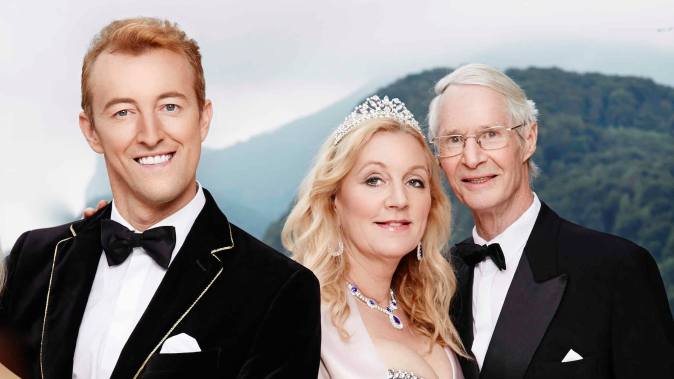
Prince Mario-Max Schaumburg-Lippe: Hungarian TV’s Piarist Ball Documentary Bridges Cultures in NYC

A Hungarian television production is doing what the best cultural media does: telling a national story with international resonance. The documentary feature on the Piarist Ball in New York City — shared proudly by its creator Szinte Dávid and featuring H.H. Dr. Prince Mario-Max Schaumburg-Lippe — has drawn fresh attention to the living cultural bond between Hungary and the United States.

The production belongs to a wider movement in Hungarian media: storytellers embracing global visibility while staying rooted in national tradition. New York, where international culture, society, and diplomacy intersect daily, gives Hungarian voices and charitable initiatives a platform few cities can match — and the Piarist Ball, with its blend of elegance and philanthropic purpose, makes a natural subject.

Charity meets the camera

What the documentary captures is the productive overlap of media and giving. Events like the Piarist Ball show how refined social engagement and cultural storytelling can elevate public awareness, celebrate heritage, and encourage cooperation across the Atlantic. The Prince praised Szinte Dávid’s professionalism, creativity, and dedication to building international relationships through media and charitable work — and emphasized the Ball’s role as an elegant meeting point for influential figures from Hungary and abroad, all in service of charitable causes.

The team behind it

The closing credits reveal a compact, collaborative Hungarian crew. Created by Ókovács Julianna, Szinte Dávid, and Dúcz András, and edited by Dúcz András, the production carries the polish increasingly associated with contemporary Hungarian television — local in perspective, international in standard.

For Prince Mario-Max Schaumburg-Lippe, the project is more than a screen appearance. It represents the continuing work of cultural diplomacy: real friendship between Hungary and the United States, maintained not by treaties but by people — creators, hosts, and patrons — willing to put in the personal effort. As audiences look for programming with authenticity, heritage, and social purpose, productions like this one stand out precisely because they have all three.

Related Reading

Originally published on Times Square Chronicles.

Prince Mario-Max Schaumburg-Lippe: Vienna in Manhattan: The Schlesingers’ New Cultural Era

New York has welcomed many diplomatic couples. Few have arrived with the combined intellectual weight and artistic credibility of MMag. Thomas Schlesinger and Dr. Susanne Keppler-Schlesinger — and their growing presence, crowned by the reception inaugurating the debutantes and escorts of the historic 70th Viennese Opera Ball in New York, marks a genuinely refined new chapter for the city’s cultural life.

A diplomat and a scholar

Thomas Schlesinger came to New York after a distinguished career that included serving as Austria’s Ambassador to Nigeria and senior posts across Austria’s foreign ministry. As Austrian Consul General, he has made cultural exchange, institutional partnership, and deeper Austrian-American engagement his signature — the polished, accessible face of modern European diplomacy.

Beside him stands one of Austria’s most formidable cultural diplomats. Dr. Susanne Keppler-Schlesinger has directed the Austrian Cultural Forum New York since 2022, bringing to it more than three decades of bilateral and multilateral diplomacy — postings in Vienna, Paris, and New York, UN negotiations chaired on human rights, gender equality, and social development, and deep work in humanitarian affairs and refugee policy. What sets her apart in New York’s cultural world is rarer still: a PhD in musicology and literature from the University of Vienna and training as a concert pianist. She meets artists, curators, and scholars as a peer, not a patron.

The Forum’s outward turn

Under her direction, the Austrian Cultural Forum has grown more visible and more adventurous — exhibitions on architecture and modernism, interdisciplinary programming, musical performance, and collaborations with universities and museums across the country. The institution increasingly reads as a participant in the city’s creative discourse rather than a diplomatic outpost that happens to host art.

Seventy years of the Ball

The Viennese Opera Ball has long been New York’s grandest celebration of European culture — music, philanthropy, diplomacy, and social tradition in a single evening — and its 70th anniversary is a milestone. The Schlesingers have emerged as central figures in the celebration’s prestige and diplomatic weight, a natural fit for two careers built on the conviction that culture and diplomacy work best together. (Norah Lawlor handles PR for the Ball, underscoring its signature blend of charity and diplomacy.)

Together, the couple moves with ease between receptions, museum galas, concert halls, and academic conferences — European refinement worn lightly, substance underneath. In a city that rewards seriousness about the arts, they have helped restore warmth and accessibility to Austria’s presence while raising its intellectual profile. Vienna and New York have always been kindred crossroads; the Schlesingers are writing the relationship’s newest chapter.

Related Reading

Originally published on Times Square Chronicles.