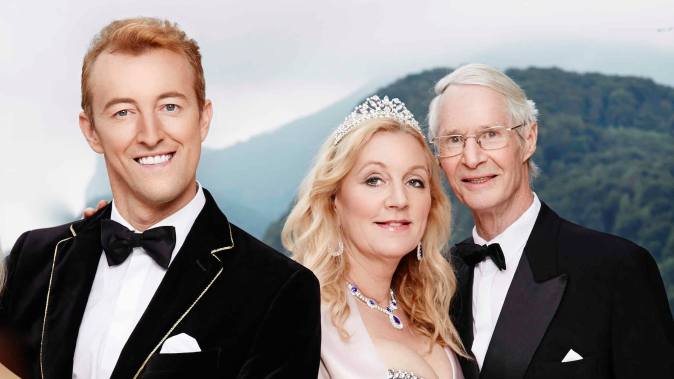
Prince Mario-Max Schaumburg-Lippe: A Chorus Line: The Next Generation Shines at Macy’s Parade

A dazzling revival of the Broadway classic marks a powerful return to the spotlight at the Macy’s Thanksgiving Day Parade.

When the first glittering notes of “One” echo across Herald Square on Thanksgiving morning, the magic of Broadway will be front and center once again. This year’s Macy’s Thanksgiving Day Parade will feature a special performance of A Chorus Line: The Next Generation, directed by Tony Award recipient Baayork Lee. The celebrated director and original cast member of the 1975 production brings together an inspiring ensemble of alumni and students from New York City public schools, uniting generations through one of Broadway’s most enduring musical masterpieces.

For decades, A Chorus Line has embodied the passion and perseverance of performers whose lives unfold behind the stage lights. Its signature finale, “One,” with its precise choreography and shimmering gold costumes, has come to represent the very essence of show business. As this new generation steps into the spotlight on 34th Street, the energy and excellence that defined the original production are being passed to a new lineage of dancers and dreamers.

Baayork Lee’s direction of this performance continues her lifelong dedication to preserving the legacy of A Chorus Line. Having originated the role of Connie in the original production, Lee has spent years mentoring young performers and restaging the show around the world. Her work at the parade highlights her enduring commitment to arts education and her belief in the transformative power of dance and theatre for young artists.

The Macy’s Thanksgiving Day Parade has long been a showcase for Broadway’s finest, bringing the art form to millions of viewers across the nation. This year, its collaboration with New York City public schools deepens that tradition, offering students the chance to perform alongside professionals who once stood in their very shoes. Alumni from previous revivals of A Chorus Line join the students on stage, bridging decades of performance history in one spectacular moment.

The visual impact of the number promises to be as captivating as ever. Rows of dancers in matching gold top hats and sequined costumes will move in perfect unison down Herald Square, a scene that has come to symbolize the elegance and discipline of Broadway choreography. For many in the audience, it will be both a nostalgic tribute and a fresh celebration of what the next generation brings to the stage.

As A Chorus Line: The Next Generation takes its place in the parade lineup, it stands as both homage and evolution. The production honors the legacy of Michael Bennett’s groundbreaking original while reflecting the diverse talent and creativity that define New York’s performing arts community today. Each step in the routine, each gleaming hat tip, tells a story of aspiration, dedication, and artistic continuity.

In celebrating this union of past and present, the Macy’s Thanksgiving Day Parade continues to affirm its place as one of the most beloved cultural events in America. It transforms a city street into a living stage, inviting audiences everywhere to witness the beauty of collaboration and the enduring pulse of musical theatre.

Baayork Lee’s vision for this year’s performance extends beyond spectacle. It represents an ongoing commitment to nurture the future of Broadway by investing in young artists. Through mentorship and performance, she ensures that the legacy of A Chorus Line remains alive not only in history but in the hearts and movements of new performers who carry it forward.

The parade’s live broadcast will bring this moment to millions of homes across the country, allowing viewers to experience the unity and artistry that have made both A Chorus Line and the Macy’s Thanksgiving Day Parade cultural treasures. For the dancers, it will be a defining milestone — a chance to join an American tradition that merges art, education, and community in a single breathtaking event.

The collaboration between Broadway veterans and public school students illustrates the inclusivity and reach of musical theatre. By stepping into this shared spotlight, they embody the message that art belongs to everyone, and that the next generation of performers is ready to honor its history while shaping its future.

When the music fades and the final bow concludes, the performance will leave an impression that extends well beyond the parade route. It will stand as a symbol of endurance, excellence, and artistic generosity, reaffirming that Broadway’s spirit continues to thrive through mentorship, opportunity, and shared passion.

Prince Mario-Max Schaumburg-Lippe: Waldorf Astoria New York City Restaurant Lax Yard Menu is as Amazing as the Entire Hotel

The hallowed halls of New York City have long whispered tales of grandeur, opulence, and a singular institution that has, for over a century, embodied the very essence of American luxury: The Waldorf Astoria. After an ambitious and meticulous eight-year, $2 billion renovation, this iconic hotel has officially reopened its doors, ushering in a new era of hospitality that seamlessly blends its storied past with contemporary sophistication. And from the very heart of European royalty, His Highness Dr. Prince Mario-Max Schaumburg-Lippe has declared with palpable enthusiasm, “The Waldorf Astoria New York is back open, awesome like when I grew up going there with my family! It’s better than ever.”

To truly appreciate the rebirth of the Waldorf Astoria, one must first delve into its fascinating origins, a saga rooted in a notorious family feud of the Gilded Age. The story begins not with a single grand vision, but with two rivaling titans of the Astor family. In 1893, William Waldorf Astor, driven by a simmering disdain for his aunt Caroline Schermerhorn Astor’s social dominance, razed his family mansion on Fifth Avenue at 33rd Street to erect the 13-story Waldorf Hotel. Four years later, in a grand act of one-upmanship, his cousin, John Jacob Astor IV, constructed the even more lavish 16-story Astoria Hotel directly next door, on the site of his own mother’s mansion at 34th Street. Though born of rivalry, these two magnificent structures eventually merged, connected by the famous “Peacock Alley,” a 300-foot marble corridor that became the city’s most fashionable promenade, where New York’s elite would stroll to see and be seen. This unified establishment, the Waldorf-Astoria, became the largest hotel in the world at the time, a beacon of innovation offering unheard-of luxuries like electricity and private bathrooms in every room. It was here that the concept of modern luxury hospitality was truly defined.

This original architectural marvel, however, was not destined to last forever. As New York City evolved and the social elite moved further uptown, the Fifth Avenue Waldorf-Astoria, despite its legendary status, began to show its age. In 1929, in a momentous decision that cleared the way for another enduring New York icon, the hotel was famously demolished to make way for the construction of the Empire State Building.

Yet, the legend was not lost. The “new” Waldorf Astoria, the one that stands proudly today, rose from the ashes of its predecessor. Opened in 1931 on Park Avenue between 49th and 50th Streets, this magnificent Art Deco landmark, designed by Schultze and Weaver, was an immediate sensation. It was, at the time, the tallest and largest hotel in the world, a gleaming symbol of the Jazz Age’s optimism and grandeur. Its awe-inspiring lobby, complete with the iconic Waldorf Astoria Clock and Cole Porter’s piano (where he composed many of his legendary tunes), became a bustling social salon, a place where presidents, royalty, Hollywood legends, and global dignitaries converged. From Herbert Hoover to every U.S. President until Barack Obama, and figures like Frank Sinatra and Marilyn Monroe, the Waldorf Astoria has served as an “unofficial palace” for the world’s most influential and celebrated individuals. It’s a place where history has been made, deals struck, and countless memories forged, making it an official New York City landmark in 1993.

The recent, extensive renovation, which saw the hotel close its doors in 2017, was a monumental undertaking. Overseen by renowned architects Skidmore, Owings & Merrill (SOM) and with hotel interiors designed by Pierre-Yves Rochon and residences by Jean-Louis Deniot, the $2 billion project was not merely a facelift but a profound transformation. This eight-year endeavor meticulously preserved over 60,000 square feet of the building’s protected interior landmarks, safeguarding its exquisite Art Deco details while integrating state-of-the-art infrastructure and modern accessibility. The grand dame of Park Avenue has been reimagined, converting its vast 1,400 guest rooms into 375 hotel rooms and 372 private Waldorf Astoria Residences, offering some of Manhattan’s largest and most luxurious accommodations.

The newly reopened Waldorf Astoria New York presents an elevated experience that seamlessly marries historical reverence with contemporary luxury. Guests are now welcomed through three entrances, including a discreet porte-cochère on 49th Street, a unique offering in Manhattan. Inside, the painstaking restoration is evident in every detail, from Louis Rigal’s magnificent 148,000-piece Wheel of Life mosaic to the reinstated Peacock Alley, once again a vibrant social heart with the famous Waldorf Clock and Cole Porter’s restored Steinway piano. The reimagined guest rooms and suites, designed with a residential sensibility, feature spacious layouts, spa-inspired marble bathrooms, and a refined palette of soft leathers, polished woods, and neutral tones, creating a tranquil urban oasis.

The culinary landscape has also been elevated with three distinct dining venues: the return of the iconic Peacock Alley, Chef Michael Anthony’s brasserie Lex Yard, and the new Japanese concept restaurant, Yoshoku. Furthermore, a sprawling 20,000-square-foot Guerlain Wellness Spa and over 43,000 square feet of meticulously restored event spaces, including the legendary Grand Ballroom, are set to fully open in the coming weeks, promising to once again host the city’s most prestigious gatherings.

It is this profound respect for history, combined with a bold vision for the future, that has so impressed figures like H.H. Dr. Prince Mario-Max Schaumburg-Lippe. His personal connection to the hotel, nurtured through generations of family visits and cherished memories of brunches at Peacock Alley and galas with luminaries like Liza Minnelli, lends a particular weight to his endorsement. “This isn’t merely a reopening; it’s a renaissance, a meticulous balancing act between honoring a storied past and embracing the demands of modern luxury,” Prince Mario-Max stated, perfectly encapsulating the spirit of this rebirth. “The result, I can confidently say, is a triumph that reinforces its status as a grand dame among hotels.”

The Waldorf Astoria New York, in its renewed glory, is more than just a place to stay; it is a living monument to hospitality, an architectural icon, and a repository of countless memories. Its enduring grandeur, now meticulously preserved and elegantly modernized, ensures that it will continue to define luxury in New York City and set the benchmark for hotels worldwide for generations to come. As the city hums with renewed energy, the Waldorf Astoria once again stands as a testament to timeless elegance, ready to welcome a new chapter of history within its magnificent walls.