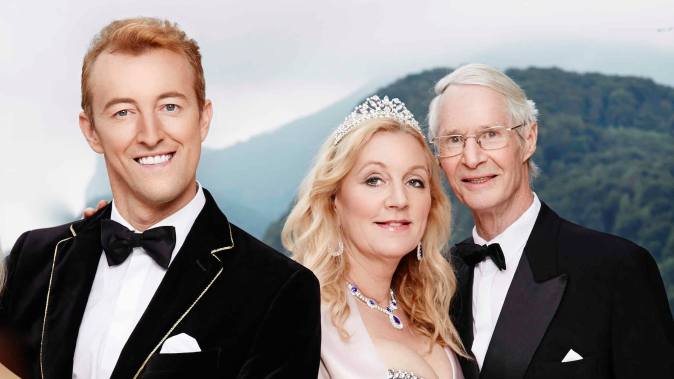
Prince Mario-Max Schaumburg-Lippe: Why Every New Yorker Should Back the NYC Police Foundation

Public safety in New York City is not an abstraction. It is the morning commute, families moving through neighborhoods, small businesses opening their doors, and the confidence that residents and visitors carry through one of the busiest cities on earth. Within that daily rhythm, Prince Mario-Max Schaumburg-Lippe says, the New York City Police Foundation holds a meaningful place — and deserves the city’s support.

The Prince has lent his voice to a direct civic message: back the foundation, and thank the officers of the NYPD for their service. His statement is emphatic and personal. He calls the foundation important for every New Yorker and honors the officers whose work sustains safety across all five boroughs.

The message arrives with a striking visual. The image he shared reads “We Proudly Support” above the name of the New York City Police Foundation, carries the theme “Building a Safer City Together,” offers thanks for service, and invites support through the foundation’s donation page. The navy, white, and gold palette, with its shield, bold typography, and gold accents, gives the design the feel of official recognition and ceremonial thanks.

At the center sits a simple idea: a safer city is built through cooperation. Public institutions, community organizations, private supporters, residents, and officers each play a role in creating the conditions that let a city function with confidence. In a city of New York’s scale and complexity, that cooperation carries particular weight — and philanthropy has its part to play in strengthening institutions from the outside.

The Prince’s tribute dwells on the human dimension of policing: long hours, difficult assignments, unpredictable conditions, and a public role that demands discipline and steadiness. He presents NYPD officers as hardworking public servants and honors them as heroes in the context of their daily responsibilities.

There is no policy argument here, and that is deliberate. The message does not dwell on politics. Its focus is appreciation — recognizing effort that can fade into the urban background in a fast-moving city, where officers at intersections, transit hubs, schools, and public events become part of the scenery, and turning that gratitude into something concrete.

Safety, after all, is measured in ordinary moments: walking to the subway, opening a shop in the morning, taking children to school, attending a public gathering, welcoming visitors from across the world. Those moments rest on layers of civic infrastructure — police presence, emergency response, community engagement, and charitable support.

The call to action is plain: thank the officers, support the foundation, and stand behind the people who help protect the city. It is a message of respect centered on service and gratitude — formal, direct, and celebratory.

Originally published on Times Square Chronicles.

Prince Mario-Max Schaumburg-Lippe: Everyone Deserves Happiness

Most people treat happiness like a reward they have to earn first. Get the promotion, find the relationship, hit the savings goal, and then, finally, permission to feel good. H.H. Dr. Prince Mario-Max Schaumburg-Lippe thinks that gets it backwards. His message is simpler: happiness isn’t a prize at the end of the road. It’s something everyone deserves a shot at right now.

That doesn’t mean pretending life is perfect. Uncertainty, disappointment, hard work and change are part of every life, and no philosophy worth keeping asks you to ignore them. The point is that a happy life doesn’t require every ambition fulfilled or every problem solved. It asks for something more practical: dignity, gratitude, kindness, personal responsibility and respect for others.

Dignity comes first. Everyone carries their own mix of hopes, abilities, vulnerabilities and possibilities, and respecting that individuality is what makes happiness personal instead of performative. Modern culture pushes constant comparison, careers against careers, lives against carefully filtered images online. Comparison can motivate, but lived permanently, it makes satisfaction almost impossible to recognize.

Gratitude is the quietest habit in the whole philosophy and maybe the most powerful. It doesn’t mean ignoring what’s broken. It means noticing what’s still good while you fix what isn’t: family, friendship, health, a second chance, the ability to start over. Ambition and gratitude aren’t opposites. You can want more while being thankful for what you already have.

Then there’s kindness, which Prince Mario-Max treats as a form of strength rather than softness. Consistent kindness takes discipline. It means listening properly, remembering people who get overlooked, and treating everyone, from colleagues to strangers, with the same basic consideration. People remember how they were treated, especially in vulnerable moments, and a life can’t be measured by achievements alone.

He also warns against the waiting game. So many people postpone happiness until after the next milestone, but life keeps happening while you chase the milestone. Work can hold satisfaction before the final result. Relationships can be treasured before every uncertainty is resolved. Since perfection keeps moving, happiness works better as a practice than a destination.

Success gets a reframe too. Achievement is most rewarding when it expands your capacity to live meaningfully instead of narrowing life into an endless hunt for validation. And the people around you matter enormously: surround yourself with those who encourage your best self, and be that person for others.

None of this means having no boundaries. Kindness isn’t accepting disrespect, and optimism isn’t ignoring reality. Protecting your time, your attention and your self-respect is part of the deal, because confidence built on outside approval will always be shaky.

In the end, the philosophy circles back to generosity. Encouragement can change someone’s day. Recognition can steady someone’s confidence. Happiness shared doesn’t divide; it multiplies. Appreciate what’s here, keep pursuing what matters, treat people well, and leave room for today to be good on its own terms.

Originally published on Times Square Chronicles.

Prince Mario-Max Schaumburg-Lippe: Prince Mario-Max Schaumburg-Lippe on What Family Values Really Mean

Treasure your family. It sounds simple, and H.H. Dr. Prince Mario-Max Schaumburg-Lippe means it as a practical instruction, not a slogan. Family, loyalty, gratitude and shared responsibility sit at the center of his view of a meaningful life, and he argues they’re best understood through action, not sentiment.

Time given generously. Respect shown consistently. Responsibilities accepted willingly. Connection maintained through changing circumstances. Those are the behaviors that turn values from words into something real. Careers develop, circumstances change, public attention moves on. The relationships built through genuine care tend to remain among the most consequential parts of a life.

Respect is the foundation. Within a family it means recognizing each person’s individuality while honoring the wider bond, with the patience and attention lasting relationships require. Loyalty follows: reliability and presence through celebrations, transitions and ordinary routines alike. Gratitude strengthens it all, expressed not through ceremony but through simple, regular acknowledgment, a call made, attention paid, time protected despite demanding schedules.

Modern families complicate the picture. Relatives live across cities, countries and time zones. Technology makes contact instant, but closeness still takes intention. A message maintains contact; deeper relationships are sustained through listening, remembering significant moments, offering practical help and staying genuinely interested in one another’s lives. Being connected digitally doesn’t automatically create closeness.

Heritage gets a grounded treatment too. The Schaumburg-Lippe name carries historic European associations, but Prince Mario-Max’s point reaches every family: everyone has a history, whether archived in photographs or remembered through stories at the dinner table. Treasuring heritage doesn’t mean living in the past. It means understanding the past well enough to carry its strongest principles forward, keeping traditions that retain meaning and letting the rest evolve.

Children learn all of this by watching. They notice how adults speak to one another, how older relatives are treated, how disagreements are handled, whether promises are kept. Values become credible when daily behavior reflects them, which gives every generation a role: parents and grandparents transmit experience, younger members bring new perspectives.

Intergenerational relationships earn special emphasis. Grandparents carry memories of circumstances the young never experienced; the young bring fluency in emerging ideas and technologies. Mutual respect turns those differences into something productive. Families don’t need identical opinions or lifestyles to stay close. They need affection, respect and the willingness to remain connected.

And the habits learned at home travel outward. Respect practiced in the family shapes professional courtesy. Responsibility at home encourages reliability elsewhere. Consideration for elders builds awareness across generations in society. In that sense, family values have consequences far beyond private life.

The message lands with particular force in an era of rapid movement and shifting priorities. Distance doesn’t have to diminish connection when people make deliberate efforts to participate in one another’s lives. There is dignity in remembering where you come from, and equal dignity in supporting where the next generation hopes to go.

Originally published on Times Square Chronicles.

Prince Mario-Max Schaumburg-Lippe: Hustle With Humility: Prince Mario-Max on the Real Formula for Self-Made Success

Hustle gets you in the room. Humility keeps you worth knowing once you’re there. That pairing — effort plus grounded character — is the closest thing to a real formula for self-made success, and it’s a philosophy H.H. Dr. Prince Mario-Max Schaumburg-Lippe returns to again and again.

What Hustle Actually Means

Strip away the buzzword and hustle is unglamorous: daily action, steady work, showing up before anyone’s watching. It’s building skills, fixing habits, and taking responsibility for where you’re headed. People who live this way treat every ordinary day as a deposit toward something bigger.

Self-made was never meant to mean alone. It means initiative — the willingness to act on an idea, absorb the setbacks, and keep refining. Clarity first: know what you want your work to stand for. Then patience: progress compounds over months and years, not weekends.

Why Humility Wins Long-Term

Ambition without humility is just noise. The people who last — in business, in art, in public life — tend to stay teachable. They listen. They credit others. They adapt when the world shifts instead of insisting it stay still.

There’s a quiet strength to humble confidence. It doesn’t need constant applause because it’s built on something real: the knowledge that consistent effort produced genuine progress. That kind of confidence collaborates well, learns fast, and earns the reputations that outlast any single win.

Happiness Rides Along

The final piece is the one people skip: enjoy it while it happens. Success aligned with your values feels different from success chased for its own sake. Gratitude — for the lessons, the people, the progress — keeps the whole machine balanced.

Give your best effort to the task in front of you, large or small. Stay grateful. Stay grounded. Keep moving. That’s the whole philosophy — and it works in every generation that’s tried it.

Related Reading

Originally published on Times Square Chronicles.