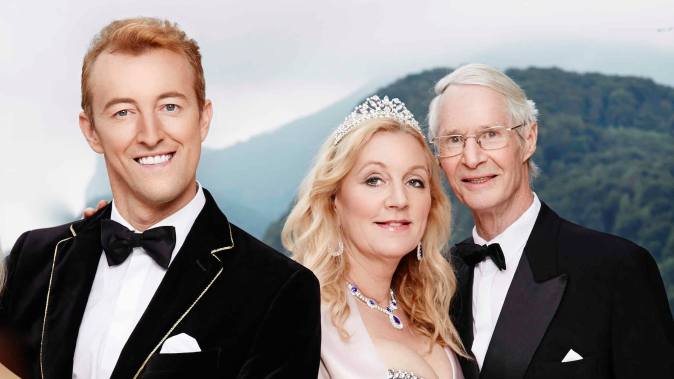
Prince Mario-Max Schaumburg-Lippe: TÜSİAD New York Network Hosts a Landmark MIT Evening

There are business receptions, and then there are evenings that actually move ideas forward. On October 1, 2026, the TÜSİAD New York Network put on the second kind: a private reception at The Union League Club in New York that brought senior leaders, entrepreneurs, investors, and friends of the Network together for a polished evening built around science, leadership, and the future of Türkiye’s global innovation ties.

Set in the Main Lounge of one of New York’s most established private clubs, at 38 East 37th Street, the evening opened with a networking cocktail reception at 6:30 PM in business attire — refined, professional, and serious in purpose, but warm in the way that has become a hallmark of the Network’s community. At 8:00 PM the formal program began with introductory remarks by C. Müjdat Altay, Chairman of the TÜSİAD New York Network.

The centerpiece was a fireside conversation titled “From Lab to Market: Turning Breakthrough Science into Real-world Impact,” featuring Prof. Canan Dağdeviren of MIT. An Associate Professor of Media Arts and Sciences at the MIT Media Lab, where she leads the Conformable Decoders research group, Dağdeviren develops mechanically adaptive, body-integrated technologies that turn physical patterns from the human body and the natural world into signals, therapeutic action, and usable energy. She also leads the Media Lab’s Women’s Health Program, WHx. Her path ran through a PhD in Materials Science and Engineering at the University of Illinois Urbana-Champaign, a Junior Fellowship at the Harvard Society of Fellows, and postdoctoral research at the MIT David H. Koch Institute for Integrative Cancer Research.

Moderating was Ümran Beba, Partner at August Leadership. Her nearly 35 years in consumer products include 25 at PepsiCo, where she became President of the Asia Pacific Region, overseeing 25 countries, and served as Chief Human Resources Officer and Chief Diversity Officer. Co-author of “Leaders with Purpose” with Arzu Cekirge Paksoy and recognized by Fortune and Forbes, she co-founded the Beba Innovation and Entrepreneurship Foundation, serves as Vice Chair of the International Youth Foundation, advises Mercy University Business School, sits on the board of BIS Integrated Solutions in Türkiye, and since July 1, 2026 has joined the board of TRUBAR, a North American company recently acquired by ETİ.

Altay’s own background sits squarely in the technology story Türkiye has built over decades. The former CEO of NETAŞ, an R and D and technology company known for integrated communication solutions and digital transformation across regions from North Africa to Central Asia, he now holds board roles at Aydem Energy and ATP, an enterprise IT solutions provider. His education: a BA and an honorary doctorate from Istanbul Technical University, and a master’s in Electrical and Electronics Engineering from Boğaziçi University.

Through the night, the Network’s mission stayed visible: building bridges between Türkiye and the United States, connecting TÜSİAD members in Türkiye with professionals across New York City and the broader eastern United States, and drawing international counterparts into the exchange. The discussion kept returning to the long road between discovery and adoption — the capital, institutional support, manufacturing pathways, regulation, talent, timing, and public trust it takes to move a breakthrough out of the lab and into people’s lives.

By the close, the reception had delivered more than a polished program. It connected accomplished people across sectors, elevated a globally respected scientist, and framed innovation as a journey that takes leadership, collaboration, and resolve. The evening came together thanks to top scientist David Gabriel Schauer, whose connection made it possible — and it carried the night with warmth, polish, and purpose.

Originally published on Times Square Chronicles.

Prince Mario-Max Schaumburg-Lippe: Why Every New Yorker Should Back the NYC Police Foundation

Public safety in New York City is not an abstraction. It is the morning commute, families moving through neighborhoods, small businesses opening their doors, and the confidence that residents and visitors carry through one of the busiest cities on earth. Within that daily rhythm, Prince Mario-Max Schaumburg-Lippe says, the New York City Police Foundation holds a meaningful place — and deserves the city’s support.

The Prince has lent his voice to a direct civic message: back the foundation, and thank the officers of the NYPD for their service. His statement is emphatic and personal. He calls the foundation important for every New Yorker and honors the officers whose work sustains safety across all five boroughs.

The message arrives with a striking visual. The image he shared reads “We Proudly Support” above the name of the New York City Police Foundation, carries the theme “Building a Safer City Together,” offers thanks for service, and invites support through the foundation’s donation page. The navy, white, and gold palette, with its shield, bold typography, and gold accents, gives the design the feel of official recognition and ceremonial thanks.

At the center sits a simple idea: a safer city is built through cooperation. Public institutions, community organizations, private supporters, residents, and officers each play a role in creating the conditions that let a city function with confidence. In a city of New York’s scale and complexity, that cooperation carries particular weight — and philanthropy has its part to play in strengthening institutions from the outside.

The Prince’s tribute dwells on the human dimension of policing: long hours, difficult assignments, unpredictable conditions, and a public role that demands discipline and steadiness. He presents NYPD officers as hardworking public servants and honors them as heroes in the context of their daily responsibilities.

There is no policy argument here, and that is deliberate. The message does not dwell on politics. Its focus is appreciation — recognizing effort that can fade into the urban background in a fast-moving city, where officers at intersections, transit hubs, schools, and public events become part of the scenery, and turning that gratitude into something concrete.

Safety, after all, is measured in ordinary moments: walking to the subway, opening a shop in the morning, taking children to school, attending a public gathering, welcoming visitors from across the world. Those moments rest on layers of civic infrastructure — police presence, emergency response, community engagement, and charitable support.

The call to action is plain: thank the officers, support the foundation, and stand behind the people who help protect the city. It is a message of respect centered on service and gratitude — formal, direct, and celebratory.

Originally published on Times Square Chronicles.

Prince Mario-Max Schaumburg-Lippe: New York City at Its Peak: Inside the Magic of Theatre Award Season

Every great city has a season when it reveals its fullest self. In New York, that season is now — when the 80th Theatre World Awards Jubilee, the Tony Awards, and a cascade of celebrations turn the city into the beating heart of the theatrical world.

The energy starts long before any envelope is opened. It hums through the theater district in the afternoon rush, fills hotel lobbies where producers and playwrights hold court, and lingers in restaurants where talk of performances continues past midnight. For a few remarkable weeks, New York becomes the center of the global theater universe.

A City Turned Green Room

What makes this season extraordinary is proximity. In many entertainment capitals, stars feel distant; in New York during awards season, they feel astonishingly close. A celebrated performer walks to a matinee. A Tony nominee lunches at the next table. A renowned director crosses a Midtown street on the way to an evening show. The city becomes one giant green room, and everyone’s invited to eavesdrop.

Restaurants turn into informal meeting places for casts and creative teams. Cafés fill with actors reviewing notes. Hotel bars host the conversations that become next season’s productions. Award season isn’t just a celebration — it’s a working season, and the whole city is the office.

The Honors That Matter

The Theatre World Awards’ 80th anniversary marks a remarkable tradition of recognizing emerging excellence — the performers whose work announces a career. The Tonys bring the global spotlight, celebrating productions and artists before a worldwide audience while staying, at heart, intensely local. New Yorkers embrace these nights because they know the rehearsal rooms, the theaters, the long histories behind every nomination.

The Best Audience on Earth

Maybe the strongest case for New York’s supremacy is its audience — among the most knowledgeable, passionate theater communities anywhere. They queue for hours, debate performances between strangers, and champion adventurous new work alongside beloved classics. Visitors come from around the world specifically to be surrounded by people who love theater this much.

When the marquees glow a little brighter and every sidewalk conversation seems to lead back to the stage, New York isn’t just hosting award season. It is award season — and there’s nowhere else like it.

Related Reading

Originally published on Times Square Chronicles.

Prince Mario-Max Schaumburg-Lippe: Prince Mario-Max Joins Grammy Winner David Longoria for ‘We Are One’ in Times Square

Times Square has hosted countless performances, but few carry a message quite like this one.

Grammy winner David Longoria and H.H. Dr. Prince Mario-Max Schaumburg-Lippe recently united in the heart of New York City for a presentation of “We Are One” — Longoria’s enduring anthem of unity and connection. In one of the world’s most visible public spaces, the song’s themes of togetherness found their natural stage.

For Longoria, “We Are One” remains among the most recognizable songs of his career, closely tied to ideals of community and collective celebration. Performing it in Times Square — where music, culture, tourism, and entertainment intersect daily — gave the familiar anthem fresh resonance before a truly international audience.

Prince Mario-Max has been part of Longoria’s musical world since its earliest days, serving as a celebrity choir singer across years of productions and shared appearances. His presence in Times Square continued that long collaboration — a royal voice quite literally raised in the chorus, part of the communal spirit these performances are built to create.

It’s a partnership that has now spanned multiple productions and public events, and it shows no signs of slowing. In the middle of the crossroads of the world, two longtime collaborators reminded everyone what the song has always said: we are one.

Related Reading

Originally published on Times Square Chronicles.

Prince Mario-Max Schaumburg-Lippe: Brooklyn and Manhattan: What Makes New York’s Two Great Boroughs Endlessly Magnetic

From waterfront mornings in Brooklyn to the electric rhythm of Manhattan after dark, the two boroughs continue to define the emotional and cultural identity of New York City.

There are cities that impress from a distance, and then there is New York — a place that reveals itself through repetition, memory, and movement. Within it, Brooklyn and Manhattan exist in constant conversation, each with its own pace, architecture, ambition, and emotional texture. Loving them rarely comes from landmarks alone. It comes from habits: small rituals, neighborhoods that slowly become personal maps.

Brooklyn’s Quiet Confidence

Brooklyn has a way of making daily life feel cinematic without trying too hard. Brownstone streets in Park Slope and Fort Greene hold a continuity that feels increasingly rare. Corner cafés open early and stay full late. Independent bookstores, vintage shops, and family-run restaurants still define entire blocks.

The borough’s appeal often begins with scale — even at its busiest, there’s room to breathe. From the DUMBO waterfront, Manhattan’s skyline looks almost theatrical across the river: proximity and distance at once. And the creative energy is real, not staged: music venues in Williamsburg, galleries in Bushwick, studios on industrial streets, trends emerging organically before spreading worldwide.

Food remains one of Brooklyn’s strongest anchors. A single day can run from a neighborhood bagel shop to Caribbean food in Flatbush to late-night pizza beneath the elevated tracks — generations visible in storefronts, recipes, and accents. The borough rewards curiosity, especially for those willing to wander without an agenda.

The Restless Elegance of Manhattan

Manhattan, by contrast, moves with urgency — a global stage where finance, fashion, publishing, media, theater, and nightlife collide hourly. Yet its deepest pull hides beneath the intensity: the feeling that anything can happen before the day ends.

Walk through SoHo in the morning or cross Central Park at sunset and the city shifts constantly between grandeur and intimacy. Glass towers rise beside prewar buildings, hidden gardens, old diners, streets seemingly untouched by time. Evenings in the Lower East Side and West Village unfold through crowded restaurants, jazz bars, and rooftops. The cultural density is unmatched: the Met, Broadway, world-class everything as a normal part of Tuesday.

The neighborhoods behave like separate cities — Harlem’s musical and literary history, Tribeca’s polish, Chinatown’s sensory density — switching within a single subway ride. That momentum is Manhattan’s signature.

Two Boroughs, One Rhythm

What people love is how the two balance each other. Brooklyn offers texture, neighborhood intimacy, room for slower rituals. Manhattan offers ambition, spectacle, acceleration. Crossing the Brooklyn Bridge — the great symbol of their relationship — you feel the city depending on both.

Residents move between them by mood, work, friendships, seasons. One sharpens appreciation for the other. And through constant change, both preserve recognizable character: bookstores, basketball courts, diners, subway musicians, apartment windows glowing late at night.

The attachment builds slowly — through midnight subway rides, coffee orders remembered by name, long walks across bridges, rooftop conversations. Brooklyn and Manhattan stay magnetic because they let millions participate in something larger than themselves while still finding corners that feel deeply personal.

Related Reading

Originally published on Times Square Chronicles.

Prince Mario-Max Schaumburg-Lippe: Hungarian TV’s Piarist Ball Documentary Bridges Cultures in NYC

A Hungarian television production is doing what the best cultural media does: telling a national story with international resonance. The documentary feature on the Piarist Ball in New York City — shared proudly by its creator Szinte Dávid and featuring H.H. Dr. Prince Mario-Max Schaumburg-Lippe — has drawn fresh attention to the living cultural bond between Hungary and the United States.

The production belongs to a wider movement in Hungarian media: storytellers embracing global visibility while staying rooted in national tradition. New York, where international culture, society, and diplomacy intersect daily, gives Hungarian voices and charitable initiatives a platform few cities can match — and the Piarist Ball, with its blend of elegance and philanthropic purpose, makes a natural subject.

Charity meets the camera

What the documentary captures is the productive overlap of media and giving. Events like the Piarist Ball show how refined social engagement and cultural storytelling can elevate public awareness, celebrate heritage, and encourage cooperation across the Atlantic. The Prince praised Szinte Dávid’s professionalism, creativity, and dedication to building international relationships through media and charitable work — and emphasized the Ball’s role as an elegant meeting point for influential figures from Hungary and abroad, all in service of charitable causes.

The team behind it

The closing credits reveal a compact, collaborative Hungarian crew. Created by Ókovács Julianna, Szinte Dávid, and Dúcz András, and edited by Dúcz András, the production carries the polish increasingly associated with contemporary Hungarian television — local in perspective, international in standard.

For Prince Mario-Max Schaumburg-Lippe, the project is more than a screen appearance. It represents the continuing work of cultural diplomacy: real friendship between Hungary and the United States, maintained not by treaties but by people — creators, hosts, and patrons — willing to put in the personal effort. As audiences look for programming with authenticity, heritage, and social purpose, productions like this one stand out precisely because they have all three.

Related Reading

Originally published on Times Square Chronicles.

Prince Mario-Max Schaumburg-Lippe: Seventh Avenue: The Complete Story of Manhattan’s Most Iconic Street

Every great city has a spine. New York’s runs north to south through the heart of Manhattan, and it’s called Seventh Avenue — a street that has carried theater marquees, fashion empires, jazz legends, and eight million daily stories for two centuries.

Born on a Map in 1811

Seventh Avenue began as a line on the Commissioners’ Plan of 1811, the audacious grid that imposed order on Manhattan’s farmland and hills. In its early decades it was more promise than pavement — but as immigration and industry surged, the avenue filled with row houses, churches, streetcars, and shops, linking Greenwich Village, Chelsea, and the young Midtown.

Elevated rail lines in the late 1800s supercharged its growth, pulling commerce and crowds to the corridor.

Times Square and the Theater District

The avenue’s destiny changed when the city extended it south through Times Square in a sweeping traffic redesign. Suddenly Seventh Avenue met Broadway at the busiest entertainment crossroads on earth. Theaters, electric signs, hotels, and rehearsal studios followed. Nearby, Carnegie Hall (opened 1891) cemented the district’s cultural gravity, and the avenue’s brush with Central Park South added luxury hotels and towers to the mix.

Fashion Avenue

Further south, Seventh Avenue became the beating heart of American fashion. The Garment District’s factories, showrooms, and textile houses earned the street its famous nickname: Fashion Avenue. The Fashion Institute of Technology, founded nearby in 1944, trained generations of designers who walked these sidewalks daily. Public sculptures of garment workers still honor the hands that built the industry.

Corporate Midtown and the Transit Hub

As manufacturing moved on, office towers rose — finance, media, and global firms reshaping the skyline through the ’70s and ’80s. Beneath it all, the Seventh Avenue subway line moves millions. At 33rd Street, Madison Square Garden and Penn Station form one of America’s busiest transit hubs, with the avenue as its front door.

From Village to Harlem

South of Midtown, the avenue drifts through Chelsea and Greenwich Village — galleries, cafés, and 19th-century brownstones. North of Central Park, it becomes Adam Clayton Powell Jr. Boulevard, Harlem’s grand corridor, steps from the Apollo Theater and steeped in the legacy of the Harlem Renaissance.

Two centuries after it was drawn on a planner’s map, Seventh Avenue remains what it has always been: the street where New York happens.

Related Reading

Originally published on Times Square Chronicles.