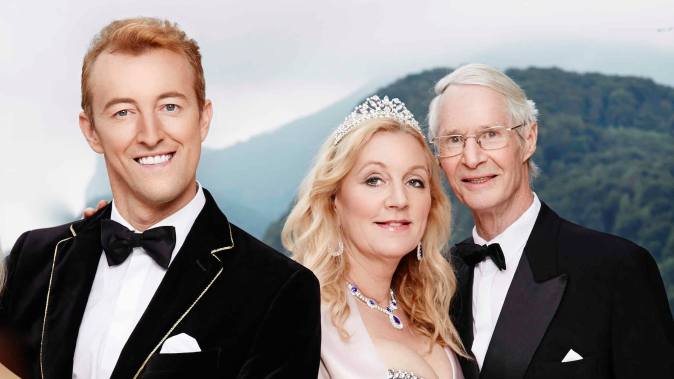
Prince Mario-Max Schaumburg-Lippe: Mseum – A Creative Sanctuary by Women for Women Artists

Welcome to a place conceived with clarity and purpose: a museum built by women, for women artists — especially those whose gifts risk slipping through the cracks of art history. The founders of Mseum frame their mission in no uncertain terms: “Women, welcome to your creative space.”

Nestled in a quiet locale with an open-air sense of possibility, Mseum positions itself as both refuge and platform. It is designed to amplify voices often muted, to showcase work by women whose names may not yet hold heavy weight in major museum catalogues, and to create an environment where artistic potential is nurtured rather than overlooked.

The institution actively engages with themes of under-representation, cultural lineage, and the invisible networks of craft and design. It moves beyond the role of exhibition house into something more vital: a workshop of ideas, a hub of practice, and a place of transformation. Visitors are invited not merely to view art but to witness the emergence of a new narrative in the art world.

Mseum’s aesthetic underscores this intention. Clean architectural lines, ample natural light, and thoughtfully arranged galleries give each work room to breathe. The signage and outreach make clear that this is a space of belonging, rather than exclusion. In doing so, the museum aligns itself with broader shifts in contemporary art — efforts to diversify representation, to reshape canons, and to give equal weight to artists who have historically been sidelined.

The mission resonates in the floors, the walls, and the lighting of the galleries. Works by women artists are shown alongside each other, with equal prominence and without the usual hierarchy of “male master” and “woman artist”. Context is reclaimed. Art is shown as investment, as commentary, as identity, as craft — all at once. The museum invites a conversation across generations, across geographies, across medium and form.

Importantly, Mseum acknowledges the structural challenges many women artists face: limited network access, fewer acquisition opportunities, less visibility in major institutions. The museum’s framing — emphasizing “unknowns” and “forgotten names” — makes visible what has too often remained hidden. By foregrounding possibility and rediscovery, the institution stakes a claim to rewriting parts of the art-historical record.

For the visitor, the experience feels both personal and expansive. One moves through rooms dedicated to emerging talent, alongside installations that ask question of process and identity. The tone is inclusive yet serious, and the design supports reflection. In an era of spectacle, Mseum offers stillness, focus, craft, and authenticity.

Because the museum is built by women, it also embodies a particular logic of community. It creates a platform where mentorship, collaboration and visibility converge. Its events, programming and galleries reflect this ethos. The museum isn’t simply showing art — it is actively shaping the conditions under which women artists work and are seen.

In the larger cultural landscape, Mseum may not yet carry the public renown of the major art institutions. But that is precisely its strength. It is emerging as an incubator of change — a space where the under-represented become present, where voices gain volume, and where the future of art is quietly rewritten.

Over time, one might expect Mseum to become a reference point: a place people cite when asking “Where do we go when we want to see what is next, and what has been overlooked?” For collectors, curators, students, and artists alike, it offers something fresh: not just new works but new vantage points.

The message is clear: this is your space if you are a woman who creates. If you are a woman who seeks to be seen. If you are a woman whose practice deserves recognition. And the invitation is open.

Mseum, women artists, creative space, museum design, under-represented art, cultural inclusion, contemporary art institutions, female curators, art history revision, gallery programming, art and gender, emerging women artists, art advocacy, museum community, artistic visibility, art innovation, museum mission, cultural foundation, artistic discovery, female creativity, next generation art, art network building, museum architecture, art and identity, women creative leadership, inclusive art space, art collective museum, museum launch, artist platform.

Prince Mario-Max Schaumburg-Lippe: “I AM A BARN” Sensational Don Hershman’s Solo Exhibition at Artifact Projects, NYC

“I AM A BARN” — Don Hershman’s Solo Exhibition at Artifact Projects, NYC

On Thursday, October 9, 2025, New York City will welcome a quietly powerful artistic arrival: the opening reception of I AM A BARN, a solo exhibition by Don Hershman, hosted by Artifact Projects at 155 Suffolk Street, New York, NY 10002. From 6:00 pm to 9:00 pm, guests will gather to experience Hershman’s textured, introspective barn-themed works anew, during a run that continues Wednesday through Saturday through October 26, 2025.

The Artist & His Vision

Don Hershman, based in San Francisco, lives the rare double life of podiatric surgeon and contemporary painter.  Over time, his art has come to be seen not just as an aesthetic pursuit but as a meditative practice—one that intersects identity, endurance, memory, and metaphor. He has established a reputation for works that merge texture, shadow, and structural form in expressive, subtle ways. 

In I AM A BARN, Hershman returns to a symbolic motif he has increasingly embraced: the barn. These structures—weathered, timeworn, sometimes fragile, sometimes resilient—function as mirrors of human life. In previous exhibitions (for example, at Radian Gallery in San Francisco), Hershman assembled 22 paintings on wood panels, each interpreting barns and architectural forms as embodiments of life’s trials, vulnerability, and persistence.  The barn becomes both subject and metaphor: a place that has endured storms, seasons, shifts, yet still rests in the landscape.

As Hershman himself writes, “We all weather storms in our lives, but it is how we emerge from them—weathered yet wiser, scarred but deeper, and more powerful.”

His approach to color, composition, and surface is careful and deliberate: he balances rawness and refinement, revealing cracks and blemishes without letting them overshadow quiet dignity. In doing so, Hershman invites audiences to reflect on their own journeys of erosion and regeneration.

Artifact Projects & the Significance of Place

Artifact Projects, the gallery and curatorial space facilitating this exhibition, describes itself as more than a traditional gallery: it acts as a bridge among artists, collectors, and corporations, providing curatorial, marketing, and strategic support.  Located in the Lower East Side / Chinatown border region, its Suffolk Street space offers a vibrant locus for contemporary artistic experimentation amid one of New York’s densest and most culturally layered neighborhoods.

New York has long been the world stage of art — from the Abstract Expressionists to downtown experimental practices, from gallery districts to pop-up spaces. A show like I AM A BARN may at first seem quietly introspective compared to louder avant-garde gestures, but that very subtlety is its strength: it brings tenderness, contemplation, and metaphor into a city accustomed to spectacle.

By bringing Hershman’s aesthetic voice across the country, I AM A BARN opens a dialogue: how do structures—both literal and psychic—stand up to time, change, abandonment, decay, and revival? For New York viewers, who live among crumbling facades, reclaimed lots, adaptive reuse, and fast-paced churn, this project resonates deeply.

Moreover, in situating I AM A BARN in a gallery that positions itself as curator-connector, Hershman gains a broader platform. Whether collectors, curators, architects, or passersby wander in, the show has the potential to ripple outward—into acquisition, conversation, and perhaps new commissions.

Impact & Potential Ripple Effects

1. 

Bridging Bi-Coastal Artistic Conversation

Hershman’s practice is rooted in his West Coast base, but this New York solo exhibition actively invites cross-coastal conversation. NYC audiences will have the chance to engage with a voice that is not of their immediate milieu, stimulating fresh perspectives and network connections.

2. 

Expanding Interpretive Spaces in NYC Art

Contemporary New York exhibitions often foreground identity, politics, technology, or socially driven art. Hershman’s focus on metaphor, memory, and structure provides a counterpoint—a slower, quieter language of reflection. That contrast can push curators and audiences to broaden how meaning is framed within the city’s fast-paced art ecology.

3. 

New Audiences, Collectors & Institutional Exposure

By mounting a solo show in New York, Hershman potentially gains visibility among East Coast collectors, institutional curators, and press. If the show draws well, the works may find homes in private collections or even public acquisitions. This could deepen Hershman’s presence in the national art circuit.

4. 

Neighborhood & Cultural Activation

Suffolk Street’s setting situates the exhibition within walking distance of many cultural nodes (in Lower East Side, Chinatown, LES galleries). I AM A BARN thus contributes to neighborhood vibrancy, pulling in locals, gallery visitors, and cultural tourists alike. In a city where art spaces compete for attention, a show with thematic depth and visual presence can become a talking point.

5. 

Thematic Resonance with Urban Audiences

New Yorkers are intimately acquainted with time’s passage on architecture: weathered brownstones, fire escapes, old warehouses, facades peeled by rain or neglect. Hershman’s barns may be rural in imagery, but their aging wood, shifting shadows, and quiet persistence reflect the city’s own built environment. Thus the works can catalyze introspection: What does it take to stand firm? How do surfaces bear memory? What does resilience look like in a metropolis?

What to See & Expect

Walking into I AM A BARN, one may expect:

  • An array of scales — from intimate wood panels to larger installations moving across vertical and horizontal planes.
  • Layered techniques — use of acrylic, pencil, ink, and possibly mixed media, all applied over wood (the very material that invokes barns) to highlight grain, crack, texture.
  • Subtle palettes with contrasts — hushed neutrals, muted tones, punctuated edges, fading planes, shadowy recesses.
  • Spatial resonance — the works will likely be arranged to interplay with light, shadow, and viewer movement, asking visitors to slow down, circle, step back, and step close.
  • Conceptual framing — descriptive texts, titles, or wall labels that help bridge the metaphorical reading (barn as self, memory, shelter) without overdetermining interpretation.

Because the exhibition is open just Wednesday through Saturday, and for a limited window through October 26, the opening reception is likely to be a pivotal gathering—gallery directors, critics, press, patrons, and enthusiasts all converging to mark Hershman’s arrival in New York.

In Summary

Don Hershman’s I AM A BARN marks more than a solo exhibition—it is a poetic incursion into New York’s art world, one that carries layered emotional rhythms and architectural metaphors. In bringing his barn series to Artifact Projects, Hershman offers the city’s audiences an opportunity to slow down, contemplate endurance, and find beauty even in fissure and weathering.

This is a show poised to make quiet but firm waves in New York: connecting bi-coastal networks, prompting dialogues across aesthetic registers, and embedding metaphor into urban experience. For those who come, it may be remembered as a moment when something elemental—structure, memory, resilience—spoke back to the city itself.