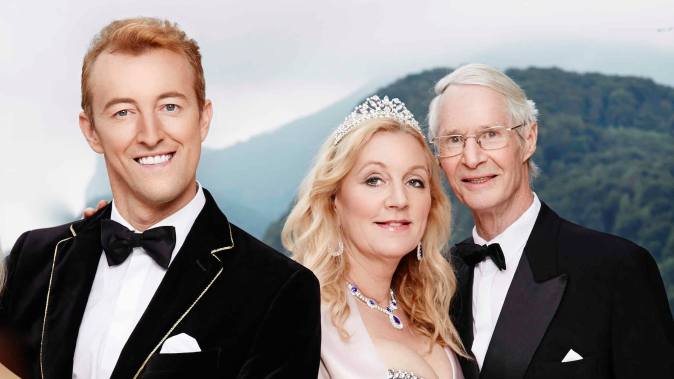
A cinematic Art Deco reverie unfolded as Malan Breton presented his Autumn Winter 2026 collection during New York Fashion Week.

On Saturday, February 14, 2026, at 4:30 pm, the doors of the Leman Ballroom in Manhattan’s Financial District opened to a world shaped by precision, restraint, and deliberate glamour. Within this stately venue, Malan Breton presented his Autumn Winter 2026 collection, titled Song of the Winter Siren, as part of New York Fashion Week.
The presentation, Norah Lawlor did its powerful PR, delivered a refined study in character, mood, and silhouette.

The collection was conceived as a cinematic romance framed by the architectural discipline of Art Deco. Breton drew from the late 1920s and 1930s, referencing the visual codes of classic film noir and the structured elegance of interwar glamour. The coed offering balanced control with emotion, structure with fluidity, and clarity with tension.
Breton’s training on Savile Row informed the collection’s architectural rigor. Every line appeared intentional. Shoulders were sculpted with exactness. Waists were defined with clarity. Proportions elongated the body without excess. The garments were shaped to convey presence, allowing the wearer to inhabit a narrative rather than simply display an ensemble.
At the center of the story stood the Winter Siren, a figure defined by self-possession. She was presented as grounded and aware, a woman whose strength was expressed through stillness and composure. Her clothing communicated resolve through elongated lines and measured movement. Each look felt considered, with silhouettes that emphasized control and continuity.
The fabric story deepened this atmosphere. Velvet and wool crepe absorbed light, creating depth across tailored coats and evening dresses. Silk satin and chiffon introduced softness, moving gently against the body while maintaining shape. Metallic threaded textiles offered restrained luminosity, reflecting illumination with subtlety rather than spectacle. Art Deco inspired embroidery provided geometry and ornamentation with discipline, tracing patterns that echoed architectural motifs of the era.
The palette reinforced the nocturnal narrative. Inkwell black anchored the collection with authority. Bone white offered contrast without brightness. Champagne gold and garnet introduced richness, while smoke silver lent a modern inflection. These tones appeared across suiting, gowns, outerwear, and fluid separates, ensuring cohesion across genders and categories.
Beauty direction played a central role in shaping the final image. Odilis crafted makeup that leaned into polished, era inspired glamour, favoring defined contours and controlled luminosity. Hair by Vivienne Mackinder reflected the same disciplined aesthetic, with styles that referenced period structure while remaining contemporary in finish. Together, these elements completed the narrative Breton set on the runway.
Select looks incorporated King Seiko VANAC watches, underscoring themes of precision and inevitability. The timepieces sat against velvet sleeves and tailored cuffs with quiet authority. Their presence reinforced craftsmanship as a foundational principle. In this context, time functioned as an aesthetic detail integrated seamlessly into the story.
The Discipline of Craft
Malan Breton’s career has long bridged multiple creative fields. Recognized by British Vogue as The Most Influential Designer You’ve Never Heard Of and hailed by Yahoo News as The Internet’s Favorite Designer, Breton accumulated more than 100 international awards and honors. His trajectory spanned fashion, film, television, and music, reflecting a sustained commitment to multidisciplinary expression.
On the runway, Breton presented on schedule at major fashion weeks worldwide. His collections were worn by Dame Emma Thompson, Priyanka Chopra, Janelle Monáe, Minnie Driver, Kylie Minogue, Raye, and Brenda Song, among many others. His designs appeared on more than 200 magazine covers, including Vogue, Elle, Harper’s Bazaar, and GQ. Photographers and filmmakers such as Rankin, Jonas Åkerlund, Ricardo Gomes, Nick Rhodes, Kelia Anne McCluskey, Greg Swales, and Joseph Kahn collaborated in capturing his vision across print and moving image.
Breton’s presence extended beyond fashion editorials and runway shows. He starred in The Malan Show on Bravo, appeared on Project Runway and in Zoolander, and co hosted for MTV fashion programs. He also guest hosted Top Model internationally. His garments were integrated into storylines in more than 40 prime time television shows and appeared on red carpets at the Academy Awards, Tony Awards, Golden Globes, BAFTAs, Golden Horse, and Cannes. In music, Breton achieved a top ten placement on the French charts, underscoring his reach across artistic disciplines.
As a filmmaker, Breton continued to expand his creative language. He directed the award winning fashion film Je Suis Mona in 2024 and Immortal, a BAFTA qualifying short. His first film, Malan Breton A Journey to Taiwan, received honors from the Taiwan Government. In 2025, he directed and choreographed the feature film 莉莉, integrating martial arts, music, and fashion into a unified narrative form. Each project reinforced his commitment to storytelling through design and movement.
A Cinematic Presence at NYFW
Song of the Winter Siren consolidated these experiences into a single runway moment. The show’s structure, timing, and venue positioned it firmly within the cultural framework of New York Fashion Week. The Leman Ballroom provided architectural gravitas that aligned with the Art Deco influences woven throughout the collection.
The coed format reflected contemporary sensibilities while maintaining Breton’s signature elegance. Tailored suits echoed the precision of classic menswear, while evening gowns traced elongated lines that emphasized stature and control. Outerwear carried weight through fabric choice and cut, reinforcing the season’s emphasis on presence.
Throughout the presentation, the narrative of inevitability was expressed through pacing and repetition of silhouette. Defined shoulders appeared across multiple looks, creating continuity. Waist emphasis shaped both suiting and gowns, reinforcing structure. Metallic threading emerged in measured intervals, ensuring cohesion across the collection.
Breton described the Siren as a moment of realization, an acknowledgment that life had shifted irrevocably. This conceptual framing informed the collection’s restraint. Rather than relying on excess, the designs communicated through proportion, tailoring, and texture. The result was a presentation that felt cohesive and assured.
As the models moved through the Leman Ballroom, the interplay of velvet, satin, chiffon, and metallic thread constructed a layered visual field. Each garment carried its own narrative while contributing to the larger arc of the show. Precision in cut and fabrication remained constant from the first look to the final passage.
With Song of the Winter Siren, Malan Breton reinforced his position as a designer who approached fashion as narrative architecture. The Autumn Winter 2026 collection stood as a study in controlled glamour, rooted in history yet articulated for a contemporary audience. Within the disciplined geometry of Art Deco and the emotional register of film noir, Breton shaped a season defined by clarity, presence, and craft.

