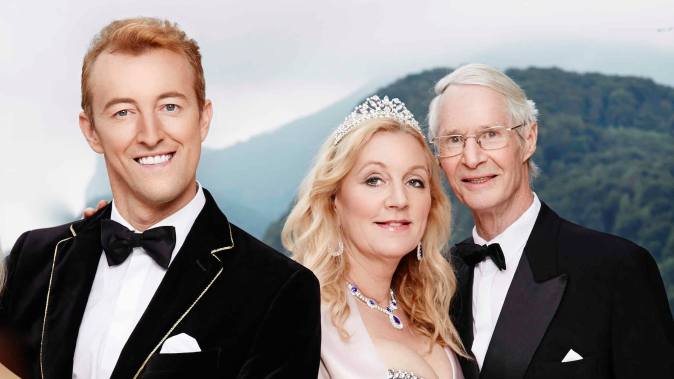
Prince Mario-Max Schaumburg-Lippe: Resident Evil Review: Zach Cregger’s Horror Triumph

Video game movies used to be where good ideas went to die. Then directors like Zach Cregger showed up. His Resident Evil — in theaters now — isn’t just the best film in the franchise’s history. It’s one of the best horror films of the year, full stop. And audiences agree: a $60 million domestic opening, $200 million-plus worldwide as of this week, and a 96% Rotten Tomatoes score. When was the last time a horror movie made everyone this happy?

Dread, done right

The premise is lean: Bryan (Austin Abrams) finds himself in a race for survival, in a brand-new story built from the bones of the beloved games. No homework required. You don’t need to know the lore, the timelines, or which game had the mansion. You just need a pulse.

What makes it sing is Cregger’s understanding of what actually made those games great. He told The Atlantic he plays them because “the game design and the pacing and the dread is so effective… That, to me, is the heart and soul of those games.” That’s the whole movie in one quote. This is horror built on pacing, not jump scares — corridors that feel too long, silences that feel too loud, a camera that knows exactly when to look away.

Abrams carries it beautifully. Bryan isn’t a superhero; he’s a guy trying to stay alive, and Abrams plays every shade of that fear without ever tipping into melodrama. You believe him. That’s rarer than it sounds.

Craft you can feel

What separates this from the average horror release is the craft. The sound design alone deserves mention — every creak, every distant thud, every held breath is placed with intention. Cregger understands that dread is a rhythm, and he conducts it like a maestro. The production design leans into decay and detail: environments that tell stories before anyone speaks. It’s the kind of filmmaking that rewards the big screen, where scale and sound do half the scaring for you. This is a director who learned pacing from games and atmosphere from the masters, and it shows in every frame.

The numbers tell the story

Let’s linger on the box office, because it’s genuinely remarkable. Sixty million domestic out of the gate. A second weekend holding at $23.3 million and pushing past $100 million domestic, per TheWrap’s roundup. Two hundred million worldwide and counting. For an R-rated horror film in September, those are the kind of numbers that make studio executives weep with joy.

And here’s the kicker: the same week Resident Evil crossed $200 million, Cregger’s next film — the Jennifer Lawrence sci-fi thriller The Flood — was announced. One director, one week, a historic hit and a dream project greenlit. Hollywood loves a winner, and this is how winning weeks look.

Why it works as an adaptation

Most game adaptations fail because they treat the source like a Wikipedia page to summarize. Cregger treated it like a feeling to recreate. The dread, the resourcefulness, the sense that safety is always one wrong turn away — that’s the games, translated honestly into cinema. Parade calls it a box office hit; we’d call it a template. This is how you do it.

The verdict

Resident Evil is scary, smart, and propulsive — the rare franchise entry that respects its source while doing something entirely its own. Cregger has now delivered Barbarian, the Oscar-winning Weapons, and this: three for three, each one distinct, each one excellent, each one proof that original voices still win big. He’s not just the most exciting horror director working. He might be the most exciting director working, period.

If you like horror, see it on the biggest screen you can find. If you don’t usually like horror, see it anyway — this is the one that converts people. Few films earn both critical love and crowd love in the same breath; this one did, and then some. A genuinely joyful week for the genre, and a triumph worth celebrating.

Prince Mario-Max Schaumburg-Lippe: Whalefall: Josh Brolin’s Deep-Sea Survival Thriller Preview

The pitch is three sentences long, and you will not forget it. A young man scuba-dives off the California coast searching for his dead father’s remains. He is swallowed whole by a massive sperm whale. He has one hour of oxygen.

That is Whalefall, arriving in theaters October 16 from 20th Century Studios. The trailer dropped in August, and if the film delivers on its premise, we’re looking at one of the year’s most gripping theatrical experiences.

The Martian Meets 127 Hours

That comparison comes from ComingSoon, and it’s doing honest work. Like The Martian, this is a problem-solving thriller: a smart protagonist, a lethal environment, a clock running down. Like 127 Hours, it’s survival stripped to the bone — one person, one impossible situation, no cavalry coming.

But the emotional engine is pure Whalefall. Jay Gardiner, played by Austin Abrams, isn’t diving for sport. He’s diving for his father, Mitt Gardiner — played by Josh Brolin — whose remains were lost at sea. Inside the whale, with sixty minutes of air, Jay has to use his father’s own survival lessons to get out. Grief as a toolkit. That’s a beautiful, painful idea, and it gives the spectacle a heartbeat. The best survival stories were never really about the environment; they’re about what the character carries in with them. This one wears that on its sleeve, in the best way — a reminder that the most uplifting stories are often the ones that go through the dark first.

The film runs 106 minutes. Tight. That’s the right length for a pressure-cooker — long enough to earn the dread, short enough that nobody gets to breathe.

Duffield Knows This Terrain

Director Brian Duffield co-wrote the screenplay with Daniel Kraus, adapting Kraus’s own 2023 novel. That’s a strong sign: the author in the room, shaping the adaptation of his own book. Duffield’s directing credits — Spontaneous and No One Will Save You — show a filmmaker comfortable with high concepts played straight and with real feeling. No One Will Save You in particular was a near-wordless alien-invasion thriller carried almost entirely by craft and one performance. A man alone inside a whale? That’s the same muscle, flexed harder.

And the producing bench is serious: Brian Grazer of Imagine Entertainment is aboard with Duffield, Jeb Brody, and Allan Mandelbaum. Grazer doesn’t produce small movies by accident. When a producer of that caliber backs a 106-minute survival thriller, it means the script earned it.

The Cast

Austin Abrams carries the film as Jay, and it’s the kind of role that makes careers — alone on screen for long stretches, acting against darkness, water, and a ticking clock. Josh Brolin plays his father Mitt, presumably in the flashbacks and memory sequences that give the survival lessons their weight. Brolin brings instant gravity; you believe a man like that would teach his son how to stay alive. Elisabeth Shue plays Jay’s mother Zara, with John Ortiz, Jane Levy, and Emily Rudd rounding out the cast. Shue is one of those actors who elevates everything she’s in — her presence suggests the family story will hit as hard as the thriller mechanics.

Why Theaters Matter for This One

Some movies you can watch anywhere. This isn’t one of them. A film about being swallowed by a whale — about pressure, darkness, the sound of your own breathing in a mask — wants a dark room and a big screen and an audience holding its breath with you. The trailer already suggests the sound design will be half the experience: creaks, currents, the awful closeness of it. This is a theatrical proposition in the old sense, the kind of big-screen event that reminds you why shared spectacle still matters — though here the voyage is considerably more alarming than a luxury cruise.

October 16 is also well chosen. It’s the heart of fall movie season, when audiences are hungry for something with teeth after the summer’s lighter fare. A survival thriller with prestige credentials and a killer hook should play very well there.

The Honest Unknowns

We’ve seen a trailer, not the film. The premise is airtight, the team is strong, but execution is everything with a concept this extreme. Can 106 minutes inside a whale sustain tension without repeating itself? Can the father-son story land without slowing the thriller? Those are craft questions, and Duffield’s track record suggests he knows exactly what he’s doing. Still — preview means preview. We’ll know on October 16.

Verdict: can’t wait. Whalefall has the year’s best hook, a director who specializes in exactly this kind of tension, and a cast built for it. One hour of oxygen. One hundred six minutes of movie. See it with people who don’t mind holding their breath.