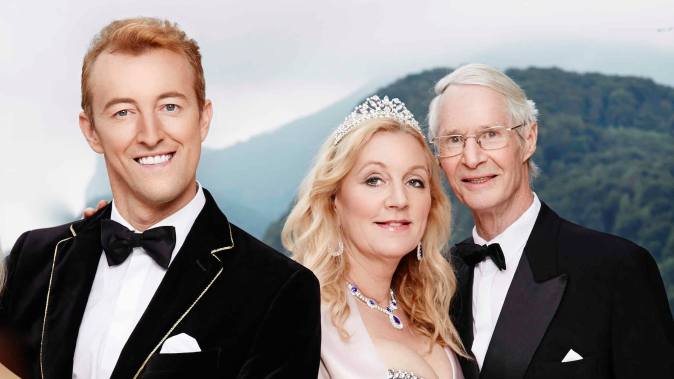
Prince Mario-Max Schaumburg-Lippe: The Waxman Luncheon 2026 Last Tickets For The Most Powerful Charity Luncheon Of The Year!

The Waxman Luncheon 2026 Sets the Standard for Purpose and Style – Get Your Ticket NOW!

An elegant New York gathering unites philanthropy, fashion, and science to advance lifesaving cancer research. New York’s PR Powerwoman Noral Lawlor reps the Luncheon of the year: BEST GUESTLIST, BEST PROGRAM, BEST CAUSE and nowhere else does doing good feel better!

https://waxmaninstitute.org/events/12th-annual-waxman-luncheon#tickets

In the refined cadence of New York’s philanthropic calendar, certain gatherings carry a deeper resonance, extending far beyond their setting to shape conversations that matter. The 12th Annual Waxman Luncheon emerges as one such occasion, where purpose and elegance meet with unmistakable clarity. Scheduled for May 6, 2026, this highly anticipated event draws together a distinguished community committed to one of the most urgent causes of our time, advancing cancer research through collective action and support.

At Riverpark, a venue synonymous with understated sophistication and sweeping views, the afternoon unfolds with intention. From the moment guests arrive, there is a palpable sense that this is not merely a social engagement, but a meaningful convergence of individuals who understand the stakes. The Samuel Waxman Institute for Aging and Cancer stands at the heart of this gathering, anchoring the event in its mission to explore the intricate relationship between aging and cancer.

The Institute’s work reflects a forward-thinking approach that recognizes aging as the most significant risk factor in the development of cancer. This perspective has guided a new era of scientific exploration, one that seeks to bridge disciplines and foster collaboration across institutions. The luncheon serves as both a celebration of progress and a catalyst for continued discovery, ensuring that each contribution supports tangible advancements in prevention, detection, and treatment.

Philanthropy at this level carries a certain elegance, expressed not only through generosity but through intention. The Waxman Luncheon has cultivated a reputation for bringing together leaders from diverse spheres, including real estate, fashion, science, and advocacy. This blend of perspectives enriches the experience, creating a dynamic environment where ideas and commitments intersect.

The 2026 luncheon honors Mary Slattery and Alexandra Adame, two figures whose dedication to the cause reflects a broader commitment to meaningful impact. Their recognition underscores the importance of individual leadership within the collective effort to address cancer’s global reach. Their presence adds a layer of personal narrative to the event, reminding attendees that progress is driven by both institutional strength and individual conviction.

Fashion plays an integral role in shaping the identity of the luncheon, adding a dimension that speaks to creativity and cultural influence. Safiyaa’s involvement as the fashion presenter introduces a refined aesthetic that complements the event’s philanthropic purpose. The presentation is not merely a display of design, but an extension of the event’s ethos, where artistry supports advocacy in a seamless expression of modern luxury.

The setting at Riverpark enhances the experience, offering a space that feels both intimate and expansive. The design of the venue allows for natural movement and interaction, encouraging conversations that extend beyond formalities. It is within these exchanges that the true spirit of the luncheon emerges, as guests share insights, build connections, and reinforce their shared commitment.

Beneath the elegance lies a carefully structured program designed to maximize impact. Live and silent auctions provide opportunities for guests to contribute directly, transforming moments of engagement into measurable support for research initiatives. Each bid represents more than a transaction, it signifies a shared investment in the future of cancer treatment.

The Samuel Waxman Institute’s affiliation with The Mark Foundation for Cancer Research further strengthens its position within the global research community. This partnership reflects a commitment to collaboration at the highest level, ensuring that resources are directed toward projects with the greatest potential for breakthrough discoveries. The luncheon serves as a vital conduit for this work, translating awareness into action.

A Legacy of Scientific Commitment

The history of the Samuel Waxman Institute is rooted in decades of dedication to advancing cancer research. Building on the legacy of the Samuel Waxman Cancer Research Foundation, the Institute has supported more than 200 scientists worldwide, distributing over $120 million in funding since its inception. This sustained effort has created a foundation upon which new discoveries continue to emerge.

The Institute’s focus on aging biology represents a significant shift in how cancer is understood and addressed. By examining the processes that contribute to cellular aging, researchers are uncovering pathways that may lead to more effective interventions. This approach holds the promise of treatments that are both more precise and less invasive, improving outcomes for patients across diverse populations.

Events such as the Waxman Luncheon play a crucial role in sustaining this momentum. They provide not only financial support but also a platform for raising awareness about the Institute’s work. The visibility generated by the luncheon extends its impact beyond the immediate audience, reaching a broader community that can engage with and support the mission.

The leadership behind the event reflects a network of individuals deeply invested in its success. Event Chairs Marion N. Waxman, Susan Pernick, and Dina Koutroumanis guide the vision with clarity and purpose. Their leadership is complemented by Event Co-Chairs Erica Linden-Fineberg, Nancy Litman, and Helen Vaysman, along with a dedicated committee that includes Sandy Ackerman, Jessica DiPalma, Orital Karelic, Norah Lawlor, Lorri Scott, and Randi Schatz.

Each of these contributors brings a unique perspective, ensuring that the luncheon reflects a balance of tradition and innovation. Their collective efforts shape an experience that is both seamless and impactful, reinforcing the event’s position as a cornerstone of philanthropic engagement in New York.

Where Style and Substance Converge

The integration of fashion within the luncheon speaks to a broader understanding of influence. Style becomes a vehicle for storytelling, a way to engage audiences who may not traditionally intersect with scientific discourse. Safiyaa’s presentation exemplifies this approach, offering a visual narrative that aligns with the event’s purpose.

Guests experience a carefully curated environment where every detail contributes to the overall narrative. From the floral arrangements to the pacing of the program, the luncheon reflects a commitment to excellence that mirrors the standards of the Institute itself. This attention to detail ensures that the event resonates on multiple levels, leaving a lasting impression.

The presence of leaders from the fashion community adds a layer of cultural relevance, highlighting the role of creative industries in shaping public engagement. Their participation reinforces the idea that philanthropy can be both impactful and inspiring, bridging the gap between different spheres of influence.

As the afternoon progresses, the sense of unity among attendees becomes increasingly evident. Conversations shift from introductions to shared goals, reflecting a collective understanding of the importance of the cause. This transformation is one of the defining features of the Waxman Luncheon, turning a gathering into a movement.

The auction segments introduce moments of anticipation, drawing guests into the process of giving in a dynamic and engaging way. Each item represents an opportunity to contribute, with proceeds directly supporting research initiatives that have the potential to change lives.

A Future Defined by Innovation

Looking ahead, the significance of the Waxman Luncheon continues to grow. As research evolves and new challenges emerge, the need for sustained support becomes even more critical. The luncheon stands as a testament to what can be achieved when communities come together with a shared purpose.

The work of the Samuel Waxman Institute extends far beyond the confines of the event, influencing the trajectory of cancer research on a global scale. Its commitment to collaboration and innovation positions it at the forefront of efforts to understand and combat the disease.

The 2026 luncheon captures this momentum, offering a moment to reflect on progress while looking toward the future. It is an occasion defined by clarity of purpose, where every element contributes to a larger vision of improved health outcomes and expanded possibilities.

In this setting, philanthropy is not an abstract concept but a tangible force, expressed through action and engagement. The luncheon embodies this principle, transforming generosity into meaningful impact that extends far beyond the event itself.

As guests depart, the impression left by the afternoon lingers, not as a fleeting memory but as a reminder of what can be accomplished through collective effort. The Waxman Luncheon continues to set a standard for how events can unite elegance and purpose in service of a vital cause.


Prince Mario-Max Schaumburg-Lippe: Come Support The Waxman Cancer Research Foundation Gala on October 22nd!

Science and Celebration Unite at the Samuel Waxman Cancer Research Foundation Gala

A night of discovery, generosity, and global collaboration will illuminate New York as the Samuel Waxman Cancer Research Foundation hosts its 28th Annual Collaborating for a Cure fundraiser.

New Yorks PR Powerhouse Norah Lawlor has just informed us that on Wednesday, October 22, 2025, the Samuel Waxman Cancer Research Foundation will mark a remarkable chapter in its legacy of scientific progress and philanthropy. AND we want your support! The 28th Annual Collaborating for a Cure event, themed A Celebration of Breakthroughs, will take place at Apella, located at 450 East 29th Street in New York City. From 6:30 to 9:30 in the evening, supporters, scientists, and leaders from across industries will gather in a shared mission: to accelerate the discovery of cancer cures through innovation and unity.

This year’s gala will carry special meaning as it not only celebrates nearly five decades of transformative research funding but also unveils the Samuel Waxman Institute for Aging & Cancer. The newly established institute represents a pioneering effort in medical science, the first of its kind to study the intersection of aging and cancer in an integrated way. It embodies the Foundation’s enduring commitment to exploring new frontiers in cancer prevention and treatment by uniting brilliant minds across the globe.

All funds raised during the evening will be matched dollar-for-dollar through the Foundation’s partnership with The Mark Foundation for Cancer Research, effectively doubling the resources available to support groundbreaking scientific grants. The collaboration between these two organizations continues to expand the potential of translational research, ensuring that promising laboratory discoveries can evolve into real-world therapies faster than ever before.

The evening will also serve as a celebration of individuals whose contributions reflect the Foundation’s core values of leadership, compassion, and impact. Honorees include Jean Shafiroff, recognized as Philanthropist of the Year for her extensive charitable work and influence across numerous causes; Robert Wiener, Chairman Emeritus of Maxx Properties, also named Philanthropist of the Year for his longstanding commitment to philanthropy; and Dr. Jeffrey Settleman, Senior Vice President and Chief Scientific Officer for Oncology Research and Development at Pfizer, who will receive the prestigious Breakthrough Science Award for his exceptional contributions to advancing cancer research.

Over nearly three decades, the Collaborating for a Cure fundraiser has become one of New York’s most inspiring philanthropic evenings. Known for blending elegance with purpose, the event draws a distinguished audience from the worlds of science, business, fashion, and entertainment. Guests will enjoy an exquisite seated dinner accompanied by a program that highlights the latest achievements of SWCRF-supported researchers, showcasing how collaboration continues to redefine what is possible in cancer prevention, diagnosis, and treatment.

The Samuel Waxman Cancer Research Foundation stands as a model of sustained scientific partnership. Since its founding in 1976, the organization has awarded more than $120 million to over 200 researchers worldwide. Central to its success is the Foundation’s signature model, the Institute Without Walls, which fosters open collaboration among global investigators, encouraging them to share data, techniques, and discoveries in real time. This approach has dramatically accelerated the pace at which cancer research progresses, bridging disciplines and national boundaries in the pursuit of cures.

At the heart of the Foundation’s philosophy is the understanding that collaboration fuels discovery. Through the decades, SWCRF has consistently sought to fund innovative science that identifies and corrects abnormal gene functions responsible for cancer while minimizing treatment toxicity for patients. The organization’s impact extends far beyond traditional grantmaking, cultivating a global community of scientists united by the belief that cooperation is essential to eradicating cancer.

As the evening unfolds at Apella, attendees will be reminded of the enduring power of partnership — between scientists and philanthropists, between institutions and individuals, and between innovation and compassion. The setting, overlooking the East River, offers a fitting backdrop for a night that honors visionaries shaping the future of medicine.

The celebration’s timing also highlights an important evolution in the Foundation’s journey. With the formal introduction of the Samuel Waxman Institute for Aging & Cancer, the Foundation is ushering in a new era of scientific exploration. By bringing together researchers who specialize in both aging and oncology, this initiative seeks to understand how the biological processes of aging influence the development and progression of cancer. The insights generated through this work are expected to transform how scientists approach prevention strategies and therapeutic design for the years ahead.

The honorees each reflect the multidimensional spirit of the Foundation’s work. Jean Shafiroff, whose philanthropic reach spans healthcare, animal welfare, and education, continues to embody the intersection of generosity and advocacy. Robert Wiener’s influence as both a business leader and humanitarian reflects the vital role that private sector visionaries play in supporting life-changing research. Dr. Jeffrey Settleman’s leadership at Pfizer underscores how industry innovation and academic collaboration can work in concert to move science forward.

Each year, Collaborating for a Cure not only raises funds but also raises awareness of the profound impact that sustained scientific investment can achieve. The event’s atmosphere combines the refinement of a gala with the sense of urgency and optimism that accompanies groundbreaking research. Guests leave with a deeper understanding that progress in oncology is not measured solely in laboratory milestones but also in the lives extended and the families preserved through research-driven discovery.

The partnership between SWCRF and The Mark Foundation for Cancer Research serves as a model for modern philanthropy. By aligning missions and resources, these organizations demonstrate how cooperation between charitable and scientific entities can double the reach and impact of every contribution. Their shared vision ensures that funds raised in a single evening have the power to transform entire research portfolios and open new paths toward cancer cures.

Throughout the evening, attendees will have the opportunity to hear about recent advancements supported by SWCRF grants, each representing a step closer to transforming cancer from a life-threatening diagnosis into a manageable condition. From molecular insights into tumor resistance to precision therapies tailored to genetic profiles, the work funded by the Foundation exemplifies how sustained investment in science yields tangible hope.

As the 28th annual event approaches, anticipation builds among supporters who have witnessed the Foundation’s growth from a pioneering idea into a global force for scientific collaboration. The Samuel Waxman Cancer Research Foundation remains guided by its founder’s enduring belief that the cure for cancer will be discovered not by isolated efforts, but through collective determination and shared discovery.

For those wishing to join this celebration of progress and possibility, details and ticket information are available at www.waxmancancer.org/gala.

Dr. Samuel Waxman’s journey is defined by both scientific ambition and humanitarian vision. From his early days immersed in rigorous medical training to the founding of the Samuel Waxman Cancer Research Foundation and decades of global collaborations, his story is one of steady advancement toward the bold objective of eradicating cancer.

Born and raised in New York City, Samuel Waxman completed an undergraduate degree at Cornell University in 1957 and earned his M.D. at the State University of New York Downstate Medical Center in 1963. He then undertook residency and fellowship training at Mount Sinai Hospital in New York, where he would forge his career as an oncologist and hematologist.

In subsequent years he joined the faculty of the Icahn School of Medicine at Mount Sinai, rising to become the Zena and Michael A. Wiener Professor of Medicine (Cancer), Distinguished Service Professor of Medicine, Hematology and Medical Oncology, and Distinguished Service Professor of Oncological Sciences.

Even as the academic titles accumulated, Dr. Waxman’s attention stayed fixed on a key scientific frontier: the abnormal differentiation of cells that leads to leukemia and other cancers. He was among the first to champion “differentiation therapy” — a concept that instead of aiming merely to kill cancerous cells, seeks to restore them toward normal maturation.

In 1976, recognizing the critical need for flexible funding and cross‐institutional collaboration in cancer research, Dr. Waxman established the Samuel Waxman Cancer Research Foundation (SWCRF). The foundation was born out of a simple conversation with a donor who asked whether Dr. Waxman had ever thought of creating an organization to fund his work. From that moment, the foundation became his vehicle to marshal resources, build networks and drive research that crossed traditional institutional boundaries.

Under Dr. Waxman’s leadership the foundation adopted a philosophy he long held: science progresses fastest when investigators and laboratories with complementary strengths join forces. The SWCRF’s “Institute Without Walls” model embodies this by funding collaborations rather than isolated labs, enabling teams from North America, Europe and Asia to work in concert on cancer’s most intractable mysteries.

One of Dr. Waxman’s landmark achievements came in the treatment of acute promyelocytic leukemia (APL). Working with colleagues in China — notably at the Shanghai Institute of Hematology — he helped pioneer treatment regimens using all‐trans retinoic acid (ATRA) and arsenic trioxide. These therapies transformed APL from a near-certain fatal disease into one with survival rates above 90 percent.

Beyond leukemia, Dr. Waxman continued to apply differentiation‐based strategies, investigating how to correct abnormal gene functions, target regulatory proteins and even explore nutritional factors in cancer cell biology. His work linked vitamins such as A, B12 and folic acid to DNA synthesis and gene regulation, thus bridging basic biochemistry with clinical oncology.

Over the course of his career Dr. Waxman has authored more than 300 scientific papers, written chapters in textbooks on hematology and chemotherapy, and published books such as Differentiation Therapy and The Leukemia Cell. As founder and scientific director of SWCRF, he has overseen funding of tens of millions of dollars and fostered a global network of cancer researchers.

Equally important is Dr. Waxman’s role as mentor, connector and visionary. He has convened international conferences on differentiation therapy, set up honorary professorships (including at Shanghai Jiao Tong University) and guided young scientists into collaborative frameworks long before such models were common.

Dr. Waxman’s story is rooted in medicine yet shaped by global possibility. His early work in New York laboratories matured into partnerships that spanned oceans. His focus on differentiation therapy opened new pathways when cytotoxic chemotherapy seemed the only option. His foundation-building created infrastructure not only for his own laboratory but for research ecosystems that persist.

In recent years Dr. Waxman has held the titles of Professor Emeritus in Medicine, Hematology/Oncology and Oncological Sciences at Mount Sinai, while continuing active engagement in research and foundation work. His vision remains firmly on the future: therapies that are minimally toxic, personalized, gene‐function‐correcting, and globally accessible.

His legacy will persist well beyond his own lab: a generation of scientists seeing cancer not merely as a target to be destroyed but as a cellular programme to be re-educated; a network of collaborations crossing disciplinary and geographic borders; and therapies seeded from his foundational work that are now standard of care.

Dr. Samuel Waxman’s life is a testament to perseverance, innovation and the conviction that scientific progress is best achieved through cooperation rather than competition. His career exemplifies how a single patient‐centre orientation — that every cancer patient deserves the best possible future — can drive decades of inquiry, fund-raising, mentorship and global outreach.

In an era where the promise of cancer cure remains both urgent and complex, Dr. Waxman’s path reminds us that breakthroughs frequently come at the intersection of biology, collaboration and vision.

Samuel Waxman Cancer Research Foundation, Samuel Waxman Institute for Aging & Cancer, The Mark Foundation for Cancer Research, Jean Shafiroff, Robert Wiener, Jeffrey Settleman, Pfizer, Maxx Properties, Apella, New York City, Lawlor Media Group, Norah Lawlor, Collaborating for a Cure, A Celebration of Breakthroughs, Cancer Research, Oncology, Aging and Cancer, Cancer Prevention, Gene Function, Philanthropy, Global Science, Biomedical Innovation, Medical Research, New York Fundraisers, Health Leadership, Cancer Collaboration, Life Sciences, Precision Medicine, Molecular Biology, Cancer Treatment, Medical Innovation, Scientific Discovery, Global Health

Prince Mario-Max Schaumburg-Lippe: Assembly Member Rebecca Seawright Hosts Free Prostate Cancer Screenings with Mount Sinai

Assembly Member Seawright just sent out an email with an upmost important message THANK YOU ! A community health initiative offering no-cost prostate cancer screenings brought New Yorkers together for an important cause of prevention and awareness. Assembly Member Rebecca Seawright, in partnership with Mount Sinai’s Robert F. Smith Mobile Prostate Cancer Screening Unit, announced the return of this vital service, providing men aged 40 and above with free, confidential screenings designed to save lives through early detection.

The event takes place Wednesday, October 29, from 10 a.m. to 4 p.m. at 1485 York Avenue, between 78th and 79th Streets. No health insurance is needed, and walk-ins are welcome throughout the day. The mobile unit, operated by Mount Sinai, offers a quick and simple blood test that takes only five to six minutes. Results are typically available within two to three days, making it one of the most efficient and accessible screening opportunities available to the public.

Assembly Member Seawright’s dedication to public health has been a hallmark of her community leadership. By partnering with Mount Sinai, she continues her advocacy for preventive care and accessible medical services for all New Yorkers, regardless of income or insurance status. The initiative highlights her ongoing mission to ensure that early detection and education remain central to men’s health awareness on the Upper East Side and beyond.

Making Prevention Accessible

Prostate cancer remains the second most common form of cancer among American men, following skin cancer. Statistics underscore the importance of annual screening, particularly for men over 40 and for those with higher risk factors. Approximately one in eight American men will develop prostate cancer during their lifetime, and about one in forty will die from the disease. The numbers are even more concerning among Black men, who experience a seventy percent higher rate of developing high-risk prostate cancer and are more than twice as likely to die from it.

Events such as this one aim to close those disparities through outreach, education, and the elimination of financial barriers. By providing a completely free screening, the program encourages men who might otherwise delay care to take a proactive step toward protecting their health. The ease of access—no appointments, no paperwork, no insurance required—reflects a new model of community-centered healthcare delivery that prioritizes prevention over reaction.

A Community United in Health

Throughout the day, volunteers and healthcare professionals from Mount Sinai’s Robert F. Smith Prostate Cancer Screening Unit will be on hand to guide participants through the quick process. Their mission is not only to provide testing but also to create a supportive environment where men can learn more about the disease, risk factors, and ongoing advances in treatment.

For many residents, this event represents more than a medical opportunity—it is a symbol of care within the community. The collaboration between Mount Sinai and Assembly Member Seawright brings a sense of civic engagement and compassion to public health, reminding attendees that awareness begins at the neighborhood level.

Public health advocates have long emphasized that early screening is key to reducing mortality rates from prostate cancer. With a test that takes just a few minutes, the potential to save lives is immense. For men aged forty and above, annual screenings can mean the difference between timely treatment and late diagnosis. This initiative ensures that cost or lack of insurance will never be the barrier that prevents someone from receiving essential care.

Continuing a Lifesaving Tradition

Assembly Member Seawright’s efforts align with a broader statewide movement to make preventive care a priority. By hosting mobile units and free testing events, she continues a pattern of hands-on service that empowers citizens to take control of their health. The presence of Mount Sinai’s trusted medical professionals reinforces the event’s credibility and ensures that participants receive both accurate results and follow-up guidance.

Men who attend the screening can expect professionalism, privacy, and encouragement. Beyond the test itself, many leave with valuable information about diet, exercise, and ongoing health monitoring. These moments of engagement—personal, brief, yet deeply impactful—reflect the essence of community healthcare in action.

As the mobile unit sets up once again on York Avenue, the invitation is clear: prevention is powerful, knowledge is vital, and everyone deserves access to care. For those walking by, the blue ribbon symbolizing prostate cancer awareness serves as a gentle reminder that early detection saves lives.

For more information about this event or other community initiatives, residents are encouraged to contact Assembly Member Rebecca Seawright’s office by calling 212-288-4607 or emailing SeawrightR@NYAssembly.gov.

Rebecca Seawright, Mount Sinai Robert F Smith, Mobile Prostate Cancer Screening Unit, York Avenue, Upper East Side, New York City, Men’s Health Awareness, Prostate Cancer Screening, Free Medical Services, Community Health Event, Preventive Care, Public Health Initiatives, Cancer Prevention, Health Equity, Black Men’s Health, Mount Sinai Hospital, Local Healthcare Access, No Cost Screenings, Walk-In Screenings, Urban Health Programs, State Assembly Outreach, Medical Volunteers, Health and Wellness, Blood Testing, Community Engagement, Early Detection, New York State Assembly, Public Awareness Campaigns, Accessible Medicine, Lifesaving Screenings, Preventive Medicine