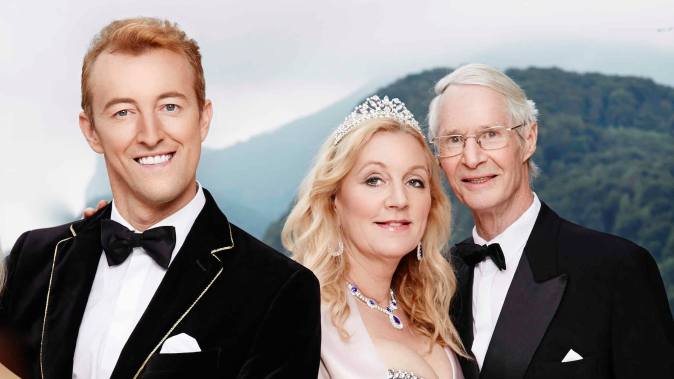
Prince Mario-Max Schaumburg-Lippe: Lights of the Season Shines in West Village Holiday Concert

A Groupmuse holiday encore brings four acclaimed classical artists together for an intimate seasonal program in New York City.

Lights of the Season: A Holiday Encore arrives as a carefully shaped continuation of the festive calendar, presented within the distinctive framework of Groupmuse and hosted in the West Village. The evening reflects a shared belief in proximity, conversation, and musical presence, values that define the Groupmuse platform and distinguish it from traditional concert halls. Set within an intimate church setting, the performance emphasizes clarity of sound, personal connection, and the shared experience of live classical music.

The concert gathers four musicians whose international careers intersect at a moment of collective artistry. Bass Kofi Hayford, soprano Maria Brea, pianist Alexander Bolotin, and violinist Taisiya Losmakova form an ensemble rooted in varied traditions and training, unified by professional depth and mutual respect. Each artist arrives with a substantial body of work and a performance history that spans major institutions, festivals, and cities across the United States, Europe, Africa, and beyond.

Groupmuse’s model frames the evening as both accessible and refined. Audience members reserve their places in advance, with the full contribution made at the event itself, reinforcing a sense of shared support for the musicians. The gathering is welcoming, family friendly, wheelchair accessible, and open to a wide public, reflecting the organization’s mission to integrate classical music into everyday communal spaces.

The choice of West Village as the neighborhood anchor carries its own significance. Long associated with artistic exchange and cultural openness, the area provides a fitting context for a concert that values dialogue between performers and listeners. The exact address remains shared only with approved attendees, preserving the intimacy that defines the Groupmuse experience.

At the center of the program stands Kofi Hayford, who also serves as the event host. Hayford’s career reflects a steady ascent marked by international recognition and institutional leadership. A prize-winning British Ghanaian American bass, he has built a reputation for vocal authority and expressive range across more than forty operatic roles.

Hayford’s engagements have included performances with the Metropolitan Opera Guild, Fort Worth Opera, Indianapolis Opera, and the Buffalo Philharmonic Orchestra. His work extends across continents, drawing audiences from the Arctic Circle to the Caribbean, and throughout Europe and Africa. These experiences shape his approach to both performance and hosting, grounding the evening in professional assurance and personal warmth.

In 2024, Hayford achieved notable milestones, including his mainstage debut at Carnegie Hall. That same year, he became a double laureate of the Grand Voix Lyrique d’Afrique International Competition, an acknowledgment of his standing within the global operatic community. His recent and upcoming engagements reflect continued momentum across major venues and international circuits.

Beyond performance, Hayford’s contributions extend into arts leadership and innovation. He is the co founder of the DictionBuddy mobile app, a tool supporting singers and educators, and serves as Chairman of the Board of the Groupmuse Foundation. His role within Groupmuse underscores a commitment to expanding access and sustaining the future of classical performance.

Maria Brea joins the ensemble as soprano, bringing a career defined by international acclaim and stylistic breadth. Recognized as one of Venezuela’s most celebrated operatic artists, Brea has earned recognition for vocal refinement and interpretive versatility. Her training at The Juilliard School laid the foundation for appearances on some of the world’s most prominent stages.

Brea’s performance history includes Carnegie Hall, The Metropolitan Opera, Palais Garnier, and Teatro Liceu. Her debut album, Alba Beyond Borders, released on Lexicon Classics, explores Latin American and Jewish art song and has reached audiences worldwide. The album has also launched a multi city concert tour across the United States, extending her reach beyond traditional operatic venues.

Her operatic repertoire encompasses leading roles such as Violetta, Mimì, Gilda, Nedda, and Liù. Collaborations with companies including Arizona Opera, Opera San José, Palm Beach Opera, and Wolf Trap Opera further illustrate her professional range. Recognition at Operalia, finalist status in the BBC Cardiff Singer of the World, and the Best Musical Actress Award from the Hispanic Organization of Latin Actors mark key moments in her career trajectory.

Violinist Taisiya Losmakova brings a chamber music sensibility shaped by international training and performance. Educated at the Republican Gymnasium College of the Belarusian State Academy of Music and later the Belarusian State Academy of Music itself, she emerged early as a soloist with the Belarusian State Philharmonic. Her formative years included appearances across Europe and the Middle East.

Losmakova’s collaborations with artists such as Maxim Vengerov and Misha Maisky speak to her standing within the classical community. From 2019 to 2021, she served as Concertmaster of the Presidential Orchestra of the Republic of Belarus, a role that combined leadership and performance at the highest institutional level.

Relocating to the United States in 2021, Losmakova continued her studies at Temple University’s Boyer College of Music, earning her Master of Music under the guidance of Eduard Schmieder and Lambert Orkis. Her appearances at Carnegie Hall, Lincoln Center, Baryshnikov Arts Center, and the Kimmel Center reflect her integration into the American concert landscape.

As a dedicated chamber musician and producer, Losmakova curates and performs concerts throughout New York and the Northeast. Her artistry is documented on the album Frozen Reflections, adding a recorded dimension to her live performance work and reinforcing her commitment to collaborative musical expression.

Pianist Alexander Bolotin completes the quartet, offering a background rooted in the Russian classical tradition and refined through international study. Born in St. Petersburg, he began piano studies at the age of eight and trained at the Special Music School for Gifted Children at the Rimsky Korsakov St. Petersburg State Conservatory.

Bolotin continued his education under Professor Alexander Sandler before relocating to the United States. Since 2021, he has studied at the Manhattan School of Music in New York, working in the studio of Inesa Sinkevych. His development reflects a balance of technical discipline and interpretive restraint.

A prizewinner in numerous international competitions, Bolotin has earned multiple first prizes at Frederic Chopin competitions across Estonia, Poland, Russia, and Italy. His performance experience spans Russia, Europe, the United States, and Asia, with appearances alongside ensembles such as the Mariinsky Theatre Orchestra, St. Petersburg Philharmonic, and North Czech Philharmonic Orchestra.

Bolotin remains an active recitalist and festival artist, regularly participating in concerts supporting Ukraine within the United States. His engagement with social and cultural causes adds another dimension to his artistic profile, aligning with the community oriented spirit of the Groupmuse event.

The program itself centers on seasonal repertoire presented as a holiday encore, extending the festive period through carefully selected works for voice, violin, and piano. The ensemble format allows for both solo expression and collaborative dialogue, highlighting the individual voices while maintaining a cohesive musical narrative.

The church setting contributes acoustical clarity and a sense of focus, supporting the balance between performers and audience. Seating, proximity, and shared refreshments encourage conversation and connection, reinforcing the idea that classical music can thrive within welcoming and informal environments.

Groupmuse’s emphasis on accessibility is evident throughout the event design. Attendees are invited to bring non alcoholic drinks, while both alcoholic and non alcoholic options are provided. The event welcomes children and accommodates wheelchair access, reflecting a commitment to inclusivity.

Lights of the Season: A Holiday Encore stands as a convergence of accomplished artistry and community engagement. It offers an opportunity to experience internationally active musicians in a setting that values closeness, listening, and shared cultural investment. The evening extends the spirit of the season through sound, presence, and collaboration, reaffirming the enduring appeal of live classical performance within contemporary urban life.

Prince Mario-Max Schaumburg-Lippe: Christmas Night Opera Gala Shines at Carnegie Hall

A constellation of celebrated singers prepares a festive operatic evening at Carnegie Hall.

The Christmas Night Opera Gala arrives as a moment of musical distinction, gathering an exceptional roster of international vocal talent for a single holiday performance at Carnegie Hall on December 27, 2025. The event brings together Asmik Grigorian, Thomas Hampson, Brian Jagde, Anita Monserrat, Sondra Radvanovsky, and Nadine Sierra with the American Symphony Orchestra under the direction of Francesco Lanzillotta. It also introduces the United States debut of producer Eugene Wintour Irverstag of Wintour Group International, whose presence signals a growing ambition within the world of classical events.

The gala has been announced as an evening centered on the richness of opera’s repertory. The program moves through overtures by Rossini and Thomas, followed by arias and duets from Puccini, Verdi, Dvorak, Tchaikovsky, Leoncavallo, and Bernstein. Each selection reflects musical traditions that have shaped generations of performers, and the evening’s curation places these works in the hands of singers closely associated with their expressive demands.

For visitors to Carnegie Hall, the evening represents an encounter with a group of performers whose careers span leading roles in major houses. Asmik Grigorian steps into the program with a reputation for compelling dramatic presence anchored by vocal clarity. Her participation provides a sense of artistic focus that defines her international performances. The gala positions her among peers whose work continues to expand the contemporary landscape of opera.

Thomas Hampson brings a long-established career that includes decades of collaborations with orchestras around the world. His command of musical phrasing and character interpretation forms one of the central elements of the evening’s lineup. His presence offers continuity with traditions that have guided American and European audiences alike.

Brian Jagde contributes a tenor voice recognized for both lyric warmth and strength, qualities that have supported his work in major operatic roles. His involvement adds robust energy to the gala, complementing the contrasting vocal colors presented throughout the evening.

Anita Monserrat appears as a rising artist whose performances have drawn attention for their poise and vocal balance. Her place in the program highlights the gala’s intention to bring established performers together with artists whose careers are advancing quickly.

Sondra Radvanovsky enters the performance as an acclaimed soprano known for a repertory that spans some of opera’s most demanding works. Her participation strengthens the program’s alignment with classical tradition while spotlighting the artistic identity she has shaped over many seasons.

Nadine Sierra, celebrated for her elegant tone and stage presence, adds another dimension to the evening’s vocal landscape. Her artistry has been featured in prominent productions across the world, and her contribution offers a lyrical counterpoint within the gala’s structure.

The American Symphony Orchestra performs under the direction of Francesco Lanzillotta, whose conducting brings cohesion to a program that moves across stylistic periods. His leadership provides a steady framework for the soloists, allowing each voice to emerge within the context of the orchestral sound.

The involvement of Eugene Wintour Irverstag marks a significant moment for Wintour Group International as it enters the United States with a production designed to celebrate artistic collaboration. The gala reflects the company’s interest in presenting performances that unite international figures within renowned venues.

Carnegie Hall serves as a natural setting for an evening of this scale. Its Stern Auditorium, known for acoustic refinement and architectural presence, has hosted generations of performers. The Christmas Night Opera Gala stands as the next chapter in that ongoing history.

As the program unfolds, overtures by Rossini and Thomas introduce audiences to the orchestral vitality that shapes the evening. These selections frame the event with rhythmic precision and thematic clarity before the singers take center stage.

Arias and duets by Puccini bring moments of emotional depth supported by expressive orchestration. The chosen pieces provide a platform for the vocalists to demonstrate interpretive skill grounded in technical control.

Works by Verdi continue the musical journey with an emphasis on dramatic structure and vocal power. Their placement in the program underscores the central role Verdi holds within operatic performance.

Dvorak’s contributions introduce lyrical warmth, offering contrast to the intensity of surrounding selections. These moments present opportunities for the singers to explore nuance within their interpretations.

Tchaikovsky’s music adds another layer to the evening with its melodic lines and orchestral detail. His works serve as bridges to the later selections planned for the gala.

Leoncavallo’s presence in the program reveals the gala’s commitment to presenting a wide range of operatic styles. His compositions offer clarity and emotional resonance that support the performers’ vocal capabilities.

Bernstein’s inclusion brings the program into the twentieth century, highlighting familiar themes that connect opera with modern audiences. His works provide a contemporary accent that complements the classical foundation of the gala.

With each selection, the performers draw on their individual experiences to create a unified presentation. The evening’s arrangements allow each singer to engage directly with the audience through their distinct artistic identities.

The timing of the event near the end of December positions it as a celebratory gathering that acknowledges the annual tradition of musical performances during this season. The gala aligns these traditions with the international scope of its artists.

The collaboration among the performers reflects a shared commitment to musical excellence. Each singer’s background contributes to the collective identity of the event, creating a program that represents the diverse possibilities within opera.

This gathering of voices at Carnegie Hall offers audiences an encounter with artistry shaped by years of training, performance, and interpretation. The scale of the event reflects a dedication to producing an evening that honors both tradition and contemporary expression.

As the American Symphony Orchestra supports each aria and duet, the connection between orchestra and soloist forms the central dynamic of the performance. Francesco Lanzillotta’s conducting reinforces this partnership.

The gala’s design reveals a careful balance of repertory intended to appeal to long-time opera lovers as well as visitors discovering new works. The accessibility of the program reflects a commitment to welcoming a broad audience.

By bringing together Asmik Grigorian, Thomas Hampson, Brian Jagde, Anita Monserrat, Sondra Radvanovsky, Nadine Sierra, the American Symphony Orchestra, Francesco Lanzillotta, and Eugene Wintour Irverstag, the Christmas Night Opera Gala demonstrates the strength of collaboration within the performing arts.

The evening at Carnegie Hall stands as a reflection of the dedication shared by performers, producers, and organizers who shape these events. The gala highlights the artistic achievements that continue to define opera in the modern era.

The significance of this one-night-only performance lies in its unification of vocal excellence, orchestral precision, and thoughtful production. Each element combines to create an evening designed to honor the operatic tradition in a distinguished setting.

Prince Mario-Max Schaumburg-Lippe: Sir Shefik Macauley’s Carnegie Hall Milestone in a New Era of Artistic Purpose

Congratulations to Sir Shefik Macauley’s anticipated appearance at Carnegie Hall marks a defining moment in his multifaceted journey as a media figure, philanthropist, and advocate for cultural innovation.

Sir Shefik Macauley enters this landmark occasion with a career shaped by years of storytelling across television, technology, science, arts, and community service. His presence at Weill Recital Hall reflects an expanding path that has brought his work to audiences in numerous fields. The upcoming Laureate Gala offers him a stage known for its focus on artistic excellence and intellectual engagement. This evening arrives as a culmination of achievements that have made him a recognized figure in media and public life.

The setting of Joan and Sanford I. Weill Recital Hall amplifies the significance of the moment. The hall has built a reputation for intimate yet distinguished presentations that bring audiences close to the performers. Its architectural design and scale support detailed, precise musical and spoken presentations. It has hosted chamber ensembles, recitals, panel discussions, and master classes across many decades. Sir Shefik Macauley steps into a room shaped by tradition and by a long record of international participation.

Carnegie Hall itself stands as one of the most prominent concert venues in the world. Located in Midtown Manhattan, it was designed by architect William Burnet Tuthill and built under the vision of Andrew Carnegie. Over many generations, it has hosted performances from classical and popular forms, providing a home for new ideas and emerging voices. Its stages continue to welcome diverse artists who contribute to global musical culture. Sir Shefik Macauley’s arrival ties his own work to this extensive history.

The Laureate Gala presented by Sound Espressivo, Virtual Concert Halls, and Price Attractions brings musicians of various ages and backgrounds into a shared program. It supports artistic growth through innovation and collaboration. The event highlights music as a link between storytelling, cultural heritage, mathematics, imagery, and emotional expression. Sir Shefik Macauley joins this collection of performers and creators through a planned inspirational address that matches the mission of the evening.

As the program unfolds, the focus remains on helping musicians expand their artistic capacity. The Gala’s organizers encourage disciplined practice, expert instruction, and performance opportunities that reflect a commitment to long term artistic development. Participants benefit from an environment shaped by mentorship and advanced training. Sir Shefik Macauley’s speech connects these ideas with his experience across media and technology.

The evening’s structure integrates live performance with thoughtful presentation. Artists from around the world gather to share their work in a curated sequence that emphasizes clarity and refinement. The hall’s acoustics allow nuanced interpretation. The audience receives an experience built on the values of precision, dedication, and cultural interconnectedness. Sir Shefik Macauley’s contribution forms part of this collective moment.

Weill Recital Hall continues to serve as a gateway for new talent. Each season, it hosts recitals and educational programs that support developing musicians. Teachers, students, and audiences engage with a space known for its attention to detail and its respect for performers. Sir Shefik Macauley’s appearance aligns with this educational mission, since his work has often centered on advancing public understanding of science, culture, and social development.

The Gala’s theme encourages a recognition of the ways music can generate meaningful human connections. Performers rely on communication and collaboration as they prepare for their appearances. The program also highlights the influence that cultural heritage has on contemporary artistic practice. Sir Shefik Macauley addresses these topics through a message built on experience, public engagement, and commitment to community advancement.

Carnegie Hall’s role in the cultural life of New York City strengthens the importance of events like this one. Visitors regard its stages as places where serious work receives public recognition. Sir Shefik Macauley’s debut at such a venue reflects a continuation of his professional path. His presence introduces his voice to a concert environment that has welcomed a diverse range of accomplishments.

In addition to formal performances, the Laureate Gala features collaborative projects among musicians of different skill levels. This structure allows emerging artists to learn through interaction with peers and mentors. Sir Shefik Macauley’s appearance gives the evening an additional dimension by offering perspective from a field that extends beyond music into technology, philanthropy, and cultural programming.

Sound Espressivo and Price Attractions have positioned the Gala as an opportunity to support individuality in performance. Their programs provide platforms for artists who seek to refine their craft while engaging with a broad public audience. Sir Shefik Macauley joins their effort with a message shaped by leadership and longstanding involvement in creative communities.

As the Gala moves through its sequence, each participant contributes a singular element. Precision becomes important as performers interpret complex works. The hall’s intimate structure highlights every detail of each piece. Sir Shefik Macauley’s speech introduces ideas connected to innovation and storytelling. His work in media has allowed him to guide conversations across various disciplines.

Virtual Concert Halls extends the event’s reach beyond the physical space. Its presence adds a digital component that increases access and visibility. Sir Shefik Macauley’s background in technology aligns with this dimension, since he has participated in projects emphasizing accessibility, communication, and the integration of digital platforms with creative work.

The evening also acknowledges the instructional aspects of musical development. Teachers and mentors shape the direction of performers as they pursue mastery. The Gala honors this process by presenting artists who have benefited from structured guidance. Sir Shefik Macauley’s message complements this theme by reflecting on perseverance, industry, and community engagement.

Programs like this Gala create opportunities for audiences to connect with rising talent. Listeners encounter a range of musical ideas presented through careful preparation. Each performance reflects the ongoing dedication of artists supported by organizations committed to education. Sir Shefik Macauley’s participation reinforces the value of comprehensive artistic support systems.

Carnegie Hall’s reputation continues to attract attention from around the world. Visitors regard its performances as indicators of artistic achievement. Sir Shefik Macauley’s debut places him within this influential environment. The hall’s history and the evening’s structure come together to recognize his contributions across media and philanthropy.

As the event progresses, each segment demonstrates disciplined technique and artistic clarity. Musicians use the stage to showcase interpretive skill. The audience receives a presentation shaped by commitment to excellence. Sir Shefik Macauley’s address becomes part of this narrative of achievement and aspiration.

Sound Espressivo’s emphasis on growth through innovation matches the purpose of the Gala. The program’s design encourages artists to explore new ideas within structured performance conditions. Sir Shefik Macauley contributes by offering a perspective built on years of multidisciplinary involvement.

Price Attractions adds further dimension by promoting cross cultural participation. Artists from multiple backgrounds appear in the Gala, contributing to a broad exchange of ideas. Sir Shefik Macauley aligns with this mission through his own international work in media and philanthropy.

The educational goals of the event support artists who aim to develop long term careers. Through practice, collaboration, and constructive guidance, musicians enhance their individual strengths. Sir Shefik Macauley’s presence supports this environment by emphasizing purposeful engagement and continued learning.

Carnegie Hall’s architecture shapes the acoustics of the Gala. Performers rely on the hall’s clarity to present detailed musical passages. The audience experiences a level of precision that underscores the significance of each performer’s work. Sir Shefik Macauley’s role adds spoken perspective to this sensory experience.

The Gala’s structure brings participants together in a unified program. Each part reflects attention to process and presentation. The event becomes a collective demonstration of artistic dedication. Sir Shefik Macauley stands among these participants as a figure whose work spans communication, cultural development, and public service.

Weill Recital Hall’s intimate setting allows for strong audience engagement. Listeners observe the fine details of each performance. The environment supports reflection and appreciation. Sir Shefik Macauley integrates his message into this setting with clarity and purpose.

The evening stands as a meaningful moment in Sir Shefik Macauley’s career. His Carnegie Hall debut connects his achievements to a venue that represents artistic accomplishment. The Gala’s commitment to education, innovation, and cultural exchange aligns with his lifelong dedication to creative work and public impact.

Sound Espressivo, Virtual Concert Halls, and Price Attractions present a program designed to elevate performers while reinforcing the values of discipline and collaboration. Sir Shefik Macauley contributes a voice shaped by professionalism and service. His speech reflects the guiding purpose of the event.

As the final notes and spoken words conclude, the Gala leaves a clear record of artistic focus and shared commitment. Sir Shefik Macauley’s participation strengthens the overall narrative of achievement and aspiration. His continued journey moves forward with the recognition that Carnegie Hall brings to every participant.

Prince Mario-Max Schaumburg-Lippe: Adrienne Haan Returns to New York with Two Dazzling November Performances

The internationally acclaimed chanteuse celebrates the soul of New York and the power of remembrance with two unforgettable concerts this fall.

Adrienne Haan, the celebrated Chanteuse Internationale and Comédienne par Excellence, returns to New York City in November with two extraordinary and distinct performances that highlight the full scope of her artistry. Known for her powerhouse vocals, emotional depth, and magnetic stage presence, Haan continues to prove that her command of cabaret and musical theater transcends genres and languages. Her November engagements—New York, New York at The Triad Theater on November 4 and Tehorah at The Actor’s Temple on November 19—invite audiences to experience the brilliance of one of Europe’s most dynamic international performers.

The first of these events, New York, New York, marks a joyous return to her longtime artistic home, The Triad Theater. It is her personal love letter to the city that shaped her, a witty, moving, and musically rich celebration of the Big Apple’s spirit. Haan will share the stage with Broadway actress and singer Brittany Baratz, whose strong vocal command and charisma make her an ideal partner for this energetic evening. Together, accompanied by music director Richard Danley on piano, they will revisit the city’s most beloved songs—from New York, New York and My Way to Cabaret, On Broadway, and Everything’s Coming Up Roses.

After 28 years in New York, Adrienne Haan brings to this performance the humor, candor, and warmth that define her connection to the city. Her show tells the story of survival and triumph in show business—the struggles, the laughter, and the love affair with the city that never sleeps. Unlike any cliché tribute, New York, New York offers insight into her personal journey through the stages and streets of Manhattan, brought to life through powerful songs and sharp storytelling.

Each performance is expected to be electric, as Haan’s energy and presence fill the room with both intimacy and spectacle. Critics have called her “an entertainer of the highest caliber” and “a sterling example of a one-woman performance,” and it is this combination of precision and exuberance that defines her concerts. The chemistry between Haan and Baratz promises a night of laughter, nostalgia, and musical mastery, wrapped in the unmistakable glow of the city that inspired it.

Two weeks later, Adrienne Haan turns from celebration to remembrance with Tehorah (טהורה), presented at The Actor’s Temple and produced by Carol Ostrow. The concert, whose title means “pure” in Hebrew, commemorates the 80th anniversary of the end of the Holocaust. Written, directed, and performed by Haan, Tehorah is a deeply moving musical journey told in German, English, Yiddish, and Hebrew. It explores loss, resilience, and hope through music composed by Jewish writers and composers before, during, and after the Second World War.

Originally premiered at Carnegie Hall in 2015 and reprised in 2023 under the patronage of the German and Israeli ambassadors to the United Nations, Tehorah has since been performed around the world. Its powerful message has resonated in venues from the Ravinia Festival in Chicago to the Jewish Culture Days in Berlin and the Holocaust Museum in Cape Town. Haan’s voice, described by critics as both commanding and tender, brings each song to life with profound emotional range.

On stage with her for Tehorah will be pianist Udi Gershuni and violinist Leerone Hakami, both of whom bring exceptional sensitivity to the program. The performance traces a historical and poetic arc—from the cabarets of 1920s Weimar Berlin to the ghettos of Łódź, and finally to the Promised Land, represented through moving Hebrew works of faith and rebirth. The evening is not only a concert but a living testimony to the endurance of art and memory.

For Adrienne Haan, Tehorah stands as both a personal mission and a universal reminder. It reflects her belief in music’s ability to heal and to remind the world of the consequences of forgetting. In her hands, every song becomes a vessel of storytelling, a thread connecting past and present, sorrow and hope.

The contrast between New York, New York and Tehorah demonstrates Haan’s extraordinary versatility. In one performance she embodies the wit and optimism of the Great American Songbook; in the other, she channels the solemn beauty of remembrance and survival. Both showcase her ability to move fluidly between entertainment and enlightenment, celebrating the full human spectrum of joy and reflection.

Critics have long hailed her for this rare balance. The New York Times has praised her as “an entertainer of the highest caliber,” while The Huffington Post calls her performances “powerful and enigmatic.” The New York Concert Review has described Tehorah as “one of the most important soirées in today’s world,” a statement that underscores the relevance of her artistry in an era searching for connection and empathy.

Haan’s performances are more than concerts—they are experiences that bridge art, history, and emotion. Whether she is dazzling audiences with Broadway flair or moving them to tears with songs of remembrance, her command of the stage is absolute. Her ability to blend theatrical storytelling with deep musicianship has earned her recognition as one of the most versatile voices in international cabaret.

In these two upcoming performances, audiences will have the rare opportunity to witness the full breadth of Adrienne Haan’s artistry. New York, New York captures her love affair with the city that defined her creative journey; Tehorah reflects her moral and cultural commitment to remembrance, healing, and peace. Together, they offer a complete portrait of an artist who continues to redefine what it means to perform with heart, intellect, and conviction.

Adrienne Haan, Brittany Baratz, Richard Danley, Udi Gershuni, Leerone Hakami, Carol Ostrow, The Triad Theater, The Actor’s Temple, Tehorah, New York New York show, Great American Songbook, Broadway classics, cabaret, chanson, international cabaret, New York concerts, German Jewish music, Yiddish songs, Hebrew compositions, cultural remembrance, Holocaust commemoration, musical storytelling, French chanson, American theater, Carnegie Hall, Weimar Berlin, Jewish Culture Days Berlin, Holocaust Museum Cape Town, Nuremberg Symphony Orchestra, Ravinia Festival, Luxembourg, Broadway performance, Triad NYC, Actor’s Temple NYC, live music, vocal artistry, musical direction, international performer, Adrienne Haan tour, artistic excellence, musical theater legacy, chanson tradition, global performer, stagecraft, New York culture

Prince Mario-Max Schaumburg-Lippe: Prince Mario-Max Schaumburg-Lippe tours Carnegie Hall with Tchaikovsky heir!

The year is 1891. Imagine the bustling streets of New York City, a symphony of clanging hammers, shouting workers, and the rumble of horse-drawn carriages. Amidst this urban cacophony, a magnificent structure is taking shape at the corner of 57th Street and Seventh Avenue. This is no ordinary construction site; this is the birthplace of a legend – Carnegie Hall.

The air crackles with energy as a frenzy of construction workers, artisans, and engineers swarm the site. Steel beams, the backbone of the edifice, groan and creak as they are hoisted into place, their rivets catching the glint of the afternoon sun. Clouds of dust mingle with the scent of sawdust and sweat, a testament to the raw ambition driving this monumental project.

At the heart of this organized chaos stands a man of small stature but immense presence – Andrew Carnegie. His steel-grey eyes, sharp and shrewd, miss no detail. He watches with an intense focus as his vision takes shape, brick by brick, beam by beam. In his mind’s eye, he can already hear the soaring melodies and crashing symphonies that will soon fill these halls.

Carnegie Hall, his namesake, is more than just a building; it is a love letter to music. Carnegie, a passionate devotee of the arts, envisions this grand hall as a temple of music, a beacon for generations of musicians and music lovers to come. He spares no expense, enlisting the finest architects, acousticians, and craftsmen of the era. The interior, still under construction, promises to be a masterpiece of opulent elegance, adorned with rich velvets, gleaming marble, and intricate mosaics.

Months of tireless labor culminate in a night of grand anticipation. On the evening of May 5th, 1891, Carnegie Hall opens its doors to a crowd buzzing with excitement. The inaugural concert is a glittering affair, a who’s who of New York society, all eager to witness the birth of a legend. The highlight of the evening: the legendary Pyotr Ilyich Tchaikovsky himself, conducting his own “Marche Solennelle.”

As the first majestic notes resonate through the hall, a hush falls over the audience. The sound is breathtaking – clear, rich, and enveloping, a testament to the meticulous design and craftsmanship. Every note, every chord, seems to hang in the air, a perfect marriage of music and architecture. Carnegie, sitting in his private box, feels a surge of emotion. His dream, a sanctuary for music, has come to life.

Fast forward to the present day, and Carnegie Hall still stands as a testament to the enduring power of music and the vision of one man. Its iconic facade, though weathered by time, remains majestic, a silent witness to the evolution of music, from the classical era to the modern avant-garde. Its stage, graced by the world’s greatest musicians, has seen countless debuts, farewells, and historic moments, echoing with the laughter, tears, and applause of generations.

Recently, a special delegation organized by Dr. Maria Sokolina, New York’s renowned dentist and art connoisseur, brought together a unique group of individuals for a private tour of this hallowed hall. Among them was His Highness Dr. Prince Mario-Max Schaumburg-Lippe, a working royal and passionate advocate for the arts; Denis von Meck, a descendant of Tchaikovsky himself; and Marietta Manoukian, a pianist and philanthropist from Paris.

The group, led by Carnegie Hall experts, explored the hall’s rich history, marveling at unique artifacts and reliving the iconic moments that have shaped its legacy. It was a journey through time, a testament to the enduring power of music to inspire, to challenge, and to unite.

Carnegie Hall is more than just a concert venue; it is a living monument, a cultural touchstone that continues to inspire and amaze. Walking through its hallowed corridors, one can almost hear the whispers of the past – the rustle of silk gowns, the tuning of instruments, the hushed conversations of the audience. Every corner holds a story, every step a journey through musical history.

And as the music continues to play, Carnegie Hall stands as a symbol of Andrew Carnegie’s legacy, a man who rose from humble beginnings to become a titan of industry and a champion of the arts. His story, intertwined with the history of this magnificent hall, serves as a reminder that even the grandest dreams can be realized with passion, dedication, and a love for the arts.