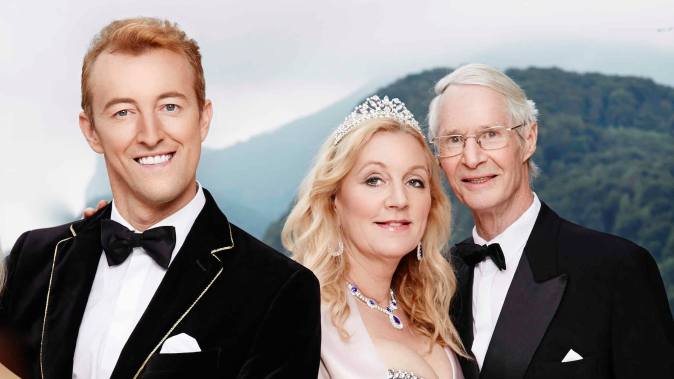
An extraordinary spring performance at the Church of the Blessed Sacrament gathers Taisiya Losmakova, Francisco Vila, and Peter Fancovic for an intimate chamber music program that places Bach and Brahms at the center of one of the season’s most refined cultural events.
New York’s classical music calendar reaches a rare moment of elegance on May 12, when Bach Brahms Afterlight arrives at the Church of the Blessed Sacrament on West 71st Street. Set beneath vaulted ceilings and illuminated by the solemn beauty of stained glass architecture, the evening promises a chamber performance defined by precision, restraint, and emotional depth. In a city crowded with major productions and large-scale performances, this concert embraces intimacy as its defining quality.
Beginning at 7:00 p.m., the event introduces audiences to a carefully assembled program rooted in the enduring legacy of Johann Sebastian Bach and Johannes Brahms. The setting itself shapes much of the evening’s atmosphere. The Church of the Blessed Sacrament, known for its Gothic interior and resonant acoustics, has long served as a fitting home for sacred and classical repertoire. Its soaring nave and historic design create a listening environment where every phrase and harmonic shift acquires unusual clarity.
The presentation is guided by Groupmuse and Art&Musica, organizations that have steadily reshaped how younger and more culturally adventurous audiences engage with classical music in New York. Their approach favors closeness over spectacle, encouraging listeners to experience chamber works in spaces that preserve concentration and emotional immediacy. Bach Brahms Afterlight reflects that philosophy fully, combining distinguished musicianship with an architectural setting that enhances the emotional scale of the repertoire.
At the center of the evening is violinist Taisiya Losmakova, whose performances have earned attention for their balance of technical confidence and lyrical sensitivity. Her stage presence favors refinement over theatricality, allowing the structure of the music itself to guide the emotional experience. In repertoire connected to Bach and Brahms, this interpretive approach carries particular significance. Both composers demand precision, intellectual command, and patience, qualities that resonate deeply in a chamber setting.
Joining her is cellist Francisco Vila, whose work continues to attract admiration for its warmth of tone and expressive control. Chamber music depends upon conversation rather than dominance, and Vila’s style aligns naturally with that tradition. The cello repertoire associated with Brahms especially rewards performers capable of sustaining emotional tension without excess, allowing melody and harmonic architecture to unfold gradually across the performance space.
Peter Fancovic completes the ensemble with a musical sensibility rooted in clarity and balance. In chamber performance, the relationship among musicians becomes visible in real time. Subtle gestures, attentive phrasing, and collective pacing shape the audience’s experience as much as the written score itself. Fancovic’s participation contributes to the sense that this concert is designed not as a showcase for individual display, but as a unified artistic statement.
The phrase “afterlight” in the concert’s title captures much of the evening’s identity. Bach and Brahms represent different periods in European music history, yet their works often seem connected through a shared concern for spiritual weight and structural beauty. Bach’s compositions carry architectural precision and devotional intensity, while Brahms introduces density, introspection, and emotional gravity. Together, their music creates an atmosphere that lingers long after the final notes have faded.
New York audiences continue to demonstrate a growing appetite for experiences that feel personal and carefully curated. Large concert halls remain important cultural landmarks, yet chamber performances in historic venues have gained renewed cultural relevance. Listeners increasingly seek evenings that allow concentration and direct connection to performers. Bach Brahms Afterlight arrives within that broader shift, presenting classical music as something immediate and deeply human rather than distant or ceremonial.
The Church of the Blessed Sacrament contributes significantly to that experience. The visual grandeur of the sanctuary does not overwhelm the performance. Instead, it frames the music with calm dignity. The rose window, stone detailing, and suspended chandeliers create an environment where the audience becomes fully attentive to sound and silence alike. In such spaces, chamber music acquires unusual emotional resonance.
Dress expectations for the evening reflect the event’s polished but welcoming tone. The semi-black tie guidance signals refinement without rigidity, encouraging guests to participate in the elegance of the occasion while maintaining the intimacy that defines the Groupmuse atmosphere. The result is an audience experience that feels socially vibrant while remaining centered on artistic focus.
The programming of Bach and Brahms together remains especially compelling because both composers reward sustained listening. Bach’s contrapuntal writing invites attention to detail, while Brahms develops emotional complexity through layered harmonies and gradual transformation. Performed within a church setting, these compositions often take on an expanded emotional dimension. The acoustics allow resonance to linger naturally, giving each musical line additional depth and presence.
For younger audiences entering the classical world, evenings like this provide an accessible pathway into the tradition. Rather than relying on institutional formality, the concert emphasizes atmosphere, architecture, and personal engagement. This approach has become increasingly influential in New York’s cultural landscape, where audiences value experiences that feel thoughtfully assembled and emotionally authentic.
Groupmuse has played a notable role in that evolution. By presenting chamber performances in distinctive spaces, the organization has helped redefine how classical music circulates through urban cultural life. Concerts become gatherings rather than distant spectacles, encouraging audiences to engage directly with performers and repertoire. Art&Musica complements this vision through programming that prioritizes intimacy, elegance, and artistic seriousness.
The musicians themselves reflect an international sensibility increasingly present in contemporary chamber music. Their collective backgrounds and interpretive styles contribute to performances that feel cosmopolitan while remaining grounded in tradition. This balance is especially effective in works by Bach and Brahms, composers whose music continues to transcend historical period and geographic identity.
The visual identity of Bach Brahms Afterlight reinforces the evening’s atmosphere. The promotional imagery foregrounds the church interior, emphasizing scale, symmetry, and warmth rather than celebrity or theatricality. The performers appear as part of the broader architectural and musical environment, underscoring the collaborative spirit that defines chamber performance.
In a cultural moment increasingly shaped by speed and distraction, chamber concerts offer a rare alternative. They ask audiences to remain still, attentive, and fully present. Bach Brahms Afterlight embraces that tradition fully. The pacing of the evening, the sacred setting, and the repertoire itself encourage sustained concentration and emotional openness.
For longtime classical listeners, the concert represents an opportunity to hear enduring repertoire interpreted within an ideal acoustic environment. For newer audiences, it offers entry into a world where detail, patience, and shared listening remain central values. The evening bridges generations and musical backgrounds through the universal language of live performance.
The Upper West Side has long maintained a distinctive relationship with New York’s artistic life, combining intellectual tradition with architectural beauty and cultural accessibility. Hosting the performance at the Church of the Blessed Sacrament situates the concert within that broader history. The neighborhood’s historic identity as a center for arts and education strengthens the event’s cultural significance.
As spring concerts begin to define the close of the season, Bach Brahms Afterlight stands apart through its clarity of vision. The event does not rely on spectacle or novelty. Its appeal emerges from careful curation, exceptional musicianship, and a setting that honors the emotional seriousness of the repertoire. Every detail, from venue selection to presentation style, reinforces the sense of thoughtful refinement.
The enduring appeal of Bach and Brahms lies partly in their ability to create emotional intensity without excess. Their music rewards close listening, offering complexity that unfolds gradually rather than immediately. In an intimate church environment, those qualities become even more powerful. Audiences hear not only melody, but breath, resonance, and silence shaped into a unified artistic experience.
New York remains one of the world’s great capitals for classical performance because it continues to support events of this scale and character. Alongside major institutions and celebrated orchestras, chamber performances preserve the essential intimacy at the heart of the tradition. Bach Brahms Afterlight demonstrates how meaningful those experiences can become when musicians, venue, and repertoire align with precision.
For one evening in May, the Church of the Blessed Sacrament transforms into a space devoted entirely to listening. Beneath vaulted ceilings and stained glass light, Bach and Brahms return to the center of the city’s cultural imagination through performances shaped by discipline, collaboration, and quiet emotional force.
classical music, chamber music, New York concerts, Bach Brahms Afterlight, Taisiya Losmakova, Francisco Vila, Peter Fancovic, Church of the Blessed Sacrament, Upper West Side, Groupmuse, Art&Musica, Bach concert NYC, Brahms performance, live chamber music, NYC cultural events, spring concerts New York, violin recital, cello performance, sacred architecture, classical performance, luxury culture, music feature, concert season NYC, intimate concerts, Gothic church concerts, New York arts scene, refined events NYC, chamber ensemble, cultural calendar, elegant evenings, classical musicians, concert feature, West 71st Street, music and architecture, fine arts NYC

