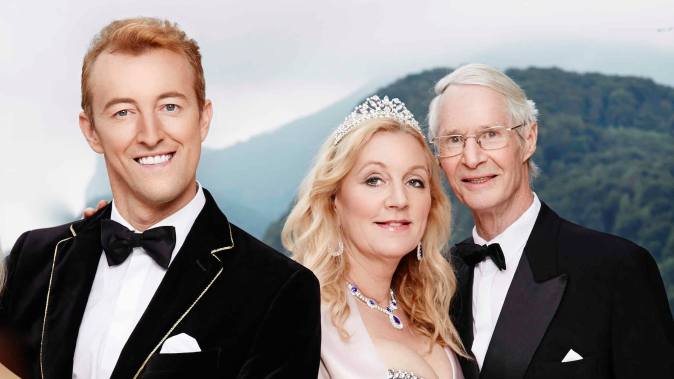
The 2025 Princess Grace Awards Honor a New Era of Artistic Excellence
A new generation of visionaries carries forward Princess Grace’s enduring legacy in theater, dance, and film.
Each autumn, the Princess Grace Foundation–USA gathers artists, patrons, and luminaries in celebration of creative achievement and timeless legacy. The 2025 Princess Grace Awards reaffirm the Foundation’s role as one of the most significant supporters of emerging talent in the performing arts, continuing a mission rooted in the ideals of Princess Grace of Monaco. Since its founding in 1982, the Foundation has recognized over nine hundred artists who have gone on to shape the cultural landscape of theater, dance, and film. This year’s honorees stand as the latest in a distinguished lineage, representing both the diversity and excellence that define the Foundation’s impact.
The Princess Grace Foundation–USA was established to carry forward Princess Grace’s belief that art, when nurtured with integrity and opportunity, holds the power to enrich lives and connect communities. That philosophy continues to guide the Foundation’s programs, grants, and mentorships, which provide vital resources to early-career artists. Under the leadership of its Board of Trustees, led by Chairman Hon. John F. Lehman and Vice Chairman Robert O. Marx, the Foundation’s work reflects a perfect balance between royal heritage and contemporary innovation. His Serene Highness Prince Albert II of Monaco, Vice Chairman of the Foundation, and Her Royal Highness The Princess of Hanover, Chairman of the Princess Grace Foundation, Monaco, maintain the direct familial connection to the legacy of Princess Grace. Their involvement, alongside Her Serene Highness Princess Stephanie of Monaco and Her Serene Highness Princess Charlene of Monaco, ensures the enduring presence of Monaco’s royal family at the heart of this philanthropic endeavor.
At the center of the Foundation’s vision stands President Diana Kemppainen, whose leadership unites tradition with modern progress. Working closely with Chief Philanthropy Officer Patricia Leonard, Chief Relationship Officer Catharina Nystrom, Grants Manager Olivia Lichens, and Philanthropy Manager Josephine Smolsky, she guides the Foundation’s programs with precision, inclusivity, and an unwavering focus on artistic excellence. Together, this leadership team ensures that each award reflects not only financial support but also the mentorship and recognition essential for a young artist’s growth.
This year’s Princess Grace Awards celebrate eighteen new Award winners and twelve Honoraria recipients across theater, dance, and film—each selected for their ability to redefine their discipline through imagination, rigor, and originality. The 2025 honorees join a legacy that includes some of the most influential artists of the past four decades, marking a new generation of voices shaping the future of performance.
At the pinnacle of recognition stands the Princess Grace Statue Award, the Foundation’s highest honor, reserved for past Award recipients who have continued to make significant contributions to their fields. In 2025, this distinction is bestowed upon ballerina Isabella Boylston and filmmaker Sky Hopinka. Boylston, originally recognized in dance in 2009, has become one of the foremost figures in contemporary ballet, while Hopinka, honored in film in 2015, has emerged as a leading voice in Indigenous cinema and experimental storytelling. Their achievements embody the Foundation’s belief in lifelong artistic evolution and the enduring impact of its support.
Theater remains one of the Foundation’s most dynamic categories, representing the power of storytelling to transform and connect. Among the 2025 honorees are Tramaine Raphael Gray of the California Institute of the Arts School of Theater, Christine Lyons of The Denyce Graves Foundation, and Germán Martinez of INTAR Theatre. Each brings a singular vision to performance, direction, and design. Dionne McClain-Freeney of Target Margin Theater and Taji Senior, nominated by Jesús I. Valles, continue the tradition of exploring identity, rhythm, and narrative through multidisciplinary approaches. The Theater Honoraria expand the scope further, honoring Hamid Dehghani, Dina El-Aziz, Maleek Rae, and Roman Sanchez for their contributions to stagecraft, costume design, and storytelling. Playwright Zoë Rhulen, recipient of the New Dramatists Playwriting Fellowship, joins this distinguished cohort with a body of work marked by clarity and emotional depth.
Dance, long a cornerstone of the Princess Grace Foundation’s mission, finds new vitality in the work of this year’s honorees. Madison Jenne’ Brown of American Ballet Theatre receives the Chris Hellman Dance Honor for her artistry and refinement, while Kayla Mak of The Juilliard School and William Okajima, nominated by Kyle Abraham, represent the next evolution of expressive movement. The Honoraria in dance celebrate Anna Mains of Charlotte Ballet and Cyrie Topete of Hubbard Street Dance Chicago, whose artistry bridges community and innovation. Choreographers Hannah Garner, Houston Thomas, and Christian A. Warner bring fresh approaches to movement and performance, joined by Marco Palomino of Visceral Dance Chicago and Ogemdi Ude of Danspace Project, whose work expands the dialogue between identity, body, and culture.
Film and animation continue to serve as platforms for new narrative and visual experimentation. Isabela Fraga-Abaza, Luke Alexander Harris, Haisi Hu, Gabriella Mykal, Philip Thompson, and Fatima Wardy lead this year’s cohort, each distinguished by their ability to explore emotion and perspective through motion and sound. Fraga-Abaza receives the Stephen Hillenburg Animation Honor, while Harris is awarded the John H. Johnson Film Honor. Gabriella Mykal, Philip Thompson, and Fatima Wardy each bring originality to contemporary storytelling, representing the breadth of voices that define today’s independent cinema. The Film Honoraria include Matt Feldman, Jared Hall, Karina Lomelin Ripper, and Loren Waters, whose works reflect themes of identity, resilience, and heritage.
Beyond the core awards, the Foundation continues to invest in its community through Special Project Grants and Artist Fellowships. The 2025 recipients—Nicole Chi Amén, Dahlak Brathwaite, Desdemona Chiang, Keerati Jinakunwiphat, Bridget L. Moore, Barkha Patel, and Sergio Mata’u Rapu—represent the Foundation’s ongoing commitment to the creation of new work. The Princess Grace Artist Fellowship, developed in partnership with MAP Fund, offers four Fellows—Chih-Jou Cheng, Roderick George, Evan Silver (also known as Tiresias), and Nesaru Tchaas—direct funding and professional development to further their artistic growth.
The Foundation’s educational mission continues through the Grace Kelly Scholarships for Thespian Excellence, presented in partnership with the Educational Theatre Foundation. These scholarships empower high school performers and designers, offering them the mentorship and support to pursue creative careers. The 2025 recipients, including Gulse Polat, Alana Rock, Nicholas Santes King, Abber Siddiqui, and Kaylah Spaulding, represent the next generation of theatrical artistry.
From its inception under the vision of Prince Rainier III and Princess Grace to its contemporary stewardship under Prince Albert II and the Foundation’s distinguished Board, the Princess Grace Foundation–USA has sustained a singular mission: to honor and nurture creative excellence. The 2025 Awards reaffirm that commitment with every artist celebrated and every performance inspired.
In every discipline, from stage to studio, the Foundation’s work continues to echo Princess Grace’s belief that art embodies humanity’s most meaningful aspirations. The 2025 Princess Grace Awards stand not only as a celebration of individual achievement but as a living tribute to the enduring power of imagination, discipline, and grace.
Princess Grace Foundation USA, Princess Grace Awards, Grace Kelly, Princess Grace of Monaco, HSH Prince Albert II, HRH The Princess of Hanover, HSH Princess Stephanie of Monaco, HSH Princess Charlene of Monaco, Diana Kemppainen, Patricia Leonard, Catharina Nystrom, Olivia Lichens, Josephine Smolsky, Isabella Boylston, Sky Hopinka, Tramaine Raphael Gray, Christine Lyons, Germán Martinez, Dionne McClain-Freeney, Taji Senior, Hamid Dehghani, Dina El-Aziz, Maleek Rae, Roman Sanchez, Zoë Rhulen, Madison Jenne’ Brown, Kayla Mak, William Okajima, Anna Mains, Cyrie Topete, Hannah Garner, Houston Thomas, Christian A. Warner, Marco Palomino, Ogemdi Ude, Isabela Fraga-Abaza, Luke Alexander Harris, Haisi Hu, Gabriella Mykal, Philip Thompson, Fatima Wardy, Matt Feldman, Jared Hall, Karina Lomelin Ripper, Loren Waters, Nicole Chi Amén, Dahlak Brathwaite, Desdemona Chiang, Keerati Jinakunwiphat, Bridget L. Moore, Barkha Patel, Sergio Mata’u Rapu, Chih-Jou Cheng, Roderick George, Evan Silver, Tiresias, Nesaru Tchaas, Gulse Polat, Alana Rock, Nicholas Santes King, Abber Siddiqui, Kaylah Spaulding, Educational Theatre Foundation, MAP Fund, American Ballet Theatre, The Juilliard School, INTAR Theatre, Target Margin Theater, The Joffrey Ballet, Danspace Project, Visceral Dance Chicago, Northlight Theatre, Noor Theatre, The Tank, CalArts, New Dramatists, Dell’Arte International, Hubbard Street Dance Chicago, performing arts philanthropy, Monaco, cultural foundation, emerging artists, artistic excellence, dance, theater, film, Princess Grace legacy, creative mentorship, nonprofit arts leadership, arts education, international arts, contemporary choreography, storytelling in film, American arts organizations

