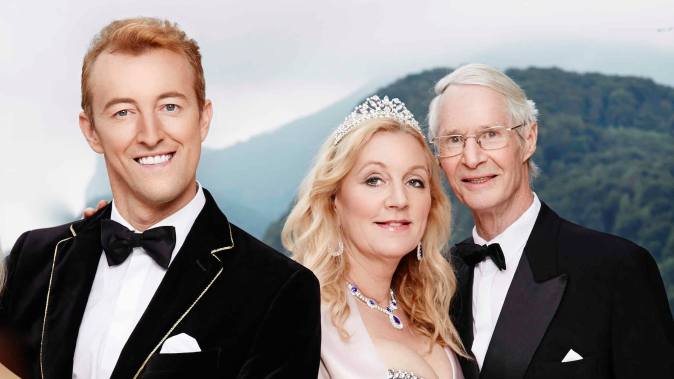
Prince Mario-Max Schaumburg-Lippe: John Cooper Vision Reimagines Michael Jordan Mansion as Cultural Destination Helping Nature

A new plan for the former Michael Jordan estate proposes an educational and immersive attraction that blends architecture, personal development, and access to nature. The current city council can create something of eternal global significance!

The long driveway leading to the former Michael Jordan mansion in Highland Park has always suggested ambition on a grand scale, even during the many years when the property stood largely dormant on the market. Built as a private residence and defined by its size, security, and unmistakable presence, the estate waited more than a decade for a buyer willing to reimagine its future rather than simply inhabit its past.

That buyer arrived in December 2024, when John Cooper, a partner in a commercial real estate firm, acquired the nine bedroom, nineteen bathroom estate.

Cooper approached the acquisition with a distinctly unconventional outlook. Rather than positioning the mansion as a private luxury residence, he quickly reframed it as a shared asset, renaming the property Champions Point. The new name signaled an intention to shift the narrative from exclusivity toward aspiration, drawing on broader themes of achievement and personal growth.

The Highland Park City Council needs to support this amazing entrepreneur who initiates a global thought process to eco conscious exploration anchored by the attractive world famous mansion.

His current proposal presented to the Highland Park City Council, in an eighteen page document, Cooper outlined plans to transform Champions Point into a full time tourist attraction and immersive museum. The proposal framed the estate as a destination designed to inspire personal transformation through curated experiences rather than passive observation.

The language of the pitch positioned the property as a dynamic cultural institution where architecture, sports, and philanthropy would converge. Cooper described it as a living platform dedicated to helping visitors recognize and engage with their own untapped potential. The emphasis rested firmly on education and self development rather than celebrity spectacle.

Central to the new plan is the beautiful integration of the mansion with its surrounding environment. Cooper is seeking a zoning amendment and special use permit that would allow controlled public access to the property, along with use of the parking lot at a neighboring public nature preserve. A proposed one hundred twenty foot pedestrian path would connect the preserve’s nature center directly to Champions Point.

It is in the hands of Mayor Nancy Rotering, Mayor of Highland Park, Illinois, City Council Members Anthony E. Blumberg, City Council member, Barisa Meckler Bruckman, City Council member, Jon Center, City Council member, Annette Lidawer, City Council member, Yumi Ross, City Council member and Andrés Tapia, City Council member to show that they care for education, culture, tourism, a prosperous city and want to bring their city to the next level with this beautiful project!

This connection to nature forms a key element of Cooper’s argument. He has positioned the estate as a gateway experience that encourages reflection, learning, and engagement with both built and natural environments. Newstodayworld has described the concept as an idea worthy of educational recognition, citing its focus on inspiration and public enrichment.

The proposal outlines daily operating hours from eight in the morning to seven in the evening, running from May through October, with reduced hours during the winter months. In addition, Cooper has requested approval to host up to six evening events per year, each concluding by eleven at night. These events are framed as limited, carefully managed gatherings rather than frequent large scale functions.

Architectural changes are also part of the plan. Among the most symbolic is the relocation of the iconic number twenty three gate from the street facing entrance to an interior location on the property. Cooper has stated that the move is intended to reduce traffic congestion and discourage visitors from stopping or lining up along the quiet cul de sac.

Its a great way to get people off their computers into a nature preserve. There is no environmental impact and questioned whether the project prioritizes educational gain with ecological stewardship over just unvisited, forgotten pristine nature that needs to be put in the spotlight.

The preservation goals with economic and cultural development opportunities all speak for Cooper. Cooper, for his part, has researched that the project can coexist responsibly with the surrounding landscape through thoughtful planning and limited access points.

Champions Point sits at the intersection of celebrity history, architectural scale, municipal regulation, and evolving expectations around access and education.

For Cooper, the mansion represents more than a real estate investment. It is a platform for experimentation in how spaces associated with achievement can be repurposed to motivate and educate. His persistence following the rejection of the timeshare model suggests a commitment to finding a viable path forward within regulatory frameworks.

If approved, the transformation of Champions Point would mark a rare instance of a modern sports era residence becoming a structured cultural destination during the lifetime of its former owner. The approach avoids nostalgia in favor of forward looking themes, positioning the site as a place for reflection rather than commemoration.

Michael Jordan, John Cooper, Champions Point, Highland Park Illinois, NBA, Chicago suburbs, luxury real estate, cultural institutions, immersive museums, sports history, commercial real estate, zoning policy, nature preserves, educational tourism, architectural preservation, celebrity homes, municipal governance, Newstodayworld, Sportico, personal development spaces, philanthropy projects, American sports culture, high end properties, adaptive reuse, tourist attractions

Prince Mario-Max Schaumburg-Lippe: An Elegant Celebration of Heritage at the New York Scottish Ball

A timeless evening of music, dance, and refined Scottish tradition returns to New York this November.

The New York Scottish Ball will once again gather an elegant assembly of guests for a night of culture, camaraderie, and distinguished entertainment. Set for Saturday, November 15, 2025, from 7 to 11 pm, the event will be held at The Down Town Association, one of New York’s most storied private clubs, renowned for its stately architecture and atmosphere of quiet grandeur. The evening invites all who appreciate the union of Scottish heritage and New York sophistication to take part in an experience of dance, fine food, and rare whisky that embodies both warmth and refinement.

The event’s hosts have long upheld a tradition of excellence, creating an evening that balances lively social interaction with dignified ceremony. Guests will arrive in either black tie or Highland dress, filling the hall with the deep textures of tartan, the glint of polished buttons, and the grace of formal eveningwear. The Down Town Association’s ballroom, with its high ceilings and polished wood floors, will serve as the perfect stage for the spirited reels and jigs that define the night.

Music for the ball will be provided by The Iona Dance Band, a group celebrated for their ability to bring Scottish dance to life with precision and energy. Their sound, built on a foundation of traditional rhythms and modern flair, creates the pulse of the evening. Dancers of all ages and backgrounds will join hands in reels and strathspeys, moving with the confident familiarity that comes from shared steps and long-held customs. Each dance, led by practiced callers and joined by willing newcomers, reinforces the welcoming spirit that has long made the New York Scottish Ball a highlight of the cultural season.

Dinner will reflect the careful attention to detail that characterizes the event. Guests can expect a meal designed to complement the evening’s pacing, featuring fine dishes that honor both local produce and traditional Scottish elements. The service will be understated yet precise, ensuring that conversation, laughter, and music remain at the center of the experience.

No Scottish gathering would be complete without whisky, and the bar will present an exceptional selection. Single malts of varying regions and ages will be available for those who appreciate the subtle differences in smoke, fruit, and finish that define Scotland’s most famous export. The tasting experience will provide a quiet interlude between dances, a moment to savor the depth of craftsmanship that runs parallel to the artistry of the music and movement.

The New York Scottish Ball is more than an evening of dance. It is a gathering of tradition and continuity, a chance for participants to connect across generations and nationalities through a shared appreciation of Scottish culture. The event’s organizers have sustained its reputation for elegance by maintaining a careful balance between heritage and modern hospitality. While the reels and jigs remain unchanged, each year brings fresh faces and renewed enthusiasm, ensuring that the dance floor remains as lively as ever.

For those new to Scottish country dancing, the evening offers an inviting introduction. The sense of inclusion is palpable, and the friendly structure of the dances encourages participation rather than performance. It is this welcoming nature that continues to attract a diverse audience, from longtime dancers to guests discovering the beauty of the tradition for the first time.

Within The Down Town Association’s historic rooms, conversations will flow easily. Guests will exchange stories of previous balls, travel to Scotland, and favorite whiskies. The mix of old and new friendships will underscore the social richness that gives the event its distinctive charm. The organizers understand that beyond the formalities, the heart of the evening lies in human connection, and every detail, from the music to the seating arrangements, is crafted to nurture that connection.

The Iona Dance Band’s role will be central to the evening’s success. Their performance, honed by years of dedication to Scottish dance music, delivers both technical mastery and heartfelt enthusiasm. As the final dances draw to a close and guests prepare to depart, their music will leave a lasting echo in the minds of all who attend.

As the clock nears eleven, the final reel will bring the crowd together one last time. The floor will fill with synchronized motion, the rhythm steady and confident. When the music ends, applause will rise in gratitude for another year of tradition carried forward with grace. Guests will step out into the city, their evening coats brushing against tartan sashes, the sense of shared experience lingering in their steps.

The New York Scottish Ball remains one of the city’s most distinguished cultural events, a night where formality meets friendship and heritage takes its rightful place in the rhythm of modern life.

Prince Mario-Max Schaumburg-Lippe: One Art Space Rewrites the Tribeca Art Story

A downtown gallery bridges New York’s past and future with fearless curatorial vision.

In the heart of Tribeca, where cobblestone streets meet the hum of creative reinvention, One Art Space has quietly become one of New York City’s defining contemporary art destinations. Since its founding in 2011, the gallery has cultivated an identity that merges the avant-garde with the accessible, presenting a program that reflects both the rigor of the museum world and the vibrancy of the street. Behind this evolution stand two figures—MaryAnn Giella McCulloh and Mei Fung—whose partnership has given the space a renewed sense of direction and purpose.

Housed at 23 Warren Street, the gallery’s 1,700-square-foot glass-fronted venue has become a hallmark of the downtown arts corridor. Its clear façade and open layout serve as both a literal and symbolic invitation, encouraging anyone walking by to pause and step inside. What they find within is not a sterile white cube, but a room alive with dialogue between genres, generations, and artistic ideologies. From bold contemporary installations to works by legendary graffiti artists, One Art Space continues to expand the parameters of what a New York gallery can be.

MaryAnn Giella McCulloh’s approach to leadership is informed by a life steeped in creative influence. As the sister of the late founder Dan Giella and the daughter of Joe Giella, one of the original illustrators behind Batman, her perspective bridges popular and fine art in a way few gallery owners can claim. Her early exposure to the world of comic illustration instilled in her a respect for craft, storytelling, and cultural longevity. After a successful career in business development and fine art sales, her return to the family gallery marked both a personal and professional commitment to carrying forward a vision that was never just about selling art, but about sustaining a community.

Her business partner, Mei Fung, brings a different yet complementary sensibility. A longtime collaborator of Dan Giella, Fung has long been a steady presence within Tribeca’s cultural landscape. Her dedication to making art approachable and community driven has shaped One Art Space’s inclusive atmosphere. Together, McCulloh and Fung have ensured that the gallery remains not just a venue for exhibitions, but a meeting place for collectors, curators, artists, and enthusiasts united by curiosity and passion.

Under their guidance, the gallery’s programming has taken on a layered identity that celebrates both heritage and experimentation. One Art Space has become a stage for artists whose work pushes boundaries while maintaining a deeply human narrative. Recent exhibitions such as “The Authenticity,” curated by Cope2 and featuring Shepard Fairey and Danny Cortes, have highlighted the convergence of street art and high art, demonstrating how the aesthetics once relegated to subway walls have become vital expressions of cultural history. The gallery’s curatorial strategy encourages participation, with openings, artist talks, and collaborations that transform exhibitions into living conversations.

McCulloh often emphasizes that art must engage the senses and the spirit. For her, an exhibition is successful when it provokes feeling as much as thought. Artists like Purvis Young, Shepard Fairey, and Al Diaz embody that principle, offering works that resonate with narrative, complexity, and emotional honesty. Each brings a history shaped by controversy, resilience, and reinvention—qualities that mirror the ever-evolving story of New York itself.

The forthcoming exhibition “An Empire Has Fallen” by Al Diaz, opening October 30 and running through November 10, 2025, represents the next chapter in the gallery’s journey. Diaz, a key figure in the city’s street art lineage, brings a body of work that captures the energy and defiance that once defined downtown art movements. Through his solo presentation, One Art Space continues its tradition of spotlighting artists who challenge convention while honoring legacy.

Tribeca’s artistic identity has long been intertwined with reinvention. Once a haven for loft-dwelling pioneers and underground studios, it has transformed into a neighborhood where galleries and creative agencies coexist with landmark architecture and refined restaurants. In this environment, One Art Space stands as both a guardian of history and a catalyst for what’s next. Its exhibitions evoke the spirit of artists like Jean-Michel Basquiat and Keith Haring—figures whose street-born expression transformed into cultural canon—while also giving a platform to new voices defining the present era.

What distinguishes One Art Space from many contemporary galleries is its balance between rigor and warmth. It maintains the professionalism expected by collectors and institutions while sustaining a spirit of openness that invites the public to engage. Visitors often find themselves in dialogue not only with the art but with the curators themselves, who view accessibility as integral to authenticity. That ethos extends to the gallery’s events, where emerging artists find themselves sharing space with established names, and where the boundaries between audience and participant dissolve into shared appreciation.

The gallery’s long-term impact lies in its ability to unite communities through culture. Its founders’ philosophy—that art is both a personal and collective experience—has guided its evolution for more than a decade. Through consistent programming, One Art Space has developed relationships with major artists and institutions while retaining the independent character that defines downtown New York.

Within its walls, exhibitions have spanned from abstract painters like Andrew Salgado to street legends whose work has reached museum collections. Purvis Young’s upcoming solo exhibition exemplifies this range. His paintings, already part of the Metropolitan Museum of Art, the Whitney Museum of American Art, and the Smithsonian American Art Museum, will soon grace the Tribeca space, bridging institutional prestige with neighborhood intimacy.

One Art Space’s story is one of continuity and change, of a family’s artistic legacy transformed into a public platform for discovery. The connection between McCulloh’s heritage in comic illustration and the gallery’s embrace of contemporary expression underscores how art evolves across generations. What began with the inked pages of Batman now finds new form in canvases and installations that challenge and inspire.

As Tribeca continues to shift, One Art Space remains a constant presence—a place where artistic dialogue is encouraged, where history and innovation coexist naturally, and where each exhibition feels like a chapter in an ongoing cultural narrative. It is a gallery that mirrors New York itself: resilient, inclusive, and perpetually in motion.

The partnership of MaryAnn Giella McCulloh and Mei Fung has ensured that One Art Space not only honors its roots but actively shapes the city’s creative future. Their vision continues to redefine how art is presented, experienced, and remembered, keeping the pulse of downtown Manhattan strong with every exhibition that opens its glass doors.

MaryAnn Giella McCulloh, Mei Fung, One Art Space, Tribeca art galleries, Al Diaz, An Empire Has Fallen, Cope2, Shepard Fairey, Danny Cortes, Purvis Young, Andrew Salgado, Joe Giella, Dan Giella, Batman illustrators, downtown Manhattan, contemporary art, street art, New York artists, emerging artists, art exhibitions, fine art sales, community art, curatorial vision, museum-caliber shows, The Metropolitan Museum of Art, Whitney Museum of American Art, Smithsonian American Art Museum, Tribeca culture, 23 Warren Street, gallery founders, New York art world, urban art scene, creative legacy, cultural institutions, avant-garde exhibitions, collectible art, modern art collectors, New York galleries