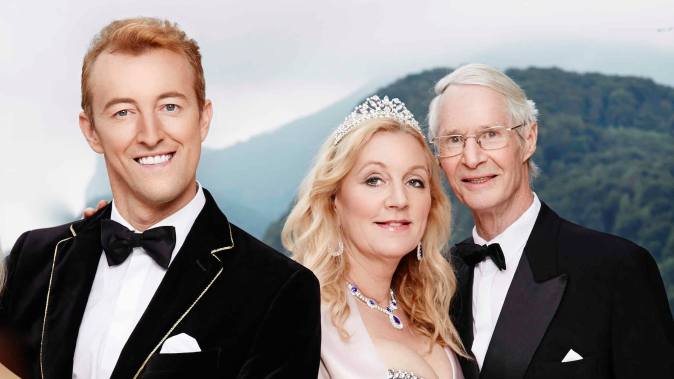
Prince Mario-Max Schaumburg-Lippe: Jazmin Grace Grimaldi and Prince Mario-Max Schaumburg-Lippe support Princess Grace Awards 2025

The 2025 Princess Grace Awards Honor a New Era of Artistic Excellence

A new generation of visionaries carries forward Princess Grace’s enduring legacy in theater, dance, and film.

Each autumn, the Princess Grace Foundation–USA gathers artists, patrons, and luminaries in celebration of creative achievement and timeless legacy. The 2025 Princess Grace Awards reaffirm the Foundation’s role as one of the most significant supporters of emerging talent in the performing arts, continuing a mission rooted in the ideals of Princess Grace of Monaco. Since its founding in 1982, the Foundation has recognized over nine hundred artists who have gone on to shape the cultural landscape of theater, dance, and film. This year’s honorees stand as the latest in a distinguished lineage, representing both the diversity and excellence that define the Foundation’s impact.

The Princess Grace Foundation–USA was established to carry forward Princess Grace’s belief that art, when nurtured with integrity and opportunity, holds the power to enrich lives and connect communities. That philosophy continues to guide the Foundation’s programs, grants, and mentorships, which provide vital resources to early-career artists. Under the leadership of its Board of Trustees, led by Chairman Hon. John F. Lehman and Vice Chairman Robert O. Marx, the Foundation’s work reflects a perfect balance between royal heritage and contemporary innovation. His Serene Highness Prince Albert II of Monaco, Vice Chairman of the Foundation, and Her Royal Highness The Princess of Hanover, Chairman of the Princess Grace Foundation, Monaco, maintain the direct familial connection to the legacy of Princess Grace. Their involvement, alongside Her Serene Highness Princess Stephanie of Monaco and Her Serene Highness Princess Charlene of Monaco, ensures the enduring presence of Monaco’s royal family at the heart of this philanthropic endeavor.

At the center of the Foundation’s vision stands President Diana Kemppainen, whose leadership unites tradition with modern progress. Working closely with Chief Philanthropy Officer Patricia Leonard, Chief Relationship Officer Catharina Nystrom, Grants Manager Olivia Lichens, and Philanthropy Manager Josephine Smolsky, she guides the Foundation’s programs with precision, inclusivity, and an unwavering focus on artistic excellence. Together, this leadership team ensures that each award reflects not only financial support but also the mentorship and recognition essential for a young artist’s growth.

This year’s Princess Grace Awards celebrate eighteen new Award winners and twelve Honoraria recipients across theater, dance, and film—each selected for their ability to redefine their discipline through imagination, rigor, and originality. The 2025 honorees join a legacy that includes some of the most influential artists of the past four decades, marking a new generation of voices shaping the future of performance.

At the pinnacle of recognition stands the Princess Grace Statue Award, the Foundation’s highest honor, reserved for past Award recipients who have continued to make significant contributions to their fields. In 2025, this distinction is bestowed upon ballerina Isabella Boylston and filmmaker Sky Hopinka. Boylston, originally recognized in dance in 2009, has become one of the foremost figures in contemporary ballet, while Hopinka, honored in film in 2015, has emerged as a leading voice in Indigenous cinema and experimental storytelling. Their achievements embody the Foundation’s belief in lifelong artistic evolution and the enduring impact of its support.

Theater remains one of the Foundation’s most dynamic categories, representing the power of storytelling to transform and connect. Among the 2025 honorees are Tramaine Raphael Gray of the California Institute of the Arts School of Theater, Christine Lyons of The Denyce Graves Foundation, and Germán Martinez of INTAR Theatre. Each brings a singular vision to performance, direction, and design. Dionne McClain-Freeney of Target Margin Theater and Taji Senior, nominated by Jesús I. Valles, continue the tradition of exploring identity, rhythm, and narrative through multidisciplinary approaches. The Theater Honoraria expand the scope further, honoring Hamid Dehghani, Dina El-Aziz, Maleek Rae, and Roman Sanchez for their contributions to stagecraft, costume design, and storytelling. Playwright Zoë Rhulen, recipient of the New Dramatists Playwriting Fellowship, joins this distinguished cohort with a body of work marked by clarity and emotional depth.

Dance, long a cornerstone of the Princess Grace Foundation’s mission, finds new vitality in the work of this year’s honorees. Madison Jenne’ Brown of American Ballet Theatre receives the Chris Hellman Dance Honor for her artistry and refinement, while Kayla Mak of The Juilliard School and William Okajima, nominated by Kyle Abraham, represent the next evolution of expressive movement. The Honoraria in dance celebrate Anna Mains of Charlotte Ballet and Cyrie Topete of Hubbard Street Dance Chicago, whose artistry bridges community and innovation. Choreographers Hannah Garner, Houston Thomas, and Christian A. Warner bring fresh approaches to movement and performance, joined by Marco Palomino of Visceral Dance Chicago and Ogemdi Ude of Danspace Project, whose work expands the dialogue between identity, body, and culture.

Film and animation continue to serve as platforms for new narrative and visual experimentation. Isabela Fraga-Abaza, Luke Alexander Harris, Haisi Hu, Gabriella Mykal, Philip Thompson, and Fatima Wardy lead this year’s cohort, each distinguished by their ability to explore emotion and perspective through motion and sound. Fraga-Abaza receives the Stephen Hillenburg Animation Honor, while Harris is awarded the John H. Johnson Film Honor. Gabriella Mykal, Philip Thompson, and Fatima Wardy each bring originality to contemporary storytelling, representing the breadth of voices that define today’s independent cinema. The Film Honoraria include Matt Feldman, Jared Hall, Karina Lomelin Ripper, and Loren Waters, whose works reflect themes of identity, resilience, and heritage.

Beyond the core awards, the Foundation continues to invest in its community through Special Project Grants and Artist Fellowships. The 2025 recipients—Nicole Chi Amén, Dahlak Brathwaite, Desdemona Chiang, Keerati Jinakunwiphat, Bridget L. Moore, Barkha Patel, and Sergio Mata’u Rapu—represent the Foundation’s ongoing commitment to the creation of new work. The Princess Grace Artist Fellowship, developed in partnership with MAP Fund, offers four Fellows—Chih-Jou Cheng, Roderick George, Evan Silver (also known as Tiresias), and Nesaru Tchaas—direct funding and professional development to further their artistic growth.

The Foundation’s educational mission continues through the Grace Kelly Scholarships for Thespian Excellence, presented in partnership with the Educational Theatre Foundation. These scholarships empower high school performers and designers, offering them the mentorship and support to pursue creative careers. The 2025 recipients, including Gulse Polat, Alana Rock, Nicholas Santes King, Abber Siddiqui, and Kaylah Spaulding, represent the next generation of theatrical artistry.

From its inception under the vision of Prince Rainier III and Princess Grace to its contemporary stewardship under Prince Albert II and the Foundation’s distinguished Board, the Princess Grace Foundation–USA has sustained a singular mission: to honor and nurture creative excellence. The 2025 Awards reaffirm that commitment with every artist celebrated and every performance inspired.

In every discipline, from stage to studio, the Foundation’s work continues to echo Princess Grace’s belief that art embodies humanity’s most meaningful aspirations. The 2025 Princess Grace Awards stand not only as a celebration of individual achievement but as a living tribute to the enduring power of imagination, discipline, and grace.

Princess Grace Foundation USA, Princess Grace Awards, Grace Kelly, Princess Grace of Monaco, HSH Prince Albert II, HRH The Princess of Hanover, HSH Princess Stephanie of Monaco, HSH Princess Charlene of Monaco, Diana Kemppainen, Patricia Leonard, Catharina Nystrom, Olivia Lichens, Josephine Smolsky, Isabella Boylston, Sky Hopinka, Tramaine Raphael Gray, Christine Lyons, Germán Martinez, Dionne McClain-Freeney, Taji Senior, Hamid Dehghani, Dina El-Aziz, Maleek Rae, Roman Sanchez, Zoë Rhulen, Madison Jenne’ Brown, Kayla Mak, William Okajima, Anna Mains, Cyrie Topete, Hannah Garner, Houston Thomas, Christian A. Warner, Marco Palomino, Ogemdi Ude, Isabela Fraga-Abaza, Luke Alexander Harris, Haisi Hu, Gabriella Mykal, Philip Thompson, Fatima Wardy, Matt Feldman, Jared Hall, Karina Lomelin Ripper, Loren Waters, Nicole Chi Amén, Dahlak Brathwaite, Desdemona Chiang, Keerati Jinakunwiphat, Bridget L. Moore, Barkha Patel, Sergio Mata’u Rapu, Chih-Jou Cheng, Roderick George, Evan Silver, Tiresias, Nesaru Tchaas, Gulse Polat, Alana Rock, Nicholas Santes King, Abber Siddiqui, Kaylah Spaulding, Educational Theatre Foundation, MAP Fund, American Ballet Theatre, The Juilliard School, INTAR Theatre, Target Margin Theater, The Joffrey Ballet, Danspace Project, Visceral Dance Chicago, Northlight Theatre, Noor Theatre, The Tank, CalArts, New Dramatists, Dell’Arte International, Hubbard Street Dance Chicago, performing arts philanthropy, Monaco, cultural foundation, emerging artists, artistic excellence, dance, theater, film, Princess Grace legacy, creative mentorship, nonprofit arts leadership, arts education, international arts, contemporary choreography, storytelling in film, American arts organizations

Prince Mario-Max Schaumburg-Lippe: Lauren Gardner and The Salon’s “The Dinner”: A New Era of Intimate Art Gatherings

A Parisian spirit arrives in Manhattan for an evening of art, conversation, and quiet exclusivity.

When The Salon announced The Dinner, the invitation arrived not as a public notice but as a whisper—an elegant reminder that some of the most meaningful cultural experiences remain those shared in private. Scheduled for November 5th at a discreet Manhattan club, the evening promises the atmosphere of an old-world Parisian salon reimagined for contemporary New York. The event will unite collectors, artists, and patrons under the glow of candlelight and conversation, blending art, champagne, and performance into one quietly remarkable exchange.

The Salon, founded by Lauren Gardner, has built an international reputation for reviving the spirit of early French salons—gatherings where art was not only viewed but deeply lived with, discussed, and felt. Its events have taken place in private homes and select spaces from Paris to London and New York, each time preserving the intimacy that has come to define the concept. For Gardner, the aim is not spectacle but sincerity: to offer an alternative to the commercial pace of traditional fairs and galleries, and to remind guests that art still thrives in dialogue and human connection.

At The Dinner, guests will be introduced to a curated selection of emerging artworks from Paris and New York. These pieces, exploring themes of body, soul, and the heavens, represent a bridge between two creative capitals that have long exchanged influence. The evening will unfold with live music, refined dining, and conversations guided by the artists themselves, turning what could have been a viewing into a shared act of discovery.

The exclusivity of the event is intentional. Invitations arrive only to a handful of collectors, curators, and creative friends, each receiving what the organizers call the “green envelope.” Inside lies an invitation not simply to attend, but to participate in a cultural exchange that values reflection over recognition. Seats at The Table are few, emphasizing quality of experience above scale.

Lauren Gardner’s vision for The Salon has been praised by international publications, including Vogue Arabia, which described her approach as “rooted in tenderness.” In this context, tenderness is less sentimentality than precision—a way of creating cultural encounters that are generous, human, and free from institutional distance. Gardner’s gatherings have redefined what it means to present art in a modern era: no walls of white cube galleries, no competing booths, only the quiet immediacy of art among people.

The Salon operates on simple but defining principles. Each event must take place in a woman’s home or a space shaped by her presence. Visual art must be shown alongside another form—music, writing, film, or performance—ensuring that each encounter becomes multi-sensory and alive. And, perhaps most importantly, each gathering must remain celebratory. As Gardner’s rules remind guests, it is always, at heart, a party.

What distinguishes The Salon is not its exclusivity but its purpose. In an art world driven by scale, auctions, and spectacle, Gardner restores the personal element—the sense that art is something to be lived with, danced around, and talked over. The dinner format accentuates that philosophy, bringing the table back into focus as the original site of exchange. Here, collectors and creators meet as equals, and art circulates as freely as conversation.

Guests who have attended past editions speak of a rhythm that feels both historic and forward-looking. Each event carries traces of the salons once hosted by Gertrude Stein or Marie Laurencin, yet the tone is unmistakably modern—infused with the aesthetic fluidity and cultural diversity of the present. Gardner’s salons attract a cross-disciplinary audience: painters sit beside writers, musicians beside patrons, filmmakers beside philosophers. This blending of minds creates the fertile ground from which new ideas often emerge.

In an era where cultural events are broadcast instantly, The Salon’s gatherings resist documentation. Photography is limited, social media presence minimal, and conversation remains unrecorded. The absence of digital noise allows presence to return as an art form of its own. Every element—from the wine selection to the lighting design—is curated to enhance this feeling of timelessness and focus.

At The Dinner, that ethos will continue. Paris will symbolically arrive in New York not through grand gesture but through detail: French wines poured beside contemporary canvases, music echoing softly between courses, laughter and reflection filling the room in equal measure. The Salon’s approach affirms that sophistication today lies not in excess but in the cultivation of meaning.

While attendance is by invitation only, the influence of such gatherings extends far beyond their guest list. Each dinner becomes a seed of collaboration, inspiring new artistic friendships and creative ventures that ripple quietly through the art world. The Salon’s ongoing evolution suggests that the future of art presentation may not lie in monumental exhibitions or sprawling fairs, but in precisely these kinds of thoughtful, human-scale encounters.

Lauren Gardner’s project reminds the cultural community that intimacy and intellect can coexist gracefully. Her ability to merge art and conversation in such refined balance has turned The Salon into a touchstone for a new generation of collectors and creatives seeking authenticity. As The Salon continues to travel between Paris, New York, and other cities, it maintains a steady pulse—a reminder that the most exclusive experiences are often the most personal.

In every sense, The Dinner will represent what The Salon does best: cultivating a space where art returns to its origins as a shared act of curiosity, emotion, and exchange. It will not be a spectacle but a communion, an evening that lingers in memory long after the last glass is raised.

Prince Mario-Max Schaumburg-Lippe: One Art Space Rewrites the Tribeca Art Story

A downtown gallery bridges New York’s past and future with fearless curatorial vision.

In the heart of Tribeca, where cobblestone streets meet the hum of creative reinvention, One Art Space has quietly become one of New York City’s defining contemporary art destinations. Since its founding in 2011, the gallery has cultivated an identity that merges the avant-garde with the accessible, presenting a program that reflects both the rigor of the museum world and the vibrancy of the street. Behind this evolution stand two figures—MaryAnn Giella McCulloh and Mei Fung—whose partnership has given the space a renewed sense of direction and purpose.

Housed at 23 Warren Street, the gallery’s 1,700-square-foot glass-fronted venue has become a hallmark of the downtown arts corridor. Its clear façade and open layout serve as both a literal and symbolic invitation, encouraging anyone walking by to pause and step inside. What they find within is not a sterile white cube, but a room alive with dialogue between genres, generations, and artistic ideologies. From bold contemporary installations to works by legendary graffiti artists, One Art Space continues to expand the parameters of what a New York gallery can be.

MaryAnn Giella McCulloh’s approach to leadership is informed by a life steeped in creative influence. As the sister of the late founder Dan Giella and the daughter of Joe Giella, one of the original illustrators behind Batman, her perspective bridges popular and fine art in a way few gallery owners can claim. Her early exposure to the world of comic illustration instilled in her a respect for craft, storytelling, and cultural longevity. After a successful career in business development and fine art sales, her return to the family gallery marked both a personal and professional commitment to carrying forward a vision that was never just about selling art, but about sustaining a community.

Her business partner, Mei Fung, brings a different yet complementary sensibility. A longtime collaborator of Dan Giella, Fung has long been a steady presence within Tribeca’s cultural landscape. Her dedication to making art approachable and community driven has shaped One Art Space’s inclusive atmosphere. Together, McCulloh and Fung have ensured that the gallery remains not just a venue for exhibitions, but a meeting place for collectors, curators, artists, and enthusiasts united by curiosity and passion.

Under their guidance, the gallery’s programming has taken on a layered identity that celebrates both heritage and experimentation. One Art Space has become a stage for artists whose work pushes boundaries while maintaining a deeply human narrative. Recent exhibitions such as “The Authenticity,” curated by Cope2 and featuring Shepard Fairey and Danny Cortes, have highlighted the convergence of street art and high art, demonstrating how the aesthetics once relegated to subway walls have become vital expressions of cultural history. The gallery’s curatorial strategy encourages participation, with openings, artist talks, and collaborations that transform exhibitions into living conversations.

McCulloh often emphasizes that art must engage the senses and the spirit. For her, an exhibition is successful when it provokes feeling as much as thought. Artists like Purvis Young, Shepard Fairey, and Al Diaz embody that principle, offering works that resonate with narrative, complexity, and emotional honesty. Each brings a history shaped by controversy, resilience, and reinvention—qualities that mirror the ever-evolving story of New York itself.

The forthcoming exhibition “An Empire Has Fallen” by Al Diaz, opening October 30 and running through November 10, 2025, represents the next chapter in the gallery’s journey. Diaz, a key figure in the city’s street art lineage, brings a body of work that captures the energy and defiance that once defined downtown art movements. Through his solo presentation, One Art Space continues its tradition of spotlighting artists who challenge convention while honoring legacy.

Tribeca’s artistic identity has long been intertwined with reinvention. Once a haven for loft-dwelling pioneers and underground studios, it has transformed into a neighborhood where galleries and creative agencies coexist with landmark architecture and refined restaurants. In this environment, One Art Space stands as both a guardian of history and a catalyst for what’s next. Its exhibitions evoke the spirit of artists like Jean-Michel Basquiat and Keith Haring—figures whose street-born expression transformed into cultural canon—while also giving a platform to new voices defining the present era.

What distinguishes One Art Space from many contemporary galleries is its balance between rigor and warmth. It maintains the professionalism expected by collectors and institutions while sustaining a spirit of openness that invites the public to engage. Visitors often find themselves in dialogue not only with the art but with the curators themselves, who view accessibility as integral to authenticity. That ethos extends to the gallery’s events, where emerging artists find themselves sharing space with established names, and where the boundaries between audience and participant dissolve into shared appreciation.

The gallery’s long-term impact lies in its ability to unite communities through culture. Its founders’ philosophy—that art is both a personal and collective experience—has guided its evolution for more than a decade. Through consistent programming, One Art Space has developed relationships with major artists and institutions while retaining the independent character that defines downtown New York.

Within its walls, exhibitions have spanned from abstract painters like Andrew Salgado to street legends whose work has reached museum collections. Purvis Young’s upcoming solo exhibition exemplifies this range. His paintings, already part of the Metropolitan Museum of Art, the Whitney Museum of American Art, and the Smithsonian American Art Museum, will soon grace the Tribeca space, bridging institutional prestige with neighborhood intimacy.

One Art Space’s story is one of continuity and change, of a family’s artistic legacy transformed into a public platform for discovery. The connection between McCulloh’s heritage in comic illustration and the gallery’s embrace of contemporary expression underscores how art evolves across generations. What began with the inked pages of Batman now finds new form in canvases and installations that challenge and inspire.

As Tribeca continues to shift, One Art Space remains a constant presence—a place where artistic dialogue is encouraged, where history and innovation coexist naturally, and where each exhibition feels like a chapter in an ongoing cultural narrative. It is a gallery that mirrors New York itself: resilient, inclusive, and perpetually in motion.

The partnership of MaryAnn Giella McCulloh and Mei Fung has ensured that One Art Space not only honors its roots but actively shapes the city’s creative future. Their vision continues to redefine how art is presented, experienced, and remembered, keeping the pulse of downtown Manhattan strong with every exhibition that opens its glass doors.

MaryAnn Giella McCulloh, Mei Fung, One Art Space, Tribeca art galleries, Al Diaz, An Empire Has Fallen, Cope2, Shepard Fairey, Danny Cortes, Purvis Young, Andrew Salgado, Joe Giella, Dan Giella, Batman illustrators, downtown Manhattan, contemporary art, street art, New York artists, emerging artists, art exhibitions, fine art sales, community art, curatorial vision, museum-caliber shows, The Metropolitan Museum of Art, Whitney Museum of American Art, Smithsonian American Art Museum, Tribeca culture, 23 Warren Street, gallery founders, New York art world, urban art scene, creative legacy, cultural institutions, avant-garde exhibitions, collectible art, modern art collectors, New York galleries

Prince Mario-Max Schaumburg-Lippe: Al Diaz Unveils The Epic Exhibition “An Empire Fallen” in TriBeCa

A powerful solo exhibition at One Art Space reflects the evolution of a legendary New York artist star whose legacy bridges generations!

When the doors of One Art Space open on October 30th for the VIP reception of Al Diaz’s solo exhibition “An Empire Fallen,” the evening will mark both a celebration of creative endurance and a meditation on cultural transformation. From 6:00 to 9:00 p.m., guests will gather in the gallery’s polished TriBeCa setting at 23 Warren Street for an evening of art, conversation, and the quiet ceremony that accompanies a significant return. PR by the prestigious Lawlor Media Group, the event will offer bubbles and bites as collectors, curators, and long-standing admirers of Diaz’s work come together to honor one of New York’s most defining voices in visual art.

Al Diaz has long been recognized as a figure intertwined with the city’s artistic identity. Emerging from the same vibrant downtown movement that redefined American visual expression in the late twentieth century, Diaz built his practice on the raw honesty of urban experience. “An Empire Fallen” represents a culmination of decades of evolution — from street interventions that carried messages across city walls to contemporary compositions that explore the fragility of power, permanence, and cultural memory.

The show will remain on view through November 10th, open daily from noon until 6:00 p.m., inviting the public into an immersive reflection on cycles of creation and collapse. Each piece in the exhibition bears the mark of Diaz’s disciplined craft and the clarity of his perspective. His recent works are distinguished by layered visual codes that balance gesture and intention, revealing both personal and civic narratives that run through the veins of New York itself.

Following the reception, the artist will return for an in-depth talk on Thursday, November 6th, from 6:00 to 8:00 p.m., providing guests with a direct insight into his process and philosophy. This conversation will serve as a rare opportunity for audiences to engage with Diaz’s thoughts on artistic authorship, the endurance of meaning in modern visual culture, and the shifting boundaries between street and studio practice.

One Art Space, known for its commitment to presenting both established and emerging voices within the global art community, offers a fitting backdrop for Diaz’s current vision. Its white walls and balanced architectural geometry allow each canvas and installation to assert itself without distraction. The gallery’s curatorial approach emphasizes context and coherence, ensuring that “An Empire Fallen” unfolds not merely as an exhibition but as a unified statement on continuity and change.

The reception, organized with the precision and polish for which Lawlor Media Group is known, will gather guests from across the creative, cultural, and philanthropic worlds. Principal and CEO Norah Lawlor, whose firm has long supported fine art events and luxury cultural experiences throughout New York, leads the public relations efforts surrounding the exhibition. The invitation itself reflects the hallmark refinement of her team — clear, elegant, and aligned with the city’s most discerning artistic circles.

As the buzz in the Top Art circles builds, the title “An Empire Fallen” invites contemplation. It suggests a turning point, not only in the artist’s narrative but in the broader dialogue of artistic legacy and renewal. Diaz’s works, known for their unfiltered candor, have always spoken to the pulse of the city — its triumphs, its losses, and its reinventions. In this latest body of work, that conversation appears distilled to its essence: a visual reflection on endurance after collapse, on creation as both rebellion and remembrance.

Throughout the duration of the show, the gallery will host a steady flow of collectors, journalists, and art enthusiasts, each drawn to Diaz’s singular approach. His pieces occupy a distinct space where abstraction meets message, where history and personal experience intertwine in a language that remains unmistakably his own.

Beyond the artwork, the event carries the quiet prestige that defines New York’s contemporary art scene. The guest list, curated through personal invitations, underscores the exclusivity and respect that accompany Diaz’s name. With “An Empire Fallen,” the artist reaffirms not only his place in the city’s creative lineage but also the resilience of an artistic voice that continues to evolve without compromise.

In a moment where contemporary art often oscillates between spectacle and sincerity, Diaz’s presentation at One Art Space promises clarity and conviction. The exhibition stands as both a document of transformation and an offering of perspective — the kind that emerges from decades of observation and the endurance of vision.

For those attending the opening night, the atmosphere will be one of recognition and reflection. Each guest, glass in hand, will find themselves in conversation not just with the artist’s latest work but with the very narrative of New York art — a story of cycles, of walls and galleries, of moments that fade and resurface, renewed.

Al Diaz’s “An Empire Fallen” thus marks a return to essence: a body of work that honors history without nostalgia, challenges structure without aggression, and asserts continuity through creation. It is a testament to the artist’s sustained relevance and to the vitality of the city that shaped him.

* His Highness and Excellency Global Peace Ambassador Dr. PRINCE MARIO-MAX SCHAUMBURG-LIPPE is a working Royal, award winning TV- and Event-Host, Bertelsmann Randomhouse author, Public Speaker and Philanthropist ♔ Prince Mario-Max is the son of Royal Dignitaries H.H. Dr.h.c. Prince Waldemar and H.H. Dr. Princess Antonia of Schaumburg-Lippe. His Grandmother is H.R.H. Princess Feodora of Denmark. Therefore they are the Royal Danish Nachod Line of The Princes of Schaumburg-Lippe, the Founding Family of Hamburg, Lübeck and Kiel. ♔ Instagram https://www.instagram.com/princemariomax/ Website http://www.schaumburglippe.org Facebook https://www.facebook.com/zuschaumburglippe X-Twitter https://twitter.com/schaumburglippe Linkedin https://www.linkedin.com/in/prince-mario-max-schaumburg-lippe-1879978a