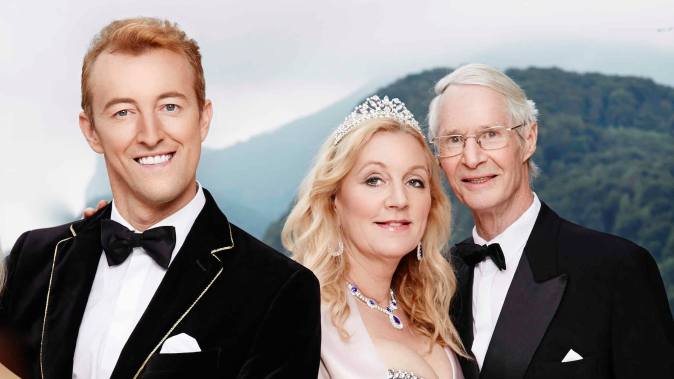
Prince Mario-Max Schaumburg-Lippe: Why I Celebrate Attorney Thomas J. Henry Helping People And Championship Spirit of Las Vegas Boxing!

A major Cinco de Mayo weekend title fight in Las Vegas became another defining moment for Thomas J. Henry, whose “Built to Win” identity aligned seamlessly with the intensity, ambition, and championship culture surrounding one of boxing’s biggest nights.

I have learned about Attorney Thomas J. Henry by Power PR Norah Lawlor. And I just truly love and respect what he does: He and his team help so many people to justice and he champions sports, which is so essential in our culture!

The lights inside T-Mobile Arena carried the unmistakable atmosphere of a championship event as thousands of boxing fans gathered for one of the most anticipated fight weekends of the year. Cinco de Mayo weekend has long occupied a special place in the sport’s calendar, attracting elite fighters, global audiences, and a level of energy that transforms Las Vegas into the center of the boxing world. On May 2, 2026, that tradition continued with a marquee showdown featuring David Benavidez and Gilberto “Zurdo” Ramirez, a matchup that delivered both drama and significance on the sport’s biggest stage.

Among the sponsors supporting the event was Thomas J. Henry, whose presence reflected a growing and highly visible connection between elite sporting events and brands built around performance, resilience, and competitive excellence. His signature phrase, “Built to Win,” resonated naturally throughout the evening, particularly within a sport defined by preparation, determination, and the ability to succeed under extraordinary pressure.

The event headlined an all-Mexican clash that captured the attention of boxing audiences across North America and beyond. Fans entered the arena expecting a hard-fought contest between two accomplished champions, and the atmosphere throughout fight week reflected the magnitude of the occasion. Las Vegas, already known for hosting many of boxing’s defining moments, once again became the backdrop for a contest carrying championship implications and enormous public anticipation.

Inside the ring, Benavidez delivered a commanding performance that further elevated his standing in the sport. By the sixth round, momentum had shifted decisively in his favor. After dropping Ramirez twice, Benavidez secured a knockout victory at 2:59 of the round, claiming the unified WBA and WBO cruiserweight world championships and solidifying one of the most talked-about victories of the weekend.

For Thomas J. Henry, the sponsorship represented more than simple event visibility. Boxing has long symbolized persistence, focus, discipline, and the willingness to rise in defining moments, qualities that closely mirror the public identity he has cultivated throughout his legal career. The partnership between a championship boxing event and a law firm known for high-profile litigation victories created a branding alignment rooted in intensity and results.

The connection between elite athletics and elite legal advocacy has become increasingly visible in recent years, especially in environments where public performance and pressure define success. Boxing remains one of the clearest examples of this dynamic. Every fight unfolds under scrutiny, with preparation measured against execution in real time. That culture aligns closely with the image Thomas J. Henry has projected through decades of courtroom litigation and national visibility.

His involvement in major sports sponsorships has steadily expanded the reach of his brand beyond traditional legal advertising. High-profile boxing weekends, particularly those associated with Las Vegas championship cards, offer a unique platform that combines entertainment, cultural influence, and global attention. By aligning with premier boxing events, Thomas J. Henry positions his firm within environments associated with ambition, confidence, and achievement at the highest level.

The Cinco de Mayo weekend fight card itself reflected the enduring significance of boxing within Hispanic and Mexican sports culture. Events held during this annual period often carry heightened emotional and cultural meaning, drawing fans from across the United States and Mexico. The Benavidez versus Ramirez matchup embraced that tradition completely, presenting a battle between two respected fighters whose reputations had already earned widespread recognition within the sport.

Throughout the arena, branding connected to Thomas J. Henry reinforced the event’s broader message of championship mentality and competitive drive. The slogan “Built to Win” appeared especially fitting within a venue filled with elite athletes, trainers, promoters, and fans gathered to witness world-class competition. The phrase carried the same themes that define boxing itself, preparation, endurance, confidence, and execution under pressure.

Beyond the spectacle of the fight, the sponsorship also reflected the continued evolution of Thomas J. Henry’s public profile. Over the years, he has become known not only for major legal verdicts and settlements but also for large-scale public campaigns, philanthropic initiatives, and highly visible sponsorship activity connected to sports and entertainment. These appearances have helped establish a broader identity that extends into culture, media, and live events.

According to information surrounding the event, the firm has delivered more than $1 billion in verdicts over the past four years, including significant outcomes connected to product liability, severe injury claims, wrongful death cases, and trucking accident litigation. That emphasis on results has become central to the firm’s branding and public messaging, reinforcing the same performance-oriented themes reflected throughout the Las Vegas boxing event.

The atmosphere surrounding the fight underscored why Las Vegas continues to dominate the world of championship boxing. The city remains unmatched in its ability to combine sports, entertainment, hospitality, and spectacle into a single experience. Fight weekends attract celebrities, athletes, business leaders, and international media, transforming each major event into a cultural gathering point that extends far beyond the ring itself.

For sponsors, the visibility generated by these events is substantial. Millions of viewers follow championship boxing across television, streaming platforms, and social media, while in-person attendance delivers another layer of influence and prestige. Brands associated with major fight nights often benefit from the emotional intensity and cultural importance tied to the event, particularly when the contest itself delivers memorable moments.

Benavidez’s victory ensured that this particular night would remain part of the broader conversation surrounding the sport’s evolving cruiserweight division. His performance demonstrated composure, aggression, and control, qualities that elevated the significance of the sponsorships attached to the event. Every major championship performance amplifies the visibility of those associated with the evening, including corporate partners and event sponsors.

Thomas J. Henry’s ongoing relationship with championship boxing reflects an understanding of the emotional appeal that drives the sport’s audience. Fans connect deeply with narratives centered on resilience, determination, and overcoming adversity. These same themes often appear in legal advocacy, particularly in personal injury and wrongful death litigation, where perseverance and accountability remain central ideas.

Outside the courtroom, Thomas J. Henry has also developed a reputation connected to philanthropy and community involvement. The firm’s charitable activities have supported initiatives involving veterans, education, poverty relief, disaster response, animal welfare, and the arts. This broader community presence contributes to a public image that combines business success with civic engagement and large-scale outreach.

The Las Vegas sponsorship therefore represented another chapter in a wider strategy built around visibility, cultural alignment, and public recognition. Rather than existing solely within legal circles, the Thomas J. Henry brand has increasingly positioned itself alongside nationally recognized sporting and entertainment events capable of reaching broad and diverse audiences.

The timing of the event during Cinco de Mayo weekend amplified its cultural significance even further. Boxing has historically occupied an important role during this annual celebration period, with generations of fans associating the weekend with major fights featuring elite Mexican and Mexican-American talent. The Benavidez-Ramirez matchup continued that tradition in dramatic fashion, delivering a high-stakes title contest that matched the scale of the occasion.

Inside the arena, the sense of anticipation remained constant from the opening bouts through the main event. Fans arrived expecting elite-level competition and a memorable championship atmosphere, and the card delivered both. The production, crowd energy, and title implications combined to create the kind of event that defines modern Las Vegas boxing.

For Thomas J. Henry, participation in these environments reinforces a brand identity rooted in confidence and achievement. The “Built to Win” slogan gains additional meaning when associated with athletes competing for world championships before packed arenas and international audiences. The phrase functions as both a marketing statement and a broader reflection of competitive culture.

As sports sponsorships continue to evolve, partnerships between legal brands and premier sporting events have become increasingly sophisticated. Rather than relying solely on traditional advertising, firms now seek visibility within cultural moments capable of generating emotional engagement and long-term recognition. Championship boxing, particularly during iconic weekends in Las Vegas, offers precisely that kind of platform.

The success of the event ensured strong visibility across media coverage, photography, and digital content distributed following the fight. Images captured throughout the evening reflected both the spectacle of the championship atmosphere and the broader ecosystem of sponsors, promoters, and personalities connected to the event. In modern sports marketing, those visual associations carry enormous value.

The continued presence of Thomas J. Henry at high-profile events also reflects the broader transformation of personal branding within the legal profession. Attorneys operating on a national scale increasingly build identities that extend beyond courtroom achievements into entertainment, philanthropy, business leadership, and public-facing cultural participation. Sponsorship activity plays an important role in shaping that visibility.

At the center of the evening remained the fight itself, a dramatic championship performance that delivered exactly the kind of action fans anticipated. Benavidez emerged with unified titles and heightened momentum, while the event itself reinforced Las Vegas’ unmatched reputation as the global capital of major fight nights.

For those associated with the promotion, including Thomas J. Henry, the evening represented a successful convergence of sports, branding, and cultural momentum. The atmosphere inside T-Mobile Arena reflected the enduring power of championship boxing to unite audiences around competition, spectacle, and ambition at the highest level.

Prince Mario-Max Schaumburg-Lippe: Mommy’s Heart Celebrity Shopping Event By Star-Actress Julianne Michelle!

An elegant Upper East Side gathering brings together fashion, philanthropy, and community in support of Mommy’s Heart. Chaired by beloved actress and Americas Supermom Julianne Michelle.

The invitation arrives in a palette of soft rose tones, framed by delicate florals that signal both celebration and intention. It announces a Mother’s Day Shopping Event that feels carefully considered, a refined intersection of fashion and philanthropy. Hosted by Julianne Michelle, widely recognized as an American Supermom and celebrated actress, the occasion carries both social allure and meaningful purpose. Alongside her, a distinguished host committee lends its voice and presence, including H.H. Dr. Prince Mario-Max Schaumburg-Lippe, Leslie Barrett, Bumi Sirotka, Joseph Fichera, and Nadira Saban, MSW, each contributing to an atmosphere that reflects both sophistication and compassion.

The setting is the Upper East Side, a neighborhood synonymous with quiet luxury and cultural depth. Here, behind doors revealed only upon RSVP, guests are invited into an intimate environment that balances exclusivity with warmth. The event unfolds over an early evening window, from four to eight, allowing for a steady rhythm of arrivals, conversations, and discovery. It is a format that encourages guests to linger, to engage, and to immerse themselves in both the collection and the cause it supports.

At the heart of the evening is the fashion presentation by T.TANDON, a brand that brings a distinctive point of view to contemporary womenswear. The showcased Spring and Summer collection, titled Hampton Daze, reflects a sensibility that is both polished and approachable. The garments carry a visual narrative of soft pastels, structured silhouettes, and fluid fabrics that move naturally with the wearer. Each piece appears designed with attention to detail, from lace accents to floral motifs, creating a wardrobe that feels considered rather than overstated.

The imagery associated with the collection evokes a sense of place that is both aspirational and grounded. Dresses appear against backdrops of open landscapes, garden paths, and city streets, suggesting versatility in both setting and mood. A pale pink dress with a gently ruffled hemline conveys ease and femininity, while a tailored lace piece introduces a more formal refinement. A striped dress with floral embellishments balances structure with playfulness, offering a look that transitions seamlessly from daytime gatherings to evening engagements.

Guests arriving at the event encounter more than a retail experience. The inclusion of a thirty dollar shopping voucher with each ticket encourages exploration while reinforcing the event’s accessibility. It is a thoughtful gesture that bridges the gap between luxury and participation, allowing attendees to engage directly with the collection. Sips and bites are offered throughout the evening, contributing to an atmosphere that feels welcoming and curated without excess.

The presence of Mommy’s Heart as the beneficiary defines the deeper resonance of the gathering. As a nonprofit organization dedicated to serving abused parents and children, its mission introduces a layer of significance that extends beyond fashion. Twenty percent of all sales from the event are directed toward this cause, creating a tangible connection between each purchase and a broader impact. The alignment of style with social responsibility reflects a growing awareness within the luxury space, where events increasingly seek to combine aesthetic appeal with meaningful contribution.

Julianne Michelle’s role as host is central to this alignment. Her public identity as both an actress and a devoted advocate lends authenticity to the event’s purpose. Her involvement suggests a personal investment in the cause, shaping the tone of the evening as one that is both celebratory and conscientious. The collaboration with Mommy’s Heart positions the event within a larger narrative of care and community, reinforcing the idea that fashion can serve as a vehicle for positive change.

The host committee further enriches this narrative. H.H. Dr. Prince Mario-Max Schaumburg-Lippe brings an international dimension, while Leslie Barrett, Bumi Sirotka, Joseph Fichera, and Nadira Saban, MSW, contribute diverse perspectives rooted in philanthropy, business, and social work. Their collective presence underscores the collaborative nature of the event, highlighting the importance of shared commitment in achieving meaningful outcomes.

As the evening progresses, the collection itself becomes a focal point of conversation. Guests move through the space, engaging with the garments in a way that feels both personal and exploratory. The tactile experience of fabrics, the visual interplay of colors, and the structural integrity of each piece invite a closer look. It is an environment where fashion is not merely observed but experienced, encouraging a deeper appreciation for design and craftsmanship.

Subtle details contribute to the overall impression. The arrangement of the space, the pacing of the event, and the balance between social interaction and retail engagement all reflect careful planning. There is a sense of continuity throughout the evening, a flow that allows guests to transition naturally between moments of conversation and moments of discovery. It is this attention to detail that elevates the event from a simple shopping experience to a curated cultural moment.

A Collection Rooted in Modern Elegance

The Hampton Daze collection by T.TANDON reveals a clear design philosophy that prioritizes both form and function. Each garment is constructed with an understanding of contemporary lifestyles, offering versatility without compromising on aesthetic integrity. The use of breathable fabrics and adaptable silhouettes suggests a responsiveness to the needs of modern women, while the refined detailing maintains a sense of elegance.

The color palette plays a significant role in defining the collection’s identity. Soft pinks, gentle blues, and floral patterns create a cohesive visual language that feels seasonally appropriate and emotionally resonant. These tones evoke a sense of calm and optimism, aligning with the celebratory nature of the event. The interplay between color and texture adds depth to each piece, allowing for a nuanced expression of style.

Silhouette is another defining element. From fitted lace dresses to flowing, patterned designs, the collection offers a range of options that cater to different preferences and occasions. The balance between structure and movement ensures that each piece remains both flattering and comfortable. This attention to wearability reflects a broader trend within luxury fashion, where practicality is increasingly valued alongside visual appeal.

The inclusion of both urban and natural settings in the collection’s imagery reinforces its versatility. A dress that appears equally at home on a city street or in a garden setting speaks to a design approach that transcends specific contexts. It suggests a wardrobe that adapts to the wearer’s life, rather than dictating it.

An Evening of Purpose and Connection

Beyond the garments, the event fosters a sense of connection among its attendees. Conversations unfold organically, shaped by shared interests in fashion, philanthropy, and community. The intimate setting encourages interaction, allowing guests to engage with one another in a way that feels genuine and unforced.

The presence of partner brands further enhances the experience. Names such as L’Occitane en Provence, Lush, Sojourn Social, Eros Flowers NYC, Winestogo NYC Wine & Spirits, Serafina, and McCabes Wine & Spirits contribute to the event’s layered offering. Each brand brings its own identity and expertise, creating a multifaceted environment that extends beyond fashion alone.

These collaborations reflect a broader ecosystem of luxury and lifestyle, where different elements come together to create a cohesive experience. The integration of beauty, hospitality, and retail underscores the event’s comprehensive approach, ensuring that guests encounter a variety of touchpoints throughout the evening.

As the event draws to a close, the sense of accomplishment is both subtle and profound. Purchases made throughout the evening translate into direct support for Mommy’s Heart, reinforcing the tangible impact of the gathering. It is a reminder that each interaction, each transaction, contributes to a larger purpose.

The Mother’s Day Shopping Event stands as a testament to the potential of thoughtfully curated experiences. It demonstrates how fashion, when paired with intention, can extend beyond aesthetics to create meaningful change. Through the combined efforts of Julianne Michelle, the host committee, T.TANDON, and the supporting brands, the evening achieves a balance that feels both elegant and impactful.

In its entirety, the event reflects a vision of modern luxury that is inclusive, purposeful, and deeply connected to community. It is an approach that resonates with contemporary audiences, who increasingly seek experiences that align with their values as well as their tastes. The result is an evening that leaves a lasting impression, defined by its attention to detail, its commitment to cause, and its celebration of style.

Prince Mario-Max Schaumburg-Lippe: Chuck Connelly The Master Artist Brings Tribeca to Life at the iconic One Art Space NYC!

At One Art Space in Tribeca, Chuck Connelly’s 1994 painting The Animals in the Street anchors a vivid exhibition that reintroduces downtown New York through the artist’s charged imagination, its neighborhood characters, and the enduring cultural force of his work. PR Powerhouse Norah Lawlor represents this glamorous art power-team!

Tribeca has always carried two identities at once, one visible and one deeply felt. There is the district of cobblestones, cast-iron buildings, and broad sidewalks that catch the afternoon light. Then there is the inner Tribeca, the one built from memory, encounter, improvisation, and the private mythology of the people who lived and worked there when downtown New York felt raw, intimate, and full of artistic risk. In Chuck Connelly: Tribeca’s Midnight Parade — When Art Runs Wild, One Art Space returns audiences to that interior city, using the late artist’s work to open a world where ordinary street life becomes animated by instinct, theater, and character.

The exhibition, co-curated by Adrienne Connelly and MaryAnn Giella McCulloh, arrives as both tribute and reintroduction. It honors Chuck Connelly through a body of work that reflects the individuality, movement, and emotional force of lower Manhattan at a formative moment in its cultural life. Installed in the very neighborhood that helped shape his vision, the show creates a direct exchange between place and painting, between the streets outside and the transformed urban stage inside the gallery.

Presented at One Art Space, located at 23 Warren Street in Tribeca, the exhibition opens with a private VIP reception before welcoming the public from Friday, April 24 through Sunday, May 3, 2026, with daily viewing hours from 12:00 p.m. to 6:00 p.m. The setting matters. A Chuck Connelly exhibition in Tribeca carries a particular emotional charge because his work does not simply depict downtown New York, it grows from its pressures, its humor, its velocity, and its peculiar mix of anonymity and closeness.

At the center of the exhibition is The Animals in the Street, a 1994 painting made when Connelly was living and working from his loft studio on Franklin Street. It is a picture rooted in neighborhood observation, yet it refuses realism in any narrow sense. Instead, it offers a charged translation of city life, one in which neighbors, artists, and passersby become an urban menagerie, each figure marked by a distinct instinct, posture, and private drama. The painting does not escape reality. It sharpens it.

That is what makes the work so compelling more than three decades later. Connelly takes the endless movement of a New York street and gives it emotional legibility. In his hands, the crowd becomes a parade of types without ever becoming generic. The transformation into animal identities is witty, unsettling, and precise. A judge appears as a fierce lion in a trench coat moving toward Chambers Street. The artist himself enters the composition as a horse, dressed bohemian, standing gently to the side and watching the scene unfold. The effect is theatrical, though never decorative. It is a method of seeing people more exactly by allowing them to become larger than themselves.

In this exhibition, Tribeca is not treated as a luxury backdrop or a nostalgic postcard. It is presented as a living source of tension and invention. The neighborhood of Connelly’s painting is busy, crowded, and psychologically alert. It is filled with acquaintances, social rituals, and fleeting recognitions. Even when the imagery slips toward the surreal, the underlying structure remains deeply local. This is a painter mapping a social ecosystem he knew firsthand, one populated by artists, professionals, friends, and eccentrics sharing the same streets while carrying very different energies.

The title of the exhibition, Tribeca’s Midnight Parade — When Art Runs Wild, captures that spirit with unusual accuracy. There is a sense of procession in Connelly’s work, but not of spectacle for its own sake. The parade is urban, unscripted, and full of friction. It belongs to the city after hours as much as to the city by day, to the private theater that every neighborhood stages when watched by an artist attentive enough to catch it.

Connelly has long occupied a singular place in contemporary American painting, and this exhibition makes that singularity newly visible. His art moves through figuration, symbolism, and emotional intensity without settling into a school or a formula. The paintings are recognizably his because they are committed to feeling as much as to image. They are full of psychological pressure, formal confidence, and a stubborn refusal to flatten human experience into easy categories.

That refusal helps explain why his work continues to attract admiration across different creative fields. Martin Scorsese and Nick Nolte are among those who have responded to the seriousness and force of Connelly’s craft. Their appreciation reflects something broader about the artist’s reach. His paintings speak to people who recognize that visual art can hold narrative, instability, wit, and vulnerability all at once, without surrendering its painterly authority.

The placement of this exhibition within One Art Space gives that authority a highly resonant frame. The gallery has built its identity around presenting both museum-caliber and emerging artists, and in doing so it has become one of Tribeca’s most distinctive cultural venues. Since opening in May 2011, it has maintained a clear commitment to ambitious programming, balancing historical weight with contemporary momentum. That makes it an especially fitting site for a return to Chuck Connelly, whose work feels anchored in art history and alive to the present at the same time.

MaryAnn Giella McCulloh, co-owner and gallerist, stands at the center of that vision alongside Mei Fung. Together they have shaped One Art Space into a gallery where curatorial intelligence and market fluency work in concert. Their stewardship has given the space a recognizable identity in downtown Manhattan, one grounded in seriousness, accessibility, and an understanding that the right exhibition can bring different generations of the art world into the same room.

That sensibility is visible in the breadth of the gallery’s programming. One Art Space has welcomed storied names from New York’s art scene and artists of international recognition, including Al Diaz, Shepard Fairey, Andrew Salgado, and Purvis Young. The variety of those presentations suggests an institution interested less in branding than in vitality. It is a gallery willing to move between street-inflected cultural history, contemporary abstraction, and deeply individual artistic legacies while keeping the focus on the work itself.

The social life around the gallery has reflected that same range. Celebrity attendees at previous exhibitions have included Alec Baldwin, Spike Lee, Ice-T, Tommy Hilfiger, and Marky Ramone. Yet the true significance of those appearances lies less in glamour than in the gallery’s ability to draw people from different creative worlds into sustained contact with art. One Art Space has become a place where cultural visibility and artistic substance meet without diluting each other.

Its physical setting contributes to that identity. The ground-level space at 23 Warren Street, marked by a glass façade and generous natural light, offers the kind of visual openness that can be rare in New York. It invites the street inward while allowing the art to project outward. For an exhibition centered on a painting like The Animals in the Street, that permeability feels especially apt. The city remains present even inside the gallery, and the gallery in turn reframes the city.

The story behind MaryAnn Giella McCulloh’s creative inheritance adds another layer to the cultural texture of the institution. Her father, Joe Giella, is a renowned Batman illustrator whose career connects comic art, popular imagination, and American visual history. His artwork appeared on two United States Postal Service stamps issued in 2006 as part of the DC Comics Superheroes release, honoring The Green Lantern and The Flash. That lineage does not define One Art Space, but it does help illuminate a sensibility that takes visual storytelling seriously across forms and generations.

In Chuck Connelly’s case, storytelling arrives through paint, gesture, and symbolic transformation rather than direct narration. The figures in The Animals in the Street do not explain themselves. They move, appear, and register. The viewer must enter their atmosphere and accept the unstable boundary between portrait and type, between documentary observation and invented emblem. That demand is one reason the work remains so contemporary. It does not offer passive nostalgia. It asks for active looking.

This becomes especially important in a neighborhood like Tribeca, whose image has changed so dramatically over the decades. Connelly’s painting preserves something about an earlier era without turning it into sentiment. It acknowledges a district that once felt freer, less systematized, and more bound to an artistic community that lived close to the work it made. The painting remembers that world by dramatizing it, not by freezing it.

There is an honesty in that choice. Memory is never neutral, and the artist who understands a neighborhood best is often the one willing to distort it in order to tell the truth about its atmosphere. Connelly does exactly that. He captures speed, tension, humor, and recognition, allowing the street to become a site of revelation. Every figure seems to carry a biography, even when reduced to a glance or a posture. Every transformation feels chosen with intent.

The presence of the artist as a horse standing softly to one side is especially moving in that regard. It suggests self-awareness without grandiosity. Connelly inserts himself into the scene as participant and observer, part of the neighborhood’s current while maintaining a slight distance from it. That dual position is familiar to many artists who have made New York their subject. They belong to the city while never fully surrendering the perspective required to interpret it.

That capacity for interpretation helps explain why Connelly’s work has been shown in institutions including the Metropolitan Museum of Art and the Brooklyn Museum. His paintings possess the scale, ambition, and depth that museum audiences recognize immediately. They belong in serious conversation with the visual history of New York and with broader traditions of figurative painting that use distortion and symbolism to reveal psychological truth.

Yet there is something particularly satisfying about seeing such work return to a neighborhood gallery setting. Museums confirm stature, but local exhibitions restore intimacy. They allow audiences to feel the original pulse of an artist’s environment. In this case, that intimacy is intensified by the fact that the exhibition unfolds in Tribeca itself, where the streets outside remain linked, however changed, to the imagination inside the frame.

Adrienne Connelly’s role as co-curator brings an additional level of care to the exhibition’s structure and meaning. A tribute show can easily become static or overly reverential. This presentation appears to aim for something more dynamic, emphasizing the energy and continuing relevance of Chuck Connelly’s vision rather than treating it as closed history. That is the right approach for an artist whose work still feels active, restless, and fully alive.

The title painting is likely to draw the most attention, and understandably so, but the larger body of work matters because it situates The Animals in the Street within a fuller understanding of Connelly’s range. The exhibition invites audiences to see not just a single memorable image, but an entire sensibility. It asks viewers to recognize how consistently Connelly translated emotion, observation, and urban identity into paintings of unusual force.

That invitation is especially meaningful now, when conversations about New York often lean toward simplification, either polished fantasy or exhausted lament. Connelly’s art offers another possibility. It sees the city as crowded with personality and contradiction, abrasive and affectionate at once. It recognizes that neighborhood life is made from countless performances, some conscious and some instinctive, all pressed together in public space.

One Art Space has built a mission around creating a place where the giants of art history and the visionaries of art’s future come together in one setting. This exhibition embodies that mission with uncommon clarity. Chuck Connelly’s work carries historical weight, but it also addresses viewers with present-tense urgency. It feels neither distant nor sealed off. It remains in circulation, still capable of startling people into attention.

The gallery’s longstanding embrace of culturally resonant programming gives the show a wider civic dimension. Tribeca is more than a market category or a real estate label. It is a neighborhood with a layered artistic past, and exhibitions like this one help keep that history visible without reducing it to branding. By foregrounding Connelly’s work in situ, One Art Space affirms that local memory can still be activated through serious curatorial practice.

There is also something generous in the way the exhibition appears to frame access. A museum-caliber artist is being presented in a welcoming downtown gallery environment, open daily for a sustained public run. That matters. It gives regular visitors, neighborhood residents, collectors, students, and curious passersby the chance to encounter work of high emotional and historical value in an immediate, unpretentious context.

For those who have followed Chuck Connelly’s career for years, the exhibition offers recognition and return. For those meeting the work for the first time, it offers a vivid point of entry into an artist who understood how to compress a city’s pressures into unforgettable visual form. For Tribeca itself, it offers a mirror, angled and transformed, but unmistakably its own.

The result is an exhibition that feels rooted, celebratory, and timely. It restores attention to an artist whose paintings continue to matter and places that work in a gallery equipped to honor its complexity. It also reminds viewers that the life of a neighborhood is never contained by architecture alone. It lives in observation, in memory, in artistic invention, and in the images that outlast the moment that first inspired them.

Chuck Connelly: Tribeca’s Midnight Parade — When Art Runs Wild stands as a strong and fitting tribute, shaped by Adrienne Connelly, MaryAnn Giella McCulloh, Mei Fung, and the broader vision of One Art Space. It brings together the legacy of Chuck Connelly, the atmosphere of Franklin Street and Chambers Street, the cultural memory of Tribeca, and the ongoing vitality of downtown New York. In doing so, it makes clear that The Animals in the Street is more than a painting from 1994. It is an enduring act of seeing.

Prince Mario-Max Schaumburg-Lippe: John Cooper Vision Reimagines Michael Jordan Mansion as Cultural Destination Helping Nature

A new plan for the former Michael Jordan estate proposes an educational and immersive attraction that blends architecture, personal development, and access to nature. The current city council can create something of eternal global significance!

The long driveway leading to the former Michael Jordan mansion in Highland Park has always suggested ambition on a grand scale, even during the many years when the property stood largely dormant on the market. Built as a private residence and defined by its size, security, and unmistakable presence, the estate waited more than a decade for a buyer willing to reimagine its future rather than simply inhabit its past.

That buyer arrived in December 2024, when John Cooper, a partner in a commercial real estate firm, acquired the nine bedroom, nineteen bathroom estate.

Cooper approached the acquisition with a distinctly unconventional outlook. Rather than positioning the mansion as a private luxury residence, he quickly reframed it as a shared asset, renaming the property Champions Point. The new name signaled an intention to shift the narrative from exclusivity toward aspiration, drawing on broader themes of achievement and personal growth.

The Highland Park City Council needs to support this amazing entrepreneur who initiates a global thought process to eco conscious exploration anchored by the attractive world famous mansion.

His current proposal presented to the Highland Park City Council, in an eighteen page document, Cooper outlined plans to transform Champions Point into a full time tourist attraction and immersive museum. The proposal framed the estate as a destination designed to inspire personal transformation through curated experiences rather than passive observation.

The language of the pitch positioned the property as a dynamic cultural institution where architecture, sports, and philanthropy would converge. Cooper described it as a living platform dedicated to helping visitors recognize and engage with their own untapped potential. The emphasis rested firmly on education and self development rather than celebrity spectacle.

Central to the new plan is the beautiful integration of the mansion with its surrounding environment. Cooper is seeking a zoning amendment and special use permit that would allow controlled public access to the property, along with use of the parking lot at a neighboring public nature preserve. A proposed one hundred twenty foot pedestrian path would connect the preserve’s nature center directly to Champions Point.

It is in the hands of Mayor Nancy Rotering, Mayor of Highland Park, Illinois, City Council Members Anthony E. Blumberg, City Council member, Barisa Meckler Bruckman, City Council member, Jon Center, City Council member, Annette Lidawer, City Council member, Yumi Ross, City Council member and Andrés Tapia, City Council member to show that they care for education, culture, tourism, a prosperous city and want to bring their city to the next level with this beautiful project!

This connection to nature forms a key element of Cooper’s argument. He has positioned the estate as a gateway experience that encourages reflection, learning, and engagement with both built and natural environments. Newstodayworld has described the concept as an idea worthy of educational recognition, citing its focus on inspiration and public enrichment.

The proposal outlines daily operating hours from eight in the morning to seven in the evening, running from May through October, with reduced hours during the winter months. In addition, Cooper has requested approval to host up to six evening events per year, each concluding by eleven at night. These events are framed as limited, carefully managed gatherings rather than frequent large scale functions.

Architectural changes are also part of the plan. Among the most symbolic is the relocation of the iconic number twenty three gate from the street facing entrance to an interior location on the property. Cooper has stated that the move is intended to reduce traffic congestion and discourage visitors from stopping or lining up along the quiet cul de sac.

Its a great way to get people off their computers into a nature preserve. There is no environmental impact and questioned whether the project prioritizes educational gain with ecological stewardship over just unvisited, forgotten pristine nature that needs to be put in the spotlight.

The preservation goals with economic and cultural development opportunities all speak for Cooper. Cooper, for his part, has researched that the project can coexist responsibly with the surrounding landscape through thoughtful planning and limited access points.

Champions Point sits at the intersection of celebrity history, architectural scale, municipal regulation, and evolving expectations around access and education.

For Cooper, the mansion represents more than a real estate investment. It is a platform for experimentation in how spaces associated with achievement can be repurposed to motivate and educate. His persistence following the rejection of the timeshare model suggests a commitment to finding a viable path forward within regulatory frameworks.

If approved, the transformation of Champions Point would mark a rare instance of a modern sports era residence becoming a structured cultural destination during the lifetime of its former owner. The approach avoids nostalgia in favor of forward looking themes, positioning the site as a place for reflection rather than commemoration.

Michael Jordan, John Cooper, Champions Point, Highland Park Illinois, NBA, Chicago suburbs, luxury real estate, cultural institutions, immersive museums, sports history, commercial real estate, zoning policy, nature preserves, educational tourism, architectural preservation, celebrity homes, municipal governance, Newstodayworld, Sportico, personal development spaces, philanthropy projects, American sports culture, high end properties, adaptive reuse, tourist attractions

Prince Mario-Max Schaumburg-Lippe: Imperial Splendor Returns to Schönbrunn: A Royal Christmas in Vienna

Vienna’s Schönbrunn Palace, long regarded as one of Europe’s most magnificent baroque landmarks, has once again become the heart of the season’s festivities. The Schönbrunn Christmas Market 2025 opened to remarkable enthusiasm, drawing visitors from across the world into its forecourt, where the palace’s golden façade gleams in the winter twilight. Beneath the illuminated star arch that reads “Willkommen,” guests step into a setting that blends royal history, Viennese tradition, and contemporary celebration.

The significance of Schönbrunn Palace extends far beyond its architectural grandeur. This historic residence has witnessed centuries of imperial life and remains closely tied to noble heritage. It was within these regal surroundings that Their Highnesses Prince Waldemar and Princess Antonia Schaumburg-Lippe were married, adding another distinguished chapter to the palace’s lineage of royal events. Their son, H.H. Dr. Prince Mario-Max Schaumburg-Lippe, continues that legacy today, symbolizing the family’s ongoing connection to European cultural and philanthropic life. The Schönbrunn estate, through its traditions and preservation, continues to represent the grace and continuity that have defined the royal history of Vienna.

From November 6, 2025, to January 6, 2026, the Christmas Market transforms Schönbrunn into a setting of light and artistry. The entrance, marked by a sweeping golden star, invites visitors into a world where imperial history and festive joy coexist. The palace’s vast courtyard, once the stage for royal processions and grand celebrations, now welcomes families, artisans, and travelers seeking the warmth of tradition in a place of timeless beauty.

At the center stands the Christmas tree, soaring before the palace’s grand façade. It anchors the market, a visual centerpiece surrounded by carefully arranged stalls offering Austrian craftsmanship and gourmet specialties. The booths themselves are designed with understated elegance, blending naturally with the baroque backdrop. Every object—from hand-painted glass ornaments to fine textiles—tells the story of dedication and regional artistry.

Visitors navigate the market at an unhurried pace, taking in the details of each stall and the harmonious rhythm of voices and music. Choirs and classical ensembles perform selections that evoke Vienna’s musical heritage, honoring a city where melody and architecture have always been intertwined. The resonance of traditional carols carries through the courtyard, creating an atmosphere that is refined yet accessible to all.

Food and drink, central to the Viennese experience, contribute to the festive energy. Vendors offer roasted chestnuts, gingerbread, apple pastries, and mulled wine, each scent mingling with the crisp air to complete the sensory landscape. Local producers present specialties rooted in Austrian culinary heritage, giving guests a taste of authenticity that complements the palace’s historic surroundings.

As the evening advances, the palace glows with precision lighting that accentuates its ornate symmetry. The atmosphere is one of quiet admiration rather than spectacle, a continuation of Schönbrunn’s long-standing tradition of cultivating beauty through restraint and proportion. This sense of balance defines both the market and the palace’s broader legacy.

The presence of royalty in the history of Schönbrunn endows the event with deeper resonance. The marriage of Prince Waldemar and Princess Antonia Schaumburg-Lippe in these halls remains an enduring example of how heritage and modern life can coexist gracefully. Their son, H.H. Dr. Prince Mario-Max Schaumburg-Lippe, represents the continuation of this noble lineage. His work and public engagements reflect the values of cultural preservation and social commitment that align closely with the spirit of Schönbrunn itself.

Each season, the market serves not only as a festive attraction but also as a tribute to Vienna’s identity as a cultural capital. It reflects a city that treasures history while embracing its future. The meticulous organization, artistic direction, and attention to quality distinguish it among Europe’s leading holiday destinations.

Visitors often note that the Schönbrunn Market offers an atmosphere unlike any other. While other European markets thrive on energy and color, Schönbrunn’s charm lies in refinement. Every architectural detail, from the grand staircase to the palace’s symmetrical wings, reinforces the impression of continuity and grace. The event becomes not just a seasonal celebration but a living expression of Austrian heritage.

Behind the beauty, thoughtful modern initiatives have shaped the 2025 edition. Energy-efficient lighting, locally sourced products, and programs supporting artisans underline Vienna’s dedication to sustainability. The market maintains its traditional charm while integrating values essential to contemporary life.

International guests contribute to the cosmopolitan character of the event. Multiple languages can be heard among the visitors, yet all share a unified sense of admiration for the palace’s scale and harmony. The soft glow of the illuminated star arch has become a symbol of welcome, greeting each arrival with the same quiet dignity that has characterized Schönbrunn for centuries.

As the weeks progress, the market evolves subtly with new performances, seasonal offerings, and artistic presentations. Yet its essence remains constant: a gathering of people drawn by history, art, and shared appreciation. The palace walls that once echoed with royal music now host a new kind of harmony, where tradition and community meet.

When the season concludes in early January, the memory of Schönbrunn’s illuminated courtyard will linger. Visitors will recall the elegance of its architecture, the craftsmanship of its artisans, and the quiet joy of walking through an imperial landmark filled with warmth and light. For Vienna, the Schönbrunn Christmas Market remains a reflection of its enduring role as a city of art, culture, and refinement.

Prince Mario-Max Schaumburg-Lippe: Italy’s Most Enchanted Palace Opens Its Doors to Timeless Celebrations

Palazzo Gondi in Florence invites guests to experience a new chapter of elegance, heritage, and refined hospitality.

In the heart of Florence, overlooking the city’s skyline of terracotta rooftops and Renaissance towers, Palazzo Gondi stands as one of Italy’s most remarkable private palaces. Long celebrated for its historic grandeur and impeccable preservation, this Renaissance landmark has become a sought-after setting for distinguished gatherings, offering a rare combination of noble atmosphere and modern sophistication.

Known today through its cultural and event platform (see insta) Vittoria Palazzo Gondi, the palace brings together centuries of Florentine artistry and contemporary Italian lifestyle. It serves as both a living monument and a versatile venue, opening its doors for gala dinners, weddings, cultural programs, and exclusive receptions that honor the enduring beauty of Italian tradition.

Every corner of Palazzo Gondi reflects the vision of a family lineage deeply rooted in Florence’s history. The interiors preserve the grace of classical architecture, with vaulted ceilings, chandeliers, and meticulously restored salons that frame the city’s light with timeless balance. From the grand staircase to the panoramic terraces that look upon the Duomo, the palace evokes an atmosphere of intimacy and prestige.

Guests arriving for private events are welcomed into an environment where every element, from table settings to floral design, speaks to the Italian art of hospitality. The palace’s dedicated event spaces adapt seamlessly to both grand celebrations and private gatherings, accommodating gala dinners beneath crystal chandeliers or wedding receptions framed by the soft glow of candlelight. The attention to detail transforms each occasion into a moment of lasting significance.

A Living Chapter of Florentine History

Palazzo Gondi’s legacy extends far beyond its architectural splendor. It is part of Dimore Storiche Italiane, a network that preserves Italy’s most important historic residences, and it remains closely involved with the Garden Club Firenze, which promotes the city’s landscape heritage. These affiliations highlight the palace’s dual role as both a guardian of cultural memory and a center for contemporary creativity.

The residence also participates in initiatives that bring new life to Florence’s artistic narrative, welcoming international guests who appreciate history as a living force. Each event hosted within its walls contributes to the ongoing dialogue between past and present, ensuring that Renaissance ideals of beauty and proportion continue to inspire today’s celebrations.

The Art of Hosting at Palazzo Gondi

What distinguishes Palazzo Gondi is its ability to blend formality with warmth. The staff approaches each event with discretion and precision, maintaining the authenticity of the surroundings while integrating modern event technology. Whether hosting an intimate dinner or a large cultural gathering, the palace maintains its signature atmosphere of harmony and grace.

The rooftop terrace, with its view of the Florence Cathedral and the Palazzo Vecchio, remains one of the most breathtaking vantage points in the city. Evening receptions held here capture the city’s architectural rhythm in a setting that feels both private and monumental. The terraces are often chosen for destination weddings, exclusive dinners, and art-focused gatherings that seek to connect with Florence’s historical skyline.

Inside, the salons display refined décor that pays homage to the craftsmanship of past centuries. Each room carries the mark of Florentine artisanship, from carved wooden beams to intricate ironwork. The palace’s dining rooms, often set with candelabras and fine linen, provide a rare ambiance for formal dinners that celebrate Italy’s culinary and cultural excellence.

A Contemporary Expression of Heritage

Beyond its role as an event venue, Palazzo Gondi has become a meeting point for creative professionals and cultural institutions. Through curated programs and collaborations, it continues to support artistic and social initiatives that reflect Florence’s evolving identity. The palace’s leadership has nurtured partnerships with local and international organizations, ensuring that the site remains both historically authentic and culturally relevant.

Guests are encouraged to explore the surrounding district, where the streets of Florence still carry the rhythm of Renaissance life. From nearby artisan studios to the view of Brunelleschi’s dome, every detail connects to the artistic lineage that shaped the city’s soul. Palazzo Gondi’s position at the heart of this heritage gives it a symbolic importance that transcends its architectural presence.

The Spirit of Italian Celebration

Events at Palazzo Gondi unfold with a quiet sense of continuity. Each celebration is designed to feel personal, even when it carries the grandeur of ceremony. The palace’s commitment to quality extends to every element of preparation, including gastronomy, music, and staging. Partnerships with renowned chefs, floral artists, and local ensembles ensure that each gathering achieves a balance of refinement and authenticity.

This respect for detail mirrors the Italian philosophy of beauty through simplicity. Palazzo Gondi does not seek to overwhelm with spectacle but rather to enhance meaning through craftsmanship and care. The result is an experience that resonates with the emotional depth of Italian culture, where history and hospitality exist in perfect alignment.

For couples, cultural organizations, and hosts seeking a venue that embodies the essence of Italy, Palazzo Gondi offers more than a location. It provides a living narrative, one where each event becomes part of a continuous story written across centuries. Its enduring allure lies in its ability to connect people through shared moments of elegance and heritage.

As Florence continues to draw admirers from around the world, Palazzo Gondi remains one of its most distinguished destinations. Within its walls, the legacy of art and architecture continues to evolve, reminding every guest that the heart of Italy’s beauty lies not in grandeur alone but in the grace of continuity.

Prince Mario-Max Schaumburg-Lippe: Türkiye’s Oscar Star “One of Those Days When Hemme Dies” Premieres in New York

A powerful screening at Turkish House honors Türkiye’s official Academy Awards submission and the creative vision of Murat Firatoğlu.

His Excellency Ambassador Muhuttin Ahmet Yazal the Consul General and head of the stunning Turkish House is a strong protector of culture, movies and a strong bridge between Istanbul, New York and Hollywood. 

The Night of Oscars Flair is supported by the great Turkish Airlines, and General Manager Emre Ismailoglu is one of the hardest working executives in aviation as the US has 11 hubs to turkey with one of the most premium global airlines!

His Excellency Ambassador and Consul General Muhittin Ahmet Yazal of the Republic of Türkiye with H.H. Dr. Prince Mario-Max Schaumburg-Lippe

My friend Pia Bozyel of New Yorks best cafe called Cafe La Belle Tasse put my attention to this fantastic film!

The lights of Turkish House in New York will dim for an evening of profound storytelling as audiences gather for the screening of “One of Those Days When Hemme Dies,” Türkiye’s official submission for the Academy Awards in the Best International Feature Film category. Presented in collaboration with the Republic of Türkiye Ministry of Culture and Tourism and Turkish Airlines, this special event marks an important cultural moment that brings the strength of contemporary Turkish cinema to an international stage.

The film, directed, produced, and led by Murat Firatoğlu, arrives with quiet confidence. Its story, steeped in the textures of daily life, captures a deeply human rhythm. The narrative is rooted in the realities of rural Türkiye, where time, labor, and love intertwine within small gestures and unspoken bonds. In this way, Firatoğlu crafts a cinematic portrait that is as grounded as it is emotionally resonant.

Turkish Airlines GM Emre Ismailoglu

After the screening, the evening will continue with a discussion featuring Murat Firatoğlu himself. Audiences will have the opportunity to hear directly from the filmmaker about the creative journey behind the project, from the early stages of development to the discipline of bringing such a subtle story to the screen. Firatoğlu’s dual role as both director and lead actor adds a remarkable layer to his artistic control, reflecting a personal investment that can be felt in every frame.

The power of a quiet story

“One of Those Days When Hemme Dies” unfolds without spectacle or excess. The film’s visual language, composed of stillness, space, and deliberate pacing, allows each moment to breathe. Firatoğlu’s direction favors authenticity over artifice, shaping a work that finds meaning in small details. Viewers are drawn into scenes of domestic simplicity and agricultural labor, where conversations unfold under muted sunlight and emotions are conveyed through subtle gestures.

The stills from the film, displayed on the event invitation, reveal rows of drying tomatoes glistening in open air, a symbol of continuity between people and their environment. These images serve as both aesthetic and thematic anchors, reflecting the patient cycles of work and the endurance of human connection. Firatoğlu’s portrayal of Hemme—a man caught between obligation and identity—embodies the balance between life’s permanence and fragility.

A cinematic voice from Türkiye

Firatoğlu’s approach reflects the strength of independent Turkish filmmaking, which continues to thrive through stories that explore rural lives and inner worlds. His work contributes to a growing body of films that redefine how Türkiye presents itself on the global screen, emphasizing everyday humanity over dramatization. This year’s selection as the country’s official Academy Awards submission underscores that commitment to sincere storytelling and creative integrity.

The film’s title, “One of Those Days When Hemme Dies,” suggests inevitability, but the narrative transforms this into contemplation rather than despair. It explores what it means to live within one’s own limits, to find beauty in persistence, and to honor the quiet dignity of labor. Firatoğlu’s restrained tone invites audiences to reflect rather than react, situating his work within the lineage of filmmakers who use minimalism to express depth.

The Turkish House gathering

At Turkish House, located at 821 United Nations Plaza, the screening is designed not only as an artistic presentation but also as a cultural dialogue. The venue has become a landmark for cultural diplomacy, connecting Turkish creativity with international audiences in New York. Its modern design and proximity to the United Nations make it an ideal space for such an event—one that merges artistry with a spirit of global exchange.

Guests attending the November 3 screening will experience an evening of cinema followed by an intimate Q&A session. The discussion will provide context for Firatoğlu’s methods, his collaboration with local communities, and his reflections on representing Türkiye in the global film arena. The dialogue between artist and audience will continue the cultural bridge that events like this are meant to build.

Cinema as cultural continuity

This year’s Academy Awards submission highlights how Turkish cinema continues to evolve. Directors like Firatoğlu are expanding its reach by creating works that resonate beyond borders while remaining grounded in national identity. The support of the Republic of Türkiye Ministry of Culture and Tourism and Turkish Airlines demonstrates the nation’s investment in artistic representation abroad.

The event also serves as a reminder of how storytelling can unite audiences through shared emotions. Every screening abroad allows viewers to witness Türkiye’s diverse voices and landscapes. Firatoğlu’s work contributes to this broader tapestry, inviting empathy through authenticity rather than ornamentation.

A filmmaker’s vision

Murat Firatoğlu’s dual role as both storyteller and performer is central to the impact of “One of Those Days When Hemme Dies.” His presence within the film lends it an immediacy that bridges fiction and observation. His performance avoids dramatics, instead presenting Hemme as a man whose quiet resilience reflects the essence of human endurance.

Through his direction, Firatoğlu captures the weight of time and memory without overt sentimentality. The result is a work that feels both local and universal. It is rooted in the soil of Anatolia yet capable of speaking to anyone who understands the quiet complexity of survival and belonging.

Looking ahead

As Türkiye’s official entry to the Oscars, the film now takes its place among the year’s most distinctive international works. Its selection reflects growing recognition of filmmakers who combine authenticity with artistic clarity. For New York audiences, the Turkish House screening offers a first glimpse of a film that will likely become a touchstone for contemporary Turkish cinema.

The evening at Turkish House promises reflection, cultural connection, and artistic celebration. It continues a long tradition of Türkiye sharing its creative spirit with the world through film. As “One of Those Days When Hemme Dies” begins its international journey, it carries with it the quiet power of a story told with honesty and care—a story that lingers long after the screen fades to black.

Türkiye Ministry of Culture and Tourism, Turkish Airlines, Turkish House New York, Murat Firatoğlu, One of Those Days When Hemme Dies, Academy Awards, Oscars 2025, Best International Feature Film, Turkish cinema, independent film, New York City, United Nations Plaza, film screening, cultural diplomacy, contemporary Turkish filmmaking, Anatolia, rural life, international film, global cinema, filmmaker Q&A, movie premiere, art and culture, cross-cultural dialogue, cinema event, creative direction, storytelling, film artistry, cinematic realism, Türkiye film industry, film submission, international showcase, cultural exchange

Prince Mario-Max Schaumburg-Lippe: YRB Magazine Shines Spotlight on Casita Maria’s 2025 Gala

YRB Magazine brought its signature cultural flair and editorial polish to one of New York City’s most anticipated evenings, the Casita Maria Center for Arts and Education 2025 Fiesta Gala at The Plaza Hotel. Through its vivid event coverage and editorial storytelling, YRB captured the grandeur, generosity, and artistic heart of a night that celebrated the fusion of culture, philanthropy, and education at the highest level.

Held on October 20, 2025, the annual Casita Maria Fiesta Gala gathered a constellation of supporters, civic leaders, and patrons dedicated to advancing arts and education for young people in New York. The event, covered extensively by YRB Magazine both online and across its social media channels, showcased not only the opulence of the evening but also the deeper mission behind it — the empowerment of youth through creativity and learning.

YRB’s coverage began with an elegant editorial feature that chronicled the evening’s standout moments in the Grand Ballroom of The Plaza Hotel. With impeccable photography and refined storytelling, the magazine illuminated the gala’s key honorees and guests, weaving together a portrait of New York society united for a meaningful cause.

The magazine spotlighted the gala’s distinguished leadership, chaired by Jacqueline Weld Drake and Prince Dimitri of Yugoslavia, who guided the evening with sophistication and purpose. Together, they honored philanthropist Kamie Lightburn and health visionary Tina Vidal-Duart, whose service to their communities exemplified the ideals celebrated by Casita Maria. YRB’s editorial voice emphasized the balance of elegance and altruism that defines this annual event, presenting each honoree within the broader narrative of cultural advancement and community care.

The magazine also highlighted a surprise moment when New York City Mayor Eric Adams made a special appearance to address the audience, underscoring the city’s recognition of Casita Maria’s historic role in nurturing artistic and educational opportunity. YRB’s coverage framed this gesture as a symbol of civic unity and shared responsibility for the cultural enrichment of the city.

Barbara Tober, another of the evening’s luminous figures, received the Jacqueline Weld Drake Living Legend Award for her lifelong dedication to the arts and her continued support for creative education. YRB’s editorial treatment of her recognition reflected its appreciation for legacy and leadership, two themes that resonate deeply with the magazine’s ongoing exploration of culture and innovation.

The Plaza Hotel’s Grand Ballroom provided a fitting backdrop for YRB’s lens, which captured the graceful flow of the evening through images by Patrick McMullan and John Sanderson. Every detail — from the formal attire to the animated conversations between guests — was reflected in YRB’s signature visual storytelling, blending glamour with authenticity.

Across its online and social media platforms, YRB amplified the energy of the evening, offering its audience a view into one of New York’s most elegant philanthropic gatherings. The magazine’s Instagram post drew thousands of engagements, bringing the gala’s message of art and education to a global digital community. The event’s success was felt not only in the ballroom but across YRB’s readership, which values the publication’s commitment to celebrating meaningful culture with style and substance.

Through its thoughtful coverage, YRB Magazine reaffirmed its role as a chronicler of contemporary cultural life — a publication that bridges society, art, and purpose. By documenting the Casita Maria Fiesta Gala, YRB once again demonstrated its ability to translate the spirit of an event into a broader cultural narrative, connecting heritage institutions with new generations of readers who care deeply about creativity and community.

The partnership between Casita Maria and YRB represents the best of New York’s cultural landscape: institutions dedicated to empowerment, inclusion, and expression, each in its own way shaping the city’s ongoing story. YRB’s feature on the 2025 Fiesta Gala did more than report on an event — it celebrated a collective mission to ensure that art and education remain vital forces in urban life.

As the evening drew to a close and guests lingered amid the golden glow of The Plaza, YRB’s editorial team had already begun transforming the night into a living archive — a record of generosity, elegance, and creative vision. Its coverage continues to circulate across platforms, reflecting the publication’s reputation for blending sophistication with genuine social engagement.

For YRB, the Casita Maria Gala was not simply another society event, but a reminder of why cultural storytelling matters. It served as both a celebration of New York’s philanthropic tradition and an affirmation of YRB’s enduring place within it — a voice dedicated to illuminating the people and institutions that keep the city’s creative pulse alive.

Prince Mario-Max Schaumburg-Lippe: Inside BlackRock’s $1.47 Trillion Bet on the Future of Global Tech

A recent filing has revealed that BlackRock, the world’s largest asset management firm, holds an astonishing $1.474 trillion across just ten companies—an extraordinary concentration that paints a clear picture of where the firm believes the future of global growth lies. Far from a diversified scatter, these positions reflect a deliberate and data-driven conviction in the ongoing dominance of technology, innovation, and financial infrastructure as the foundation of the modern economy.

Leading the portfolio is Nvidia, valued at approximately $301 billion in BlackRock’s holdings. The company’s rise from a niche graphics processor manufacturer to the defining force behind artificial intelligence hardware has made it a focal point for institutional investors. Nvidia’s influence stretches from data centers to self-driving systems, and its near-singular role in AI infrastructure has elevated it to one of the world’s most valuable corporations.

Next is Microsoft, representing $289 billion of BlackRock’s exposure. With its diversified ecosystem—from cloud computing and enterprise software to AI partnerships—Microsoft stands as a model of sustained innovation. The company’s enduring strength in both consumer and business markets underscores why institutional portfolios continue to favor its long-term potential.

Apple follows with $236 billion, a position built on the company’s continuing ability to turn design, technology, and brand loyalty into unmatched profitability. Its ecosystem—spanning hardware, services, and an expanding focus on health and wearable technology—remains a cornerstone of global consumer behavior.

Amazon’s $156 billion share reflects the e-commerce and cloud giant’s dual role as both a logistical powerhouse and a data-driven infrastructure leader. Amazon Web Services, in particular, remains central to the global internet economy, ensuring the company’s influence stretches far beyond retail.

Meta Platforms, valued at $123 billion in BlackRock’s holdings, signals confidence in the next wave of social and digital experiences. Despite ongoing transformation, the company’s command of global communication and its pivot toward immersive technologies make it a compelling long-term play in digital connectivity.

The $104 billion allocation to Broadcom highlights the growing importance of semiconductors in nearly every sector. Broadcom’s role in powering data centers, wireless networks, and connected devices places it alongside Nvidia and other chip leaders as an essential component of the technology value chain.

Alphabet’s two share classes—Class A and Class C, together totaling $140 billion—reflect both corporate structure and investor strategy. As the parent company of Google, Alphabet remains a global engine of search, advertising, and machine learning. Its leadership in artificial intelligence research and expansion into autonomous systems demonstrates why major institutions see it as a lasting force in innovation.

Tesla’s $65 billion presence in the portfolio underscores faith in the electric vehicle revolution. Beyond automotive production, Tesla’s reach into energy storage, renewable integration, and AI-driven automation defines it as more than a carmaker—it is a symbol of industrial transformation.

Finally, JPMorgan Chase rounds out the group with $60 billion, serving as a reminder that even in an era dominated by technology, financial institutions remain indispensable to the world’s economic machinery. As one of the most stable and globally integrated banks, JPMorgan offers both resilience and reach, ensuring balance within an otherwise tech-heavy allocation.

Altogether, BlackRock’s investment structure illustrates a conviction in the synergy between data, automation, and digital infrastructure. Each company represents a pillar of the contemporary economy—processors, platforms, networks, cloud systems, and the financial institutions that sustain them. This concentration does not merely chase momentum; it reflects an institutional belief that the coming decade will be defined by convergence between technology, capital, and intelligence.

The scale of this investment is equally revealing. With over $10 trillion in total assets under management, BlackRock’s $1.47 trillion focus on just ten companies shows the magnitude of influence such holdings can exert on global markets. As capital flows increasingly concentrate in the most innovative firms, these companies shape not only industries but also the contours of policy, employment, and technological progress.

What emerges from this snapshot is not simply a portfolio, but a map of the modern economy’s hierarchy. Nvidia, Microsoft, and Apple lead in digital hardware and software; Amazon, Meta, and Alphabet anchor the virtual and consumer worlds; Broadcom and Tesla bridge infrastructure and innovation; and JPMorgan Chase ensures the flow of capital that fuels it all. Each is a node in a vast system that defines twenty-first-century commerce and capability.

BlackRock’s position is thus both financial and philosophical. It reflects a trust in innovation as the engine of growth, and in technology as the framework through which future prosperity will unfold. Whether these bets continue to outperform will depend on how these corporations adapt to new challenges—AI regulation, global supply chains, data privacy, and the balance between automation and human work. But for now, the message is clear: the world’s largest investor is staking its future on the forces shaping the digital age.

Prince Mario-Max Schaumburg-Lippe: Because Beaubourg: The Centre Pompidou Closes & Grand Farewell Closing Party in Paris

A final celebration of art, music, and creative freedom will take over the Centre Pompidou in Paris on October 24 and 25, 2025. Entitled Because Beaubourg, the two-day and two-night event will mark the museum’s temporary closure for a major renovation expected to last until 2030. Conceived as both a farewell and a forward-looking tribute, the program will unite visual artists, musicians, and performers from around the world in a dynamic festival that transforms every corner of the Pompidou into a living work of art.

The celebration will open at eleven in the morning on Friday, October 24, with free-access daytime showcases and workshops filling the museum’s plaza and surrounding spaces. From interactive installations to open performances, visitors will be invited to experience the Pompidou in a new way, celebrating its legacy as a space that has continually redefined the relationship between art and the public. At seven in the evening, the festival will transition into a ticketed nighttime program lasting until five in the morning, bringing together an impressive roster of international acts, immersive environments, and dance-floor experiences.

Headlining the evening program are Catherine Ringer, Keziah Jones, The Limiñanas, and a DEEWEE Club Night curated by the electronic music label founded by the Dewaele brothers. The lineup also includes 2manydjs, Asa Moto, Breakbot & Irfane, Charlotte Adigéry, Christine and the Queens, Sébastien Tellier, and Pedro Winter, among many others. The diversity of performers reflects the Pompidou’s commitment to artistic multiplicity—bridging styles from French chanson to experimental sound design, from global rhythms to avant-garde pop.

Beyond the musical performances, Because Beaubourg will offer a series of immersive experiences designed specifically for this momentous occasion. Among them, IRIS Augmented: A Space Opera by Justice promises a sensorial voyage through sound and light, while Alias: A Sensory Exploration by Shygirl will invite guests to navigate a hybrid environment of music and motion. A Roller Disco by La Main Jaune will bring a joyful retro element to the proceedings, reviving the spirit of 1970s Paris nightlife within the modernist architecture of the Pompidou.

Art installations curated by Thomas Bangalter will occupy the museum’s public areas, integrating visual and auditory elements into the flow of the event. Visitors will encounter projections, masterclasses, and spontaneous interventions, maintaining the Beaubourg tradition of making high art accessible and participatory. From the expansive plaza to the rooftop terraces, each space will pulse with creative energy.

The programming continues through October 25, extending the festival’s sense of discovery across two days and two nights of uninterrupted celebration. As artists such as Alewya, Keziah Jones, Charlotte Adigéry, and The Limiñanas take the stage, the museum’s glass and steel frame will serve as both a backdrop and a participant in the unfolding spectacle. The collaboration between Because Music and the Centre Pompidou underscores the event’s dual mission: to celebrate art as experience and to honor Beaubourg’s unique role as a laboratory of ideas.

The closure of the Centre Pompidou for renovation represents a significant moment in Parisian cultural life. Since its opening in 1977, the museum has stood as an emblem of architectural innovation and a gathering place for artists, thinkers, and the public. Its renovation aims to preserve the building’s iconic structure while enhancing accessibility and sustainability, ensuring that it continues to serve future generations. The Because Beaubourg celebration thus functions as both an homage and a promise—a recognition of what the Pompidou has achieved and a vision of what it will become.

Tickets for the evening sessions, running from seven at night until five in the morning, are available through the Centre Pompidou’s website. The daytime portion of the event will remain open to all, reaffirming the museum’s founding ideal of openness and inclusion. As Paris gathers to bid farewell, Because Beaubourg is poised to be remembered not as an ending but as a beginning—a final explosion of creativity before five years of transformation.