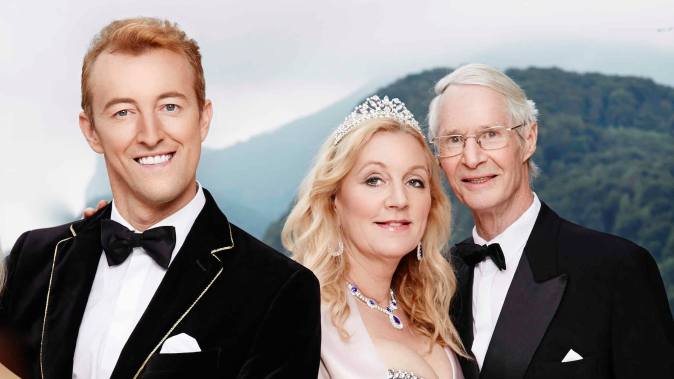
An evening honoring Marie Antoinette and Empress Eugénie will bring history, elegance, and diplomacy together in Paris.
Paris is preparing for one of its most refined cultural evenings as the Cercle de France announces the Fourth Soirée de Gala et Bal des Deux Empires. The distinguished event will be held on Saturday, March 7, 2026, under the patronage of Laurent Poultier du Mesnil, President of the Cercle de France, and Daria Davidoff, the organization’s Executive Vice President. Both figures have become synonymous with preserving the heritage of European court culture through meticulously staged gatherings that bridge art, history, and high society.
The gala will pay tribute to two legendary women whose grace and influence defined eras of refinement: Queen Marie Antoinette of France and Empress Eugénie of the French Second Empire. Their legacies remain central to the aesthetic and spirit of the event, which seeks to revive the splendor of the royal and imperial salons that once set the tone for European elegance. This year’s soirée promises to capture the grandeur of the ancien régime and the Napoleonic age through music, dance, and exquisite presentation.
Each year, the Bal des Deux Empires serves as both an artistic celebration and a symbol of Franco-European friendship. The gathering draws an audience of diplomats, historians, cultural patrons, and social figures who share a passion for heritage preservation and historical tradition. Guests, often dressed in period-inspired formalwear, contribute to an atmosphere that blends ceremony with authenticity. Beyond its social charm, the evening has become a cultural institution that promotes the values of continuity, artistry, and respect for history’s aesthetic achievements.
The Cercle de France, led by Laurent Poultier du Mesnil, has consistently positioned itself at the intersection of heritage and modern diplomacy. The organization’s mission extends beyond elegant gatherings, emphasizing dialogue between nations through cultural exchange. Under Daria Davidoff’s direction, the Cercle has developed programs that highlight music, architecture, and decorative arts as expressions of shared European identity.
The upcoming gala continues a legacy of carefully orchestrated events that evoke the richness of French artistic life. The music, dance performances, and table settings are selected to echo the splendor of Versailles and the Tuileries, while contemporary touches keep the evening accessible to modern sensibilities. The balance between tradition and relevance is what defines the Cercle’s unique contribution to cultural diplomacy.
Later in the year, on December 12, 2025, the organization will also present a concert titled “Noël de l’Est à l’Ouest” at the Église Saint-Louis-en-l’Île in Paris, featuring the artist Sacha Bouros. This musical event, set in one of the city’s most atmospheric churches, will bring together compositions from both Eastern and Western Europe, reflecting the Cercle’s commitment to uniting cultures through the arts. The concert will serve as a prelude to the grandeur of the March gala, linking the two occasions through the shared language of music and heritage.
The Soirée de Gala et Bal des Deux Empires has earned a reputation for precision in its aesthetic presentation. Decorations often feature imperial symbols, gilded motifs, and carefully reproduced details from the palatial décor of France’s golden centuries. The choice of venue, yet to be officially announced, will likely continue the tradition of hosting the event in a setting worthy of the occasion—an environment where architectural splendor and historical resonance complement the evening’s ceremonial rhythm.
As with previous editions, attendance is expected to draw an international array of guests representing culture, diplomacy, and philanthropy. Many come not only for the beauty of the event but for its deeper purpose: to remind modern audiences of the cultural sophistication that once defined Europe’s social order and continues to inspire refinement today.
In a time when cultural memory often competes with modern speed, gatherings like the Bal des Deux Empires reaffirm the importance of continuity and ceremony. They encourage reflection on how history’s grandeur can coexist with contemporary values of inclusion, creativity, and shared heritage.
The forthcoming gala will thus stand as both homage and aspiration—a tribute to the luminous figures of Marie Antoinette and Empress Eugénie, and an affirmation of France’s enduring role as a guardian of art, style, and grace. Guests who step into the ballroom in March 2026 will not merely attend a social evening; they will participate in a living celebration of European history, carried forward through dance, music, and the timeless art of gathering.

