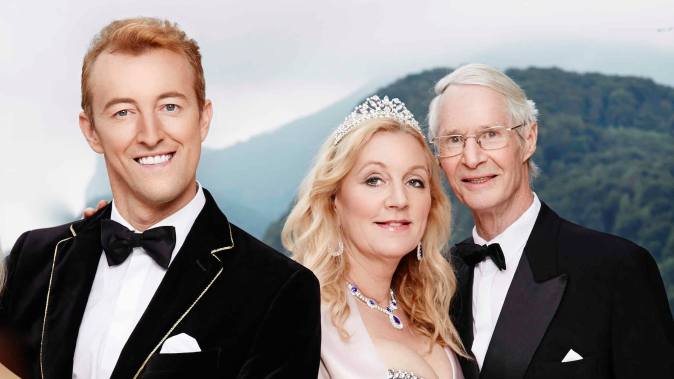
Prince Mario-Max Schaumburg-Lippe: Don Hershman’s Out of Line Comes To Tribecas Finest Gallery One Art Space NYC

Don Hershman’s Out of Line brings a focused and refined contemporary art presentation to One Art Space in Tribeca, curated by MaryAnn Giella McCulloh.

Don Hershman’s Out of Line arrives at One Art Space with the kind of clarity that suits a Tribeca setting, direct in its title, disciplined in its presentation, and centered on the expressive possibilities of line, form, and artistic confidence.

Presented at One Art Space, located at 23 Warren Street in New York’s Tribeca neighborhood, the exhibition places Hershman’s work within one of downtown Manhattan’s most active cultural corridors. Tribeca has long held a particular appeal for artists, collectors, curators, and design-minded audiences, drawing together historic architecture, contemporary galleries, and a steady rhythm of creative exchange.

Out of Line suggests an artist interested in boundaries, structure, and the freedom that comes from moving beyond expected limits. The title carries a sense of independence, yet it also points toward discipline. To go out of line is to recognize the line first, to understand its purpose, and then to make a deliberate gesture beyond it.

For Hershman, that phrase feels especially suited to a body of work shaped by personality, observation, and visual decisiveness. The exhibition’s presentation invites viewers to consider how an artist can use restraint without becoming static, and how a composition can feel alive through the simplest elements when handled with authority.

The setting at One Art Space supports that experience. Known for its clean exhibition environment and downtown accessibility, the venue offers a direct encounter between artwork and audience. In a city where visual noise is constant, a focused exhibition like Out of Line creates room for close attention.

A Curated Presentation in Tribeca

Curated by MaryAnn Giella McCulloh, the exhibition carries an editorial sensibility that is both polished and approachable. A strong curatorial hand can give an artist’s work room to breathe while establishing a coherent rhythm from one piece to the next. In Out of Line, the curatorial framing places emphasis on the integrity of Hershman’s visual language and the experience of moving through it with attention.

The collaboration between artist, curator, and venue is central to the strength of the presentation. Hershman brings the work, McCulloh shapes the encounter, and One Art Space provides the architectural and cultural context. Together, they create an exhibition that feels grounded in the city while remaining centered on the artist’s individual vision.

There is a natural elegance in an exhibition that does not need to overexplain itself. Out of Line benefits from that quality. Its title does meaningful work, offering a concise entry point while leaving room for interpretation. The viewer is invited into an experience rather than instructed toward a single conclusion.

The phrase also carries an appealing tension. It can imply rebellion, humor, risk, or movement. It can refer to drawing, behavior, form, or perspective. Within a gallery context, that openness gives the exhibition a layered quality while keeping the presentation accessible to a broad audience.

Hershman’s name is placed prominently at the center of the exhibition identity, and rightly so. This is a presentation anchored in authorship. The show foregrounds an artist with a distinct point of view, one whose work is being invited into conversation with a New York audience in a focused and deliberate way.

Tribeca remains an ideal neighborhood for such an encounter. Its galleries and cultural spaces often reward looking closely. The neighborhood’s scale allows exhibitions to feel personal while still participating in the larger art life of the city. One Art Space, with its Warren Street address, sits comfortably within that environment.

The refinement of the exhibition announcement mirrors the sensibility of the show itself. The design is minimal, balanced, and legible, placing the artist’s name, exhibition title, venue, and curator in a clean hierarchy. That visual restraint gives the presentation a professional tone before the viewer even enters the gallery.

In that way, Out of Line begins before the first artwork is seen. It begins with a name, a title, a place, and a sense of anticipation. The exhibition identity makes clear that this is a considered project, not simply a gathering of works, but a curated occasion shaped for a specific space and audience.

The importance of the title continues to resonate. Lines can divide or connect. They can define a figure, suggest movement, mark a threshold, or record a gesture. In the hands of an artist, a line is never merely a line. It becomes evidence of choice, pressure, rhythm, and intent.

Out of Line therefore becomes a phrase about artistic freedom. It gestures toward work that may depart from convention while remaining grounded in skill. It acknowledges that meaningful departures often come from close engagement with form rather than avoidance of it.

MaryAnn Giella McCulloh’s role as curator brings another layer of context to the exhibition. A curator’s work often exists in the balance between visibility and restraint. The best curatorial presence supports the artist without overwhelming the viewer’s experience. Here, the curatorial credit signals thoughtful organization and a clear belief in the strength of Hershman’s presentation.

One Art Space provides a fitting platform for this kind of exhibition. Its Tribeca location connects the show to an audience that includes collectors, artists, designers, writers, and cultural patrons, while its gallery format allows the work to remain the central focus.

New York has always been a city where line matters. It appears in the geometry of streets, the edges of buildings, the movement of pedestrians, the language of signage, and the energy of drawn and painted forms. In this context, Hershman’s Out of Line feels connected to the urban experience without needing to describe it directly.

The exhibition’s strength lies in its ability to suggest both precision and release. A line can be controlled, and it can also be expressive. It can follow an expected path, or it can break away. That duality gives the show its conceptual appeal.

For audiences visiting One Art Space, the experience promises a focused encounter with an artist working through a clear visual idea. The presentation does not rely on excess. It relies on the enduring power of composition, gesture, and interpretation.

Out of Line also reflects the continuing importance of independent gallery exhibitions in New York. These presentations create vital spaces for artists to meet audiences in direct and immediate ways. They support the city’s cultural ecosystem by giving viewers opportunities to experience work beyond major institutions and commercial fairs.

The exhibition’s polished framing, from venue to curator to visual identity, positions it as a noteworthy cultural moment within the Tribeca art calendar. It is the kind of presentation that benefits from close looking and rewards viewers who allow time for detail, rhythm, and nuance.

There is also something compelling about the simplicity of the invitation. Don Hershman. Out of Line. One Art Space. Tribeca. The essential information is direct, elegant, and memorable. It gives the exhibition a strong identity while preserving a sense of openness around the work itself.

The presence of bubbles and bites in the reception framing adds a social dimension to the occasion without distracting from the art. It recognizes that gallery openings are cultural gatherings as well as visual experiences, places where conversation, community, and artistic appreciation naturally meet.

Still, the heart of the event remains Hershman’s work. The title directs attention back to artistic process and vision. It asks viewers to consider what happens when an artist steps outside a prescribed edge and allows the work to find its own balance.

In a city defined by motion, exhibitions like Out of Line offer a welcome pause. They ask for attention, not spectacle. They invite viewers to enter a room, look carefully, and engage with the decisions embedded in the artwork.

That quality gives the show its quiet confidence. It is grounded in a recognizable art-world tradition, an artist, a curator, a gallery, a clearly framed exhibition, yet it also carries the energy of discovery. It suggests a presentation shaped by care and intended for meaningful encounter.

Don Hershman’s Out of Line stands as a refined addition to Tribeca’s cultural life. With MaryAnn Giella McCulloh curating and One Art Space providing the setting, the exhibition brings together artistic identity, professional presentation, and downtown New York visibility in a manner that feels assured and thoughtfully composed.

For collectors and art enthusiasts, the show offers an opportunity to engage with Hershman’s practice in a focused environment. For general audiences, it provides an accessible entry point into contemporary art through a title and presentation that are immediately clear yet open to interpretation.

Out of Line is ultimately a celebration of artistic direction. It honors the act of moving with intention, of recognizing structure and then making space for individuality. In the setting of One Art Space, that idea becomes more than a phrase. It becomes an exhibition shaped by presence, purpose, and a distinctly New York sense of cultural occasion.

* His Highness and Excellency Global Peace Ambassador Dr. PRINCE MARIO-MAX SCHAUMBURG-LIPPE is a working Royal, award winning TV- and Event-Host, Bertelsmann Randomhouse author, Public Speaker and Philanthropist ♔ Prince Mario-Max is the son of Royal Dignitaries H.H. Dr.h.c. Prince Waldemar and H.H. Dr. Princess Antonia of Schaumburg-Lippe. His Grandmother is H.R.H. Princess Feodora of Denmark. Therefore they are the Royal Danish Nachod Line of The Princes of Schaumburg-Lippe, the Founding Family of Hamburg, Lübeck and Kiel. ♔ Instagram https://www.instagram.com/princemariomax/ Website http://www.schaumburglippe.org Facebook https://www.facebook.com/zuschaumburglippe X-Twitter https://twitter.com/schaumburglippe Linkedin https://www.linkedin.com/in/prince-mario-max-schaumburg-lippe-1879978a

Prince Mario-Max Schaumburg-Lippe: Al Diaz Unveils The Epic Exhibition “An Empire Fallen” in TriBeCa

A powerful solo exhibition at One Art Space reflects the evolution of a legendary New York artist star whose legacy bridges generations!

When the doors of One Art Space open on October 30th for the VIP reception of Al Diaz’s solo exhibition “An Empire Fallen,” the evening will mark both a celebration of creative endurance and a meditation on cultural transformation. From 6:00 to 9:00 p.m., guests will gather in the gallery’s polished TriBeCa setting at 23 Warren Street for an evening of art, conversation, and the quiet ceremony that accompanies a significant return. PR by the prestigious Lawlor Media Group, the event will offer bubbles and bites as collectors, curators, and long-standing admirers of Diaz’s work come together to honor one of New York’s most defining voices in visual art.

Al Diaz has long been recognized as a figure intertwined with the city’s artistic identity. Emerging from the same vibrant downtown movement that redefined American visual expression in the late twentieth century, Diaz built his practice on the raw honesty of urban experience. “An Empire Fallen” represents a culmination of decades of evolution — from street interventions that carried messages across city walls to contemporary compositions that explore the fragility of power, permanence, and cultural memory.

The show will remain on view through November 10th, open daily from noon until 6:00 p.m., inviting the public into an immersive reflection on cycles of creation and collapse. Each piece in the exhibition bears the mark of Diaz’s disciplined craft and the clarity of his perspective. His recent works are distinguished by layered visual codes that balance gesture and intention, revealing both personal and civic narratives that run through the veins of New York itself.

Following the reception, the artist will return for an in-depth talk on Thursday, November 6th, from 6:00 to 8:00 p.m., providing guests with a direct insight into his process and philosophy. This conversation will serve as a rare opportunity for audiences to engage with Diaz’s thoughts on artistic authorship, the endurance of meaning in modern visual culture, and the shifting boundaries between street and studio practice.

One Art Space, known for its commitment to presenting both established and emerging voices within the global art community, offers a fitting backdrop for Diaz’s current vision. Its white walls and balanced architectural geometry allow each canvas and installation to assert itself without distraction. The gallery’s curatorial approach emphasizes context and coherence, ensuring that “An Empire Fallen” unfolds not merely as an exhibition but as a unified statement on continuity and change.

The reception, organized with the precision and polish for which Lawlor Media Group is known, will gather guests from across the creative, cultural, and philanthropic worlds. Principal and CEO Norah Lawlor, whose firm has long supported fine art events and luxury cultural experiences throughout New York, leads the public relations efforts surrounding the exhibition. The invitation itself reflects the hallmark refinement of her team — clear, elegant, and aligned with the city’s most discerning artistic circles.

As the buzz in the Top Art circles builds, the title “An Empire Fallen” invites contemplation. It suggests a turning point, not only in the artist’s narrative but in the broader dialogue of artistic legacy and renewal. Diaz’s works, known for their unfiltered candor, have always spoken to the pulse of the city — its triumphs, its losses, and its reinventions. In this latest body of work, that conversation appears distilled to its essence: a visual reflection on endurance after collapse, on creation as both rebellion and remembrance.

Throughout the duration of the show, the gallery will host a steady flow of collectors, journalists, and art enthusiasts, each drawn to Diaz’s singular approach. His pieces occupy a distinct space where abstraction meets message, where history and personal experience intertwine in a language that remains unmistakably his own.

Beyond the artwork, the event carries the quiet prestige that defines New York’s contemporary art scene. The guest list, curated through personal invitations, underscores the exclusivity and respect that accompany Diaz’s name. With “An Empire Fallen,” the artist reaffirms not only his place in the city’s creative lineage but also the resilience of an artistic voice that continues to evolve without compromise.

In a moment where contemporary art often oscillates between spectacle and sincerity, Diaz’s presentation at One Art Space promises clarity and conviction. The exhibition stands as both a document of transformation and an offering of perspective — the kind that emerges from decades of observation and the endurance of vision.

For those attending the opening night, the atmosphere will be one of recognition and reflection. Each guest, glass in hand, will find themselves in conversation not just with the artist’s latest work but with the very narrative of New York art — a story of cycles, of walls and galleries, of moments that fade and resurface, renewed.

Al Diaz’s “An Empire Fallen” thus marks a return to essence: a body of work that honors history without nostalgia, challenges structure without aggression, and asserts continuity through creation. It is a testament to the artist’s sustained relevance and to the vitality of the city that shaped him.

* His Highness and Excellency Global Peace Ambassador Dr. PRINCE MARIO-MAX SCHAUMBURG-LIPPE is a working Royal, award winning TV- and Event-Host, Bertelsmann Randomhouse author, Public Speaker and Philanthropist ♔ Prince Mario-Max is the son of Royal Dignitaries H.H. Dr.h.c. Prince Waldemar and H.H. Dr. Princess Antonia of Schaumburg-Lippe. His Grandmother is H.R.H. Princess Feodora of Denmark. Therefore they are the Royal Danish Nachod Line of The Princes of Schaumburg-Lippe, the Founding Family of Hamburg, Lübeck and Kiel. ♔ Instagram https://www.instagram.com/princemariomax/ Website http://www.schaumburglippe.org Facebook https://www.facebook.com/zuschaumburglippe X-Twitter https://twitter.com/schaumburglippe Linkedin https://www.linkedin.com/in/prince-mario-max-schaumburg-lippe-1879978a

Prince Mario-Max Schaumburg-Lippe: “I AM A BARN” Sensational Don Hershman’s Solo Exhibition at Artifact Projects, NYC

“I AM A BARN” — Don Hershman’s Solo Exhibition at Artifact Projects, NYC

On Thursday, October 9, 2025, New York City will welcome a quietly powerful artistic arrival: the opening reception of I AM A BARN, a solo exhibition by Don Hershman, hosted by Artifact Projects at 155 Suffolk Street, New York, NY 10002. From 6:00 pm to 9:00 pm, guests will gather to experience Hershman’s textured, introspective barn-themed works anew, during a run that continues Wednesday through Saturday through October 26, 2025.

The Artist & His Vision

Don Hershman, based in San Francisco, lives the rare double life of podiatric surgeon and contemporary painter.  Over time, his art has come to be seen not just as an aesthetic pursuit but as a meditative practice—one that intersects identity, endurance, memory, and metaphor. He has established a reputation for works that merge texture, shadow, and structural form in expressive, subtle ways. 

In I AM A BARN, Hershman returns to a symbolic motif he has increasingly embraced: the barn. These structures—weathered, timeworn, sometimes fragile, sometimes resilient—function as mirrors of human life. In previous exhibitions (for example, at Radian Gallery in San Francisco), Hershman assembled 22 paintings on wood panels, each interpreting barns and architectural forms as embodiments of life’s trials, vulnerability, and persistence.  The barn becomes both subject and metaphor: a place that has endured storms, seasons, shifts, yet still rests in the landscape.

As Hershman himself writes, “We all weather storms in our lives, but it is how we emerge from them—weathered yet wiser, scarred but deeper, and more powerful.”

His approach to color, composition, and surface is careful and deliberate: he balances rawness and refinement, revealing cracks and blemishes without letting them overshadow quiet dignity. In doing so, Hershman invites audiences to reflect on their own journeys of erosion and regeneration.

Artifact Projects & the Significance of Place

Artifact Projects, the gallery and curatorial space facilitating this exhibition, describes itself as more than a traditional gallery: it acts as a bridge among artists, collectors, and corporations, providing curatorial, marketing, and strategic support.  Located in the Lower East Side / Chinatown border region, its Suffolk Street space offers a vibrant locus for contemporary artistic experimentation amid one of New York’s densest and most culturally layered neighborhoods.

New York has long been the world stage of art — from the Abstract Expressionists to downtown experimental practices, from gallery districts to pop-up spaces. A show like I AM A BARN may at first seem quietly introspective compared to louder avant-garde gestures, but that very subtlety is its strength: it brings tenderness, contemplation, and metaphor into a city accustomed to spectacle.

By bringing Hershman’s aesthetic voice across the country, I AM A BARN opens a dialogue: how do structures—both literal and psychic—stand up to time, change, abandonment, decay, and revival? For New York viewers, who live among crumbling facades, reclaimed lots, adaptive reuse, and fast-paced churn, this project resonates deeply.

Moreover, in situating I AM A BARN in a gallery that positions itself as curator-connector, Hershman gains a broader platform. Whether collectors, curators, architects, or passersby wander in, the show has the potential to ripple outward—into acquisition, conversation, and perhaps new commissions.

Impact & Potential Ripple Effects

1. 

Bridging Bi-Coastal Artistic Conversation

Hershman’s practice is rooted in his West Coast base, but this New York solo exhibition actively invites cross-coastal conversation. NYC audiences will have the chance to engage with a voice that is not of their immediate milieu, stimulating fresh perspectives and network connections.

2. 

Expanding Interpretive Spaces in NYC Art

Contemporary New York exhibitions often foreground identity, politics, technology, or socially driven art. Hershman’s focus on metaphor, memory, and structure provides a counterpoint—a slower, quieter language of reflection. That contrast can push curators and audiences to broaden how meaning is framed within the city’s fast-paced art ecology.

3. 

New Audiences, Collectors & Institutional Exposure

By mounting a solo show in New York, Hershman potentially gains visibility among East Coast collectors, institutional curators, and press. If the show draws well, the works may find homes in private collections or even public acquisitions. This could deepen Hershman’s presence in the national art circuit.

4. 

Neighborhood & Cultural Activation

Suffolk Street’s setting situates the exhibition within walking distance of many cultural nodes (in Lower East Side, Chinatown, LES galleries). I AM A BARN thus contributes to neighborhood vibrancy, pulling in locals, gallery visitors, and cultural tourists alike. In a city where art spaces compete for attention, a show with thematic depth and visual presence can become a talking point.

5. 

Thematic Resonance with Urban Audiences

New Yorkers are intimately acquainted with time’s passage on architecture: weathered brownstones, fire escapes, old warehouses, facades peeled by rain or neglect. Hershman’s barns may be rural in imagery, but their aging wood, shifting shadows, and quiet persistence reflect the city’s own built environment. Thus the works can catalyze introspection: What does it take to stand firm? How do surfaces bear memory? What does resilience look like in a metropolis?

What to See & Expect

Walking into I AM A BARN, one may expect:

  • An array of scales — from intimate wood panels to larger installations moving across vertical and horizontal planes.
  • Layered techniques — use of acrylic, pencil, ink, and possibly mixed media, all applied over wood (the very material that invokes barns) to highlight grain, crack, texture.
  • Subtle palettes with contrasts — hushed neutrals, muted tones, punctuated edges, fading planes, shadowy recesses.
  • Spatial resonance — the works will likely be arranged to interplay with light, shadow, and viewer movement, asking visitors to slow down, circle, step back, and step close.
  • Conceptual framing — descriptive texts, titles, or wall labels that help bridge the metaphorical reading (barn as self, memory, shelter) without overdetermining interpretation.

Because the exhibition is open just Wednesday through Saturday, and for a limited window through October 26, the opening reception is likely to be a pivotal gathering—gallery directors, critics, press, patrons, and enthusiasts all converging to mark Hershman’s arrival in New York.

In Summary

Don Hershman’s I AM A BARN marks more than a solo exhibition—it is a poetic incursion into New York’s art world, one that carries layered emotional rhythms and architectural metaphors. In bringing his barn series to Artifact Projects, Hershman offers the city’s audiences an opportunity to slow down, contemplate endurance, and find beauty even in fissure and weathering.

This is a show poised to make quiet but firm waves in New York: connecting bi-coastal networks, prompting dialogues across aesthetic registers, and embedding metaphor into urban experience. For those who come, it may be remembered as a moment when something elemental—structure, memory, resilience—spoke back to the city itself.