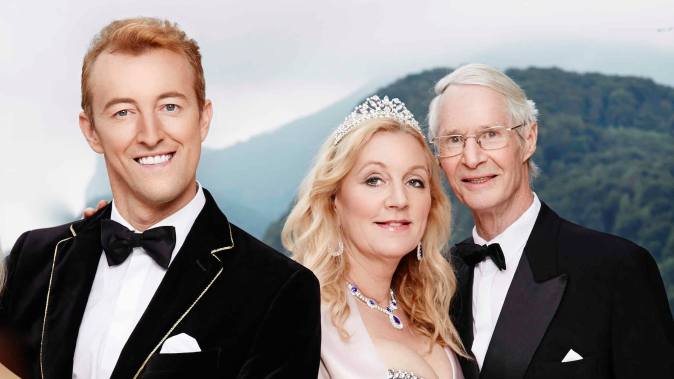
Prince Mario-Max Schaumburg-Lippe: Türkiye’s Oscar Star “One of Those Days When Hemme Dies” Premieres in New York

A powerful screening at Turkish House honors Türkiye’s official Academy Awards submission and the creative vision of Murat Firatoğlu.

His Excellency Ambassador Muhuttin Ahmet Yazal the Consul General and head of the stunning Turkish House is a strong protector of culture, movies and a strong bridge between Istanbul, New York and Hollywood. 

The Night of Oscars Flair is supported by the great Turkish Airlines, and General Manager Emre Ismailoglu is one of the hardest working executives in aviation as the US has 11 hubs to turkey with one of the most premium global airlines!

His Excellency Ambassador and Consul General Muhittin Ahmet Yazal of the Republic of Türkiye with H.H. Dr. Prince Mario-Max Schaumburg-Lippe

My friend Pia Bozyel of New Yorks best cafe called Cafe La Belle Tasse put my attention to this fantastic film!

The lights of Turkish House in New York will dim for an evening of profound storytelling as audiences gather for the screening of “One of Those Days When Hemme Dies,” Türkiye’s official submission for the Academy Awards in the Best International Feature Film category. Presented in collaboration with the Republic of Türkiye Ministry of Culture and Tourism and Turkish Airlines, this special event marks an important cultural moment that brings the strength of contemporary Turkish cinema to an international stage.

The film, directed, produced, and led by Murat Firatoğlu, arrives with quiet confidence. Its story, steeped in the textures of daily life, captures a deeply human rhythm. The narrative is rooted in the realities of rural Türkiye, where time, labor, and love intertwine within small gestures and unspoken bonds. In this way, Firatoğlu crafts a cinematic portrait that is as grounded as it is emotionally resonant.

Turkish Airlines GM Emre Ismailoglu

After the screening, the evening will continue with a discussion featuring Murat Firatoğlu himself. Audiences will have the opportunity to hear directly from the filmmaker about the creative journey behind the project, from the early stages of development to the discipline of bringing such a subtle story to the screen. Firatoğlu’s dual role as both director and lead actor adds a remarkable layer to his artistic control, reflecting a personal investment that can be felt in every frame.

The power of a quiet story

“One of Those Days When Hemme Dies” unfolds without spectacle or excess. The film’s visual language, composed of stillness, space, and deliberate pacing, allows each moment to breathe. Firatoğlu’s direction favors authenticity over artifice, shaping a work that finds meaning in small details. Viewers are drawn into scenes of domestic simplicity and agricultural labor, where conversations unfold under muted sunlight and emotions are conveyed through subtle gestures.

The stills from the film, displayed on the event invitation, reveal rows of drying tomatoes glistening in open air, a symbol of continuity between people and their environment. These images serve as both aesthetic and thematic anchors, reflecting the patient cycles of work and the endurance of human connection. Firatoğlu’s portrayal of Hemme—a man caught between obligation and identity—embodies the balance between life’s permanence and fragility.

A cinematic voice from Türkiye

Firatoğlu’s approach reflects the strength of independent Turkish filmmaking, which continues to thrive through stories that explore rural lives and inner worlds. His work contributes to a growing body of films that redefine how Türkiye presents itself on the global screen, emphasizing everyday humanity over dramatization. This year’s selection as the country’s official Academy Awards submission underscores that commitment to sincere storytelling and creative integrity.

The film’s title, “One of Those Days When Hemme Dies,” suggests inevitability, but the narrative transforms this into contemplation rather than despair. It explores what it means to live within one’s own limits, to find beauty in persistence, and to honor the quiet dignity of labor. Firatoğlu’s restrained tone invites audiences to reflect rather than react, situating his work within the lineage of filmmakers who use minimalism to express depth.

The Turkish House gathering

At Turkish House, located at 821 United Nations Plaza, the screening is designed not only as an artistic presentation but also as a cultural dialogue. The venue has become a landmark for cultural diplomacy, connecting Turkish creativity with international audiences in New York. Its modern design and proximity to the United Nations make it an ideal space for such an event—one that merges artistry with a spirit of global exchange.

Guests attending the November 3 screening will experience an evening of cinema followed by an intimate Q&A session. The discussion will provide context for Firatoğlu’s methods, his collaboration with local communities, and his reflections on representing Türkiye in the global film arena. The dialogue between artist and audience will continue the cultural bridge that events like this are meant to build.

Cinema as cultural continuity

This year’s Academy Awards submission highlights how Turkish cinema continues to evolve. Directors like Firatoğlu are expanding its reach by creating works that resonate beyond borders while remaining grounded in national identity. The support of the Republic of Türkiye Ministry of Culture and Tourism and Turkish Airlines demonstrates the nation’s investment in artistic representation abroad.

The event also serves as a reminder of how storytelling can unite audiences through shared emotions. Every screening abroad allows viewers to witness Türkiye’s diverse voices and landscapes. Firatoğlu’s work contributes to this broader tapestry, inviting empathy through authenticity rather than ornamentation.

A filmmaker’s vision

Murat Firatoğlu’s dual role as both storyteller and performer is central to the impact of “One of Those Days When Hemme Dies.” His presence within the film lends it an immediacy that bridges fiction and observation. His performance avoids dramatics, instead presenting Hemme as a man whose quiet resilience reflects the essence of human endurance.

Through his direction, Firatoğlu captures the weight of time and memory without overt sentimentality. The result is a work that feels both local and universal. It is rooted in the soil of Anatolia yet capable of speaking to anyone who understands the quiet complexity of survival and belonging.

Looking ahead

As Türkiye’s official entry to the Oscars, the film now takes its place among the year’s most distinctive international works. Its selection reflects growing recognition of filmmakers who combine authenticity with artistic clarity. For New York audiences, the Turkish House screening offers a first glimpse of a film that will likely become a touchstone for contemporary Turkish cinema.

The evening at Turkish House promises reflection, cultural connection, and artistic celebration. It continues a long tradition of Türkiye sharing its creative spirit with the world through film. As “One of Those Days When Hemme Dies” begins its international journey, it carries with it the quiet power of a story told with honesty and care—a story that lingers long after the screen fades to black.

Türkiye Ministry of Culture and Tourism, Turkish Airlines, Turkish House New York, Murat Firatoğlu, One of Those Days When Hemme Dies, Academy Awards, Oscars 2025, Best International Feature Film, Turkish cinema, independent film, New York City, United Nations Plaza, film screening, cultural diplomacy, contemporary Turkish filmmaking, Anatolia, rural life, international film, global cinema, filmmaker Q&A, movie premiere, art and culture, cross-cultural dialogue, cinema event, creative direction, storytelling, film artistry, cinematic realism, Türkiye film industry, film submission, international showcase, cultural exchange

Prince Mario-Max Schaumburg-Lippe: Walter Koenig Returns to the Screen in “Mr. Fleischmann” with Ralf Nieder – Filming Started!

A powerful new short film unites Hollywood legends and global storytellers in a haunting exploration of justice and redemption.

In a world exclusive announcement that has captivated both Hollywood insiders and international film circles, the revered actor Walter Koenig is set to return to the screen in Mr. Fleischmann, a striking new film directed by Frank Crim and produced by Ralf Nieder. The project, first revealed by Prince Mario-Max Schaumburg-Lippe, has already drawn significant attention for its extraordinary combination of talent, emotion, and social resonance.

Walter Koenig, whose legendary portrayals in Star Trek and Babylon 5 defined generations of science fiction, now steps into an entirely different kind of role—one grounded not in interstellar exploration but in the human pursuit of truth. Mr. Fleischmann is a film about justice, memory, and revenge, exploring how the shadows of the past can shape lives long after the events that caused them.

Director Frank Crim, a veteran filmmaker with more than 35 years of experience, brings his cinematic precision to the project. Known for crafting emotionally charged narratives with technical mastery, he approaches Mr. Fleischmann as both storyteller and craftsman. His producing partner, Ralf Nieder, brings more than fifteen years of expertise in post-production, ensuring that every frame will resonate with both clarity and intensity.

At its core, Mr. Fleischmann is not just a film about vengeance—it is a study of moral reckoning. It follows one man’s journey to confront the echoes of personal and historical trauma, a path that blurs the line between justice and obsession. The filmmakers have described the story as both timeless and urgent, a mirror to modern struggles for peace and accountability. With references that extend to current global conflicts, the film becomes a universal statement about the cost of violence and the resilience of the human spirit.

Frank Crim and Ralf Nieder share a clear creative vision: to produce a work that combines the intimacy of independent cinema with the weight of moral storytelling. Their passion for the material is matched by a commitment to artistic integrity and technical excellence. From meticulous casting to the precision of sound design, the film aims to deliver a powerful sensory and emotional experience.

The project’s resonance lies in its ability to connect deeply personal emotion with the grand scale of human history. Walter Koenig’s performance promises to embody this duality, portraying a character shaped by grief yet driven by an unrelenting desire for closure. His return to the screen marks not only a reunion with his audience but also a continuation of his artistic evolution—an actor who, even after decades in the industry, continues to seek new dimensions of expression.

For Frank Crim, the film represents the culmination of decades of work devoted to exploring human depth through cinema. For Ralf Nieder, it is an opportunity to apply his mastery of post-production to a project of both artistic and moral consequence. Together, they embody a partnership built on trust, vision, and mutual respect—values that are evident in every aspect of the film’s development.

Prince Mario-Max Schaumburg-Lippe’s introduction of the project to global audiences underscored its importance as a cultural moment. His involvement helped position Mr. Fleischmann not just as another independent film, but as a narrative event—one that unites Hollywood tradition with European sophistication and global purpose.

Thematically, Mr. Fleischmann aligns with the tradition of films that challenge audiences to confront uncomfortable truths. Its focus on human endurance, loss, and the pursuit of moral equilibrium places it firmly within the lineage of socially engaged cinema. Yet, its execution remains deeply personal, driven by performance and emotional nuance rather than spectacle.

As production moves forward, anticipation continues to grow. Walter Koenig’s return marks a bridge between Hollywood’s golden age and its contemporary independent scene. His legacy, stretching from the starships of Star Trek to the intergalactic diplomacy of Babylon 5, finds a new expression in the intimate framework of Mr. Fleischmann. It is a return not to nostalgia, but to relevance—a reinvention by an actor whose artistry continues to transcend time.

In an age when cinema often leans toward excess, Mr. Fleischmann stands apart as a reminder of storytelling’s essential power. Its creators are crafting a film that honors emotion, authenticity, and the universal need for justice. With a message that resonates across cultures and generations, the film has already begun to shape conversations even before cameras roll.

Through this project, Walter Koenig, Frank Crim, and Ralf Nieder are not simply making a film—they are building a testament to resilience, reflection, and artistic integrity. The collaboration between such seasoned talent and visionary direction ensures that Mr. Fleischmann will be remembered not just for its performances, but for its purpose.

For audiences and supporters alike, the anticipation is clear: to witness one of cinema’s most enduring icons return to tell a story that matters.

Prince Mario-Max Schaumburg-Lippe: Nicole Kidman: Why Everyone Loves Her!

Across four decades of film and television, Nicole Kidman has captivated audiences with her artistry, intelligence, and unwavering commitment to craft and character. Her appeal extends far beyond her striking onscreen presence; it lies in the range of her performances, the deliberateness of her choices, and the generosity of her off-screen personality.

A beginning anchored in intention

Born in Honolulu in 1967 and raised in Sydney, Kidman’s early training in ballet, mime, and drama opened a pathway to acting at a young age. She made her professional film debut at age sixteen in the Australian holiday film Bush Christmas before moving into television and feature films that revealed her ambition and adaptability.

A career of range and risk

What sets Kidman apart is the breadth of her career. She has navigated blockbusters, art-house films, television series, and stage work with equal seriousness. Her early Hollywood roles in Days of Thunder and Far and Away introduced her to international audiences, but she soon shifted toward daring, complex performances in Moulin Rouge! and The Hours, earning the Academy Award for Best Actress. More recently, her work in Big Little Lies and The Undoing reaffirmed her ability to evolve with new forms of storytelling while maintaining her signature depth.

Mastery in craft

Much of the admiration for Kidman is rooted in her dedication to character, emotion, and detail. Whether inhabiting historical figures, fictional icons, or modern women, she brings the same discipline and authenticity to each role. Her performances are not about transformation for its own sake but about an honest search for emotional truth. That integrity, supported by decades of recognition from peers and audiences, has cemented her status as one of cinema’s most respected actors.

Elegance without artifice

Kidman’s public persona balances glamour with sincerity. She maintains an elegant composure in the press and public appearances, yet she often speaks candidly about the demands of her profession and the realities of her life. This openness, coupled with a quiet confidence, makes her relatable despite her star power. Her willingness to discuss both success and vulnerability has endeared her to audiences who admire her not just for her beauty or talent but for her humanity.

A producer with purpose

Beyond acting, Kidman has become an influential producer, shaping projects that highlight women’s voices and stories. Through her production company, she has developed acclaimed series and films that give a platform to diverse creative talent. Her decision to use her influence to support other artists adds depth to her public image and shows a clear sense of purpose that goes beyond personal achievement.

Resilience and reinvention

Kidman’s longevity in the entertainment industry is a testament to her resilience. She has adapted through changing trends, shifting media landscapes, and evolving cultural expectations, all while maintaining a consistent standard of excellence. Her transition from film to television and streaming demonstrated a rare ability to reinvent herself without losing her artistic identity.

Humanity in the spotlight

Behind the fame, Kidman’s grounded presence continues to draw admiration. Her commitment to humanitarian work, her devotion to family, and her thoughtful approach to public life reveal a person deeply connected to her values. She manages to balance visibility with integrity, a quality that enhances her enduring appeal.

A career that matters

Nicole Kidman stands as one of the defining figures of modern cinema. She represents a rare combination of talent, intelligence, and grace—an artist who has shaped her career with deliberate care and who continues to use her voice to create meaningful work. People love her not only because she is brilliant onscreen but because she embodies the best of what art, empathy, and perseverance can achieve.

Prince Mario-Max Schaumburg-Lippe: Isabella Hirt: The Queen of the International Film Jungle Reigns Supreme

A visionary producer, creative architect, and cultural force redefining the global entertainment landscape, Isabella Hirt has emerged as one of the most compelling figures shaping today’s cinematic and luxury frontiers. Her work bridges the glamour of classic Hollywood with the consciousness of a new global era, transforming artistry into purpose and storytelling into diplomacy.

Hirt’s growing renown as a producer of spiritually resonant and visually opulent films has placed her firmly in the international spotlight. Nominated for excellence as an impact-driven producer and leading contender at the prestigious Go Global Awards Gala in Westminster, she embodies a balance of regal poise and modern innovation. Her projects carry the weight of heritage yet speak to the emotional needs of the present age—creating films that uplift, heal, and connect.

Her creative world expanded dramatically following the theft of Napoléon’s imperial jewels from the Louvre in October 2025. Where others saw loss, Hirt saw inspiration. The incident became the foundation for her upcoming Jungle Queen jewelry collection, a collaboration with a globally recognized designer. These pieces reinterpret the concept of lost legacy through a modern lens of strength and renewal. Each design reflects cinematic grandeur, regal elegance, and emotional endurance, already attracting attention from royal collectors and Hollywood’s elite.

Hirt’s vision reaches far beyond luxury. Her work as a producer aligns artistry with measurable social impact, seeking to bridge cultures and ease emotional disconnection through meaningful storytelling. Among her forthcoming films are Kubrick’s Waterloo, a visually ambitious historical epic, and Legacy of Love, a poetic meditation inspired by Empress Zita and shaped by Hirt’s profound dreams of Queen Elizabeth II. Both projects reflect her signature synthesis of spirituality, history, and cinematic beauty.

Operating across multiple creative sectors, Isabella Hirt leads an empire that merges film production, jewelry design, international distribution, and philanthropic events. Her Flame of Passion galas in Vienna and the United States have become hallmark celebrations of art and purpose, uniting royal guests, industry executives, and cultural icons. Each gathering underscores her belief that luxury and meaning are not mutually exclusive—they are most powerful when intertwined.

Her expanding circle of collaborators includes Peace Ambassador Prince Dr. Mario Max Schaumburg-Lippe, who serves as her royal delegate and close supporter. Together, they are shaping an international cultural dialogue where art and diplomacy meet, advancing a shared vision of elegance as a form of humanitarianism.

From London to Los Angeles, Vienna to Versailles, Hirt’s influence continues to spread through industries once thought separate—film, luxury, and cultural leadership. Her instinct for uniting creative expression with business precision positions her as both an artist and architect of a new era in entertainment. She approaches every project as an ecosystem of value, balancing financial viability with a deep moral compass rooted in faith and empathy.

Her rise symbolizes a broader movement within modern cinema—one that values purpose as much as production, beauty as much as box office. She is a producer whose legacy is being built not on spectacle, but on sincerity, and whose work champions the restoration of human connection through art.

As the world turns its attention toward the Go Global Awards in Westminster, Isabella Hirt’s nomination feels not merely earned but inevitable. Her trajectory represents the global reawakening of creative integrity in an industry long defined by commerce. Through her leadership, she demonstrates that elegance can be strength, and luxury can serve as a vehicle for light.

With every venture, Isabella Hirt expands the possibilities of what modern storytelling can achieve. Her reign as the Queen of the International Film Jungle is not one of dominance, but of design—a conscious and deliberate shaping of a cultural future where artistry, heritage, and hope coexist. Her story stands as a testament to what happens when vision meets discipline, and when glamour embraces grace.