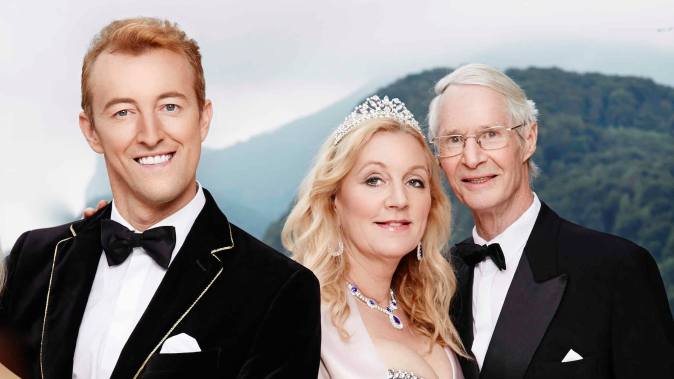
A celebration of leadership, vision, and life-changing impact gathers in West Hollywood.
The GEANCO Foundation’s Hollywood Gala brings together an extraordinary community of leaders and supporters whose shared commitment continues to strengthen essential healthcare, education, and opportunity across Nigeria.
The evening set for December 5, 2025 at 1 Hotel West Hollywood presents a moment of unity and purpose shaped by the Foundation’s impactful history and the remarkable individuals who guide its mission. Hosted by David Oyelowo with co-chairs and special panelists Shabnam Safarzadeh and Shay Safarzadeh, the gala reflects a deep appreciation for the organization’s partners, supporters, and the communities it serves. It stands as both a celebration and an invitation into the work that defines GEANCO’s legacy.
The Foundation’s story began with Dr. Godwin Onyema, who was moved early in life by his father and a British missionary physician working in his community. The promise he made before leaving Nigeria to study and practice medicine in the United States laid the groundwork for an organization that would one day save and transform thousands of lives. This promise remained constant as he and his wife Josephine built a new life in Chicago, carrying the determination to return meaningful support to his homeland.
Dr. Onyema honored that commitment as his children reached adulthood, uniting the family around a shared purpose to create a sustainable model of medical and educational impact. Together they founded GEANCO in 2005, launching a mission powered by medical expertise, global partnerships, and a dedication to serve vulnerable populations in Nigeria.
The Foundation’s work has grown into expansive programs that address complex health and educational challenges. Its surgical missions bring minimally invasive procedures and specialized training to Nigerian doctors, led in part by Dr. Kevin El-Hayek, whose leadership strengthens hospital teams and expands local medical capacity. GEANCO’s solar-powered rural clinics support safe deliveries, vaccinations, and primary care for communities that otherwise face limited access. Its educational investments introduce laptops, laboratory infrastructure, and library and sports facilities to schools across the country.
One of GEANCO’s most meaningful initiatives is the David Oyelowo Leadership Scholarship for Girls, which fully supports young female survivors of terrorism and gender inequality. The scholarship provides tuition, healthcare, and psychological services. It illustrates the organization’s commitment to protecting and uplifting those who stand to benefit most from stable opportunity and sustained care. This commitment guides the purpose of the Hollywood Gala, which helps fund the scholarship and bring increased attention to its life-changing impact.
The GEANCO leadership team brings an exceptional breadth of training, cultural experience, and professional achievement to the foundation’s work. Its Directors and Special Advisors include graduates of Harvard, Stanford, Princeton, Yale, Georgetown, Johns Hopkins, Caltech, and the University of Pennsylvania. Each contributes expertise across healthcare, law, finance, business, technology, media, and social impact, ensuring the organization operates with rigor and clarity.
A significant part of GEANCO’s identity is shaped by the intellectual legacy of its Honorary Chairman Chinua Achebe. His presence carries a symbolic and cultural resonance. Achebe’s work, including the landmark novel Things Fall Apart, has influenced generations of readers and scholars, grounding GEANCO’s purpose in a lineage of Nigerian voices committed to knowledge, dignity, and progress.
The Officers of the Foundation form a core team that maintains the organization’s vision and operations. Dr. Godwin Onyema continues to guide the strategy and medical direction of the Foundation while drawing from his extensive experience as a physician, department chair, and hospital leader. His record includes decades of service across Chicago hospitals, professional recognition from medical societies, and leadership roles that demonstrate consistent excellence.
Afam Onyema, the Foundation’s CEO, leads GEANCO full-time after completing degrees at Harvard and Stanford Law School. His decision to forgo corporate law opportunities to dedicate himself to the Foundation reflects the organization’s values of service and commitment. His voice has played an important role in elevating GEANCO’s mission across global media, with profiles and interviews in numerous major publications. His leadership continues to shape the Foundation’s growth and visibility.
The Board of Directors brings a sophisticated range of talents that strengthen GEANCO’s governance. Tony Archibong contributes deep experience in product development and entertainment technology through leadership roles at Google, YouTube, Apple, Hulu, and Microsoft. His work highlights the importance of digital engagement and content-driven storytelling.
Dr. Kevin El-Hayek offers a clinical and academic perspective essential to the Foundation’s surgical missions. His contributions reach from hands-on medical procedures to the training of professionals in Nigeria, expanding the reach of modern surgical care.
Mark Johnson’s influence in film and television adds valuable perspective on production, storytelling, and creative strategy. With an Academy Award and a record of producing acclaimed films and series, he brings a cultural dimension to the organization’s outreach. His work across motion pictures and television reflects a sustained dedication to bringing meaningful narratives to wide audiences.
Sam Neswick’s background in strategic planning, entertainment for social impact, and corporate development strengthens the Foundation’s understanding of mission-driven business models. His experience at Participant Media, Disney, and Bain supports critical decisions around partnership and growth.
Ebele Onyema contributes expertise in social work, youth development, event planning, and strategic communication. Her leadership across nonprofits, educational institutions, media organizations, and community programs reflects a strong commitment to empowerment and organizational clarity.
Gozie Onyema’s background in international trade law and regulatory strategy supports the Foundation’s global operations. His legal experience across major firms provides essential guidance on compliance and international partnerships.
Nche Onyema brings a human-centered approach to organizational design. Her work in community engagement, event production, social justice, and creative strategy strengthens the Foundation’s cultural and operational connection to the communities it serves. Her leadership reflects a deep understanding of equity, collaboration, and innovative program design.
The Foundation also benefits from its Directors Emeritus. Tyrone Fahner contributes decades of legal expertise from his leadership at Mayer Brown LLP and his service as Attorney General of Illinois. His recognition as a leading business lawyer underscores his valued role within the organization.
Dr. Emmanuel Egbogah adds global experience as a petroleum engineer and advisor across multiple continents. His extensive technical and strategic background in oil and gas provides an informed perspective on energy, economic development, and international project management.
Special Advisors broaden the Foundation’s expertise in finance, sustainability, technology, design, and production. Justin Steele offers extensive experience in financial strategy and advisory leadership. Scot Hopps contributes management and engineering knowledge from his work in hospitality and renewable energy. Chess Stetson adds a research-based perspective from his work in neuroscience, computation, and engineering, supporting technological development and GEANCO’s symposia.
Jennifer Stetson offers deep experience in film, documentary production, and storytelling. Her documentary on GEANCO’s medical mission in Nigeria and her ongoing advisory role with the Foundation support the organization’s media presence and narrative clarity.
Pablo Clarke’s advisory role draws from his work in real estate transactions, corporate finance, and strategic investment. His perspective helps the Foundation navigate complex partnerships and long-term planning in both domestic and international contexts.
The Hollywood Gala brings all of these contributions together in a single evening of recognition and support. Guests gather not only to celebrate the organization’s achievements but to connect with the individuals who sustain its programs. The event acknowledges the power of collective action and the dedication of supporters who continue to advance the Foundation’s mission.
The presence of hospitality partner Whispering Angel and the Safar Global Foundation reflects the strong network of collaborators committed to GEANCO’s continued growth. Their support enhances the gala experience and strengthens the Foundation’s ability to expand its outreach.
This year’s gala also highlights the continued advancement of GEANCO’s medical and educational initiatives. Funds raised support the David Oyelowo Leadership Scholarship for Girls, which provides long-term stability and opportunity for students who face significant barriers to safety and education. The scholarship’s impact extends beyond individual students, strengthening families, schools, and entire communities.
The Foundation continues to grow through its partnerships, public engagement, and the leadership of its dedicated team. Its programs remain deeply connected to the needs of communities in Nigeria, guided by the expertise of medical professionals, academics, creative leaders, and strategists.
The Hollywood Gala provides an annual moment to honor the individuals and institutions that make this work possible. The event underscores the Foundation’s mission to create accessible healthcare, empower vulnerable communities, and support the educational development of young women. It represents the shared commitment of supporters across industries, cities, and disciplines who believe in the power of sustained humanitarian work.
Through every surgical mission, scholarship, rural clinic, and community initiative, GEANCO continues to honor the promise made by Dr. Godwin Onyema many decades ago. The Hollywood Gala stands as a testament to that promise and to the global network of individuals dedicated to keeping it alive.
The Powerhouse Behind Hollywood’s Most Iconic Luxury Gala, The Visionary Media Queen, and the Woman Redefining Global Prestige
By H.H. Dr. Prince Mario-Max Schaumburg-Lippe
Editor, NewsTodayWorld.org
A Global Icon Steps Into Her Crown
There are leaders, there are innovators—and then there is Samira Kazemeni, a one-woman cultural revolution who has reshaped the face of Hollywood prestige and elevated modern media to a new stratosphere of excellence. NewsTodayWorld.org is honored to name her our 2025 Woman of the Year, recognizing a body of work that spans luxury branding, worldwide philanthropy, and groundbreaking entertainment influence.
From the dazzling runways of Oscars Week to the red carpets of global film festivals, Samira has become the defining force behind Hollywood’s most glamorous and influential experiences. Her name is synonymous with excellence, innovation, and integrity—qualities that make her one of the most powerful women in media today.
The Rise of a Media Visionary
Samira’s ascent is legendary.
As the founder and publisher of Hollywood Elites Magazine, she built a publication that didn’t just cover the entertainment industry—it elevated it. Her magazine stands alongside the world’s most respected luxury and celebrity outlets, delivering unmatched access to icons, innovators, and global changemakers.
But it is her signature creation—the Luxury Gala during Oscars Week—that catapulted her into international stardom.
An event now regarded as one of the Top 3 Galas of Oscar Season, the Luxury Gala gathers Academy members, Hollywood royalty, world-famous designers, philanthropists, ambassadors, and global elite under one impeccably designed roof. It represents the soul of Hollywood glamour: refined, visionary, inclusive, and unforgettable.
The Luxury Gala: A New Standard for Hollywood
While many events rely on spectacle, Samira relies on precision, artistry, and purpose. She transformed the Luxury Gala into a masterpiece of:
World-Class Production Exclusive VIP Experiences Cultural Diplomacy and Global Philanthropy Media Innovation and Digital Integration Fashion, Entertainment & High Society
Her signature addition, the Crypto Lounge, introduced industry leaders to futuristic innovation—bridging the gap between Hollywood’s glittering past and its digital future.
The result?
A red-carpet ecosystem that feels both timeless and visionary.
Philanthropy at the Heart of Every Achievement
Where others see fame, Samira sees responsibility.
Her events consistently partner with nonprofits, humanitarian organizations, and foundations, using glamour as a vehicle for global good. The Luxury Gala is not merely an event—it is a platform for helping vulnerable communities, supporting youth programs, and uplifting charitable missions worldwide.
This commitment to philanthropy distinguishes her as a woman of heart, not just power.
A Force in Technology and Innovation
Samira sees the world not only as it is, but as it could be.
Her integration of Web3, digital art, and blockchain culture into mainstream Hollywood events positioned her at the forefront of a new entertainment frontier. While many feared change, Samira embraced it—and transformed it into a breathtaking visual and experiential journey for thousands.
From her magazine to her galas, she constantly blends:
Traditional media Luxury branding Cutting-edge technology Vision-forward creativity
She is the rare leader who understands that the future belongs to those who build it.
The Woman Behind the Empire
What sets Samira apart is not just her résumé—it is her character.
She is known among peers for her:
generosity warmth loyalty tireless work ethic devotion to her community ability to elevate everyone around her
Her supporters often say that working with Samira does not feel like joining a project—it feels like joining a movement.
She empowers women.
She fosters opportunity.
She creates bridges between cultures, industries, and people.
She is a global connector in the truest sense.
A Royal Salute
As a Global Peace Ambassador and Editor, I have met visionary leaders across continents—but few possess the brilliance and moral depth of Samira Kazemeni.
“Samira is not only the queen of Hollywood galas—she is a global woman of purpose.
Her leadership inspires, her achievements empower, and her heart uplifts.”
— H.H. Dr. Prince Mario-Max Schaumburg-Lippe
Her legacy is one of transformation, elegance, and fearless innovation.
The Future: Even Brighter Than the Spotlight
In 2025 and beyond, Samira is preparing to expand her empire with new:
Global editions of Hollywood Elites Magazine International luxury events Film, fashion, and philanthropy collaborations Technology-driven cultural experiences
If the past is any indicator, these ventures will not only succeed—they will redefine the industries they touch.
Conclusion: A Woman of Power, Prestige, and Purpose
Samira Kazemeni stands as a shining example of what one woman can accomplish with vision, courage, and boundless creativity. Her influence shapes Hollywood, uplifts communities, and inspires generations.
For her extraordinary achievements and unwavering commitment to excellence, NewsTodayWorld.org proudly names her:
His Highness Dr.h.c. Prince Waldemar Prinz zu Schaumburg-Lippe, Her Highness Mag. Mag. Dr. Princess Antonia Prinzessin zu Schaumburg-Lippe and Their son His Highness Mag.Dr. Mario-Max Prinz zu Schaumburg-Lippe, MAS, LL.M: A Legacy of Loyalty, Discipline, and Integrity!
Their son, Prince Mario-Max, continues their noble example through philanthropy, media, and technology leadership that bridges heritage with the modern world.
The story of Royal Dream Couple Prince Waldemar and Princess Antonia Schaumburg-Lippe is one of lineage and purpose, of a royal family that unites the grace of tradition with the clarity of modern responsibility.
H.H. Dr.h.c. Prince Waldemar of Schaumburg-Lippe With H.H. Dr. Princess Antonia of Schaumburg-Lippe with their together son H.H. Dr. Prince Mario-Max of Schaumburg-Lippe
Their Highnesses Dr. Princess Antonia zu Schaumburg-Lippe with Dr.h.c. Prince Waldemar zu Schaumburg-Lippe in Altenburg Palace in Thuringia Germany
As working royals from one of Europe’s most respected houses, their lives have been defined by service, discipline, and an unwavering sense of duty. Together, they represent their enduring principles of their Royal Schaumburg-Lippe-Nachod House while embracing the global character of a new generation of leadership.
Prince Waldemar Schaumburg-Lippe’s background reflects a synthesis of diplomacy, finance, and philanthropy. His career as a diplomat and banker established him into circles where intellect and discretion are paramount, while his philanthropic work demonstrates a lifelong commitment to service beyond the formal boundaries of royalty. He stands as a figure whose loyalty to both heritage and humanity defines his every endeavor, maintaining the royal standard not through ceremony but through tangible action. His books are bestsellers of photographic art and elegant scripture.
Princess Antonia Schaumburg-Lippe embodies a distinctive combination of intellect, civic responsibility, and artistic engagement. Known as the world’s most academically accomplished royal princess, she holds degrees in law and veterinary medicine, a reflection of both intellectual depth and compassion for life in all its forms. Her political achievements, marked by her election to public office, established her as a figure of integrity in leadership. Today, as a filmmaker, she continues to communicate ideas through creativity and empathy, expanding her influence from governance to cultural expression.
Their marriage in the Schoenbrunn Palace in Vienna represents not only a personal union but also a philosophical harmony — a balance of service, intellect, and artistry that defines the modern expression of royalty. Together, they have instilled in their son, Prince Mario-Max Schaumburg-Lippe, the values that have guided their lives: loyalty, discipline, integrity, and a deep commitment to the welfare of others. Prince Waldemar was so proud when his wife gave birth to their son Prince Mario-Max Schaumburg-Lippe: I am so proud of him, he could be heard saying strongly on the world stages, about their child and only son!
Prince Mario-Max stands as the modern embodiment of his family’s principles. With a professional background that spans law, journalism, technology, and philanthropy, he exemplifies the evolution of royalty in the twenty-first century — not removed from society, but actively engaged with it. His work as a media and AI technology expert, he is the Prince of AI and AI Royal, bridges tradition and innovation, offering a royal voice in conversations shaping the future of communication and ethics in a digital age.
His academic achievements and professional experience have positioned him as a trusted commentator and advocate for responsible technological progress. Yet, beyond his intellectual pursuits, his heart remains anchored in philanthropy. Prince Mario-Max dedicates time and resources to assisting those in need, extending compassion to individuals and communities worldwide. His understanding of service, inherited from his parents, finds expression in his daily actions rather than public display.
In the world of fashion and culture, Prince Mario-Max has become a celebrity and respected presence. Having hosted ten major fashion weeks — from New York City to the Hamptons and Palm Springs — he connects creativity with cause, using global platforms to highlight innovation, inclusion, and ethical artistry. His role at these events reflects both his media expertise and his belief in fashion as a form of modern diplomacy, where culture can inspire unity and understanding.
Those who encounter the Prince Mario-Max Schaumburg-Lippe Royal family find a consistent theme of quiet excellence. There is no division between their private convictions and public service; the same discipline that governs their professional endeavors also defines their personal lives. Their commitment to loyalty and integrity is not ceremonial but deeply lived, guiding their decisions and shaping the tone of their influence.
Prince Mario-Max is the only Tripple Royal
H.H. Dr. Prince Mario-Max Schaumburg-Lippe was uniquely blessed within his illustrious lineage. His royal father, Prince Waldemar zu Schaumburg-Lippe, had a beloved aunt, the legendary Princess Helga-Lee zu Schaumburg-Lippe, Colonial Dame of America. Deeply devoted to their Royal family, but without children of her own, Princess Helga-Lee asked Prince Waldemar and Princess Antonia for permission to adopt Prince Mario-Max as an additional Royal mentor for the Prince. This extraordinary gesture made him a Triple Prince—by birth from his father Prince Waldemar, by birth from his mother Princess Antonia, and in addition by princely adoption by his paternal Royal aunt Princess Helga Lee. A Royal family real life history only nobility can show.
In this rare and historic union of love and lineage, Prince Mario-Max stands as the ONLY triple royal prince in modern history, a living symbol of heritage, unity, and devotion within European nobility. Noblesse Oblige the Prince is the guardian of his family legacy and his ensures the integrity of his and his mothers regal titles of Prinz zu Schaumburg-Lippe and Prinzessin zu Schaumburg-Lippe, which are constitutional protected Royal names that will be carried by the future wife and children of Prince Mario-Max due to constitutional rights and are fully inscribed in their government documents and passports.
Prince Waldemar’s diplomatic heritage remains evident in his approach to global engagement. He values dialogue, respect, and cooperation, qualities essential in both statecraft and human relations. His philanthropic projects mirror his belief that privilege carries obligation, and that the true purpose of leadership is found in service.
Princess Antonia’s career as a politician and later as a filmmaker speaks to her sense of duty and creativity in equal measure. She uses her voice to bring attention to meaningful issues and her education to ensure that her perspectives are informed, ethical, and fair. Her combination of intellect and empathy has made her a figure admired not only for her royal status but also for her professional accomplishments.
Together, the couple represented a model of what modern royalty can achieve — a balance between history and progress, tradition and innovation. Their son, Prince Mario-Max, continues that lineage with energy and purpose, using contemporary tools to carry forward timeless values. His mastery of law, journalism, and technology reflects not only education but also a profound awareness of responsibility. Prince Waldemar and Princess Antonia educated Prince Mario-Max with the values of his Grandmother Her Royal Highness Princess Feodora of Denmark, who originates of the oldest Reigning Royal Family in Europe.
Their collective story is not one of privilege alone but of consistent work, humility, and moral clarity. The Schaumburg-Lippe name stands for reliability, grace, and contribution — qualities that resonate far beyond the walls of any royal residence.
In an age when the meaning of royalty continues to evolve, the Prince Waldemar, Princess Antonia and Prince Mario-Max Schaumburg-Lippe Royal family exemplifies how noble heritage can coexist with modern ambition. They have embraced progress without losing reverence for history, demonstrating that leadership grounded in service remains as vital today as it ever was.
Prince Waldemar’s godmother was Her Majesty Queen Alexandrine of Denmark, born Mecklenburg, wife of His Majesty King Christian X of Denmark. This godparent bond sits alongside a close family relationship to King Christian X, who was the brother of Prince Waldemar’s grandmother, Her Royal Highness Princess Louise of Denmark, married to his grandfather, His Highness Friedrich of Schaumburg-Lippe.
Princess Louise’s siblings extended the family’s ties across Scandinavia. Her brother was His Majesty King Haakon VII of Norway, and her sister was Her Royal Highness Princess Ingeborg of Sweden. These connections shaped a childhood for Prince Waldemar that unfolded among reigning and future monarchs and set the tone for a life in which royal duty was lived rather than observed from a distance.
His cousin, Her Majesty Margrethe II of Denmark, appointed Prince Waldemar Royal Danish Court Photographer. He served in this capacity for the Royal House and for his own family, including his mother, Princess Feodora of Denmark, contributing to an archive defined by accuracy and discretion.
As a child, Prince Waldemar grew up together with his related royals, including His Majesty King Carl Gustav of Sweden, Her Majesty Queen Beatrix of the Netherlands, and Her Majesty Queen Elizabeth of England. One of his closest mentors was his uncle, King Olav of Norway. At the home of his uncle, His Royal Highness Prince Peter of Denmark, he celebrated the birthday of the Dalai Lama, an occasion that reflected the family’s global connections and respectful diplomacy.
Prince Waldemar is also part of the line of succession to the British throne. The pathway traces descent from King George II of the United Kingdom through his daughter, Queen Louisa of Denmark and Norway, adding a British constitutional dimension to a primarily Danish and German princely identity.
The lineage that joins Prince Waldemar and Prince Mario-Max to the Danish throne proceeds through Princess Feodora of Denmark and Prince Christian of Schaumburg-Lippe and extends back to the earliest documented sovereigns of Denmark. The sequence includes interregna and dynastic shifts, yet forms a continuous royal record recognized across Europe.
That record begins with King Gorm the Old, who died in 958 and who anchors the historical register of Denmark’s monarchy. From this point the line advances to King Harald Bluetooth, who died by the late 980s, followed by King Sweyn Forkbeard, who died in 1014, and King Harald II, whose reign extended from 1014 to 1018. The narrative then reaches King Canute the Great from 1018 to 1035 and King Hardicanute from 1035 to 1042.
The mid-eleventh century brings King Magnus the Good from 1042 to 1047 and King Sweyn Estridsen from 1047 to 1074, a period that laid administrative groundwork and stabilized succession. King Harald Hén reigned from 1074 to 1080, followed by King Canute the Holy from 1080 to 1086, a figure remembered for strengthening the authority of the crown.
The era continued with King Oluf Hunger from 1086 to 1095 and King Eric Egode from 1095 to 1103. King Niels governed from 1104 to 1134, guiding the realm through regional pressures, while King Erik Emune reigned from 1134 to 1137, addressing power challenges that defined early medieval governance.
King Eric Lamb, from 1137 to 1146, provided a quiet interval before a contested moment in 1146 to 1157 that involved King Sweyn Grathe, King Canute V, and the future King Valdemar the Great. The settlement of authority brought King Valdemar I the Great to the throne from 1157 to 1182, opening a period marked by development and consolidation.
King Canute VI reigned from 1182 to 1202, and King Valdemar the Victorious governed from 1202 to 1241, advancing royal power across Danish territories. King Eric Ploughpenny followed from 1241 to 1250, then King Abel from 1250 to 1252, and King Christopher I from 1252 to 1259, each navigating succession claims and noble influence.
King Eric Clipping reigned from 1259 to 1286, succeeded by King Eric Menved from 1286 to 1320. The crown then passed to King Christopher II from 1319 to 1332, after which an interregnum from 1332 to 1340 interrupted the monarchy’s direct continuity while preparing the ground for restoration.
The restoration arrived with King Valdemar IV Atterdag from 1340 to 1375, whose governance reasserted the authority of the throne. King Oluf II succeeded from 1375 to 1387, followed by Queen Margrete I from 1387 to 1412, whose tenure established a notable unionist legacy across Scandinavian crowns.
The fifteenth century began with King Eric of Pomerania from 1412 to 1439. King Christopher of Bavaria reigned from 1440 to 1448, then the House of Oldenburg commenced with King Christian I from 1448 to 1481, a sovereign whose descendants would shape centuries of Danish rule.
King Hans governed from 1482 to 1513 and King Christian II from 1513 to 1523, navigating emergent European currents. King Frederik I ruled from 1523 to 1533, followed by an interregnum from 1533 to 1534 that ended with the accession of King Christian III from 1534 to 1559, who anchored the Lutheran Reformation in Denmark.
King Frederik II reigned from 1559 to 1588, succeeded by King Christian IV from 1588 to 1648, a long reign identified with statecraft and maritime strength. King Frederik III followed from 1648 to 1670, a period associated with constitutional shifts that defined modern governance.
King Christian V ruled from 1670 to 1699, then King Frederik IV from 1699 to 1730. King Christian VI from 1730 to 1746 emphasized administrative clarity and court culture, and King Frederik V from 1746 to 1766 continued a steady royal line into a changing European order.
King Christian VII reigned from 1766 to 1808, followed by King Frederik VI from 1808 to 1839, who guided the realm through Napoleonic pressures. King Christian VIII from 1839 to 1848 bridged eras, and King Frederik VII from 1848 to 1863 steered constitutional transformation.
In 1863, King Christian IX ascended the throne and reigned until 1906, becoming a pivotal ancestor for the interconnected royal houses of Europe. His son King Frederik VIII reigned from 1906 to 1912, consolidating a modern constitutional monarchy and setting the familial context that would later encompass Prince Waldemar’s direct line.
From King Frederik VIII the lineage reaches Prince Harald of Denmark, born in 1876 and living until 1949, whose daughter Princess Feodora of Denmark, born in 1910 and passing in 1975, is Prince Waldemar’s mother. Through Princess Feodora and Prince Christian of Schaumburg-Lippe, Prince Waldemar enters the present generation of the Schaumburg-Lippe family.
Born in 1940, His Highness Prince Waldemar Schaumburg-Lippe of Germany married Her Highness Princess Antonia Schaumburg-Lippe. His only son is His Highness Prince Mario-Max Schaumburg-Lippe of Germany. This modern household carries forward the Danish royal line while upholding the responsibilities of a German princely family.
The Princely Schaumburg-Lippe crest, recognized as the Schaumburg-Lippe Princely Crest, symbolizes this continuity. It stands as an emblem of identity that integrates the historic Danish royal line with the traditions of the House of Schaumburg-Lippe and Lippe-Biesterfeld kinship networks.
Prince Waldemar’s ties to European royal houses extend across state borders. Related royal families include the Kingdom of Denmark, the Kingdom of Norway, the Kingdom of Sweden, the Kingdom of Belgium, the Kingdom of the Netherlands, the United Kingdom, the Kingdom of Spain, the Grand Duchy of Luxembourg, the Principality of Liechtenstein, and the Principality of Monaco. These ties reflect marriages and shared ancestors that have connected the courts of Europe for generations.
This network also explains why many heads of state stand as family relations. The mutual ancestor King Christian IX of Denmark links Her Majesty Queen Elizabeth II, King Philippe of Belgium, King Harald V of Norway, King Felipe VI of Spain, and Grand Duke Henri of Luxembourg to Prince Waldemar and his family. Prince Philip, Duke of Edinburgh, Queen Sofia of Spain, Constantine II of the Hellenes, Queen Anne-Marie, King Michael I of Romania, and Queen Anne of Romania are counted among those descended from King Christian IX.
The Commonwealth realms historically listed are part of this picture. Antigua and Barbuda, Australia, the Bahamas, Barbados, the British Overseas Territories including Bermuda, Cayman, Gibraltar, and Turks, Belize, Canada, Grenada, Jamaica, New Zealand, Papua New Guinea, the Solomon Islands, Saint Kitts and Nevis, Saint Lucia, and Saint Vincent and the Grenadines share the thread of kinship through the same Danish ancestor that links the line to Prince Waldemar.
In the Low Countries and Scandinavia the same pattern holds. The Netherlands through King Willem-Alexander reflects ties via Prince Bernhard of Lippe-Biesterfeld and a family association with Princess Louise of the Netherlands, married Queen of Sweden and Norway. Norway connects directly through King Haakon VII, the brother of Princess Louise of Denmark and therefore a great familial point of reference for Prince Waldemar.
Luxembourg’s relationship includes the historic bond that Grand Duchess Adelaide Marie has to the Schaumburg-Lippe line, linked as the sister of Prince Waldemar’s great-grandmother on his father Prince Christian’s side. In Liechtenstein, Princess Margaretha of Liechtenstein, born Princess of Luxembourg, and her husband, brother to the reigning Prince Hans-Adam II, reflect intersecting lines within the same European dynastic circle.
In Monaco the link includes Her Royal Highness Princess Caroline of Monaco and Her Royal Highness Princess Ortrud of Hanover, the latter remembered as Prince Waldemar’s aunt and a favored relative. The family note that they share the same birthday illustrates how personal detail and dynastic history often overlap in lived experience.
Through all these connections, the guiding principles of loyalty, discipline, and integrity remain central. Prince Waldemar and Princess Antonia apply them to public roles that are contemporary in practice and traditional in foundation. Their son Prince Mario-Max expresses them through media, law, technology, and philanthropy, modern marketing and enterprise.
The royal Danish lineage through Princess Feodora of Denmark sets in order more than a millennium of rulers. It begins with King Gorm the Old and continues through King Harald Bluetooth, King Sweyn Forkbeard, King Harald II, King Canute the Great, King Hardicanute, King Magnus the Good, King Sweyn Estridsen, King Harald Hén, and King Canute the Holy. It proceeds through King Oluf Hunger, King Eric Egode, King Niels, King Erik Emune, King Eric Lamb, King Sweyn Grathe, King Canute V, and King Valdemar I the Great.
The sequence advances with King Canute VI, King Valdemar the Victorious, King Eric Ploughpenny, King Abel, King Christopher I, King Eric Clipping, King Eric Menved, and King Christopher II. It notes the interregnum, resumes with King Valdemar IV Atterdag, King Oluf II, Queen Margrete I, King Eric of Pomerania, and King Christopher of Bavaria, and continues with King Christian I and King Hans.
From there the continuity moves through King Christian II, King Frederik I, the interregnum, King Christian III, King Frederik II, King Christian IV, King Frederik III, King Christian V, King Frederik IV, King Christian VI, King Frederik V, King Christian VII, King Frederik VI, King Christian VIII, and King Frederik VII.
It culminates in the modern starting point for many contemporary lines with King Christian IX and King Frederik VIII, before passing to Prince Harald, Princess Feodora, and Prince Waldemar, and forward to Prince Mario-Max and Princess Eleonore-Christine. This is the unbroken thread that anchors a family to the Danish monarchy’s historical framework.
Each name in that list represents a period of governance and responsibility within Denmark’s evolving constitutional and cultural order. Interregna are recorded as part of the same continuity, recognizing that pauses and restorations belong to the same narrative.
This lineage is not a museum catalog but a living reference that explains how a modern princely family can be connected to multiple reigning houses while pursuing active roles in public life. It is also an account of education and professional application, from Princess Antonia’s authorship and public service to Prince Mario-Max’s work across television, publishing, performance, and technology.
The Schaumburg-Lippe story reflects European history’s structure of alliances and families. It also shows how those structures adapt to current realities. The presence of Princess Antonia as a legislator, author, editor, journalist, and television personality adds a contemporary civic dimension. The career of Prince Mario-Max shows how a new generation applies learning across borders and industries.
Across decades, the family’s associations with Queen Alexandrine, King Christian X, King Haakon VII, Princess Ingeborg of Sweden, Queen Beatrix of the Netherlands, King Carl Gustav of Sweden, Queen Elizabeth, King Olav of Norway, and Prince Peter of Denmark shape a consistent environment of responsibility and proximity to state leadership. The moment with the Dalai Lama’s birthday illustrates how the circle extends beyond Europe to a wider conversation.
Prince Waldemar’s appointment as Royal Danish Court Photographer by Queen Margrethe II of Denmark confirms the trust placed in his eye and discretion. The work served the Royal House and preserved a visual record that remains part of institutional memory.
Today the family continues forward with the same core values. Loyalty is practiced in commitments kept. Discipline appears in scholarly training and professional standards. Integrity is present in each public role and private choice, aligning heritage with action.
A millennium of kings is not a distant legend for this household. It is a documented path that explains how Prince Waldemar and Princess Antonia built a family rooted in service, how Prince Mario-Max balances media and philanthropy with law and technology.
The crest of Schaumburg-Lippe stands for this ongoing identity. It signals a princely house in step with the present and in continuity with Denmark’s earliest recorded crown. The story remains active, shaped by work and guided by the same principles that carried it from King Gorm the Old to the present generation.
Prince Waldemar Prinz zu Schaumburg-Lippe, Princess Antonia Schaumburg-Lippe, Prince Mario-Max Schaumburg-Lippe, King Gorm the Old, Harald Bluetooth, Sweyn Forkbeard, Harald II, Canute the Great, Hardicanute, Magnus the Good, Sweyn Estridsen, Harald Hén, Canute the Holy, Oluf Hunger, Eric Egode, Niels of Denmark, Erik Emune, Eric Lamb, Sweyn Grathe, Canute V, Valdemar I the Great, Canute VI, Valdemar the Victorious, Eric Ploughpenny, Abel of Denmark, Christopher I, Eric Clipping, Eric Menved, Christopher II, Valdemar IV Atterdag, Oluf II, Margrete I, Eric of Pomerania, Christopher of Bavaria, Christian I, King Hans, Christian II, Frederik I, Christian III, Frederik II, Christian IV, Frederik III, Christian V, Frederik IV, Christian VI, Frederik V, Christian VII, Frederik VI, Christian VIII, Frederik VII, Christian IX, Frederik VIII, Princess Feodora of Denmark, Princess Louise of Denmark, Friedrich of Schaumburg-Lippe, Queen Alexandrine of Denmark, King Christian X of Denmark, King Haakon VII of Norway, Princess Ingeborg of Sweden, Queen Margrethe II of Denmark, King Carl Gustav of Sweden, Queen Beatrix of the Netherlands, Queen Elizabeth II, King Olav of Norway, Prince Peter of Denmark, King George II of Great Britain, Queen Louisa of Denmark and Norway, Royal Danish Court Photographer, Schaumburg-Lippe Princely Crest, House of Schaumburg-Lippe, Royal Danish House, European royal lineage, British line of succession, Scandinavian monarchy, German princely houses, modern royal family, academic degrees across continents, media and technology leadership, cultural diplomacy, Prince Waldemar Schaumburg-Lippe, Princess Antonia Schaumburg-Lippe, Prince Mario-Max Schaumburg-Lippe, Royal Danish House, Danish royalty, European royals, working royals, diplomacy, philanthropy, leadership, discipline, loyalty, integrity, law, veterinary medicine, filmmaker, academic royal, politician, lawyer, journalist, AI technology expert, media professional, humanitarian, global philanthropy, fashion week host, New York Fashion Week, Hamptons Fashion Week, Palm Springs Fashion Week, modern monarchy, royal family, European heritage, social responsibility, innovation, global culture, royal legacy, contemporary royalty, public service, cultural diplomacy, ethical leadership
The legendary actress and activist remains a powerful symbol of grace, courage, and compassion, inspiring generations through her work in cinema and her lifelong dedication to protecting animals and the environment.
The beloved French icon is resting comfortably in Saint-Tropez after a recent hospital stay, reassuring fans around the world who had been deeply concerned for her wellbeing.
Brigitte Bardot has returned home to Saint-Tropez following a period of illness that prompted widespread expressions of care and affection from admirers everywhere. A spokesperson confirmed that she is now resting comfortably, sharing that the celebrated actress is fine and in good spirits after undergoing treatment in a hospital in Toulon.
The news brings a wave of relief to those who hold Bardot in their hearts as one of the most enduring and influential figures of French cinema and culture. Reports last week had revealed that she had been admitted to hospital for a serious illness and had undergone surgery, leading to an outpouring of messages wishing her strength and recovery.
Throughout her long and remarkable life, Bardot has remained a figure of timeless fascination—a star whose legacy extends beyond film into fashion, music, and activism. Her home in Saint-Tropez, long associated with her name, became once again the center of public attention as news spread of her hospitalization. Residents, friends, and fans across France and beyond expressed their support, recalling the grace and passion that have defined her career for decades.
In July 2023, she had previously faced a health scare due to respiratory problems brought on by extreme summer temperatures in Saint-Tropez. Medics were called to her residence at the time, and her resilience then—as now—became a reminder of her remarkable spirit. This latest recovery reinforces her enduring vitality and the affection she continues to inspire.
The sight of Brigitte Bardot’s return home symbolizes more than just recovery—it marks a moment of collective relief among those who have followed her journey since the golden age of French cinema. Her presence remains deeply woven into the cultural fabric of France, embodying an elegance and individuality that have never faded.
Friends and admirers describe her as strong and dignified, facing health challenges with characteristic determination. The reassurance that she is resting and recovering comfortably brings peace to her devoted fans, many of whom regard her not only as an artist but as a symbol of freedom and authenticity.
Bardot’s influence continues to reach new generations who admire her contributions both on-screen and beyond. Her advocacy for animal welfare and environmental causes has further defined her later years, transforming her from international film star to global humanitarian voice. Her legacy has never been static—it continues to evolve, shaped by compassion and conviction.
In Saint-Tropez, the small coastal town that became synonymous with her name, well-wishers have shared quiet optimism. The connection between Bardot and this part of southern France remains unique; it was here that her career soared in the 1950s, and it is here that she continues to live surrounded by tranquility and the beauty she has long cherished.
The latest update serves as a comforting reminder that Brigitte Bardot, despite health challenges, remains strong. For her fans, it is a moment to celebrate her resilience, her spirit, and her indelible mark on culture. Around the world, people who grew up with her films, her music, and her advocacy take heart in knowing she is home, recovering, and once again surrounded by the serenity of Saint-Tropez.
Brigitte Bardot’s name has long stood for elegance, independence, and conviction. While the world recently expressed collective relief at news that she is resting comfortably at her home in Saint-Tropez, it was not just concern for her health that filled the air—it was admiration for a woman whose life has become a story of artistic brilliance and unshakable purpose.
From the moment Bardot appeared on screen in the 1950s, she redefined what it meant to be a star. Her breakout role in And God Created Woman turned her into an international phenomenon, not only as an actress but as a symbol of freedom and authenticity. With her effortless style and emotional intensity, she became one of France’s greatest cinematic exports, captivating audiences across Europe and the world. Yet what makes her legacy so enduring is not merely her beauty or fame—it is her decision to use that fame for something far greater.
In the 1970s, at the height of her career, Bardot chose to step away from film and dedicate her life to causes that mattered deeply to her. She founded the Brigitte Bardot Foundation for the Welfare and Protection of Animals, an organization that has since become one of the most respected voices in animal advocacy worldwide. Through her foundation, she has fought tirelessly against cruelty in all forms, from the fur trade to animal testing, and championed the preservation of endangered species.
Her activism has been both compassionate and courageous. Bardot’s outspoken defense of animal welfare challenged industries and institutions, often putting her at the center of public debate. Yet she never wavered. Her voice became one of moral clarity, urging respect for all living beings and promoting humane, sustainable ways of life.
Over the decades, the foundation bearing her name has grown into a global network of sanctuaries, rescue operations, and legislative advocacy campaigns. It has helped shape public awareness and influenced policies across Europe and beyond, contributing to bans on seal hunting, reforms in livestock transport, and greater protection for companion animals. Bardot’s commitment transformed her image from movie star to humanitarian pioneer—a woman who used her influence not for indulgence, but for impact.
Her work has inspired countless others to act with the same conviction. In France, her foundation’s initiatives continue to improve the lives of thousands of animals each year, from stray dogs and horses to exotic wildlife rescued from illegal trade. Beyond that, she has been a tireless advocate for environmental protection, emphasizing the deep connection between humanity’s well-being and the health of the planet.
Even as she withdrew from public life, Bardot’s influence never faded. Artists, designers, and filmmakers continue to cite her as a muse, while environmentalists and animal rights advocates regard her as one of the earliest and most influential voices for ethical awareness. Her ability to merge fame with purpose remains a model for those who believe that celebrity can serve as a force for good.
The affection that people around the world feel for Brigitte Bardot today is as much about who she has become as who she was. Her courage to reinvent herself—to trade glamour for principle—has made her story one of substance and integrity. Few figures from the golden age of cinema have managed to transcend their art in such a profound way.
In Saint-Tropez, where her name has been synonymous with French style and freedom for more than half a century, she continues to live surrounded by the animals and natural beauty that have always been her truest companions. Her presence there symbolizes continuity and devotion—a life spent in harmony with the ideals she has defended so passionately.
Brigitte Bardot’s enduring legacy is not just about film or fame; it is about kindness, conscience, and conviction. Her journey from silver screen luminary to humanitarian visionary illustrates the power of one individual to shape public awareness and inspire compassion on a global scale.
Today, admiration for Bardot extends far beyond nostalgia for her cinematic past. It reflects gratitude for a lifetime of giving—of speaking for those who cannot speak, and of transforming glamour into goodness. Her story remains a reminder that the greatest form of beauty lies in empathy, and that true stardom shines brightest when guided by purpose.
A dazzling convergence of fashion, finance, technology, and wellness redefines luxury diplomacy at one of New York’s most memorable red-carpet celebrations.
In the grand tradition of elite gatherings that seamlessly blend glamour with purpose, Black Tie International Magazine once again affirmed its position at the pinnacle of luxury publishing and event production with its spectacular Fashion Meets Technology, Finance & Wellness celebration. Held at the Oppenheimer & Co. Auditorium in New York City, this exclusive affair, produced by Gloria Consolacion Tamayo Cressler—International Editor of Black Tie International Magazine and Founder of Elite Professional Group—became a radiant showcase of intellect, elegance, and innovation.
The event, which coincided with New York Fashion Week, drew a distinguished roster of diplomats, royals, entrepreneurs, and fashion icons. Every moment reflected the magazine’s mission to unite international leaders and creative visionaries through a lens of philanthropy and progress. It was more than a red-carpet reception; it was a forum of transformation, where aesthetics met purpose, and influence met integrity.
Among the evening’s distinguished guests were Ambassador Hugues Sanon and his wife, the stunning Supermodel Emmanuella Sanon, alongside His Highness Prince Mario-Max Schaumburg-Lippe, whose charm and humanitarian grace captured the admiration of the audience. Their presence added a spirit of diplomacy and refinement, reminding all in attendance that true global influence rests on service and unity.
The evening opened with a dynamic sequence of introductions and photo sessions, featuring international beauty queens and supermodels such as Miss Russia New York Angelina, Sylviana Miss Kabaya Indonesia USA, and Svetlana Miss World. Their elegance reflected the event’s cosmopolitan theme—a celebration of global culture and female empowerment through artistry and grace.
Following the vibrant introductions came a series of thought-provoking talks centered on artificial intelligence and innovation in global markets. Distinguished speakers included Morgan Freeman and Ambe Sadon, Financial Advisors with Oppenheimer & Co., Merly Barlaan, Director of UN Relations for WFWPI, and Frank A. Ottomannalli, a business leader representing a legacy of family entrepreneurship. Each shared invaluable insights into how technology and finance can shape a sustainable future.
The highlight of the evening was the keynote address by Bill Walsh, Founder and CEO of Powerteam International, whose inspiring words ignited ambition across the room. Known for his dynamic approach to entrepreneurship and leadership, Walsh emphasized the importance of innovation and human connection in the ever-evolving landscape of business.
The award segment, an annual tradition of Black Tie International Magazine’s celebrations, followed with the elegance and ceremony for which the publication is renowned. Ambassador Hugues Sanon and Ambassador Nadine Hernandez presented the first honor of the night to Bill Walsh for his extraordinary leadership in global business education. Gerald McKeon, Publisher of Black Tie International Magazine, was also recognized for his invaluable contributions to international media and diplomacy. Gloria Cressler, whose vision continues to drive the publication’s global outreach, received accolades for her leadership, and Dutta Anupam, CEO of an AI technology firm, was honored for his pioneering work in digital innovation.
Every facet of the event reflected Gloria Cressler’s impeccable production and curatorial skill. Her ability to blend diplomacy, philanthropy, and creativity ensured that each guest felt part of something exceptional—a world-class occasion where achievement met artistry.
Prince Mario-Max Schaumburg-Lippe stood as one of the evening’s most admired figures. As a global peace ambassador and humanitarian, he represents the enduring nobility of purpose that defines true modern royalty. Son of Prince Waldemar and Princess Antonia of Schaumburg-Lippe, and grandson of Princess Feodora of Denmark, his lineage is one of Europe’s most distinguished. Yet it is his global service, his advocacy for intercultural understanding, and his commitment to peace that truly make his legacy shine. His Highness’s presence at the event embodied the perfect harmony between heritage and humanity.
Ambassador Dr. Hugues Sanon’s distinguished career was also honored in the narrative of the evening. A global peace advocate with more than twenty-five years of service, Dr. Sanon has inspired countless leaders through his work as Special Envoy to the United Nations for COJEP International and as International Ambassador for the Foundation for a Drug-Free World. His lifetime of humanitarian engagement reflects the shared mission of Black Tie International Magazine—to uplift, empower, and connect.
The fashion presentations, curated by designer Valda Rainey, enchanted guests with a vivid fusion of creativity and couture. Her collection captured the essence of personalized luxury, each piece an expression of individuality and craftsmanship. Under her brand Designs by Valda Rainey, her artistry served as both aesthetic and statement—proving that fashion remains one of the world’s most powerful languages of self-expression.
As the night unfolded, guests enjoyed fine wines and sparkling selections provided by long-standing sponsors Aroma Thyme Bistro and VIP Wine Tour. Their partnership with Black Tie International Magazine has become a hallmark of excellence, ensuring that every event reflects both sophistication and sustainability. The generous contributions of W Beverage Group Ltd. and WineSA, alongside International Wine Masters, added a global dimension to the evening’s culinary experience.
One of the event’s most admired presences was modern portrait artist Tatyan Horoshko, whose luminous works graced the venue. Her refined ability to portray vitality and beauty has made her a favorite among celebrities and art patrons alike, and her participation underscored the event’s commitment to artistry and culture.
Behind the scenes, Gloria Cressler’s coordination exemplified her signature professionalism and warmth. Supported by contributors including Amber Soden, Morgan Freeman, Cynthia Stephen, and Evangeline Ferrer, the evening flowed seamlessly from discussion to celebration. Each moment reflected the spirit of collaboration that defines both Black Tie International Magazine and Elite Professional Group.
The event also marked a prelude to upcoming milestones, including the United Nations Conference and the historic 80th Anniversary Celebration of the United Nations later in October—both produced with the same diplomatic precision and global vision for which Gloria Cressler is known.
Every Black Tie International Magazine affair carries a resonance far beyond its immediate audience. It represents a movement—one of elegance with purpose, of style anchored in substance. Through its events, articles, and international collaborations, the magazine continues to illuminate pathways for cultural exchange, economic empowerment, and humanitarian progress.
Fashion met technology, finance met wellness, and through it all, diplomacy found its perfect stage. What emerged was not only an unforgettable evening of celebration but a testament to the enduring mission of Black Tie International Magazine: to connect the world through beauty, knowledge, and benevolence.