Prince Mario-Max Schaumburg-Lippe: Lady Denise Fraile – The Stunning Palm Beach’ Celebrity Turns Heads In Versailles… We know Why!

Make NEWSTODAYWORLD A Favorite News Source HERE https://www.google.com/preferences/source?q=newstodayworld.org

Enjoy the most personal interview yet of American Celebrity Philanthropist Lady Denise Fraile, directly from Versailles where she Graced The Royal Ball: I’m on a constant quest to build things bigger than myself—life’s too short to think small.

How do you know H.H. Prince Mario-Max Schaumburg-Lippe?

He’s a dear friend and someone I respect tremendously for his ambition to make this world a better place.


Which achievement are you especially proud of?

My philanthropic work. Knowing that I’ve changed lives for the better is humbling and incredibly meaningful.


What moves and encourages you?

Kindness in action, tangible results, and seeing the good guys come out on top.


Are you upset about critique?

No. Indifference is worse.


Where does your next trip lead you to?

The Royal Ball in Versailles.


What’s something small that says everything about a person?

How they treat others.


What’s something people assume about you that’s completely wrong?
That it all comes easily. It doesn’t—I just don’t make it visible.


Are you a night owl or early bird and why?

Night owl. I have great ideas at 1 a.m. and very strong opinions about them at 8 a.m.


Whom would you like to dine with present or past?

Past: Plato

Present (sort of): Pierce Brosnan—as Thomas Crown.

Text or call?
Text first. Call if it matters.

What’s your signature move in life?
Making things happen.

What’s a line you won’t cross, no matter the opportunity?
Anything that costs me my integrity.


What’s something you’ll never apologize for?
Expecting more.


What’s one thing that instantly turns you off?
Excuses.


What’s your “don’t test me” moment?
When someone confuses kindness for weakness.


The best place after a party night out in town?

It somehow always circles back to Howley’s Diner—where the night relaxes, even if the outfits don’t… and you’d be surprised who shows up.


How can you be treated with a culinary delight?

The company matters more than the menu.


Most overrated luxury?
Logos without substance.


How do you relax?

Painting, writing, or getting lost in time with my people.


If you could be someone else for a week, who would that be?

Wonder Woman


Your biggest hero?

My biggest heroes are the people who failed big and kept going—I respect resilience more than perfection. I don’t think there’s one person who’s done everything right, but there are circumstances where you can admire someone for what they did in that moment.


How many languages do you speak?

2.5


Which character attributes do you treasure?

Loyalty, kindness, selflessness, and confidence—with a little old-world polish. No drama, no excuses—just competence.


Which book did you read last?

Never Split the Difference.


What is a perfect day?

When everything just clicks—unplanned moments, small surprises, and something you smile about later.


What are you proud of?

Doing the right thing, even when it’s not easy.


Which dream do you want to fulfill yourself?

To leave a legacy that outlasts me.


What’s your favorite drink?

If it’s worth a toast, you’ll know.


Your biggest success?

Learning how to rebuild—more than once.


Your biggest down?

People who don’t try.


What can’t you understand?

A-holes. Zero tolerance for people who make the world worse for no reason.


Which talent would you like to have?

Reading minds.


Share a life wisdom with us?

People remember how you made them feel—good or bad, it always comes back around.


Life is too short to?

Life’s too short to play games – be direct, be honest, move forward.


How do you define luxury?

Peace of mind. Everything else is extra… though I do enjoy the extra.


What do you always have in your fridge?

Leftovers 


What’s your life motto?

Make it meaningful—or don’t make it at all.


What’s your favorite app?

Monopoly Go.


What’s your favorite sport?

Equestrian. I’ve been riding since I was five—it’s second nature.


What would be your last meal?

Swiss chocolate mousse—or my sister’s version.


Tell us something you never told anyone before?

I’ve made a habit of not putting those things in writing.

Prince Mario-Max Schaumburg-Lippe: Mark Seidenfeld NY’s celebrated master artist inaugurates The Bridgehampton Museum’s stunning new Tractor Barn!

Mark Seidenfeld inaugurates The Bridgehampton Museum’s newly renovated Tractor Barn with a solo exhibition that brings abstraction, depth, and discovery into a historic Hamptons setting announces PR Powerhouse Norah Lawlor.

Mark Seidenfeld’s new exhibition, Uncharted Waters, arrives with the clarity of an artist entering a defining moment. On view from June 4 through June 21, 2026, the solo presentation marks a significant occasion for Seidenfeld, for The Bridgehampton Museum, and for the East End’s cultural landscape. It inaugurates the museum’s newly renovated Corwith Homestead Tractor Barn at 2368 Montauk Highway, a contemporary exhibition space set within the historic William A. Corwith Homestead campus.

For Seidenfeld, who lives and works in the Hamptons, the exhibition represents a concentrated statement of an evolving abstract practice. His paintings have moved from earlier representational foundations into compositions where landscape is no longer described directly, but transformed into interior structure, sensation, and perception. The resulting works are built through layering, interruption, revision, and instinct.

The title, Uncharted Waters, carries a direct relationship to Seidenfeld’s understanding of painting. His studio practice is rooted in exploration, uncertainty, and the pursuit of a visual language that resists repetition. Each painting becomes an encounter with the unknown, a place where what has already been resolved cannot simply be repeated.

Works such as Time Traveler, painted in oil on panel in 2021, and When Flowers Whisper, an acrylic on canvas from 2026, show an artist deeply engaged with surface, pressure, color, and movement. The paintings do not offer fixed scenes. They open fields of perception, inviting the viewer to enter layered spaces that feel active, shifting, and unresolved in the most compelling way.

Inside the newly renovated Tractor Barn, that sense of expansion gains architectural force. The scale and structure of the barn allow Seidenfeld’s paintings to occupy the space with presence, turning the inaugural exhibition into a dialogue between contemporary abstraction and Bridgehampton’s historic fabric.

Seidenfeld was born in New York City in 1954, and his work reflects a long engagement with painting as a living process. His practice is defined by structure, gesture, spatial depth, and a sustained willingness to revise. In Uncharted Waters, those qualities come together with particular focus.

The Bridgehampton Museum’s opening of the Corwith Homestead Tractor Barn expands its ability to present ambitious, site-responsive exhibitions while continuing its mission of preserving and activating the local history of Bridgehampton and the East End of Long Island. With Seidenfeld’s solo show, the barn begins its new chapter through art that is both deeply personal and broadly resonant.

Uncharted Waters is a fitting inaugural gesture. It honors discovery, embraces uncertainty, and positions abstraction as an act of awareness. For Seidenfeld, painting is not decorative retreat. It is a demanding journey toward a more singular creative voice.

The exhibition stands as a celebration of artistic risk, museum renewal, and the continuing vitality of the Hamptons as a place where history and contemporary culture meet with purpose.

Prince Mario-Max Schaumburg-Lippe: Asprey London & Michael Gregson Reinert-Sessions Host New York’s Most Exclusive Mother’s Day Shopping Event!

New York’s most discerning tastemakers gathered for an intimate and elegant celebration as Asprey London, the world’s oldest and most prestigious luxury house, hosted a refined Mother’s Day shopping experience on Madison Avenue together with New Yorks Luxury Branding Magnate Michael Gregson Reinert Sessions and Michele Heary.

The exclusive “Shop, Sip & Celebrate MOM” event was presented under the distinguished patronage of Michael Gregson Reinert-Sessions, widely regarded across the United States as “Mr. Sophistication and Luxury.” Known for his impeccable taste, refined presence, and deep ties to the world of high society and luxury brands, his involvement elevated the evening into a true statement of elegance and prestige. Co-hosted alongside Michele Heary, the event reflected a seamless blend of heritage and contemporary glamour.

Founded in 1781, Asprey has long stood as a symbol of exceptional craftsmanship and royal patronage, serving an elite global clientele for over two centuries. The Madison Avenue boutique became the setting for a curated experience where guests explored exquisite fine jewelry, handcrafted leather goods, and iconic silver pieces—each embodying the house’s legacy of excellence.

Champagne flowed as conversations and connections flourished in an atmosphere defined by grace and exclusivity. Guests discovered timeless gifts perfect for honoring Mother’s Day – pieces designed not merely as presents, but as lasting expressions of appreciation and legacy.

With the unmistakable influence of Michael Gregson Reinert-Sessions, whose name has become synonymous with modern luxury culture in America, the event transcended traditional retail and became a celebration of refined living itself.

As Mother’s Day approaches, Asprey London once again affirms its position at the pinnacle of global luxury—where heritage, craftsmanship, and impeccable taste come together in perfect harmony.

Follow the world’s most historic luxury house—and experience the art of gifting at its most sophisticated.

Prince Mario-Max Schaumburg-Lippe: Mommy’s Heart Celebrity Shopping Event By Star-Actress Julianne Michelle!

An elegant Upper East Side gathering brings together fashion, philanthropy, and community in support of Mommy’s Heart. Chaired by beloved actress and Americas Supermom Julianne Michelle.

The invitation arrives in a palette of soft rose tones, framed by delicate florals that signal both celebration and intention. It announces a Mother’s Day Shopping Event that feels carefully considered, a refined intersection of fashion and philanthropy. Hosted by Julianne Michelle, widely recognized as an American Supermom and celebrated actress, the occasion carries both social allure and meaningful purpose. Alongside her, a distinguished host committee lends its voice and presence, including H.H. Dr. Prince Mario-Max Schaumburg-Lippe, Leslie Barrett, Bumi Sirotka, Joseph Fichera, and Nadira Saban, MSW, each contributing to an atmosphere that reflects both sophistication and compassion.

The setting is the Upper East Side, a neighborhood synonymous with quiet luxury and cultural depth. Here, behind doors revealed only upon RSVP, guests are invited into an intimate environment that balances exclusivity with warmth. The event unfolds over an early evening window, from four to eight, allowing for a steady rhythm of arrivals, conversations, and discovery. It is a format that encourages guests to linger, to engage, and to immerse themselves in both the collection and the cause it supports.

At the heart of the evening is the fashion presentation by T.TANDON, a brand that brings a distinctive point of view to contemporary womenswear. The showcased Spring and Summer collection, titled Hampton Daze, reflects a sensibility that is both polished and approachable. The garments carry a visual narrative of soft pastels, structured silhouettes, and fluid fabrics that move naturally with the wearer. Each piece appears designed with attention to detail, from lace accents to floral motifs, creating a wardrobe that feels considered rather than overstated.

The imagery associated with the collection evokes a sense of place that is both aspirational and grounded. Dresses appear against backdrops of open landscapes, garden paths, and city streets, suggesting versatility in both setting and mood. A pale pink dress with a gently ruffled hemline conveys ease and femininity, while a tailored lace piece introduces a more formal refinement. A striped dress with floral embellishments balances structure with playfulness, offering a look that transitions seamlessly from daytime gatherings to evening engagements.

Guests arriving at the event encounter more than a retail experience. The inclusion of a thirty dollar shopping voucher with each ticket encourages exploration while reinforcing the event’s accessibility. It is a thoughtful gesture that bridges the gap between luxury and participation, allowing attendees to engage directly with the collection. Sips and bites are offered throughout the evening, contributing to an atmosphere that feels welcoming and curated without excess.

The presence of Mommy’s Heart as the beneficiary defines the deeper resonance of the gathering. As a nonprofit organization dedicated to serving abused parents and children, its mission introduces a layer of significance that extends beyond fashion. Twenty percent of all sales from the event are directed toward this cause, creating a tangible connection between each purchase and a broader impact. The alignment of style with social responsibility reflects a growing awareness within the luxury space, where events increasingly seek to combine aesthetic appeal with meaningful contribution.

Julianne Michelle’s role as host is central to this alignment. Her public identity as both an actress and a devoted advocate lends authenticity to the event’s purpose. Her involvement suggests a personal investment in the cause, shaping the tone of the evening as one that is both celebratory and conscientious. The collaboration with Mommy’s Heart positions the event within a larger narrative of care and community, reinforcing the idea that fashion can serve as a vehicle for positive change.

The host committee further enriches this narrative. H.H. Dr. Prince Mario-Max Schaumburg-Lippe brings an international dimension, while Leslie Barrett, Bumi Sirotka, Joseph Fichera, and Nadira Saban, MSW, contribute diverse perspectives rooted in philanthropy, business, and social work. Their collective presence underscores the collaborative nature of the event, highlighting the importance of shared commitment in achieving meaningful outcomes.

As the evening progresses, the collection itself becomes a focal point of conversation. Guests move through the space, engaging with the garments in a way that feels both personal and exploratory. The tactile experience of fabrics, the visual interplay of colors, and the structural integrity of each piece invite a closer look. It is an environment where fashion is not merely observed but experienced, encouraging a deeper appreciation for design and craftsmanship.

Subtle details contribute to the overall impression. The arrangement of the space, the pacing of the event, and the balance between social interaction and retail engagement all reflect careful planning. There is a sense of continuity throughout the evening, a flow that allows guests to transition naturally between moments of conversation and moments of discovery. It is this attention to detail that elevates the event from a simple shopping experience to a curated cultural moment.

A Collection Rooted in Modern Elegance

The Hampton Daze collection by T.TANDON reveals a clear design philosophy that prioritizes both form and function. Each garment is constructed with an understanding of contemporary lifestyles, offering versatility without compromising on aesthetic integrity. The use of breathable fabrics and adaptable silhouettes suggests a responsiveness to the needs of modern women, while the refined detailing maintains a sense of elegance.

The color palette plays a significant role in defining the collection’s identity. Soft pinks, gentle blues, and floral patterns create a cohesive visual language that feels seasonally appropriate and emotionally resonant. These tones evoke a sense of calm and optimism, aligning with the celebratory nature of the event. The interplay between color and texture adds depth to each piece, allowing for a nuanced expression of style.

Silhouette is another defining element. From fitted lace dresses to flowing, patterned designs, the collection offers a range of options that cater to different preferences and occasions. The balance between structure and movement ensures that each piece remains both flattering and comfortable. This attention to wearability reflects a broader trend within luxury fashion, where practicality is increasingly valued alongside visual appeal.

The inclusion of both urban and natural settings in the collection’s imagery reinforces its versatility. A dress that appears equally at home on a city street or in a garden setting speaks to a design approach that transcends specific contexts. It suggests a wardrobe that adapts to the wearer’s life, rather than dictating it.

An Evening of Purpose and Connection

Beyond the garments, the event fosters a sense of connection among its attendees. Conversations unfold organically, shaped by shared interests in fashion, philanthropy, and community. The intimate setting encourages interaction, allowing guests to engage with one another in a way that feels genuine and unforced.

The presence of partner brands further enhances the experience. Names such as L’Occitane en Provence, Lush, Sojourn Social, Eros Flowers NYC, Winestogo NYC Wine & Spirits, Serafina, and McCabes Wine & Spirits contribute to the event’s layered offering. Each brand brings its own identity and expertise, creating a multifaceted environment that extends beyond fashion alone.

These collaborations reflect a broader ecosystem of luxury and lifestyle, where different elements come together to create a cohesive experience. The integration of beauty, hospitality, and retail underscores the event’s comprehensive approach, ensuring that guests encounter a variety of touchpoints throughout the evening.

As the event draws to a close, the sense of accomplishment is both subtle and profound. Purchases made throughout the evening translate into direct support for Mommy’s Heart, reinforcing the tangible impact of the gathering. It is a reminder that each interaction, each transaction, contributes to a larger purpose.

The Mother’s Day Shopping Event stands as a testament to the potential of thoughtfully curated experiences. It demonstrates how fashion, when paired with intention, can extend beyond aesthetics to create meaningful change. Through the combined efforts of Julianne Michelle, the host committee, T.TANDON, and the supporting brands, the evening achieves a balance that feels both elegant and impactful.

In its entirety, the event reflects a vision of modern luxury that is inclusive, purposeful, and deeply connected to community. It is an approach that resonates with contemporary audiences, who increasingly seek experiences that align with their values as well as their tastes. The result is an evening that leaves a lasting impression, defined by its attention to detail, its commitment to cause, and its celebration of style.

Prince Mario-Max Schaumburg-Lippe: Chuck Connelly The Master Artist Brings Tribeca to Life at the iconic One Art Space NYC!

At One Art Space in Tribeca, Chuck Connelly’s 1994 painting The Animals in the Street anchors a vivid exhibition that reintroduces downtown New York through the artist’s charged imagination, its neighborhood characters, and the enduring cultural force of his work. PR Powerhouse Norah Lawlor represents this glamorous art power-team!

Tribeca has always carried two identities at once, one visible and one deeply felt. There is the district of cobblestones, cast-iron buildings, and broad sidewalks that catch the afternoon light. Then there is the inner Tribeca, the one built from memory, encounter, improvisation, and the private mythology of the people who lived and worked there when downtown New York felt raw, intimate, and full of artistic risk. In Chuck Connelly: Tribeca’s Midnight Parade — When Art Runs Wild, One Art Space returns audiences to that interior city, using the late artist’s work to open a world where ordinary street life becomes animated by instinct, theater, and character.

The exhibition, co-curated by Adrienne Connelly and MaryAnn Giella McCulloh, arrives as both tribute and reintroduction. It honors Chuck Connelly through a body of work that reflects the individuality, movement, and emotional force of lower Manhattan at a formative moment in its cultural life. Installed in the very neighborhood that helped shape his vision, the show creates a direct exchange between place and painting, between the streets outside and the transformed urban stage inside the gallery.

Presented at One Art Space, located at 23 Warren Street in Tribeca, the exhibition opens with a private VIP reception before welcoming the public from Friday, April 24 through Sunday, May 3, 2026, with daily viewing hours from 12:00 p.m. to 6:00 p.m. The setting matters. A Chuck Connelly exhibition in Tribeca carries a particular emotional charge because his work does not simply depict downtown New York, it grows from its pressures, its humor, its velocity, and its peculiar mix of anonymity and closeness.

At the center of the exhibition is The Animals in the Street, a 1994 painting made when Connelly was living and working from his loft studio on Franklin Street. It is a picture rooted in neighborhood observation, yet it refuses realism in any narrow sense. Instead, it offers a charged translation of city life, one in which neighbors, artists, and passersby become an urban menagerie, each figure marked by a distinct instinct, posture, and private drama. The painting does not escape reality. It sharpens it.

That is what makes the work so compelling more than three decades later. Connelly takes the endless movement of a New York street and gives it emotional legibility. In his hands, the crowd becomes a parade of types without ever becoming generic. The transformation into animal identities is witty, unsettling, and precise. A judge appears as a fierce lion in a trench coat moving toward Chambers Street. The artist himself enters the composition as a horse, dressed bohemian, standing gently to the side and watching the scene unfold. The effect is theatrical, though never decorative. It is a method of seeing people more exactly by allowing them to become larger than themselves.

In this exhibition, Tribeca is not treated as a luxury backdrop or a nostalgic postcard. It is presented as a living source of tension and invention. The neighborhood of Connelly’s painting is busy, crowded, and psychologically alert. It is filled with acquaintances, social rituals, and fleeting recognitions. Even when the imagery slips toward the surreal, the underlying structure remains deeply local. This is a painter mapping a social ecosystem he knew firsthand, one populated by artists, professionals, friends, and eccentrics sharing the same streets while carrying very different energies.

The title of the exhibition, Tribeca’s Midnight Parade — When Art Runs Wild, captures that spirit with unusual accuracy. There is a sense of procession in Connelly’s work, but not of spectacle for its own sake. The parade is urban, unscripted, and full of friction. It belongs to the city after hours as much as to the city by day, to the private theater that every neighborhood stages when watched by an artist attentive enough to catch it.

Connelly has long occupied a singular place in contemporary American painting, and this exhibition makes that singularity newly visible. His art moves through figuration, symbolism, and emotional intensity without settling into a school or a formula. The paintings are recognizably his because they are committed to feeling as much as to image. They are full of psychological pressure, formal confidence, and a stubborn refusal to flatten human experience into easy categories.

That refusal helps explain why his work continues to attract admiration across different creative fields. Martin Scorsese and Nick Nolte are among those who have responded to the seriousness and force of Connelly’s craft. Their appreciation reflects something broader about the artist’s reach. His paintings speak to people who recognize that visual art can hold narrative, instability, wit, and vulnerability all at once, without surrendering its painterly authority.

The placement of this exhibition within One Art Space gives that authority a highly resonant frame. The gallery has built its identity around presenting both museum-caliber and emerging artists, and in doing so it has become one of Tribeca’s most distinctive cultural venues. Since opening in May 2011, it has maintained a clear commitment to ambitious programming, balancing historical weight with contemporary momentum. That makes it an especially fitting site for a return to Chuck Connelly, whose work feels anchored in art history and alive to the present at the same time.

MaryAnn Giella McCulloh, co-owner and gallerist, stands at the center of that vision alongside Mei Fung. Together they have shaped One Art Space into a gallery where curatorial intelligence and market fluency work in concert. Their stewardship has given the space a recognizable identity in downtown Manhattan, one grounded in seriousness, accessibility, and an understanding that the right exhibition can bring different generations of the art world into the same room.

That sensibility is visible in the breadth of the gallery’s programming. One Art Space has welcomed storied names from New York’s art scene and artists of international recognition, including Al Diaz, Shepard Fairey, Andrew Salgado, and Purvis Young. The variety of those presentations suggests an institution interested less in branding than in vitality. It is a gallery willing to move between street-inflected cultural history, contemporary abstraction, and deeply individual artistic legacies while keeping the focus on the work itself.

The social life around the gallery has reflected that same range. Celebrity attendees at previous exhibitions have included Alec Baldwin, Spike Lee, Ice-T, Tommy Hilfiger, and Marky Ramone. Yet the true significance of those appearances lies less in glamour than in the gallery’s ability to draw people from different creative worlds into sustained contact with art. One Art Space has become a place where cultural visibility and artistic substance meet without diluting each other.

Its physical setting contributes to that identity. The ground-level space at 23 Warren Street, marked by a glass façade and generous natural light, offers the kind of visual openness that can be rare in New York. It invites the street inward while allowing the art to project outward. For an exhibition centered on a painting like The Animals in the Street, that permeability feels especially apt. The city remains present even inside the gallery, and the gallery in turn reframes the city.

The story behind MaryAnn Giella McCulloh’s creative inheritance adds another layer to the cultural texture of the institution. Her father, Joe Giella, is a renowned Batman illustrator whose career connects comic art, popular imagination, and American visual history. His artwork appeared on two United States Postal Service stamps issued in 2006 as part of the DC Comics Superheroes release, honoring The Green Lantern and The Flash. That lineage does not define One Art Space, but it does help illuminate a sensibility that takes visual storytelling seriously across forms and generations.

In Chuck Connelly’s case, storytelling arrives through paint, gesture, and symbolic transformation rather than direct narration. The figures in The Animals in the Street do not explain themselves. They move, appear, and register. The viewer must enter their atmosphere and accept the unstable boundary between portrait and type, between documentary observation and invented emblem. That demand is one reason the work remains so contemporary. It does not offer passive nostalgia. It asks for active looking.

This becomes especially important in a neighborhood like Tribeca, whose image has changed so dramatically over the decades. Connelly’s painting preserves something about an earlier era without turning it into sentiment. It acknowledges a district that once felt freer, less systematized, and more bound to an artistic community that lived close to the work it made. The painting remembers that world by dramatizing it, not by freezing it.

There is an honesty in that choice. Memory is never neutral, and the artist who understands a neighborhood best is often the one willing to distort it in order to tell the truth about its atmosphere. Connelly does exactly that. He captures speed, tension, humor, and recognition, allowing the street to become a site of revelation. Every figure seems to carry a biography, even when reduced to a glance or a posture. Every transformation feels chosen with intent.

The presence of the artist as a horse standing softly to one side is especially moving in that regard. It suggests self-awareness without grandiosity. Connelly inserts himself into the scene as participant and observer, part of the neighborhood’s current while maintaining a slight distance from it. That dual position is familiar to many artists who have made New York their subject. They belong to the city while never fully surrendering the perspective required to interpret it.

That capacity for interpretation helps explain why Connelly’s work has been shown in institutions including the Metropolitan Museum of Art and the Brooklyn Museum. His paintings possess the scale, ambition, and depth that museum audiences recognize immediately. They belong in serious conversation with the visual history of New York and with broader traditions of figurative painting that use distortion and symbolism to reveal psychological truth.

Yet there is something particularly satisfying about seeing such work return to a neighborhood gallery setting. Museums confirm stature, but local exhibitions restore intimacy. They allow audiences to feel the original pulse of an artist’s environment. In this case, that intimacy is intensified by the fact that the exhibition unfolds in Tribeca itself, where the streets outside remain linked, however changed, to the imagination inside the frame.

Adrienne Connelly’s role as co-curator brings an additional level of care to the exhibition’s structure and meaning. A tribute show can easily become static or overly reverential. This presentation appears to aim for something more dynamic, emphasizing the energy and continuing relevance of Chuck Connelly’s vision rather than treating it as closed history. That is the right approach for an artist whose work still feels active, restless, and fully alive.

The title painting is likely to draw the most attention, and understandably so, but the larger body of work matters because it situates The Animals in the Street within a fuller understanding of Connelly’s range. The exhibition invites audiences to see not just a single memorable image, but an entire sensibility. It asks viewers to recognize how consistently Connelly translated emotion, observation, and urban identity into paintings of unusual force.

That invitation is especially meaningful now, when conversations about New York often lean toward simplification, either polished fantasy or exhausted lament. Connelly’s art offers another possibility. It sees the city as crowded with personality and contradiction, abrasive and affectionate at once. It recognizes that neighborhood life is made from countless performances, some conscious and some instinctive, all pressed together in public space.

One Art Space has built a mission around creating a place where the giants of art history and the visionaries of art’s future come together in one setting. This exhibition embodies that mission with uncommon clarity. Chuck Connelly’s work carries historical weight, but it also addresses viewers with present-tense urgency. It feels neither distant nor sealed off. It remains in circulation, still capable of startling people into attention.

The gallery’s longstanding embrace of culturally resonant programming gives the show a wider civic dimension. Tribeca is more than a market category or a real estate label. It is a neighborhood with a layered artistic past, and exhibitions like this one help keep that history visible without reducing it to branding. By foregrounding Connelly’s work in situ, One Art Space affirms that local memory can still be activated through serious curatorial practice.

There is also something generous in the way the exhibition appears to frame access. A museum-caliber artist is being presented in a welcoming downtown gallery environment, open daily for a sustained public run. That matters. It gives regular visitors, neighborhood residents, collectors, students, and curious passersby the chance to encounter work of high emotional and historical value in an immediate, unpretentious context.

For those who have followed Chuck Connelly’s career for years, the exhibition offers recognition and return. For those meeting the work for the first time, it offers a vivid point of entry into an artist who understood how to compress a city’s pressures into unforgettable visual form. For Tribeca itself, it offers a mirror, angled and transformed, but unmistakably its own.

The result is an exhibition that feels rooted, celebratory, and timely. It restores attention to an artist whose paintings continue to matter and places that work in a gallery equipped to honor its complexity. It also reminds viewers that the life of a neighborhood is never contained by architecture alone. It lives in observation, in memory, in artistic invention, and in the images that outlast the moment that first inspired them.

Chuck Connelly: Tribeca’s Midnight Parade — When Art Runs Wild stands as a strong and fitting tribute, shaped by Adrienne Connelly, MaryAnn Giella McCulloh, Mei Fung, and the broader vision of One Art Space. It brings together the legacy of Chuck Connelly, the atmosphere of Franklin Street and Chambers Street, the cultural memory of Tribeca, and the ongoing vitality of downtown New York. In doing so, it makes clear that The Animals in the Street is more than a painting from 1994. It is an enduring act of seeing.

Prince Mario-Max Schaumburg-Lippe: Feroz Khan Zadran and the New Shape of Media – Instagram: What Do You Do for a Living?

From New York sidewalks to global screens, Feroz Khan Zadran has built Khan Journey and What Do You Do for a Living? into a distinctly modern media empire shaped by curiosity, discipline, and an instinct for bringing strangers into a shared conversation.  

Feroz Khan Zadran, the handsome New Yorker with model looks, belongs to a new class of smart, modern public storyteller, one that does not begin in a newsroom, a studio lot, or a legacy media tower, but on the street, in motion, with a camera, a question, and a willingness to meet people where they are. In his hands, social media becomes less a stream of content than a living archive of work, ambition, personality, and unexpected intimacy.

His platform, known through Khan Journey and the widely recognized series What Do You Do for a Living?, has grown because it understands something very simple about modern attention. People still want sincerity. They still want to hear how others built a life, changed a path, faced pressure, or kept going. They still want to see a city, and in many ways the wider world, through the faces and voices of ordinary people and public figures occupying the same cultural frame.

That clarity feels especially powerful in New York, where the pace is fast, the standards are high, and the competition for attention is relentless. Khan’s work does not rely on spectacle alone. It relies on the discipline of showing up repeatedly, the editorial instinct to recognize a compelling moment, and the confidence to let a direct human exchange carry the story forward.

The scale of the result is striking. Across platforms, the Khan Journey media kit presents an audience of 1.6 million lifetime followers, 3.2 billion lifetime views, 15.7 million likes, 460 million views over the last three months, 6.7 million profile visits over the same recent period, and 1 million shares and reposts. Those figures suggest reach, but they also indicate repeat interest, a sign that viewers are not simply passing by. They are returning.  

I met Khan through his street interview and I truly love his authentic work and style, he is such a great guy.

Given all those record numbers real weight is the life behind them. The story that accompanies the pitch materials is not a polished origin myth. It is a record of reinvention. Khan studied in nursing school, served as an NYPD police officer during a leave of absence, returned to nursing, and then moved into education, first as a substitute teacher and later as a full-time pre school teacher. The progression reads less like a straight line than a determined search for meaningful work and stability.

A Career Built in Public

Before the audience arrived in force, the work of building a life was already well underway. The materials describe years of financial struggle, family responsibility, and health challenges, including a thyroid nodule that required half of the thyroid to be removed, followed by heart issues at an early age. These details matter because they frame the success correctly. This was not a casual leap into content creation. It was an act of persistence under pressure.

That context gives the signature question of his platform a deeper resonance. What do you do for a living is not presented as a gimmick. It carries the weight of lived experience. It comes from someone who has moved through multiple professional identities, who understands labor from the inside, and who recognizes that occupation often serves as a doorway into a larger story about family, migration, aspiration, resilience, and self respect.

The materials place the turning point on Bleecker Street in Manhattan, where Khan began filming street interviews. The response was immediate. Within a week, one video reached 10.6 million views on TikTok. Days later, another video hit 13.5 million views, and the first week brought 50,000 followers. From there, the account accelerated quickly, with an Instagram post later clearing 17 million views and the broader audience rising past 1.3 million followers across platforms, accompanied in the pitch by a total of more than 3.6 billion views.  

There is a reason this format travels so well. It gives people access to two pleasures at once. First, there is the immediate intrigue of the person on screen, someone encountered in the wild, often stylish, composed, surprising, or disarmingly candid. Then there is the second layer, the revelation that a life can rarely be judged from appearance alone. Khan’s interviews reward attention because they invite reassessment.

This is also why his work feels broader than a social series. It sits at the intersection of urban portraiture, labor storytelling, fashion awareness, celebrity culture, immigrant ambition, and platform era entrepreneurship. A single interview can contain all of those threads in a minute. Few creators manage that compression with consistency.

The labor behind the finished videos deserves its own recognition. In the pitch, Khan describes continuing to work full time as a preschool teacher while waking early to teach three and four year olds, then filming, editing, answering emails, closing collaborations, and posting several times daily. The image is clear, a creator operating with the routine of an athlete and the output of a small media company.

The Reach of a Modern Interviewer

Khan’s rise has been powered by everyday people, but it has also attracted a highly visible set of names across entertainment, politics, and business. The supplied materials and screenshots reference conversations with Jennifer Lopez, Willem Dafoe, Adam Sandler, Reid Hoffman, Chef Vikas Khanna, Zohran Mamdani, Andy Cohen, Sydney Sweeney, and Badshah. Each appearance expands the perimeter of the project while reinforcing its central idea, that the format can hold both famous and unfamiliar faces without losing its identity.

That balance is a rare achievement. Celebrity access often pulls creators away from the audience that made them relevant in the first place. In Khan’s case, the opposite seems to have happened. The better known the guest, the more clearly the broader premise comes into view. Status does not overpower the format. It confirms that the format itself has cultural value.

There is a useful elegance to that. Jennifer Lopez, Willem Dafoe, Adam Sandler, Reid Hoffman, Vikas Khanna, Zohran Mamdani, Andy Cohen, Sydney Sweeney, and Badshah come from very different worlds. Entertainment, technology, politics, television, culinary culture, and music do not usually share the same visual language. Yet in a street interview framework, they become part of the same democratic public conversation.

That democratic quality helps explain why admirers from very different circles respond to the work. The user’s note evokes appreciation extending from the mayor of New York to the prince of Schaumburg Lippe, a formulation that captures the unusual breadth of Khan’s appeal. Public life, civic life, social life, and global cultural life all find a point of contact in the straightforward generosity of asking people to speak about themselves.

There is also something visually precise about Khan’s brand. In the media kit and images, he is presented with a polished but accessible presence, part interviewer, part host, part founder, with the kind of camera facing confidence that could have led toward fashion or modeling. The user’s observation that he could be a top model but instead chose to devote his time to building one of the world’s most powerful social media platforms reads less like exaggeration than a recognition of how carefully he has directed his public image toward enterprise.

That entrepreneurial dimension is essential. This is not simply a popular account. It is an organized media property. The second page of the media kit emphasizes more than 3,000 videos published, a strong record of partnerships, and a body of content designed to be relatable, engaging, and viral. The work is presented with the confidence of an operating business, not a hobby that happened to catch fire.  

Brand Power and Cultural Fluency

The partnership roster deepens that impression. The materials reference collaborations or associations with Ring Concierge, Sweetgreen, TikTok, Cuts, Shopbop, the US Open, Jacquemus, Greenberg Cosmetic Surgery and Dermatology, Snapchat, and SAME. These names matter because they represent very different slices of contemporary consumer and cultural life, from fashion and wellness to sport, technology, food, and premium lifestyle branding.

That breadth suggests brand safety, but it also suggests something more interesting, cultural fluency. Khan’s audience is broad enough to attract mainstream advertisers, yet specific enough to preserve a point of view. He is operating in a space where luxury, everyday aspiration, mass visibility, and intimate conversation are able to coexist.

This is where his work becomes especially relevant to a business focused audience. The street interview may appear casual on screen, but as a business model it is highly sophisticated. It depends on high frequency production, consistent editorial framing, a repeatable format, strong audience recognition, creator credibility, and cross platform distribution. In other words, it converts personality and process into a durable media engine.

Seen in that light, the Fox Business angle contained in the pitch makes immediate sense. Khan’s story is not merely about virality. It is about building a business from uncertainty. It is about recognizing an opening in the market, testing a format in public, proving demand quickly, and then scaling without abandoning the original product identity. That is a business story in the clearest possible sense.

The phrase sustainable business appears in the pitch for good reason. Creator culture often rewards sudden spikes and punishes inconsistency. Khan’s approach appears grounded in routine and repetition. He does not present himself as a momentary internet personality. He presents himself as a founder.

That distinction matters for viewers who may be tired of the mythology around effortless success. Khan’s story is compelling because it carries visible evidence of work. Teaching in the morning, filming and editing through the day, handling inbound interest, publishing repeatedly, and maintaining audience trust all point to an operation built through structure. Ambition is present, but so is administration.

Beyond Virality

The achievement section of the media kit broadens the portrait even further. Khan was invited to speak at Columbia University’s Business Department, sharing his journey and insights as a creator. He also led a fundraising campaign that brought attention and support to providing clean drinking water to rural communities through sustainable solar powered systems. The materials further note that he was featured on Fox News for his work and impact.  

These details are important because they position him beyond entertainment metrics. Columbia University signals institutional recognition. The clean water fundraising effort signals civic responsibility. Fox News signals a widening public profile. Together, they show that Khan’s platform can travel across academia, philanthropy, media, and commerce without losing its center.

The center remains the same, people. That is why the project continues to resonate. In a digital environment crowded with commentary and conflict, Khan’s interviews return to biography. The emphasis falls on jobs, stories, turning points, dreams, setbacks, and visible self presentation. People are invited to explain themselves rather than perform a partisan or ideological script.

There is also a distinctly positive quality to the enterprise. The supplied note describes good people loving Khan’s work because it brings social media to the next level and brings people together. That is the right instinct. The videos do not erase differences in class, profession, fame, or background, but they create a shared frame in which those differences can be seen with interest rather than suspicion.

For that reason, Khan stands out as more than an influencer in the ordinary sense. He is an interviewer, a founder, a digital publisher, and a public facing entrepreneur whose medium happens to be the social feed. His subject is human work in all its forms, and his commercial achievement has come from taking that subject seriously.

The appeal of his story lies in the way it joins old and new American narratives. There is the classic account of self invention through effort, family duty, and reinvention after hardship. There is also the distinctly contemporary account of platform native entrepreneurship, where a single idea, executed with discipline, can become a globally recognized property.

What Feroz Khan Zadran has created with Khan Journey and What Do You Do for a Living? feels durable because it rests on a dependable premise and a recognizable ethic. He has built an audience by paying attention to other people, a business by honoring consistency, and a public image that combines polish with purpose. In a culture that often confuses visibility with value, he has managed to make visibility serve value.

That is why his trajectory continues to attract attention across media, business, fashion, and public life. It is why household names agree to stop for the conversation. It is why brands see a platform worth investing in. It is why institutions such as Columbia University take note. And it is why a figure who could easily have pursued image alone has instead devoted himself to building a large, modern, and unusually human media enterprise.

Prince Mario-Max Schaumburg-Lippe: Malan Breton’s Song of the Winter Siren Captivated NYFW

A cinematic Art Deco vision unfolded as Malan Breton revealed his Autumn Winter 2026 collection during New York Fashion Week represented by Norah Lawlor the NY Power Pr House.

On Saturday, February 14, 2026, at 4:30 pm, the Leman Ballroom in Manhattan’s Financial District became the setting for one of the season’s most acclaimed and visually cohesive presentations. Malan Breton introduced his Autumn Winter 2026 collection, Song of the Winter Siren, during New York Fashion Week. The afternoon marked a decisive moment in Breton’s ongoing dialogue between fashion, cinema, and narrative form.

Baayork and Prince Mario Max

Conceived as a cinematic romance grounded in Art Deco grandeur, the coed collection reflected the visual codes of late 1920s and 1930s glamour while maintaining a distinctly contemporary clarity. The influence of classic film noir was evident in the measured pacing of silhouettes and the controlled interplay of light across textured fabrics. Breton approached the season with the precision of a director composing a frame, ensuring that each look carried narrative intent.

His Savile Row training was apparent in the structure of the garments. Jackets were cut with sculpted shoulders and disciplined lines. Waists were defined with architectural accuracy. Trousers fell with length and purpose. Evening gowns followed elongated contours that emphasized composure and restraint. The tailoring conveyed authority without excess, reinforcing a sense of character embedded within each piece.

At the center of the collection stood the Winter Siren, a figure defined by self awareness and presence. She was portrayed as assured and deliberate, her clothing expressing resolve through line and proportion. Breton described the Siren as a moment of recognition, an acknowledgment that life has shifted irrevocably. This idea informed the collection’s controlled intensity and its refusal to rely on spectacle.

Fabric choices deepened the mood. Velvet and wool crepe absorbed light, lending depth to outerwear and suiting. Silk satin and chiffon introduced fluidity, offering contrast through texture rather than embellishment. Metallic threaded textiles provided restrained luminosity, woven into garments with careful consideration. Art Deco inspired embroidery traced geometric motifs with precision, reinforcing the architectural references at the heart of the collection.

The palette anchored the narrative in nocturnal tones. Inkwell black established authority across coats and gowns. Bone white introduced clarity and contrast. Champagne gold and garnet added richness, while smoke silver brought a refined modern note. These shades appeared consistently across menswear and womenswear, ensuring cohesion throughout the presentation.

Beauty direction reinforced the era inspired aesthetic. Makeup by Odilis emphasized sculpted features and polished finishes that aligned with the collection’s disciplined mood. Hair by Vivienne Mackinder reflected structured elegance, echoing period influences while maintaining contemporary refinement. Together, beauty and fashion formed a unified visual language that elevated the runway into a complete narrative environment.

Select looks featured King Seiko VANAC watches, integrated seamlessly into tailored ensembles and eveningwear. The timepieces underscored themes of inevitability and precision, serving as subtle punctuation within the broader story. Their presence aligned with Breton’s emphasis on craftsmanship and detail, reinforcing the technical discipline underlying the collection.

A Multidisciplinary Vision

Malan Breton’s career has consistently bridged creative disciplines. Recognized by British Vogue as The Most Influential Designer You’ve Never Heard Of and described by Yahoo News as The Internet’s Favorite Designer, Breton has accumulated more than 100 international awards and honors. His work spans fashion, film, television, and music, reflecting a sustained commitment to storytelling across mediums.

In fashion, Breton has presented on schedule at major fashion weeks worldwide. His designs have been worn by Dame Emma Thompson, Priyanka Chopra, Janelle Monáe, Minnie Driver, Kylie Minogue, Raye, and Brenda Song. His creations have appeared on more than 200 magazine covers, including Vogue, Elle, Harper’s Bazaar, and GQ. Collaborations with photographers and filmmakers such as Rankin, Jonas Åkerlund, Ricardo Gomes, Nick Rhodes, Kelia Anne McCluskey, Greg Swales, and Joseph Kahn have further expanded his visual reach.

On screen, Breton starred in The Malan Show on Bravo, appeared on Project Runway and in Zoolander, and co hosted fashion programming for MTV. He also guest hosted Top Model internationally. His garments have become narrative elements in over 40 prime time television shows and have appeared on red carpets including the Academy Awards, Tony Awards, Golden Globes, BAFTAs, Golden Horse, and Cannes. In music, he achieved a top ten placement on the French charts, extending his creative presence beyond design.

As a filmmaker, Breton directed the award winning fashion film Je Suis Mona in 2024 and Immortal, a BAFTA qualifying short. His first film, Malan Breton A Journey to Taiwan, received recognition from the Taiwan Government. In 2025, he directed and choreographed the feature film 莉莉, blending martial arts, music, and fashion into a unified cinematic experience. Each endeavor reflects his dedication to narrative continuity across disciplines.

A Defining Moment at New York Fashion Week

Song of the Winter Siren consolidated Breton’s multidisciplinary approach into a single, cohesive runway presentation. The Leman Ballroom provided architectural gravitas that aligned with the collection’s Art Deco influences, while the coed format reflected a contemporary understanding of shared visual language across gender.

Tailored suits echoed classic menswear traditions through precise construction and balanced proportions. Evening gowns extended the body through elongated lines and controlled drape. Outerwear carried structural weight, reinforcing the season’s emphasis on presence. Repetition of sculpted shoulders and defined waists created continuity across the show, ensuring that each passage contributed to a unified vision.

Metallic threading appeared at measured intervals, adding texture without distraction. Embroidery traced geometric patterns that reinforced the era references. Fabric transitions from velvet to satin to chiffon were handled with deliberation, maintaining tonal and structural harmony.

As models moved through the Leman Ballroom, the interplay of texture, silhouette, and restrained ornamentation defined the atmosphere. The collection maintained a steady rhythm from opening look to finale, underscoring Breton’s commitment to clarity and cohesion.

With Song of the Winter Siren, Malan Breton delivered a presentation grounded in discipline, narrative depth, and technical precision. The Autumn Winter 2026 collection affirmed his position as a designer who approaches fashion as a comprehensive creative practice, shaped by tailoring, filmic structure, and an unwavering dedication to craft.

Malan Breton, Song of the Winter Siren, New York Fashion Week, NYFW 2026, Leman Ballroom, Manhattan Financial District, EPN Fashion Week, King Seiko VANAC, Odilis Beauty, Vivienne Mackinder, Savile Row tailoring, British Vogue, Yahoo News, Dame Emma Thompson, Priyanka Chopra, Janelle Monáe, Minnie Driver, Kylie Minogue, Raye, Brenda Song, Rankin photography, Jonas Åkerlund, Project Runway, The Malan Show, Bravo TV, Je Suis Mona film, Immortal short film, BAFTA qualifying short, Taiwan Government honors, 莉莉 feature film, Art Deco fashion, Film noir glamour

Prince Mario-Max Schaumburg-Lippe: AI WORLD FEDERATION PRESIDENT Prince Mario-Max Schaumburg-Lippe launches FIRST NEUTRAL TOP LEVEL AI

Prince Mario-Max Launches AIWorldFederation GPT!

A royal media visionary introduces AIWORLDFEDERATION, a factual diplomatic AI designed to bring verified, detailed insight to a complex world.

AIWORLDFEDERATION CHAT GPT

The arrival of AIWORLDFEDERATION comes at a moment when accuracy, civility, and context in global dialogue feel more important than ever. Conceived as a factual and diplomatic artificial intelligence offering verified, deeply detailed analysis, AIWORLDFEDERATION reflects both the technological curiosity and the public service ethos of its creator, His Highness Dr. Prince Mario-Max Schaumburg-Lippe.

In a digital environment filled with rushed reactions and fragmented narratives, this new tool sets out a different standard. AIWORLDFEDERATION is framed around careful sourcing, balanced tone, and an emphasis on international cooperation, echoing the lifelong focus on diplomacy and communication that has defined Prince Mario-Max’s professional path.

For the German-born, Los Angeles based royal, embracing technology is not a departure from tradition. It is an extension of a family history that has treated public duty as a continuous responsibility, whether expressed through philanthropy, media, law, or now, artificial intelligence. At the heart of AIWORLDFEDERATION lies a simple intention: to give users a resource that explains complex issues with clarity, respect, and a sense of global citizenship.

The name itself, AIWORLDFEDERATION, hints at the ambition behind the project. It suggests a space where perspectives from different regions and disciplines can be synthesized and presented in a steady and measured form. It is not a platform for spectacle. It is positioned instead as a working tool for those who care about diplomacy, international affairs, culture, public policy, and the many intersections between them.

Presented on the ChatGPT platform as a customized GPT, AIWORLDFEDERATION is formally introduced as a factual, diplomatic AI that focuses on verified information and deep detail. That guiding description is more than a tagline. It functions as a mission statement, a concise explanation of how the prince envisions responsible artificial intelligence in the hands of students, professionals, researchers, journalists, and curious citizens who want more substance and less noise.

A royal life shaped by law, journalism, and diplomacy

To understand why AIWORLDFEDERATION looks the way it does, it helps to see the career that led to its creation. Prince Mario-Max was born in Salzburg and grew up in a family that combined European royal lineage with an ethic of modern public engagement. He earned three master’s degrees and a doctorate in law, building a formal understanding of legal structures, governance, and international frameworks that now quietly inform the way his AI project approaches public affairs and policy topics.

From an early age, he chose communication as his arena. His first steps into journalism came through radio, covering local charities and community figures while still a teenager. This early hands-on work, which involved interviewing political leaders, law enforcement professionals, business figures, and nonprofit organizers, gave him a practical sense of how information circulates and how narratives are shaped in real time.

Over three decades, that early interest developed into a long and varied media career. Prince Mario-Max has served as editor and contributor to Newstodayworld.org and worked across major broadcast networks, including ABC, CBS, FOX, BRAVO, and VH1 in the United States, as well as prominent European outlets. His television presence, coupled with his role as a professional member of SAG-AFTRA and a judge for the Emmy Awards, positioned him at the intersection of journalism, entertainment, and cultural commentary.

Print, too, has been a central part of his portfolio. As a Random House and Bertelsmann author, he has contributed to the long tradition of thoughtful nonfiction publishing, while also creating his own magazine, Trendsetter, and writing columns that blend lifestyle, culture, and current affairs. Years of crafting narratives on the page now echo in AIWORLDFEDERATION’s focus on structure, coherence, and logical argument.

At the same time, he kept one foot in the specialist world of royalty coverage, hosting the long running television show Astro Royal, which focuses on verified stories about royal families rather than rumor or gossip. That emphasis on fact checking and careful framing helped set a template for how he now approaches AI: as a medium that deserves the same care as a broadcast, a book, or a diplomatic speech.

Heritage and responsibility in the digital age

The launch of AIWORLDFEDERATION is also a family story. Prince Mario-Max is the son of His Highness Dr. h.c. Prince Waldemar Prinz zu Schaumburg-Lippe and Her Highness Dr. Princess Antonia Prinzessin zu Schaumburg-Lippe, members of the Royal Danish Nachod line of the House of Schaumburg-Lippe. His grandmother, Her Royal Highness Princess Feodora of Denmark, adds a further connection to European royal history.

On his official site, the prince’s parents are described as a couple whose life together combined tradition with active service. His father, Prince Waldemar, who passed away in 2020, is remembered in particular for his wide-ranging work and the strong sense of duty he brought to both public and private life. AIWORLDFEDERATION can be read as one more chapter in that legacy, an effort to extend those values into a new technological field.

Today, Prince Mario-Max often acknowledges his parents as central inspirations behind his work in diplomacy, philanthropy, and communication. His projects in media and public engagement are consistently framed as a continuation of their example. With AIWORLDFEDERATION, he moves that pattern into the digital sphere, with an emphasis on global dialogue and cross-border understanding.

The Nachod lineage, which is distinct from the German Schaumburg-Lippe line centered around other family branches, is a point of clarity on the family’s official channels. This careful attention to heritage and accuracy in titles and affiliations mirrors the attention to precision that AIWORLDFEDERATION aspires to bring to its users.

For Prince Mario-Max, the title of prince is not treated as an ornament. His recent work as a Global Peace Ambassador, his participation in high-level conferences, and his involvement with humanitarian organizations show a consistent effort to translate status into service. An AI project that focuses on diplomacy and verified facts fits within that framework as another working tool rather than a symbolic gesture.

Global Peace Ambassador in an AI driven world

In recent years, Prince Mario-Max has been formally appointed as a Global Peace Ambassador by the Institute of Public Policy and Diplomacy Research and honored at the United Nations Headquarters in New York for his humanitarian work. He has received the United States President’s Lifetime Achievement Award, the President’s Volunteer Service Award, and additional humanitarian distinctions that recognize his efforts in dialogue, peace, and social support.

These honors are not abstract. They are rooted in concrete engagements: speeches at the UN, participation in humanitarian leadership events, and continuing service on boards, including his role in the Mommy’s Heart Foundation, which supports survivors of abuse. AIWORLDFEDERATION sits alongside these commitments as a digital instrument for the same overarching goal, which is to encourage informed, respectful conversation and to bring attention to issues that affect vulnerable communities worldwide.

The prince’s public life has taken him from European palaces to American media studios, fashion week runways, healthcare award ceremonies, and educational forums. He has opened conferences such as the Forum for World Education’s events on diplomacy and peace and has collaborated with civic leaders, healthcare advocates, and cultural figures. Each of these experiences adds another layer to the kind of knowledge and perspective that AIWORLDFEDERATION aims to reflect.

As a Global Peace Ambassador, he often describes unity, cooperation, and mutual understanding as central themes, whether speaking on camera or addressing audiences in person. The structure of AIWORLDFEDERATION supports these values by prioritizing measured language, an international lens, and explanations that seek to reduce confusion rather than inflame division.

The presence of AI in diplomacy and policy conversations can be fraught when systems are deployed without clear guidelines. By explicitly positioning his GPT as factual and diplomatic, Prince Mario-Max signals that AIWORLDFEDERATION is engineered around responsibility, not novelty. This orientation makes the project distinctive among many general purpose chat tools.

A factual and diplomatic AI for a global audience

At its core, AIWORLDFEDERATION is designed for users who want depth around international issues without losing accessibility. The tool offers detailed responses and favors structured analysis, which aligns with the prince’s legal training and decades of editorial experience. Topics such as global governance, human rights, cultural diplomacy, education, healthcare, sustainable development, and media literacy sit naturally within its remit.

The word diplomatic in its description is significant. It points to tone as much as content. AIWORLDFEDERATION presents information in a manner that respects multiple viewpoints and aims to lower the temperature around sensitive debates. In an era when public discourse can feel reactive, having a tool that consistently adopts steady language and practical framing is a deliberate design choice.

Accuracy is another pillar. With his history in journalism and publishing, Prince Mario-Max understands the reputational and social cost of erroneous reporting. AIWORLDFEDERATION’s focus on verified information reflects this awareness. While no system is infallible, the intention is to create an AI that treats every answer as a responsibility, not a casual guess.

The tool also mirrors the prince’s international footprint. With roots in Austria, Germany, and Denmark, and a professional base in the United States, his work has always moved across languages and cultures. AIWORLDFEDERATION, by design, can speak to users in many regions who navigate overlapping legal systems, cultural norms, and political realities.

As with many AI systems, the potential use cases are wide. Policy students can turn to it for explanations of global institutions. Journalists can explore it as a sounding board for complex geopolitical scenarios. Nonprofit leaders can use it to draft frameworks for humanitarian projects. Everyday users can ask about diplomatic history, cultural etiquette, or international law in approachable language.

A continuation of a media and technology trajectory

AIWORLDFEDERATION is not Prince Mario-Max’s first encounter with emerging formats. His career has involved experimenting with interactive television, digital magazines, streaming platforms, and cross media storytelling. Programs like Astro Royal, his roles in teleshopping, and his frequent television appearances required constant adaptation to new production technologies and audience habits.

These experiences shaped a comfort with innovation that now extends calmly into the AI space. Where some might see artificial intelligence as distant or abstract, the prince approaches it as another broadcast medium, one that can carry values of clarity, civility, and service if guided with intention. AIWORLDFEDERATION is structured accordingly, with priorities that echo a carefully produced news segment rather than a casual online discussion.

He has also observed the challenges media faces, from disinformation to shortened attention spans and the erosion of trust in institutions. Through books, long form interviews, and partnerships with responsible outlets, he has often championed context over sensation. AIWORLDFEDERATION brings that approach into an environment where users can interact with information rather than merely consume it.

The legal and diplomatic aspects of his background matter here as well. Complex questions around sovereignty, treaties, international governance, and human rights cannot be summarized in a few lines without losing essential nuance. An AI focused on deeply detailed analysis is better placed to reflect that complexity than tools configured for brief, surface level answers.

By bringing together law, media, diplomacy, and technology, Prince Mario-Max positions AIWORLDFEDERATION as a synthesis of his existing work rather than a separate side project. The result is an AI presence that feels consistent with the rest of his public life: formal where needed, approachable in tone, and always anchored in a sense of duty.

A platform aligned with humanitarian and educational work

Prince Mario-Max’s humanitarian commitments stretch across healthcare, education, and social services. He has been honored for contributions to peace and healthcare, including American Healthcare Humanitarian Awards presented at major galas in New York, and he frequently supports initiatives that emphasize access to care and community resilience.

He also lends his presence to fundraising events, from New York Fashion Week galas benefiting charities like the Centre for Family Services in Palm Beach County to leadership summits in the Hamptons that assemble philanthropists and innovators. These roles are not simply ceremonial. They draw attention to organizations and causes that may otherwise struggle to secure a broad audience.

In the educational sphere, his work with the Forum for World Education illustrates his interest in learning as a long term instrument for peace and prosperity. Opening conferences on global diplomacy and peace, he has underlined the value of knowledge and thoughtful discourse. AIWORLDFEDERATION aligns with this vision by providing a resource that can support teachers, students, and lifelong learners who seek structured explanations rather than fragmented commentary.

His board role with organizations such as Mommy’s Heart and connections with figures in diplomacy and civil society form an ecosystem around the AI project. The tool can help contextualize issues like survivor support, legal protections, and social services within a broader global framework, reinforcing the work already undertaken on the ground.

In many ways, AIWORLDFEDERATION acts as an accessible gateway into topics that underpin international cooperation. Whether users are exploring the structure of the United Nations, learning about humanitarian law, or trying to understand the background of a peace award, the tool can provide clear, respectful explanations that complement, rather than replace, the work of experts and institutions.

Connected to a vibrant cultural and social calendar

The prince’s schedule illustrates how AIWORLDFEDERATION remains connected to real world activity. In recent months he has appeared at events ranging from diplomatic award ceremonies on New York’s Billionaires Row to intimate cultural evenings hosted by figures such as Keiko Ono Aoki. Media coverage regularly highlights his presence at philanthropic galas, fashion gatherings, and business forums, portraying a royal who treats appearances as opportunities to strengthen networks and support causes.

Through outlets including Times Square Chronicles, Newstodayworld.org, and other publications, audiences see a consistent narrative: a working royal, media professional, and Global Peace Ambassador who stays actively engaged rather than retreating into private life. AIWORLDFEDERATION extends that visibility into a format that users can access at any time, from anywhere, without the formality of an in-person event.

Even as he attends award nights, charity luncheons, and summit stages, the prince simultaneously embraces new digital expressions. AIWORLDFEDERATION exists comfortably beside animated magazine covers, online interviews, and social media updates that showcase ongoing initiatives and partnerships. Together, these activities form an integrated communication strategy that speaks to multiple generations.

Partners and collaborators also benefit from the project’s existence. Diplomats, nonprofit leaders, and cultural organizers who work with Prince Mario-Max can point audiences toward AIWORLDFEDERATION as a neutral, explanatory resource on global themes that arise in their own work. The AI’s diplomatic framing and dedication to verified facts make it suitable as a support tool for conversations that demand care.

In this sense, AIWORLDFEDERATION becomes part of a wider ecosystem of initiatives connected to his name, from royal family communications platforms to advocacy campaigns and international conferences. It is both a standalone asset and a reinforcement for ongoing projects in peacebuilding, education, and culture.

A steady vision for the future of responsible AI

Looking ahead, AIWORLDFEDERATION suggests a model for how individual leaders, especially those with public service backgrounds, can shape AI in ways that reflect their own commitments. By defining the tool as factual and diplomatic from the outset, Prince Mario-Max sets expectations for its behavior and for the kind of user community it will attract.

This approach has particular resonance within royal and diplomatic circles, where tone and protocol carry real importance. An AI that mirrors the formal calm of a diplomatic briefing rather than the volatility of online debate can serve as a bridge between established institutions and new technologies, offering a format that feels consistent with long standing norms while taking advantage of digital speed and reach.

Prince Mario-Max’s own trajectory, from Salzburg radio studios to Los Angeles sets, United Nations ceremonies, and global humanitarian platforms, shows a steady progression toward larger and more interconnected stages. AIWORLDFEDERATION marks the latest of these stages, translating his values into a tool that anyone can consult, free from the constraints of geography or scheduling.

At a time when artificial intelligence is often discussed in abstract terms, this project stands out for its clear human imprint. The biography behind it is public and detailed, the intentions are explicitly stated, and the use cases are grounded in real diplomatic, educational, and humanitarian needs. It is not a generic experiment. It is a specific contribution from a recognizable figure, offered in service of a more informed global conversation.

As AIWORLDFEDERATION begins its life on the ChatGPT platform, it carries with it the heritage of the House of Schaumburg-Lippe, the academic rigor of a trained lawyer, the craft of a seasoned journalist and broadcaster, and the sensibility of a Global Peace Ambassador who has chosen to treat technology as another avenue for service. In the growing landscape of specialized AI tools, it stands as a disciplined, diplomatic presence that invites users to engage with the world’s complexity in a thoughtful and respectful way.
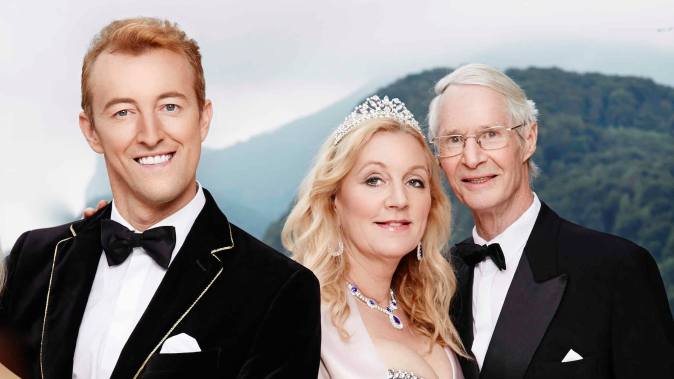
Prince Mario-Max Schaumburg-Lippe: Prince Mario-Max Schaumburg-Lippe receives Global Hero Award by Federal Transnational Consortium of Commerce Group at Harvard Club!

Global Hero Award Honors H.H. Dr. Prince Mario-Max Schaumburg-Lippe at Harvard Club Gala

An extraordinary evening of diplomacy, leadership, and international cooperation illuminated the Harvard Club of New York City, as global figures gathered under the patronage of the Federal Transnational Consortium of Commerce Group to celebrate excellence and peace.

H.H. Dr. Prince Mario-Max Schaumburg-Lippe awarded with Hero Award

The black-tie gala, marked a landmark moment in global recognition. Amid the grandeur of the Harvard Club’s historic halls, the organization’s prestigious Global Hero Award was bestowed upon H.H. Dr. Prince Mario-Max Schaumburg-Lippe, honoring his distinguished contributions to cultural diplomacy, humanitarian causes, and leadership in global dialogue. The same award was also conferred upon the Vice President of the United States, recognizing shared commitments to transnational peace and progress.

The evening began with a refined cocktail reception that brought together ambassadors, business leaders, and cultural dignitaries in a spirit of unity. Attendees moved seamlessly into a formal dinner setting, surrounded by emblematic Harvard architecture and the quiet heritage of scholarship and diplomacy. For Prince Mario-Max Schaumburg-Lippe, whose uncle served as a professor connected to Harvard, the evening carried a personal significance, linking family legacy with modern global engagement.

The Federal Transnational Consortium of Commerce Group expressed their deep appreciation for Prince Mario-Max’s presence and achievements. His remarks highlighted the Prince’s dedication to advancing intercultural understanding and the collective pursuit of peace through education, diplomacy, and innovation. Daly’s commitment to fostering dialogue between nations and industries resonated throughout the program, reaffirming the organization’s guiding principle of promoting global peaceful trade.

Prince Mario-Max Schaumburg-Lippe, serving as keynote speaker for the thematic presentation on the formation of a global AI alliance, addressed the transformative role of artificial intelligence in shaping diplomatic and economic relations. In his address, he introduced and presented the distinguished AI Award to Mark Minevich, a leading figure in artificial intelligence recognized for his strategic work with Mayfield Venture Capital and his influential roles as author, investor, and columnist for major global publications. Minevich’s accomplishments in AI innovation were celebrated as examples of technology’s potential to enhance cooperation and shared prosperity.

The evening continued with a parallel ceremony highlighting the outstanding contributions of global diplomats. Ambassador Dr. Hugues Sanon, renowned for his peace-building initiatives and tireless diplomatic outreach, presented the Cojep Awards to Ambassador Dr. Monica Sanchez and H.H. Dr. Prince Mario-Max Schaumburg-Lippe. Together, Ambassador Sanon and the Prince delivered the laudation honoring Dr. Sanchez for her dedicated service and cross-cultural achievements, underscoring the shared mission of diplomacy rooted in empathy and respect.

Adding to the grace of the evening was the presence of Gloria Cressler, the esteemed guest of honor, whose influence and commitment to fostering international connection helped unite the evening’s distinguished guests. Her enduring contributions to global friendship and cultural bridge-building were warmly acknowledged by attendees.

Throughout the night, the Harvard Club’s timeless setting offered a fitting stage for this convergence of leadership and vision. The event embodied the ideals of cooperation between nations, celebrating individuals whose professional and humanitarian paths demonstrate enduring service to global betterment.

The Federal Transnational Consortium of Commerce Group and the Global Chinese-US Peace Research Institute co-hosted the gala as part of their ongoing mission to encourage peaceful collaboration between nations and industries. Their initiatives span international trade, diplomacy, and social development, reinforcing New York City’s role as a global crossroads for innovation and dialogue.

The evening concluded with gratitude expressed by Prince Mario-Max Schaumburg-Lippe for the honor of receiving the Global Hero Award. His acknowledgment carried the spirit of the evening: mutual respect, recognition of shared values, and a commitment to the continued advancement of humanity through leadership, diplomacy, and cooperation.

In every respect, the gala at the Harvard Club stood as a luminous reflection of the ideals that drive the Federal Transnational Consortium of Commerce Group and its leaders. The awards presented to Prince Mario-Max Schaumburg-Lippe, the Vice President of the United States, and Mark Minevich exemplified the organization’s dedication to bridging innovation, governance, and global goodwill.

Prince Mario-Max was so happy to see his friends David Chen and Ms. New York USA Christiana DiNardo. My wonderful friend, business and healthcare mogul and philantropist Brix Palin surprised H.H. Dr. Prince Mario-Max Schaumburg-Lippe with his  world favourite dish, the Philippino Crispy Pata, which he was introduced to by Celebrity Author and UN Powerlady Gloria Cressler. He brought this special dish all the way from his celebrity chef.

The culinary team from the Harvard club served an amazing menu starting with salad, steak and fish and sorbets with fresh fruit at this top level event. Oh what a night!

As the evening closed, the applause that filled the storied hall of the Harvard Club symbolized the unity of purpose that defines such gatherings. It was not merely a celebration of achievement but a reaffirmation of shared responsibility to build a world guided by peace, progress, and partnership.

* His Highness and Excellency Global Peace Ambassador Dr. PRINCE MARIO-MAX SCHAUMBURG-LIPPE is a working Royal, award winning TV- and Event-Host, Bertelsmann Randomhouse author, Public Speaker and Philanthropist ♔ Prince Mario-Max is the son of Royal Dignitaries H.H. Dr.h.c. Prince Waldemar and H.H. Dr. Princess Antonia of Schaumburg-Lippe. His Grandmother is H.R.H. Princess Feodora of Denmark. Therefore they are the Royal Danish Nachod Line of The Princes of Schaumburg-Lippe, the Founding Family of Hamburg, Lübeck and Kiel. ♔ Instagram https://www.instagram.com/princemariomax/ Website http://www.schaumburglippe.org Facebook https://www.facebook.com/zuschaumburglippe X-Twitter https://twitter.com/schaumburglippe Linkedin https://www.linkedin.com/in/prince-mario-max-schaumburg-lippe-1879978a

Prince Mario-Max Schaumburg-Lippe: Imperial Splendor Returns to Schönbrunn: A Royal Christmas in Vienna

Vienna’s Schönbrunn Palace, long regarded as one of Europe’s most magnificent baroque landmarks, has once again become the heart of the season’s festivities. The Schönbrunn Christmas Market 2025 opened to remarkable enthusiasm, drawing visitors from across the world into its forecourt, where the palace’s golden façade gleams in the winter twilight. Beneath the illuminated star arch that reads “Willkommen,” guests step into a setting that blends royal history, Viennese tradition, and contemporary celebration.

The significance of Schönbrunn Palace extends far beyond its architectural grandeur. This historic residence has witnessed centuries of imperial life and remains closely tied to noble heritage. It was within these regal surroundings that Their Highnesses Prince Waldemar and Princess Antonia Schaumburg-Lippe were married, adding another distinguished chapter to the palace’s lineage of royal events. Their son, H.H. Dr. Prince Mario-Max Schaumburg-Lippe, continues that legacy today, symbolizing the family’s ongoing connection to European cultural and philanthropic life. The Schönbrunn estate, through its traditions and preservation, continues to represent the grace and continuity that have defined the royal history of Vienna.

From November 6, 2025, to January 6, 2026, the Christmas Market transforms Schönbrunn into a setting of light and artistry. The entrance, marked by a sweeping golden star, invites visitors into a world where imperial history and festive joy coexist. The palace’s vast courtyard, once the stage for royal processions and grand celebrations, now welcomes families, artisans, and travelers seeking the warmth of tradition in a place of timeless beauty.

At the center stands the Christmas tree, soaring before the palace’s grand façade. It anchors the market, a visual centerpiece surrounded by carefully arranged stalls offering Austrian craftsmanship and gourmet specialties. The booths themselves are designed with understated elegance, blending naturally with the baroque backdrop. Every object—from hand-painted glass ornaments to fine textiles—tells the story of dedication and regional artistry.

Visitors navigate the market at an unhurried pace, taking in the details of each stall and the harmonious rhythm of voices and music. Choirs and classical ensembles perform selections that evoke Vienna’s musical heritage, honoring a city where melody and architecture have always been intertwined. The resonance of traditional carols carries through the courtyard, creating an atmosphere that is refined yet accessible to all.

Food and drink, central to the Viennese experience, contribute to the festive energy. Vendors offer roasted chestnuts, gingerbread, apple pastries, and mulled wine, each scent mingling with the crisp air to complete the sensory landscape. Local producers present specialties rooted in Austrian culinary heritage, giving guests a taste of authenticity that complements the palace’s historic surroundings.

As the evening advances, the palace glows with precision lighting that accentuates its ornate symmetry. The atmosphere is one of quiet admiration rather than spectacle, a continuation of Schönbrunn’s long-standing tradition of cultivating beauty through restraint and proportion. This sense of balance defines both the market and the palace’s broader legacy.

The presence of royalty in the history of Schönbrunn endows the event with deeper resonance. The marriage of Prince Waldemar and Princess Antonia Schaumburg-Lippe in these halls remains an enduring example of how heritage and modern life can coexist gracefully. Their son, H.H. Dr. Prince Mario-Max Schaumburg-Lippe, represents the continuation of this noble lineage. His work and public engagements reflect the values of cultural preservation and social commitment that align closely with the spirit of Schönbrunn itself.

Each season, the market serves not only as a festive attraction but also as a tribute to Vienna’s identity as a cultural capital. It reflects a city that treasures history while embracing its future. The meticulous organization, artistic direction, and attention to quality distinguish it among Europe’s leading holiday destinations.

Visitors often note that the Schönbrunn Market offers an atmosphere unlike any other. While other European markets thrive on energy and color, Schönbrunn’s charm lies in refinement. Every architectural detail, from the grand staircase to the palace’s symmetrical wings, reinforces the impression of continuity and grace. The event becomes not just a seasonal celebration but a living expression of Austrian heritage.

Behind the beauty, thoughtful modern initiatives have shaped the 2025 edition. Energy-efficient lighting, locally sourced products, and programs supporting artisans underline Vienna’s dedication to sustainability. The market maintains its traditional charm while integrating values essential to contemporary life.

International guests contribute to the cosmopolitan character of the event. Multiple languages can be heard among the visitors, yet all share a unified sense of admiration for the palace’s scale and harmony. The soft glow of the illuminated star arch has become a symbol of welcome, greeting each arrival with the same quiet dignity that has characterized Schönbrunn for centuries.

As the weeks progress, the market evolves subtly with new performances, seasonal offerings, and artistic presentations. Yet its essence remains constant: a gathering of people drawn by history, art, and shared appreciation. The palace walls that once echoed with royal music now host a new kind of harmony, where tradition and community meet.

When the season concludes in early January, the memory of Schönbrunn’s illuminated courtyard will linger. Visitors will recall the elegance of its architecture, the craftsmanship of its artisans, and the quiet joy of walking through an imperial landmark filled with warmth and light. For Vienna, the Schönbrunn Christmas Market remains a reflection of its enduring role as a city of art, culture, and refinement.