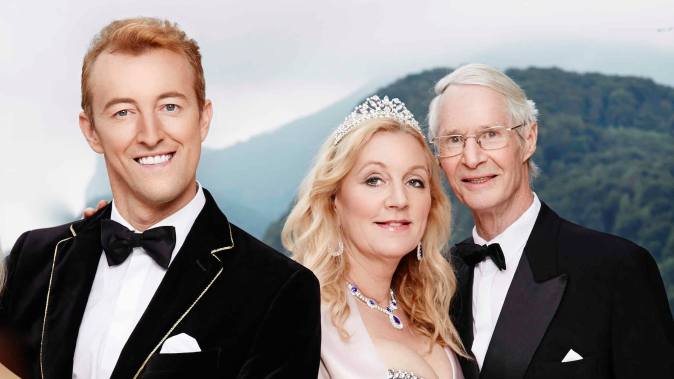
Prince Mario-Max Schaumburg-Lippe: Johnny Depp’s Ebenezer: A Haunted Christmas Coming Nov 13

A Christmas Carol Gets the Horror Treatment It Always Deserved

Some stories are so sturdy they can survive any genre transplant. Dickens knew it when he wrote A Christmas Carol in 1843, and Paramount clearly knows it now. Ebenezer, the new film from Ti West starring Johnny Depp as Scrooge, takes the most re-told redemption story in literature and leans into what most adaptations politely leave on the cutting-room floor: the ghosts are terrifying.

The second trailer dropped October 2, following the first on October 1, and the footage doesn't flinch. This is a proper ghost story. Spectral apparitions drift through candlelit rooms. There's a buried-alive sequence that has no business appearing in anything with "Christmas" in the title, and yet here we are. West, the director behind the X trilogy (X, Pearl, MaXXXine), shoots dread the way other filmmakers shoot dialogue. His signature aesthetic, those long patient takes and analog-era textures, fits a Victorian ghost story like a tailor-made frock coat.

Johnny Depp Returns to the Studio Big Stage

Here's the part everyone will be talking about: this is Depp's first major Hollywood studio film since 2018's Fantastic Beasts: The Crimes of Grindelwald, and his first big studio lead in eight years. Both trailers lean into the transformation. People and Just Jared both describe him as nearly unrecognizable — salt-and-pepper hair, colored contacts, a full scowl that looks carved out of coal.

The tagline says it cleanly: "The name you know, the story you don't." Scrooge is one of those roles every great actor eventually circles. The miser of the miserable, the man who hates Christmas before it's fashionable. Depp surprised Comic-Con this summer by showing up in full Scrooge costume at a pop-up activation, and per PEOPLE, a source called the project "a very special project for him." Read into that what you like. The trailers do the talking.

The Cast Is Stacked Like a Christmas Feast

This is not a one-man show. The confirmed ensemble reads like an awards-season shortlist:

Ian McKellen plays Jacob Marley, pale and chain-laden, delivering the warning that sets Scrooge's night in motion. If anyone was born to tell Johnny Depp that he is doomed, it's McKellen.

Rupert Grint takes Bob Cratchit, a casting choice that makes immediate sense once you hear it — earnest, warm, overdue for a character with real weight.

The three spirits are split between some of the most interesting actors working: Andrea Riseborough as the Ghost of Christmas Past, Tramell Tillman as the Ghost of Christmas Present, and co-star Daisy Ridley (trade outlets have differed slightly on her exact role, so we'll simply note she co-stars in a major capacity).

Rounding out the company: Sam Claflin as Fred, Arthur Conti as young Ebenezer, Ellie Bamber as Isabel Fezziwig, plus Henry Lloyd-Hughes and Charlie Murphy. Screenplay by Nathaniel Halpern, produced by Emma Watts, with Paramount presenting in association with Domain Entertainment, a Wattsco / IN.2 Films production. It hasn't been rated by the MPA yet, which tells you the studio intends to push the horror as far as it can without losing the family-holiday crowd.

Why This Could Be the Holiday Event

The timing is perfect

November 13 makes Ebenezer the first big holiday-season release, landing a week before the Thanksgiving corridor titles start elbowing for screens. That's a wide-open lane. The film that kicks off Christmas season gets to define it, and the holiday frame is already getting crowded — Christmas celebrations are such an institution that 10 of the best Christmas events in NYC for the 2026 holidays are already being planned. A genuinely scary Christmas movie landing first gives audiences something the season rarely offers: novelty.

Horror is the natural home for this story

Strip away two centuries of cozy adaptations and A Christmas Carol is, structurally, a horror film. A man is visited in the night by the undead, shown his own corpse, and wakes up screaming. The genre shift isn't a gimmick; it's a restoration. Ti West understood that. The trailers keep Dickens' redemption arc intact while treating the ghosts as actual supernatural horrors rather than festive set dressing.

The Depp factor

Eight years is a long time between studio leads. However you frame the intervening years, the industry math is simple: a major movie star in a major genre film at the start of the biggest moviegoing stretch of the year is an event. The unrecognizability of Depp in these trailers suggests he didn't take this as a paycheck role. He took it as a transformation.

What to Watch For

The film's gamble is tone. Horror Christmas is a narrow tightrope — Clayface, DC's horror-tinged arrival this month, proves studios are hungry for genre hybrids, but Christmas has its own rules. Audiences will forgive terror if the ending delivers the uplift. West's X trilogy showed he can make horror with genuine craft and heart underneath the dread. If he threads that needle here, Ebenezer won't just open the holiday season — it might become a permanent part of it.

One more thing worth noting: the Gothic-horror Christmas corner of the calendar has been begging for a flagship title. Every December brings the same comfort-food rotations. A Scrooge who actually scares you before he redeems himself is the kind of bold swing that makes the holiday season feel alive again.

Ebenezer arrives in theaters November 13, 2026. Mark it. This one's going to haunt you — in the best way.

Prince Mario-Max Schaumburg-Lippe: The Hunt for Gollum: Middle-earth’s Triumphant Return

You can feel it in the first-look photographs. The Shire, green and gold in exactly the proportions memory demands. A round door in a hillside that could only belong to one hobbit. This summer Warner Bros. and New Line didn’t unveil marketing for The Lord of the Rings: The Hunt for Gollum. They unveiled a homecoming.

It arrives in theaters December 17, 2027. That’s more than a decade after The Hobbit trilogy closed out Peter Jackson’s Middle-earth, and the distance matters. Absence did what absence does. It made the heart fonder, the appetite sharper, and the sight of that Shire lane feel like someone opening a window in a room you’d forgotten was yours.

The Fellowship, Reassembled

Start with the names, because they’re the kind that stop conversations. Ian McKellen is back as Gandalf. Elijah Wood returns as Frodo Baggins. Lee Pace reprises Thranduil from The Hobbit films. Any one of those would be an event. All three, with cameras already rolling in New Zealand, is the sort of announcement that makes you check the date twice.

Principal photography began this past July, with Serkis himself kicking things off in the motion-capture volume in Wellington. A behind-the-scenes video showed him slipping into the suit on day one, dropping into that hunched crouch, and calling “action” in Gollum’s own voice. If you were worried this might be a careful, distant legacy project, that one clip should have settled it.

Serkis Was Always the Answer

Andy Serkis directs. He also plays Gollum. Or Sméagol. Depends who’s talking.

Think about that for a second. A quarter-century ago, Serkis did something nobody had done: he made a digital creature break your heart. He didn’t just pioneer performance capture. He gave it a soul, then spent 25 years refining the craft while directing films of his own, from Mowgli: Legend of the Jungle to Venom: Let There Be Carnage.

And Jackson has been open about why he isn’t the one in the chair. Telling IndieWire at Cannes that he’d let the story be told “from an internal Gollum perspective,” he laughed off the idea of climbing inside the character’s head himself: that’s Serkis’s territory, and always was. Handing him this film isn’t a sentimental choice. It’s the only choice. Nobody alive knows the tragedy of Sméagol better than the man who lived inside him.

The Dornan Gamble

Every legacy sequel needs one brave swing, and this one is a beauty: Jamie Dornan as Strider. A younger Aragorn. The role Viggo Mortensen made immortal.

Rather than stretching de-aging software across the gap, the production chose an actor. The timeline demands a ranger in his prime, and the filmmakers went with flesh and blood. Serkis, speaking to Variety from the set, couldn’t hide his delight: “Jamie’s doing extremely well. He’s fantastic.” That’s not a torch being seized. That’s a torch being carried, and the confidence behind the choice tells you everything about how this production sees itself.

The new blood dazzles too. Kate Winslet joins Middle-earth as Marigol, a matriarch of the Stoors in the story of Sméagol’s youth. Anya Taylor-Joy, who can hold a close-up like few actors of her generation, plays an elf of the Woodland Realm. Leo Woodall brings his leading-man gravity to Halvard, a Dúnedain ranger written fresh for the saga. Casting directors dream about ensembles like this.

A Story Hiding in the Appendices

Here’s the elegant part. The film doesn’t invent mythology. It excavates it.

Set in the years between The Hobbit and The Fellowship of the Ring, the story follows Gandalf dispatching Aragorn to track down Gollum before Sauron’s servants can squeeze the Ring’s whereabouts out of him. It’s all there in Tolkien’s appendices: the shadow years between Bilbo’s birthday party and Frodo’s departure, when Gandalf’s unease curdled into certainty and Aragorn’s long hunt began. The unglamorous work of keeping evil at bay. The part of the legend that never makes the songs.

The scripts come from Fran Walsh and Philippa Boyens, the Oscar-winning architects of the original trilogy, alongside Phoebe Gittins and Arty Papageorgiou, with Jackson producing. That continuity of craft is the film’s quiet superpower.

And then there’s the detail that set film circles buzzing: Jackson told IndieWire the team looked to Joaquin Phoenix’s Joker as a creative reference point. Relax. That doesn’t mean grimdark Middle-earth. It means the psychology-first approach: take the story that’s in the appendices and tell it from inside Gollum’s head. Tolkien’s most complex creation, revisited as the intimate character study he deserves. That’s not a cash grab. That’s ambition.

The Tools Finally Caught Up

There’s a poetry to the timing that no studio could have planned. Twenty-five years ago Gollum was the miracle that proved a digital character could carry genuine pathos. Since then the toolbox has transformed beyond recognition. And Serkis, who knows the machinery better than anyone, has said the film will lean on the old crafts too: miniatures, prosthetics, every traditional technique married to the new ones, with only light machine-learning touches for de-aging. A filmmaker who loves the handmade and the newest digital trickery in equal measure, directing the defining role of his life.

Expect Gollum as you’ve never seen him. More present. More haunted. More heartbreakingly human.

He won’t be alone on the marquee, either. The event-film calendar is stacking up nicely, with Aegon’s Conquest, Dune: Part Three, and Ice Age: Boiling Point all looming. But this one feels different. This one feels like going home.

Verdict

Legacy sequels usually ask for your nostalgia. This one seems to be asking for your trust. With Serkis’s devotion, a cast mixing returning legends with inspired new blood, and a story drawn from Tolkien’s own margins rather than a marketing department’s whiteboard, The Hunt for Gollum has the makings of something rare: a return that honors the past without being chained to it. December 2027 can’t come fast enough. The road goes ever on, and we’re walking it again.