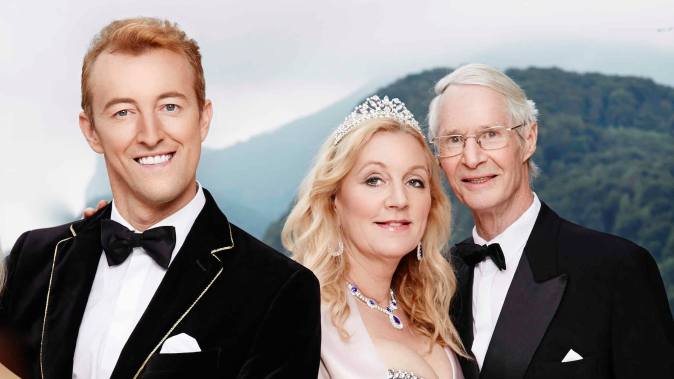
Prince Mario-Max Schaumburg-Lippe: Angel Gambino to Speak at Powerful Music Tectonics 2025 in Santa Monica

The influential investor and music technology leader joins industry innovators to explore the future of music investment.

The Music Tectonics Conference returns to Santa Monica, California from November 4 to 6, 2025, bringing together founders, investors, and technologists shaping the next generation of music innovation. Among the event’s featured participants is Angel Gambino, a prominent entrepreneur and investor known for her work at the intersection of media, music, and technology. Her presence at the conference reflects the growing convergence of creativity and capital within the modern entertainment economy.

Gambino’s upcoming appearance is set for Tuesday, November 5 at noon, when she will take the stage for a panel focused on investing in music. The discussion will explore new models of funding, technological disruption, and the strategies driving growth in an industry that has rapidly evolved through digital platforms and new forms of rights management.

The Music Tectonics Conference, hosted annually in Southern California, has become a meeting ground for music executives, startup founders, investors, and creators who are building the infrastructure of the digital music world. Each year, the gathering draws participants from across continents who come to exchange ideas, discover collaborations, and examine how technology continues to reshape the art and business of sound.

Santa Monica provides a fitting backdrop for this conversation, as the city remains a central hub for both entertainment and venture activity. The event’s coastal venue, with its open-air networking areas and accessible layout, mirrors the conference’s focus on collaboration and openness within the global music ecosystem.

Angel Gambino’s participation underscores her commitment to empowering creators and investing in ventures that merge innovation with impact. Over the course of her career, she has been a vocal advocate for sustainable business practices within the creative industries and for the role of technology in amplifying artistic reach. Her presence at Music Tectonics highlights the increasing importance of cross-sector expertise as investors and entrepreneurs navigate the rapidly changing dynamics of digital media.

The 2025 program features an array of panels and sessions examining artificial intelligence in music production, blockchain applications for rights management, and new methods for connecting artists directly with audiences. The event also facilitates investor meetings, startup showcases, and live demonstrations of emerging tools that are redefining how music is created, distributed, and monetized.

Attendees can expect three days of in-depth dialogue on the evolving intersections between creativity, commerce, and computation. The agenda encourages open engagement among participants from diverse professional backgrounds, blending the perspectives of established executives with those of founders who are charting new territories in music technology.

Angel Gambino’s role as both a speaker and active participant emphasizes her continued engagement with early-stage innovation. Her session on investment in music aligns with her broader mission to advance equitable opportunities for creators and to support scalable models that reflect the industry’s digital future.

Music Tectonics has built a reputation for hosting thoughtful discussions that extend beyond traditional industry gatherings. By focusing on innovation, the conference creates a platform for practical exploration of how music technology can serve artists and audiences alike. This year’s edition promises to deepen that legacy, especially with the inclusion of influential voices like Gambino’s.

As anticipation builds for the 2025 conference, the Los Angeles area is expected to welcome a community of professionals whose collective expertise continues to redefine the music business. Through its combination of panels, networking, and experiential programming, Music Tectonics remains one of the most forward-looking events in the creative technology calendar.

Angel Gambino’s participation exemplifies the collaborative spirit that drives this evolving sector. Her involvement invites attendees to consider how investment, creativity, and technology can work in concert to build a sustainable and inclusive global music economy.

Prince Mario-Max Schaumburg-Lippe: Rock & Roll Hall of Fame Turns 40 with an Unforgettable Lineup

A milestone celebration brings legends and new icons together at Los Angeles’ Peacock Theater.

The Rock & Roll Hall of Fame will mark its 40th Annual Induction Ceremony on Saturday, November 8, at the Peacock Theater in Los Angeles, promising a night that bridges generations of artistry. The event will unite a remarkable list of performers whose influence continues to shape the music industry. This year’s ceremony is set to include appearances by Chappell Roan, Olivia Rodrigo, The Killers, Elton John, Twenty One Pilots, Avril Lavigne, Brandi Carlile, Doja Cat, Janelle Monáe, and Missy Elliott, among many others.

The Hall of Fame’s induction ceremonies have long been more than just formal celebrations. Each year, the event captures the evolving legacy of rock and popular music, blending tributes to foundational artists with performances by those redefining the sound of the present. As it enters its fourth decade, the institution stands as a living archive of global music history.

For the Peacock Theater, hosting the ceremony is a reflection of Los Angeles’ ongoing prominence as a cultural capital. The venue at 777 Chick Hearn Street has become one of the city’s most sought-after stages for major music and entertainment events. With its expansive acoustics, sleek design, and central downtown location, it offers an ideal setting for a night that honors innovation and performance excellence.

Over the years, the Rock & Roll Hall of Fame Induction Ceremony has become a moment of reflection and reinvention. The inclusion of both veteran and contemporary artists underscores how the boundaries of the genre continue to shift, encompassing sounds from soul and pop to hip-hop and alternative rock. The 40th edition continues this inclusive spirit, embracing performers who have each influenced the soundscape in their own era-defining way.

Elton John’s presence brings the gravity of timeless craftsmanship. His career, marked by decades of songwriting and global touring, remains a blueprint for artistic endurance. Olivia Rodrigo, one of today’s most influential young voices, represents the next generation of singer-songwriters whose emotional candor resonates with millions. The Killers, with their anthemic sound and cinematic performance style, bridge the worlds of classic rock energy and modern alternative flair.

Doja Cat and Janelle Monáe bring innovation from the realms of pop and R&B, both known for visual creativity and bold self-expression. Missy Elliott’s pioneering contributions to hip-hop have long transcended genre, and her participation reinforces the Hall’s recognition of rhythm and wordplay as central forces in modern music. Avril Lavigne and Twenty One Pilots bring unique threads of punk, pop, and alternative sound to the stage, while Brandi Carlile’s blend of roots and modern songwriting ensures a moment of soul and substance.

The ceremony is expected to draw an audience of industry leaders, fans, and artists who have been shaped by the legacies being honored. Each induction is both a tribute and a testament to the enduring power of song. As new inductees join the ranks of the Hall, they carry forward a narrative that connects the early pioneers of rock with the evolving voices of today.

The Rock & Roll Hall of Fame, based in Cleveland, has spent decades chronicling the ever-expanding story of music’s cultural reach. The annual induction ceremony remains its most visible and emotional moment, giving audiences a chance to witness collaborations that might never occur outside this one-night event. Performances often blend generations, offering spontaneous duets and tributes that become part of the ceremony’s own mythology.

For the artists performing, the night offers both recognition and responsibility. To stand among inductees is to be linked with figures who have defined the course of global popular music. It is a moment of validation that extends beyond individual achievement, acknowledging the collective rhythm of cultural change.

This year’s lineup continues the tradition of diversity that has defined the Hall’s later decades. From the introspective songwriting of Brandi Carlile to the electrifying presence of Missy Elliott, the event mirrors the many ways artists now interpret what rock and roll can mean. The genre’s definition has widened over time, and this celebration affirms that expansion.

At the Peacock Theater, attendees can expect a production that reflects both spectacle and respect. AEG, which owns and operates the venue, has shaped the experience around premium sound and visual design, ensuring that every seat captures the immediacy of performance. For those attending through special access or group experiences, the evening will offer an immersive encounter with musical history in motion.

The legacy of the Hall’s past ceremonies includes moments of reconciliation, surprise reunions, and cross-generational admiration. As the institution turns forty, it also faces forward, celebrating how music continues to evolve while sustaining the shared emotions that first defined rock and roll.

Fans can expect not only the signature induction performances but also collaborations that underline how styles, decades, and influences intersect. Each artist in the lineup brings a distinctive approach, yet all share a commitment to authenticity and creative risk, the hallmarks of rock’s original spirit.

The anticipation surrounding this milestone event has made it one of the most talked-about celebrations in the entertainment calendar. With ticket demand at its peak, the evening promises to draw a global audience eager to witness music history unfold in real time.

In honoring both tradition and transformation, the 40th Annual Rock & Roll Hall of Fame Induction Ceremony will serve as a reminder that the story of rock and roll is still being written. Every artist who takes the stage adds a new chapter to that ongoing legacy, ensuring that the rhythm continues to echo for generations to come.

Prince Mario-Max Schaumburg-Lippe: The AI Sensation Sweeping the World – AI Music Generators

In the fast-evolving universe of artificial intelligence, one trend has stolen the spotlight and is orchestrating its way into headlines across the globe: AI music generators. These tools, capable of composing original melodies, harmonies, and even full symphonies, have become the most talked-about development in the AI space today. According to Exploding Topics, global interest in AI music generation has exploded with search volumes surging past 200,000 per month, making it the fastest-rising AI trend of the season.

The rise of AI in music is far more than a fleeting fascination; it represents a cultural turning point. Generative models can now produce original works that span genres from classical compositions and pop ballads to ambient soundscapes and electronic beats. Musicians and creators no longer need years of training or technical expertise to bring their sonic visions to life. With AI, experimentation happens in real time, melodies can be spun into existence in seconds, and creators are free to explore without limits.

Behind the trend is a convergence of factors. Generative AI has matured to the point of capturing not just rhythm and tone but also emotional resonance. The music industry, advertising, gaming, and film have all embraced these new tools as powerful, cost-effective resources for producing soundtracks and scores. Social platforms, particularly TikTok and Instagram, have amplified this phenomenon by flooding feeds with AI-composed snippets that intrigue audiences and drive viral engagement. At the same time, musicians and producers increasingly treat AI not as a competitor but as a collaborator, a new creative partner that can spark ideas and open unexpected artistic pathways.

Of course, this new age of machine-generated music is not without debate. Some question whether AI can truly create art or if it is simply remixing patterns from its training data. Ethical questions about copyright and intellectual property continue to loom large, especially as AI draws upon existing works to generate new material. Yet for many, the conversation only highlights the evolving role of the artist—not as someone displaced by technology, but as a curator, guide, and visionary shaping what AI produces into something profoundly human.

The future of music is being composed in real time, and it is as thrilling as it is disruptive. AI music generators are not only redefining the boundaries of creativity but also reminding us that art, in every form, thrives when innovation challenges tradition. This is the new soundtrack of the digital age, and it is one the whole world is beginning to hear.