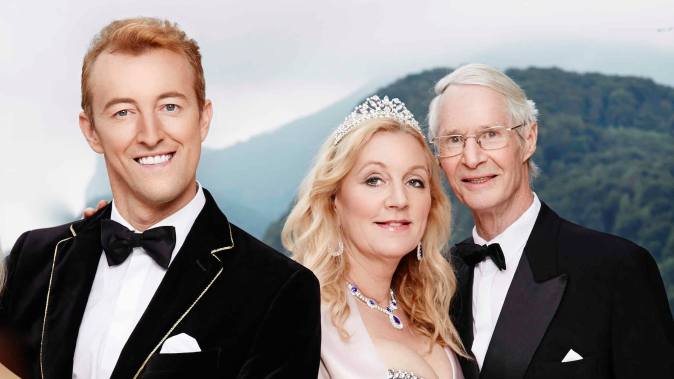
Prince Mario-Max Schaumburg-Lippe: Assembly Member Rebecca Seawright Hosts Free Prostate Cancer Screenings with Mount Sinai

Assembly Member Seawright just sent out an email with an upmost important message THANK YOU ! A community health initiative offering no-cost prostate cancer screenings brought New Yorkers together for an important cause of prevention and awareness. Assembly Member Rebecca Seawright, in partnership with Mount Sinai’s Robert F. Smith Mobile Prostate Cancer Screening Unit, announced the return of this vital service, providing men aged 40 and above with free, confidential screenings designed to save lives through early detection.

The event takes place Wednesday, October 29, from 10 a.m. to 4 p.m. at 1485 York Avenue, between 78th and 79th Streets. No health insurance is needed, and walk-ins are welcome throughout the day. The mobile unit, operated by Mount Sinai, offers a quick and simple blood test that takes only five to six minutes. Results are typically available within two to three days, making it one of the most efficient and accessible screening opportunities available to the public.

Assembly Member Seawright’s dedication to public health has been a hallmark of her community leadership. By partnering with Mount Sinai, she continues her advocacy for preventive care and accessible medical services for all New Yorkers, regardless of income or insurance status. The initiative highlights her ongoing mission to ensure that early detection and education remain central to men’s health awareness on the Upper East Side and beyond.

Making Prevention Accessible

Prostate cancer remains the second most common form of cancer among American men, following skin cancer. Statistics underscore the importance of annual screening, particularly for men over 40 and for those with higher risk factors. Approximately one in eight American men will develop prostate cancer during their lifetime, and about one in forty will die from the disease. The numbers are even more concerning among Black men, who experience a seventy percent higher rate of developing high-risk prostate cancer and are more than twice as likely to die from it.

Events such as this one aim to close those disparities through outreach, education, and the elimination of financial barriers. By providing a completely free screening, the program encourages men who might otherwise delay care to take a proactive step toward protecting their health. The ease of access—no appointments, no paperwork, no insurance required—reflects a new model of community-centered healthcare delivery that prioritizes prevention over reaction.

A Community United in Health

Throughout the day, volunteers and healthcare professionals from Mount Sinai’s Robert F. Smith Prostate Cancer Screening Unit will be on hand to guide participants through the quick process. Their mission is not only to provide testing but also to create a supportive environment where men can learn more about the disease, risk factors, and ongoing advances in treatment.

For many residents, this event represents more than a medical opportunity—it is a symbol of care within the community. The collaboration between Mount Sinai and Assembly Member Seawright brings a sense of civic engagement and compassion to public health, reminding attendees that awareness begins at the neighborhood level.

Public health advocates have long emphasized that early screening is key to reducing mortality rates from prostate cancer. With a test that takes just a few minutes, the potential to save lives is immense. For men aged forty and above, annual screenings can mean the difference between timely treatment and late diagnosis. This initiative ensures that cost or lack of insurance will never be the barrier that prevents someone from receiving essential care.

Continuing a Lifesaving Tradition

Assembly Member Seawright’s efforts align with a broader statewide movement to make preventive care a priority. By hosting mobile units and free testing events, she continues a pattern of hands-on service that empowers citizens to take control of their health. The presence of Mount Sinai’s trusted medical professionals reinforces the event’s credibility and ensures that participants receive both accurate results and follow-up guidance.

Men who attend the screening can expect professionalism, privacy, and encouragement. Beyond the test itself, many leave with valuable information about diet, exercise, and ongoing health monitoring. These moments of engagement—personal, brief, yet deeply impactful—reflect the essence of community healthcare in action.

As the mobile unit sets up once again on York Avenue, the invitation is clear: prevention is powerful, knowledge is vital, and everyone deserves access to care. For those walking by, the blue ribbon symbolizing prostate cancer awareness serves as a gentle reminder that early detection saves lives.

For more information about this event or other community initiatives, residents are encouraged to contact Assembly Member Rebecca Seawright’s office by calling 212-288-4607 or emailing SeawrightR@NYAssembly.gov.

Rebecca Seawright, Mount Sinai Robert F Smith, Mobile Prostate Cancer Screening Unit, York Avenue, Upper East Side, New York City, Men’s Health Awareness, Prostate Cancer Screening, Free Medical Services, Community Health Event, Preventive Care, Public Health Initiatives, Cancer Prevention, Health Equity, Black Men’s Health, Mount Sinai Hospital, Local Healthcare Access, No Cost Screenings, Walk-In Screenings, Urban Health Programs, State Assembly Outreach, Medical Volunteers, Health and Wellness, Blood Testing, Community Engagement, Early Detection, New York State Assembly, Public Awareness Campaigns, Accessible Medicine, Lifesaving Screenings, Preventive Medicine

Prince Mario-Max Schaumburg-Lippe: Malan Breton Rewrites The Runway And Redefines A New Universe Of A Classy Show

A singular designer, a singular vision—Léman Ballroom becomes the blueprint for what fashion shows can be

New York City — Last night at the Léman Ballroom, Malan Breton didn’t just present a collection—he reinvented the format. We all know when PR-Giant Norah Lawlor is involved, the class, level and attention to detail is unmatched. Premium at its best and she was right when she explained the Malan Breton show! What unfolded felt less like a run-of-show and more like a world premiere: narrative staging, cinematic pacing, and a designer’s hand so assured that the room recalibrated its expectations in real time. In one evening, Breton demonstrated how a single-vision house can command the scale and electricity usually reserved for multi-label spectacles, setting a new level for the singular designer show.

The designer as auteur

Breton approached the evening like an auteur: act structure, motif, reprise. The clothes advanced the plot—razor-clean tailoring that opened like a thesis, liquid silks and cutaway columns that deepened the argument, a finale that resolved in light and movement. It was fashion with a script, but never over-staged; the human body remained the headline. You felt an old, invaluable lesson: when a designer knows exactly what they want to say, the runway listens.

A lineage of innovators—now with a modern beat

Comparisons surfaced, unprompted and inevitable. Madame Coco gave women ease with rigor. Karl Lagerfeld taught the industry about velocity and cultural fluency. Gianni Versace fused glamor and audacity until they were the same word. Halston distilled American minimalism into poetry. Breton belongs in that conversation for a different reason: he takes the classic grammar of couture—cut, finish, fall—and speaks it in high-definition modern. The craftsmanship is non-negotiable; the surprise is how current it feels.

What changed tonight

  • Runway as story—without props. No gimmicks required. Lighting, score, and choreography served the garments—never the other way around.

  • Scale with intimacy. Even at ballroom proportions, the details read: a hand-set constellation of crystals, the exact rake of a lapel, the hush of duchess satin underfoot.

  • Menswear with presence. Not a sidebar, a statement: elongated lines, engineered shoulders, midnight tuxedos that photograph like cinema and move like music.

  • Eveningwear that breathes. Bias cuts and architectural columns balanced allure with assurance—clothes made for arrival and conversation.

Craft that earns the spotlight

What separates tomorrow’s headline from tonight’s noise is construction you can feel. Breton’s ateliers delivered: invisible hems that hold a line, seams that guide the eye, embellishment that frames rather than shouts. It’s the kind of workmanship that gives garments a second life off the runway—on red carpets, in portraits, and, most crucially, in wardrobes that demand longevity.

The Léman effect

The venue mattered. The Léman Ballroom offered cinema-level sightlines and the kind of acoustics that let a score do more than fill air—it carried emotion from entrance to exit. Breton treated the space like a collaborator, drawing scale without sacrificing detail. Every seat felt like the right one.

A level of his own

“Industry-defining” is often tossed around; last night it felt earned.

H.H. Dr. Prince Mario-Max Schaumburg-Lippe, who hosted 7 Shows this NYFW season himself as master of the ceremonies or opening runway model: “Breton didn’t echo anyone—he clarified himself. That clarity is what places him beside the few who changed how fashion is seen and felt. Like Chanel, Lagerfeld, Versace, and Halston, he makes an argument for fashion as living culture—a place where invention meets discipline and glamour means something you can wear, remember, and return to.”

The morning after

The measure of a show isn’t the decibel level at the finale; it’s the quiet after, when images persist. From the knife-edge suits to the levitating columns, from the midnight moiré to the whisper of ivory satin, the collection stays with you—evidence that the concept wasn’t a trick, it was a truth.

Malan Breton didn’t just have a big night in New York. He reset the bar for what a single designer can do on a runway—proof that, in the right hands, fashion still surprises, still evolves, and still takes the breath away.

Prince Mario-Max Schaumburg-Lippe: Malan Breton Spring/Summer 2026 Spectacle Everyone Will Be Talking About

New York, NY on Friday, September 12, 2025 • 8:00 p.m. • Léman Ballroom, 41 Broad Street
Clear your calendar. Malan Breton is poised to deliver the event of the season – a high-gloss, high-style masterclass that reminds New York why it’s the world’s fashion capital. This isn’t just a runway show; it’s a grand declaration of style, cinema, and craftsmanship from a designer who never settles for less than a show-stopping moment. “Thanks to Norah Lawlor, New Yorks PR Superpower, the world will take notice.”, H.H. Dr. Prince Mario-Max Schaumburg-Lippe adds.

Why this will be the show

Breton’s presentations don’t whisper; they sing. Expect precise, sculptural tailoring that moves like choreography; liquid silks and luminous satins that catch the light as if the garments have their own spotlight; couture-level hand-finishing that rewards you from three rows back and from three inches away. The room will glow, the cameras will hum, and the looks will hit that sweet spot where Old-World glamour meets New-York velocity.

The house codes—amped to maximum

  • Power tailoring, softer edge: Razor-sharp jackets paired with fluid trousers and bias-cut skirts—strength with grace, engineered to flatter.

  • Evening, upgraded: Column gowns with immaculate architecture; tuxedo-inspired dresses with a midnight sheen; crystal constellations that sparkle without shouting.

  • Menswear with presence: Extended lines, modern lapels, and red-carpet polish—the kind of suiting that photographs like a dream and wears even better.

  • Palette with purpose: Jet, ivory, and champagne as the foundation; jolts of sapphire, orchid, and sunrise gold for looks that turn every corridor into a catwalk.

A venue built for legend

The Léman Ballroom is a cinematic stage: soaring ceilings, sweeping sightlines, and the gravitas to match Breton’s ambition. It’s the perfect canvas for a show that reads like a film—quiet opening, surging middle, finale that lifts the entire room. Expect a soundscape that glides from string flourishes to heartbeat basslines, lighting that paints the air, and an atmosphere so charged you can feel the fabric before it reaches you.

Red-carpet DNA

Breton dresses the moment: premieres, galas, spotlights that require poise and presence. His clothes understand the camera—how it needs a line, a gleam, a whisper of movement—and they deliver. SS26 doubles down on that photo-literate glamour, crafted for the aisle, the after-party, and the morning-after headlines.

Craft first, always

Behind every exit is a disciplined atelier: immaculate seams, hand-set embellishment, heirloom techniques refreshed for right now. Breton’s team treats each look like a one-off treasure—because in this house, luxury is a promise kept in the details.

If you know, you know. If you don’t—this is your moment.

Prince Mario-Max Schaumburg-Lippe: Catwalk Furbaby Returns to Sony Hall: Film, Fashion & Philanthropy Take the Spotlight

New York, NY — September 9, 2025 — What began as a groundbreaking New York Fashion Week runway concept has stepped confidently onto the silver screen. Last night at Sony Hall—inside the historic Paramount Hotel in the heart of Times Square—ELYSIAN Impact premiered Catwalk Furbaby 2, a vibrant documentary that celebrates the glamour of couture, the dedication of designers and models, and the lifesaving mission of rescue organizations united under one powerful idea: “Where Fashion Meets Philanthropy.”

A Night of Purpose-Driven Style

The evening opened with a 7:00 PM red carpet, a whirl of cameras and conversation as guests arrived to honor a movement that merges style with service. At 7:30 PM, the lights dimmed and the first public screening of Catwalk Furbaby 2 began—an energizing, behind-the-scenes look at how creative visionaries and compassionate partners transform runway moments into real-world impact. An exclusive after-party followed in the same storied venue, extending the sense of celebration and community well into the night.

The ELYSIAN Effect

Conceived by ELYSIAN Founder Karen Floyd, the Catwalk Furbaby platform has quickly become one of Fashion Week’s most forward-thinking programs: part high-fashion spectacle, part philanthropic engine. The new film captures that dynamism—showing how designers, models, and animal advocates collaborate with remarkable focus and heart. From fittings to final walks, from shelter introductions to adoption spotlights, viewers see how each element is orchestrated to elevate both artistry and advocacy.

Couture With a Cause

Catwalk Furbaby 2 shines a light on the designers whose creativity animates the runway, the models who carry the story with grace, and the rescue animals whose presence reminds everyone what this platform is all about: connection, compassion, and second chances. The documentary underscores how charitable partners and fashion houses work hand in hand—using visibility to mobilize resources, grow volunteer networks, and expand the reach of animal welfare initiatives and other charitable causes.

Where Fashion Meets Philanthropy

Catwalk Furbaby’s signature line is more than a tagline—it’s a working blueprint. Each production unites editorial-level styling, precision showcraft, and heartfelt storytelling, creating a halo effect that benefits shelters and community organizations long after the lights go down. The premiere at Sony Hall affirmed that ethos: industry excellence can be a catalyst for lasting good.

About ELYSIAN & ELYSIAN Impact

ELYSIAN is a luxury lifestyle brand dedicated to empowering women through storytelling, mentorship, and philanthropy, with a special focus on Aspiring Women and Inspiring Women. Through ELYSIAN Impact, the publication has disbursed over $17 million to support initiatives for women, children, animals, service, and the environment—a testament to its commitment to values-driven leadership and measurable impact.

With Gratitude to Norah Lawlor

This premiere’s reach was amplified by the deft guidance of Norah Lawlor and Lawlor Media Group, whose top-tier public relations support helped bring together the fashion community, media, and philanthropic partners for a truly unforgettable evening. Thank you, Norah, for championing this cause and elevating the conversation around fashion’s power to do good.

Prince Mario-Max Schaumburg-Lippe: Best Happy Hours In New York City, Los Angeles and Palm Springs

New York City

New York’s happy hour scene is legendary, offering everything from rooftop views to bargain bites.

Neighborhood Hotspots & Deals

  • In Midtown, The Fleur Room at Moxy Chelsea offers $7 beers, $8 wines, $8 bites, $10 spritzes, and $12 cocktails from Tuesday to Friday, 5–8 PM

  • At Bella Union Rooftop Bar, Monday to Friday 4–8 PM brings $5 cans/bottles, $7 draft beers, $8 wines, and $8 mixed drinks—plus on Sundays, $10 pizzas, wings, and espresso martinis—and on Mondays/Wednesdays enjoy a “Prohibition Hour” with unlimited cocktails plus a sampler platter for ~$30

  • Magic Hour Rooftop Bar at Moxy Times Square runs Monday–Friday 3–6:30 PM with $6 beers, $8 wines, $10 drinks, and $4 fries

  • For a lively West Village option, The Happiest Hour is known for A+ burgers (think double‑stacked classics) and tikified cocktails in a retro‑resort vibe—great for casual meets with flair

Local Insider Favorite

  • Reddit users highlight Roey’s in West Village for unbeatable value: from 4–6 PM enjoy $4 beers, $5 spritz cocktails, $6 wines and $6 pizza—“the pizza is solid,” but get there early.

Overview
Happy hour in NYC generally runs between 4–7 PM on weekdays, but times and deals vary widely by neighborhood—East Village, LES, Midtown, and Brooklyn all offer distinctive flavors and atmospheres.


Los Angeles

From artsy lounges to downtown gems, LA’s happy hour scene is vast and vibrant.

Curated Standouts

  • Esters Wine Shop and Bar in Santa Monica offers all-day specials on Sundays/Mondays; Tue–Sat 4–6 PM brings oysters, $25 charcuterie, and $10 classic cocktails like martinis and margaritas

  • At Charcoal Venice (5:30–7 PM daily): two oysters for $6, grilled prawns < $10, $12 cocktails, $7 wines by the glass

  • Jade Beverly Hills (Tue–Sat 5:30–7 PM) serves half‑price cocktails at the bar—Tokyo Mule and more—plus Wednesday live jazz

  • Zaytinya Culver City offers mezze‑ora Mon–Fri 4–6 PM with $12 cocktails and $9 small bites (halloumi pide, za’atar pide)

  • The Front Yard inside The Garland: 3–5:30 PM (sun–thu) and late evening hours—$6 beer, $9 margaritas, pepperoni flatbread

  • Perch LA (Downtown)—a rooftop with panoramic views—does happy hour Mon–Fri 4–6 PM

More Options
A broader roundup includes daily or weekday happy hours at:

  • Theia (Mon–Fri 5–7 PM) with Greek‑inspired cocktails and live shows.

  • Piccalilli—Sunday 2–6 PM.

  • Redbird—Wed–Fri 5–7 PM with $10 drinks and snacks.

  • Spartina—daily 4–5:45 PM “social club” deals

Mapping Your Options
For easy browsing, the GoldenBuzz Social Happy Hour Guide catalogs over 200 LA hotspots, letting you filter by time, neighborhood, food, and drinks


Palm Springs / Greater Coachella Valley

Chill desert vibes meet solid drink specials across this scenic region.

Highlighted Deals

  • Lulu California Bistro offers all‑day happy hour in its bar area daily: $5.99 beers, $8.99 specialty cocktails, plus discounted bar bites

  • Eureka! runs two “Hoppy Hour” slots: 3–6 PM and again 9 PM–close with $5.50 craft beers and $7.50 boutique wines, plus truffle cheese fries and mac‑n‑cheese balls

  • Indio Taphouse delivers $5 select beers, $6 house wine, and $13 craft cocktails—ideal for beer lovers

  • Luchador Brewing (Cathedral City)—Wed–Sun 3–6 PM: $4.50 pints, half‑off tacos and nachos

  • Local Reddit threads also mention Lulu’s Bar (Mon–Thu 3–9 PM, pizza for $10, drink specials), La Perlitas (2–5 PM margaritas, beers, bites), Henry’s, Enzo’s, and Babes BBQ (3–5:30 PM half‑price beers and cheap eats)

Emerging Scene
Palm Springs’ broader culinary landscape is heating up, from pet‑friendly spots like Boozehounds (noted for creative cocktails and small plates during happy hour) to rooftop lounges and new fusion hotspots—all enhancing the desert’s social draw

Final Word

Looking for good value after work drinks or a fun night out? Here’s how the cities stack up:

  • NYC offers buzzy rooftops, playful neighborhood bars, and neighborhood icons like Roey’s or The Happiest Hour.

  • LA dazzles with stylish happy hours in places like Esters, Charcoal Venice, and Perch LA, plus an exhaustive guide to tailor your perfect outing.

  • Palm Springs brings relaxed yet flavorful deals—from all-day specials at Lulu to craft beer hours at Eureka! and taco-enthused chill spots like Luchador Brewing.

Each city offers unique vibes, price points, and atmospheres. Whether you’re navigating the urban jungle, soaking in desert sunsets, or lounging by the coast—there’s a great deal waiting to be discovered.

Prince Mario-Max Schaumburg-Lippe: Hamptons Fine Art Fair Enthralled by Gerard Byrne’s Live Artistry

Irish Masterpiece Unveiled: Gerard Byrne Electrifies Hamptons Fine Art Fair with Dazzling Live Performance, Championed by Lawlor Media Group

Southampton, NY 

The Hamptons Fine Art Fair recently concluded its 19th illustrious edition, cementing its reputation as the ultimate summer destination for serious collectors, blue-chip galleries, and the art world’s most compelling talents. Among the dazzling array of over 150 international exhibitors, one artist truly commanded attention, leaving an indelible mark on attendees and critics alike: the celebrated Irish artist Gerard Byrne. His captivating U.S. art fair debut, meticulously orchestrated with the strategic brilliance of Lawlor Media Group, culminated in a live painting demonstration that transcended mere exhibition, becoming a performance piece that captivated the very heart of the East End’s vibrant art scene.

Byrne, renowned for his luminous plein-air works and dreamlike urban landscapes, brought a transatlantic showcase to Booth #418. This highly anticipated exhibition featured over a dozen never-before-seen paintings, many born from his transformative 2024 artist residency in New York City. These works offered an intimate exploration of Manhattan’s iconic geometry and incandescent street life, rendering the city’s pulse with a mesmerizing glow and profound sense of introspection.

The undeniable highlight of the fair arrived on its final day, Sunday, July 13. From 1:00 PM to 4:00 PM, Byrne transformed a simple easel and canvas into a riveting spectacle during his live demonstration. With an audience of spellbound collectors, curators, and art enthusiasts gathered around, he brought a vintage car to vivid life on canvas—a car formerly a museum exhibit and custom-painted in the distinctive style of Pollock by artist Mark Grimaldi. Guests watched in awe as Byrne’s distinctive brushwork and evocative palette unfolded in real time, a testament to his mastery of light and form. This live performance powerfully underscored Byrne’s established reputation, with many drawing parallels between his style and a modern-day fusion of Monet’s ethereal fluidity and Hopper’s profound introspection. His unparalleled ability to translate fleeting impressions into enduring emotion solidified his booth as one of the fair’s most talked-about destinations.

The triumph of Gerard Byrne’s artistry at the Hamptons Fine Art Fair was magnificently complemented by key partnerships that further elevated his presence. Esteemed fashion brand Todd Snyder proudly appointed Gerard their brand ambassador for HFAF 2025, a testament to his sophisticated appeal and artistic integrity. Furthermore, Orior Furniture, renowned for their exquisite pieces designed and crafted in Ireland, generously provided stunning furnishings that enhanced the overall aesthetic of the Gerard Byrne Gallery + Studio exhibit, creating an immersive and visually cohesive experience for visitors.

Gerard Byrne stands as Ireland’s foremost Modern Impressionist. His expansive body of work, meticulously developed over 35 years, showcases an unparalleled versatility within the contemporary Irish art scene. Byrne’s oil paintings are instantly recognizable for their vibrant palette, dynamically expressive brushwork, and a masterful interplay of light and shadow—elements that distinctly evoke the timeless work of the Impressionist Masters. His captivating artwork is proudly held in esteemed collections across Ireland and globally, including those of the Irish Government, various Irish Embassies, and the prestigious Citadelle Art Museum in Texas, USA. In 2017, Gerard and his wife, Agata Byrne, united their vision to co-found the Gerard Byrne Studio. Located in the charming heart of Dublin’s Ranelagh village, this innovative space serves as a dynamic living space, a vibrant creative hub, and a sprawling 1,500 sq ft commercial gallery, offering visitors a unique and immersive journey into Byrne’s artistic practice. Through thoughtfully curated exhibitions, the Gerard Byrne Studio has become synonymous with presenting Byrne’s art in a way that resonates deeply with collectors, curators, and enthusiasts alike.

Behind this sensational U.S. debut and the resounding success at the Hamptons Fine Art Fair stands the strategic communications prowess of Lawlor Media Group. Led by the incomparable Norah Lawlor, this premier public relations bureau is renowned for its unparalleled ability to elevate brands and individuals within the luxury, art, and lifestyle sectors. Their meticulous planning, expert media outreach, and profound understanding of the Hamptons’ discerning audience played an instrumental role in ensuring Gerard Byrne’s art fair debut was nothing short of a spectacular triumph. Lawlor Media Group’s dedication to securing high-profile visibility and orchestrating impactful moments solidified Byrne’s position as a major force in the contemporary art world.

The Art A-List included Gerard Byrne, Norah Lawlor, Mark Grimaldi, Agata Byrne, Brian McGuigan, Rosie McGuigan, Rick Friedman, Jean Shafiroff, Cindy Lou Wakefield, Katherine Andreassen, Alexandrea LaFata, Southampton, New York City, East End, Manhattan, Dublin, Ranelagh, Texas, Newry, Ireland, Hamptons Fine Art Fair, Citadelle Art Museum, Gerard Byrne Studio and the Lawlor Media Group, New York.

The collaboration between Gerard Byrne’s profound artistic talent and Lawlor Media Group’s strategic brilliance has set a new benchmark for how international artists can successfully enter and captivate the American art market. This synergistic partnership ensures that Byrne’s evocative canvases will continue to garner the global recognition they so rightfully deserve.

Prince Mario-Max Schaumburg-Lippe: Waldorf Astoria New York City Restaurant Lax Yard Menu is as Amazing as the Entire Hotel

The hallowed halls of New York City have long whispered tales of grandeur, opulence, and a singular institution that has, for over a century, embodied the very essence of American luxury: The Waldorf Astoria. After an ambitious and meticulous eight-year, $2 billion renovation, this iconic hotel has officially reopened its doors, ushering in a new era of hospitality that seamlessly blends its storied past with contemporary sophistication. And from the very heart of European royalty, His Highness Dr. Prince Mario-Max Schaumburg-Lippe has declared with palpable enthusiasm, “The Waldorf Astoria New York is back open, awesome like when I grew up going there with my family! It’s better than ever.”

To truly appreciate the rebirth of the Waldorf Astoria, one must first delve into its fascinating origins, a saga rooted in a notorious family feud of the Gilded Age. The story begins not with a single grand vision, but with two rivaling titans of the Astor family. In 1893, William Waldorf Astor, driven by a simmering disdain for his aunt Caroline Schermerhorn Astor’s social dominance, razed his family mansion on Fifth Avenue at 33rd Street to erect the 13-story Waldorf Hotel. Four years later, in a grand act of one-upmanship, his cousin, John Jacob Astor IV, constructed the even more lavish 16-story Astoria Hotel directly next door, on the site of his own mother’s mansion at 34th Street. Though born of rivalry, these two magnificent structures eventually merged, connected by the famous “Peacock Alley,” a 300-foot marble corridor that became the city’s most fashionable promenade, where New York’s elite would stroll to see and be seen. This unified establishment, the Waldorf-Astoria, became the largest hotel in the world at the time, a beacon of innovation offering unheard-of luxuries like electricity and private bathrooms in every room. It was here that the concept of modern luxury hospitality was truly defined.

This original architectural marvel, however, was not destined to last forever. As New York City evolved and the social elite moved further uptown, the Fifth Avenue Waldorf-Astoria, despite its legendary status, began to show its age. In 1929, in a momentous decision that cleared the way for another enduring New York icon, the hotel was famously demolished to make way for the construction of the Empire State Building.

Yet, the legend was not lost. The “new” Waldorf Astoria, the one that stands proudly today, rose from the ashes of its predecessor. Opened in 1931 on Park Avenue between 49th and 50th Streets, this magnificent Art Deco landmark, designed by Schultze and Weaver, was an immediate sensation. It was, at the time, the tallest and largest hotel in the world, a gleaming symbol of the Jazz Age’s optimism and grandeur. Its awe-inspiring lobby, complete with the iconic Waldorf Astoria Clock and Cole Porter’s piano (where he composed many of his legendary tunes), became a bustling social salon, a place where presidents, royalty, Hollywood legends, and global dignitaries converged. From Herbert Hoover to every U.S. President until Barack Obama, and figures like Frank Sinatra and Marilyn Monroe, the Waldorf Astoria has served as an “unofficial palace” for the world’s most influential and celebrated individuals. It’s a place where history has been made, deals struck, and countless memories forged, making it an official New York City landmark in 1993.

The recent, extensive renovation, which saw the hotel close its doors in 2017, was a monumental undertaking. Overseen by renowned architects Skidmore, Owings & Merrill (SOM) and with hotel interiors designed by Pierre-Yves Rochon and residences by Jean-Louis Deniot, the $2 billion project was not merely a facelift but a profound transformation. This eight-year endeavor meticulously preserved over 60,000 square feet of the building’s protected interior landmarks, safeguarding its exquisite Art Deco details while integrating state-of-the-art infrastructure and modern accessibility. The grand dame of Park Avenue has been reimagined, converting its vast 1,400 guest rooms into 375 hotel rooms and 372 private Waldorf Astoria Residences, offering some of Manhattan’s largest and most luxurious accommodations.

The newly reopened Waldorf Astoria New York presents an elevated experience that seamlessly marries historical reverence with contemporary luxury. Guests are now welcomed through three entrances, including a discreet porte-cochère on 49th Street, a unique offering in Manhattan. Inside, the painstaking restoration is evident in every detail, from Louis Rigal’s magnificent 148,000-piece Wheel of Life mosaic to the reinstated Peacock Alley, once again a vibrant social heart with the famous Waldorf Clock and Cole Porter’s restored Steinway piano. The reimagined guest rooms and suites, designed with a residential sensibility, feature spacious layouts, spa-inspired marble bathrooms, and a refined palette of soft leathers, polished woods, and neutral tones, creating a tranquil urban oasis.

The culinary landscape has also been elevated with three distinct dining venues: the return of the iconic Peacock Alley, Chef Michael Anthony’s brasserie Lex Yard, and the new Japanese concept restaurant, Yoshoku. Furthermore, a sprawling 20,000-square-foot Guerlain Wellness Spa and over 43,000 square feet of meticulously restored event spaces, including the legendary Grand Ballroom, are set to fully open in the coming weeks, promising to once again host the city’s most prestigious gatherings.

It is this profound respect for history, combined with a bold vision for the future, that has so impressed figures like H.H. Dr. Prince Mario-Max Schaumburg-Lippe. His personal connection to the hotel, nurtured through generations of family visits and cherished memories of brunches at Peacock Alley and galas with luminaries like Liza Minnelli, lends a particular weight to his endorsement. “This isn’t merely a reopening; it’s a renaissance, a meticulous balancing act between honoring a storied past and embracing the demands of modern luxury,” Prince Mario-Max stated, perfectly encapsulating the spirit of this rebirth. “The result, I can confidently say, is a triumph that reinforces its status as a grand dame among hotels.”

The Waldorf Astoria New York, in its renewed glory, is more than just a place to stay; it is a living monument to hospitality, an architectural icon, and a repository of countless memories. Its enduring grandeur, now meticulously preserved and elegantly modernized, ensures that it will continue to define luxury in New York City and set the benchmark for hotels worldwide for generations to come. As the city hums with renewed energy, the Waldorf Astoria once again stands as a testament to timeless elegance, ready to welcome a new chapter of history within its magnificent walls.

Prince Mario-Max Schaumburg-Lippe: New York Restaurants Employ Overseas Zoom Cashiers for 3.75 USD per hour

NYC Restaurants Employ Overseas Zoom Cashiers for 3.75 USD per hour 

New York City, known for its diverse culinary scene, is now making headlines for a different reason. Several restaurants, including Sansan Ramen and Sansan Chicken in Long Island City, have employed virtual cashiers who work remotely from the Philippines via Zoom. These cashiers, greeting customers and taking orders through video calls, are reportedly paid $3.75 per hour.

The restaurant owners stated that it allows them to cut costs and offer competitive prices to customers. They also add that the virtual cashiers are paid a fair wage based on the standards of living in the Philippines.

The use of virtual cashiers from overseas is a relatively new in the restaurant industry, and its long-term impact remains to be seen.

As this practice continues to gain attention, the future of work and labor practices in the restaurant industry and beyond are in the spotlight.