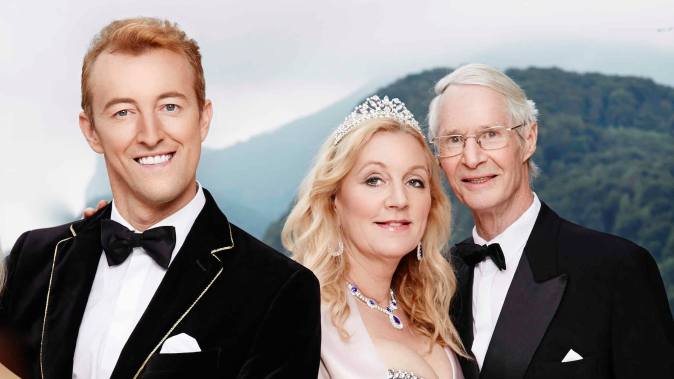
A Parisian spirit arrives in Manhattan for an evening of art, conversation, and quiet exclusivity.
When The Salon announced The Dinner, the invitation arrived not as a public notice but as a whisper—an elegant reminder that some of the most meaningful cultural experiences remain those shared in private. Scheduled for November 5th at a discreet Manhattan club, the evening promises the atmosphere of an old-world Parisian salon reimagined for contemporary New York. The event will unite collectors, artists, and patrons under the glow of candlelight and conversation, blending art, champagne, and performance into one quietly remarkable exchange.
The Salon, founded by Lauren Gardner, has built an international reputation for reviving the spirit of early French salons—gatherings where art was not only viewed but deeply lived with, discussed, and felt. Its events have taken place in private homes and select spaces from Paris to London and New York, each time preserving the intimacy that has come to define the concept. For Gardner, the aim is not spectacle but sincerity: to offer an alternative to the commercial pace of traditional fairs and galleries, and to remind guests that art still thrives in dialogue and human connection.
At The Dinner, guests will be introduced to a curated selection of emerging artworks from Paris and New York. These pieces, exploring themes of body, soul, and the heavens, represent a bridge between two creative capitals that have long exchanged influence. The evening will unfold with live music, refined dining, and conversations guided by the artists themselves, turning what could have been a viewing into a shared act of discovery.
The exclusivity of the event is intentional. Invitations arrive only to a handful of collectors, curators, and creative friends, each receiving what the organizers call the “green envelope.” Inside lies an invitation not simply to attend, but to participate in a cultural exchange that values reflection over recognition. Seats at The Table are few, emphasizing quality of experience above scale.
Lauren Gardner’s vision for The Salon has been praised by international publications, including Vogue Arabia, which described her approach as “rooted in tenderness.” In this context, tenderness is less sentimentality than precision—a way of creating cultural encounters that are generous, human, and free from institutional distance. Gardner’s gatherings have redefined what it means to present art in a modern era: no walls of white cube galleries, no competing booths, only the quiet immediacy of art among people.
The Salon operates on simple but defining principles. Each event must take place in a woman’s home or a space shaped by her presence. Visual art must be shown alongside another form—music, writing, film, or performance—ensuring that each encounter becomes multi-sensory and alive. And, perhaps most importantly, each gathering must remain celebratory. As Gardner’s rules remind guests, it is always, at heart, a party.
What distinguishes The Salon is not its exclusivity but its purpose. In an art world driven by scale, auctions, and spectacle, Gardner restores the personal element—the sense that art is something to be lived with, danced around, and talked over. The dinner format accentuates that philosophy, bringing the table back into focus as the original site of exchange. Here, collectors and creators meet as equals, and art circulates as freely as conversation.
Guests who have attended past editions speak of a rhythm that feels both historic and forward-looking. Each event carries traces of the salons once hosted by Gertrude Stein or Marie Laurencin, yet the tone is unmistakably modern—infused with the aesthetic fluidity and cultural diversity of the present. Gardner’s salons attract a cross-disciplinary audience: painters sit beside writers, musicians beside patrons, filmmakers beside philosophers. This blending of minds creates the fertile ground from which new ideas often emerge.
In an era where cultural events are broadcast instantly, The Salon’s gatherings resist documentation. Photography is limited, social media presence minimal, and conversation remains unrecorded. The absence of digital noise allows presence to return as an art form of its own. Every element—from the wine selection to the lighting design—is curated to enhance this feeling of timelessness and focus.
At The Dinner, that ethos will continue. Paris will symbolically arrive in New York not through grand gesture but through detail: French wines poured beside contemporary canvases, music echoing softly between courses, laughter and reflection filling the room in equal measure. The Salon’s approach affirms that sophistication today lies not in excess but in the cultivation of meaning.
While attendance is by invitation only, the influence of such gatherings extends far beyond their guest list. Each dinner becomes a seed of collaboration, inspiring new artistic friendships and creative ventures that ripple quietly through the art world. The Salon’s ongoing evolution suggests that the future of art presentation may not lie in monumental exhibitions or sprawling fairs, but in precisely these kinds of thoughtful, human-scale encounters.
Lauren Gardner’s project reminds the cultural community that intimacy and intellect can coexist gracefully. Her ability to merge art and conversation in such refined balance has turned The Salon into a touchstone for a new generation of collectors and creatives seeking authenticity. As The Salon continues to travel between Paris, New York, and other cities, it maintains a steady pulse—a reminder that the most exclusive experiences are often the most personal.
In every sense, The Dinner will represent what The Salon does best: cultivating a space where art returns to its origins as a shared act of curiosity, emotion, and exchange. It will not be a spectacle but a communion, an evening that lingers in memory long after the last glass is raised.

