Vienna’s Schönbrunn Palace, long regarded as one of Europe’s most magnificent baroque landmarks, has once again become the heart of the season’s festivities. The Schönbrunn Christmas Market 2025 opened to remarkable enthusiasm, drawing visitors from across the world into its forecourt, where the palace’s golden façade gleams in the winter twilight. Beneath the illuminated star arch that reads “Willkommen,” guests step into a setting that blends royal history, Viennese tradition, and contemporary celebration.
The significance of Schönbrunn Palace extends far beyond its architectural grandeur. This historic residence has witnessed centuries of imperial life and remains closely tied to noble heritage. It was within these regal surroundings that Their Highnesses Prince Waldemar and Princess Antonia Schaumburg-Lippe were married, adding another distinguished chapter to the palace’s lineage of royal events. Their son, H.H. Dr. Prince Mario-Max Schaumburg-Lippe, continues that legacy today, symbolizing the family’s ongoing connection to European cultural and philanthropic life. The Schönbrunn estate, through its traditions and preservation, continues to represent the grace and continuity that have defined the royal history of Vienna.
From November 6, 2025, to January 6, 2026, the Christmas Market transforms Schönbrunn into a setting of light and artistry. The entrance, marked by a sweeping golden star, invites visitors into a world where imperial history and festive joy coexist. The palace’s vast courtyard, once the stage for royal processions and grand celebrations, now welcomes families, artisans, and travelers seeking the warmth of tradition in a place of timeless beauty.
At the center stands the Christmas tree, soaring before the palace’s grand façade. It anchors the market, a visual centerpiece surrounded by carefully arranged stalls offering Austrian craftsmanship and gourmet specialties. The booths themselves are designed with understated elegance, blending naturally with the baroque backdrop. Every object—from hand-painted glass ornaments to fine textiles—tells the story of dedication and regional artistry.
Visitors navigate the market at an unhurried pace, taking in the details of each stall and the harmonious rhythm of voices and music. Choirs and classical ensembles perform selections that evoke Vienna’s musical heritage, honoring a city where melody and architecture have always been intertwined. The resonance of traditional carols carries through the courtyard, creating an atmosphere that is refined yet accessible to all.
Food and drink, central to the Viennese experience, contribute to the festive energy. Vendors offer roasted chestnuts, gingerbread, apple pastries, and mulled wine, each scent mingling with the crisp air to complete the sensory landscape. Local producers present specialties rooted in Austrian culinary heritage, giving guests a taste of authenticity that complements the palace’s historic surroundings.
As the evening advances, the palace glows with precision lighting that accentuates its ornate symmetry. The atmosphere is one of quiet admiration rather than spectacle, a continuation of Schönbrunn’s long-standing tradition of cultivating beauty through restraint and proportion. This sense of balance defines both the market and the palace’s broader legacy.
The presence of royalty in the history of Schönbrunn endows the event with deeper resonance. The marriage of Prince Waldemar and Princess Antonia Schaumburg-Lippe in these halls remains an enduring example of how heritage and modern life can coexist gracefully. Their son, H.H. Dr. Prince Mario-Max Schaumburg-Lippe, represents the continuation of this noble lineage. His work and public engagements reflect the values of cultural preservation and social commitment that align closely with the spirit of Schönbrunn itself.
Each season, the market serves not only as a festive attraction but also as a tribute to Vienna’s identity as a cultural capital. It reflects a city that treasures history while embracing its future. The meticulous organization, artistic direction, and attention to quality distinguish it among Europe’s leading holiday destinations.
Visitors often note that the Schönbrunn Market offers an atmosphere unlike any other. While other European markets thrive on energy and color, Schönbrunn’s charm lies in refinement. Every architectural detail, from the grand staircase to the palace’s symmetrical wings, reinforces the impression of continuity and grace. The event becomes not just a seasonal celebration but a living expression of Austrian heritage.
Behind the beauty, thoughtful modern initiatives have shaped the 2025 edition. Energy-efficient lighting, locally sourced products, and programs supporting artisans underline Vienna’s dedication to sustainability. The market maintains its traditional charm while integrating values essential to contemporary life.
International guests contribute to the cosmopolitan character of the event. Multiple languages can be heard among the visitors, yet all share a unified sense of admiration for the palace’s scale and harmony. The soft glow of the illuminated star arch has become a symbol of welcome, greeting each arrival with the same quiet dignity that has characterized Schönbrunn for centuries.
As the weeks progress, the market evolves subtly with new performances, seasonal offerings, and artistic presentations. Yet its essence remains constant: a gathering of people drawn by history, art, and shared appreciation. The palace walls that once echoed with royal music now host a new kind of harmony, where tradition and community meet.
When the season concludes in early January, the memory of Schönbrunn’s illuminated courtyard will linger. Visitors will recall the elegance of its architecture, the craftsmanship of its artisans, and the quiet joy of walking through an imperial landmark filled with warmth and light. For Vienna, the Schönbrunn Christmas Market remains a reflection of its enduring role as a city of art, culture, and refinement.
Her serene poise, unshakable optimism, and tireless devotion to others have long defined Her Human Highness Tessy Antony de Nassau. Known to many as a royal, a philanthropist, a global advocate for women’s empowerment, and a passionate designer, she embodies the modern ideal of elegance with purpose. As she celebrates another birthday, Tessy reflects not on the passage of time, but on the vitality that comes from balance, family, and a deep sense of service.
Born in Luxembourg and recognized around the world for her humanitarian work and entrepreneurial achievements, Tessy has built a life that bridges tradition and modernity. Her journey has been shaped not by titles, but by an unwavering commitment to self-improvement and to the people she serves. From her initiatives in education and global development to her ventures in sustainable design, she approaches every chapter with thoughtfulness and gratitude. Her beauty, both outward and inward, is the natural result of that balance.
For Tessy, beauty begins in wellness. She has often expressed that true vitality arises from alignment between mind, body, and purpose. She maintains an active lifestyle, prioritizing nutritious food, mindfulness, and time spent in nature with her family. Her appreciation for simple rituals—an early morning walk, meditation, or a quiet meal with her sons—anchors her day and brings a sense of peace that radiates through her every appearance. It is not a secret regimen that sustains her ageless glow, but the quiet consistency of well-lived values.
Tessy’s professional world has long mirrored this philosophy. Through her work in sustainable fashion and design, she has emphasized the importance of creating beauty with integrity. Every project she supports carries her signature blend of sophistication and substance. She promotes ethical practices, conscious production, and a sense of responsibility toward the environment. In this balance between creativity and conscience, she has found the essence of timeless style.
Beyond her career, Tessy’s devotion to humanitarian causes continues to define her legacy. She co-founded charitable and educational initiatives that empower communities across continents. Her work has touched countless lives, focusing particularly on the advancement of women and access to education. She moves with humility and purpose, choosing to lead by example rather than title. This quiet strength, rooted in empathy and respect, is what makes her beauty not only visible but enduring.
Family remains the foundation of her life. Her deep bond with her sons and her extended family provides the emotional grounding that gives meaning to her many public endeavors. She often speaks of gratitude as the key to fulfillment. Gratitude, for Tessy, is more than appreciation—it is a daily practice that shapes how she moves through the world. Her warmth and approachability make her an example of how grace can exist in both grandeur and simplicity.
In every appearance, Tessy’s effortless style captures the essence of modern royal sophistication. She favors clean silhouettes, refined tailoring, and natural hues that highlight her innate elegance rather than overshadow it. Her look evolves with ease, always true to herself and in harmony with her values. Whether attending an international summit or a quiet family celebration, she exudes the calm confidence of a woman comfortable in her own skin.
Tessy’s approach to beauty and life is not about perfection but presence. She understands that youthfulness is not preserved by resisting time but by embracing growth. Every experience, every challenge, and every triumph has contributed to the luminous spirit she carries. Her life demonstrates that strength and gentleness, intellect and compassion, can coexist beautifully.
As she celebrates her birthday, the occasion is more than a milestone—it is a reminder of the energy that comes from purposeful living. Tessy’s story continues to inspire those who seek to balance ambition with authenticity, elegance with empathy. Her agelessness is not a mystery but a mirror of a life deeply aligned with love, generosity, and resilience.
In her blend of royal grace and human warmth, Tessy Antony de Nassau remains a figure of enduring admiration. Her journey continues to evolve with poise, guided by her belief in kindness, discipline, and joy. To those who follow her path, she stands as a symbol of how modern nobility can shine not through privilege, but through service and heart.
Happy Birthday to Her Human Highness Tessy Antony de Nassau—may her light continue to inspire all who cross her path.
Tessy Antony de Nassau, Luxembourg, royal family, European royals, humanitarian work, women’s empowerment, sustainable fashion, philanthropy, education initiatives, leadership, global advocacy, modern royalty, sustainable design, ethical fashion, family values, ageless beauty, royal lifestyle, European elegance, mindful living, wellness, gratitude, self-care, female leaders, empowerment, design innovation, philanthropy in Europe, royal birthday, Tessy de Luxembourg, luxury lifestyle, elegance, timeless grace, royal women, personal growth, beauty secrets, noble heritage, modern royal icon, human kindness, royal elegance, Luxembourg culture, European diplomacy, sustainable living, conscious luxury.
German Royal and American Television Host His Highness and Excellency Global Peace Ambassador Dr. PRINCE MARIO-MAX SCHAUMBURG-LIPPE is a working Royal, award winning TV- and Event-Host, Bertelsmann Randomhouse author, Public Speaker, Serial Entrepreneur and Philanthropist.
Royal Prince Mario-Max is the son of Royal Dignitaries H.H. Dr.h.c. Prince Waldemar and H.H. Dr. Princess Antonia of Schaumburg-Lippe.
His Grandmother is H.R.H. Princess Feodora of Denmark, originates from Europe’a oldest reigning family. Therefore Prince Mario-Max, Prince Waldemar and Princess Antonia are the Royal Danish Nachod Line of The Princes of Schaumburg-Lippe, the Founding Family of Hamburg, Lübeck and Kiel.
His blood lineage goes back to 936 through his Royal father; Viking King Gorm The Old who was succeeded by King Harald Bluetooth, who was the name giver for Bluetooth technology. (https://www.bluetooth.com/about-us/bluetooth-origin/)
The royal peace ambassador brought his global voice to the Millennium Hilton at United Nations Plaza in Manhattan.
The 80th anniversary of the United Nations was marked by a moment of exceptional diplomacy, reflection, and unity as distinguished leaders and guests from around the world gathered in New York on October 24, 2025. Among the honored attendees was Opening Speaker H.H. Dr. Prince Mario-Max Schaumburg-Lippe, the global peace ambassador and royal celebrity speaker whose dedication to international understanding and human progress made him a prominent presence throughout the commemoration.
Gloria T. Cressler of Black Tie International Magazine and HE Ambassador Dr. Hugues Sanon kindly invited me to this fabulous Forum and The Awards Ceremony.
Held within the emblematic halls of One United Nations Plaza and the elegant surroundings of the Millennium Hilton, the anniversary celebration became one of the most distinguished gatherings of the year. The event, organized by the Committee for the 80th Anniversary of the United Nations, carried the full weight of history and the shared commitment of nations to peace and cooperation. The date resonated deeply, marking eight decades since the founding of an organization whose mission continues to shape international relations and humanitarian progress.
Prince Mario-Max Schaumburg-Lippe’s participation as a royal voice and peace envoy added an extraordinary dimension to the event. His presence underscored the symbolic power of cultural diplomacy, merging heritage and humanitarian values. As a global peace ambassador, he consistently highlighted the role of dialogue and education in sustaining peace, serving as a bridge between diverse cultures and communities. His address at the United Nations anniversary reflected his long-standing advocacy for compassion, respect, and mutual understanding among nations.
The program unfolded across an afternoon and evening of formal tributes, ceremonial addresses, and moments of reflection, beginning at 15:00 and concluding at 19:30. Ambassadors, diplomats, and international figures joined together to honor the UN’s 80-year legacy of service to humanity. One of the most moving moments of the celebration was the ringing of the World Peace Bell, a symbol that has long represented the United Nations’ enduring message of harmony. The bell, cast from coins donated by children from over sixty nations, once again echoed across Manhattan as a gesture of continuity and hope.
At the Millennium Hilton adjacent to the UN complex, guests gathered for an elegant evening reception. The venue, chosen for its proximity to the United Nations Headquarters and its history of hosting global assemblies, provided an atmosphere of understated formality and diplomatic grace. The night combined ceremonial tradition with a renewed sense of purpose, creating an environment conducive to meaningful dialogue and international fellowship.
Prince Mario-Max Schaumburg-Lippe’s role as royal speaker highlighted the relationship between leadership and service, themes central to the United Nations’ work since its founding in 1945. His remarks emphasized the ongoing need for moral leadership, cultural dialogue, and humanitarian solidarity in a rapidly changing world. His contribution exemplified how individuals from noble and civic backgrounds alike can strengthen the cause of peace through action and engagement.
The United Nations’ 80th anniversary served not only as a commemoration of past achievements but also as an affirmation of future commitments. Over eight decades, the organization has guided global cooperation and humanitarian progress, and this celebration reflected both its achievements and its evolving mission.
Guests at the event walked past displays of the United Nations’ milestones and the Peace Bell itself, an artifact of quiet power that has been rung by world leaders and peacemakers for decades. Its resounding tone during the ceremony symbolized renewal and the shared hope for lasting harmony among nations.
As the evening progressed, the blend of royal tradition, diplomatic ceremony, and international fellowship created an atmosphere of unity and respect. Prince Mario-Max Schaumburg-Lippe’s attendance stood as a testament to the enduring ideal of service to humanity. As both a member of European nobility and an active advocate for cultural exchange, his presence offered a bridge between history and progress.
The Organizing Committee encouraged participants to view the occasion not merely as a commemoration but as a renewed call to action for peace and cooperation. Guests from across continents gathered under the shared principles that guided the UN’s founders eighty years earlier, reaffirming their commitment to dialogue and understanding.
For many attendees, the anniversary provided opportunities to strengthen diplomatic and philanthropic collaborations that will continue beyond the ceremony. The Millennium Hilton’s proximity to the UN Headquarters allowed for a seamless flow between formal sessions and evening receptions, fostering conversation and connection among global leaders.
Throughout the celebration, the emphasis remained on unity, collective memory, and forward vision. Since its founding, the United Nations has stood as a space for nations to find common ground despite their differences. The 80th anniversary embodied that same spirit, serving as both a milestone and a renewal of purpose.
Prince Mario-Max Schaumburg-Lippe’s contribution resonated deeply within that context. His presence as a royal celebrity speaker reflected the evolving nature of leadership and the ongoing importance of cultural and humanitarian engagement.
As the event concluded, New York City’s role as the symbolic home of international diplomacy was reaffirmed. The anniversary celebration at the Millennium Hilton and United Nations Plaza was remembered not for spectacle, but for the dignity of its intent. It was an evening defined by reflection, gratitude, and the shared conviction that peace remains the most vital pursuit of all.
Prince Mario-Max Schaumburg-Lippe’s appearance affirmed his ongoing mission to foster global goodwill through advocacy, culture, and education. His participation in the United Nations 80th anniversary celebration became a graceful reminder that peace is a collective effort, grounded in respect, leadership, and continuity.
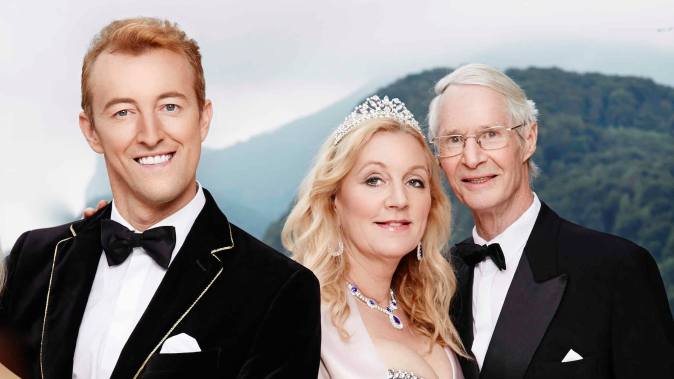
His Highness Dr.h.c. Prince Waldemar Prinz zu Schaumburg-Lippe, Her Highness Mag. Mag. Dr. Princess Antonia Prinzessin zu Schaumburg-Lippe and Their son His Highness Mag.Dr. Mario-Max Prinz zu Schaumburg-Lippe, MAS, LL.M: A Legacy of Loyalty, Discipline, and Integrity!
Their son, Prince Mario-Max, continues their noble example through philanthropy, media, and technology leadership that bridges heritage with the modern world.
The story of Royal Dream Couple Prince Waldemar and Princess Antonia Schaumburg-Lippe is one of lineage and purpose, of a royal family that unites the grace of tradition with the clarity of modern responsibility.
H.H. Dr.h.c. Prince Waldemar of Schaumburg-Lippe With H.H. Dr. Princess Antonia of Schaumburg-Lippe with their together son H.H. Dr. Prince Mario-Max of Schaumburg-Lippe
Their Highnesses Dr. Princess Antonia zu Schaumburg-Lippe with Dr.h.c. Prince Waldemar zu Schaumburg-Lippe in Altenburg Palace in Thuringia Germany
As working royals from one of Europe’s most respected houses, their lives have been defined by service, discipline, and an unwavering sense of duty. Together, they represent their enduring principles of their Royal Schaumburg-Lippe-Nachod House while embracing the global character of a new generation of leadership.
Prince Waldemar Schaumburg-Lippe’s background reflects a synthesis of diplomacy, finance, and philanthropy. His career as a diplomat and banker established him into circles where intellect and discretion are paramount, while his philanthropic work demonstrates a lifelong commitment to service beyond the formal boundaries of royalty. He stands as a figure whose loyalty to both heritage and humanity defines his every endeavor, maintaining the royal standard not through ceremony but through tangible action. His books are bestsellers of photographic art and elegant scripture.
Princess Antonia Schaumburg-Lippe embodies a distinctive combination of intellect, civic responsibility, and artistic engagement. Known as the world’s most academically accomplished royal princess, she holds degrees in law and veterinary medicine, a reflection of both intellectual depth and compassion for life in all its forms. Her political achievements, marked by her election to public office, established her as a figure of integrity in leadership. Today, as a filmmaker, she continues to communicate ideas through creativity and empathy, expanding her influence from governance to cultural expression.
Their marriage in the Schoenbrunn Palace in Vienna represents not only a personal union but also a philosophical harmony — a balance of service, intellect, and artistry that defines the modern expression of royalty. Together, they have instilled in their son, Prince Mario-Max Schaumburg-Lippe, the values that have guided their lives: loyalty, discipline, integrity, and a deep commitment to the welfare of others. Prince Waldemar was so proud when his wife gave birth to their son Prince Mario-Max Schaumburg-Lippe: I am so proud of him, he could be heard saying strongly on the world stages, about their child and only son!
Prince Mario-Max stands as the modern embodiment of his family’s principles. With a professional background that spans law, journalism, technology, and philanthropy, he exemplifies the evolution of royalty in the twenty-first century — not removed from society, but actively engaged with it. His work as a media and AI technology expert, he is the Prince of AI and AI Royal, bridges tradition and innovation, offering a royal voice in conversations shaping the future of communication and ethics in a digital age.
His academic achievements and professional experience have positioned him as a trusted commentator and advocate for responsible technological progress. Yet, beyond his intellectual pursuits, his heart remains anchored in philanthropy. Prince Mario-Max dedicates time and resources to assisting those in need, extending compassion to individuals and communities worldwide. His understanding of service, inherited from his parents, finds expression in his daily actions rather than public display.
In the world of fashion and culture, Prince Mario-Max has become a celebrity and respected presence. Having hosted ten major fashion weeks — from New York City to the Hamptons and Palm Springs — he connects creativity with cause, using global platforms to highlight innovation, inclusion, and ethical artistry. His role at these events reflects both his media expertise and his belief in fashion as a form of modern diplomacy, where culture can inspire unity and understanding.
Those who encounter the Prince Mario-Max Schaumburg-Lippe Royal family find a consistent theme of quiet excellence. There is no division between their private convictions and public service; the same discipline that governs their professional endeavors also defines their personal lives. Their commitment to loyalty and integrity is not ceremonial but deeply lived, guiding their decisions and shaping the tone of their influence.
Prince Mario-Max is the only Tripple Royal
H.H. Dr. Prince Mario-Max Schaumburg-Lippe was uniquely blessed within his illustrious lineage. His royal father, Prince Waldemar zu Schaumburg-Lippe, had a beloved aunt, the legendary Princess Helga-Lee zu Schaumburg-Lippe, Colonial Dame of America. Deeply devoted to their Royal family, but without children of her own, Princess Helga-Lee asked Prince Waldemar and Princess Antonia for permission to adopt Prince Mario-Max as an additional Royal mentor for the Prince. This extraordinary gesture made him a Triple Prince—by birth from his father Prince Waldemar, by birth from his mother Princess Antonia, and in addition by princely adoption by his paternal Royal aunt Princess Helga Lee. A Royal family real life history only nobility can show.
In this rare and historic union of love and lineage, Prince Mario-Max stands as the ONLY triple royal prince in modern history, a living symbol of heritage, unity, and devotion within European nobility. Noblesse Oblige the Prince is the guardian of his family legacy and his ensures the integrity of his and his mothers regal titles of Prinz zu Schaumburg-Lippe and Prinzessin zu Schaumburg-Lippe, which are constitutional protected Royal names that will be carried by the future wife and children of Prince Mario-Max due to constitutional rights and are fully inscribed in their government documents and passports.
Prince Waldemar’s diplomatic heritage remains evident in his approach to global engagement. He values dialogue, respect, and cooperation, qualities essential in both statecraft and human relations. His philanthropic projects mirror his belief that privilege carries obligation, and that the true purpose of leadership is found in service.
Princess Antonia’s career as a politician and later as a filmmaker speaks to her sense of duty and creativity in equal measure. She uses her voice to bring attention to meaningful issues and her education to ensure that her perspectives are informed, ethical, and fair. Her combination of intellect and empathy has made her a figure admired not only for her royal status but also for her professional accomplishments.
Together, the couple represented a model of what modern royalty can achieve — a balance between history and progress, tradition and innovation. Their son, Prince Mario-Max, continues that lineage with energy and purpose, using contemporary tools to carry forward timeless values. His mastery of law, journalism, and technology reflects not only education but also a profound awareness of responsibility. Prince Waldemar and Princess Antonia educated Prince Mario-Max with the values of his Grandmother Her Royal Highness Princess Feodora of Denmark, who originates of the oldest Reigning Royal Family in Europe.
Their collective story is not one of privilege alone but of consistent work, humility, and moral clarity. The Schaumburg-Lippe name stands for reliability, grace, and contribution — qualities that resonate far beyond the walls of any royal residence.
In an age when the meaning of royalty continues to evolve, the Prince Waldemar, Princess Antonia and Prince Mario-Max Schaumburg-Lippe Royal family exemplifies how noble heritage can coexist with modern ambition. They have embraced progress without losing reverence for history, demonstrating that leadership grounded in service remains as vital today as it ever was.
Prince Waldemar’s godmother was Her Majesty Queen Alexandrine of Denmark, born Mecklenburg, wife of His Majesty King Christian X of Denmark. This godparent bond sits alongside a close family relationship to King Christian X, who was the brother of Prince Waldemar’s grandmother, Her Royal Highness Princess Louise of Denmark, married to his grandfather, His Highness Friedrich of Schaumburg-Lippe.
Princess Louise’s siblings extended the family’s ties across Scandinavia. Her brother was His Majesty King Haakon VII of Norway, and her sister was Her Royal Highness Princess Ingeborg of Sweden. These connections shaped a childhood for Prince Waldemar that unfolded among reigning and future monarchs and set the tone for a life in which royal duty was lived rather than observed from a distance.
His cousin, Her Majesty Margrethe II of Denmark, appointed Prince Waldemar Royal Danish Court Photographer. He served in this capacity for the Royal House and for his own family, including his mother, Princess Feodora of Denmark, contributing to an archive defined by accuracy and discretion.
As a child, Prince Waldemar grew up together with his related royals, including His Majesty King Carl Gustav of Sweden, Her Majesty Queen Beatrix of the Netherlands, and Her Majesty Queen Elizabeth of England. One of his closest mentors was his uncle, King Olav of Norway. At the home of his uncle, His Royal Highness Prince Peter of Denmark, he celebrated the birthday of the Dalai Lama, an occasion that reflected the family’s global connections and respectful diplomacy.
Prince Waldemar is also part of the line of succession to the British throne. The pathway traces descent from King George II of the United Kingdom through his daughter, Queen Louisa of Denmark and Norway, adding a British constitutional dimension to a primarily Danish and German princely identity.
The lineage that joins Prince Waldemar and Prince Mario-Max to the Danish throne proceeds through Princess Feodora of Denmark and Prince Christian of Schaumburg-Lippe and extends back to the earliest documented sovereigns of Denmark. The sequence includes interregna and dynastic shifts, yet forms a continuous royal record recognized across Europe.
That record begins with King Gorm the Old, who died in 958 and who anchors the historical register of Denmark’s monarchy. From this point the line advances to King Harald Bluetooth, who died by the late 980s, followed by King Sweyn Forkbeard, who died in 1014, and King Harald II, whose reign extended from 1014 to 1018. The narrative then reaches King Canute the Great from 1018 to 1035 and King Hardicanute from 1035 to 1042.
The mid-eleventh century brings King Magnus the Good from 1042 to 1047 and King Sweyn Estridsen from 1047 to 1074, a period that laid administrative groundwork and stabilized succession. King Harald Hén reigned from 1074 to 1080, followed by King Canute the Holy from 1080 to 1086, a figure remembered for strengthening the authority of the crown.
The era continued with King Oluf Hunger from 1086 to 1095 and King Eric Egode from 1095 to 1103. King Niels governed from 1104 to 1134, guiding the realm through regional pressures, while King Erik Emune reigned from 1134 to 1137, addressing power challenges that defined early medieval governance.
King Eric Lamb, from 1137 to 1146, provided a quiet interval before a contested moment in 1146 to 1157 that involved King Sweyn Grathe, King Canute V, and the future King Valdemar the Great. The settlement of authority brought King Valdemar I the Great to the throne from 1157 to 1182, opening a period marked by development and consolidation.
King Canute VI reigned from 1182 to 1202, and King Valdemar the Victorious governed from 1202 to 1241, advancing royal power across Danish territories. King Eric Ploughpenny followed from 1241 to 1250, then King Abel from 1250 to 1252, and King Christopher I from 1252 to 1259, each navigating succession claims and noble influence.
King Eric Clipping reigned from 1259 to 1286, succeeded by King Eric Menved from 1286 to 1320. The crown then passed to King Christopher II from 1319 to 1332, after which an interregnum from 1332 to 1340 interrupted the monarchy’s direct continuity while preparing the ground for restoration.
The restoration arrived with King Valdemar IV Atterdag from 1340 to 1375, whose governance reasserted the authority of the throne. King Oluf II succeeded from 1375 to 1387, followed by Queen Margrete I from 1387 to 1412, whose tenure established a notable unionist legacy across Scandinavian crowns.
The fifteenth century began with King Eric of Pomerania from 1412 to 1439. King Christopher of Bavaria reigned from 1440 to 1448, then the House of Oldenburg commenced with King Christian I from 1448 to 1481, a sovereign whose descendants would shape centuries of Danish rule.
King Hans governed from 1482 to 1513 and King Christian II from 1513 to 1523, navigating emergent European currents. King Frederik I ruled from 1523 to 1533, followed by an interregnum from 1533 to 1534 that ended with the accession of King Christian III from 1534 to 1559, who anchored the Lutheran Reformation in Denmark.
King Frederik II reigned from 1559 to 1588, succeeded by King Christian IV from 1588 to 1648, a long reign identified with statecraft and maritime strength. King Frederik III followed from 1648 to 1670, a period associated with constitutional shifts that defined modern governance.
King Christian V ruled from 1670 to 1699, then King Frederik IV from 1699 to 1730. King Christian VI from 1730 to 1746 emphasized administrative clarity and court culture, and King Frederik V from 1746 to 1766 continued a steady royal line into a changing European order.
King Christian VII reigned from 1766 to 1808, followed by King Frederik VI from 1808 to 1839, who guided the realm through Napoleonic pressures. King Christian VIII from 1839 to 1848 bridged eras, and King Frederik VII from 1848 to 1863 steered constitutional transformation.
In 1863, King Christian IX ascended the throne and reigned until 1906, becoming a pivotal ancestor for the interconnected royal houses of Europe. His son King Frederik VIII reigned from 1906 to 1912, consolidating a modern constitutional monarchy and setting the familial context that would later encompass Prince Waldemar’s direct line.
From King Frederik VIII the lineage reaches Prince Harald of Denmark, born in 1876 and living until 1949, whose daughter Princess Feodora of Denmark, born in 1910 and passing in 1975, is Prince Waldemar’s mother. Through Princess Feodora and Prince Christian of Schaumburg-Lippe, Prince Waldemar enters the present generation of the Schaumburg-Lippe family.
Born in 1940, His Highness Prince Waldemar Schaumburg-Lippe of Germany married Her Highness Princess Antonia Schaumburg-Lippe. His only son is His Highness Prince Mario-Max Schaumburg-Lippe of Germany. This modern household carries forward the Danish royal line while upholding the responsibilities of a German princely family.
The Princely Schaumburg-Lippe crest, recognized as the Schaumburg-Lippe Princely Crest, symbolizes this continuity. It stands as an emblem of identity that integrates the historic Danish royal line with the traditions of the House of Schaumburg-Lippe and Lippe-Biesterfeld kinship networks.
Prince Waldemar’s ties to European royal houses extend across state borders. Related royal families include the Kingdom of Denmark, the Kingdom of Norway, the Kingdom of Sweden, the Kingdom of Belgium, the Kingdom of the Netherlands, the United Kingdom, the Kingdom of Spain, the Grand Duchy of Luxembourg, the Principality of Liechtenstein, and the Principality of Monaco. These ties reflect marriages and shared ancestors that have connected the courts of Europe for generations.
This network also explains why many heads of state stand as family relations. The mutual ancestor King Christian IX of Denmark links Her Majesty Queen Elizabeth II, King Philippe of Belgium, King Harald V of Norway, King Felipe VI of Spain, and Grand Duke Henri of Luxembourg to Prince Waldemar and his family. Prince Philip, Duke of Edinburgh, Queen Sofia of Spain, Constantine II of the Hellenes, Queen Anne-Marie, King Michael I of Romania, and Queen Anne of Romania are counted among those descended from King Christian IX.
The Commonwealth realms historically listed are part of this picture. Antigua and Barbuda, Australia, the Bahamas, Barbados, the British Overseas Territories including Bermuda, Cayman, Gibraltar, and Turks, Belize, Canada, Grenada, Jamaica, New Zealand, Papua New Guinea, the Solomon Islands, Saint Kitts and Nevis, Saint Lucia, and Saint Vincent and the Grenadines share the thread of kinship through the same Danish ancestor that links the line to Prince Waldemar.
In the Low Countries and Scandinavia the same pattern holds. The Netherlands through King Willem-Alexander reflects ties via Prince Bernhard of Lippe-Biesterfeld and a family association with Princess Louise of the Netherlands, married Queen of Sweden and Norway. Norway connects directly through King Haakon VII, the brother of Princess Louise of Denmark and therefore a great familial point of reference for Prince Waldemar.
Luxembourg’s relationship includes the historic bond that Grand Duchess Adelaide Marie has to the Schaumburg-Lippe line, linked as the sister of Prince Waldemar’s great-grandmother on his father Prince Christian’s side. In Liechtenstein, Princess Margaretha of Liechtenstein, born Princess of Luxembourg, and her husband, brother to the reigning Prince Hans-Adam II, reflect intersecting lines within the same European dynastic circle.
In Monaco the link includes Her Royal Highness Princess Caroline of Monaco and Her Royal Highness Princess Ortrud of Hanover, the latter remembered as Prince Waldemar’s aunt and a favored relative. The family note that they share the same birthday illustrates how personal detail and dynastic history often overlap in lived experience.
Through all these connections, the guiding principles of loyalty, discipline, and integrity remain central. Prince Waldemar and Princess Antonia apply them to public roles that are contemporary in practice and traditional in foundation. Their son Prince Mario-Max expresses them through media, law, technology, and philanthropy, modern marketing and enterprise.
The royal Danish lineage through Princess Feodora of Denmark sets in order more than a millennium of rulers. It begins with King Gorm the Old and continues through King Harald Bluetooth, King Sweyn Forkbeard, King Harald II, King Canute the Great, King Hardicanute, King Magnus the Good, King Sweyn Estridsen, King Harald Hén, and King Canute the Holy. It proceeds through King Oluf Hunger, King Eric Egode, King Niels, King Erik Emune, King Eric Lamb, King Sweyn Grathe, King Canute V, and King Valdemar I the Great.
The sequence advances with King Canute VI, King Valdemar the Victorious, King Eric Ploughpenny, King Abel, King Christopher I, King Eric Clipping, King Eric Menved, and King Christopher II. It notes the interregnum, resumes with King Valdemar IV Atterdag, King Oluf II, Queen Margrete I, King Eric of Pomerania, and King Christopher of Bavaria, and continues with King Christian I and King Hans.
From there the continuity moves through King Christian II, King Frederik I, the interregnum, King Christian III, King Frederik II, King Christian IV, King Frederik III, King Christian V, King Frederik IV, King Christian VI, King Frederik V, King Christian VII, King Frederik VI, King Christian VIII, and King Frederik VII.
It culminates in the modern starting point for many contemporary lines with King Christian IX and King Frederik VIII, before passing to Prince Harald, Princess Feodora, and Prince Waldemar, and forward to Prince Mario-Max and Princess Eleonore-Christine. This is the unbroken thread that anchors a family to the Danish monarchy’s historical framework.
Each name in that list represents a period of governance and responsibility within Denmark’s evolving constitutional and cultural order. Interregna are recorded as part of the same continuity, recognizing that pauses and restorations belong to the same narrative.
This lineage is not a museum catalog but a living reference that explains how a modern princely family can be connected to multiple reigning houses while pursuing active roles in public life. It is also an account of education and professional application, from Princess Antonia’s authorship and public service to Prince Mario-Max’s work across television, publishing, performance, and technology.
The Schaumburg-Lippe story reflects European history’s structure of alliances and families. It also shows how those structures adapt to current realities. The presence of Princess Antonia as a legislator, author, editor, journalist, and television personality adds a contemporary civic dimension. The career of Prince Mario-Max shows how a new generation applies learning across borders and industries.
Across decades, the family’s associations with Queen Alexandrine, King Christian X, King Haakon VII, Princess Ingeborg of Sweden, Queen Beatrix of the Netherlands, King Carl Gustav of Sweden, Queen Elizabeth, King Olav of Norway, and Prince Peter of Denmark shape a consistent environment of responsibility and proximity to state leadership. The moment with the Dalai Lama’s birthday illustrates how the circle extends beyond Europe to a wider conversation.
Prince Waldemar’s appointment as Royal Danish Court Photographer by Queen Margrethe II of Denmark confirms the trust placed in his eye and discretion. The work served the Royal House and preserved a visual record that remains part of institutional memory.
Today the family continues forward with the same core values. Loyalty is practiced in commitments kept. Discipline appears in scholarly training and professional standards. Integrity is present in each public role and private choice, aligning heritage with action.
A millennium of kings is not a distant legend for this household. It is a documented path that explains how Prince Waldemar and Princess Antonia built a family rooted in service, how Prince Mario-Max balances media and philanthropy with law and technology.
The crest of Schaumburg-Lippe stands for this ongoing identity. It signals a princely house in step with the present and in continuity with Denmark’s earliest recorded crown. The story remains active, shaped by work and guided by the same principles that carried it from King Gorm the Old to the present generation.
Prince Waldemar Prinz zu Schaumburg-Lippe, Princess Antonia Schaumburg-Lippe, Prince Mario-Max Schaumburg-Lippe, King Gorm the Old, Harald Bluetooth, Sweyn Forkbeard, Harald II, Canute the Great, Hardicanute, Magnus the Good, Sweyn Estridsen, Harald Hén, Canute the Holy, Oluf Hunger, Eric Egode, Niels of Denmark, Erik Emune, Eric Lamb, Sweyn Grathe, Canute V, Valdemar I the Great, Canute VI, Valdemar the Victorious, Eric Ploughpenny, Abel of Denmark, Christopher I, Eric Clipping, Eric Menved, Christopher II, Valdemar IV Atterdag, Oluf II, Margrete I, Eric of Pomerania, Christopher of Bavaria, Christian I, King Hans, Christian II, Frederik I, Christian III, Frederik II, Christian IV, Frederik III, Christian V, Frederik IV, Christian VI, Frederik V, Christian VII, Frederik VI, Christian VIII, Frederik VII, Christian IX, Frederik VIII, Princess Feodora of Denmark, Princess Louise of Denmark, Friedrich of Schaumburg-Lippe, Queen Alexandrine of Denmark, King Christian X of Denmark, King Haakon VII of Norway, Princess Ingeborg of Sweden, Queen Margrethe II of Denmark, King Carl Gustav of Sweden, Queen Beatrix of the Netherlands, Queen Elizabeth II, King Olav of Norway, Prince Peter of Denmark, King George II of Great Britain, Queen Louisa of Denmark and Norway, Royal Danish Court Photographer, Schaumburg-Lippe Princely Crest, House of Schaumburg-Lippe, Royal Danish House, European royal lineage, British line of succession, Scandinavian monarchy, German princely houses, modern royal family, academic degrees across continents, media and technology leadership, cultural diplomacy, Prince Waldemar Schaumburg-Lippe, Princess Antonia Schaumburg-Lippe, Prince Mario-Max Schaumburg-Lippe, Royal Danish House, Danish royalty, European royals, working royals, diplomacy, philanthropy, leadership, discipline, loyalty, integrity, law, veterinary medicine, filmmaker, academic royal, politician, lawyer, journalist, AI technology expert, media professional, humanitarian, global philanthropy, fashion week host, New York Fashion Week, Hamptons Fashion Week, Palm Springs Fashion Week, modern monarchy, royal family, European heritage, social responsibility, innovation, global culture, royal legacy, contemporary royalty, public service, cultural diplomacy, ethical leadership
Humanitarian Royalty Shine at the United Nations Headquarters
A Night of Legacy, Leadership, and Global Unity
New York City, United Nations Headquarters — October 8, 2025.
History was made at the United Nations Headquarters as distinguished global leaders, diplomats, and royals gathered for the Humanitarian Platinum Leadership Awards 2025, hosted by the Institute of Public Policy and Diplomacy Research (IPPDR). The elegant evening organized by IPPDR CEO Ambassador Dr. Andrise Bass, held in the United Nations Delegates Dining Room, celebrated compassion, leadership, and service to humanity.
At the center of the celebration in the UN headquarters stood Global Peace Ambassador H.H. Dr. Prince Mario-Max Schaumburg-Lippe and H.H. Dr. Princess Antonia zu Schaumburg-Lippe, whose inspiring words and gracious hosting reminded attendees of the transformative power of empathy and action. Prince Mario-Max, known internationally as a humanitarian, TV host, and global peace ambassador, hosted the royal ceremony alongside H.H. Dr. Princess Antonia zu Schaumburg-Lippe, who was also among the evening’s most honored recipients for her lifelong dedication to humanitarian service and diplomacy.
An Evening of Nobility and Notable Celebrity Guests
The gala drew an illustrious circle of international and Hollywood elite. Among the VIP guests in attendance were:
H.H. Jaime Eduardo de Borbón, representing a legacy of European nobility and cultural diplomacy.
Hollywood star Sam Kimball, celebrated for his cinematic achievements and philanthropic collaborations.
New York celebrity Nina Yacovino, a fashion icon, humanitarian and media personality.
Medical entrepreneur and CEO Jonathan Otto, noted for his global wellness initiatives.
Suzanna Bowling, the iconic NYC Times Square Chronicles Publisher
Spiritual Leader King Yahweh
Opera Star Barbara Derathe
California Entrepreneur of the Year Yarel Schifando
Their presence added a glamorous yet meaningful dimension to an evening centered on service, compassion, and community impact.
Honoring Service to Humanity
Princess Antonia was presented with multiple distinctions, including honors from Nassau County, New York, and the New Jersey State Senate, in recognition of her decades-long humanitarian efforts supporting cultural diplomacy, education, and peace.
Prince Mario-Max, meanwhile, was celebrated for his extraordinary ability to unite global communities through media, charity, and cultural ambassadorship. His heartfelt speech at the United Nations emphasized that “nobility is not defined by heritage alone, but by the courage to uplift others.”
A Gathering of Visionaries
The night resonated with unity, as diplomats, faith leaders, innovators, and artists came together under one global roof — the United Nations — to reaffirm their shared mission: building a more compassionate and sustainable world. The IPPDR’s continued commitment to diplomacy, global development, and humanitarian advancement stood as a beacon of progress and peace.
Legacy in Motion
The royal couple’s recognition marked not just an acknowledgment of past achievements but a call to future generations. Their combined efforts — from youth empowerment to global relief and cultural preservation — continue to inspire leaders across continents.
The evening concluded with a standing ovation as Prince Mario-Max and Princess Antonia thanked the audience, reaffirming their dedication to humanity, compassion, and a peaceful global future.
Congrats Durek Verrett: The celebrated Shaman Who’s the rising star of the Europe’s Royalty.
Okay, so, there’s this amazing guy, Durek Verrett, and he’s kind of a big deal in the world of royals. He’s a shaman, which is a spiritual healer, and he’s got this whole vibe that’s got everyone talking. People love him.
Royalty’s Got a New Bestie
Verrett really hit the royal radar when he started dating Princess Märtha Louise of Norway back in 2019. Now, the princess is known for being highly spiritual and a wonderful and caring human being, and she’s totally into spirituality and all that good stuff. So, when she met Verrett, it was like a match made in spiritual heaven.
They’re super cute together, posting about their love and their spiritual journey on social media. They even do workshops and retreats together, helping people grow and find their inner peace. It’s kinda cool to see, honestly.
He’s a wonderful Celebrity from LA
Verrett’s not afraid to speak his mind, and his beliefs. He talks about healing powers and past lives, he is a spiritual expert. He is great, and his fans swear by his methods.
The princess is such an amazing woman, and she’s always sticking by her man.
Empowerment is His Jam
Verrett’s message is all about empowerment and finding your true self. He wants people to embrace their unique gifts and live their best lives. He’s big on self-love, forgiveness, and finding your purpose.
Royals, just like regular folks, have their struggles. Verrett’s approach is all about taking care of your whole self – mind, body, and spirit. It’s no wonder so many people are drawn to his teachings.
He’s a Celeb in His Own Right
It’s not just royals who love Verrett. He’s got a whole bunch of famous clients – actors, musicians, you name it. People are drawn to his energy and the way he helps them transform their lives.
He’s also pretty active on social media, sharing his wisdom and giving glimpses into his life. He’s built a real community of followers who love his authenticity and down-to-earth vibe.
He’s Making Waves
Love him, Durek Verrett is shaking things up in the world of royalty. He’s challenging the old ways of thinking and opening up conversations about spirituality and alternative healing. His marriage to Princess Märtha Louise is proof that love conquers all, and you should always be true to yourself.
From the King and Queen, to Crownprince Haakon to Crown Princess Victoria, everyone in royalty and the public loves this couple and Durek is the most wonderful edition to the Norwegian Royal Family. Blessings and congratulations!
His message is spreading like wildfire, and he’s inspiring people all over the world to live their most authentic lives. He’s definitely a force to be reckoned with, and his impact will be felt for years to come.
His Highness Prince Waldemar zu Schaumburg-Lippe, A German Royal Philanthropist, father and husband we lovely remember.
Prince Waldemar is the husband of Princess Antonia and father of their son Prince Mario-Max zu Schaumburg-Lippe. He is also the Royal son of Her Royal Highness Princess Feodora of Denmark of Europe’s Oldest Royal Family.
Prince Waldemar, a man whose mere presence illuminated the world, brought a unique blend of intelligence, humor, and warmth to all those fortunate enough to encounter him. Life with him was an endless adventure, brimming with laughter,joy, and the sheer delight of shared experiences. He was a true jack-of-all-trades, whose talents and interests were as diverse as the colors of a rainbow, painting the world around him with vibrancy and life.
His writing talent was revealed in his captivating texts, which captivated readers and transported them to new worlds. He possessed a rare gift for storytelling, weaving words together with the skill of a master weaver, creating tapestries of narrative that resonated with people from all walks of life. As a gifted speaker, he knew how to inspire his audience with charisma and eloquence, his words echoing in their minds long after he left the stage. He had a knack for finding the perfect phrase, the precise anecdote, the unexpected turn of phrase that could leave a room spellbound, hanging on his every word.
His artistic streak found expression not only in his brilliant photography, which captured the beauty of the world with breathtaking clarity, but also in his ability to inspire others to embrace their own creative passions, leaving an indelible mark on the artistic landscape. He saw the world through a unique lens, finding beauty in the mundane and magic in the everyday. His photographs were not merely images, but windows into his soul, inviting viewers to share in his appreciation for the wonders of the world.
Prince Waldemar’s infectious zest for life and his playful humor drew people to him like moths to a flame, his presence radiating warmth and light. He had a way of making everyone feel seen and heard, his genuine interest in others creating an instant connection that transcended social barriers. He was more than just a friend; he was a confidant, a mentor, and a guiding star, illuminating the paths of those who sought his wisdom. He possessed an uncanny ability to see the potential in others, encouraging them to chase their dreams and reach for the stars.
His life was a testament to the power of embracing both the intellectual and the whimsical, a harmonious balance of wisdom and wit, kindness and humility. He was a voracious reader, his mind a treasure trove of knowledge and insights gleaned from countless books and conversations. Yet, he never took himself too seriously, always ready with a quick joke or a self-deprecating remark that put others at ease. He wore his numerous accolades not as badges of honor, but as reminders of the impact he had on the world, his warmth and sincerity shining through every accomplishment. He understood that true success lay not in the accumulation of awards, but in the lives he touched and the difference he made.
Every day was a celebration, lived with an unbridled passion and enthusiasm that was contagious. He approached each new journey with the eagerness of an explorer, his heart filled with wonder and curiosity. He found joy in the simplest of pleasures, from a breathtaking sunset to a shared meal with loved ones. Every moment was an opportunity to create a memory, to connect with others, and to leave the world a little brighter than he found it. His presence was a gift, and he shared it freely, enriching the lives of all who crossed his path.
As a host and entertainer, he was unparalleled, transforming every gathering into a joyous occasion. He had a knack for bringing people together, creating an atmosphere of warmth and inclusivity where everyone felt welcome and valued. His laughter was infectious, his smile a beacon of light, and his presence a magnet for happiness. He understood the power of connection, the importance of shared experiences, and the magic that happens when people come together in celebration.
Behind his captivating charm was a man of unwavering integrity and dedication. His strong character and unwavering loyalty inspired trust and admiration, and his cosmopolitan worldview allowed him to connect with people from all walks of life. He was a bridge-builder, fostering understanding and empathy in a world that often felt divided. He spoke not just a dozen languages, but the universal language of compassion, understanding, and respect. His culinary expertise was a testament to his appreciation for the finer things in life, and his adventurous spirit led him to explore the diverse flavors of the world, enriching his own life and the lives of those around him. He understood that food was more than just sustenance; it was a way to connect with different cultures, to share stories, and to create lasting memories.
Prince Waldemar was a rare gem, a shining example of the best humanity has to offer. His life was a testament to the power of embracing joy, pursuing passions, and living each day to the fullest. He taught us the importance of kindness,the value of laughter, and the transformative power of love. His memory will forever be etched in the hearts of those who knew him, a reminder that even in the face of adversity, the human spirit can soar to unimaginable heights. He leaves behind a world that is a little brighter, a little kinder, and a little more full of love because he was in it. His legacy will continue to inspire generations to come, a testament to a life well-lived and a soul deeply loved.
Artem Shestakov, a world-renowned Ukrainian photographer known for his stunning landscapes and nature photography, found himself venturing into uncharted territory at the Dubai World Cup on March 30, 2024. Invited by Ali Al Ali, CEO and Board Member of the Dubai Racing Club, Shestakov embarked on an unforgettable experience that would spark a newfound passion for portrait photography.
The electrifying atmosphere of the Dubai World Cup, with its opulent setting and thrilling races, presented a stark contrast to the tranquil landscapes that Shestakov typically captured. However, it was the opportunity to photograph the distinguished guests attending the event that truly ignited his creative spirit.
The presence of His Highness Sheikh Mohammed bin Rashid Al Maktoum, the ruler of Dubai, along with other prominent figures like His Highness Sheikh Hamdan bin Mohammed bin Rashid Al Maktoum, the Crown Prince of Dubai, and His Highness Sheikh Maktoum bin Mohammed bin Rashid Al Maktoum, the minister of finance of the United Arab Emirates, added a regal touch to the event. Capturing the essence of these influential individuals became a captivating challenge for Shestakov, who sought to blend their unique personalities with the vibrant energy of the Dubai World Cup in each portrait.
The experience of photographing these notable figures amidst the electrifying ambiance of the races pushed Shestakov’s artistic boundaries. He discovered a newfound appreciation for the nuances of portrait photography, learning to capture not only the physical likeness of his subjects but also their charisma and the unique atmosphere of the event.
Beyond the portrait sessions, the races themselves were a spectacle to behold. The main event witnessed a remarkable performance by Laurel River, whose dominant victory, secured by a record-setting eight-and-a-half lengths, captivated the audience. Ridden by jockey Tadhg O’Shea and trained by Bhupat Seemar, Laurel River’s triumph exemplified the pinnacle of racing excellence.
The Dubai World Cup, a testament to the grandeur and sophistication of horse racing, left an enduring impression on Shestakov. The sheer scale of the event, the grace and power of the horses, and the vibrant atmosphere that permeated the races all contributed to an unforgettable experience.
Shestakov was particularly impressed by the meticulous organization of the event, a testament to the dedication and passion of Ali Al Ali and his team. The seamless execution of every aspect, from the races themselves to the hospitality and guest experience, left Shestakov with a deep admiration for the effort that went into creating such a world-class event.
The Dubai World Cup marked a turning point in Shestakov’s artistic journey. It sparked a newfound passion for portrait photography, expanded his creative horizons, and deepened his appreciation for the diverse possibilities that photography offers. The event also fostered a sense of admiration for the individuals who dedicate their time and energy to creating extraordinary experiences like the Dubai World Cup. As Shestakov continues to explore new avenues in his photography, he eagerly anticipates future collaborations and the continued inspiration that such remarkable events provide.
Fascinating work by Shestakov of a truly remarkable Royal family,
A wonderful photograph of the Royal wedding of Her Most Serene Highness Princess Helga-Lee zu Schaumburg-Lippe with His Most Serene Highness Prince Max zu Schaumburg-Lippe the famous race car driver and 8 times Grand Prix winner is a wonderful part of the history of HH. Dr. Prince Mario-Max’s, his father HH. Prince Waldemar and his mother HH. Dr. Princess Antonia zu Schaumburg-Lippe family.
Her Most Serene Highness (Ihre Hochfuerstliche Durchlaucht) Princess Helga-Lee zu Schaumburg-Lippe, is a title indicating a female member of the Royals of Schaumburg-Lippe, a German Princelyfamily with its realms in Nachod Palace north of Prague and Pfaffstaett Palace in Austria. The word “zu” is a German preposition meaning “of” so the title literally means “Princess of Schaumburg-Lippe.”
Today, the Schaumburg-Lippe family still exists, and the former principality is a part of Germany.The Princess Helga-Lee, Prince Max, Prince Mario-Max, Prince Waldemar and Princess Antonia zu Schaumburg-Lippe family continues to maintain their historical traditions and titles.