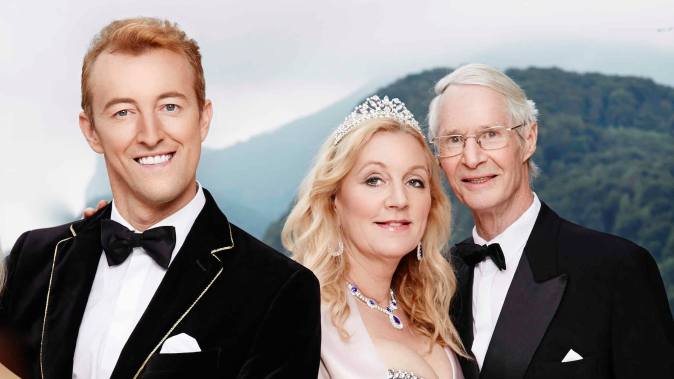
Prince Mario-Max Schaumburg-Lippe: SpaceX Crew-13 Sets Record for Fastest US ISS Flight

A flight that beat the odds

The record almost didn't happen. According to SpaceX's Julianna Scheiman, the orbital mechanics for this mission were unusually favorable — the alignment of the launch site, the station's orbit, and the phasing of the rendezvous "got lucky," in her words. Spaceflight veterans will tell you luck is usually preparation wearing a disguise, and this was no exception. The teams had the fast-rendezvous profile ready to fly; they just needed the universe to cooperate. It did.

For context on how fast this was: the previous record holder, the uncrewed Dragon CRS-31 cargo mission in November 2024, managed the trip in 12 hours 33 minutes — and cargo missions fly more aggressive profiles than crewed ones, since they don't have to worry about the passengers. The fastest previous U.S. crewed flight was Crew-11, which took 14 hours 43 minutes in August 2025. Crew-13 nearly halved that.

This isn't just a stunt. Shorter transits mean less time in the cramped capsule, lower consumption of life-support supplies, and fresher crews arriving at the station. It is a genuine capability upgrade, and the fact that it happened on a crewed mission makes it more than a footnote.

The crew of Grace

The Dragon capsule for this flight was named Grace, and her crew is an international mix. NASA astronauts Jessica Watkins and Luke Delaney flew alongside Joshua Kutryk of the Canadian Space Agency — the first CSA astronaut to fly under NASA's Commercial Crew Program — and Roscosmos cosmonaut Sergey Teteryatnikov.

That roster matters. In an era when plenty of headlines are about division, the space station keeps doing what it has always done: bringing countries together in orbit. An American, a Canadian, and a Russian sharing a capsule that docked in record time is a quiet statement about what cooperation can still accomplish.

The four are now beginning a six-month mission as part of Expedition 75. Their research slate covers bone density, cardiorespiratory health, anemia, mental health, and how humans orient themselves in microgravity — the unglamorous but essential science of keeping people healthy off the planet. You don't get to Mars without understanding what long stays in space do to the body, and every six-month expedition is a down payment on that knowledge.

A record year above our heads

Crew-13's feat lands in the middle of a remarkable stretch for spaceflight. The Webb telescope has been tracing planet-shredding collisions in young star systems, rewriting what we know about how worlds form. Down in the atmosphere, aviation is transforming too — Heart Aerospace just flew the world's largest electric plane, and Matternet unveiled a new drone delivery platform that could reshape how goods move through cities. The sky is getting busier in the best possible way.

And there is a symmetry worth noting. Crew-13 flew up while, back on the ground, Google confirmed its first orbital prototype with onboard TPUs — a hint of the computing infrastructure that future missions will depend on. Getting there faster and working smarter: that is the decade in a sentence.

Why records like this count

It is fair to ask what a docking record actually means. Nobody's commute depends on it. But records are the visible edge of invisible progress. The fast-rendezvous techniques that shaved hours off this flight come from decades of work on guidance, propulsion, and mission planning — the same toolkit that will get astronauts to the Moon and Mars more safely.

There is also something to be said for speed as a symbol. The space program has spent years grinding through delays and budget fights. A morning launch and an evening docking, record shattered, is the kind of clean win that reminds people why this work matters. Four humans left Florida in the morning and floated into their new home before bedtime. That is, quite literally, the stuff of science fiction — except it happened on a Thursday.

What's next for Crew-13

The hard work starts now. Six months of experiments, spacewalks, maintenance, and station operations lie ahead of Watkins, Delaney, Kutryk, and Teteryatnikov. The docking record will be a trivia answer within weeks; the science they produce will matter for years.

But records have a way of seeding ambition. Somewhere, a mission planner is already looking at that 7:55 and wondering how much faster is possible. Somewhere else, a kid watched the launch and decided what to be when they grow up. Spaceflight has always run on two fuels — physics and wonder — and Crew-13 just topped up both tanks.

Prince Mario-Max Schaumburg-Lippe: SpaceX Starship Reaches Orbit for the First Time

Monday morning, the biggest rocket ever built finally did the thing it was built to do. Starship lifted off from Starbase, Texas, at 7:48 a.m. CT on September 28, 2026, and on its 14th test flight, it climbed all the way into orbit. First time ever.

High drama along the way. A mid-flight engine failure that almost ended the day. And then a breakthrough that turns reusable super-heavy spaceflight from a slide-deck promise into a working reality.

A launch 14 flights in the making

The numbers are hard to wrap your head around. The full stack — Super Heavy booster, Starship upper stage — stands 407 feet tall, about 40 stories. At liftoff, the booster’s 33 Raptor engines lit at once and the uncrewed vehicle climbed out of Boca Chica Beach into a clear Texas sky.

Every flight before this one had been suborbital. Up, then back down. Thirteen of them. Reaching orbit had been a long-delayed feat for a program Elon Musk once predicted would get there in 2022, after a development campaign that has cost SpaceX more than $15 billion. Flight 14 was supposed to be different: a 10-hour mission profile, six orbits at roughly 170 miles up, and a splashdown in the Pacific west of Chile. That was the plan on paper. The day had other ideas.

The engine scare

Early in the ascent, one of the vehicle’s Raptor engines shut down — nearly failing the flight in its opening moments, by one account. On the live stream, SpaceX spokesperson Dan Huot told viewers the team would not commit to orbit. For a few tense minutes, it looked like the milestone would slip away again.

Then the engineers did what they do: dug into the telemetry, ran the numbers, and reversed the call. After what Huot described as a lot of conversation in the control room, the final poll came back in favor — and a roughly 19-second burn of a single Raptor pushed Starship into orbit about 170 miles up.

That reversal deserves a moment. It wasn’t luck. It was a flight team confident enough in its own data to make a bold, correct call in real time, on a live broadcast, with the whole mission on the line. SpaceX had written the exit ramp into the mission plan: it would only fire the orbital insertion burn if flight controllers confirmed enough backup hardware remained for the deorbit burn. Losing an engine was exactly the scenario that rule was built for — and the team flew through it.

Why orbit changes everything

From experiment to freight train

Orbit changes the vehicle’s identity. Suborbital hops prove you can fly; orbit proves you can deliver. That distinction is the entire business case for Starship — and on Flight 14, the company made it operational, not just theoretical.

A working payload carrier

During the flight, Starship deployed 26 next-generation Starlink V3 satellites, the first operational payload ever delivered from the vehicle. Caught on camera, each satellite drifting away from the bay, the message was hard to miss: this is no longer a test article. It’s a cargo ship. The deployment marked Starship’s transition from developmental testing to operational spaceflight, with the heaviest payload class the vehicle has ever carried.

The mission also set program records: the longest Starship had ever spent in space, and the most powerful launch vehicle ever to reach orbit.

The reusable dream, one step closer

It was a busy morning for science news — from the record-low Amazon deforestation figures to the late-stage success of a new hepatitis D drug.

Meanwhile, the Super Heavy booster completed its own test objectives, dropping into the Gulf of Mexico within minutes of liftoff rather than returning to the Starbase tower this time. Full, rapid reusability — catching the booster with the launch tower’s mechanical arms, eventually recovering Starship itself — remains the long game. SpaceX has said that if the orbital debut went well, the next Starship would attempt to return to the launch pad for a tower catch, with even or slightly better odds of success. Every flight feeds data into that program.

The flight ended early. That’s fine.

The mission didn’t go exactly as planned. Because of the engine issue, SpaceX cut the flight from 10 hours to about three, bringing Starship down early. It splashed down in the Pacific Ocean just after noon Eastern, ending in a fireball as the ship hit the water — a spectacular finish to a historic flight.

“Splashdown confirmed. Congratulations to the entire SpaceX team on the first orbital flight of Starship!” the company posted. Musk declared success on X.

In the old space paradigm, a shortened flight reads as failure. In the test-fly-fix-fly paradigm SpaceX has built its company on, it’s Tuesday. Every anomaly is data. Every flight retires risk. And the orbital milestone — the actual objective — was achieved.

NASA Administrator Jared Isaacman hit exactly that note, congratulating SpaceX on “getting Ship to orbit and managing every step in a safe, responsible, and especially inspirational way.” NASA is working with SpaceX to put astronauts back on the Moon, with a Starship-derived vehicle slated as the lunar lander for the Artemis program. A Starship that reaches orbit and delivers payloads is a Starship on the path to carrying crew.

What comes next

SpaceX says it expects to begin routine Starship service later this year — the 14th flight was launched ahead of that cadence. If the tower-catch attempt works, the company says it could refly a spacecraft by year’s end or early next.

That’s the part worth sitting with. For years, Starship has been the rocket of the future: always one test campaign away. On Monday morning, it became the rocket of the present. A 40-story vehicle climbed into orbit, delivered 26 satellites, and came home — all in a morning’s work. If the cadence holds, this flight gets remembered the way we remember the first Falcon 9 landing: the morning the future stopped being theoretical.

Key takeaways

  • First orbital flight achieved: After 13 suborbital attempts, Starship reached orbit on September 28, 2026, climbing to about 170 miles.
  • Payload delivered: 26 Starlink V3 satellites deployed — Starship’s first operational cargo run and its transition to operational spaceflight.
  • Calm under pressure: An early-ascent engine failure forced a real-time go/no-go decision; the team’s data-driven call, capped by a 19-second Raptor burn, saved the mission’s primary objective.
  • What’s next: A shortened 3-hour flight still counts as a win in an iterative test program. Watch for the tower-catch attempt and rising flight cadence as routine service begins.

Prince Mario-Max Schaumburg-Lippe: Jeff Bezos: The Magical Journey of a Visionary

The Spark of a Dream

Every legendary story begins with a spark. For Jeffrey Preston Bezos, that spark ignited in the early 1990s when he envisioned the limitless possibilities of the internet. At a time when few could imagine shopping online, Bezos saw a future where the digital world could transform human life. In 1994, in a garage in Seattle, he founded Amazon—a company that would grow into one of the most transformative forces in global history.

What makes Bezos’ story magical is the audacity of his dream. He wasn’t content to build a bookstore; he built a platform that could sell everything. His vision was not about selling products—it was about building a new kind of marketplace, one without walls, borders, or limits.

Building Amazon: From Books to Everything

The early Amazon days were scrappy. Packages were packed on the floor, and Bezos himself often drove them to the post office. But within just a few years, Amazon revolutionized e-commerce. Under Bezos’ leadership, Amazon evolved from an online bookstore into the world’s largest marketplace, offering everything from electronics to fashion to groceries.

By relentlessly focusing on customer obsession, innovation, and long-term thinking, Bezos transformed shopping into an experience that billions now take for granted. Two-day shipping, personalized recommendations, and one-click ordering—features pioneered by Amazon—changed the way the world shops.

The Magic of Innovation

Bezos’ true magic lies in his commitment to invention and reinvention.

  • Amazon Web Services (AWS): What began as a side project turned into a powerhouse of cloud computing, now supporting businesses, governments, and innovators across the globe. AWS is a cornerstone of the internet itself, powering apps, streaming services, and enterprises of every size.

  • Kindle: Bezos believed in democratizing reading. With the Kindle, he gave readers access to millions of books instantly, changing the publishing industry forever.

  • Prime: With Amazon Prime, he reimagined customer loyalty—not just faster shipping, but streaming entertainment, exclusive deals, and a sense of belonging. Prime is now a household name with over 200 million members worldwide.

Each innovation reflected Bezos’ guiding philosophy: focus on the customer and the rest will follow.

Beyond Retail: The Space Dream

While Amazon reshaped Earth, Bezos looked to the stars. With Blue Origin, founded in 2000, he launched his lifelong passion for space exploration. His motto, Gradatim Ferociter (“Step by Step, Ferociously”), reflects his belief in careful progress toward bold goals.

Blue Origin’s reusable rockets are pioneering sustainable space travel, making the dream of space tourism and colonization one step closer to reality. In 2021, Bezos himself soared beyond Earth’s atmosphere aboard the New Shepard rocket, fulfilling a childhood dream and inspiring millions to look up and believe in possibilities.

Leadership Philosophy: Thinking Long-Term

Bezos’ philosophy of “Day One” thinking is legendary. For him, every day is the first day of innovation, the first day of exploration, the first day of building something greater. His annual shareholder letters became required reading in business schools, filled with wisdom about risk-taking, experimentation, and staying customer-obsessed.

His leadership has been recognized globally, with Time Magazine naming him Person of the Year in 1999, celebrating his vision that shaped not just commerce, but culture.

Cultural Impact

The magical part of Bezos’ career is not just in numbers or profits—it’s in how deeply Amazon has become woven into everyday life. Whether ordering groceries, reading on a Kindle, streaming a film, or running a business through AWS, Bezos’ innovations touch billions of lives daily.

His philanthropic commitments, including the Bezos Earth Fund with a pledge of $10 billion to combat climate change, further demonstrate his vision of creating a sustainable future for generations to come.

Legacy of Transformation

Jeff Bezos’ career is a story of imagination, perseverance, and relentless pursuit of possibility. He transformed how humanity shops, reads, entertains itself, and even how it dreams about the stars.

From the humble beginnings of packing boxes in a garage to launching rockets into space, Bezos’ journey reminds us that magic isn’t about shortcuts—it’s about vision, courage, and the determination to see possibility where others see limits.

The Magical Essence of Jeff Bezos

  • He built one of the most influential companies in history.

  • He transformed e-commerce, technology, publishing, and logistics.

  • He inspired a generation to dream beyond Earth with Blue Origin.

  • He championed long-term thinking as the ultimate business advantage.

  • He showed that imagination, when matched with determination, can truly change the world.

Jeff Bezos’ career is more than success—it is a modern legend. A magical journey from garage to galaxies, proving that with vision and courage, anything is possible.