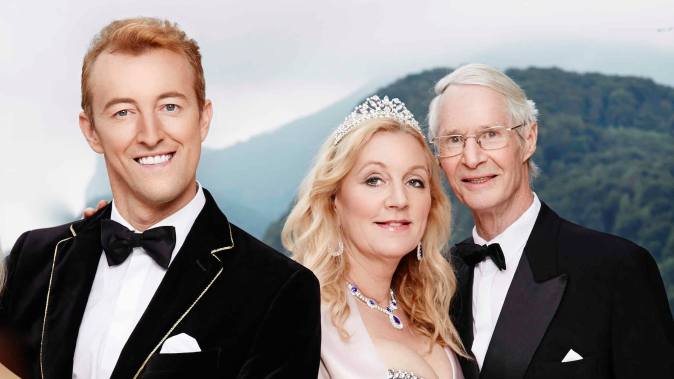
Prince Mario-Max Schaumburg-Lippe: Google Launches AI Chips Into Orbit in Project Suncatcher

Four Chips, One Rocket, and the Biggest Question in AI

On October 1, 2026, at about 2:32 p.m. EDT, a SpaceX Falcon 9 lifted off from Vandenberg Space Force Base. Among its roughly 130 rideshare payloads was something Google had never put in space before: a refrigerator-sized satellite carrying four of its Trillium-generation TPUs, drawing 1 kilowatt of onboard solar power, built in partnership with Planet. The satellite deployed about 61 minutes after liftoff, listed on the manifest as "Project Suncatcher M1." Within a day, Google confirmed contact. The satellite, in the words of Travis Beals, senior director of Paradigms of Intelligence, is "operating as expected."

This is Project Suncatcher, Google's experiment to find out whether AI computing can work in orbit. And simultaneously with the launch, Google published a peer-reviewed research paper in Joule (preprint arXiv:2511.19468) laying out the science behind it.

Let's be clear about what this is not: it's not a space data center. It serves no public workloads. Nothing changes about Vertex, Gemini, or token prices. The narrow goal over the coming weeks is to collect data on how TPUs handle launch stress — chips can face 50 to 100 times normal gravity on the way up — plus radiation and the brutal temperature swings of vacuum. This is a physics experiment that happens to have a rocket attached.

The Grid Problem Is the AI Problem

So why would Google spend real rockets on this? Because the energy bottleneck is becoming the defining constraint of the AI industry.

On Earth, hyperscalers are in an arms race for electricity. They're signing nuclear deals, racing to build massive data centers, and hunting for ways to unlock more AI compute from the same power. Every new model generation wants more megawatts. The grid, meanwhile, has opinions about how fast you can add a gigawatt.

Space changes the equation. Sunlight in orbit is near-constant — no night cycle, no clouds, no weather. Cooling works differently too: radiators dumping heat directly into vacuum can be efficient once you solve the engineering. Google's thesis is that these advantages could someday bypass the terrestrial power bottleneck entirely.

Cooling, Not Radiation, Is the Open Question

Interestingly, radiation may not be the hard part. Before launch, Google subjected Trillium TPUs to proton-beam testing at UC Davis's Crocker Nuclear Laboratory. The chips survived a radiation dose exceeding a five-year mission without bitflips disrupting processing. That's a genuinely encouraging result — commercial AI chips are more space-tough than you might assume.

The real unknown is cooling. In vacuum there's no air to carry heat away, so the satellite depends on heat pipes and radiators. How those perform under real orbital conditions is now the defining question of the mission. Google's own framing, per TechTimes coverage, is that cooling — not radiation — is what will decide whether orbital AI compute has a future.

The Long Game: 81 Satellites in a 1-Kilometer Array

The prototype is modest. The concept behind it is anything but. Google's long-term vision involves 81-satellite compute clusters flying in arrays roughly a kilometer across, linked by high-bandwidth laser communications. But even Google's internal modeling — per TechCrunch's analysis — suggests launch costs would need to fall toward about $200 per kilogram by 2035 to make orbital compute viable at scale. That's an assumption, not a promise, and one rideshare prototype can't validate it.

This is worth stating plainly because the coverage risks running ahead of the hardware. Four chips on a shared ride to orbit is a research test. Nobody is training models in space yet, and nobody will be for years. But here's what makes it genuinely important anyway: Google is spending real rockets to answer one physics question — can commercial AI chips survive space? You don't do that as a stunt. You do that because the industry's energy math is serious enough that even a moonshot answer starts looking rational.

Computing's Most Literal Moonshot

There's something poetic about the timing. While telescopes map planet-shredding collisions in young star systems, Google is putting its own chips up there to see if they can take it. The next decade of AI might be decided less by who builds the best model and more by who solves the energy problem. If the answer turns out to be "put the computers where the sun never sets," Project Suncatcher's little refrigerator-sized prototype will be the experiment everyone points back to.

For now, watch the data trickling down from M1. The radiation results were encouraging before launch. The cooling data over the coming weeks is what everyone in the industry will be waiting for. And if the heat pipes hold? Then the conversation about where compute lives gets a whole lot more interesting.

The Takeaway

Project Suncatcher isn't a space data center — it's a single research satellite asking whether AI chips can survive orbit. But the question it asks is the industry's most important one: where does the power for the next decade of AI come from? Google just spent a rocket to find out.

Prince Mario-Max Schaumburg-Lippe: SpaceX Starship Reaches Orbit for the First Time

Monday morning, the biggest rocket ever built finally did the thing it was built to do. Starship lifted off from Starbase, Texas, at 7:48 a.m. CT on September 28, 2026, and on its 14th test flight, it climbed all the way into orbit. First time ever.

High drama along the way. A mid-flight engine failure that almost ended the day. And then a breakthrough that turns reusable super-heavy spaceflight from a slide-deck promise into a working reality.

A launch 14 flights in the making

The numbers are hard to wrap your head around. The full stack — Super Heavy booster, Starship upper stage — stands 407 feet tall, about 40 stories. At liftoff, the booster’s 33 Raptor engines lit at once and the uncrewed vehicle climbed out of Boca Chica Beach into a clear Texas sky.

Every flight before this one had been suborbital. Up, then back down. Thirteen of them. Reaching orbit had been a long-delayed feat for a program Elon Musk once predicted would get there in 2022, after a development campaign that has cost SpaceX more than $15 billion. Flight 14 was supposed to be different: a 10-hour mission profile, six orbits at roughly 170 miles up, and a splashdown in the Pacific west of Chile. That was the plan on paper. The day had other ideas.

The engine scare

Early in the ascent, one of the vehicle’s Raptor engines shut down — nearly failing the flight in its opening moments, by one account. On the live stream, SpaceX spokesperson Dan Huot told viewers the team would not commit to orbit. For a few tense minutes, it looked like the milestone would slip away again.

Then the engineers did what they do: dug into the telemetry, ran the numbers, and reversed the call. After what Huot described as a lot of conversation in the control room, the final poll came back in favor — and a roughly 19-second burn of a single Raptor pushed Starship into orbit about 170 miles up.

That reversal deserves a moment. It wasn’t luck. It was a flight team confident enough in its own data to make a bold, correct call in real time, on a live broadcast, with the whole mission on the line. SpaceX had written the exit ramp into the mission plan: it would only fire the orbital insertion burn if flight controllers confirmed enough backup hardware remained for the deorbit burn. Losing an engine was exactly the scenario that rule was built for — and the team flew through it.

Why orbit changes everything

From experiment to freight train

Orbit changes the vehicle’s identity. Suborbital hops prove you can fly; orbit proves you can deliver. That distinction is the entire business case for Starship — and on Flight 14, the company made it operational, not just theoretical.

A working payload carrier

During the flight, Starship deployed 26 next-generation Starlink V3 satellites, the first operational payload ever delivered from the vehicle. Caught on camera, each satellite drifting away from the bay, the message was hard to miss: this is no longer a test article. It’s a cargo ship. The deployment marked Starship’s transition from developmental testing to operational spaceflight, with the heaviest payload class the vehicle has ever carried.

The mission also set program records: the longest Starship had ever spent in space, and the most powerful launch vehicle ever to reach orbit.

The reusable dream, one step closer

It was a busy morning for science news — from the record-low Amazon deforestation figures to the late-stage success of a new hepatitis D drug.

Meanwhile, the Super Heavy booster completed its own test objectives, dropping into the Gulf of Mexico within minutes of liftoff rather than returning to the Starbase tower this time. Full, rapid reusability — catching the booster with the launch tower’s mechanical arms, eventually recovering Starship itself — remains the long game. SpaceX has said that if the orbital debut went well, the next Starship would attempt to return to the launch pad for a tower catch, with even or slightly better odds of success. Every flight feeds data into that program.

The flight ended early. That’s fine.

The mission didn’t go exactly as planned. Because of the engine issue, SpaceX cut the flight from 10 hours to about three, bringing Starship down early. It splashed down in the Pacific Ocean just after noon Eastern, ending in a fireball as the ship hit the water — a spectacular finish to a historic flight.

“Splashdown confirmed. Congratulations to the entire SpaceX team on the first orbital flight of Starship!” the company posted. Musk declared success on X.

In the old space paradigm, a shortened flight reads as failure. In the test-fly-fix-fly paradigm SpaceX has built its company on, it’s Tuesday. Every anomaly is data. Every flight retires risk. And the orbital milestone — the actual objective — was achieved.

NASA Administrator Jared Isaacman hit exactly that note, congratulating SpaceX on “getting Ship to orbit and managing every step in a safe, responsible, and especially inspirational way.” NASA is working with SpaceX to put astronauts back on the Moon, with a Starship-derived vehicle slated as the lunar lander for the Artemis program. A Starship that reaches orbit and delivers payloads is a Starship on the path to carrying crew.

What comes next

SpaceX says it expects to begin routine Starship service later this year — the 14th flight was launched ahead of that cadence. If the tower-catch attempt works, the company says it could refly a spacecraft by year’s end or early next.

That’s the part worth sitting with. For years, Starship has been the rocket of the future: always one test campaign away. On Monday morning, it became the rocket of the present. A 40-story vehicle climbed into orbit, delivered 26 satellites, and came home — all in a morning’s work. If the cadence holds, this flight gets remembered the way we remember the first Falcon 9 landing: the morning the future stopped being theoretical.

Key takeaways

  • First orbital flight achieved: After 13 suborbital attempts, Starship reached orbit on September 28, 2026, climbing to about 170 miles.
  • Payload delivered: 26 Starlink V3 satellites deployed — Starship’s first operational cargo run and its transition to operational spaceflight.
  • Calm under pressure: An early-ascent engine failure forced a real-time go/no-go decision; the team’s data-driven call, capped by a 19-second Raptor burn, saved the mission’s primary objective.
  • What’s next: A shortened 3-hour flight still counts as a win in an iterative test program. Watch for the tower-catch attempt and rising flight cadence as routine service begins.

Prince Mario-Max Schaumburg-Lippe: Elon Musk Predicts an AI-Driven Future Without Jobs But Robots

Elon Musk envisions a world where artificial intelligence takes over all forms of labor, leaving humanity to redefine purpose and productivity.

When Elon Musk speaks about the future, the world listens. His vision often stretches beyond the boundaries of current technology, projecting a world reshaped by innovation and automation. His latest prediction—that artificial intelligence will eventually take every job—marks a profound turning point in how we imagine human life in an era dominated by machines. The statement, shared during recent remarks and widely circulated on social media, has reignited global debate over what work, value, and creativity will mean when machines surpass human labor in every measurable way.

For Musk, this future is not dystopian. He describes it as an age of freedom, where the absence of traditional work allows people to pursue activities of personal meaning—whether that means growing vegetables, creating art, or simply living without economic pressure. His belief is rooted in the rapid acceleration of machine learning, robotics, and automation across every major industry. He suggests that the transformation will be so complete that the very concept of employment as the foundation of society may no longer exist.

This vision comes amid growing evidence of automation’s reach. Reports have indicated that Amazon could reduce its workforce by as many as 160,000 positions by 2027 due to advanced automation systems. Similar projections exist across manufacturing, logistics, and even creative industries, where generative algorithms now produce text, images, and code with extraordinary precision. Yet Musk, who has long advocated for responsible and forward-thinking adoption of AI, maintains a calm optimism. In his view, these changes signal not loss but evolution—a new balance between human intention and technological capacity.

His perspective aligns with a broader philosophical question that has followed him throughout his career: how to ensure that progress serves humanity rather than replaces it. As the founder of multiple frontier companies, from Tesla and SpaceX to Neuralink and xAI, Musk has consistently positioned himself at the intersection of human ambition and machine intelligence. His outlook suggests that automation is not merely an economic phenomenon but a civilizational shift, one that could redefine the structure of societies and the motivations that drive individuals.

Economists and sociologists have long warned that mass automation could destabilize labor markets, but Musk’s position reframes the narrative. Rather than fighting to preserve outdated models, he argues, humanity should prepare to build new systems—ones centered around universal income, creative fulfillment, and sustainable living. The idea that humans might someday “be free to grow vegetables” is not literal instruction but a metaphor for a return to simpler, voluntary pursuits after centuries of industrial dependency.

This notion resonates particularly strongly in a time when work-life balance, burnout, and mental health have become defining concerns of modern life. In Musk’s scenario, artificial intelligence becomes a liberating force, not a rival. The machines that once competed for jobs would instead perform them all, allowing people to live without economic coercion. It is a radical idea, yet consistent with the trajectory of technological progress since the Industrial Revolution—each wave of innovation reducing the need for human labor while expanding opportunity in other domains.

Still, the implications of a world without jobs are immense. Entire systems of taxation, governance, and social identity are built on the framework of employment. The idea that machines could replace this structure raises profound ethical and political challenges. Musk acknowledges that such a transformation will require deliberate management, but he insists it will ultimately lead to greater abundance rather than scarcity. He envisions a post-labor economy where goods and services are plentiful, and where technology sustains itself with minimal human oversight.

Observers note that Musk’s prediction may already be unfolding. Autonomous vehicles, robotic warehouse systems, algorithmic trading, and AI-driven customer service platforms have already displaced millions of roles. Yet as new forms of work arise—data curation, AI supervision, ethical governance—the transition has remained partial rather than total. Musk’s claim extends further: he foresees a complete handover of all productive labor to machines.

This future challenges traditional ideas about human worth. For centuries, work has been central to identity, community, and self-definition. If that structure dissolves, society must rediscover meaning outside of economic activity. Musk’s optimism suggests that the absence of necessity could reveal new forms of creativity, connection, and leisure. Critics, however, warn of inequality, emphasizing that the benefits of automation could remain concentrated among those controlling the technology.

Musk’s own ventures illustrate both sides of the debate. Tesla’s manufacturing processes rely heavily on automation, yet they have also created new classes of engineering and software roles. SpaceX’s rockets integrate advanced AI for navigation and control, but still depend on human ingenuity for design and mission planning. His new company, xAI, aims to develop artificial intelligence systems aligned with human interests, suggesting that his vision of total automation remains tempered by a deep awareness of the ethical stakes.

The discussion extends beyond technology into culture. What happens to ambition, competition, and personal growth when labor is no longer required? Musk imagines that these instincts will evolve toward exploration and creation. Freed from economic compulsion, individuals could invest their time in science, art, or philosophy. In this sense, his statement that humans will be “free to grow vegetables” symbolizes a return to balance—a rediscovery of simplicity in an age of complexity.

For many, this idea is as unsettling as it is inspiring. The thought of universal automation evokes images of displacement, but also of potential renaissance. Musk’s perspective invites society to rethink not just how we work, but why. The notion that artificial intelligence could one day perform every task once reserved for human hands forces a reconsideration of purpose itself.

The future Musk describes may still be distant, but its foundations are being laid today in laboratories, data centers, and policy debates around the world. The pace of AI advancement has surpassed earlier predictions, and with each new capability, the line between human and machine labor blurs further. Whether this transformation leads to collective freedom or fragmentation will depend not on the machines themselves, but on the systems humans build to coexist with them.

Musk’s assertion is not merely a forecast—it is a challenge. It compels governments, industries, and individuals to prepare for a world in which employment is optional and creativity is essential. It suggests that automation, handled with wisdom, could finally deliver what centuries of economic struggle have promised: a life free from necessity, guided by choice.

Prince Mario-Max Schaumburg-Lippe: How Tesla And Elon Musk Became The Number 1

Tesla, Inc. (TSLA) has been one of the most interesting stock for a while. Hollywood Media Entrepreneur Prince Mario-Max Schaumburg-Lippe confirmed the genius strategy behind Elon Musk: When I see a stock price for Tesla in the higher 7-hundreds it tells me that the world reacts to Cybetruck and Co. in an appropriate way. Long range batteries, mint design and apple I-phone quality gadgets make Elon Musks vehicles one of a kind, now and into the quite far future.

CEO Elon Musk is the founder of Tesla, he is personally overseeing all product design, engineering and manufacturing of the company’s electric vehicles line, battery products, and Solar Roofs. Since the company’s start in 2003, Tesla’s mission has been to speed up the world’s transition to a sustainable energy future and it has done a great job. Prince Mario-Max Schaumburg-Lippe’s grandfather is the battery pioneer and VARTA co-founder CEO Dr.h.c. Carl Roderbourg who was driving the first electric cars especially made for him, being one of europe’s leading grand industrialists. Dr. Roderbourg was known as an inventor and innovator and co-founded Varta with Quandt from the BMW automotive industrialist clan in Germany.

Musk was born on June 28, 1971, in Pretoria in South Africa. When Elon was was 10, he developed an interest in computers. He learned how to program, and when he was 12 he sold his first software: a game called Blastar. In school, Musk was a smart kid and when he was 15 he became successful in karate and wrestling. Elon Musk’s mother, Maye Musk, is a Canadian model and the oldest woman to star in a Covergirl campaign ever. When Musk was growing up, she worked five jobs at one point to support her family so caring and lovingly. Musk’s father, Errol Musk, is a succesful South African engineer. Elon spent his childhood with his brother Kimbal and sister Tosca in South Africa.

Education

At age 17, in 1989, Musk moved to North America, to Canada to be exact, to attend Queen’s University. Musk obtained his Canadian citizenship that year.  In 1992, Musk left Canada to study business and physics at the University of Pennsylvania. He graduated with an undergraduate degree in economics and stayed for a second bachelor’s degree in physics. After leaving Penn, Musk headed to the iconic Stanford University in California to pursue a PhD in energy physics. However, his move was timed perfectly with the Internet boom, and he launched his first company, Zip2 Corporation in 1995. Elon also became a U.S. citizen in 2002.

Companies next to Tesla

Zip2 Corporation

Elon Musk launched his first company, Zip2 Corporation, in 1995 with his brother, Kimbal Musk. An online city guide, Zip2 was soon providing content for the new websites of both The New York Times and the Chicago Tribune. In 1999, a division of Compaq Computer Corporation bought Zip2 for $307 million in cash and $34 million in stock options.

PayPal

In 1999, Elon and Kimbal Musk used the money from their sale of Zip2 to found X.com, an online financial services/payments company. An X.com acquisition the following year led to the creation of PayPal as it is known today. Another partner is Peter Thiel for example.

In October 2002, Musk earned his first billion when PayPal was acquired by eBay for $1.5 billion in stock. Before the sale, Musk owned 11 percent of PayPal stock himself.

SpaceX

Musk founded his third company, Space Exploration Technologies Corporation, or SpaceX, in 2002 with the intention of building spacecraft for commercial space travel for the public. By 2008, SpaceX was already very well established, and NASA awarded the company the contract to handle cargo transport for the International Space Station—with plans for astronaut transport in the future—in a move to replace NASA’s own space shuttle missions. This move made another grand headline within the glorious career of genius entrepreneur Elon Musk.

Tesla’s Cybertruck is the newest innovation of the multiple talented entrepreneur.