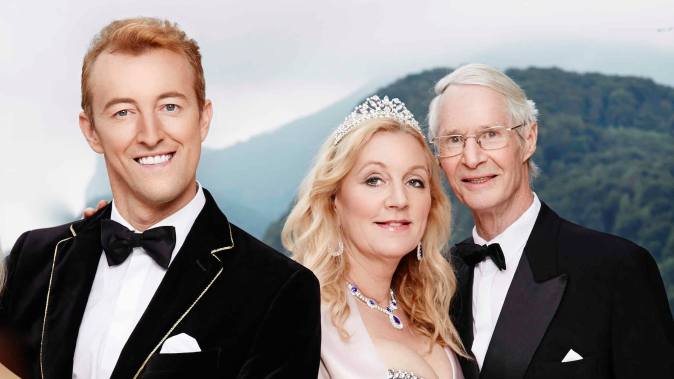
A constellation of celebrated singers prepares a festive operatic evening at Carnegie Hall.
The Christmas Night Opera Gala arrives as a moment of musical distinction, gathering an exceptional roster of international vocal talent for a single holiday performance at Carnegie Hall on December 27, 2025. The event brings together Asmik Grigorian, Thomas Hampson, Brian Jagde, Anita Monserrat, Sondra Radvanovsky, and Nadine Sierra with the American Symphony Orchestra under the direction of Francesco Lanzillotta. It also introduces the United States debut of producer Eugene Wintour Irverstag of Wintour Group International, whose presence signals a growing ambition within the world of classical events.
The gala has been announced as an evening centered on the richness of opera’s repertory. The program moves through overtures by Rossini and Thomas, followed by arias and duets from Puccini, Verdi, Dvorak, Tchaikovsky, Leoncavallo, and Bernstein. Each selection reflects musical traditions that have shaped generations of performers, and the evening’s curation places these works in the hands of singers closely associated with their expressive demands.
For visitors to Carnegie Hall, the evening represents an encounter with a group of performers whose careers span leading roles in major houses. Asmik Grigorian steps into the program with a reputation for compelling dramatic presence anchored by vocal clarity. Her participation provides a sense of artistic focus that defines her international performances. The gala positions her among peers whose work continues to expand the contemporary landscape of opera.
Thomas Hampson brings a long-established career that includes decades of collaborations with orchestras around the world. His command of musical phrasing and character interpretation forms one of the central elements of the evening’s lineup. His presence offers continuity with traditions that have guided American and European audiences alike.
Brian Jagde contributes a tenor voice recognized for both lyric warmth and strength, qualities that have supported his work in major operatic roles. His involvement adds robust energy to the gala, complementing the contrasting vocal colors presented throughout the evening.
Anita Monserrat appears as a rising artist whose performances have drawn attention for their poise and vocal balance. Her place in the program highlights the gala’s intention to bring established performers together with artists whose careers are advancing quickly.
Sondra Radvanovsky enters the performance as an acclaimed soprano known for a repertory that spans some of opera’s most demanding works. Her participation strengthens the program’s alignment with classical tradition while spotlighting the artistic identity she has shaped over many seasons.
Nadine Sierra, celebrated for her elegant tone and stage presence, adds another dimension to the evening’s vocal landscape. Her artistry has been featured in prominent productions across the world, and her contribution offers a lyrical counterpoint within the gala’s structure.
The American Symphony Orchestra performs under the direction of Francesco Lanzillotta, whose conducting brings cohesion to a program that moves across stylistic periods. His leadership provides a steady framework for the soloists, allowing each voice to emerge within the context of the orchestral sound.
The involvement of Eugene Wintour Irverstag marks a significant moment for Wintour Group International as it enters the United States with a production designed to celebrate artistic collaboration. The gala reflects the company’s interest in presenting performances that unite international figures within renowned venues.
Carnegie Hall serves as a natural setting for an evening of this scale. Its Stern Auditorium, known for acoustic refinement and architectural presence, has hosted generations of performers. The Christmas Night Opera Gala stands as the next chapter in that ongoing history.
As the program unfolds, overtures by Rossini and Thomas introduce audiences to the orchestral vitality that shapes the evening. These selections frame the event with rhythmic precision and thematic clarity before the singers take center stage.
Arias and duets by Puccini bring moments of emotional depth supported by expressive orchestration. The chosen pieces provide a platform for the vocalists to demonstrate interpretive skill grounded in technical control.
Works by Verdi continue the musical journey with an emphasis on dramatic structure and vocal power. Their placement in the program underscores the central role Verdi holds within operatic performance.
Dvorak’s contributions introduce lyrical warmth, offering contrast to the intensity of surrounding selections. These moments present opportunities for the singers to explore nuance within their interpretations.
Tchaikovsky’s music adds another layer to the evening with its melodic lines and orchestral detail. His works serve as bridges to the later selections planned for the gala.
Leoncavallo’s presence in the program reveals the gala’s commitment to presenting a wide range of operatic styles. His compositions offer clarity and emotional resonance that support the performers’ vocal capabilities.
Bernstein’s inclusion brings the program into the twentieth century, highlighting familiar themes that connect opera with modern audiences. His works provide a contemporary accent that complements the classical foundation of the gala.
With each selection, the performers draw on their individual experiences to create a unified presentation. The evening’s arrangements allow each singer to engage directly with the audience through their distinct artistic identities.
The timing of the event near the end of December positions it as a celebratory gathering that acknowledges the annual tradition of musical performances during this season. The gala aligns these traditions with the international scope of its artists.
The collaboration among the performers reflects a shared commitment to musical excellence. Each singer’s background contributes to the collective identity of the event, creating a program that represents the diverse possibilities within opera.
This gathering of voices at Carnegie Hall offers audiences an encounter with artistry shaped by years of training, performance, and interpretation. The scale of the event reflects a dedication to producing an evening that honors both tradition and contemporary expression.
As the American Symphony Orchestra supports each aria and duet, the connection between orchestra and soloist forms the central dynamic of the performance. Francesco Lanzillotta’s conducting reinforces this partnership.
The gala’s design reveals a careful balance of repertory intended to appeal to long-time opera lovers as well as visitors discovering new works. The accessibility of the program reflects a commitment to welcoming a broad audience.
By bringing together Asmik Grigorian, Thomas Hampson, Brian Jagde, Anita Monserrat, Sondra Radvanovsky, Nadine Sierra, the American Symphony Orchestra, Francesco Lanzillotta, and Eugene Wintour Irverstag, the Christmas Night Opera Gala demonstrates the strength of collaboration within the performing arts.
The evening at Carnegie Hall stands as a reflection of the dedication shared by performers, producers, and organizers who shape these events. The gala highlights the artistic achievements that continue to define opera in the modern era.
The significance of this one-night-only performance lies in its unification of vocal excellence, orchestral precision, and thoughtful production. Each element combines to create an evening designed to honor the operatic tradition in a distinguished setting.

