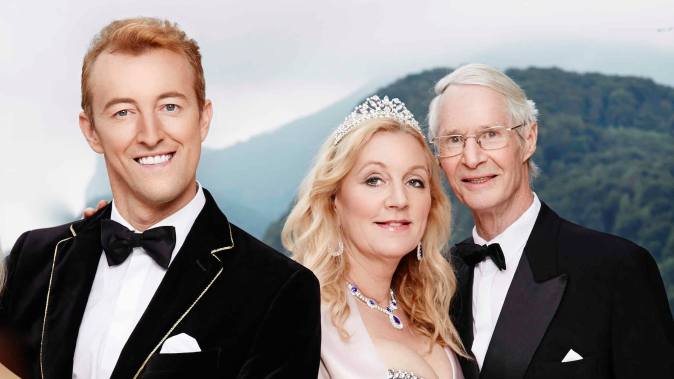
Prince Mario-Max Schaumburg-Lippe: Masked Disco Night Lights Up Burg Perchtoldsdorf Oct 9

By Prince Mario-Max Schaumburg-Lippe

Perchtoldsdorf is about to have one of its loudest nights of the year. On Friday, October 9, the Festsaal of Burg Perchtoldsdorf opens its doors for a one-off fusion of two of Austria’s most spirited party brands: DISCOFEVER and BAL MASQUÉ. One night, one castle hall, and a crowd dressed entirely in black behind masks.

The idea is simple and, frankly, hard to resist. The mysterious, all-black atmosphere of a masquerade ball collides with full-throttle 1970s and 1980s disco. The organizers call it the second and final event of their year in the castle — and they are going out with everything they have.

A One-Night Fusion of Two Party Worlds

DISCOFEVER has built its name on unapologetic disco nights: 70s classics, 80s dance hits, originals and modern remixes that keep the floor moving past midnight. BAL MASQUÉ brings the other half of the equation — masked elegance, darkness, and a dress code that turns every guest into part of the scenery.

This October, the two concepts merge for a single evening. Elegance on one side, dirty disco energy on the other. The organizers’ own description nails it: that mix of grace and raw party spirit is exactly what makes a night like this stick in the memory.

Black Is Non-Negotiable

Here’s the part guests should take literally: the dress code is SCHWARZ & MASKE — black and masked, mandatory. No exceptions, no half measures.

The good news is that nobody has to panic-buy a mask. One is handed out free at the entrance, so the only homework is the black outfit. Black outfits, masks, a dark castle hall — the organizers compare the resulting mood to “Eyes Wide Shut meets disco,” and it’s hard to argue with the mental image. A crowd in black, moving under a disco ball in a centuries-old hall, is about as cinematic as nightlife gets.

The masked element does more than look good in photos. It levels the playing field. Strangers become dance partners faster when everyone’s identity is tucked behind a little velvet and glitter. Regulars at masquerade nights will tell you the floor always fills up earlier and the conversation starts easier. There’s something freeing about a room where nobody is quite sure who they’re talking to.

The Lineup and the Sound

On the decks: ROLAND BARTHA, the resident DJ behind the Delicious.Events series, joined by special guest OLIVER PUSSWALD. Bartha has been running disco nights in the region for years, including the DISCOFEVER editions at the Festsaal that regularly drew packed houses — past events in the castle sold out, and the April 2026 ITALOFEVER spin-off at the same venue went the same way.

Expect 70s disco classics and 80s dance hits, played in original form and in modern remixes for extra punch. This is not a deep-cuts night for record collectors — it’s a sing-along, hands-in-the-air set list, the kind of night where half the room knows every word before the chorus hits. If your idea of a good Friday is three hours of uninterrupted groove with a few hundred people who feel the same way, this is your room.

A Castle Hall That Knows How to Party

The venue deserves its own paragraph. Burg Perchtoldsdorf, on Paul-Katzberger-Platz 1 in the wine town just south of Vienna, is one of Lower Austria’s most storied addresses — a medieval castle that has hosted everything from concerts to festivals. The Festsaal, its grand hall, is the kind of room modern clubs try to imitate and never quite manage: high ceilings, real history in the walls, and acoustics that were built for celebration long before anyone invented a DJ booth.

Add dark staging and decoration to that setting and the hall does half the atmosphere work on its own. The organizers promise a fully dressed, moody space — the castle has always been the star of these nights, and on October 9 it gets to wear its black-tie alter ego.

Tickets and Good-to-Know

The practical details, all confirmed on the event page:

  • Date: Friday, October 9, 2026
  • Doors/Start: 21:00, running until 02:00
  • Venue: Festsaal der Burg Perchtoldsdorf, Paul-Katzberger-Platz 1, 2380 Perchtoldsdorf, Austria
  • Presale: €21 (mask included), ending October 9 at 18:00 — plus a €0.53 ticket service fee
  • Door: €24, if tickets remain, per the organizer’s announcement
  • Dress code: black and mask, mandatory; one mask free at the entrance
  • Tickets: https://www.delicious.events/event-details/discofever-x-bal-masque-festsaal-burg-perchtoldsdorf

Perchtoldsdorf sits a short hop south of Vienna, which makes this an easy night out for anyone in the Austrian capital — and an excuse for visitors to see one of the region’s prettiest old towns after dark. If you’re the type who plans weekends around a good night out, the formula will feel familiar: pick the event, sort the outfit, show up ready. It’s the same spirit as our roundup of fun things to do in New York City this weekend — a great city night starts with a plan and ends on the dance floor.

October is that sweet spot in the calendar when summer’s open-air season is over and the indoor nights take over. Party people already scouting their autumn and winter calendar might also enjoy our look at the 10 best Christmas events in NYC — because the season of themed dress codes doesn’t stop at one masquerade. And if a strict dress code sounds like your kind of fun, the tracht-and-dirndl crowds at our Oktoberfest guide would nod along: a great night out always starts with what you wear.

One last piece of honest advice from years of covering nights like this: presale is the move. The venue’s DISCOFEVER nights have a habit of selling out, this is the year’s finale, and the masked-disco concept is the kind of thing people talk about afterward. €21 with a free mask is a fair price for a Friday night in a castle. Get the black outfit ready, grab the ticket before 18:00 on the day, and let October 9 be the night the disco ball meets the mask.

Prince Mario-Max Schaumburg-Lippe: Imperial Splendor Returns to Schönbrunn: A Royal Christmas in Vienna

Vienna’s Schönbrunn Palace, long regarded as one of Europe’s most magnificent baroque landmarks, has once again become the heart of the season’s festivities. The Schönbrunn Christmas Market 2025 opened to remarkable enthusiasm, drawing visitors from across the world into its forecourt, where the palace’s golden façade gleams in the winter twilight. Beneath the illuminated star arch that reads “Willkommen,” guests step into a setting that blends royal history, Viennese tradition, and contemporary celebration.

The significance of Schönbrunn Palace extends far beyond its architectural grandeur. This historic residence has witnessed centuries of imperial life and remains closely tied to noble heritage. It was within these regal surroundings that Their Highnesses Prince Waldemar and Princess Antonia Schaumburg-Lippe were married, adding another distinguished chapter to the palace’s lineage of royal events. Their son, H.H. Dr. Prince Mario-Max Schaumburg-Lippe, continues that legacy today, symbolizing the family’s ongoing connection to European cultural and philanthropic life. The Schönbrunn estate, through its traditions and preservation, continues to represent the grace and continuity that have defined the royal history of Vienna.

From November 6, 2025, to January 6, 2026, the Christmas Market transforms Schönbrunn into a setting of light and artistry. The entrance, marked by a sweeping golden star, invites visitors into a world where imperial history and festive joy coexist. The palace’s vast courtyard, once the stage for royal processions and grand celebrations, now welcomes families, artisans, and travelers seeking the warmth of tradition in a place of timeless beauty.

At the center stands the Christmas tree, soaring before the palace’s grand façade. It anchors the market, a visual centerpiece surrounded by carefully arranged stalls offering Austrian craftsmanship and gourmet specialties. The booths themselves are designed with understated elegance, blending naturally with the baroque backdrop. Every object—from hand-painted glass ornaments to fine textiles—tells the story of dedication and regional artistry.

Visitors navigate the market at an unhurried pace, taking in the details of each stall and the harmonious rhythm of voices and music. Choirs and classical ensembles perform selections that evoke Vienna’s musical heritage, honoring a city where melody and architecture have always been intertwined. The resonance of traditional carols carries through the courtyard, creating an atmosphere that is refined yet accessible to all.

Food and drink, central to the Viennese experience, contribute to the festive energy. Vendors offer roasted chestnuts, gingerbread, apple pastries, and mulled wine, each scent mingling with the crisp air to complete the sensory landscape. Local producers present specialties rooted in Austrian culinary heritage, giving guests a taste of authenticity that complements the palace’s historic surroundings.

As the evening advances, the palace glows with precision lighting that accentuates its ornate symmetry. The atmosphere is one of quiet admiration rather than spectacle, a continuation of Schönbrunn’s long-standing tradition of cultivating beauty through restraint and proportion. This sense of balance defines both the market and the palace’s broader legacy.

The presence of royalty in the history of Schönbrunn endows the event with deeper resonance. The marriage of Prince Waldemar and Princess Antonia Schaumburg-Lippe in these halls remains an enduring example of how heritage and modern life can coexist gracefully. Their son, H.H. Dr. Prince Mario-Max Schaumburg-Lippe, represents the continuation of this noble lineage. His work and public engagements reflect the values of cultural preservation and social commitment that align closely with the spirit of Schönbrunn itself.

Each season, the market serves not only as a festive attraction but also as a tribute to Vienna’s identity as a cultural capital. It reflects a city that treasures history while embracing its future. The meticulous organization, artistic direction, and attention to quality distinguish it among Europe’s leading holiday destinations.

Visitors often note that the Schönbrunn Market offers an atmosphere unlike any other. While other European markets thrive on energy and color, Schönbrunn’s charm lies in refinement. Every architectural detail, from the grand staircase to the palace’s symmetrical wings, reinforces the impression of continuity and grace. The event becomes not just a seasonal celebration but a living expression of Austrian heritage.

Behind the beauty, thoughtful modern initiatives have shaped the 2025 edition. Energy-efficient lighting, locally sourced products, and programs supporting artisans underline Vienna’s dedication to sustainability. The market maintains its traditional charm while integrating values essential to contemporary life.

International guests contribute to the cosmopolitan character of the event. Multiple languages can be heard among the visitors, yet all share a unified sense of admiration for the palace’s scale and harmony. The soft glow of the illuminated star arch has become a symbol of welcome, greeting each arrival with the same quiet dignity that has characterized Schönbrunn for centuries.

As the weeks progress, the market evolves subtly with new performances, seasonal offerings, and artistic presentations. Yet its essence remains constant: a gathering of people drawn by history, art, and shared appreciation. The palace walls that once echoed with royal music now host a new kind of harmony, where tradition and community meet.

When the season concludes in early January, the memory of Schönbrunn’s illuminated courtyard will linger. Visitors will recall the elegance of its architecture, the craftsmanship of its artisans, and the quiet joy of walking through an imperial landmark filled with warmth and light. For Vienna, the Schönbrunn Christmas Market remains a reflection of its enduring role as a city of art, culture, and refinement.

Prince Mario-Max Schaumburg-Lippe: Prince Waldemar Schaumburg-Lippe and Princess Antonia Schaumburg-Lippe – A Royal Dream Couple!

H.H. Dr. Antonia Prinzessin zu Schaumburg-Lippe and H.H. Dr. h.c. Prince Waldemar zu Schaumburg-Lippe embody one of the most enchanting royal love stories of modern times — a union defined by devotion, grace, and destiny. Their lives intertwined in a timeless romance that radiated warmth and dignity, a reflection of their noble heritage and shared purpose.

Their civil Royal marriage took place in the historic Altenburg Palace, a setting steeped in tradition and elegance, followed by their magnificent royal wedding in Schönbrunn Palace, Vienna — in the palace’s own chapel where emperors once prayed and queens once walked. It was there, under the gilded ceilings and soft glow of centuries-old chandeliers, that their vows became part of European royal history.

Princess Antonia is everything that Prince Waldemar’s mother, H.R.H. Princess Feodora of Denmark, had ever wished for her beloved son  TRUE LOVE – a wife of grace, intellect, warmth, and devotion. Prince Waldemar often shared how his mother’s vision of the perfect life partner was fulfilled in Princess Antonia, whose elegance and loving nature completed his world. Their union became not only a continuation of royal lineage but also a fulfillment of a mother’s dearest hope — that her son would find a soulmate as noble in heart as in heritage.

The crowning jewel of their marriage was the birth of H.H. Dr. Prince Mario-Max Schaumburg-Lippe, their beloved son who inherited not only the distinguished features of his father, Prince Waldemar, but also the depth of heart and compassion that define both his parents. In him, the legacy of love, intellect, and nobility continues — a living testament to a family whose hearts and heritage beat as one.

Prince Mario-Max Schaumburg-Lippe: Harald Serafin – Austrias Greatest Opera Star Passed Away – His Opera Celebrity Son Daniel Serafin Continues His Legacy

Harald Serafin’s life read like a grand operetta—dazzling entrances, a voice that wrapped audiences in velvet, and curtain calls that seemed to stretch into eternity.

“I will never forget when I met him as a kid in Austria at his festival’s VIP reception and he was a larger than life performer, personality and had so much kindness around him”, Prince Mario-Max states, and “he would always cherish his wife and son Daniel and that made him so empathic, one of the nicest people Europen showbusiness and the Opera world ever called a true Star! Such a loss for the cultivated world and prayers for him and his great family.”

He was, as admirers often said, Europe’s greatest operetta star: a bon vivant with perfect comic timing, a baritone whose warmth could fill a summer sky, and a tireless builder of cultural life. Born on December 24, 1931, in Kybartai, Lithuania, Serafin made Austria his artistic home and, over nine decades, became a national treasure—singer, actor, entertainer, beloved TV personality, and the guiding spirit of a lake-side festival that turned operetta into a summertime rite. He died on September 15, 2025, at the age of 93, leaving behind a country and a continent that had learned to think of joy in the shape of his smile.

He came to fame onstage, where his signature role as Danilo in Lehár’s Die lustige Witwe (The Merry Widow) became legend—sung, according to colleagues and chroniclers, some 1,700 times. Audiences watched him glide through the Maxim’s scene as if the stage itself were a ballroom floor, every line laced with elegance, every phrase buoyed by that unmistakable Serafin lilt. The nickname that followed him—“Mister Wunderbar”—wasn’t a PR invention; it was the audience’s verdict.

Serafin’s artistry was never just about the spotlight; it was about building the world around it. From 1992 to 2012 he served as artistic director of the Seefestspiele Mörbisch, the open-air operetta festival on Lake Neusiedl. Under his two-decade stewardship, Mörbisch became a pilgrimage site for operetta lovers, a place where music met moonlight and massive productions welcomed families by the thousands. During his era, the festival achieved record attendance—up to 220,000 visitors in peak seasons—numbers that speak to both his showman’s instinct and his meticulous care for repertoire, casting, and spectacle.

For Austria, Serafin was more than a star—he was a household presence. Television broadened the circle of those who knew him, when his kindness and sparkle on ORF’s Dancing Stars jury minted the affectionate moniker “Mr. Wunderbar” for a new generation. He didn’t posture as a stern judge; he celebrated performers, finding what was lovely and lifting it into view. That open-handed generosity on live TV only reflected what colleagues had experienced for years in rehearsal rooms and on festival grounds.

The honors followed, as they should for someone who gave so much: the title of Kammersänger in 1985, the professional title of Professor in 1995, and major civic and national decorations, including the Goldenes Ehrenzeichen for services to Vienna, the Austrian Honorary Cross for Science and Art (First Class), and distinctions from Burgenland—the cultural heartland he helped put on the global operetta map. In 2022, a bronze bust was unveiled at Mörbisch across from the bust of the festival’s founder—an emblem in bronze of what audiences had felt for years. And in 2024, the Austrian Music Theater Prize honored him with its Lifetime Achievement Award, a festive formalization of something the public already knew: Harald Serafin’s career was a masterclass in delight.

Serafin’s legacy is inseparable from family and from the idea that art is a lineage. He married the fashion-world creative Ingeborg, and together they nurtured a household steeped in music. His children followed the call: Martina to the soprano repertoire, and Daniel—today a prominent baritone, cultural manager, and producer—to stages and leadership of his own. “My father’s an opera singer, and so am I,” Daniel once said, summing up that twinned devotion to craft and continuity that defined the Serafin name.

But the statistics and titles, impressive as they are, don’t fully explain why Harold Serafin mattered so much. The truth was in the way he made operetta feel like home. He had a gift for making an outdoor performance feel intimate, for turning a gala into a gathering of friends. Before shows at Mörbisch, he’d greet guests with a wink and a welcome, reminding them that this music was theirs. On television he was the same—playful, elegant, fundamentally kind. Even his famous “Wunderbar!” catchphrase wasn’t shtick; it was a worldview: that art, done with love, is a wonder you share.

Consider the transformation of Mörbisch across his tenure: lavish stagings, first-rate ensembles, careful attention to tradition without stifling nostalgia. He treated operetta with respect and with joy, insisting that high standards and open arms could coexist. Families brought children who grew up to bring their own. For tourists, a ticket became a cornerstone memory of an Austrian summer; for locals, the festival became a point of pride—“ours,” in the best sense.

Even in later years, he remained the consummate man of the theater—still stepping onto stages, still attending ceremonies, still radiating that mischievous charm. Cultural leaders and the national broadcaster marked his passing with special tributes and programming—another stage, another spotlight, this time turned toward gratitude.

What, finally, did Harald Serafin teach? That elegance and warmth are not opposites. That popular art can be great art when made with care. That a festival can be both spectacular and deeply human. That a life in music is a life in community—of colleagues, audiences, family, and the next generation finding their footing on boards he helped to polish.

A great artist’s departure is always a silence. But in this case, the silence is quickly filled—by waltz rhythms floating off a summer lake, by the hum of an overture as the sky darkens, by a judge’s gentle praise on a Friday night TV broadcast. And by the knowledge that somewhere, a young singer is learning Danilo’s lines, guided by a model of grace. Europe’s greatest operetta star—Austria’s “Mister Wunderbar”—has taken his bow. The ovation goes on.

Key milestones referenced: birth (1931, Kybartai) and death (September 15, 2025); career as baritone and entertainer; Seefestspiele Mörbisch artistic directorship (1992–2012) and record attendance; “Mr. Wunderbar” on Dancing Stars; major honors (Kammersänger, Professor, civic and national decorations; 2022 bronze bust; 2024 Lifetime Achievement Award); signature Danilo role; family lineage including son Daniel Serafin.