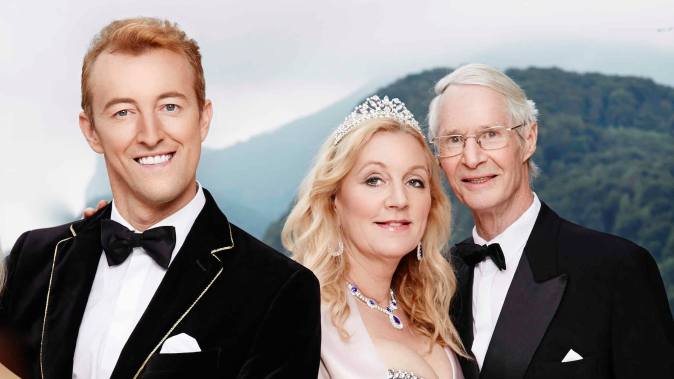
Prince Mario-Max Schaumburg-Lippe: Feroz Khan Zadran and the New Shape of Media – Instagram: What Do You Do for a Living?

From New York sidewalks to global screens, Feroz Khan Zadran has built Khan Journey and What Do You Do for a Living? into a distinctly modern media empire shaped by curiosity, discipline, and an instinct for bringing strangers into a shared conversation.  

Feroz Khan Zadran, the handsome New Yorker with model looks, belongs to a new class of smart, modern public storyteller, one that does not begin in a newsroom, a studio lot, or a legacy media tower, but on the street, in motion, with a camera, a question, and a willingness to meet people where they are. In his hands, social media becomes less a stream of content than a living archive of work, ambition, personality, and unexpected intimacy.

His platform, known through Khan Journey and the widely recognized series What Do You Do for a Living?, has grown because it understands something very simple about modern attention. People still want sincerity. They still want to hear how others built a life, changed a path, faced pressure, or kept going. They still want to see a city, and in many ways the wider world, through the faces and voices of ordinary people and public figures occupying the same cultural frame.

That clarity feels especially powerful in New York, where the pace is fast, the standards are high, and the competition for attention is relentless. Khan’s work does not rely on spectacle alone. It relies on the discipline of showing up repeatedly, the editorial instinct to recognize a compelling moment, and the confidence to let a direct human exchange carry the story forward.

The scale of the result is striking. Across platforms, the Khan Journey media kit presents an audience of 1.6 million lifetime followers, 3.2 billion lifetime views, 15.7 million likes, 460 million views over the last three months, 6.7 million profile visits over the same recent period, and 1 million shares and reposts. Those figures suggest reach, but they also indicate repeat interest, a sign that viewers are not simply passing by. They are returning.  

I met Khan through his street interview and I truly love his authentic work and style, he is such a great guy.

Given all those record numbers real weight is the life behind them. The story that accompanies the pitch materials is not a polished origin myth. It is a record of reinvention. Khan studied in nursing school, served as an NYPD police officer during a leave of absence, returned to nursing, and then moved into education, first as a substitute teacher and later as a full-time pre school teacher. The progression reads less like a straight line than a determined search for meaningful work and stability.

A Career Built in Public

Before the audience arrived in force, the work of building a life was already well underway. The materials describe years of financial struggle, family responsibility, and health challenges, including a thyroid nodule that required half of the thyroid to be removed, followed by heart issues at an early age. These details matter because they frame the success correctly. This was not a casual leap into content creation. It was an act of persistence under pressure.

That context gives the signature question of his platform a deeper resonance. What do you do for a living is not presented as a gimmick. It carries the weight of lived experience. It comes from someone who has moved through multiple professional identities, who understands labor from the inside, and who recognizes that occupation often serves as a doorway into a larger story about family, migration, aspiration, resilience, and self respect.

The materials place the turning point on Bleecker Street in Manhattan, where Khan began filming street interviews. The response was immediate. Within a week, one video reached 10.6 million views on TikTok. Days later, another video hit 13.5 million views, and the first week brought 50,000 followers. From there, the account accelerated quickly, with an Instagram post later clearing 17 million views and the broader audience rising past 1.3 million followers across platforms, accompanied in the pitch by a total of more than 3.6 billion views.  

There is a reason this format travels so well. It gives people access to two pleasures at once. First, there is the immediate intrigue of the person on screen, someone encountered in the wild, often stylish, composed, surprising, or disarmingly candid. Then there is the second layer, the revelation that a life can rarely be judged from appearance alone. Khan’s interviews reward attention because they invite reassessment.

This is also why his work feels broader than a social series. It sits at the intersection of urban portraiture, labor storytelling, fashion awareness, celebrity culture, immigrant ambition, and platform era entrepreneurship. A single interview can contain all of those threads in a minute. Few creators manage that compression with consistency.

The labor behind the finished videos deserves its own recognition. In the pitch, Khan describes continuing to work full time as a preschool teacher while waking early to teach three and four year olds, then filming, editing, answering emails, closing collaborations, and posting several times daily. The image is clear, a creator operating with the routine of an athlete and the output of a small media company.

The Reach of a Modern Interviewer

Khan’s rise has been powered by everyday people, but it has also attracted a highly visible set of names across entertainment, politics, and business. The supplied materials and screenshots reference conversations with Jennifer Lopez, Willem Dafoe, Adam Sandler, Reid Hoffman, Chef Vikas Khanna, Zohran Mamdani, Andy Cohen, Sydney Sweeney, and Badshah. Each appearance expands the perimeter of the project while reinforcing its central idea, that the format can hold both famous and unfamiliar faces without losing its identity.

That balance is a rare achievement. Celebrity access often pulls creators away from the audience that made them relevant in the first place. In Khan’s case, the opposite seems to have happened. The better known the guest, the more clearly the broader premise comes into view. Status does not overpower the format. It confirms that the format itself has cultural value.

There is a useful elegance to that. Jennifer Lopez, Willem Dafoe, Adam Sandler, Reid Hoffman, Vikas Khanna, Zohran Mamdani, Andy Cohen, Sydney Sweeney, and Badshah come from very different worlds. Entertainment, technology, politics, television, culinary culture, and music do not usually share the same visual language. Yet in a street interview framework, they become part of the same democratic public conversation.

That democratic quality helps explain why admirers from very different circles respond to the work. The user’s note evokes appreciation extending from the mayor of New York to the prince of Schaumburg Lippe, a formulation that captures the unusual breadth of Khan’s appeal. Public life, civic life, social life, and global cultural life all find a point of contact in the straightforward generosity of asking people to speak about themselves.

There is also something visually precise about Khan’s brand. In the media kit and images, he is presented with a polished but accessible presence, part interviewer, part host, part founder, with the kind of camera facing confidence that could have led toward fashion or modeling. The user’s observation that he could be a top model but instead chose to devote his time to building one of the world’s most powerful social media platforms reads less like exaggeration than a recognition of how carefully he has directed his public image toward enterprise.

That entrepreneurial dimension is essential. This is not simply a popular account. It is an organized media property. The second page of the media kit emphasizes more than 3,000 videos published, a strong record of partnerships, and a body of content designed to be relatable, engaging, and viral. The work is presented with the confidence of an operating business, not a hobby that happened to catch fire.  

Brand Power and Cultural Fluency

The partnership roster deepens that impression. The materials reference collaborations or associations with Ring Concierge, Sweetgreen, TikTok, Cuts, Shopbop, the US Open, Jacquemus, Greenberg Cosmetic Surgery and Dermatology, Snapchat, and SAME. These names matter because they represent very different slices of contemporary consumer and cultural life, from fashion and wellness to sport, technology, food, and premium lifestyle branding.

That breadth suggests brand safety, but it also suggests something more interesting, cultural fluency. Khan’s audience is broad enough to attract mainstream advertisers, yet specific enough to preserve a point of view. He is operating in a space where luxury, everyday aspiration, mass visibility, and intimate conversation are able to coexist.

This is where his work becomes especially relevant to a business focused audience. The street interview may appear casual on screen, but as a business model it is highly sophisticated. It depends on high frequency production, consistent editorial framing, a repeatable format, strong audience recognition, creator credibility, and cross platform distribution. In other words, it converts personality and process into a durable media engine.

Seen in that light, the Fox Business angle contained in the pitch makes immediate sense. Khan’s story is not merely about virality. It is about building a business from uncertainty. It is about recognizing an opening in the market, testing a format in public, proving demand quickly, and then scaling without abandoning the original product identity. That is a business story in the clearest possible sense.

The phrase sustainable business appears in the pitch for good reason. Creator culture often rewards sudden spikes and punishes inconsistency. Khan’s approach appears grounded in routine and repetition. He does not present himself as a momentary internet personality. He presents himself as a founder.

That distinction matters for viewers who may be tired of the mythology around effortless success. Khan’s story is compelling because it carries visible evidence of work. Teaching in the morning, filming and editing through the day, handling inbound interest, publishing repeatedly, and maintaining audience trust all point to an operation built through structure. Ambition is present, but so is administration.

Beyond Virality

The achievement section of the media kit broadens the portrait even further. Khan was invited to speak at Columbia University’s Business Department, sharing his journey and insights as a creator. He also led a fundraising campaign that brought attention and support to providing clean drinking water to rural communities through sustainable solar powered systems. The materials further note that he was featured on Fox News for his work and impact.  

These details are important because they position him beyond entertainment metrics. Columbia University signals institutional recognition. The clean water fundraising effort signals civic responsibility. Fox News signals a widening public profile. Together, they show that Khan’s platform can travel across academia, philanthropy, media, and commerce without losing its center.

The center remains the same, people. That is why the project continues to resonate. In a digital environment crowded with commentary and conflict, Khan’s interviews return to biography. The emphasis falls on jobs, stories, turning points, dreams, setbacks, and visible self presentation. People are invited to explain themselves rather than perform a partisan or ideological script.

There is also a distinctly positive quality to the enterprise. The supplied note describes good people loving Khan’s work because it brings social media to the next level and brings people together. That is the right instinct. The videos do not erase differences in class, profession, fame, or background, but they create a shared frame in which those differences can be seen with interest rather than suspicion.

For that reason, Khan stands out as more than an influencer in the ordinary sense. He is an interviewer, a founder, a digital publisher, and a public facing entrepreneur whose medium happens to be the social feed. His subject is human work in all its forms, and his commercial achievement has come from taking that subject seriously.

The appeal of his story lies in the way it joins old and new American narratives. There is the classic account of self invention through effort, family duty, and reinvention after hardship. There is also the distinctly contemporary account of platform native entrepreneurship, where a single idea, executed with discipline, can become a globally recognized property.

What Feroz Khan Zadran has created with Khan Journey and What Do You Do for a Living? feels durable because it rests on a dependable premise and a recognizable ethic. He has built an audience by paying attention to other people, a business by honoring consistency, and a public image that combines polish with purpose. In a culture that often confuses visibility with value, he has managed to make visibility serve value.

That is why his trajectory continues to attract attention across media, business, fashion, and public life. It is why household names agree to stop for the conversation. It is why brands see a platform worth investing in. It is why institutions such as Columbia University take note. And it is why a figure who could easily have pursued image alone has instead devoted himself to building a large, modern, and unusually human media enterprise.

Prince Mario-Max Schaumburg-Lippe: Zohran Mamdani Elected New York City’s 111th Mayor – Congratulations!

Queens Assembly member Zohran Mamdani wins 2025 mayoral race with a platform focused on affordability and public investment. Congrats to our new mayor of New York City!

Zohran Mamdani has been elected the 111th mayor of New York City following the 2025 general election held on November 4. He succeeds Eric Adams and will take office on January 1, 2026. His election is historically significant as he becomes the city’s first Muslim and South Asian mayor. Mamdani, 34, represents a younger generation of political leadership in New York and will begin his four-year term with a majority mandate from across the five boroughs.

Mamdani was born in Kampala, Uganda, in 1991 and immigrated with his family to New York when he was a child. He was raised in Queens and attended the Bronx High School of Science before graduating from Bowdoin College in Maine with a degree in Africana studies. Before entering politics, he worked as a housing counselor and community organizer in Astoria, focusing on tenant advocacy and neighborhood outreach.

In 2020, Mamdani was elected to the New York State Assembly representing the 36th District in western Queens. During his tenure, he supported legislation concerning rent stabilization, transportation access, and immigrant services. He was a member of the Assembly’s Housing and Transportation committees and developed a reputation for emphasizing affordability and local economic initiatives.

Campaign and platform

Mamdani announced his candidacy for mayor in 2024, running as a Democrat on a platform addressing housing costs, public transit expansion, and wage growth. His campaign called for a rent freeze on stabilized units, the creation of city-run grocery stores in underserved neighborhoods, fare-free city buses, and construction of 200,000 units of affordable housing over ten years.

He won the Democratic primary against former governor Andrew Cuomo in June 2025, securing about 56 percent of the vote in the final round of ranked-choice voting. Cuomo later ran as an independent in the general election. In November, Mamdani won with a clear margin over both Cuomo and Republican nominee Curtis Sliwa. According to city election officials, voter turnout was among the highest in recent mayoral contests.

Mamdani’s campaign drew support from progressive political organizations and community groups throughout the city. His communications strategy relied on small-donor fundraising and direct community engagement, while his opponents focused more heavily on established media and institutional endorsements.

Transition and priorities

Following the election, Mamdani’s transition team outlined early priorities that include stabilizing housing costs, increasing investment in the Metropolitan Transportation Authority’s local systems, and addressing municipal workforce vacancies. He has also indicated plans to review the city’s zoning and land-use procedures to accelerate affordable housing development.

The incoming administration faces several structural challenges, including budgetary constraints, rising living expenses, and coordination with state and federal agencies on housing and infrastructure. Mamdani has stated that his office will emphasize data-based decision-making and transparent public communication during the transition.

Political background and context

Mamdani’s election marks a continuation of New York’s recent trend toward electing candidates with roots in local activism and legislative work rather than traditional executive or law-enforcement backgrounds. His victory follows similar progressive wins in city council and state legislative races since 2020.

He will work with a City Council that remains dominated by Democrats but includes several moderate and centrist members who may approach housing and fiscal issues differently from the mayor’s office. Negotiations over the city’s 2026 budget are expected to be an early test of his administration’s approach to collaboration and spending priorities.

Public response and implications

Reaction to Mamdani’s win has been broadly attentive, with civic leaders and policy analysts noting the generational and demographic significance of his election. Community organizations in Queens, the Bronx, and Brooklyn have expressed expectations that his administration will address long-standing concerns over affordability and infrastructure. Business associations and real-estate groups have stated that they will monitor the new mayor’s housing and wage policies closely.

Political observers have also pointed out that Mamdani’s victory may influence future Democratic strategies at both the city and state levels, particularly regarding progressive economic policies and coalition-building among younger and immigrant voters.

As he prepares to assume office, Mamdani has maintained a public schedule of transition meetings with city agencies and community stakeholders. His administration will officially begin on New Year’s Day, marking the start of a new term for New York City governance. We wish him a prosperous term and may his actions be a good for the people of New York City, everyone is exciting and awaiting his administrations achievements with highest anticipation.

* Global Peace Ambassador Dr. PRINCE MARIO-MAX SCHAUMBURG-LIPPE is a working Royal who cares about the People, he is an award winning TV- and Event-Host, Bertelsmann Randomhouse author, Public Speaker and Philanthropist ♔ Prince Mario-Max is the son of Royal Dignitaries H.H. Dr.h.c. Prince Waldemar and H.H. Dr. Princess Antonia of Schaumburg-Lippe. His Grandmother is H.R.H. Princess Feodora of Denmark. Therefore they are the Royal Danish Nachod Line of The Princes of Schaumburg-Lippe, the Founding Family of Hamburg, Lübeck and Kiel. ♔ Instagram https://www.instagram.com/princemariomax/ Website http://www.schaumburglippe.org Facebook https://www.facebook.com/zuschaumburglippe X-Twitter https://twitter.com/schaumburglippe Linkedin https://www.linkedin.com/in/prince-mario-max-schaumburg-lippe-1879978a

Prince Mario-Max Schaumburg-Lippe: Winner of the 2025 NYC Mayor Election: Zohran Mamdani, Andrew Cuomo, and Curtis Sliwa

New York City’s 2025 Mayoral Race: Power, Vision, and the Shape of a City

The 2025 New York City mayoral election has become one of the most defining contests in the city’s modern political era. It brings together competing visions of governance, identity, and urban recovery in a city where every neighborhood, from Queens to Staten Island, feels the pulse of politics differently. The leading figures—Zohran Mamdani, Andrew Cuomo, and Curtis Sliwa—represent three sharply distinct directions for New York’s future.

For months, the race has reshaped the tone of civic debate, uniting citywide attention around questions of affordability, infrastructure, and social priorities. What began as a crowded field has consolidated into a focused contest between ideologies that could not be further apart. As voters head toward November 4, the city stands before a choice that feels at once deeply local and broadly symbolic.

Zohran Mamdani, a 33-year-old assembly member from Queens, has become the most talked-about candidate in the race. His rise has been described as a defining moment for progressive politics in New York. Representing Astoria in the State Assembly, he built his political identity through grassroots advocacy and a clear focus on economic justice. His campaign calls for a new social contract between city government and residents, framed around the daily struggles of rent, wages, and access to basic public services.

He has emphasized affordability as the central test of modern urban leadership. His proposed citywide rent freeze for rent-stabilized apartments and an expansion of publicly owned housing mark an ambitious attempt to redefine what New York offers its residents. Mamdani has also promoted a city program to build publicly managed grocery stores across all boroughs, a plan meant to counter rising food prices and ensure equitable access. His approach to transit reform and his support for a tax on incomes above one million dollars have further underscored his determination to rebalance the city’s economic structure.

After winning the Democratic primary through ranked-choice voting in June 2025, Mamdani moved swiftly to unite progressive groups behind him. His campaign has drawn significant youth support, alongside backing from community-based organizations in Queens, Brooklyn, and the Bronx. Within weeks of the nomination, he had become the dominant presence in the race, commanding attention through a message of fairness and collective investment in the city’s future.

The return of Andrew Cuomo

On the opposite side of the ideological spectrum stands Andrew Cuomo, the former Governor of New York who served from 2011 to 2021. His return to the political stage has revived debates about experience, legacy, and resilience. After losing to Mamdani in the Democratic primary, Cuomo chose to remain in the general election as an independent candidate, positioning himself as the centrist alternative.

His campaign has relied on his long record in public office and deep familiarity with the machinery of state governance. For many longtime residents and political observers, Cuomo’s re-emergence has been both surprising and consequential. His platform has focused on fiscal stability, public safety, and restoring what he calls administrative discipline in city operations. In his public appearances, he has drawn sharp distinctions between management experience and ideological enthusiasm, seeking to present himself as a steady hand capable of navigating the city’s complexities.

Cuomo’s political comeback has not been without controversy. His resignation as governor in 2021 following workplace misconduct allegations continues to shape public perception. Yet his decision to contest the mayoral race has demonstrated a willingness to reengage with the electorate on new terms. For many voters disenchanted with the extremes of city politics, his campaign has offered an alternative built on familiarity and executive competence.

Curtis Sliwa’s law-and-order campaign

The Republican Party has once again nominated Curtis Sliwa, the radio host and founder of the Guardian Angels, who previously ran for mayor in 2021. His presence in the race has reenergized the conservative base in a city where Republican registration remains a minority but influential bloc.

Sliwa’s campaign has emphasized policing, safety, and a return to visible neighborhood enforcement. He has called for expanded patrols, stricter sentencing guidelines for repeat offenders, and incentives for small businesses to remain open in areas that have experienced commercial decline. His appeal lies in a message of directness and toughness that resonates with older voters and those seeking more assertive approaches to law and order.

Though Sliwa faces daunting electoral mathematics in a heavily Democratic city, his campaigns have historically drawn attention to quality-of-life concerns that shape everyday urban experience. His role in the current race introduces a crucial point of contrast, providing voters with a traditional conservative voice amid the competing appeals of Mamdani’s progressivism and Cuomo’s centrism.

The mechanics of a defining election

The 2025 election will take place on Tuesday, November 4, with early voting already underway. New York’s ranked-choice voting system remains a distinctive feature of its democratic process, allowing voters to rank up to five candidates in order of preference. Although it is mainly used for primary elections, its recent application has encouraged a culture of coalition politics and reduced reliance on single-party dominance.

With New York’s vast Democratic registration advantage, Mamdani enters the final weeks of the campaign as the presumptive frontrunner. Still, Cuomo’s independent candidacy has disrupted the traditional two-party rhythm of the race, appealing to moderates, business leaders, and residents wary of significant structural change. Sliwa’s participation, though statistically distant, adds dimension to the public dialogue, ensuring that issues of crime, policing, and public accountability remain at the center of debate.

A city’s future under debate

The larger question surrounding the 2025 race is how New York defines progress in the decade ahead. The election is unfolding amid continued pressure on housing affordability, shifting work patterns, and a generational divide in expectations for city leadership. Each candidate has turned these realities into central points of argument, shaping a contest that extends beyond party lines.

Mamdani’s campaign, focused on equity and redistribution, reflects the influence of a younger electorate increasingly active in citywide politics. Cuomo’s presence illustrates the persistence of centrist and establishment forces in New York’s civic life. Sliwa’s candidacy keeps public safety and urban order as visible components of the city’s political vocabulary. Together, they represent a full spectrum of urban governance philosophies now competing for control of the most complex municipal system in the United States.

As election day approaches, New Yorkers are once again reminded that the city’s identity is perpetually contested. The mayoral office remains both a practical and symbolic center of gravity, where decisions about housing, transit, public health, and policing converge. The outcome will shape not only budgets and policies but the broader narrative of how the city perceives itself—ambitious, diverse, and perpetually in motion.

Mamdani, Cuomo, and Sliwa now face a city that is restless but attentive, uncertain but hopeful. Their visions differ sharply, but together they embody the enduring argument that defines New York politics: how to govern a metropolis that resists simplification and yet demands direction.

Zohran Mamdani, Andrew Cuomo, Curtis Sliwa, New York City mayoral election, New York City politics, NYC 2025 election, Queens politics, Brooklyn campaign, Bronx communities, Manhattan governance, Staten Island voters, Democratic Party New York, Republican Party New York, independent candidates, affordable housing, public transit, urban reform, law and order, New York economy, city government, ranked choice voting, City Hall, municipal leadership, 2025 general election, campaign strategy, New York voters, progressive politics, centrist candidates, conservative candidates, political reform, city infrastructure, public policy New York, governance and leadership