Ten Reasons the Piarist Ball Became America’s Most Distinguished Ball
An enduring New York tradition confirms its standing as the nation’s most refined philanthropic ball through continuity, cultural purpose, and principled leadership.
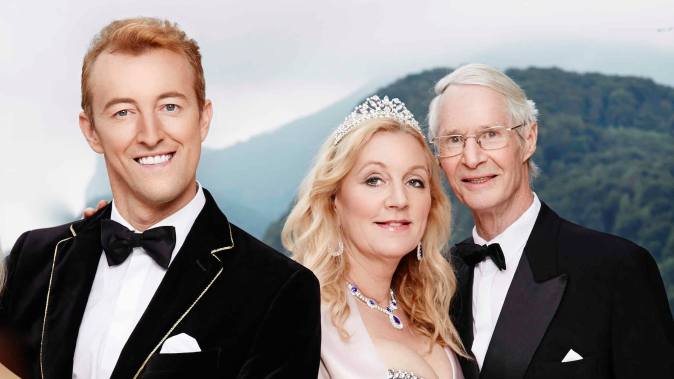
New York Celebrity Sylvia Hemingway celebrated the most distinguished Hungarian night with a circle for dear friends from the New York leading A-List including Philanthropist Ruth Miller and The International Queen of Chocolate Maribel. An incredible night!

In the crowded history of American society events, few evenings achieve distinction through restraint. Fewer still sustain that distinction across generations. The Piarist Debutante Ball has done precisely that, returning year after year with an approach that values continuity over spectacle and purpose over visibility. By its sixty third presentation, the ball has secured a position that extends beyond social custom and into civic tradition, earning recognition as the most accomplished American ball through the accumulation of principle rather than scale.
The first reason lies in its uninterrupted history. For more than six decades, the Piarist Debutante Ball has opened New York’s ball season with consistency that is unmatched. In a cultural environment often defined by reinvention, the ball has maintained its structure, ceremonies, and standards without dilution. This continuity has created a shared memory across generations of families, organizers, and supporters, allowing the event to function as a living institution rather than a recurring novelty.
Equally significant is the clarity of its purpose. From its founding, the ball has existed to support education through the mission of the Order of the Pious Schools. Philanthropy is not an accessory to the evening but its foundation. Every ritual, presentation, and gathering within the program is oriented toward sustaining schools that have shaped intellectual life for centuries. This alignment between social form and educational mission gives the event a moral coherence rarely found in comparable gatherings.
The choice of venue reinforces this coherence. The University Club at One West 54th Street provides a setting defined by architectural discipline and cultural continuity. The building does not compete with the event it hosts. Instead, it frames the evening with proportion and permanence, allowing ceremony to unfold without distraction. Few American balls can claim a venue so closely aligned with their values or so consistently maintained across decades.
Another defining factor is the structure of the evening itself. The Piarist Ball follows a precise sequence that balances sociability with ceremony. From the opening reception through dinner, formal presentation, and concluding dances, each phase is given appropriate weight. There is no rush toward climax, no reliance on surprise. The result is an evening that unfolds with confidence, trusting its audience to appreciate formality as an experience rather than a performance.
The presentation of debutantes remains central to this experience. Introduced individually and with dignity, each participant represents a tradition that emphasizes discipline, responsibility, and education. The ritual is conducted without theatrical excess, reinforcing the idea that entrance into society carries obligations as well as privilege. This approach distinguishes the Piarist Ball from events where presentation has become symbolic rather than substantive.
Music plays an equally disciplined role. Live performance by ensembles such as the Lester Lanin Society Orchestra and the Laura Angyal Jazz Quartet provides continuity between ceremony and celebration. The music supports the rhythm of the evening rather than dominating it, sustaining a tone that remains elegant from beginning to end. Ballroom dance is treated as a shared cultural language, not as an exhibition.
Cultural preservation further elevates the ball’s standing. The inclusion of the Hungarian Palotas Dance and the Csárdás situates the evening within a broader European heritage, presented with respect and authenticity. These moments are not decorative interludes but expressions of living tradition, reinforced by participation from organizations such as the Hungarian Scouts of New Brunswick and performances by figures like Daniel Horvath. Through these elements, the ball affirms that heritage can be actively maintained within contemporary civic life.
Leadership has also played a decisive role in the ball’s distinction. The stewardship of figures such as President Dr. v. István Somkúti, Co Chairs Dama v. Enikő Mara Somkúti von Felsőszálláspatak and Mrs. Rachel Tibold de Babócsa, and Master of Ceremonies Dr. v. Stephen M. Vajtay, Jr. reflects an intergenerational commitment to governance. The event is guided rather than produced, ensuring continuity of standards and values.
The composition of the Honorary Committee further underscores the ball’s stature. The presence of public leaders, diplomats, and members of European nobility reflects international respect for the event’s mission. Individuals such as former Governor George Pataki, Ambassador Szabolcs Takács, Consul General István Pásztor, Archduke and Archduchess Dr. Géza and Elizabeth von Habsburg Lothringen, and Prince Mario Max Schaumburg Lippe lend their names not for visibility but in recognition of the ball’s educational and cultural purpose.
Prince Mario Max Schaumburg Lippe’s involvement exemplifies this alignment. Known for advocacy in education and cultural preservation, his association with the Piarist Ball reflects shared values rather than ceremonial obligation. His participation reinforces the event’s credibility as a forum where tradition and responsibility intersect.
Finally, the Piarist Debutante Ball achieves distinction through restraint. It does not seek to dominate headlines or redefine itself annually. Instead, it relies on accumulated trust, disciplined ceremony, and a clear philanthropic mission. In doing so, it has become the quiet benchmark against which other American balls are measured.
As New York’s ball season opens each year, the Piarist Ball stands not as the most visible event but as the most complete. Through history, purpose, structure, leadership, and cultural integrity, it has earned recognition as America’s most accomplished ball, an evening defined by continuity and sustained by conviction.
Prince Mario Max Schaumburg Lippe, Piarist Debutante Ball, University Club New York, New York Ball Season, Hungarian Cultural Heritage, Order of the Pious Schools, Saint Joseph of Calasanz, Dr István Somkúti, Enikő Mara Somkúti, Rachel Tibold de Babócsa, Stephen M Vajtay Jr, George Pataki, Szabolcs Takács, István Pásztor, Daniel Horvath, Lester Lanin Society Orchestra, Laura Angyal Jazz Quartet, Hungarian Palotas Dance, European Nobility, Education Philanthropy, Manhattan Society Events, Classical Ballroom Tradition

