Prince Mario-Max Schaumburg-Lippe: SpaceX Starship Reaches Orbit for the First Time

Monday morning, the biggest rocket ever built finally did the thing it was built to do. Starship lifted off from Starbase, Texas, at 7:48 a.m. CT on September 28, 2026, and on its 14th test flight, it climbed all the way into orbit. First time ever.

High drama along the way. A mid-flight engine failure that almost ended the day. And then a breakthrough that turns reusable super-heavy spaceflight from a slide-deck promise into a working reality.

A launch 14 flights in the making

The numbers are hard to wrap your head around. The full stack — Super Heavy booster, Starship upper stage — stands 407 feet tall, about 40 stories. At liftoff, the booster’s 33 Raptor engines lit at once and the uncrewed vehicle climbed out of Boca Chica Beach into a clear Texas sky.

Every flight before this one had been suborbital. Up, then back down. Thirteen of them. Reaching orbit had been a long-delayed feat for a program Elon Musk once predicted would get there in 2022, after a development campaign that has cost SpaceX more than $15 billion. Flight 14 was supposed to be different: a 10-hour mission profile, six orbits at roughly 170 miles up, and a splashdown in the Pacific west of Chile. That was the plan on paper. The day had other ideas.

The engine scare

Early in the ascent, one of the vehicle’s Raptor engines shut down — nearly failing the flight in its opening moments, by one account. On the live stream, SpaceX spokesperson Dan Huot told viewers the team would not commit to orbit. For a few tense minutes, it looked like the milestone would slip away again.

Then the engineers did what they do: dug into the telemetry, ran the numbers, and reversed the call. After what Huot described as a lot of conversation in the control room, the final poll came back in favor — and a roughly 19-second burn of a single Raptor pushed Starship into orbit about 170 miles up.

That reversal deserves a moment. It wasn’t luck. It was a flight team confident enough in its own data to make a bold, correct call in real time, on a live broadcast, with the whole mission on the line. SpaceX had written the exit ramp into the mission plan: it would only fire the orbital insertion burn if flight controllers confirmed enough backup hardware remained for the deorbit burn. Losing an engine was exactly the scenario that rule was built for — and the team flew through it.

Why orbit changes everything

From experiment to freight train

Orbit changes the vehicle’s identity. Suborbital hops prove you can fly; orbit proves you can deliver. That distinction is the entire business case for Starship — and on Flight 14, the company made it operational, not just theoretical.

A working payload carrier

During the flight, Starship deployed 26 next-generation Starlink V3 satellites, the first operational payload ever delivered from the vehicle. Caught on camera, each satellite drifting away from the bay, the message was hard to miss: this is no longer a test article. It’s a cargo ship. The deployment marked Starship’s transition from developmental testing to operational spaceflight, with the heaviest payload class the vehicle has ever carried.

The mission also set program records: the longest Starship had ever spent in space, and the most powerful launch vehicle ever to reach orbit.

The reusable dream, one step closer

It was a busy morning for science news — from the record-low Amazon deforestation figures to the late-stage success of a new hepatitis D drug.

Meanwhile, the Super Heavy booster completed its own test objectives, dropping into the Gulf of Mexico within minutes of liftoff rather than returning to the Starbase tower this time. Full, rapid reusability — catching the booster with the launch tower’s mechanical arms, eventually recovering Starship itself — remains the long game. SpaceX has said that if the orbital debut went well, the next Starship would attempt to return to the launch pad for a tower catch, with even or slightly better odds of success. Every flight feeds data into that program.

The flight ended early. That’s fine.

The mission didn’t go exactly as planned. Because of the engine issue, SpaceX cut the flight from 10 hours to about three, bringing Starship down early. It splashed down in the Pacific Ocean just after noon Eastern, ending in a fireball as the ship hit the water — a spectacular finish to a historic flight.

“Splashdown confirmed. Congratulations to the entire SpaceX team on the first orbital flight of Starship!” the company posted. Musk declared success on X.

In the old space paradigm, a shortened flight reads as failure. In the test-fly-fix-fly paradigm SpaceX has built its company on, it’s Tuesday. Every anomaly is data. Every flight retires risk. And the orbital milestone — the actual objective — was achieved.

NASA Administrator Jared Isaacman hit exactly that note, congratulating SpaceX on “getting Ship to orbit and managing every step in a safe, responsible, and especially inspirational way.” NASA is working with SpaceX to put astronauts back on the Moon, with a Starship-derived vehicle slated as the lunar lander for the Artemis program. A Starship that reaches orbit and delivers payloads is a Starship on the path to carrying crew.

What comes next

SpaceX says it expects to begin routine Starship service later this year — the 14th flight was launched ahead of that cadence. If the tower-catch attempt works, the company says it could refly a spacecraft by year’s end or early next.

That’s the part worth sitting with. For years, Starship has been the rocket of the future: always one test campaign away. On Monday morning, it became the rocket of the present. A 40-story vehicle climbed into orbit, delivered 26 satellites, and came home — all in a morning’s work. If the cadence holds, this flight gets remembered the way we remember the first Falcon 9 landing: the morning the future stopped being theoretical.

Key takeaways

  • First orbital flight achieved: After 13 suborbital attempts, Starship reached orbit on September 28, 2026, climbing to about 170 miles.
  • Payload delivered: 26 Starlink V3 satellites deployed — Starship’s first operational cargo run and its transition to operational spaceflight.
  • Calm under pressure: An early-ascent engine failure forced a real-time go/no-go decision; the team’s data-driven call, capped by a 19-second Raptor burn, saved the mission’s primary objective.
  • What’s next: A shortened 3-hour flight still counts as a win in an iterative test program. Watch for the tower-catch attempt and rising flight cadence as routine service begins.

Prince Mario-Max Schaumburg-Lippe: Seventh Avenue: The Complete Story of Manhattan’s Most Iconic Street

Every great city has a spine. New York’s runs north to south through the heart of Manhattan, and it’s called Seventh Avenue — a street that has carried theater marquees, fashion empires, jazz legends, and eight million daily stories for two centuries.

Born on a Map in 1811

Seventh Avenue began as a line on the Commissioners’ Plan of 1811, the audacious grid that imposed order on Manhattan’s farmland and hills. In its early decades it was more promise than pavement — but as immigration and industry surged, the avenue filled with row houses, churches, streetcars, and shops, linking Greenwich Village, Chelsea, and the young Midtown.

Elevated rail lines in the late 1800s supercharged its growth, pulling commerce and crowds to the corridor.

Times Square and the Theater District

The avenue’s destiny changed when the city extended it south through Times Square in a sweeping traffic redesign. Suddenly Seventh Avenue met Broadway at the busiest entertainment crossroads on earth. Theaters, electric signs, hotels, and rehearsal studios followed. Nearby, Carnegie Hall (opened 1891) cemented the district’s cultural gravity, and the avenue’s brush with Central Park South added luxury hotels and towers to the mix.

Fashion Avenue

Further south, Seventh Avenue became the beating heart of American fashion. The Garment District’s factories, showrooms, and textile houses earned the street its famous nickname: Fashion Avenue. The Fashion Institute of Technology, founded nearby in 1944, trained generations of designers who walked these sidewalks daily. Public sculptures of garment workers still honor the hands that built the industry.

Corporate Midtown and the Transit Hub

As manufacturing moved on, office towers rose — finance, media, and global firms reshaping the skyline through the ’70s and ’80s. Beneath it all, the Seventh Avenue subway line moves millions. At 33rd Street, Madison Square Garden and Penn Station form one of America’s busiest transit hubs, with the avenue as its front door.

From Village to Harlem

South of Midtown, the avenue drifts through Chelsea and Greenwich Village — galleries, cafés, and 19th-century brownstones. North of Central Park, it becomes Adam Clayton Powell Jr. Boulevard, Harlem’s grand corridor, steps from the Apollo Theater and steeped in the legacy of the Harlem Renaissance.

Two centuries after it was drawn on a planner’s map, Seventh Avenue remains what it has always been: the street where New York happens.

Related Reading

Originally published on Times Square Chronicles.

Prince Mario-Max Schaumburg-Lippe: Prince Mario-Max Schaumburg-Lippe on Why America Feels Like Home

Ask H.H. Dr. Prince Mario-Max Schaumburg-Lippe about America, and you won’t get diplomacy. You’ll get something warmer: genuine affection, built over years of travel, work, and friendship across the United States.

The Prince — European royal, media figure, entrepreneur — has made America something of a second home. His projects have taken him from coast to coast, into studios, boardrooms, and charity galas, and through it all he’s developed a clear-eyed appreciation for what makes the country tick.

What He Loves About America

First, the openness. He describes a culture where people from every background can chase an ambition with optimism intact — where reinvention isn’t just tolerated, it’s expected. That spirit, he says, is the engine behind America’s global influence in film, television, technology, and business.

Then there’s the creativity. Hollywood storytelling, the startup hustle, the sheer range of cultural expression — for someone working in international media, America is where the world’s imagination gets manufactured.

And the philanthropy. The Prince often notes how deeply giving is woven into American life — the foundations, the galas, the quiet generosity that funds hospitals, schools, and the arts. It’s a culture of giving he’s seen up close, many times over.

Friends Who Feel Like Family

His American circle includes close friends like Al Harris and Raquel Sanchez of the KTM and Evolutionist award organizations — the kind of relationships that turn a country you visit into a place you belong.

For a prince raised in centuries-old European tradition, America’s spirit of reinvention offers a compelling contrast — and, he says, a continuing inspiration. Heritage matters, but so does the freedom to become something new. In America, he’s found both.

Related Reading

Originally published on Times Square Chronicles.

Prince Mario-Max Schaumburg-Lippe: Oscar Sunday’s Luxury Gala Names Its Winners: The Full List of Honorees

Oscar Sunday in Hollywood belongs to the statues — but the night belongs to the Luxury Gala. At the Universal Hilton, founder and CEO Samira Kazemeni and host H.H. Dr. Prince Mario-Max Schaumburg-Lippe led a grand celebration honoring the supporters, sponsors, and stars behind Hollywood’s biggest prestige gala, naming winners across entertainment, business, wellness, and innovation.

The evening opened with a performance by Sir Earl Toon, setting a celebratory tone that never let up.

The Honorees

Advocacy and impact led the program: Dr. Meleeka Clary received the Global Human Rights Award, while Poppa Snoop (Vernell Varnado) took the Advocate for Veterans Award. Robert LaSardo earned the Best Supporting Actor Lifetime Achievement Award, and Eric Roberts received the Lifetime Achievement Award honoring decades of screen work.

Fashion and design shone through Kaveri Nathan (Luxury Fashion Excellence Award), Radhika Khurana (Icon of Style for RasaNari), Hiroaki Omote (Outstanding Kimono Design Innovator), and Katrina Yu (Best Modeling Coach of the Year), with Paromita Ghosh’s Paroma A La Mode also celebrated.

Movement and music: Travis Payne — Michael Jackson’s choreographer — was named Best Choreographer of the Year, and Sir Earl Toon returned to the stage for the Legendary Icon Award. Douglas Vermeeren took Best Actor for the Slateworks production Book of Dragons. Randy Green was honored as Executive Producer for Independent Movies.

Wellness and coaching: Saul Maxwell received the Excellence in Celebrity Coaching and Energy Healing Award. Business minds Bill Walsh (Business Coach of the Year, Powerteam International) and Larry Steinhouse (Investment Educator of the Year) took their bows, alongside remarks from Jason Gahari of CIF, Fiona Ma, and Daniel Sieu.

Tech and tomorrow: Peter Wu and Juan Vargas received the AI and Web3 Innovation Award for Xavvi, while Dimitri Mikhalchuk earned the Lifetime of Creative Excellence honor. The night’s most cosmic recognition went to Isauro Mercado III — the first cinematographer with a film archive on the Moon, flown via SpaceX Falcon 9 with the Lunaprise Museum — and Dallas Santana, whose Space Blue sent the first digital art and music time capsule to the Moon.

Culinary honors went to Fogo de Chao (Luxury Dining Experience Award), with live performances from Ahmed Eldeberky, Akusaa Powell of Club Akusaa, Dustin Quick with Medi Em, and Minn Vo’s Hollywood Hotshots keeping the energy high.

The Partners Who Made It Possible

Behind the glamour stood an army of sponsors and vendors — from A Perfect Fifth LLC, IMA, and American Guardian Security to wellness partners like Angela Kung Acupuncture, culinary contributors including Ayda Cake & Art and Wasabi at Citywalk, and media supporters like Hollywood Elites Magazine. Samira and the Prince made a point of honoring them all: these partners, they said, are the true champions of the gala.

As Oscar Sunday wound down, the message was clear — the Luxury Gala isn’t just Hollywood’s biggest party. It’s where the industry’s builders, dreamers, and givers get their night.

Related Reading

Originally published on Times Square Chronicles.

Prince Mario-Max Schaumburg-Lippe: Hustle With Humility: Prince Mario-Max on the Real Formula for Self-Made Success

Hustle gets you in the room. Humility keeps you worth knowing once you’re there. That pairing — effort plus grounded character — is the closest thing to a real formula for self-made success, and it’s a philosophy H.H. Dr. Prince Mario-Max Schaumburg-Lippe returns to again and again.

What Hustle Actually Means

Strip away the buzzword and hustle is unglamorous: daily action, steady work, showing up before anyone’s watching. It’s building skills, fixing habits, and taking responsibility for where you’re headed. People who live this way treat every ordinary day as a deposit toward something bigger.

Self-made was never meant to mean alone. It means initiative — the willingness to act on an idea, absorb the setbacks, and keep refining. Clarity first: know what you want your work to stand for. Then patience: progress compounds over months and years, not weekends.

Why Humility Wins Long-Term

Ambition without humility is just noise. The people who last — in business, in art, in public life — tend to stay teachable. They listen. They credit others. They adapt when the world shifts instead of insisting it stay still.

There’s a quiet strength to humble confidence. It doesn’t need constant applause because it’s built on something real: the knowledge that consistent effort produced genuine progress. That kind of confidence collaborates well, learns fast, and earns the reputations that outlast any single win.

Happiness Rides Along

The final piece is the one people skip: enjoy it while it happens. Success aligned with your values feels different from success chased for its own sake. Gratitude — for the lessons, the people, the progress — keeps the whole machine balanced.

Give your best effort to the task in front of you, large or small. Stay grateful. Stay grounded. Keep moving. That’s the whole philosophy — and it works in every generation that’s tried it.

Related Reading

Originally published on Times Square Chronicles.

Prince Mario-Max Schaumburg-Lippe: Palm Beach Scene Magazine Celebrates Its Second Edition With a Royal Launch Party

Palm Beach has a new chronicle of its own glittering life. Baroness Tracy Turco unveiled the second edition of Palm Beach Scene — her glossy magazine documenting the island’s society, philanthropy, and cultural traditions — at a celebratory royal launch party.

Guests gathered before the signature Palm Scene backdrop, flipping through the new edition’s portraits and event coverage while posing with copies hot off the press. Baroness Turco, the publication’s driving force, welcomed friends and collaborators alongside her husband, Baron Jerry Turco, as the town’s social set turned out to celebrate.

A Truly International Guest List

Prince Mario-Max Schaumburg-Lippe joined the celebration, his presence a nod to the international threads woven through Palm Beach society. Lady Isabeau Wellington attended with Kedem Sinar; Patrick Lortieuneau, Katie Weisz, and Count Roberto De Alba represented the town’s global social circle; Nina Yacovino and Maria DeMoya, Robert Walden with Dianne and James Norton, and longtime supporters Guy Clark and Harrison Morgan all turned out.

One of the evening’s standout moments: Kelly Henry photographed with Prince Mario-Max and Lady Denise Fraile — an iconic Palm Beach grouping if ever there was one. Multigenerational families like Georgie, Ingrid Murdoch, and Anne Katrin Weber showed how deeply the town’s social traditions run, while Jennifer Rowan Miller, Cindy Karen, Suzy Zikr, Niv Jacobi, and Alan and Joy Marks rounded out a room full of familiar faces.

Documenting the Island’s Social Soul

What makes Palm Beach Scene work is its focus: people and community. The magazine is a visual record of the gatherings, friendships, and personalities that give the town its unmistakable character — and the second edition proves the concept has staying power.

As guests departed with copies in hand, the message was clear: Palm Beach’s social scene isn’t just alive, it’s thriving — and now it has its chronicler.

Related Reading

Originally published on Times Square Chronicles.

Prince Mario-Max Schaumburg-Lippe: Alberto Luzzi Brings Finest Roman Jewelry to New York!

Alberto Luzzi’s SoHo Fine Jewelry Room introduces New York to a refined Roman jewelry tradition through distinctive collections, one-of-a-kind pieces, and an intimate new destination in Manhattan. New York’s prestigious Norah Lawlor PR Firm just shared the details with a select distinct list of celebrities.

Rome has long held a distinctive position in the history of jewelry. Its traditions are connected to generations of goldsmithing, sculpture, architecture, decorative arts, and an enduring appreciation for objects made with permanence in mind. Now that heritage is finding a new expression in New York through Alberto Luzzi and the unveiling of the Alberto Luzzi SoHo Fine Jewelry Room.

Located at 102 Thompson Street in SoHo, the Fine Jewelry Room brings Alberto Luzzi’s Roman perspective into one of Manhattan’s most internationally recognized creative neighborhoods. The arrival establishes a direct connection between Rome and New York, two cities with strong identities in art, fashion, design, and personal style.

The concept is centered on fine jewelry presented with intimacy and attention. Rather than treating jewelry simply as an accessory, Alberto Luzzi places craftsmanship, material, proportion, and individuality at the center of the experience. Fine-jewelry collections are joined by one-of-a-kind pieces, giving the SoHo room the character of a destination for discovery.

For New York clients, the opening offers an opportunity to encounter jewelry informed by an Italian design sensibility without leaving Manhattan. The emphasis is on pieces with presence, detailed workmanship, and a recognizable point of view. The jewelry shown in the unveiling imagery reinforces that direction, with richly worked gold forms that command attention while remaining designed for personal wear.

Alberto Luzzi’s connection to both New York and Rome is especially relevant to the new space. These are cities with very different visual languages, yet each has a sophisticated understanding of craftsmanship and individual expression. Rome contributes centuries of decorative tradition. New York contributes a contemporary culture in which jewelry moves easily between private collecting, fashion, art, and daily life.

The SoHo Fine Jewelry Room brings those influences into a focused setting. It marks an expansion of Alberto Luzzi’s presence while giving the house a physical environment in which its jewelry can be experienced at close range.

Roman Craftsmanship Arrives in SoHo

The significance of Roman jewelry begins with the city’s extraordinary relationship with ornament. Across centuries, Rome has developed a visual vocabulary shaped by classical forms, ecclesiastical art, Renaissance workshops, Baroque decoration, and generations of highly skilled artisans. Jewelry belongs naturally within that continuum.

Italian fine jewelry has traditionally placed considerable importance on the handling of gold. The material is valued for more than its intrinsic worth. Its color, weight, flexibility, texture, and ability to hold intricate forms give designers an extensive language with which to work.

That tradition is visible in Alberto Luzzi’s presentation. The pieces featured in the SoHo Fine Jewelry Room announcement favor dimensional surfaces and sculptural construction. Gold appears expressive rather than restrained, with detailed forms that invite a closer examination of how individual elements have been assembled and finished.

The large pendant at the center of the imagery is particularly representative of this approach. Its radiating, organic structure creates a strong focal point, while the surrounding jewelry carries related qualities of texture and intricacy. Earrings, rings, necklaces, and bracelets become part of a coordinated visual identity without appearing dependent on a single rigid motif.

This is jewelry designed to be noticed, yet its impact comes from workmanship and form rather than unnecessary excess. The result feels aligned with a Roman approach to luxury in which richness can coexist with discipline.

Bringing that perspective to SoHo gives the collection a compelling New York context. The neighborhood has spent decades serving as a meeting point for galleries, fashion houses, independent designers, collectors, architects, and creative businesses. Its cast-iron buildings and street-level boutiques have helped establish a particular form of downtown luxury, one that values individuality and cultural credibility.

Alberto Luzzi enters that environment with a proposition rooted in jewelry itself. The Fine Jewelry Room is dedicated to collections and singular pieces, making the object and its craftsmanship the central experience.

A Fine Jewelry Room Built Around Discovery

The language of a Fine Jewelry Room carries a different feeling from that of a conventional retail destination. It suggests privacy, concentration, and personal attention. That distinction matters in a category where scale, texture, movement, and proportion are difficult to understand fully from an image alone.

Fine jewelry becomes particularly compelling when viewed closely. A photograph can communicate an overall silhouette, but physical proximity reveals construction, finishing, weight, articulation, and the relationship between a piece and the person wearing it.

For one-of-a-kind jewelry, that experience becomes even more important. Singular pieces occupy a special position within collecting because their appeal extends beyond conventional seasonal fashion. Their individuality becomes part of their value.

Alberto Luzzi’s decision to emphasize one-of-a-kind pieces alongside broader fine-jewelry collections gives the SoHo room an element of discovery. A client can enter with an appreciation for the house and encounter something that feels unusually personal.

That approach reflects the changing character of luxury in New York. Many experienced clients increasingly understand the distinctions between recognizable branding and genuine individuality. They know materials, examine workmanship, develop relationships with designers, and often seek objects that are less widely encountered.

Fine jewelry is particularly suited to this kind of connoisseurship. Unlike many fashion purchases, a well-made jewel can remain relevant for decades. It can move between wardrobes and occasions, become associated with important personal moments, and eventually take on a history beyond the circumstances in which it was acquired.

The most successful jewelry therefore needs to satisfy several demands at once. It should possess visual distinction, demonstrate technical accomplishment, feel comfortable and convincing when worn, and retain enough character to remain meaningful over time.

The Alberto Luzzi Fine Jewelry Room positions itself within precisely that conversation.

From Rome to New York

The movement from Rome to New York has cultural significance beyond geography. Both cities reward confidence, although they express it differently.

Roman style is closely connected to history, craftsmanship, material richness, and an ease developed through long familiarity with beautiful objects. New York style is highly individual, constantly evolving, and comfortable combining references from different periods and cultures.

Fine jewelry can operate naturally between those worlds.

A substantial gold necklace can accompany sharply tailored evening clothing, while a sculptural ring can become the defining detail of an otherwise restrained wardrobe. Elaborate earrings can be worn formally or introduced into a more relaxed downtown look. A richly constructed bracelet can become an everyday signature rather than an object reserved exclusively for ceremonies.

This flexibility is central to contemporary fine jewelry. Important pieces no longer need to remain stored until a traditional formal occasion arrives. Increasingly, collectors integrate them into their personal style, allowing craftsmanship to become part of everyday visual identity.

The imagery surrounding Alberto Luzzi’s SoHo introduction communicates this contemporary approach clearly. The jewelry is paired with black tailoring, allowing the warmth and complexity of the gold to remain visually dominant. The styling is polished but direct. Jewelry provides the principal decorative language.

It is an effective expression of what Roman craftsmanship can look like within a New York wardrobe.

The result also underscores why SoHo is a fitting location. Downtown Manhattan has long encouraged the combination of luxury and informality. A significant jewel can appear beside modern tailoring, denim, minimal clothing, or evening dress without losing its stature.

That freedom gives Alberto Luzzi’s work room to be interpreted by the wearer.

The Return of Jewelry With Presence

There is something particularly timely about jewelry with a strong physical identity. After years in which minimalism influenced large areas of fashion and design, substantial pieces have regained an important place in personal style.

This does not require abandoning refinement. Presence and sophistication can comfortably coexist when proportion and craftsmanship are carefully controlled.

Alberto Luzzi’s jewelry demonstrates that balance through texture and dimension. The pieces shown are detailed enough to reward close attention, yet their overall forms remain legible. From a distance, they create a recognizable silhouette. At close range, their construction becomes part of the experience.

Gold is especially effective in this context because it responds constantly to movement and light. A textured surface behaves differently from a polished plane, while raised and recessed elements create variations across a single piece. Skilled construction can therefore give gold visual depth without relying exclusively on gemstones for impact.

That emphasis connects naturally with Italy’s long goldsmithing tradition. Italian jewelry houses and workshops have repeatedly demonstrated how much expression can be achieved through metal itself.

For collectors, this focus on construction can make a piece particularly satisfying. The craftsmanship is visible rather than hidden. Detail becomes something that can be appreciated repeatedly through wear.

The Fine Jewelry Room creates an appropriate environment for that appreciation. It encourages a slower encounter with objects whose value is tied to detail.

One-of-a-Kind Pieces and Personal Collecting

The inclusion of one-of-a-kind pieces gives Alberto Luzzi’s New York presence another important dimension.

Uniqueness has always carried significance in jewelry. A singular jewel can establish a direct relationship between designer, maker, and collector. Its proportions, materials, construction, and design exist as an individual resolution rather than as one example among a large production run.

For established collectors, such pieces can become anchors within a jewelry wardrobe. For newer collectors, they can provide an entry into a more personal understanding of fine jewelry.

The process often begins with instinct. A person responds to a shape, texture, color, or scale. From there comes closer consideration of workmanship, versatility, materials, and the way the piece sits on the body.

An intimate jewelry environment supports that process better than hurried browsing. It allows jewelry to be considered as an object before it becomes a purchase.

This is where the Fine Jewelry Room concept feels especially appropriate. It creates a setting for attention, and attention remains one of the essential ingredients of genuine luxury.

The presence of Alberto Luzzi and Nic Canal in the unveiling further establishes the project as a personal introduction to the New York market. Their names accompany the invitation to discover the room, reinforcing the human dimension behind the new SoHo destination.

That personal quality matters. Fine jewelry has always depended on relationships, between artisans and materials, designers and workshops, houses and collectors, and eventually between jewels and the people who live with them.

A New Italian Address in Manhattan

At 102 Thompson Street, Alberto Luzzi joins a part of Manhattan whose identity has been shaped by independent taste.

SoHo remains internationally associated with fashion and design, but its enduring attraction comes from the diversity of what can be discovered within a relatively compact neighborhood. Established luxury names coexist with specialized boutiques, galleries, restaurants, creative studios, and smaller destinations that reward deliberate exploration.

A Fine Jewelry Room fits comfortably into this environment because jewelry benefits from destination retail. Clients often seek out a jeweler specifically, particularly when the work has a distinct aesthetic identity.

Alberto Luzzi’s arrival gives those clients a new connection to Rome through a dedicated New York setting.

It also strengthens the broader dialogue between Italian craftsmanship and American style. That relationship has been productive for generations. American collectors have long valued Italian fashion, furniture, leatherwork, automobiles, glass, ceramics, and jewelry because these disciplines often combine technical expertise with a clear understanding of design.

New York, in return, offers international designers an unusually diverse audience. The city’s collectors arrive with different backgrounds, wardrobes, professions, and approaches to luxury. A jewel may be interpreted in many ways once it enters that environment.

For Alberto Luzzi, this creates fertile ground for a collection built around expressive gold work and distinctive design.

The SoHo Fine Jewelry Room is therefore more than an additional point of presence. It represents the meeting of two established cultural centers through an object that has always traveled well between them.

Rome provides the heritage. New York provides a new setting and a new generation of encounters.

Within the room, the focus remains where it should be, on the jewelry. Fine-jewelry collections and one-of-a-kind pieces offer visitors the opportunity to consider workmanship closely and to understand the character of Alberto Luzzi through physical objects rather than through image alone.

That distinction is increasingly valuable. In a culture saturated with digital imagery, the direct experience of craftsmanship carries renewed importance. Weight can be felt. Scale becomes clear. Texture can be examined. The relationship between a jewel and the body becomes immediate.

For a house bringing Roman quality to New York, those details provide the strongest introduction.

Alberto Luzzi’s SoHo Fine Jewelry Room establishes a sophisticated bridge between Italy and Manhattan, grounded in gold, craftsmanship, individuality, and the enduring appeal of jewelry created to be worn and collected. At 102 Thompson Street, Roman fine-jewelry tradition now has a dedicated New York home, giving SoHo another destination where luxury is defined through skilled making, distinctive design, and objects intended to remain meaningful for years to come.
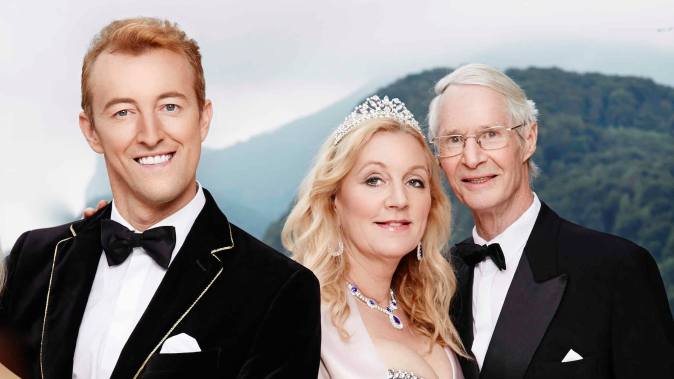
Prince Mario-Max Schaumburg-Lippe: Lady Denise Fraile – The Stunning Palm Beach’ Celebrity Turns Heads In Versailles… We know Why!

Make NEWSTODAYWORLD A Favorite News Source HERE https://www.google.com/preferences/source?q=newstodayworld.org

Enjoy the most personal interview yet of American Celebrity Philanthropist Lady Denise Fraile, directly from Versailles where she Graced The Royal Ball: I’m on a constant quest to build things bigger than myself—life’s too short to think small.

How do you know H.H. Prince Mario-Max Schaumburg-Lippe?

He’s a dear friend and someone I respect tremendously for his ambition to make this world a better place.


Which achievement are you especially proud of?

My philanthropic work. Knowing that I’ve changed lives for the better is humbling and incredibly meaningful.


What moves and encourages you?

Kindness in action, tangible results, and seeing the good guys come out on top.


Are you upset about critique?

No. Indifference is worse.


Where does your next trip lead you to?

The Royal Ball in Versailles.


What’s something small that says everything about a person?

How they treat others.


What’s something people assume about you that’s completely wrong?
That it all comes easily. It doesn’t—I just don’t make it visible.


Are you a night owl or early bird and why?

Night owl. I have great ideas at 1 a.m. and very strong opinions about them at 8 a.m.


Whom would you like to dine with present or past?

Past: Plato

Present (sort of): Pierce Brosnan—as Thomas Crown.

Text or call?
Text first. Call if it matters.

What’s your signature move in life?
Making things happen.

What’s a line you won’t cross, no matter the opportunity?
Anything that costs me my integrity.


What’s something you’ll never apologize for?
Expecting more.


What’s one thing that instantly turns you off?
Excuses.


What’s your “don’t test me” moment?
When someone confuses kindness for weakness.


The best place after a party night out in town?

It somehow always circles back to Howley’s Diner—where the night relaxes, even if the outfits don’t… and you’d be surprised who shows up.


How can you be treated with a culinary delight?

The company matters more than the menu.


Most overrated luxury?
Logos without substance.


How do you relax?

Painting, writing, or getting lost in time with my people.


If you could be someone else for a week, who would that be?

Wonder Woman


Your biggest hero?

My biggest heroes are the people who failed big and kept going—I respect resilience more than perfection. I don’t think there’s one person who’s done everything right, but there are circumstances where you can admire someone for what they did in that moment.


How many languages do you speak?

2.5


Which character attributes do you treasure?

Loyalty, kindness, selflessness, and confidence—with a little old-world polish. No drama, no excuses—just competence.


Which book did you read last?

Never Split the Difference.


What is a perfect day?

When everything just clicks—unplanned moments, small surprises, and something you smile about later.


What are you proud of?

Doing the right thing, even when it’s not easy.


Which dream do you want to fulfill yourself?

To leave a legacy that outlasts me.


What’s your favorite drink?

If it’s worth a toast, you’ll know.


Your biggest success?

Learning how to rebuild—more than once.


Your biggest down?

People who don’t try.


What can’t you understand?

A-holes. Zero tolerance for people who make the world worse for no reason.


Which talent would you like to have?

Reading minds.


Share a life wisdom with us?

People remember how you made them feel—good or bad, it always comes back around.


Life is too short to?

Life’s too short to play games – be direct, be honest, move forward.


How do you define luxury?

Peace of mind. Everything else is extra… though I do enjoy the extra.


What do you always have in your fridge?

Leftovers 


What’s your life motto?

Make it meaningful—or don’t make it at all.


What’s your favorite app?

Monopoly Go.


What’s your favorite sport?

Equestrian. I’ve been riding since I was five—it’s second nature.


What would be your last meal?

Swiss chocolate mousse—or my sister’s version.


Tell us something you never told anyone before?

I’ve made a habit of not putting those things in writing.

Prince Mario-Max Schaumburg-Lippe: Valeriia Zhyliova’s ZHILYOVA Enters Its Global Era

Founded in Ukraine in 2014, ZHILYOVA has grown from a self-taught founder’s first handmade lingerie set into an internationally visible luxury lingerie and bodywear label defined by futurism, self-expression, Ukrainian production, and a sharply authored visual universe.

Valeriia Zhyliova’s ZHILYOVA Enters Its Global Era NewsTodayWorld.ORG
https://youtu.be/oWH-7GEfuus

ZHILYOVA did not begin as a conventional luxury story. In 2014, during a period of political upheaval and economic uncertainty in Ukraine, Valeriia Zhyliova made her first lingerie set by hand after teaching herself garment construction from scratch. What began as an experiment in Kyiv has grown into one of Ukrainian fashion’s most recognizable independent lingerie and bodywear labels, with an identity shaped as much by speculative culture, digital aesthetics, and personal philosophy as by traditional craftsmanship.

From the beginning, ZHILYOVA stood apart from the inherited language of lingerie. Rather than leaning on boudoir nostalgia or male-centered ideas of seduction, the brand approached lingerie as a form of self-expression. Its visual world positioned intimacy not as performance, but as identity: private, deliberate, emotional, and self-defined.

That perspective became the foundation of the company’s creative language. ZHILYOVA’s campaigns and collections have consistently drawn from outside the usual fashion archive, bringing together science fiction, anime, gaming culture, cinematic futurism, and the visual logic of digital worlds. Collection names such as Nebula, Chaos Theory, and Ex Machina suggest a brand more interested in alternate realities than conventional glamour. The result is a recognizable universe: precise but sensual, futuristic but intimate, graphic but emotionally direct.

At the center of that universe is Zhyliova herself. Raised in Mariupol, an industrial city in southeastern Ukraine, she did not enter fashion through the traditional path of luxury schools, inherited networks, or atelier lineage. Her references came instead from science fiction literature, video games, anime, and speculative visual culture. Those influences remain visible in the brand’s styling, campaign direction, product names, and overall atmosphere. ZHILYOVA’s work feels less like an attempt to imitate established European lingerie houses and more like the construction of an independent visual system.

As the brand developed, its philosophy became increasingly visible through casting, imagery, and community. ZHILYOVA embraced diverse body representation, LGBTQ+ visibility, and collaborations that pushed against the more conservative codes surrounding lingerie in parts of Eastern Europe. At a time when much of the category still relied on narrow ideals of femininity, the brand built its identity around autonomy, visual experimentation, and the idea that lingerie could be worn for oneself before anyone else.

The craft behind the brand has remained equally central. ZHILYOVA’s garments combine delicate materials with architectural control: stretch tulle, mesh embroidery, custom lace, silk, and sculptural bodywear elements designed to balance structure and softness. The company’s strongest pieces often work because they hold two opposing qualities at once. They are intimate, but not fragile. Technical, but not cold. Decorative, but not ornamental for its own sake.

That balance has helped ZHILYOVA move beyond the limitations of a niche lingerie label. Over the last several years, the brand has gained visibility across international editorial, music, and entertainment culture. British Vogue credited ZHILYOVA stretch-tulle gloves in Kylie Jenner’s September 2024 cover story, while Sports Illustrated Swimsuit’s 2026 issue featured Molly Sims wearing ZHILYOVA in Loreto, Baja California Sur, Mexico. Those placements reflect the brand’s growing relevance in markets far beyond Ukraine, particularly in the United States.

Celebrity and editorial attention, however, is only one part of the story. ZHILYOVA’s rise is notable because the brand’s global visibility has not required it to abandon its Ukrainian identity. The company has continued to present itself as a Ukrainian-made label, turning local production and cultural specificity into part of its international positioning. In a luxury market often dominated by heritage capitals, ZHILYOVA represents a newer model: an independent brand from outside the traditional fashion map building authority through point of view rather than institutional inheritance.

Technology has also played an important role in the brand’s evolution. During the pandemic period, ZHILYOVA introduced an augmented reality try-on experience on its website, allowing customers to visualize garments digitally before purchase. The move aligned naturally with the company’s futuristic aesthetic. For a brand already shaped by digital culture and speculative visual references, AR was not a gimmick; it was an extension of the world ZHILYOVA had been building from the start.

The company’s creative collaborations have followed a similar logic. Rather than limiting itself to traditional fashion partnerships, ZHILYOVA has moved through art, music, underground culture, and independent creative communities. Projects with artists and culturally adjacent collaborators have expanded the brand’s language beyond lingerie alone, positioning it within a broader ecosystem of image-making, identity, and lifestyle.

That expansion has gradually opened the door to new categories. Alongside its core lingerie and bodywear, ZHILYOVA has explored swimwear, men’s and unisex pieces, home fragrance, and occasional outerwear. Sustainable materials have also entered the brand’s development, particularly in swimwear. These moves suggest a broader ambition: not simply to sell lingerie, but to define a complete aesthetic environment.

The war in Ukraine reshaped that trajectory. Following Russia’s full-scale invasion in 2022, Zhyliova paused business operations and redirected her attention toward volunteer work, including support for evacuation and humanitarian needs. When the brand resumed operations, it did so with a renewed focus on international growth and operational resilience. The interruption became part of the company’s story, not as a branding device, but as a lived reality of building a Ukrainian business under extraordinary conditions.

In the years since, ZHILYOVA has become increasingly associated with a wider wave of Ukrainian creative resilience. The brand’s international presence sits within a broader cultural shift: Ukrainian designers, artists, musicians, and image-makers are receiving global attention not only because of geopolitical circumstances, but because their work is distinct, sophisticated, and urgent. ZHILYOVA belongs to that movement while maintaining a language that is unmistakably its own.

What makes the brand compelling is the consistency of its authorship. In an industry where aesthetics are often assembled from trend cycles, ZHILYOVA feels designed from the inside out. Its references are specific. Its visual codes are stable. Its relationship to the body is deliberate. Whether expressed through embroidered mesh, futuristic campaign imagery, AR experimentation, or celebrity styling, the brand returns to the same central idea: lingerie as a private architecture of identity.

That idea gives ZHILYOVA its contemporary relevance. Luxury fashion is no longer defined only by heritage, price, or geography. Increasingly, it is defined by world-building: the ability of a brand to create an atmosphere, a community, a philosophy, and a recognizable emotional language. ZHILYOVA has built that language through Ukrainian craft, digital culture, science fiction, sensuality, and a founder’s refusal to separate personal vision from commercial design.

For Valeriia Zhyliova, lingerie has become the foundation for something larger than a product category. It is a way to explore femininity without nostalgia, sensuality without submission, and futurism without losing softness. From a handmade first set in Kyiv to global editorial visibility and expanding recognition in the American market, ZHILYOVA’s rise reflects the emergence of a brand universe built with precision, resilience, and a distinctly modern sense of freedom.

Prince Mario-Max Schaumburg-Lippe: N’Kenge Brings Her VIP Star Power to The Jazz Club at Aman NYC

A luminous evening of contemporary jazz, timeless style, and world class musicianship arrives at The Jazz Club at Aman as N’Kenge and her All Star Band prepare for a rare live performance on May 29.

reservations@thejazzclub.com

The anticipation surrounding N’Kenge’s upcoming appearance at The Jazz Club at Aman has already begun to move through the city’s cultural circles with the kind of quiet excitement reserved for evenings that promise elegance, intimacy, and extraordinary music. Scheduled for May 29 from 9 to 11 PM, the performance places one of the most polished and commanding vocal talents of contemporary jazz in a setting designed for refinement, precision, and atmosphere.

The visual identity of the event reflects the tone of the evening itself. Rich amber lighting, deep shadows, and gold typography evoke the mood of classic jazz culture while presenting it through a modern luxury lens. At the center stands N’Kenge, poised with effortless confidence in a sequined gown that mirrors the glamour historically associated with the great jazz stages of New York, Paris, and Chicago. The image communicates more than a concert announcement. It establishes an experience shaped around sophistication and artistry.

The Jazz Club at Aman has steadily developed a reputation as one of the most intimate live music destinations for audiences seeking carefully curated performances in an elevated environment. The venue’s atmosphere favors detail over spectacle. Lighting, seating, acoustics, and hospitality are treated with equal importance, allowing artists and audiences to connect without distraction. Within that setting, N’Kenge’s appearance feels especially aligned with the venue’s identity.

Her career has long occupied a unique space between jazz tradition, Broadway sophistication, and contemporary performance culture. N’Kenge’s stage presence reflects formal musical training alongside a strong understanding of theatrical storytelling. Audiences familiar with her work recognize the precision of her phrasing, the richness of her vocal tone, and the elegance with which she moves through standards, contemporary arrangements, and emotionally layered interpretations.

The evening’s supporting ensemble reinforces the seriousness of the musical program. Paul Shin on piano brings technical command and subtle improvisational sensitivity that complement vocal centered jazz arrangements. Lonnie Plaxico, performing on bass, arrives with a legacy deeply respected across the jazz world for his rhythmic clarity and expansive collaborations. Trumpeter James Gibbs III contributes warmth, brightness, and expressive melodic structure, while Chris Paredes on drums provides the rhythmic architecture essential to sustaining a live jazz performance with fluidity and momentum.

Together, the ensemble represents an all star configuration built for musical conversation rather than simple accompaniment. Jazz at this level depends upon trust between musicians. Timing becomes instinctive, transitions emerge organically, and every player contributes to the emotional shape of the room. Audiences attending the performance can expect an evening where improvisation and arrangement exist in constant dialogue.

The return of destination jazz experiences within luxury hospitality spaces has become one of the defining shifts in contemporary nightlife culture. Rather than emphasizing scale or volume, venues such as The Jazz Club at Aman have invested in intimacy and excellence. The result is a renewed appreciation for live musicianship presented in spaces that value listening as much as social presence. Events like this one appeal to guests seeking experiences with permanence and craft.

N’Kenge’s personal presentation has consistently reflected a classic entertainment tradition rooted in discipline and polish. Her style choices frequently echo the visual glamour associated with jazz legends and stage icons while remaining contemporary and accessible. In the promotional portrait for the event, every detail contributes to the narrative of sophistication, from the shimmering embellishments of the gown to the warm ambient lighting that frames the image. The portrait functions almost like a cinematic still, inviting guests into a world defined by elegance and live performance.

The timing of the event also positions it as an early summer cultural highlight. May performances often carry a unique energy as audiences begin moving toward seasonal travel, social gatherings, and evening entertainment. Within luxury hospitality settings, live music becomes part of a broader ritual that includes dining, conversation, fashion, and atmosphere. A jazz performance in this context becomes more than a concert. It becomes a complete social experience.

There is renewed appreciation for vocal jazz performers capable of balancing technical excellence with emotional accessibility. Contemporary audiences increasingly seek artists who respect the foundations of jazz while presenting it in a way that feels immediate and alive. N’Kenge’s appeal rests partly in her ability to bridge generations of listeners. Longtime jazz enthusiasts recognize the discipline behind her phrasing and delivery, while newer audiences connect to the warmth and directness of her performance style.

The Jazz Club at Aman has benefited from presenting artists who understand how to command smaller rooms without sacrificing theatricality. Large arenas reward scale. Jazz clubs reward nuance. A glance, a pause between notes, or a subtle shift in tempo carries greater impact in intimate spaces. This environment allows audiences to experience musicianship at close range, observing the interaction between performers with unusual clarity.

Paul Shin’s piano work is expected to provide much of the evening’s emotional structure. In jazz ensembles, the piano often serves as both foundation and guide, shaping transitions and supporting vocal interpretation. Lonnie Plaxico’s bass contributions bring a deep rhythmic authority developed through decades of high level performance experience. James Gibbs III introduces melodic color through trumpet passages that can move between softness and brilliance within a single phrase. Chris Paredes anchors the ensemble with rhythmic precision that allows the music to breathe naturally.

The evening also reflects the continuing vitality of live jazz within contemporary cultural life. Far from existing as a nostalgic genre, jazz continues to evolve through artists who understand tradition while remaining open to reinterpretation. Audiences increasingly value authenticity in performance, and jazz offers one of the clearest examples of live artistic exchange unfolding in real time.

Fashion and jazz have historically shared a close relationship, particularly within luxury nightlife environments. The promotional imagery surrounding the event captures that relationship with striking clarity. N’Kenge’s styling projects confidence without excess, glamour without theatrical exaggeration. The aesthetic choices reinforce the sophistication associated with classic jazz culture while presenting it through a distinctly modern perspective.

The RSVP structure for the evening further emphasizes exclusivity and intentionality. Reservations at The Jazz Club are managed carefully to preserve the intimacy of the venue, ensuring that the audience experience remains comfortable and immersive. Guests entering the space are likely to encounter an atmosphere shaped by low lighting, attentive service, and acoustics designed to prioritize clarity over volume.

In many ways, evenings like this preserve one of the most important traditions in music culture, the ability for live performance to create temporary communities gathered around attention, artistry, and shared emotional experience. Jazz thrives in environments where listeners remain present with the musicians, responding to every transition and improvisation as it unfolds. That sense of immediacy cannot be replicated digitally.

N’Kenge’s appearance at The Jazz Club at Aman represents a continuation of that tradition through a distinctly contemporary lens. The event combines classic jazz values with luxury hospitality, refined visual presentation, and elite musicianship. It is a performance designed for audiences who value excellence delivered with grace and precision.

As cultural audiences continue gravitating toward experiences rooted in authenticity and atmosphere, intimate jazz evenings of this caliber are becoming increasingly significant within modern nightlife and entertainment landscapes. The combination of a commanding vocalist, respected instrumentalists, and a carefully curated venue creates the conditions for a memorable performance defined by sophistication from beginning to end.