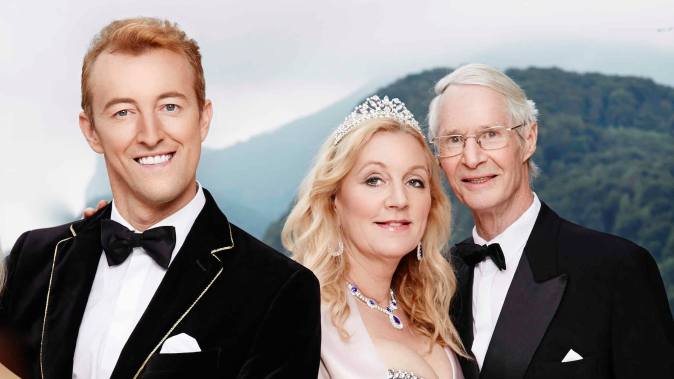
Prince Mario-Max Schaumburg-Lippe: Cristina Fontanelli: Christmas in Italy Concert Brings Italian Spirit and Her Starpower to New York

A cherished New York holiday tradition returned with warmth, music, and deep cultural pride as Cristina Fontanelli and her foundation presented the 22nd annual Christmas in Italy concert, an evening that once again united Italian heritage, classical artistry, and charitable purpose in the heart of the city. The stunning St. Jean Baptiste Church on 76th Street was the wonderful venue for the show.

We can confidently call it the concert of the year!

For more than two decades, Christmas in Italy has stood as a singular event on New York’s cultural calendar, blending sacred music, beloved Italian songs, and seasonal classics with a sense of personal history and community devotion. This year’s performances continued that legacy with quiet confidence and emotional clarity, reaffirming the concert’s place as a meaningful gathering rather than a spectacle.

The program was presented by the Cristina Fontanelli Foundation, Inc., an organization whose mission is closely tied to education, children, and the preservation of cultural values. Under its guidance, the concert has evolved into a sustained philanthropic effort that channels the power of music into tangible support for young people, particularly students with special needs.

At the center of the evening stood Cristina Fontanelli, host soprano and founder, whose presence shaped every aspect of the performance.

Her role was not limited to singing. She served as curator, storyteller, and guiding voice, weaving together repertoire, memory, and intention with a steady sense of purpose. Her approach remained grounded and sincere, reflecting a lifelong commitment to honoring her Italian roots while embracing the American city that has become her home.

The setting at St. Jean Baptiste Church, located at 76th Street and Lexington Avenue, provided a dignified and resonant space for the performances. The church’s long association with the Italian American community lent additional meaning to the evening, reinforcing the sense that this concert belongs as much to the neighborhood and its history as it does to the stage.

The wonderful St Anthony of Padova is the family saint patron of the Royal H.H. Dr. Prince Mario-Max Schaumburg-Lippe family.

The concert opened with an atmosphere of welcome shaped by emcee Denise Richardson, whose steady presence framed the evening with grace and clarity. Her connection to public broadcasting and cultural advocacy brought a tone of respect and familiarity that set the stage for the music to unfold naturally.

From the first notes, the program moved with thoughtful pacing, balancing traditional Italian songs, classical selections, and Christmas favorites. The repertoire reflected centuries of musical heritage, yet it was presented with accessibility and warmth, inviting listeners of all backgrounds into the experience.

Alexander Chaplinski contributed piano and organ performances that anchored the evening with elegance and restraint. His playing offered both structural support and expressive nuance, allowing the vocalists and instrumentalists to move confidently through the varied program.

The mandolin section, featuring Joyce Balint, Janet Folchetti, and Patricia Foung, brought a distinctive Italian color to the concert. Their performances evoked intimacy and craftsmanship, reminding the audience of the instrument’s deep association with Italian folk and classical traditions. Each player contributed her own musical voice while maintaining a cohesive ensemble sound.

David Galvez on guitar added rhythmic warmth and melodic clarity, complementing the mandolins and vocals with sensitivity. His background in classical and contemporary styles was evident in the way he shaped phrases and supported the singers without drawing attention away from the core of the music.

Accordionist Bill Schimmel provided one of the evening’s most evocative textures. The instrument’s unmistakable voice carried listeners across borders and generations, recalling both street music and concert halls. His performance underscored the accordion’s unique ability to bridge popular and classical traditions.

Tenor Joseph Disalle brought vocal strength and emotional directness to the program. His singing conveyed clarity of line and respect for the text, qualities that resonated deeply within the sacred and traditional repertoire.

A special place in the concert was reserved for young performers, including the students of PS 168X, guided by vocal soloist Evangeline Pabalalan. Their participation reinforced the foundation’s commitment to education and inclusion, reminding the audience that the future of cultural tradition depends on the encouragement and visibility of young voices.

Adding a theatrical element, the concert also featured young actors Arturo Skoda, Mara Carbone, and Timmy Cavanaugh. Their involvement brought a sense of storytelling and continuity, connecting music to narrative and memory.

Throughout the evening, the program reflected a careful balance between performance and remembrance. A printed dedication honored Cristina Fontanelli’s family, including her mother Mamma Francesca, her grandparents Eleonora and Domenico De Candia, Christina and Joseph Fontanelli, her brother John, her father Rocco, and the many supporters who have passed on. This acknowledgment was offered not as sentimentality but as an integral part of the concert’s meaning.

The dedication also extended to the Italian American immigrant experience, specifically honoring those connected to the Italian Food Center on Mulberry and Grand Streets in Little Italy. The recognition of these everyday histories grounded the concert in lived experience, reminding the audience that cultural traditions are sustained by families, labor, and shared memory.

Beyond the music itself, Christmas in Italy has always carried a philanthropic purpose. Proceeds from the concert support children and youth through the foundation’s ongoing initiatives, including programs for students with special needs. This charitable dimension was not presented as an aside but as a core reason for the concert’s continued existence.

The printed program detailed the wide network of sponsors and supporters who contribute to making the event possible, reflecting a community effort rather than a single artistic endeavor. Their involvement underscored the collaborative spirit that has sustained the concert for twenty two years.

The evening concluded without spectacle or excess, staying true to the concert’s character. The final moments felt resolved and complete, shaped by gratitude and continuity rather than finale-driven drama.

Christmas in Italy remains a rare example of a cultural event that has grown steadily while maintaining its original intention. It has not chased trends or expanded beyond recognition. Instead, it has deepened its connection to audience, place, and purpose.

In a city defined by constant change, the concert’s consistency has become one of its greatest strengths. Audiences return not only for the music but for the sense of belonging it fosters, a feeling rooted in tradition and sustained by care.

Cristina Fontanelli’s vision continues to guide the concert with clarity. Her ability to merge artistry with service, and heritage with openness, has shaped Christmas in Italy into a lasting institution rather than a seasonal occasion.

As the final notes faded inside St. Jean Baptiste Church, the concert left behind a quiet affirmation of what holiday music can represent. It offered remembrance without nostalgia, celebration without excess, and generosity without display.

Christmas in Italy once again fulfilled its purpose, blessing New York with the enduring spirit of Italian culture, community devotion, and shared humanity.

Cristina Fontanelli and the Modern Life of Opera

An American soprano with international reach, Cristina Fontanelli has shaped a distinctive career that places classical voice at the center of contemporary cultural life.

Cristina Fontanelli occupies a rare position in American music, one defined by sustained classical discipline and a broad public presence that continues to grow. Trained in the rigor of opera while fluent in the language of popular presentation, she has built a career that respects tradition and remains attentive to modern audiences. Her work reflects a belief that opera can live comfortably within today’s cultural landscape without dilution or spectacle.

Born in New Jersey, Cristina Fontanelli discovered music early and pursued vocal study with a seriousness that would later define her professional path. From her formative years, her voice showed a natural lyric clarity that responded well to classical training. Her development followed a disciplined trajectory that emphasized technique, language, and musical interpretation rather than quick exposure.

Her education brought her into contact with established pedagogical traditions that have shaped operatic voices for generations. She absorbed these methods carefully, refining breath control, tonal balance, and expressive restraint. This foundation became central to her performances, allowing her to navigate demanding repertoire with consistency and control.

Early professional engagements confirmed her readiness for a public career. She appeared in concert settings that favored precision and emotional clarity over theatrical excess. These performances introduced her to audiences who responded to her direct style and clear vocal presence.

As her career expanded, Fontanelli became known for programming that welcomed listeners who might not otherwise attend opera. She curated concerts that combined well known arias with accessible selections, presented in formal settings without intimidation. This approach positioned her as a bridge between traditional opera houses and contemporary cultural venues.

Her voice, a lyric soprano of focused projection, proved especially effective in live concert environments. She maintained vocal integrity while communicating directly with audiences, a balance that remains difficult for many classically trained singers. The result has been a growing base of listeners who follow her work across genres.

Fontanelli’s collaborations have played an important role in shaping her public profile. Her performances alongside Andrea Bocelli introduced her to international audiences and underscored her credibility within the classical community. These appearances reinforced her reputation as a singer capable of sharing the stage with globally recognized artists while maintaining her own artistic identity.

Beyond individual concerts, she has participated in televised performances and large scale public events that brought opera into mainstream view. These appearances were marked by careful repertoire choices and a presentation style that emphasized musical substance. She consistently avoided novelty in favor of clarity and respect for the material.

Her work has also included philanthropic and civic engagements, where music functions as a shared cultural language. In these settings, Fontanelli often emphasizes the emotional accessibility of classical music. She treats opera not as an elite form but as a living tradition meant to be heard and understood.

After years of steady growth, her career reflects longevity rather than acceleration. She has avoided the cycle of constant reinvention, choosing instead to deepen her repertoire and refine her performance practice. This approach has allowed her voice to mature naturally over time.

Her recordings serve as an extension of her live work. They emphasize vocal purity and traditional arrangements, capturing the qualities that define her stage presence. Listeners encounter a consistent artistic voice across formats.

Fontanelli’s presence in American cultural life has contributed to a renewed visibility for opera singers outside conventional institutions. She demonstrates that a classical career can thrive through adaptability rather than compromise. Her performances invite attention without demanding explanation.

Subhead: Building an Audience for Classical Voice

Audience development remains central to her work. Fontanelli understands that many listeners approach opera with uncertainty. Her concerts often include contextual framing through program selection rather than spoken instruction, allowing the music itself to guide the experience.

She maintains a professional aesthetic that reflects the formality of opera while remaining contemporary in presentation. This balance has proven effective in venues that range from concert halls to civic stages. Her visual and musical restraint keeps attention focused on the voice.

Critical reception has emphasized her technical reliability and clear interpretive choices. Reviewers often note her ability to sustain long phrases and maintain tonal focus throughout demanding programs. These qualities support a career built on repeat engagement rather than momentary attention.

Her work has also influenced younger singers who see in her career a model of sustainability. By emphasizing preparation and thoughtful programming, she presents an alternative to rapid exposure through competition or media trends. Her path demonstrates that steady artistry can coexist with public visibility.

Fontanelli remains active in live performance, where her voice continues to evolve within the framework of classical technique. Each appearance reflects accumulated experience rather than departure from form. This continuity reinforces audience trust.

Her career stands as an example of how opera singers can engage contemporary audiences while honoring tradition. She does not frame her work as innovation but as continuation. The result is a body of work that feels grounded and relevant.

As opera continues to seek new listeners, Cristina Fontanelli’s career offers a practical and persuasive model. Through disciplined training, careful collaboration, and consistent public engagement, she has sustained a presence that respects the art form and the audience equally.

Cristina Fontanelli, opera singer, American soprano, classical music, opera concerts, Andrea Bocelli, concert soprano, opera in America, lyric soprano, classical crossover, live performance, vocal performance, opera outreach, televised concerts, orchestral collaboration, New Jersey artists, American opera voices, concert halls, philanthropic performances, classical recordings, vocal training, music education, public concerts, opera accessibility, cultural events.

* His Highness and Excellency Global Peace Ambassador Dr. PRINCE MARIO-MAX SCHAUMBURG-LIPPE is a working Royal, award winning TV- and Event-Host, Bertelsmann Randomhouse author, Public Speaker and Philanthropist ♔ Prince Mario-Max is the son of Royal Dignitaries H.H. Dr.h.c. Prince Waldemar and H.H. Dr. Princess Antonia of Schaumburg-Lippe. His Grandmother is H.R.H. Princess Feodora of Denmark. Therefore they are the Royal Danish Nachod Line of The Princes of Schaumburg-Lippe, the Founding Family of Hamburg, Lübeck and Kiel. ♔ Instagram https://www.instagram.com/princemariomax/ Website http://www.schaumburglippe.org Facebook https://www.facebook.com/zuschaumburglippe X-Twitter https://twitter.com/schaumburglippe Linkedin https://www.linkedin.com/in/prince-mario-max-schaumburg-lippe-1879978a

Prince Mario-Max Schaumburg-Lippe: Prince Waldemar zu Schaumburg-Lippe, His Highness Dr.h.c. – A Tribute To The Royal Prince of Hearts!

A Tribute to H.H. Dr. H.c. Prince Waldemar Prinz zu Schaumburg-Lippe.
The Royal Prince of the Hearts

His wife H.H. Dr. Princess Antonia zu Schaumburg -Lippe and his son H.H. Dr. Mario-Max Prince zu Schaumburg-Lippe state:

The world mourns the loss of my beautiful humble loving Prince Waldemar, my beloved husband of regal heritage and extraordinary character. A royal banker, photographer, painter, writer, and polyglot! Prince Waldemar’s presence lit up every room he entered. His family and friends worldwide remember him with tears, but also with laughter and joy, as they recall his charismatic personality, infectious humor, and unwavering kindness.

“He was a brave fighter and advocate against mobbing and stalking, as even he himself and his family has been a decades long target of a bully and stalker. He never gossiped, and he never humiliated anyone,” we hear unisono. Coming from incomparable nobility dating back to the first Viking King and the year 936, he clearly called out arisproletarians (Arisproleten), people with a title that dont conduct what aristocracy means, as he has condemned gossipy or commentary nobles that think they can get away with their misconduct by birthright. Prince Waldemar called them nobodies and wannabes and always taught his Royal son Prince Mario-Max and Royal wife Princess Antonia to expose those, as they bring the entire Royalty down. He was himself master of etiquette and protocol, held the Danish Diplomatic passport and was known as the most refined Prince on earth.

“When he entered a room, he was the center of the party – charismatic, fun, trustworthy.” Prince Waldemar’s handshake had quality, a testament to his integrity and strength of character.

A loving husband to Her Highness Princess Antonia and proud father to His Highness Prince Mario-Max, His Highness Prince Waldemar was a rock for his family.

No mountain was too high for him to climb, and his love and support knew no bounds. He spoke many languages fluently, connecting with people from diverse backgrounds and cultures. He built bridges between cultures and his work was honored with multiprl awards because people respect his passionate work to make the world a better place.

As we celebrate his birthday today we honor this extraordinary prince, we take comfort in the memories of his laughter, his art, and his unwavering optimism. Beloved Prince Waldemar may be gone, but his spirit lives on in the hearts of those who loved him. And also for his mother H.R.H. Princess Feodora of Denmark he was the best son of the world.

💕

In Love,
Princess Antonia

Prince Mario-Max Schaumburg-Lippe: Winter Community Leadership in NYC Takes Center Stage – Thank You Farah N. Louis!

Two landmark holiday initiatives demonstrate how civic leadership and community organizations deliver tangible support during the winter season.

As winter settles into New York, the season once again reveals its defining contrast, celebration alongside responsibility. Across the city, community leaders and nonprofit partners step forward to ensure that joy, dignity, and care remain accessible to families who need it most. This year, two winter initiatives stand out for their scale, organization, and clarity of purpose, each addressing essential needs through thoughtful collaboration and public service.

The first of these initiatives is Winter Wonderland, a Holiday Toys and Winter Coat Distribution presented under the leadership of New York City Council Member Farah N. Louis. Organized in partnership with Elite Learners Inc., Ede Youth, I Will Graduate, and Brooklyn Sigmas, the event reflects a coordinated effort to meet practical needs while maintaining the spirit of the holiday season.

Fabulous Council Member Farah N. Louis anchors the initiative with a focus on family stability and youth development. Her involvement signals a broader commitment to ensuring that public office remains closely connected to neighborhood realities, particularly during winter when economic pressure intensifies for many households. By convening nonprofit organizations, educators, and community advocates, the event creates a framework for meaningful seasonal support.

Winter Wonderland is scheduled for December 22 at the Flatbush YMCA, located at 1401 Flatbush Avenue in Brooklyn. Doors open at 6:00 PM, with advance registration required to ensure a smooth and equitable distribution process. The setting reflects accessibility and familiarity, reinforcing the YMCA’s longstanding role as a community hub in Brooklyn.

At the heart of the event is the distribution of holiday toys and winter coats, items that address both emotional and physical well being. Toys provide children with a sense of normalcy and celebration, while winter coats address a basic and immediate necessity. Together, they represent a balanced approach to seasonal support that recognizes the full scope of family needs.

The event is strengthened by a wide network of partners and supporters, including FDC, Elite Learners Inc., Kappa Beta Sigma Brooklyn Sigmas, Ede Youth, I Will Graduate, Yeled V’Yalda, and additional community organizations. Their collective presence underscores the importance of collaboration in delivering large scale initiatives effectively.

Corporate and institutional partners such as Anthem MetroPlus Health, Amazon, Citymeals on Wheels, the YMCA, and Mount Sinai contribute to the infrastructure that makes Winter Wonderland possible. Their involvement highlights the role of cross sector partnerships in sustaining community focused programs.

Complementing this large scale distribution is a second initiative that emphasizes direct engagement, celebration, and giving at the neighborhood level. The Annual Toy Drive and Holiday Party taking place at 217-02 Jamaica Avenue in Queens Village brings together families, youth, and local organizations in a setting designed for connection and shared experience.

Scheduled for Saturday, December 20 from 2:00 PM to 5:00 PM, the event invites the community to gather around food, music, games, and fellowship. The atmosphere is intentionally welcoming, reinforcing the idea that support can be both practical and celebratory.

The toy drive component allows attendees to participate directly in the act of giving. Donations collected during the event contribute to a broader effort to ensure children receive gifts during the holiday season. Free produce distribution further expands the scope of support, addressing food access alongside holiday needs.

Ede Youth plays a central role in organizing this event, continuing its mission to empower young people and families through education, mentorship, and community engagement. Partner organizations including Event Parlour, EmblemHealth, A.Y.E.S., Nourishing Hearts, and the New York State Assembly lend their support, creating a layered network of resources and advocacy.

The event also highlights the importance of accessible drop off locations for donations. Contributions are accepted at the Queens Rosedale Library, located at 144-20 243rd Street in Rosedale, New York, extending the reach of the toy drive beyond a single afternoon.

Both initiatives reflect a shared understanding of winter as a period that demands coordinated action. While one operates at a citywide scale under elected leadership, and the other centers on neighborhood connection, together they demonstrate a comprehensive approach to seasonal support.

What distinguishes these activities is their emphasis on dignity. Distribution is handled with care, registration processes are clear, and families are welcomed rather than scrutinized. This approach fosters trust and reinforces the idea that assistance is a right grounded in community responsibility.

Youth engagement remains a central theme across both events. By centering children and young people, organizers acknowledge that winter support is an investment in the city’s future. Toys, coats, and shared experiences contribute to emotional security as much as physical comfort.

The timing of these events, positioned just days apart, creates a sustained rhythm of support throughout the holiday period. Families are not met with a single moment of relief, but with multiple opportunities for connection and assistance.

These initiatives also illustrate how public leadership and grassroots organizing can function in alignment. Council Member Farah N. Louis’s involvement complements the work of nonprofit leaders and volunteers who manage logistics, outreach, and on the ground engagement.

Community trust is reinforced through transparency. Clear information about locations, times, registration requirements, and partner organizations ensures that families know what to expect and how to participate.

The visual identity of both events reflects careful planning, signaling professionalism and respect for the communities they serve. These details matter, as they communicate seriousness of purpose and pride in service.

As winter continues, the impact of these initiatives will extend beyond their scheduled dates. Coats worn throughout the season, toys cherished in homes, and connections formed during these gatherings all contribute to longer term stability and morale.

Support for these events represents support for a broader vision of community care. Donations, volunteer time, and public engagement ensure that these programs remain sustainable and responsive.

In a city defined by scale and diversity, such initiatives remind residents that meaningful change often begins with targeted, well organized action. Winter Wonderland and the Annual Toy Drive and Holiday Party each demonstrate how leadership, partnership, and intention translate into tangible outcomes.

Together, they stand as the most important winter activities of the season, not because of spectacle, but because of their direct and lasting impact on families and youth.

Prince Mario-Max Schaumburg-Lippe: Randy Edelman at Carnegie Hall Marks a Landmark Musical Evening

A celebrated composer returns to one of the world’s most revered stages for a rare live performance shaped by decades of cinematic and concert music.

The announcement arrives with the calm assurance of an artist whose career no longer requires embellishment. Randy Edelman, composer, pianist, and storyteller, is scheduled to appear live at Carnegie Hall on Friday, December 19th, 2025, at 8:00 pm, bringing his music to a venue that has long served as a touchstone for artistic achievement. The evening is presented as a full concert experience, centered on Edelman’s expansive body of work and his personal relationship with the music that has defined generations of audiences.

Carnegie Hall stands as an essential part of the narrative. Located at 881 Seventh Avenue in New York City, the hall represents continuity, history, and cultural authority. For an artist like Edelman, whose compositions have traveled widely through film, television, and concert halls, this stage offers a setting where sound, memory, and architectural presence converge. The invitation promises a carefully considered evening rather than a retrospective designed for nostalgia alone.

Edelman’s career unfolds across multiple disciplines, yet the concert frames him foremost as a composer and pianist. His presence at the keyboard remains central to his musical identity, grounding his work in melody and structure even when his scores expand across orchestras and cinematic landscapes. The evening positions him as a storyteller as well, emphasizing the narrative qualities that have allowed his music to move fluidly between film and live performance.

The program draws attention to some of Edelman’s most widely recognized scores. My Cousin Vinny, The Last of the Mohicans, Ghostbusters II, and Dragonheart are named as touchstones within a broader catalog that spans decades. These works occupy distinct emotional and stylistic territories, yet they share a clarity of theme that has become a defining characteristic of Edelman’s approach to composition.

Film music has often been treated as secondary to concert repertoire, but Edelman’s career challenges that division. His scores are constructed with the same attention to form and pacing that define classical composition, while remaining accessible to wide audiences. In a live setting, these pieces are given space to exist beyond their original narratives, allowing listeners to experience their musical architecture directly.

The evening is framed as an event of elegance and focus. Rather than spectacle, the emphasis rests on musicianship and continuity. Carnegie Hall’s acoustics support this intention, offering a space where orchestral and piano textures can unfold with precision. The hall’s history adds context, situating Edelman within a lineage of composers and performers who have shaped public musical life.

Edelman’s relationship with storytelling is not limited to the screen. His live performances often include reflections that connect composition to lived experience, offering audiences insight into how music emerges from collaboration, discipline, and personal history. This dimension of his work reinforces the description of the evening as both musical and narrative in character.

The date itself carries significance as a moment near the close of the year, when audiences are often inclined toward reflection. Without invoking sentimentality, the concert suggests a pause within the cultural calendar, an opportunity to listen attentively to music that has accompanied many through different stages of life.

A Career Shaped by Melody and Craft

Randy Edelman’s professional path began long before his film scores achieved global recognition. Trained as a pianist and composer, he developed an early sensitivity to melody as a primary vehicle for emotional communication. This foundation has remained consistent even as his work expanded into large scale orchestration.

His transition into film scoring was marked by an ability to adapt musical language to diverse narratives. Comedy, historical drama, fantasy, and adventure each required a distinct approach, yet Edelman maintained a recognizable voice. This consistency has allowed audiences to connect his work across genres without confusion or repetition.

In My Cousin Vinny, his music supports timing and character without drawing attention away from dialogue. In The Last of the Mohicans, the score assumes a more expansive role, shaping emotional arcs and contributing to the film’s enduring resonance. These contrasts illustrate Edelman’s flexibility and discipline as a composer.

Dragonheart and Ghostbusters II further demonstrate his capacity to balance orchestral scale with thematic clarity. In each case, the music serves narrative purpose while remaining memorable in isolation. This balance has been essential to the longevity of his work in both popular and professional contexts.

Live performance introduces a different dimension. Without the presence of visual narrative, the music relies entirely on its internal logic and expressive force. Edelman’s comfort in this setting reflects years of experience engaging directly with audiences, whether through piano performance or orchestral leadership.

The Carnegie Hall appearance situates Edelman within a tradition of composers who move seamlessly between media. It affirms the idea that film music belongs naturally within concert halls, not as adaptation but as repertoire in its own right.

Carnegie Hall as Cultural Framework

The choice of Carnegie Hall carries symbolic weight. Since its opening, the hall has represented artistic seriousness and public engagement. For composers, it offers validation that extends beyond commercial success.

Edelman’s presence there aligns his work with a broader cultural conversation about what constitutes enduring music. The hall’s audience brings expectations shaped by history, yet remains open to contemporary voices that respect craft and intention.

The architecture and acoustics of the venue support an experience rooted in listening rather than distraction. This environment allows Edelman’s compositions to be heard with clarity, highlighting structural detail and melodic development.

New York City itself forms an unspoken backdrop. As a center of musical production and performance, it provides context for an artist whose work has circulated globally while remaining grounded in American musical traditions.

The evening’s presentation emphasizes prestige without exclusivity. The invitation language suggests openness, welcoming listeners familiar with Edelman’s work as well as those encountering it live for the first time.

Music, Memory, and Continuity

Edelman’s music often functions as a companion to memory. Many listeners first encountered his compositions in theaters, associating them with personal experiences rather than formal musical study. Live performance reframes these associations, offering a shared listening environment that renews familiarity.

This renewal is central to the concert’s appeal. Rather than revisiting past achievements as static artifacts, the music is presented as living material, responsive to interpretation and performance context.

Edelman’s role as pianist reinforces this immediacy. The physical act of performance underscores the connection between composer and audience, reminding listeners that these works originate in human gesture and intention.

The evening at Carnegie Hall thus becomes an intersection of career, venue, and audience. It reflects a moment where accumulated experience meets present attention, allowing music to function as both record and expression.

As the concert approaches, it stands as an affirmation of longevity built on craft rather than novelty. Edelman’s work continues to resonate because it remains attentive to melody, structure, and emotional clarity.

In bringing this body of music to Carnegie Hall, Randy Edelman participates in a tradition that values continuity and thoughtful engagement. The event promises an evening shaped by discipline, experience, and respect for the enduring power of composed sound.

Prince Mario-Max Schaumburg-Lippe: John Cooper Vision Reimagines Michael Jordan Mansion as Cultural Destination Helping Nature

A new plan for the former Michael Jordan estate proposes an educational and immersive attraction that blends architecture, personal development, and access to nature. The current city council can create something of eternal global significance!

The long driveway leading to the former Michael Jordan mansion in Highland Park has always suggested ambition on a grand scale, even during the many years when the property stood largely dormant on the market. Built as a private residence and defined by its size, security, and unmistakable presence, the estate waited more than a decade for a buyer willing to reimagine its future rather than simply inhabit its past.

That buyer arrived in December 2024, when John Cooper, a partner in a commercial real estate firm, acquired the nine bedroom, nineteen bathroom estate.

Cooper approached the acquisition with a distinctly unconventional outlook. Rather than positioning the mansion as a private luxury residence, he quickly reframed it as a shared asset, renaming the property Champions Point. The new name signaled an intention to shift the narrative from exclusivity toward aspiration, drawing on broader themes of achievement and personal growth.

The Highland Park City Council needs to support this amazing entrepreneur who initiates a global thought process to eco conscious exploration anchored by the attractive world famous mansion.

His current proposal presented to the Highland Park City Council, in an eighteen page document, Cooper outlined plans to transform Champions Point into a full time tourist attraction and immersive museum. The proposal framed the estate as a destination designed to inspire personal transformation through curated experiences rather than passive observation.

The language of the pitch positioned the property as a dynamic cultural institution where architecture, sports, and philanthropy would converge. Cooper described it as a living platform dedicated to helping visitors recognize and engage with their own untapped potential. The emphasis rested firmly on education and self development rather than celebrity spectacle.

Central to the new plan is the beautiful integration of the mansion with its surrounding environment. Cooper is seeking a zoning amendment and special use permit that would allow controlled public access to the property, along with use of the parking lot at a neighboring public nature preserve. A proposed one hundred twenty foot pedestrian path would connect the preserve’s nature center directly to Champions Point.

It is in the hands of Mayor Nancy Rotering, Mayor of Highland Park, Illinois, City Council Members Anthony E. Blumberg, City Council member, Barisa Meckler Bruckman, City Council member, Jon Center, City Council member, Annette Lidawer, City Council member, Yumi Ross, City Council member and Andrés Tapia, City Council member to show that they care for education, culture, tourism, a prosperous city and want to bring their city to the next level with this beautiful project!

This connection to nature forms a key element of Cooper’s argument. He has positioned the estate as a gateway experience that encourages reflection, learning, and engagement with both built and natural environments. Newstodayworld has described the concept as an idea worthy of educational recognition, citing its focus on inspiration and public enrichment.

The proposal outlines daily operating hours from eight in the morning to seven in the evening, running from May through October, with reduced hours during the winter months. In addition, Cooper has requested approval to host up to six evening events per year, each concluding by eleven at night. These events are framed as limited, carefully managed gatherings rather than frequent large scale functions.

Architectural changes are also part of the plan. Among the most symbolic is the relocation of the iconic number twenty three gate from the street facing entrance to an interior location on the property. Cooper has stated that the move is intended to reduce traffic congestion and discourage visitors from stopping or lining up along the quiet cul de sac.

Its a great way to get people off their computers into a nature preserve. There is no environmental impact and questioned whether the project prioritizes educational gain with ecological stewardship over just unvisited, forgotten pristine nature that needs to be put in the spotlight.

The preservation goals with economic and cultural development opportunities all speak for Cooper. Cooper, for his part, has researched that the project can coexist responsibly with the surrounding landscape through thoughtful planning and limited access points.

Champions Point sits at the intersection of celebrity history, architectural scale, municipal regulation, and evolving expectations around access and education.

For Cooper, the mansion represents more than a real estate investment. It is a platform for experimentation in how spaces associated with achievement can be repurposed to motivate and educate. His persistence following the rejection of the timeshare model suggests a commitment to finding a viable path forward within regulatory frameworks.

If approved, the transformation of Champions Point would mark a rare instance of a modern sports era residence becoming a structured cultural destination during the lifetime of its former owner. The approach avoids nostalgia in favor of forward looking themes, positioning the site as a place for reflection rather than commemoration.

Michael Jordan, John Cooper, Champions Point, Highland Park Illinois, NBA, Chicago suburbs, luxury real estate, cultural institutions, immersive museums, sports history, commercial real estate, zoning policy, nature preserves, educational tourism, architectural preservation, celebrity homes, municipal governance, Newstodayworld, Sportico, personal development spaces, philanthropy projects, American sports culture, high end properties, adaptive reuse, tourist attractions

Prince Mario-Max Schaumburg-Lippe: The Italian Pop Up at The Colony Palm Beach Celebrated The Best Of Italian Elegance: Michaela Bruni Reichlin & Dress More With Less

An intimate holiday retail moment brought two refined Italian fashion houses to Palm Beach, transforming The Colony Hotel into a destination for quiet luxury and considered design.

The Italian Pop Up at The Colony Hotel in Palm Beach unfolded as a measured and thoughtfully executed retail event that reflected the shared values of craftsmanship, restraint, and enduring style. Hosted within the Solarium of the landmark hotel, the pop up brought together Dress More With Less and Michela Bruni Reichlin for a pair of curated holiday appointments that emphasized quality over excess and heritage over novelty.

The Colony Hotel, long regarded as one of Palm Beach’s most recognizable addresses, served as a fitting setting for the collaboration. Under the leadership of Sarah Wittenhall, the property had established itself as a place where fashion, culture, and hospitality intersected with clarity and intention. The Italian Pop Up aligned seamlessly with that vision, offering guests a focused experience rather than a spectacle.

Dress More With Less, founded and led by Federica Balestrieri, presented a selection that reflected the brand’s guiding philosophy of reducing fast fashion in favor of singular, well-made garments. The pieces on view spoke to longevity and versatility, designed to move easily between settings while maintaining a sense of individuality. The brand’s presence in Palm Beach underscored its growing resonance with clients who valued discernment and personal style over trend-driven consumption.

Michela Bruni Reichlin introduced her jewelry collections with the same understated confidence that had defined her Milan showroom on Via Monte Napoleone. Known for her sculptural use of stones and refined metalwork, her designs carried a quiet authority rooted in Italian artisanal tradition. The pieces displayed during the pop up reflected years of craftsmanship and a deep respect for material, form, and proportion.

Together, the two brands created a dialogue rather than a contrast. Clothing and jewelry were presented as complementary expressions of a shared aesthetic, one that favored balance, permanence, and thoughtful detail. Guests experienced the collections in a setting that encouraged consideration, with appointments allowing time to engage with each piece and understand its place within a broader wardrobe or personal collection.

The event took place across two dates in December, allowing returning visitors and local residents to engage at their own pace. Rather than compressing the experience into a single day, the extended schedule reflected the organizers’ belief in accessibility without urgency. The pop up felt deliberate and calm, aligning with the values of both brands.

Palm Beach provided a receptive audience for the collaboration. The town’s appreciation for heritage brands and discreet luxury mirrored the sensibilities of the Italian houses involved. Clients familiar with European fashion found a recognizable standard of quality, while others encountered a new perspective on Italian design grounded in restraint.

The Solarium at The Colony Hotel functioned as more than a venue. Its light-filled architecture and residential scale created an atmosphere that felt personal and welcoming. The setting allowed garments and jewelry to be viewed in a context closer to real life than a traditional retail floor, reinforcing the intimacy of the experience.

Dress More With Less emphasized garments designed for longevity, pieces intended to remain relevant beyond a single season. The collection highlighted careful tailoring, distinctive textiles, and silhouettes that allowed the wearer’s personality to remain central. The brand’s Miami Beach roots added a subtle transatlantic dimension to the Italian narrative.

Michela Bruni Reichlin’s jewelry offered a counterpoint rooted in permanence. Each piece reflected the discipline of fine jewelry making, with stones selected for character rather than uniformity. The designs carried an architectural quality, reflecting the brand’s Milanese foundation and its proximity to Italy’s design capital.

The collaboration avoided excess branding or overt promotion. Instead, the focus remained on craftsmanship and dialogue. Conversations between guests, designers, and hosts became an essential part of the experience, reinforcing the educational and relational nature of the pop up.

The Italian Pop Up also highlighted the evolving role of hotels as cultural hosts. Under Sarah Wittenhall’s direction, The Colony Hotel had consistently supported fashion and design initiatives that extended beyond hospitality. This event continued that approach, positioning the hotel as an active participant in the creative life of Palm Beach.

By the close of the appointments, the pop up had established itself as a meaningful exchange rather than a temporary retail installation. Clients departed with pieces that carried stories of origin, process, and philosophy, reinforcing the idea that luxury resides in intention and care.

The collaboration demonstrated how independent brands could resonate internationally without compromising identity. Both Dress More With Less and Michela Bruni Reichlin maintained their distinct voices while finding common ground in values and execution.

The event’s success lay in its restraint. There was no sense of urgency or spectacle, only a clear presentation of work shaped by experience and conviction. The Italian Pop Up affirmed that thoughtful fashion experiences continued to find relevance when grounded in authenticity.

Palm Beach proved to be an ideal host city, offering a clientele attuned to quality and a setting that supported a slower, more reflective approach to shopping. The Colony Hotel provided the architectural and cultural framework that allowed the collaboration to unfold naturally.

As the holiday season progressed, the pop up remained a quiet highlight rather than a headline-driven moment. Its impact was measured in relationships formed, appreciation deepened, and a shared understanding of Italian elegance conveyed without excess.

The Italian Pop Up at The Colony Hotel ultimately stood as a testament to the enduring appeal of craftsmanship and clarity. It reflected a shared belief that fashion and jewelry, when presented with integrity, could create lasting impressions without theatricality.

Dress More With Less, Michela Bruni Reichlin, The Colony Hotel, Palm Beach, Sarah Wittenhall, Federica Balestrieri, Italian fashion, Italian jewelry, luxury pop up, Palm Beach fashion, Milan design, Via Monte Napoleone, Miami Beach fashion, holiday shopping Palm Beach, independent luxury brands, slow fashion movement, fine jewelry Italy, boutique retail experience, luxury hotel collaborations, European fashion in Florida, The Colony Solarium, refined style, artisan craftsmanship, contemporary Italian elegance

Prince Mario-Max Schaumburg-Lippe: The 2026 Sophia Awards Gala Celebrates Spanish Culture in Miami

A distinguished evening at the Pérez Art Museum Miami will honor cultural leadership under the presidency of Her Majesty Queen Sofía.

The invitation itself signals the gravity of the occasion, a formal announcement issued by the Board of Directors of The Queen Sofía Spanish Institute, presented under the presidency of Her Majesty Queen Sofía. It extends a clear and deliberate welcome to the 2026 Sophia Awards for Excellence Gala, an evening positioned as one of the most significant cultural gatherings on the international calendar linking Spain and the United States. Every element of the presentation reflects continuity, institutional strength, and a long-standing commitment to cultural exchange.

The Sophia Awards for Excellence have become a defining expression of the Institute’s mission, recognizing individuals whose contributions advance the understanding of Spanish culture, language, and civic engagement beyond national borders. The 2026 gala continues this tradition with an emphasis on leadership, philanthropy, and cultural stewardship, placing Miami at the center of a transatlantic dialogue that has shaped art, education, and public life for decades.

Presided over by Her Majesty Queen Sofía, the evening carries a rare level of symbolic importance. Her association with the Institute has long embodied its values of cultural diplomacy, intellectual exchange, and enduring respect for the humanities. Her presence affirms the gala’s standing as a serious and respected platform rather than a ceremonial gathering alone.

The Queen Sofía Spanish Institute, based in New York with a global reach, has consistently served as a bridge between Spain and the United States through programming that spans literature, visual arts, music, education, and public policy. The gala represents the Institute’s most visible annual moment, drawing together patrons, cultural leaders, and supporters whose work reflects these shared priorities.

For 2026, the Board of Directors has selected honorees whose influence resonates across both civic and cultural spheres. Jorge M. and Darlene Pérez are recognized for their transformative role in shaping Miami’s cultural landscape, particularly through their sustained commitment to the arts, education, and public institutions. Their philanthropic vision has left an enduring imprint on the city and continues to support cultural access at an international level.

Frank and Haydée Rainieri are also honored, reflecting a lifetime of leadership that connects business, culture, and social responsibility. Their work has contributed to economic development while maintaining a strong emphasis on cultural heritage and community engagement, aligning closely with the values celebrated by the Sophia Awards.

The decision to host the gala at the Pérez Art Museum Miami underscores the evening’s cultural focus. Located at 1103 Biscayne Boulevard, the museum stands as one of the most prominent contemporary art institutions in the United States, known for its global perspective and its role as a civic anchor in Miami. The venue provides a fitting setting for an event that celebrates international cultural dialogue.

Miami itself holds particular relevance for the Queen Sofía Spanish Institute. As a city shaped by Spanish language, heritage, and transnational exchange, it serves as a natural extension of the Institute’s mission. Hosting the gala there reflects the evolving geography of cultural leadership in the United States, acknowledging Miami’s role as a gateway between Europe, the Americas, and beyond.

The formal structure of the evening adheres to tradition, with a black tie dress code that signals both respect for the institution and the ceremonial nature of the awards. Guests are invited to participate in an event that balances elegance with intellectual purpose, reinforcing the idea that cultural recognition carries both dignity and responsibility.

The gala’s schedule, set for Wednesday evening, positions the event within a broader season of international cultural gatherings, yet the Sophia Awards maintain a distinct identity. Rather than focusing on artistic trends or commercial success, the awards emphasize long-term contribution, stewardship, and the sustained advancement of cultural understanding.

Throughout its history, the Queen Sofía Spanish Institute has maintained a careful balance between honoring legacy and engaging with contemporary issues. The Sophia Awards for Excellence reflect this approach, acknowledging individuals whose work is rooted in tradition while addressing the realities of a globalized cultural landscape.

The presence of Her Majesty Queen Sofía lends continuity to this vision. Her role as president is not merely honorary but emblematic of the Institute’s enduring values. Her longstanding support for cultural institutions has reinforced the importance of education, art, and dialogue as foundations of civil society.

The 2026 honorees exemplify these principles through action rather than rhetoric. Jorge M. and Darlene Pérez have demonstrated how private philanthropy can shape public cultural life, while Frank and Haydée Rainieri illustrate how leadership across sectors can support heritage and innovation simultaneously.

As the evening unfolds, the focus remains firmly on recognition rather than spectacle. The Sophia Awards are designed to elevate the work of their recipients while reinforcing the Institute’s broader mission, creating a shared moment of acknowledgment that extends beyond the walls of the venue.

The invitation’s design, understated and formal, reflects this sensibility. It communicates respect for tradition while situating the event within a contemporary cultural context, signaling that the gala is both a celebration and a reaffirmation of purpose.

For attendees, the gala represents an opportunity to engage with a network of individuals committed to cultural exchange and public service. It serves as a reminder that institutions like the Queen Sofía Spanish Institute rely on collective support and shared values to sustain their work across generations.

The choice of Miami as host city further emphasizes the Institute’s recognition of evolving cultural centers within the United States. By bringing the Sophia Awards to the Pérez Art Museum Miami, the Institute acknowledges the city’s growing influence in global cultural conversations.

As preparations culminate in January 2026, the gala stands as a clear expression of continuity, honoring individuals whose contributions align with a broader commitment to cultural understanding and civic responsibility. It reinforces the idea that excellence in culture is measured not by visibility alone but by lasting impact.

In bringing together honorees, patrons, and institutional leaders, the 2026 Sophia Awards for Excellence Gala affirms the enduring relevance of the Queen Sofía Spanish Institute’s mission. The evening reflects a shared belief in culture as a public good and in recognition as a means of strengthening the institutions that sustain it.

Queen Sofía, Queen Sofía Spanish Institute, Sophia Awards for Excellence, Sophia Awards Gala, Pérez Art Museum Miami, Jorge M. Pérez, Darlene Pérez, Frank Rainieri, Haydée Rainieri, Miami cultural events, Spanish cultural diplomacy, international philanthropy, art institutions Miami, Spanish American relations, cultural leadership, global arts patronage, black tie gala Miami, Biscayne Boulevard, Miami arts scene, transatlantic culture, cultural excellence awards, Spanish heritage, American cultural institutions, nonprofit leadership, international gala events

Prince Mario-Max Schaumburg-Lippe: Lights of the Season Shines in West Village Holiday Concert

A Groupmuse holiday encore brings four acclaimed classical artists together for an intimate seasonal program in New York City.

Lights of the Season: A Holiday Encore arrives as a carefully shaped continuation of the festive calendar, presented within the distinctive framework of Groupmuse and hosted in the West Village. The evening reflects a shared belief in proximity, conversation, and musical presence, values that define the Groupmuse platform and distinguish it from traditional concert halls. Set within an intimate church setting, the performance emphasizes clarity of sound, personal connection, and the shared experience of live classical music.

The concert gathers four musicians whose international careers intersect at a moment of collective artistry. Bass Kofi Hayford, soprano Maria Brea, pianist Alexander Bolotin, and violinist Taisiya Losmakova form an ensemble rooted in varied traditions and training, unified by professional depth and mutual respect. Each artist arrives with a substantial body of work and a performance history that spans major institutions, festivals, and cities across the United States, Europe, Africa, and beyond.

Groupmuse’s model frames the evening as both accessible and refined. Audience members reserve their places in advance, with the full contribution made at the event itself, reinforcing a sense of shared support for the musicians. The gathering is welcoming, family friendly, wheelchair accessible, and open to a wide public, reflecting the organization’s mission to integrate classical music into everyday communal spaces.

The choice of West Village as the neighborhood anchor carries its own significance. Long associated with artistic exchange and cultural openness, the area provides a fitting context for a concert that values dialogue between performers and listeners. The exact address remains shared only with approved attendees, preserving the intimacy that defines the Groupmuse experience.

At the center of the program stands Kofi Hayford, who also serves as the event host. Hayford’s career reflects a steady ascent marked by international recognition and institutional leadership. A prize-winning British Ghanaian American bass, he has built a reputation for vocal authority and expressive range across more than forty operatic roles.

Hayford’s engagements have included performances with the Metropolitan Opera Guild, Fort Worth Opera, Indianapolis Opera, and the Buffalo Philharmonic Orchestra. His work extends across continents, drawing audiences from the Arctic Circle to the Caribbean, and throughout Europe and Africa. These experiences shape his approach to both performance and hosting, grounding the evening in professional assurance and personal warmth.

In 2024, Hayford achieved notable milestones, including his mainstage debut at Carnegie Hall. That same year, he became a double laureate of the Grand Voix Lyrique d’Afrique International Competition, an acknowledgment of his standing within the global operatic community. His recent and upcoming engagements reflect continued momentum across major venues and international circuits.

Beyond performance, Hayford’s contributions extend into arts leadership and innovation. He is the co founder of the DictionBuddy mobile app, a tool supporting singers and educators, and serves as Chairman of the Board of the Groupmuse Foundation. His role within Groupmuse underscores a commitment to expanding access and sustaining the future of classical performance.

Maria Brea joins the ensemble as soprano, bringing a career defined by international acclaim and stylistic breadth. Recognized as one of Venezuela’s most celebrated operatic artists, Brea has earned recognition for vocal refinement and interpretive versatility. Her training at The Juilliard School laid the foundation for appearances on some of the world’s most prominent stages.

Brea’s performance history includes Carnegie Hall, The Metropolitan Opera, Palais Garnier, and Teatro Liceu. Her debut album, Alba Beyond Borders, released on Lexicon Classics, explores Latin American and Jewish art song and has reached audiences worldwide. The album has also launched a multi city concert tour across the United States, extending her reach beyond traditional operatic venues.

Her operatic repertoire encompasses leading roles such as Violetta, Mimì, Gilda, Nedda, and Liù. Collaborations with companies including Arizona Opera, Opera San José, Palm Beach Opera, and Wolf Trap Opera further illustrate her professional range. Recognition at Operalia, finalist status in the BBC Cardiff Singer of the World, and the Best Musical Actress Award from the Hispanic Organization of Latin Actors mark key moments in her career trajectory.

Violinist Taisiya Losmakova brings a chamber music sensibility shaped by international training and performance. Educated at the Republican Gymnasium College of the Belarusian State Academy of Music and later the Belarusian State Academy of Music itself, she emerged early as a soloist with the Belarusian State Philharmonic. Her formative years included appearances across Europe and the Middle East.

Losmakova’s collaborations with artists such as Maxim Vengerov and Misha Maisky speak to her standing within the classical community. From 2019 to 2021, she served as Concertmaster of the Presidential Orchestra of the Republic of Belarus, a role that combined leadership and performance at the highest institutional level.

Relocating to the United States in 2021, Losmakova continued her studies at Temple University’s Boyer College of Music, earning her Master of Music under the guidance of Eduard Schmieder and Lambert Orkis. Her appearances at Carnegie Hall, Lincoln Center, Baryshnikov Arts Center, and the Kimmel Center reflect her integration into the American concert landscape.

As a dedicated chamber musician and producer, Losmakova curates and performs concerts throughout New York and the Northeast. Her artistry is documented on the album Frozen Reflections, adding a recorded dimension to her live performance work and reinforcing her commitment to collaborative musical expression.

Pianist Alexander Bolotin completes the quartet, offering a background rooted in the Russian classical tradition and refined through international study. Born in St. Petersburg, he began piano studies at the age of eight and trained at the Special Music School for Gifted Children at the Rimsky Korsakov St. Petersburg State Conservatory.

Bolotin continued his education under Professor Alexander Sandler before relocating to the United States. Since 2021, he has studied at the Manhattan School of Music in New York, working in the studio of Inesa Sinkevych. His development reflects a balance of technical discipline and interpretive restraint.

A prizewinner in numerous international competitions, Bolotin has earned multiple first prizes at Frederic Chopin competitions across Estonia, Poland, Russia, and Italy. His performance experience spans Russia, Europe, the United States, and Asia, with appearances alongside ensembles such as the Mariinsky Theatre Orchestra, St. Petersburg Philharmonic, and North Czech Philharmonic Orchestra.

Bolotin remains an active recitalist and festival artist, regularly participating in concerts supporting Ukraine within the United States. His engagement with social and cultural causes adds another dimension to his artistic profile, aligning with the community oriented spirit of the Groupmuse event.

The program itself centers on seasonal repertoire presented as a holiday encore, extending the festive period through carefully selected works for voice, violin, and piano. The ensemble format allows for both solo expression and collaborative dialogue, highlighting the individual voices while maintaining a cohesive musical narrative.

The church setting contributes acoustical clarity and a sense of focus, supporting the balance between performers and audience. Seating, proximity, and shared refreshments encourage conversation and connection, reinforcing the idea that classical music can thrive within welcoming and informal environments.

Groupmuse’s emphasis on accessibility is evident throughout the event design. Attendees are invited to bring non alcoholic drinks, while both alcoholic and non alcoholic options are provided. The event welcomes children and accommodates wheelchair access, reflecting a commitment to inclusivity.

Lights of the Season: A Holiday Encore stands as a convergence of accomplished artistry and community engagement. It offers an opportunity to experience internationally active musicians in a setting that values closeness, listening, and shared cultural investment. The evening extends the spirit of the season through sound, presence, and collaboration, reaffirming the enduring appeal of live classical performance within contemporary urban life.

Prince Mario-Max Schaumburg-Lippe: Christmas Night Opera Gala Shines at Carnegie Hall

A constellation of celebrated singers prepares a festive operatic evening at Carnegie Hall.

The Christmas Night Opera Gala arrives as a moment of musical distinction, gathering an exceptional roster of international vocal talent for a single holiday performance at Carnegie Hall on December 27, 2025. The event brings together Asmik Grigorian, Thomas Hampson, Brian Jagde, Anita Monserrat, Sondra Radvanovsky, and Nadine Sierra with the American Symphony Orchestra under the direction of Francesco Lanzillotta. It also introduces the United States debut of producer Eugene Wintour Irverstag of Wintour Group International, whose presence signals a growing ambition within the world of classical events.

The gala has been announced as an evening centered on the richness of opera’s repertory. The program moves through overtures by Rossini and Thomas, followed by arias and duets from Puccini, Verdi, Dvorak, Tchaikovsky, Leoncavallo, and Bernstein. Each selection reflects musical traditions that have shaped generations of performers, and the evening’s curation places these works in the hands of singers closely associated with their expressive demands.

For visitors to Carnegie Hall, the evening represents an encounter with a group of performers whose careers span leading roles in major houses. Asmik Grigorian steps into the program with a reputation for compelling dramatic presence anchored by vocal clarity. Her participation provides a sense of artistic focus that defines her international performances. The gala positions her among peers whose work continues to expand the contemporary landscape of opera.

Thomas Hampson brings a long-established career that includes decades of collaborations with orchestras around the world. His command of musical phrasing and character interpretation forms one of the central elements of the evening’s lineup. His presence offers continuity with traditions that have guided American and European audiences alike.

Brian Jagde contributes a tenor voice recognized for both lyric warmth and strength, qualities that have supported his work in major operatic roles. His involvement adds robust energy to the gala, complementing the contrasting vocal colors presented throughout the evening.

Anita Monserrat appears as a rising artist whose performances have drawn attention for their poise and vocal balance. Her place in the program highlights the gala’s intention to bring established performers together with artists whose careers are advancing quickly.

Sondra Radvanovsky enters the performance as an acclaimed soprano known for a repertory that spans some of opera’s most demanding works. Her participation strengthens the program’s alignment with classical tradition while spotlighting the artistic identity she has shaped over many seasons.

Nadine Sierra, celebrated for her elegant tone and stage presence, adds another dimension to the evening’s vocal landscape. Her artistry has been featured in prominent productions across the world, and her contribution offers a lyrical counterpoint within the gala’s structure.

The American Symphony Orchestra performs under the direction of Francesco Lanzillotta, whose conducting brings cohesion to a program that moves across stylistic periods. His leadership provides a steady framework for the soloists, allowing each voice to emerge within the context of the orchestral sound.

The involvement of Eugene Wintour Irverstag marks a significant moment for Wintour Group International as it enters the United States with a production designed to celebrate artistic collaboration. The gala reflects the company’s interest in presenting performances that unite international figures within renowned venues.

Carnegie Hall serves as a natural setting for an evening of this scale. Its Stern Auditorium, known for acoustic refinement and architectural presence, has hosted generations of performers. The Christmas Night Opera Gala stands as the next chapter in that ongoing history.

As the program unfolds, overtures by Rossini and Thomas introduce audiences to the orchestral vitality that shapes the evening. These selections frame the event with rhythmic precision and thematic clarity before the singers take center stage.

Arias and duets by Puccini bring moments of emotional depth supported by expressive orchestration. The chosen pieces provide a platform for the vocalists to demonstrate interpretive skill grounded in technical control.

Works by Verdi continue the musical journey with an emphasis on dramatic structure and vocal power. Their placement in the program underscores the central role Verdi holds within operatic performance.

Dvorak’s contributions introduce lyrical warmth, offering contrast to the intensity of surrounding selections. These moments present opportunities for the singers to explore nuance within their interpretations.

Tchaikovsky’s music adds another layer to the evening with its melodic lines and orchestral detail. His works serve as bridges to the later selections planned for the gala.

Leoncavallo’s presence in the program reveals the gala’s commitment to presenting a wide range of operatic styles. His compositions offer clarity and emotional resonance that support the performers’ vocal capabilities.

Bernstein’s inclusion brings the program into the twentieth century, highlighting familiar themes that connect opera with modern audiences. His works provide a contemporary accent that complements the classical foundation of the gala.

With each selection, the performers draw on their individual experiences to create a unified presentation. The evening’s arrangements allow each singer to engage directly with the audience through their distinct artistic identities.

The timing of the event near the end of December positions it as a celebratory gathering that acknowledges the annual tradition of musical performances during this season. The gala aligns these traditions with the international scope of its artists.

The collaboration among the performers reflects a shared commitment to musical excellence. Each singer’s background contributes to the collective identity of the event, creating a program that represents the diverse possibilities within opera.

This gathering of voices at Carnegie Hall offers audiences an encounter with artistry shaped by years of training, performance, and interpretation. The scale of the event reflects a dedication to producing an evening that honors both tradition and contemporary expression.

As the American Symphony Orchestra supports each aria and duet, the connection between orchestra and soloist forms the central dynamic of the performance. Francesco Lanzillotta’s conducting reinforces this partnership.

The gala’s design reveals a careful balance of repertory intended to appeal to long-time opera lovers as well as visitors discovering new works. The accessibility of the program reflects a commitment to welcoming a broad audience.

By bringing together Asmik Grigorian, Thomas Hampson, Brian Jagde, Anita Monserrat, Sondra Radvanovsky, Nadine Sierra, the American Symphony Orchestra, Francesco Lanzillotta, and Eugene Wintour Irverstag, the Christmas Night Opera Gala demonstrates the strength of collaboration within the performing arts.

The evening at Carnegie Hall stands as a reflection of the dedication shared by performers, producers, and organizers who shape these events. The gala highlights the artistic achievements that continue to define opera in the modern era.

The significance of this one-night-only performance lies in its unification of vocal excellence, orchestral precision, and thoughtful production. Each element combines to create an evening designed to honor the operatic tradition in a distinguished setting.