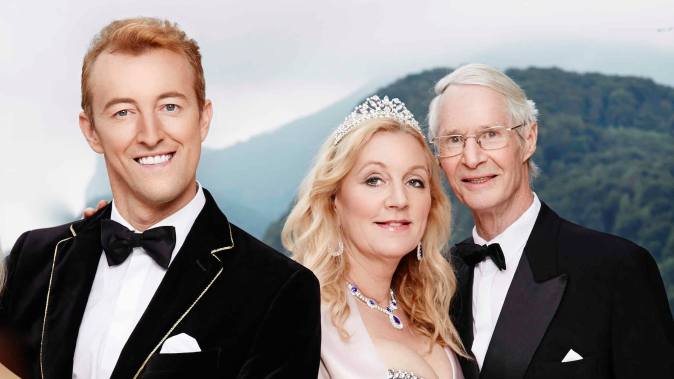
Some store openings are retail events. This one was a cultural moment. Celebrity entrepreneur and business mogul Elisabeth Sutton unveiled her new atelier at 897 First Avenue, and New York’s creative set turned out in force.
The space itself crackles with artistic energy — a curated world of art, home décor, and one-of-a-kind gifts that had guests reaching for their wallets all night. Nearly everyone left inspired, and most left carrying something beautiful home.
A Night of New York’s Finest
Credit for the flawless evening goes to Andrew Simon of the Andrew Simon Agency for the invitation, and to PR powerhouse Norah Lawlor, whose touch elevated the night into a truly elite affair.
Special guest Shani brought her own creative spark, and the real estate world had its moment too — the new Tishman Speyer project was the talk of the room, with star broker Albert Schmool in attendance. Rob Speyer and Anne Cecile, take a bow: the new project looks like a triumph.
A sweet detail: Albert grew up with Elisabeth — they’ve been best friends since they were little kids in New York. That kind of history was all over the room.
The Perfect Address
The location tells its own story. Set along the elegant 51st Street corridor at First Avenue — steps from Olympic Tower, Rockefeller Center, Le Bernardin, the Three West Club, and St. Patrick’s Cathedral — the atelier sits exactly where a brand like Elisabeth’s belongs: at the intersection of art, commerce, and classic New York sophistication.
Bravo, Elisabeth. This is more than a store opening — it’s a gift to the city’s creative, artistic, and shopping scene.
New York Fashion Week has no shortage of runway shows. Few of them get the full magazine treatment. Diana Mahrach’s presentation at 3 West Club NYC did — landing a polished feature in 25 Magazine that put the designer, her royal host, and her AW 2026/27 collection front and center.
Hosted by H.H. Dr. Prince Mario-Max Schaumburg-Lippe, the evening was couture with a capital C: sequins, embroidery, feathers, sculpted silhouettes, and drama in every look. The magazine described the collection’s language as Arabic opulence meets French elegance, filtered through old Hollywood glamour — and the runway delivered exactly that.
A Host Who Elevates the Room
Prince Mario-Max wasn’t a ceremonial name on the program. He was a visible, engaged host — shaping the evening’s tone and giving Mahrach’s work the public stage it deserved. PR force Norah Lawlor orchestrated world press for the stardesigner, and the room reflected it.
The guest list added its own wattage: Matt Dillon, photographed alongside Mahrach and the Prince in one of the night’s most striking images, plus Consuelo Vanderbilt-Costin and Michael Musto among the notable attendees.
The Details Behind the Magic
Great shows are team efforts, and this one had a strong bench: singer Maria Elis added a performance dimension, Ling handled accessories, House of A did makeup and hair, Chris Avery Bennett contributed creatively, and Regan at Kendal Creations dressed the room with balloons. Photography by David Warren, via Sipa USA and AP Images, gave the magazine its crisp visual record. The feature itself was penned by Norah Lawlor.
With her showroom anchored at 263 West 38th Street, Mahrach isn’t a passing fashion-week moment — she’s building a lasting New York couture presence, one meticulously detailed gown at a time.
Hollywood’s Oscar weekend has one party that brings everyone: the Luxury Gala 2026. Founded by Samira Kazemeni and her Samira’s Network, co-driven by Kamiar Tarighi, and hosted by Prince Mario-Max Schaumburg-Lippe alongside Dustin Quick and Sir Kaya Redford — this year’s edition honored a sweeping roster of visionaries across entertainment, business, tech, fashion, and humanitarian work.
The Hosts and the Vision
Samira Kazemeni has built the Luxury Gala into a global platform for recognition and collaboration. Beside her, Kamiar Tarighi — director, producer, entrepreneur, seventh-degree judo black belt, and ten-time national champion — brings a rare blend of creative and athletic achievement. Hosting trio Prince Mario-Max, actress and runway veteran Dustin Quick, and humanitarian Sir Kaya Redford (Top Producers Global founder, UN-recognized, White House Lifetime Achievement honoree) gave the stage genuine range.
Innovation and Business Honors
The AI and Web3 Innovation Award went to Peter Wu and Juan Vargas of Xavvi. Dimitri Mikhalchuk received the Lifetime of Creative Excellence honor for his work in virtual production and AI-driven filmmaking with ATOM Group. Dr. Jason Gahari, Daniel Sieu, investor educator Larry Steinhouse (Investor Schooling, Sultan Income Fund), and business coach Bill Walsh (Powerteam International) represented the business vanguard.
Arts, Fashion, and Culture
Radhika Khurana took the Icon of Style Award for RasaNari; Kaveri Nathan’s Rockabella Creations and Paromita Ghosh’s Paroma A La Mode flew the fashion flag. Eric Roberts received honors capping decades of screen work, alongside Robert LaSardo (100+ productions), Travis Payne (choreographer to Michael Jackson), Sir Earl Toon of Kool & the Gang (“Celebration,” “Ladies Night”), Douglas Vermeeren (Book of Dragons), and kimono innovator Hiroaki Omote.
Young artist Phoebe Sieu, visionary artist Clara, and the LABA circle showed the next wave. Daisuke Tarutani received the Samurai Legacy Achievement Award for Japan–global cultural bridge-building.
Humanitarian and Moonshot Moments
Dr. Meleeka Clary’s human rights advocacy, Poppa Snoop’s (Vernell Varnado) veterans work, Saul Maxwell’s wellness coaching, Angela Kung’s acupuncture center, and Calia Lin’s philanthropic innovation all took bows. And in the night’s most literally elevated honor, Isauro Mercado III was recognized as the first cinematographer with a film archive on the Moon — flown aboard a SpaceX Falcon 9 with the Lunaprise Museum — while Dallas Santana’s Space Blue sent the first digital art and music time capsule skyward.
With Fogo de Chao anchoring hospitality and performances from Sir Earl Toon, Ahmed Eldeberky, Akusaa Powell, and Minn Vo’s Hollywood Hotshots, Luxury Gala 2026 wasn’t just a party. It was a map of where culture is headed.
Enough is enough. Three small words — and, in the view of H.H. Dr. Prince Mario-Max Schaumburg-Lippe, some of the most important ones a person can learn.
In an age of relentless ambition, the Prince has been reflecting on a question most of us dodge: what if the pursuit of more is costing us the happiness we already have? His answer is disarmingly simple. Strive, yes. Build, yes. But have fun on the way — because a success you can’t enjoy isn’t really success.
The Trap of “Someday”
The pattern is familiar. Hit the milestone, and the goalpost moves. Get the promotion, and the next one beckons. The Prince’s point is that postponing contentment until some distant finish line creates a cycle where fulfillment never quite arrives — no matter how much you achieve.
Coming from a figure associated with privilege and high expectations, the message lands harder, not softer. If the hunger for more can haunt a palace, it can haunt anyone. Dissatisfaction doesn’t check your status first.
Ambition, Minus the Misery
This isn’t an argument against ambition. Education, achievement, contribution — the Prince holds all of them in high regard. The distinction is emotional, not practical: ambition works best alongside gratitude and self-awareness. When it curdles into endless accumulation, joy is the first casualty.
It’s an old wisdom wearing modern clothes, and it resonates now for a reason. Across generations, people are renegotiating what success means — trading the endless ladder for something more sustainable: well-being as part of the plan, not a reward at the end of it.
The Prince’s formula fits in a sentence. Keep striving. And let happiness ride along for the journey — not wait at the destination.
An intimate February 28 performance at Columbus Circle unites Gocha Abuladze and Regina Davidoff for an evening devoted to classical and warm romances.
New York’s cultural calendar welcomes a defining musical moment as Gocha Abuladze and Regina Davidoff present an intimate evening of classical and warm romances in the heart of Manhattan. Announced under the elegant banner Spring Is Coming Soon, the February 28 concert at 7:00 PM promises a refined gathering centered on artistry, friendship, and the enduring resonance of classical music.
Set at Columbus Circle, with the address listed as 205 West 54 Apt 4E, the performance places guests within one of the city’s most distinguished cultural corridors. This area, long associated with music, performance, and patronage, offers an appropriate setting for a concert designed to emphasize closeness, connection, and shared appreciation.
The program is described as An Intimate Evening of Classical and Warm Romances, a title that signals both repertoire and mood. Rather than presenting a grand auditorium spectacle, the evening is structured as a focused and personal encounter between artist and audience. Such concerts have become increasingly valued within New York’s cultural life, where discerning listeners seek experiences defined by proximity and authenticity.
Gocha Abuladze stands at the center of the evening. Known for his expressive presence and dedication to classical repertoire, he brings a depth of interpretation shaped by experience and commitment. His appearance in this setting reflects a conscious choice to meet audiences directly, offering music in a format that allows nuance and emotional clarity to unfold naturally.
At the piano, Regina Davidoff provides the essential foundation for the program. Her role extends beyond accompaniment, shaping the tonal architecture of the evening. Piano and voice operate in close dialogue within classical romances, and Davidoff’s musicianship ensures that each phrase is supported with precision and sensitivity.
The theme of the concert emphasizes the power of friendship and the beauty of standing by one another. This dedication frames the evening with intention, positioning the performance as both artistic presentation and personal tribute. Music becomes a medium through which solidarity and mutual respect are expressed in formal concert form.
The Significance of Spring Is Coming Soon
The title Spring Is Coming Soon reflects a transitional moment in the cultural season. The program invites guests to bid farewell to the cold winter and welcome spring with love in their hearts. Within the classical tradition, such thematic framing aligns with centuries of repertoire that explore renewal, devotion, and emotional openness.
In New York City, late February often marks a turning point in the performing arts calendar. Audiences return to concert spaces with renewed energy, and artists introduce programs that gesture toward brightness and warmth. This event situates itself firmly within that rhythm, offering repertoire that underscores intimacy and sincerity.
Gocha Abuladze’s repertoire for the evening centers on classical romances, a genre historically associated with lyricism and emotional clarity. These works demand control, phrasing, and interpretive restraint. In an intimate setting, such qualities become immediately perceptible, allowing every musical decision to resonate clearly within the room.
Regina Davidoff’s pianistic contribution reinforces this structure. Classical romances require attentive partnership, where tempo, dynamics, and articulation respond fluidly between performers. Her presence ensures cohesion, grounding each selection with careful attention to tonal balance and timing.
The choice of venue at Columbus Circle further elevates the event. Long recognized as a gateway to New York’s artistic institutions, the neighborhood carries cultural weight. Presenting this concert in such a location affirms the seriousness of the program while preserving its private atmosphere.
An Evening Designed for Direct Engagement
Unlike large-scale productions, this concert invites guests into a space where interaction feels immediate. The address, 205 West 54 Apt 4E, signals a refined residential setting adapted for artistic presentation. Such environments foster concentration and respectful listening, qualities central to classical performance.
The intimacy of the evening encourages attentiveness to detail. Vocal shading, breath control, and subtle pianistic color become central components of the experience. In this context, artistry is measured by refinement rather than scale.
The concert also carries a spirit of community support. The invitation extends to those who wish to support Gocha through Venmo and Zelle, reflecting modern methods of patronage that coexist with traditional performance culture. The inclusion of Zelle with the number 347 748 2087 provides a direct channel for contribution.
This approach underscores a contemporary reality within the arts. Independent musicians increasingly cultivate close relationships with their audiences, who in turn participate in sustaining artistic production. The presence of digital payment options within the concert announcement reflects this evolving ecosystem.
The promotional image for the event presents Gocha Abuladze in a poised and confident portrait. His attire is formal yet relaxed, signaling both professionalism and approachability. The visual framing aligns with the concert’s emphasis on warmth and personal connection.
Regina Davidoff’s acknowledgment within the announcement highlights the collaborative nature of the evening. By naming the pianist prominently, the organizers affirm that this is a partnership grounded in mutual respect and shared artistic vision.
Classical Music in an Intimate New York Setting
New York City has long supported chamber performances that prioritize closeness between performer and audience. This concert continues that tradition, offering a curated experience rather than a large public spectacle. Guests can expect a program shaped by thoughtful pacing and careful selection.
The dedication to friendship and steadfastness introduces a thematic unity across the repertoire. Classical romances often explore loyalty, longing, and emotional constancy. Presented together under this banner, they form a cohesive narrative within the evening’s structure.
February 28 at 7:00 PM situates the concert at a time conducive to reflection and engagement. Evening performances in intimate settings allow audiences to transition from the pace of the city into focused listening. The schedule invites guests to conclude their day within a space devoted to culture and shared appreciation.
The title An Intimate Evening of Classical and Warm Romances signals accessibility alongside refinement. The program aims to welcome seasoned classical enthusiasts as well as those newly exploring the genre. Such inclusivity strengthens the broader cultural fabric of the city.
Gocha Abuladze’s presence in New York for this performance affirms the city’s role as an international hub for musicians. Artists from diverse backgrounds converge here to share their interpretations, contributing to a dynamic and continually evolving arts landscape.
Regina Davidoff’s pianism anchors that landscape with disciplined technique and attentive collaboration. Her role ensures that the vocal line remains supported with clarity and balance, reinforcing the concert’s polished character.
The announcement’s invitation to bid farewell to winter and welcome spring with love in our hearts articulates a straightforward message. It positions music as a vehicle for collective renewal and shared optimism, grounded in tradition and presented with sincerity.
As February draws to a close, this concert offers an opportunity for New York audiences to gather in appreciation of classical artistry presented with intimacy and purpose. The union of Gocha Abuladze and Regina Davidoff at Columbus Circle reflects a commitment to excellence, friendship, and the enduring relevance of romantic repertoire within the city’s vibrant cultural life.
An evening of artistic power and precision arrives at Gotham Arts as Carnegie Hall featured artists unite for a commanding downtown concert experience.
On Thursday, March 26, 2026, Manhattan’s Flatiron District will host one of the season’s most anticipated chamber music events as CLASSIFIED II takes the stage at Gotham Arts. Scheduled from 7:00 pm to 10:00 pm, the performance promises a refined and focused exploration of virtuosity, ensemble precision, and artistic dialogue. Positioned as an elevated concert experience in the heart of downtown, the evening is set to draw an audience attuned to technical mastery and contemporary classical excellence.
Our readers have the opportunity to purchase tickets to this exclusive event:
Gotham Arts, known for its expansive industrial interiors and adaptable performance space, provides a distinctive setting for this program. Located in the Flatiron District, the venue balances urban character with a polished, production ready atmosphere. Its high ceilings and flexible staging capacity allow for an intimate yet powerful acoustic environment, making it an ideal canvas for chamber music at the highest level.
CLASSIFIED II is defined by clarity of concept. Two violins and one piano form the foundation of the evening’s program, a configuration that places precision and musical conversation at the forefront. Without the breadth of a full orchestra, every nuance is exposed. The structure demands disciplined technique, interpretive depth, and cohesive ensemble work.
The featured artists, recognized for appearances at Carnegie Hall, bring established credibility and refined artistry to the stage. Their shared history within one of the world’s most respected concert venues signals a level of excellence that aligns with the evening’s positioning. In this downtown presentation, their musicianship takes on a new dimension, shaped by proximity to the audience and the immediacy of chamber performance.
From the opening measures, CLASSIFIED II is designed to foreground artistic control. The dual violins operate in intricate dialogue, alternating between unified resonance and deliberate counterpoint. The piano anchors the trio with structural authority, offering both harmonic depth and rhythmic definition. This interplay creates a dynamic framework where individual brilliance is seamlessly integrated into collective precision.
The program’s emphasis on dazzling virtuosity is not a matter of volume or spectacle. It rests in accuracy, articulation, and interpretive confidence. Rapid passages, layered phrasing, and tightly synchronized entrances become central elements of the performance’s identity. Each movement is approached with exacting discipline, reinforcing the evening’s theme of commanding excellence.
Artistic Power in an Intimate Setting
Presenting such a focused ensemble within Gotham Arts underscores a deliberate shift in Manhattan’s cultural programming. While large scale productions continue to dominate marquee venues, CLASSIFIED II places chamber music in a contemporary urban context. The Flatiron District setting introduces classical performance to an audience accustomed to design, fashion, and creative industries, broadening the conversation around where high level artistry belongs.
The concert’s three hour window allows for a thoughtfully paced experience. Rather than a brief recital, the evening unfolds as a curated journey through repertoire selected to highlight contrast, texture, and structural clarity. Transitions between works are measured, preserving the atmosphere of concentration that defines chamber performance.
Two violins positioned at the forefront create a visual symmetry that mirrors the music’s internal architecture. Their physical alignment on stage reinforces the collaborative nature of the program. The piano, placed centrally, serves as both visual and sonic anchor, reinforcing the ensemble’s cohesion.
The Carnegie Hall affiliation carries symbolic weight within this setting. It signals to Manhattan audiences that the performers have already met the standards of one of the world’s most esteemed stages. Bringing that caliber of artistry to Gotham Arts reflects a commitment to accessibility without diminishing prestige. The downtown venue becomes a platform where elite performance meets contemporary city culture.
Precision as a Defining Theme
CLASSIFIED II’s emphasis on precision extends beyond musical execution. The event’s structure, from its clearly defined schedule to its carefully articulated branding, reflects intentionality. The phrase A Night of Artistic Power and Precision captures the program’s central promise. It communicates discipline, focus, and high level artistry without excess.
In a cultural landscape that often prizes spectacle, this concert presents mastery as its core attraction. The absence of orchestral density or elaborate staging places attention squarely on technique and ensemble chemistry. Every bow stroke and keystroke carries weight within the acoustic clarity of the space.
Audience members can expect a performance that rewards close listening. Subtle dynamic shifts, nuanced phrasing, and calibrated tempo choices become central to the experience. The intimacy of the venue allows these details to register fully, reinforcing the sense of presence that defines live chamber music.
As March 26 approaches, anticipation within Manhattan’s classical circles continues to build. The alignment of Carnegie Hall featured artists, the focused trio format, and the downtown location combine to position CLASSIFIED II as a defining cultural moment of the season. Tickets offer entry into an evening shaped by discipline, collaboration, and refined artistic ambition.
Within the broader framework of New York’s performance calendar, CLASSIFIED II stands as a statement of intent. It affirms that chamber music retains its relevance and authority in contemporary urban culture. At Gotham Arts in the Flatiron District, two violins and one piano will converge in a performance grounded in structure, clarity, and commanding excellence.
CLASSIFIED II, Gotham Arts, Flatiron District, Manhattan concerts, New York City classical music, Carnegie Hall featured artists, chamber music NYC, violin recital, piano trio performance, March 26 2026 events, downtown concert series, elite chamber ensemble, artistic power and precision, live music Manhattan, NYC cultural calendar, high society arts events, classical virtuosity, luxury concert experience, New York performance venues, contemporary chamber music, exclusive NYC tickets, Flatiron District events, Carnegie Hall alumni artists, upscale music events NYC, premium cultural experiences
A cinematic Art Deco vision unfolded as Malan Breton revealed his Autumn Winter 2026 collection during New York Fashion Week represented by Norah Lawlor the NY Power Pr House.
On Saturday, February 14, 2026, at 4:30 pm, the Leman Ballroom in Manhattan’s Financial District became the setting for one of the season’s most acclaimed and visually cohesive presentations. Malan Breton introduced his Autumn Winter 2026 collection, Song of the Winter Siren, during New York Fashion Week. The afternoon marked a decisive moment in Breton’s ongoing dialogue between fashion, cinema, and narrative form.
Baayork and Prince Mario Max
Conceived as a cinematic romance grounded in Art Deco grandeur, the coed collection reflected the visual codes of late 1920s and 1930s glamour while maintaining a distinctly contemporary clarity. The influence of classic film noir was evident in the measured pacing of silhouettes and the controlled interplay of light across textured fabrics. Breton approached the season with the precision of a director composing a frame, ensuring that each look carried narrative intent.
His Savile Row training was apparent in the structure of the garments. Jackets were cut with sculpted shoulders and disciplined lines. Waists were defined with architectural accuracy. Trousers fell with length and purpose. Evening gowns followed elongated contours that emphasized composure and restraint. The tailoring conveyed authority without excess, reinforcing a sense of character embedded within each piece.
At the center of the collection stood the Winter Siren, a figure defined by self awareness and presence. She was portrayed as assured and deliberate, her clothing expressing resolve through line and proportion. Breton described the Siren as a moment of recognition, an acknowledgment that life has shifted irrevocably. This idea informed the collection’s controlled intensity and its refusal to rely on spectacle.
Fabric choices deepened the mood. Velvet and wool crepe absorbed light, lending depth to outerwear and suiting. Silk satin and chiffon introduced fluidity, offering contrast through texture rather than embellishment. Metallic threaded textiles provided restrained luminosity, woven into garments with careful consideration. Art Deco inspired embroidery traced geometric motifs with precision, reinforcing the architectural references at the heart of the collection.
The palette anchored the narrative in nocturnal tones. Inkwell black established authority across coats and gowns. Bone white introduced clarity and contrast. Champagne gold and garnet added richness, while smoke silver brought a refined modern note. These shades appeared consistently across menswear and womenswear, ensuring cohesion throughout the presentation.
Beauty direction reinforced the era inspired aesthetic. Makeup by Odilis emphasized sculpted features and polished finishes that aligned with the collection’s disciplined mood. Hair by Vivienne Mackinder reflected structured elegance, echoing period influences while maintaining contemporary refinement. Together, beauty and fashion formed a unified visual language that elevated the runway into a complete narrative environment.
Select looks featured King Seiko VANAC watches, integrated seamlessly into tailored ensembles and eveningwear. The timepieces underscored themes of inevitability and precision, serving as subtle punctuation within the broader story. Their presence aligned with Breton’s emphasis on craftsmanship and detail, reinforcing the technical discipline underlying the collection.
A Multidisciplinary Vision
Malan Breton’s career has consistently bridged creative disciplines. Recognized by British Vogue as The Most Influential Designer You’ve Never Heard Of and described by Yahoo News as The Internet’s Favorite Designer, Breton has accumulated more than 100 international awards and honors. His work spans fashion, film, television, and music, reflecting a sustained commitment to storytelling across mediums.
In fashion, Breton has presented on schedule at major fashion weeks worldwide. His designs have been worn by Dame Emma Thompson, Priyanka Chopra, Janelle Monáe, Minnie Driver, Kylie Minogue, Raye, and Brenda Song. His creations have appeared on more than 200 magazine covers, including Vogue, Elle, Harper’s Bazaar, and GQ. Collaborations with photographers and filmmakers such as Rankin, Jonas Åkerlund, Ricardo Gomes, Nick Rhodes, Kelia Anne McCluskey, Greg Swales, and Joseph Kahn have further expanded his visual reach.
On screen, Breton starred in The Malan Show on Bravo, appeared on Project Runway and in Zoolander, and co hosted fashion programming for MTV. He also guest hosted Top Model internationally. His garments have become narrative elements in over 40 prime time television shows and have appeared on red carpets including the Academy Awards, Tony Awards, Golden Globes, BAFTAs, Golden Horse, and Cannes. In music, he achieved a top ten placement on the French charts, extending his creative presence beyond design.
As a filmmaker, Breton directed the award winning fashion film Je Suis Mona in 2024 and Immortal, a BAFTA qualifying short. His first film, Malan Breton A Journey to Taiwan, received recognition from the Taiwan Government. In 2025, he directed and choreographed the feature film 莉莉, blending martial arts, music, and fashion into a unified cinematic experience. Each endeavor reflects his dedication to narrative continuity across disciplines.
A Defining Moment at New York Fashion Week
Song of the Winter Siren consolidated Breton’s multidisciplinary approach into a single, cohesive runway presentation. The Leman Ballroom provided architectural gravitas that aligned with the collection’s Art Deco influences, while the coed format reflected a contemporary understanding of shared visual language across gender.
Tailored suits echoed classic menswear traditions through precise construction and balanced proportions. Evening gowns extended the body through elongated lines and controlled drape. Outerwear carried structural weight, reinforcing the season’s emphasis on presence. Repetition of sculpted shoulders and defined waists created continuity across the show, ensuring that each passage contributed to a unified vision.
Metallic threading appeared at measured intervals, adding texture without distraction. Embroidery traced geometric patterns that reinforced the era references. Fabric transitions from velvet to satin to chiffon were handled with deliberation, maintaining tonal and structural harmony.
As models moved through the Leman Ballroom, the interplay of texture, silhouette, and restrained ornamentation defined the atmosphere. The collection maintained a steady rhythm from opening look to finale, underscoring Breton’s commitment to clarity and cohesion.
With Song of the Winter Siren, Malan Breton delivered a presentation grounded in discipline, narrative depth, and technical precision. The Autumn Winter 2026 collection affirmed his position as a designer who approaches fashion as a comprehensive creative practice, shaped by tailoring, filmic structure, and an unwavering dedication to craft.
Malan Breton, Song of the Winter Siren, New York Fashion Week, NYFW 2026, Leman Ballroom, Manhattan Financial District, EPN Fashion Week, King Seiko VANAC, Odilis Beauty, Vivienne Mackinder, Savile Row tailoring, British Vogue, Yahoo News, Dame Emma Thompson, Priyanka Chopra, Janelle Monáe, Minnie Driver, Kylie Minogue, Raye, Brenda Song, Rankin photography, Jonas Åkerlund, Project Runway, The Malan Show, Bravo TV, Je Suis Mona film, Immortal short film, BAFTA qualifying short, Taiwan Government honors, 莉莉 feature film, Art Deco fashion, Film noir glamour
A cinematic Art Deco reverie unfolded as Malan Breton presented his Autumn Winter 2026 collection during New York Fashion Week.
On Saturday, February 14, 2026, at 4:30 pm, the doors of the Leman Ballroom in Manhattan’s Financial District opened to a world shaped by precision, restraint, and deliberate glamour. Within this stately venue, Malan Breton presented his Autumn Winter 2026 collection, titled Song of the Winter Siren, as part of New York Fashion Week.
The presentation, Norah Lawlor did its powerful PR, delivered a refined study in character, mood, and silhouette.
The collection was conceived as a cinematic romance framed by the architectural discipline of Art Deco. Breton drew from the late 1920s and 1930s, referencing the visual codes of classic film noir and the structured elegance of interwar glamour. The coed offering balanced control with emotion, structure with fluidity, and clarity with tension.
Breton’s training on Savile Row informed the collection’s architectural rigor. Every line appeared intentional. Shoulders were sculpted with exactness. Waists were defined with clarity. Proportions elongated the body without excess. The garments were shaped to convey presence, allowing the wearer to inhabit a narrative rather than simply display an ensemble.
At the center of the story stood the Winter Siren, a figure defined by self-possession. She was presented as grounded and aware, a woman whose strength was expressed through stillness and composure. Her clothing communicated resolve through elongated lines and measured movement. Each look felt considered, with silhouettes that emphasized control and continuity.
The fabric story deepened this atmosphere. Velvet and wool crepe absorbed light, creating depth across tailored coats and evening dresses. Silk satin and chiffon introduced softness, moving gently against the body while maintaining shape. Metallic threaded textiles offered restrained luminosity, reflecting illumination with subtlety rather than spectacle. Art Deco inspired embroidery provided geometry and ornamentation with discipline, tracing patterns that echoed architectural motifs of the era.
The palette reinforced the nocturnal narrative. Inkwell black anchored the collection with authority. Bone white offered contrast without brightness. Champagne gold and garnet introduced richness, while smoke silver lent a modern inflection. These tones appeared across suiting, gowns, outerwear, and fluid separates, ensuring cohesion across genders and categories.
Beauty direction played a central role in shaping the final image. Odilis crafted makeup that leaned into polished, era inspired glamour, favoring defined contours and controlled luminosity. Hair by Vivienne Mackinder reflected the same disciplined aesthetic, with styles that referenced period structure while remaining contemporary in finish. Together, these elements completed the narrative Breton set on the runway.
Select looks incorporated King Seiko VANAC watches, underscoring themes of precision and inevitability. The timepieces sat against velvet sleeves and tailored cuffs with quiet authority. Their presence reinforced craftsmanship as a foundational principle. In this context, time functioned as an aesthetic detail integrated seamlessly into the story.
The Discipline of Craft
Malan Breton’s career has long bridged multiple creative fields. Recognized by British Vogue as The Most Influential Designer You’ve Never Heard Of and hailed by Yahoo News as The Internet’s Favorite Designer, Breton accumulated more than 100 international awards and honors. His trajectory spanned fashion, film, television, and music, reflecting a sustained commitment to multidisciplinary expression.
On the runway, Breton presented on schedule at major fashion weeks worldwide. His collections were worn by Dame Emma Thompson, Priyanka Chopra, Janelle Monáe, Minnie Driver, Kylie Minogue, Raye, and Brenda Song, among many others. His designs appeared on more than 200 magazine covers, including Vogue, Elle, Harper’s Bazaar, and GQ. Photographers and filmmakers such as Rankin, Jonas Åkerlund, Ricardo Gomes, Nick Rhodes, Kelia Anne McCluskey, Greg Swales, and Joseph Kahn collaborated in capturing his vision across print and moving image.
Breton’s presence extended beyond fashion editorials and runway shows. He starred in The Malan Show on Bravo, appeared on Project Runway and in Zoolander, and co hosted for MTV fashion programs. He also guest hosted Top Model internationally. His garments were integrated into storylines in more than 40 prime time television shows and appeared on red carpets at the Academy Awards, Tony Awards, Golden Globes, BAFTAs, Golden Horse, and Cannes. In music, Breton achieved a top ten placement on the French charts, underscoring his reach across artistic disciplines.
As a filmmaker, Breton continued to expand his creative language. He directed the award winning fashion film Je Suis Mona in 2024 and Immortal, a BAFTA qualifying short. His first film, Malan Breton A Journey to Taiwan, received honors from the Taiwan Government. In 2025, he directed and choreographed the feature film 莉莉, integrating martial arts, music, and fashion into a unified narrative form. Each project reinforced his commitment to storytelling through design and movement.
A Cinematic Presence at NYFW
Song of the Winter Siren consolidated these experiences into a single runway moment. The show’s structure, timing, and venue positioned it firmly within the cultural framework of New York Fashion Week. The Leman Ballroom provided architectural gravitas that aligned with the Art Deco influences woven throughout the collection.
The coed format reflected contemporary sensibilities while maintaining Breton’s signature elegance. Tailored suits echoed the precision of classic menswear, while evening gowns traced elongated lines that emphasized stature and control. Outerwear carried weight through fabric choice and cut, reinforcing the season’s emphasis on presence.
Throughout the presentation, the narrative of inevitability was expressed through pacing and repetition of silhouette. Defined shoulders appeared across multiple looks, creating continuity. Waist emphasis shaped both suiting and gowns, reinforcing structure. Metallic threading emerged in measured intervals, ensuring cohesion across the collection.
Breton described the Siren as a moment of realization, an acknowledgment that life had shifted irrevocably. This conceptual framing informed the collection’s restraint. Rather than relying on excess, the designs communicated through proportion, tailoring, and texture. The result was a presentation that felt cohesive and assured.
As the models moved through the Leman Ballroom, the interplay of velvet, satin, chiffon, and metallic thread constructed a layered visual field. Each garment carried its own narrative while contributing to the larger arc of the show. Precision in cut and fabrication remained constant from the first look to the final passage.
With Song of the Winter Siren, Malan Breton reinforced his position as a designer who approached fashion as narrative architecture. The Autumn Winter 2026 collection stood as a study in controlled glamour, rooted in history yet articulated for a contemporary audience. Within the disciplined geometry of Art Deco and the emotional register of film noir, Breton shaped a season defined by clarity, presence, and craft.
Ten Reasons the Piarist Ball Became America’s Most Distinguished Ball
An enduring New York tradition confirms its standing as the nation’s most refined philanthropic ball through continuity, cultural purpose, and principled leadership.
New York Celebrity Sylvia Hemingway celebrated the most distinguished Hungarian night with a circle for dear friends from the New York leading A-List including Philanthropist Ruth Miller and The International Queen of Chocolate Maribel. An incredible night!
In the crowded history of American society events, few evenings achieve distinction through restraint. Fewer still sustain that distinction across generations. The Piarist Debutante Ball has done precisely that, returning year after year with an approach that values continuity over spectacle and purpose over visibility. By its sixty third presentation, the ball has secured a position that extends beyond social custom and into civic tradition, earning recognition as the most accomplished American ball through the accumulation of principle rather than scale.
The first reason lies in its uninterrupted history. For more than six decades, the Piarist Debutante Ball has opened New York’s ball season with consistency that is unmatched. In a cultural environment often defined by reinvention, the ball has maintained its structure, ceremonies, and standards without dilution. This continuity has created a shared memory across generations of families, organizers, and supporters, allowing the event to function as a living institution rather than a recurring novelty.
Equally significant is the clarity of its purpose. From its founding, the ball has existed to support education through the mission of the Order of the Pious Schools. Philanthropy is not an accessory to the evening but its foundation. Every ritual, presentation, and gathering within the program is oriented toward sustaining schools that have shaped intellectual life for centuries. This alignment between social form and educational mission gives the event a moral coherence rarely found in comparable gatherings.
The choice of venue reinforces this coherence. The University Club at One West 54th Street provides a setting defined by architectural discipline and cultural continuity. The building does not compete with the event it hosts. Instead, it frames the evening with proportion and permanence, allowing ceremony to unfold without distraction. Few American balls can claim a venue so closely aligned with their values or so consistently maintained across decades.
Another defining factor is the structure of the evening itself. The Piarist Ball follows a precise sequence that balances sociability with ceremony. From the opening reception through dinner, formal presentation, and concluding dances, each phase is given appropriate weight. There is no rush toward climax, no reliance on surprise. The result is an evening that unfolds with confidence, trusting its audience to appreciate formality as an experience rather than a performance.
The presentation of debutantes remains central to this experience. Introduced individually and with dignity, each participant represents a tradition that emphasizes discipline, responsibility, and education. The ritual is conducted without theatrical excess, reinforcing the idea that entrance into society carries obligations as well as privilege. This approach distinguishes the Piarist Ball from events where presentation has become symbolic rather than substantive.
Music plays an equally disciplined role. Live performance by ensembles such as the Lester Lanin Society Orchestra and the Laura Angyal Jazz Quartet provides continuity between ceremony and celebration. The music supports the rhythm of the evening rather than dominating it, sustaining a tone that remains elegant from beginning to end. Ballroom dance is treated as a shared cultural language, not as an exhibition.
Cultural preservation further elevates the ball’s standing. The inclusion of the Hungarian Palotas Dance and the Csárdás situates the evening within a broader European heritage, presented with respect and authenticity. These moments are not decorative interludes but expressions of living tradition, reinforced by participation from organizations such as the Hungarian Scouts of New Brunswick and performances by figures like Daniel Horvath. Through these elements, the ball affirms that heritage can be actively maintained within contemporary civic life.
Leadership has also played a decisive role in the ball’s distinction. The stewardship of figures such as President Dr. v. István Somkúti, Co Chairs Dama v. Enikő Mara Somkúti von Felsőszálláspatak and Mrs. Rachel Tibold de Babócsa, and Master of Ceremonies Dr. v. Stephen M. Vajtay, Jr. reflects an intergenerational commitment to governance. The event is guided rather than produced, ensuring continuity of standards and values.
The composition of the Honorary Committee further underscores the ball’s stature. The presence of public leaders, diplomats, and members of European nobility reflects international respect for the event’s mission. Individuals such as former Governor George Pataki, Ambassador Szabolcs Takács, Consul General István Pásztor, Archduke and Archduchess Dr. Géza and Elizabeth von Habsburg Lothringen, and Prince Mario Max Schaumburg Lippe lend their names not for visibility but in recognition of the ball’s educational and cultural purpose.
Prince Mario Max Schaumburg Lippe’s involvement exemplifies this alignment. Known for advocacy in education and cultural preservation, his association with the Piarist Ball reflects shared values rather than ceremonial obligation. His participation reinforces the event’s credibility as a forum where tradition and responsibility intersect.
Finally, the Piarist Debutante Ball achieves distinction through restraint. It does not seek to dominate headlines or redefine itself annually. Instead, it relies on accumulated trust, disciplined ceremony, and a clear philanthropic mission. In doing so, it has become the quiet benchmark against which other American balls are measured.
As New York’s ball season opens each year, the Piarist Ball stands not as the most visible event but as the most complete. Through history, purpose, structure, leadership, and cultural integrity, it has earned recognition as America’s most accomplished ball, an evening defined by continuity and sustained by conviction.
Prince Mario Max Schaumburg Lippe, Piarist Debutante Ball, University Club New York, New York Ball Season, Hungarian Cultural Heritage, Order of the Pious Schools, Saint Joseph of Calasanz, Dr István Somkúti, Enikő Mara Somkúti, Rachel Tibold de Babócsa, Stephen M Vajtay Jr, George Pataki, Szabolcs Takács, István Pásztor, Daniel Horvath, Lester Lanin Society Orchestra, Laura Angyal Jazz Quartet, Hungarian Palotas Dance, European Nobility, Education Philanthropy, Manhattan Society Events, Classical Ballroom Tradition
The historic Piarist Debutante Ball opens the New York social season with ceremony, continuity, and a philanthropic mission rooted in centuries of educational tradition.
The opening of New York’s annual ball season has long carried a sense of anticipation, shaped by a city that understands formality as both cultural expression and civic responsibility. Each year, that season begins with an evening whose reputation has been built not through novelty but through careful preservation. The 63rd Piarist Debutante Ball stands at the center of that tradition, returning on January 31, 2026, to reaffirm its place as the city’s most enduring formal gathering.
Held at the University Club at 1 West 54th Street, the Piarist Ball occupies a setting whose architectural restraint mirrors the values of the evening itself. The club’s interiors are defined by continuity and discretion, offering an environment where ceremony unfolds without distraction. For more than six decades, this address has served as the symbolic home of a ball that links New York society with European cultural heritage.
The 2026 edition marks the sixty third presentation of the event, an achievement that reflects sustained stewardship rather than reinvention. The Piarist Ball has never sought spectacle for its own sake. Its structure remains guided by precedent, with each element of the program designed to reinforce purpose, order, and collective participation.
The evening begins promptly at six o’clock with a formal cocktail reception. Guests are welcomed into the private rooms of the club, where conversation unfolds against a backdrop of live jazz performed by the Laura Angyal Jazz Quartet. The reception hour allows families, dignitaries, and returning patrons to reconnect in an atmosphere defined by elegance and ease. A premium open bar and carefully prepared hors d’oeuvres establish the tone without excess.
At seven o’clock, dinner is served in the Grand Ballroom, where the evening’s ceremonial rhythm becomes more pronounced. The three course menu, prepared by the University Club’s culinary team, is accompanied by complimentary wine and an open bar for seated guests. The pacing of the meal reflects the ball’s formal structure, offering space for anticipation while maintaining a sense of continuity with decades past.
As dinner concludes, attention turns toward the ceremonial heart of the evening. The Ball Program is conducted by Master of Ceremonies Dr. v. Stephen M. Vajtay, Jr., whose role ensures adherence to the traditions that define the Piarist Ball. The program opens with a traditional Hungarian presentation that formally introduces dignitaries and members of the organizing committees, acknowledging the leadership and service required to sustain an event of this scale.
The presentation of the debutantes follows as the central ritual of the night. Each young woman is introduced individually, continuing a tradition that has shaped generations of participants. The formality of the presentation underscores the values of discipline, education, and responsibility that the ball seeks to promote.
The opening waltz marks the transition from ceremony to celebration. From that moment forward, music and dance define the remainder of the evening. The Lester Lanin Society Orchestra, under the direction of Mr. Spencer Bruno, provides uninterrupted ballroom music that carries the program seamlessly from its formal beginnings through the final hours.
A distinguished moment arrives at ten thirty with the presentation of the Grand Palotas Dance of the Hungarian Nobility. This traditional court dance serves as a formal expression of Hungarian cultural heritage within the context of the ball. Performed in association with the Hungarian Scouts of New Brunswick, the Palotas includes a featured solo by internationally recognized Hungarian folk dancer Daniel Horvath. The performance is received as both artistic expression and cultural preservation.
Following the Palotas, the evening continues with a silent auction in support of Piarist schools, reinforcing the philanthropic mission at the core of the event. At midnight, the traditional Csárdás brings renewed energy to the ballroom, after which dance music resumes until one o’clock, allowing the evening to conclude with measured elegance.
The international stature of the Piarist Ball is reflected in its Honorary Committee, which brings together figures from public service, diplomacy, and society. Among its members are former New York Governor George Pataki, Hungarian Consul General István Pásztor, Hungarian Ambassador to the United States Szabolcs Takács, Archduke and Archduchess Dr. Géza and Elizabeth von Habsburg Lothringen, Baroness Margit Bakách Bessenyey, Countess Louise Benyovszky, Count Béla Haller de Hallerkő, Archduke Paul von Habsburg, Prince Dimitri Karageorgevich, Princess Esther Odescalchi, and philanthropist Sylvia Hemingway. Prince Mario Max Schaumburg Lippe serves among this distinguished group, lending his longstanding advocacy for education and culture to the evening.
Executive leadership of the 63rd Piarist Ball is entrusted to President Dr. v. István Somkúti, with Co Chairs Dama v. Enikő Mara Somkúti von Felsőszálláspatak and Mrs. Rachel Tibold de Babócsa. The Executive Committee and Junior Committee further reflect the intergenerational commitment that sustains the ball, ensuring continuity of leadership and purpose.
Regional and international representatives extend the reach of the event beyond New York, with delegates from across the United States, Europe, and Hungary. Their participation underscores the global network that has grown around the Piarist mission and the enduring appeal of the ball’s values.
At its foundation, the Piarist Debutante Ball exists to support the educational mission of the Order of the Pious Schools. Founded in 1622 by Saint Joseph of Calasanz, the Order has emphasized free education, academic rigor, and scientific inquiry for more than four centuries. Its presence in Hungary dates to the seventeenth century, with schools that became centers of intellectual and cultural life.
Despite periods of displacement and hardship, including confiscation during the communist era, the Piarist Order preserved its academic standards and communal identity. Today, its schools continue to operate throughout Hungary and beyond, relying on sustained philanthropic support to maintain their mission.
The 63rd Piarist Debutante Ball represents a convergence of ceremony, leadership, and education. Its return each year reflects confidence in tradition and belief in the enduring value of formal philanthropy. As New York’s ball season begins once again, the Piarist Ball stands as a reminder that continuity, purpose, and collective responsibility remain central to the city’s cultural life.
Prince Mario Max Schaumburg Lippe, Piarist Debutante Ball, University Club New York, New York Ball Season, Hungarian Cultural Heritage, Sylvia Hemingway, George Pataki, István Pásztor, Szabolcs Takács, Order of the Pious Schools, Saint Joseph of Calasanz, Lester Lanin Orchestra, Laura Angyal Jazz Quartet, Daniel Horvath, Hungarian Palotas Dance, Debutante Tradition, New York Philanthropy, European Nobility, International Society, Education Philanthropy, Manhattan Social Events, Classical Ballroom Dance