Paris’s premier tennis event embraces scale, design, and sporting excellence in a bold new setting.
The Rolex Paris Masters, one of the most anticipated tournaments on the ATP Tour, returns from October 25 to November 2, 2025, with a new chapter in its distinguished history. For the first time, the event moves to Paris La Défense Arena, introducing a grand stage that blends architectural innovation, world-class sport, and the unmistakable precision of the Rolex name. This transformation marks both a milestone in tennis and a defining cultural moment for Paris, reinforcing its status as the world’s capital of elegance, endurance, and performance.
Since its inception, the Rolex Paris Masters has symbolized the final push of the tennis season. As the last ATP Masters 1000 event before the year-end finals, it carries both competitive intensity and emotional resonance. The tournament has long been associated with breakthrough victories and defining moments — a stage where legends solidify their legacies and emerging stars announce their arrival. In its new home, that drama takes on even greater scale.
Paris La Défense Arena, now the largest indoor venue in Europe, reimagines what a tennis experience can be. Its design allows for a central show court surrounded by multiple competition and practice courts, giving spectators unprecedented access to every level of play. This evolution extends beyond the physical structure; it represents a redefinition of atmosphere. The arena’s advanced lighting, acoustics, and spectator layout create a sense of immersion that places every attendee at the heart of the match.
The move to La Défense follows years of growth and global recognition for the tournament. From its origins at the Palais omnisports de Paris-Bercy to this new arena, the Rolex Paris Masters has consistently blended sport and spectacle. The 2025 edition continues this tradition with refined hospitality areas, expanded fan zones, and a renewed emphasis on design and experience. The Rolex brand’s presence ensures that every detail, from timing to presentation, reflects the precision and craftsmanship synonymous with its name.
While the architecture and amenities set the stage, the true heart of the tournament remains its players. The world’s best athletes will converge on Paris to compete for crucial ranking points and the final chance to qualify for the ATP Finals. The atmosphere promises a blend of anticipation and nostalgia — the last major indoor test before the season’s closing act. Fans can expect appearances from the game’s most celebrated figures, each bringing their own legacy and determination to the court.
Spectators attending this year’s event will experience a reimagined rhythm of sport and entertainment. The arena’s modular design allows for simultaneous matches, practice sessions open to viewing, and curated spaces that celebrate tennis culture. Between matches, guests can enjoy fine dining, exhibitions on the history of the Masters tournaments, and interactive displays tracing the evolution of performance in the modern game. The environment speaks to the refinement of Paris itself — modern, ambitious, and effortlessly elegant.
As with all major Parisian events, the Rolex Paris Masters extends beyond sport into the realm of lifestyle. Visitors to La Défense can explore nearby architectural landmarks, stay at world-class hotels, and enjoy the culinary and cultural offerings that define the city. The tournament’s relocation not only expands capacity but aligns it with a vision of global accessibility, making it easier for fans from around the world to experience the event in person.
The decision to move the tournament marks a ten-year commitment between organizers and the city’s leadership, ensuring stability and continued innovation. The project also reflects Paris’s ongoing investment in sport as a cultural pillar, following the energy of recent international events hosted in the city. This commitment to excellence extends from the athletes to the audience, from the court surface to the skyline.
The Rolex Paris Masters remains, above all, a testament to endurance and artistry — a celebration of what happens when competition and design share the same discipline. Beneath the arena’s vast roof, the game’s finest will meet in moments of quiet focus and explosive brilliance, their movements timed as precisely as the watches that bear the tournament’s name.
The 2025 edition stands poised to define a new era. Its setting is larger, its ambition higher, yet its essence unchanged. It remains the place where the tennis season reaches its crescendo, where Paris’s elegance meets athletic power, and where the mastery of sport continues to inspire generations of fans.
Rolex Paris Masters, Paris La Défense Arena, ATP Masters 1000, Paris France, men’s tennis, professional tennis, indoor tournament, European sports, tennis competition, luxury sports event, modern architecture, La Défense district, sports culture, Paris events, ATP Finals, year end tournament, tennis heritage, international players, global sports, athletic performance, French tennis, city of Paris, tournament hospitality, sports venue design, contemporary sports, championship tennis, Paris lifestyle, cultural experience, event architecture, competitive excellence, Paris travel, sporting tradition, luxury branding, athletic legacy, tennis spectators, indoor hard court, ATP tour, elite competition, Paris arena, sporting innovation, French culture, Rolex heritage.
A refined weekend affair uniting craftsmanship, fashion, and fine living at The Baker House 1650 has been brought to us by New York / Hamptons PR Powerhouse Norah Lawlor:
The Baker House 1650 in East Hampton will once again open its doors to host Timeless Craft, an experiential showcase that celebrates the art of modern craftsmanship with a focus on enduring quality and design. Presented by Paz Lifestyle, the two-day event takes place on October 25th and 26th, offering an immersive journey through the worlds of fashion, art, and hospitality. Each presentation within the showcase reflects a dedication to detail and an appreciation for the artistry of creation, set within one of the Hamptons’ most elegant and historic boutique hotels.
Guests will be invited to experience a thoughtfully curated environment where tradition meets innovation. The program reflects a deep reverence for material excellence and aesthetic integrity, beginning with bespoke tailoring by Rishabh Manocha. Known for precise workmanship and classic tailoring sensibilities, Manocha brings a sense of individuality and form to contemporary menswear. His presentation emphasizes the dialogue between structure and expression that defines true sartorial craftsmanship.
The event extends into the realm of design with functional art from Slicelab, whose explorations of form and geometry blur the line between architecture and sculpture. Their work demonstrates how digital fabrication and material experimentation can yield pieces that are both visually striking and purposefully designed. The inclusion of Slicelab underlines the event’s broader theme: the seamless integration of art and utility in modern living.
Adding a global dimension to the showcase, the Peruvian textile brands Kuna and Ayni present their signature creations. Both brands are celebrated for their commitment to ethical sourcing and traditional craftsmanship, translating centuries of Andean heritage into contemporary fashion. Through their refined alpaca and cotton pieces, they convey a deep respect for cultural lineage and artisanal technique, connecting distant traditions with today’s mindful luxury consumer.
In keeping with East Hampton’s spirit of understated indulgence, the experience is elevated further by elements of gastronomy and leisure. Montecristo brings the sophistication of fine cigar craftsmanship to the event, inviting guests to savor the legacy of a name synonymous with quality and refinement. Altima adds another layer of indulgence with a caviar tasting experience, emphasizing purity and provenance in every serving. Completing the culinary journey, the Hamptons Shucker Company offers oysters freshly sourced from local waters, highlighting the region’s maritime heritage and culinary excellence.
The Baker House 1650 provides a fitting setting for this celebration of artistry and culture. With its meticulously preserved architecture and intimate charm, the historic property serves as both backdrop and inspiration. Its setting on Main Street in East Hampton offers an atmosphere of serenity and distinction, complementing the event’s dedication to timeless design and sensory experience. Guests attending Timeless Craft will find themselves immersed in an environment where craftsmanship is not merely observed but felt — through touch, taste, and conversation.
Paz Lifestyle, the presenting host, has established itself as a curator of conscious luxury. The brand’s philosophy centers on sustainability, authenticity, and the art of living well. By assembling creators who embody these values, Timeless Craft becomes more than a showcase — it is a dialogue on the enduring relevance of skilled hands and thoughtful creation in an increasingly digital age.
Each participant contributes to a shared narrative of care and dedication. The event’s structure encourages slow exploration, allowing attendees to engage directly with designers, artists, and artisans. In this way, the showcase revives an appreciation for craftsmanship that is often overshadowed by speed and mass production. Every presentation within Timeless Craft is designed to reawaken the senses, grounding guests in the tactile beauty of materials and the precision of human touch.
Throughout the weekend, visitors can move between presentations, tastings, and conversations at their own pace. The open format reflects the relaxed yet refined rhythm of the Hamptons, where discovery unfolds organically. It is an atmosphere that encourages connection — between guest and creator, between past and present, and between the many forms of artistry on display.
For those familiar with The Baker House 1650, the setting itself is part of the experience. The historic property embodies East Hampton’s architectural heritage, balancing elegance with intimacy. Its manicured grounds and carefully preserved interiors provide a serene counterpart to the modern creativity showcased within its walls. Every corner of the estate reinforces the event’s message of timelessness and authenticity.
Behind the coordination of Timeless Craft stands Lawlor Media Group, known for crafting cultural events that highlight design, art, and philanthropy. With Norah Lawlor overseeing press and communications, the firm ensures that the event maintains its signature polish and sophistication, drawing guests from both New York City and the Hamptons community.
By blending fine tailoring, artful design, global craftsmanship, and epicurean delight, Timeless Craft presents a comprehensive portrait of contemporary luxury rooted in tradition. It reaffirms the notion that craftsmanship, when guided by vision and integrity, transcends time and trend. The showcase honors not only the final creations but also the process, dedication, and artistry behind them — a celebration of excellence expressed through every fabric, form, and flavor.
The event welcomes guests from 1:00 p.m. to 8:00 p.m. on both days, offering ample opportunity to engage with each presentation in a leisurely and thoughtful manner. With its combination of fashion, art, gastronomy, and hospitality, Timeless Craft promises to stand as one of the season’s most distinctive gatherings in East Hampton.
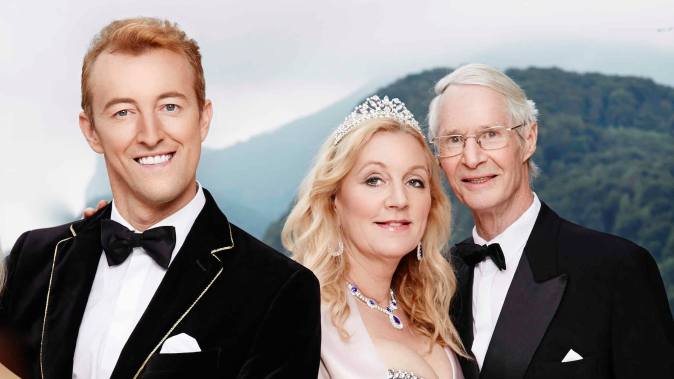
His Highness Dr.h.c. Prince Waldemar Prinz zu Schaumburg-Lippe, Her Highness Mag. Mag. Dr. Princess Antonia Prinzessin zu Schaumburg-Lippe and Their son His Highness Mag.Dr. Mario-Max Prinz zu Schaumburg-Lippe, MAS, LL.M: A Legacy of Loyalty, Discipline, and Integrity!
Their son, Prince Mario-Max, continues their noble example through philanthropy, media, and technology leadership that bridges heritage with the modern world.
The story of Royal Dream Couple Prince Waldemar and Princess Antonia Schaumburg-Lippe is one of lineage and purpose, of a royal family that unites the grace of tradition with the clarity of modern responsibility.
H.H. Dr.h.c. Prince Waldemar of Schaumburg-Lippe With H.H. Dr. Princess Antonia of Schaumburg-Lippe with their together son H.H. Dr. Prince Mario-Max of Schaumburg-Lippe
Their Highnesses Dr. Princess Antonia zu Schaumburg-Lippe with Dr.h.c. Prince Waldemar zu Schaumburg-Lippe in Altenburg Palace in Thuringia Germany
As working royals from one of Europe’s most respected houses, their lives have been defined by service, discipline, and an unwavering sense of duty. Together, they represent their enduring principles of their Royal Schaumburg-Lippe-Nachod House while embracing the global character of a new generation of leadership.
Prince Waldemar Schaumburg-Lippe’s background reflects a synthesis of diplomacy, finance, and philanthropy. His career as a diplomat and banker established him into circles where intellect and discretion are paramount, while his philanthropic work demonstrates a lifelong commitment to service beyond the formal boundaries of royalty. He stands as a figure whose loyalty to both heritage and humanity defines his every endeavor, maintaining the royal standard not through ceremony but through tangible action. His books are bestsellers of photographic art and elegant scripture.
Princess Antonia Schaumburg-Lippe embodies a distinctive combination of intellect, civic responsibility, and artistic engagement. Known as the world’s most academically accomplished royal princess, she holds degrees in law and veterinary medicine, a reflection of both intellectual depth and compassion for life in all its forms. Her political achievements, marked by her election to public office, established her as a figure of integrity in leadership. Today, as a filmmaker, she continues to communicate ideas through creativity and empathy, expanding her influence from governance to cultural expression.
Their marriage in the Schoenbrunn Palace in Vienna represents not only a personal union but also a philosophical harmony — a balance of service, intellect, and artistry that defines the modern expression of royalty. Together, they have instilled in their son, Prince Mario-Max Schaumburg-Lippe, the values that have guided their lives: loyalty, discipline, integrity, and a deep commitment to the welfare of others. Prince Waldemar was so proud when his wife gave birth to their son Prince Mario-Max Schaumburg-Lippe: I am so proud of him, he could be heard saying strongly on the world stages, about their child and only son!
Prince Mario-Max stands as the modern embodiment of his family’s principles. With a professional background that spans law, journalism, technology, and philanthropy, he exemplifies the evolution of royalty in the twenty-first century — not removed from society, but actively engaged with it. His work as a media and AI technology expert, he is the Prince of AI and AI Royal, bridges tradition and innovation, offering a royal voice in conversations shaping the future of communication and ethics in a digital age.
His academic achievements and professional experience have positioned him as a trusted commentator and advocate for responsible technological progress. Yet, beyond his intellectual pursuits, his heart remains anchored in philanthropy. Prince Mario-Max dedicates time and resources to assisting those in need, extending compassion to individuals and communities worldwide. His understanding of service, inherited from his parents, finds expression in his daily actions rather than public display.
In the world of fashion and culture, Prince Mario-Max has become a celebrity and respected presence. Having hosted ten major fashion weeks — from New York City to the Hamptons and Palm Springs — he connects creativity with cause, using global platforms to highlight innovation, inclusion, and ethical artistry. His role at these events reflects both his media expertise and his belief in fashion as a form of modern diplomacy, where culture can inspire unity and understanding.
Those who encounter the Prince Mario-Max Schaumburg-Lippe Royal family find a consistent theme of quiet excellence. There is no division between their private convictions and public service; the same discipline that governs their professional endeavors also defines their personal lives. Their commitment to loyalty and integrity is not ceremonial but deeply lived, guiding their decisions and shaping the tone of their influence.
Prince Mario-Max is the only Tripple Royal
H.H. Dr. Prince Mario-Max Schaumburg-Lippe was uniquely blessed within his illustrious lineage. His royal father, Prince Waldemar zu Schaumburg-Lippe, had a beloved aunt, the legendary Princess Helga-Lee zu Schaumburg-Lippe, Colonial Dame of America. Deeply devoted to their Royal family, but without children of her own, Princess Helga-Lee asked Prince Waldemar and Princess Antonia for permission to adopt Prince Mario-Max as an additional Royal mentor for the Prince. This extraordinary gesture made him a Triple Prince—by birth from his father Prince Waldemar, by birth from his mother Princess Antonia, and in addition by princely adoption by his paternal Royal aunt Princess Helga Lee. A Royal family real life history only nobility can show.
In this rare and historic union of love and lineage, Prince Mario-Max stands as the ONLY triple royal prince in modern history, a living symbol of heritage, unity, and devotion within European nobility. Noblesse Oblige the Prince is the guardian of his family legacy and his ensures the integrity of his and his mothers regal titles of Prinz zu Schaumburg-Lippe and Prinzessin zu Schaumburg-Lippe, which are constitutional protected Royal names that will be carried by the future wife and children of Prince Mario-Max due to constitutional rights and are fully inscribed in their government documents and passports.
Prince Waldemar’s diplomatic heritage remains evident in his approach to global engagement. He values dialogue, respect, and cooperation, qualities essential in both statecraft and human relations. His philanthropic projects mirror his belief that privilege carries obligation, and that the true purpose of leadership is found in service.
Princess Antonia’s career as a politician and later as a filmmaker speaks to her sense of duty and creativity in equal measure. She uses her voice to bring attention to meaningful issues and her education to ensure that her perspectives are informed, ethical, and fair. Her combination of intellect and empathy has made her a figure admired not only for her royal status but also for her professional accomplishments.
Together, the couple represented a model of what modern royalty can achieve — a balance between history and progress, tradition and innovation. Their son, Prince Mario-Max, continues that lineage with energy and purpose, using contemporary tools to carry forward timeless values. His mastery of law, journalism, and technology reflects not only education but also a profound awareness of responsibility. Prince Waldemar and Princess Antonia educated Prince Mario-Max with the values of his Grandmother Her Royal Highness Princess Feodora of Denmark, who originates of the oldest Reigning Royal Family in Europe.
Their collective story is not one of privilege alone but of consistent work, humility, and moral clarity. The Schaumburg-Lippe name stands for reliability, grace, and contribution — qualities that resonate far beyond the walls of any royal residence.
In an age when the meaning of royalty continues to evolve, the Prince Waldemar, Princess Antonia and Prince Mario-Max Schaumburg-Lippe Royal family exemplifies how noble heritage can coexist with modern ambition. They have embraced progress without losing reverence for history, demonstrating that leadership grounded in service remains as vital today as it ever was.
Prince Waldemar’s godmother was Her Majesty Queen Alexandrine of Denmark, born Mecklenburg, wife of His Majesty King Christian X of Denmark. This godparent bond sits alongside a close family relationship to King Christian X, who was the brother of Prince Waldemar’s grandmother, Her Royal Highness Princess Louise of Denmark, married to his grandfather, His Highness Friedrich of Schaumburg-Lippe.
Princess Louise’s siblings extended the family’s ties across Scandinavia. Her brother was His Majesty King Haakon VII of Norway, and her sister was Her Royal Highness Princess Ingeborg of Sweden. These connections shaped a childhood for Prince Waldemar that unfolded among reigning and future monarchs and set the tone for a life in which royal duty was lived rather than observed from a distance.
His cousin, Her Majesty Margrethe II of Denmark, appointed Prince Waldemar Royal Danish Court Photographer. He served in this capacity for the Royal House and for his own family, including his mother, Princess Feodora of Denmark, contributing to an archive defined by accuracy and discretion.
As a child, Prince Waldemar grew up together with his related royals, including His Majesty King Carl Gustav of Sweden, Her Majesty Queen Beatrix of the Netherlands, and Her Majesty Queen Elizabeth of England. One of his closest mentors was his uncle, King Olav of Norway. At the home of his uncle, His Royal Highness Prince Peter of Denmark, he celebrated the birthday of the Dalai Lama, an occasion that reflected the family’s global connections and respectful diplomacy.
Prince Waldemar is also part of the line of succession to the British throne. The pathway traces descent from King George II of the United Kingdom through his daughter, Queen Louisa of Denmark and Norway, adding a British constitutional dimension to a primarily Danish and German princely identity.
The lineage that joins Prince Waldemar and Prince Mario-Max to the Danish throne proceeds through Princess Feodora of Denmark and Prince Christian of Schaumburg-Lippe and extends back to the earliest documented sovereigns of Denmark. The sequence includes interregna and dynastic shifts, yet forms a continuous royal record recognized across Europe.
That record begins with King Gorm the Old, who died in 958 and who anchors the historical register of Denmark’s monarchy. From this point the line advances to King Harald Bluetooth, who died by the late 980s, followed by King Sweyn Forkbeard, who died in 1014, and King Harald II, whose reign extended from 1014 to 1018. The narrative then reaches King Canute the Great from 1018 to 1035 and King Hardicanute from 1035 to 1042.
The mid-eleventh century brings King Magnus the Good from 1042 to 1047 and King Sweyn Estridsen from 1047 to 1074, a period that laid administrative groundwork and stabilized succession. King Harald Hén reigned from 1074 to 1080, followed by King Canute the Holy from 1080 to 1086, a figure remembered for strengthening the authority of the crown.
The era continued with King Oluf Hunger from 1086 to 1095 and King Eric Egode from 1095 to 1103. King Niels governed from 1104 to 1134, guiding the realm through regional pressures, while King Erik Emune reigned from 1134 to 1137, addressing power challenges that defined early medieval governance.
King Eric Lamb, from 1137 to 1146, provided a quiet interval before a contested moment in 1146 to 1157 that involved King Sweyn Grathe, King Canute V, and the future King Valdemar the Great. The settlement of authority brought King Valdemar I the Great to the throne from 1157 to 1182, opening a period marked by development and consolidation.
King Canute VI reigned from 1182 to 1202, and King Valdemar the Victorious governed from 1202 to 1241, advancing royal power across Danish territories. King Eric Ploughpenny followed from 1241 to 1250, then King Abel from 1250 to 1252, and King Christopher I from 1252 to 1259, each navigating succession claims and noble influence.
King Eric Clipping reigned from 1259 to 1286, succeeded by King Eric Menved from 1286 to 1320. The crown then passed to King Christopher II from 1319 to 1332, after which an interregnum from 1332 to 1340 interrupted the monarchy’s direct continuity while preparing the ground for restoration.
The restoration arrived with King Valdemar IV Atterdag from 1340 to 1375, whose governance reasserted the authority of the throne. King Oluf II succeeded from 1375 to 1387, followed by Queen Margrete I from 1387 to 1412, whose tenure established a notable unionist legacy across Scandinavian crowns.
The fifteenth century began with King Eric of Pomerania from 1412 to 1439. King Christopher of Bavaria reigned from 1440 to 1448, then the House of Oldenburg commenced with King Christian I from 1448 to 1481, a sovereign whose descendants would shape centuries of Danish rule.
King Hans governed from 1482 to 1513 and King Christian II from 1513 to 1523, navigating emergent European currents. King Frederik I ruled from 1523 to 1533, followed by an interregnum from 1533 to 1534 that ended with the accession of King Christian III from 1534 to 1559, who anchored the Lutheran Reformation in Denmark.
King Frederik II reigned from 1559 to 1588, succeeded by King Christian IV from 1588 to 1648, a long reign identified with statecraft and maritime strength. King Frederik III followed from 1648 to 1670, a period associated with constitutional shifts that defined modern governance.
King Christian V ruled from 1670 to 1699, then King Frederik IV from 1699 to 1730. King Christian VI from 1730 to 1746 emphasized administrative clarity and court culture, and King Frederik V from 1746 to 1766 continued a steady royal line into a changing European order.
King Christian VII reigned from 1766 to 1808, followed by King Frederik VI from 1808 to 1839, who guided the realm through Napoleonic pressures. King Christian VIII from 1839 to 1848 bridged eras, and King Frederik VII from 1848 to 1863 steered constitutional transformation.
In 1863, King Christian IX ascended the throne and reigned until 1906, becoming a pivotal ancestor for the interconnected royal houses of Europe. His son King Frederik VIII reigned from 1906 to 1912, consolidating a modern constitutional monarchy and setting the familial context that would later encompass Prince Waldemar’s direct line.
From King Frederik VIII the lineage reaches Prince Harald of Denmark, born in 1876 and living until 1949, whose daughter Princess Feodora of Denmark, born in 1910 and passing in 1975, is Prince Waldemar’s mother. Through Princess Feodora and Prince Christian of Schaumburg-Lippe, Prince Waldemar enters the present generation of the Schaumburg-Lippe family.
Born in 1940, His Highness Prince Waldemar Schaumburg-Lippe of Germany married Her Highness Princess Antonia Schaumburg-Lippe. His only son is His Highness Prince Mario-Max Schaumburg-Lippe of Germany. This modern household carries forward the Danish royal line while upholding the responsibilities of a German princely family.
The Princely Schaumburg-Lippe crest, recognized as the Schaumburg-Lippe Princely Crest, symbolizes this continuity. It stands as an emblem of identity that integrates the historic Danish royal line with the traditions of the House of Schaumburg-Lippe and Lippe-Biesterfeld kinship networks.
Prince Waldemar’s ties to European royal houses extend across state borders. Related royal families include the Kingdom of Denmark, the Kingdom of Norway, the Kingdom of Sweden, the Kingdom of Belgium, the Kingdom of the Netherlands, the United Kingdom, the Kingdom of Spain, the Grand Duchy of Luxembourg, the Principality of Liechtenstein, and the Principality of Monaco. These ties reflect marriages and shared ancestors that have connected the courts of Europe for generations.
This network also explains why many heads of state stand as family relations. The mutual ancestor King Christian IX of Denmark links Her Majesty Queen Elizabeth II, King Philippe of Belgium, King Harald V of Norway, King Felipe VI of Spain, and Grand Duke Henri of Luxembourg to Prince Waldemar and his family. Prince Philip, Duke of Edinburgh, Queen Sofia of Spain, Constantine II of the Hellenes, Queen Anne-Marie, King Michael I of Romania, and Queen Anne of Romania are counted among those descended from King Christian IX.
The Commonwealth realms historically listed are part of this picture. Antigua and Barbuda, Australia, the Bahamas, Barbados, the British Overseas Territories including Bermuda, Cayman, Gibraltar, and Turks, Belize, Canada, Grenada, Jamaica, New Zealand, Papua New Guinea, the Solomon Islands, Saint Kitts and Nevis, Saint Lucia, and Saint Vincent and the Grenadines share the thread of kinship through the same Danish ancestor that links the line to Prince Waldemar.
In the Low Countries and Scandinavia the same pattern holds. The Netherlands through King Willem-Alexander reflects ties via Prince Bernhard of Lippe-Biesterfeld and a family association with Princess Louise of the Netherlands, married Queen of Sweden and Norway. Norway connects directly through King Haakon VII, the brother of Princess Louise of Denmark and therefore a great familial point of reference for Prince Waldemar.
Luxembourg’s relationship includes the historic bond that Grand Duchess Adelaide Marie has to the Schaumburg-Lippe line, linked as the sister of Prince Waldemar’s great-grandmother on his father Prince Christian’s side. In Liechtenstein, Princess Margaretha of Liechtenstein, born Princess of Luxembourg, and her husband, brother to the reigning Prince Hans-Adam II, reflect intersecting lines within the same European dynastic circle.
In Monaco the link includes Her Royal Highness Princess Caroline of Monaco and Her Royal Highness Princess Ortrud of Hanover, the latter remembered as Prince Waldemar’s aunt and a favored relative. The family note that they share the same birthday illustrates how personal detail and dynastic history often overlap in lived experience.
Through all these connections, the guiding principles of loyalty, discipline, and integrity remain central. Prince Waldemar and Princess Antonia apply them to public roles that are contemporary in practice and traditional in foundation. Their son Prince Mario-Max expresses them through media, law, technology, and philanthropy, modern marketing and enterprise.
The royal Danish lineage through Princess Feodora of Denmark sets in order more than a millennium of rulers. It begins with King Gorm the Old and continues through King Harald Bluetooth, King Sweyn Forkbeard, King Harald II, King Canute the Great, King Hardicanute, King Magnus the Good, King Sweyn Estridsen, King Harald Hén, and King Canute the Holy. It proceeds through King Oluf Hunger, King Eric Egode, King Niels, King Erik Emune, King Eric Lamb, King Sweyn Grathe, King Canute V, and King Valdemar I the Great.
The sequence advances with King Canute VI, King Valdemar the Victorious, King Eric Ploughpenny, King Abel, King Christopher I, King Eric Clipping, King Eric Menved, and King Christopher II. It notes the interregnum, resumes with King Valdemar IV Atterdag, King Oluf II, Queen Margrete I, King Eric of Pomerania, and King Christopher of Bavaria, and continues with King Christian I and King Hans.
From there the continuity moves through King Christian II, King Frederik I, the interregnum, King Christian III, King Frederik II, King Christian IV, King Frederik III, King Christian V, King Frederik IV, King Christian VI, King Frederik V, King Christian VII, King Frederik VI, King Christian VIII, and King Frederik VII.
It culminates in the modern starting point for many contemporary lines with King Christian IX and King Frederik VIII, before passing to Prince Harald, Princess Feodora, and Prince Waldemar, and forward to Prince Mario-Max and Princess Eleonore-Christine. This is the unbroken thread that anchors a family to the Danish monarchy’s historical framework.
Each name in that list represents a period of governance and responsibility within Denmark’s evolving constitutional and cultural order. Interregna are recorded as part of the same continuity, recognizing that pauses and restorations belong to the same narrative.
This lineage is not a museum catalog but a living reference that explains how a modern princely family can be connected to multiple reigning houses while pursuing active roles in public life. It is also an account of education and professional application, from Princess Antonia’s authorship and public service to Prince Mario-Max’s work across television, publishing, performance, and technology.
The Schaumburg-Lippe story reflects European history’s structure of alliances and families. It also shows how those structures adapt to current realities. The presence of Princess Antonia as a legislator, author, editor, journalist, and television personality adds a contemporary civic dimension. The career of Prince Mario-Max shows how a new generation applies learning across borders and industries.
Across decades, the family’s associations with Queen Alexandrine, King Christian X, King Haakon VII, Princess Ingeborg of Sweden, Queen Beatrix of the Netherlands, King Carl Gustav of Sweden, Queen Elizabeth, King Olav of Norway, and Prince Peter of Denmark shape a consistent environment of responsibility and proximity to state leadership. The moment with the Dalai Lama’s birthday illustrates how the circle extends beyond Europe to a wider conversation.
Prince Waldemar’s appointment as Royal Danish Court Photographer by Queen Margrethe II of Denmark confirms the trust placed in his eye and discretion. The work served the Royal House and preserved a visual record that remains part of institutional memory.
Today the family continues forward with the same core values. Loyalty is practiced in commitments kept. Discipline appears in scholarly training and professional standards. Integrity is present in each public role and private choice, aligning heritage with action.
A millennium of kings is not a distant legend for this household. It is a documented path that explains how Prince Waldemar and Princess Antonia built a family rooted in service, how Prince Mario-Max balances media and philanthropy with law and technology.
The crest of Schaumburg-Lippe stands for this ongoing identity. It signals a princely house in step with the present and in continuity with Denmark’s earliest recorded crown. The story remains active, shaped by work and guided by the same principles that carried it from King Gorm the Old to the present generation.
Prince Waldemar Prinz zu Schaumburg-Lippe, Princess Antonia Schaumburg-Lippe, Prince Mario-Max Schaumburg-Lippe, King Gorm the Old, Harald Bluetooth, Sweyn Forkbeard, Harald II, Canute the Great, Hardicanute, Magnus the Good, Sweyn Estridsen, Harald Hén, Canute the Holy, Oluf Hunger, Eric Egode, Niels of Denmark, Erik Emune, Eric Lamb, Sweyn Grathe, Canute V, Valdemar I the Great, Canute VI, Valdemar the Victorious, Eric Ploughpenny, Abel of Denmark, Christopher I, Eric Clipping, Eric Menved, Christopher II, Valdemar IV Atterdag, Oluf II, Margrete I, Eric of Pomerania, Christopher of Bavaria, Christian I, King Hans, Christian II, Frederik I, Christian III, Frederik II, Christian IV, Frederik III, Christian V, Frederik IV, Christian VI, Frederik V, Christian VII, Frederik VI, Christian VIII, Frederik VII, Christian IX, Frederik VIII, Princess Feodora of Denmark, Princess Louise of Denmark, Friedrich of Schaumburg-Lippe, Queen Alexandrine of Denmark, King Christian X of Denmark, King Haakon VII of Norway, Princess Ingeborg of Sweden, Queen Margrethe II of Denmark, King Carl Gustav of Sweden, Queen Beatrix of the Netherlands, Queen Elizabeth II, King Olav of Norway, Prince Peter of Denmark, King George II of Great Britain, Queen Louisa of Denmark and Norway, Royal Danish Court Photographer, Schaumburg-Lippe Princely Crest, House of Schaumburg-Lippe, Royal Danish House, European royal lineage, British line of succession, Scandinavian monarchy, German princely houses, modern royal family, academic degrees across continents, media and technology leadership, cultural diplomacy, Prince Waldemar Schaumburg-Lippe, Princess Antonia Schaumburg-Lippe, Prince Mario-Max Schaumburg-Lippe, Royal Danish House, Danish royalty, European royals, working royals, diplomacy, philanthropy, leadership, discipline, loyalty, integrity, law, veterinary medicine, filmmaker, academic royal, politician, lawyer, journalist, AI technology expert, media professional, humanitarian, global philanthropy, fashion week host, New York Fashion Week, Hamptons Fashion Week, Palm Springs Fashion Week, modern monarchy, royal family, European heritage, social responsibility, innovation, global culture, royal legacy, contemporary royalty, public service, cultural diplomacy, ethical leadership
Among the world’s most refined circles, luxury in 2026 has evolved into an art of discretion. Royals, financiers, and global billionaires now favor shoes that merge artisanal craftsmanship with subtle design, expressing confidence without display. Each pair serves not merely as footwear but as a code — a quiet language of quality recognized instantly among peers. From the cobbled lanes of Capri to the terraces of Gstaad, these six models define the understated elegance of contemporary power dressing.
The Loro Piana Summer Walk remains the unspoken signature of those who measure success in ease rather than spectacle. Hand-stitched from soft suede and lined with the brand’s signature precision, the Summer Walk moves soundlessly through marble corridors and teak decks alike. It embodies the confidence of those who have nothing to prove. Favored by discreet industrialists and royals during Mediterranean seasons, it continues to be the ultimate mark of nonchalant sophistication.
The On Cloud 5, engineered in Switzerland, represents the modern elite’s embrace of innovation and comfort. With its patented CloudTec cushioning and minimal silhouette, it is the choice of technology founders, retired investors, and private equity magnates who have traded boardrooms for coastal jogs and mountain walks. Its clean design and quiet performance make it the footwear equivalent of a perfectly tuned hybrid supercar — efficient, silent, and built for precision.
From Italy, the Zegna Triple Stitch offers the perfect midpoint between formal structure and effortless mobility. Made in butter-soft deerskin with elastic crossover straps replacing traditional laces, it reflects the new rhythm of global wealth — relaxed, connected, and perpetually in transit. Often seen on those taking morning calls from terraces in Sardinia or long lunches at Splendido, the Triple Stitch embodies the understated professionalism of men whose time is their ultimate luxury.
The Tod’s Gommino Loafer stands as the eternal symbol of Italian ease. With its pebbled rubber sole and hand-sewn upper, it transitions seamlessly from yacht to garden terrace. Its owners wear them without socks, paired with rolled cuffs and open linen shirts, maintaining a level of informality that only heritage can justify. More than footwear, the Gommino is a passport to a lifestyle — one that values restraint, comfort, and continuity.
The Gucci Horsebit Loafer, introduced in 1953, retains its position as the quintessential emblem of cultivated heritage. Crafted from polished leather with its signature gold bit, it continues to bridge generations of taste — from aristocrats to entrepreneurs who favor enduring codes over fleeting fashion. Every pair signals restraint and tradition. It does not speak loudly, because it has already been heard for seventy years.
Rounding out this circle of quiet excellence is the Louis Vuitton Monte Carlo Moccasin, the Parisian house’s interpretation of understated prestige. Created in supple calf leather and finished with discreet LV detailing, it exemplifies modern savoir-faire. The shoe’s refined hand-stitching and flexible construction have made it a favorite among those who still appreciate formality yet expect the ease of contemporary living. The Monte Carlo moves between jet cabins, marble foyers, and Riviera promenades with equal grace. It represents the meeting point of old-world craftsmanship and the polished minimalism that defines 2026’s elite aesthetic.
Together, these six models form the invisible uniform of the world’s most privileged — worn by monarchs, discreet magnates, and heirs whose luxury resides in the confidence of simplicity. Each pair is the product of heritage and evolution, built not to attract attention but to affirm belonging within an inner circle where style remains the final signifier of culture.
In an era when the loudest brands have quieted their symbols, these shoes remain the truest expression of authority. Whether rendered in hand-cut suede, polished leather, or engineered mesh, they convey the same message: comfort, continuity, and mastery of one’s own narrative. The global elite do not chase trends; they walk above them, in shoes that outlast every season.
A recent filing has revealed that BlackRock, the world’s largest asset management firm, holds an astonishing $1.474 trillion across just ten companies—an extraordinary concentration that paints a clear picture of where the firm believes the future of global growth lies. Far from a diversified scatter, these positions reflect a deliberate and data-driven conviction in the ongoing dominance of technology, innovation, and financial infrastructure as the foundation of the modern economy.
Leading the portfolio is Nvidia, valued at approximately $301 billion in BlackRock’s holdings. The company’s rise from a niche graphics processor manufacturer to the defining force behind artificial intelligence hardware has made it a focal point for institutional investors. Nvidia’s influence stretches from data centers to self-driving systems, and its near-singular role in AI infrastructure has elevated it to one of the world’s most valuable corporations.
Next is Microsoft, representing $289 billion of BlackRock’s exposure. With its diversified ecosystem—from cloud computing and enterprise software to AI partnerships—Microsoft stands as a model of sustained innovation. The company’s enduring strength in both consumer and business markets underscores why institutional portfolios continue to favor its long-term potential.
Apple follows with $236 billion, a position built on the company’s continuing ability to turn design, technology, and brand loyalty into unmatched profitability. Its ecosystem—spanning hardware, services, and an expanding focus on health and wearable technology—remains a cornerstone of global consumer behavior.
Amazon’s $156 billion share reflects the e-commerce and cloud giant’s dual role as both a logistical powerhouse and a data-driven infrastructure leader. Amazon Web Services, in particular, remains central to the global internet economy, ensuring the company’s influence stretches far beyond retail.
Meta Platforms, valued at $123 billion in BlackRock’s holdings, signals confidence in the next wave of social and digital experiences. Despite ongoing transformation, the company’s command of global communication and its pivot toward immersive technologies make it a compelling long-term play in digital connectivity.
The $104 billion allocation to Broadcom highlights the growing importance of semiconductors in nearly every sector. Broadcom’s role in powering data centers, wireless networks, and connected devices places it alongside Nvidia and other chip leaders as an essential component of the technology value chain.
Alphabet’s two share classes—Class A and Class C, together totaling $140 billion—reflect both corporate structure and investor strategy. As the parent company of Google, Alphabet remains a global engine of search, advertising, and machine learning. Its leadership in artificial intelligence research and expansion into autonomous systems demonstrates why major institutions see it as a lasting force in innovation.
Tesla’s $65 billion presence in the portfolio underscores faith in the electric vehicle revolution. Beyond automotive production, Tesla’s reach into energy storage, renewable integration, and AI-driven automation defines it as more than a carmaker—it is a symbol of industrial transformation.
Finally, JPMorgan Chase rounds out the group with $60 billion, serving as a reminder that even in an era dominated by technology, financial institutions remain indispensable to the world’s economic machinery. As one of the most stable and globally integrated banks, JPMorgan offers both resilience and reach, ensuring balance within an otherwise tech-heavy allocation.
Altogether, BlackRock’s investment structure illustrates a conviction in the synergy between data, automation, and digital infrastructure. Each company represents a pillar of the contemporary economy—processors, platforms, networks, cloud systems, and the financial institutions that sustain them. This concentration does not merely chase momentum; it reflects an institutional belief that the coming decade will be defined by convergence between technology, capital, and intelligence.
The scale of this investment is equally revealing. With over $10 trillion in total assets under management, BlackRock’s $1.47 trillion focus on just ten companies shows the magnitude of influence such holdings can exert on global markets. As capital flows increasingly concentrate in the most innovative firms, these companies shape not only industries but also the contours of policy, employment, and technological progress.
What emerges from this snapshot is not simply a portfolio, but a map of the modern economy’s hierarchy. Nvidia, Microsoft, and Apple lead in digital hardware and software; Amazon, Meta, and Alphabet anchor the virtual and consumer worlds; Broadcom and Tesla bridge infrastructure and innovation; and JPMorgan Chase ensures the flow of capital that fuels it all. Each is a node in a vast system that defines twenty-first-century commerce and capability.
BlackRock’s position is thus both financial and philosophical. It reflects a trust in innovation as the engine of growth, and in technology as the framework through which future prosperity will unfold. Whether these bets continue to outperform will depend on how these corporations adapt to new challenges—AI regulation, global supply chains, data privacy, and the balance between automation and human work. But for now, the message is clear: the world’s largest investor is staking its future on the forces shaping the digital age.
A final celebration of art, music, and creative freedom will take over the Centre Pompidou in Paris on October 24 and 25, 2025. Entitled Because Beaubourg, the two-day and two-night event will mark the museum’s temporary closure for a major renovation expected to last until 2030. Conceived as both a farewell and a forward-looking tribute, the program will unite visual artists, musicians, and performers from around the world in a dynamic festival that transforms every corner of the Pompidou into a living work of art.
The celebration will open at eleven in the morning on Friday, October 24, with free-access daytime showcases and workshops filling the museum’s plaza and surrounding spaces. From interactive installations to open performances, visitors will be invited to experience the Pompidou in a new way, celebrating its legacy as a space that has continually redefined the relationship between art and the public. At seven in the evening, the festival will transition into a ticketed nighttime program lasting until five in the morning, bringing together an impressive roster of international acts, immersive environments, and dance-floor experiences.
Headlining the evening program are Catherine Ringer, Keziah Jones, The Limiñanas, and a DEEWEE Club Night curated by the electronic music label founded by the Dewaele brothers. The lineup also includes 2manydjs, Asa Moto, Breakbot & Irfane, Charlotte Adigéry, Christine and the Queens, Sébastien Tellier, and Pedro Winter, among many others. The diversity of performers reflects the Pompidou’s commitment to artistic multiplicity—bridging styles from French chanson to experimental sound design, from global rhythms to avant-garde pop.
Beyond the musical performances, Because Beaubourg will offer a series of immersive experiences designed specifically for this momentous occasion. Among them, IRIS Augmented: A Space Opera by Justice promises a sensorial voyage through sound and light, while Alias: A Sensory Exploration by Shygirl will invite guests to navigate a hybrid environment of music and motion. A Roller Disco by La Main Jaune will bring a joyful retro element to the proceedings, reviving the spirit of 1970s Paris nightlife within the modernist architecture of the Pompidou.
Art installations curated by Thomas Bangalter will occupy the museum’s public areas, integrating visual and auditory elements into the flow of the event. Visitors will encounter projections, masterclasses, and spontaneous interventions, maintaining the Beaubourg tradition of making high art accessible and participatory. From the expansive plaza to the rooftop terraces, each space will pulse with creative energy.
The programming continues through October 25, extending the festival’s sense of discovery across two days and two nights of uninterrupted celebration. As artists such as Alewya, Keziah Jones, Charlotte Adigéry, and The Limiñanas take the stage, the museum’s glass and steel frame will serve as both a backdrop and a participant in the unfolding spectacle. The collaboration between Because Music and the Centre Pompidou underscores the event’s dual mission: to celebrate art as experience and to honor Beaubourg’s unique role as a laboratory of ideas.
The closure of the Centre Pompidou for renovation represents a significant moment in Parisian cultural life. Since its opening in 1977, the museum has stood as an emblem of architectural innovation and a gathering place for artists, thinkers, and the public. Its renovation aims to preserve the building’s iconic structure while enhancing accessibility and sustainability, ensuring that it continues to serve future generations. The Because Beaubourg celebration thus functions as both an homage and a promise—a recognition of what the Pompidou has achieved and a vision of what it will become.
Tickets for the evening sessions, running from seven at night until five in the morning, are available through the Centre Pompidou’s website. The daytime portion of the event will remain open to all, reaffirming the museum’s founding ideal of openness and inclusion. As Paris gathers to bid farewell, Because Beaubourg is poised to be remembered not as an ending but as a beginning—a final explosion of creativity before five years of transformation.
A new generation of students faces an increasingly competitive academic landscape, where entry into the world’s most prestigious institutions has become a remarkable feat of intellect, perseverance, and preparation. The latest global overview of acceptance rates highlights the universities that admit only a fraction of their applicants, offering a revealing look into where the world’s most selective academic doors stand.
At the top of this list is Tsinghua University in Beijing, China, admitting approximately 0.3 percent of applicants. Known for its rigorous entrance exams and emphasis on engineering, technology, and public policy, Tsinghua represents an apex of Chinese education, producing leaders who shape not only industry but also national and international discourse. Its standing reflects both the vast applicant pool within China and the university’s extraordinary academic standards.
Close behind is Peking University, also in Beijing, with an acceptance rate near one percent. Renowned for its depth in humanities, sciences, and law, Peking University has long been regarded as China’s intellectual heart. Admission there is as much a matter of cultural distinction as it is of scholastic achievement, symbolizing entry into a tradition of scholarship that stretches back more than a century.
Third on the list are the Indian Institutes of Technology, where admission rates hover around two percent. With numerous campuses across India, the IIT system represents one of the most competitive educational networks in the world. Its entrance examination, known for its exacting standards, draws millions of applicants annually. Graduates frequently ascend to leadership roles in global technology, academia, and entrepreneurship, underscoring India’s reputation for producing scientific talent on an international scale.
In the United States, the California Institute of Technology ranks fourth, with a three-point-one percent acceptance rate. Caltech’s focus on research and its intimate scale make each student’s admission a matter of careful consideration, emphasizing not only aptitude but also potential for groundbreaking work.
Harvard University, fifth at roughly three-point-four percent, continues to set the gold standard for comprehensive education. Its admissions process, characterized by holistic evaluation, reflects the institution’s enduring emphasis on both intellectual rigor and character.
Stanford University, with an acceptance rate of three-point-nine percent, and Columbia University, at three-point-nine-three percent, occupy the sixth and seventh positions. Each blends elite academic achievement with cultural and professional opportunity. Stanford’s proximity to Silicon Valley anchors its reputation for innovation, while Columbia’s location in New York City positions it at the crossroads of global arts, finance, and diplomacy.
Yale University, at four-point-three-five percent, and Princeton University, at four-point-five percent, follow closely behind. Both are synonymous with academic tradition and intellectual leadership. Yale’s strength in law, political science, and the humanities complements Princeton’s excellence in research, mathematics, and public affairs, together embodying the best of Ivy League education.
Completing the list is the Massachusetts Institute of Technology, with a four-point-six-eight percent acceptance rate. MIT’s global influence in science, engineering, and economics reflects not only the brilliance of its students but also the institution’s ability to nurture groundbreaking ideas that extend beyond academia.
These ten universities represent the height of academic exclusivity, spanning Asia, North America, and beyond. Together they define the international standard for educational excellence, where admission is a statement of extraordinary capability and commitment. The low acceptance percentages are not merely statistics but indicators of vast global demand for access to these centers of knowledge. For students who earn a place among their ranks, acceptance is more than an achievement—it is the beginning of participation in a legacy of leadership, research, and influence that extends across generations.
An elegant celebration of design, culture, and French artistry will unfold in New York City this November.
The French Heritage Society will host its annual Art Deco Ball on Wednesday, November 12, 2025, at The Metropolitan Club on East 60th Street. This highly anticipated black-tie evening will honor the storied French fashion house Lanvin and its Artistic Director, Peter Copping, recognizing their continued influence on both couture and cultural preservation. The event will include cocktails at seven o’clock, followed by dinner and dancing at eight, with music provided by the Alex Donner Orchestra and an after party extending the night’s festivities.
Under the gracious patronage of His Excellency Laurent Bili, Ambassador of France to the United States, His Excellency Jérôme Bonnafont, Ambassador and Permanent Representative of France to the United Nations, Mr. Cédric Fouriscot, Consul General of France in New York, and Mr. Mohamed Bouabdallah, Cultural Counselor of the French Embassy in the United States, the evening reflects a seamless bond between French diplomacy and cultural heritage.
The distinguished Gala Chairmen—Liz McDermott Barnes, Jean Shafiroff, CeCe Black, and Ann Van Ness—will oversee an event that brings together leaders from design, philanthropy, and international society. The Honorary Chairmen include Geoffrey N. Bradfield, Stewart F. Lane and Bonnie Comley, Timothy Corrigan, Kazie Metzger Harvey, and Odile de Schiétère-Longchamp, each known for their longstanding commitment to heritage and the arts.
Dinner Chairmen Ben Barnes, Lanvin, Lee Black, Martin Shafiroff, Jennifer Farrell, Bill Van Ness, Lady Maria Fishel and Kenneth Fishel, and Rebecca and Stephen Whyte will guide the evening’s elegant meal and program. Co-Chairmen Brenda and Jim Howard, Eily Kunze, Monica and Scott Laurans, Allen Maines, Denise Littlefield Sobel, Richard and Donna Soloway, Will Steele and Chris Drake, Barbara Tober, and Jennifer C. Schünemann ensure that the evening’s celebration reflects both artistic precision and social warmth.
Among the Vice Chairmen are Erin and Christophe Berthoux, Sharon Bush and Bob Murray, Yann Coatalem and James G. Brooks, Francine Crocker and Dirk Adams, Randolph Fishburn and Andrew Sands, Katherine and Daniel Gordon, Susan Gutfreund, Rosann Gutman, Emily Kunze, John C. Harvey, Marifé Hernández and Joel Bell, Frédéric de Joybert, Mrs. Helen K. King, Michael Kovner and Jean Doyen de Montaillou, Elizabeth F. Stribling and Guy N. Robinson, Lynn and Pascal Franchot Tone, and Jean and Donald Wolf. Their presence represents a network of patrons who have devoted decades to the society’s mission of preserving the architectural and cultural treasures of France.
The Young Patron Chairmen, a new generation of enthusiasts, include Pauline Argenson, Elena Ayot, Dr. Bettina Bennett, Melanie Boude, Gert Dekegel, Galina Fendikevich, Dr. Claudine Holt, Luis de Lencquesaing, Davy Malinur, Stephanie Mattera, Johnsonie Mazuryk, Christina Bott Murphy, Michael Gregson Reinert-Sessions and Jonathan Reinert-Sessions, Derin Sezercan, Victoria Sherman, Lauren Summa, Flore-Yanha Thervil, Ilona Velez, Baroness Allison von Arnim, and Nina Yacavino. Together they embody the continuity of cultural stewardship through a younger lens.
The Committee’s members bring together individuals from both sides of the Atlantic, including His Highness Jaime Eduardo de Borbon, Baroness Lulu Sezercan Dalkanat, Lynette Dallas, James Demmert, Gigi Fisdeil, Anne H. Fitzpatrick, Michelle Fox, Penny Grant, MD, David M. Gray, Lou Rena Hammond, Kenneth Hausman and Malathi Srinivasan, Lucia Hwong Gordon, and Hon. Brenda LaG. Johnson. Additional committee members include Margo Morton Langenberg, Isabelle de Laroullière, Valerie A. Lettan, Maribel Lieberman, Kamie Lightburn, Marcy Maguire, Vicky McLoughlin, Maureen Nash, Frederick X. Schwenker, Arthur and Roberta Sandeman Houghton, Mark A. Walter, and Jacqueline Wilson.
Rosann Gutman and Ann Van Ness will serve as New York Chapter Chairs, with George P. Sape as Wine Consultant, bringing refinement and expertise to the evening’s table.
Since its founding, the French Heritage Society has been devoted to preserving and promoting French architectural and cultural heritage in both France and the United States. Over the past forty-three years, the organization has awarded more than seven hundred restoration and cultural grants, ensuring that historic properties endure for future generations. Nearly six hundred university students have crossed the Atlantic under its support to complete internships at esteemed institutions, linking two nations through education, history, and art. With eleven active chapters—ten in the United States and one in Paris—the society remains a vital bridge between continents and cultures.
For this November’s Art Deco Ball, the French Heritage Society invites guests to step into a world of artistry, elegance, and purpose. The Metropolitan Club’s storied rooms will provide a fitting backdrop for an evening defined by gratitude and preservation, honoring the legacy of Jeanne Lanvin and the creative vision of Peter Copping while celebrating the living bond between France and America.
A grand celebration at the UN Hilton in New York will honor eight decades of international cooperation and peace.
In October 2025, the United Nations will commemorate its 80th anniversary with a ceremony that underscores the institution’s enduring role as a global forum for diplomacy and shared responsibility. The Organizing Committee for the 80th Anniversary of the United Nations has extended invitations to distinguished guests from around the world, inviting them to gather next to the UN Headquarters in New York on October 24, 2025, to mark this significant milestone. The event will take place from 5:00 PM to 7:30 PM, followed by a formal reception at the Millennium Hilton at One United Nations Plaza.
The anniversary program is designed as both a celebration and a moment of reflection, recognizing the UN’s eight decades of advancing peace, security, and human progress. Diplomats, global leaders, and representatives from member states will assemble to honor the founding ideals of the organization while envisioning the next chapter of multilateral cooperation. The event aims to highlight the UN’s continued dedication to humanitarian causes, sustainable development, and cross-cultural dialogue.
As the invitation letter conveys, the ceremony will represent a “grand ceremony of great historical significance,” bringing together figures who have contributed to or supported the UN’s evolving mission. Guests will have the opportunity to revisit the organization’s remarkable journey since its founding in 1945 and to reaffirm the shared commitments that have guided international relations through times of change and challenge.
The invitation notes that each guest’s presence will “add brilliance to this important occasion,” emphasizing the inclusive and collaborative spirit at the heart of the UN’s legacy. The organizers have expressed their intention for the event to serve not only as a commemoration but as an inspiration for renewed dedication to global unity and shared progress.
Central to the celebration will be the symbolic World Peace Bell, an enduring emblem of harmony and mutual understanding. The bell, which has long held ceremonial significance within the United Nations complex, stands as a representation of hope and cooperation among nations. Guests will be encouraged to reflect on its message of global peace and to consider the collective responsibility of preserving this ideal for future generations.
The images accompanying the invitation highlight moments from previous commemorative gatherings, depicting dignitaries in attendance and scenes from the UN’s historic chambers. These visuals reflect the organization’s culture of inclusivity and respect, as well as its enduring role as a meeting ground for ideas that transcend borders. The Millennium Hilton, prominently featured, will serve as the venue for post-ceremony gatherings, offering a space for dignitaries and representatives to engage in dialogue and informal exchange.
The dress code for the event is formal, in keeping with the ceremonial dignity of the occasion. Invitations have been extended to international delegates, senior diplomats, and individuals recognized for their contributions to global cooperation. Attendees are requested to confirm their participation through designated liaison channels, underscoring the careful organization and attention to protocol that define major United Nations events.
The 80th anniversary represents a significant juncture in the organization’s timeline, linking its foundational past with an evolving global present. Since its establishment in the aftermath of World War II, the United Nations has become an anchor of international governance, shaping dialogue on issues ranging from conflict resolution and humanitarian aid to environmental sustainability and digital equity.
This commemorative ceremony will also serve as a platform to reaffirm the values inscribed in the UN Charter—values that continue to guide diplomatic efforts in addressing modern challenges. In an age marked by rapid transformation and complex interdependence, the UN’s commitment to fostering mutual understanding remains central to its mission.
Beyond the formalities of the anniversary, the celebration will stand as a reminder of the institution’s resilience and adaptability. Each decade has brought new global priorities, yet the United Nations has consistently worked to maintain an equilibrium between the aspirations of its members and the realities of international diplomacy.
The 80th anniversary also offers an opportunity to honor the countless individuals—past and present—who have contributed to the UN’s initiatives. Their work has extended across humanitarian operations, peacekeeping efforts, education programs, and partnerships with regional organizations. Together, these endeavors form the foundation of the institution’s enduring influence.
In preparing for this milestone, the organizing committee has emphasized the importance of unity and continuity. The invitation’s refined design, with its formal script and symbolic imagery, conveys a sense of respect for tradition while reflecting the forward-looking perspective that defines the UN’s modern identity.
The commemoration will bring together not only statesmen and officials but also representatives from academia, civil society, and the private sector, reflecting the increasingly multifaceted nature of global cooperation. This inclusive approach underscores the UN’s recognition that international progress is a shared endeavor, shaped by diverse voices and collective action.
As October 24, 2025 approaches, anticipation builds for what promises to be a moment of dignified reflection and celebration. The event will reaffirm the relevance of the United Nations as a cornerstone of dialogue, diplomacy, and humanitarian progress in a world that continues to evolve.
Through this gathering, the organization seeks not merely to celebrate its past but to chart a vision for the future—one rooted in partnership, respect, and mutual understanding among nations. The UN’s 80th anniversary stands as both a tribute to history and a commitment to continuity, ensuring that the values that shaped its founding continue to guide the generations that follow.
Across four decades of film and television, Nicole Kidman has captivated audiences with her artistry, intelligence, and unwavering commitment to craft and character. Her appeal extends far beyond her striking onscreen presence; it lies in the range of her performances, the deliberateness of her choices, and the generosity of her off-screen personality.
A beginning anchored in intention
Born in Honolulu in 1967 and raised in Sydney, Kidman’s early training in ballet, mime, and drama opened a pathway to acting at a young age. She made her professional film debut at age sixteen in the Australian holiday film Bush Christmas before moving into television and feature films that revealed her ambition and adaptability.
A career of range and risk
What sets Kidman apart is the breadth of her career. She has navigated blockbusters, art-house films, television series, and stage work with equal seriousness. Her early Hollywood roles in Days of Thunder and Far and Away introduced her to international audiences, but she soon shifted toward daring, complex performances in Moulin Rouge! and The Hours, earning the Academy Award for Best Actress. More recently, her work in Big Little Lies and The Undoing reaffirmed her ability to evolve with new forms of storytelling while maintaining her signature depth.
Mastery in craft
Much of the admiration for Kidman is rooted in her dedication to character, emotion, and detail. Whether inhabiting historical figures, fictional icons, or modern women, she brings the same discipline and authenticity to each role. Her performances are not about transformation for its own sake but about an honest search for emotional truth. That integrity, supported by decades of recognition from peers and audiences, has cemented her status as one of cinema’s most respected actors.
Elegance without artifice
Kidman’s public persona balances glamour with sincerity. She maintains an elegant composure in the press and public appearances, yet she often speaks candidly about the demands of her profession and the realities of her life. This openness, coupled with a quiet confidence, makes her relatable despite her star power. Her willingness to discuss both success and vulnerability has endeared her to audiences who admire her not just for her beauty or talent but for her humanity.
A producer with purpose
Beyond acting, Kidman has become an influential producer, shaping projects that highlight women’s voices and stories. Through her production company, she has developed acclaimed series and films that give a platform to diverse creative talent. Her decision to use her influence to support other artists adds depth to her public image and shows a clear sense of purpose that goes beyond personal achievement.
Resilience and reinvention
Kidman’s longevity in the entertainment industry is a testament to her resilience. She has adapted through changing trends, shifting media landscapes, and evolving cultural expectations, all while maintaining a consistent standard of excellence. Her transition from film to television and streaming demonstrated a rare ability to reinvent herself without losing her artistic identity.
Humanity in the spotlight
Behind the fame, Kidman’s grounded presence continues to draw admiration. Her commitment to humanitarian work, her devotion to family, and her thoughtful approach to public life reveal a person deeply connected to her values. She manages to balance visibility with integrity, a quality that enhances her enduring appeal.
A career that matters
Nicole Kidman stands as one of the defining figures of modern cinema. She represents a rare combination of talent, intelligence, and grace—an artist who has shaped her career with deliberate care and who continues to use her voice to create meaningful work. People love her not only because she is brilliant onscreen but because she embodies the best of what art, empathy, and perseverance can achieve.