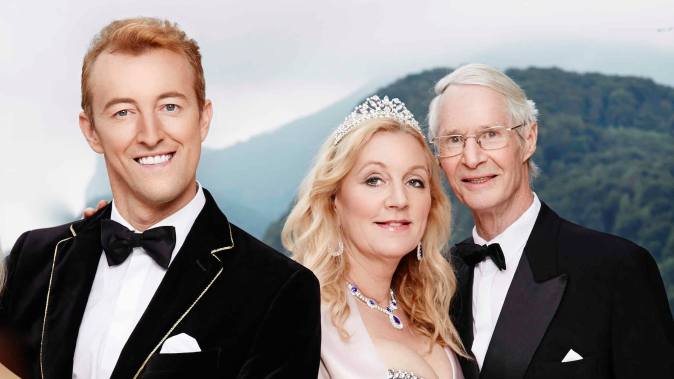
Prince Mario-Max Schaumburg-Lippe: The Empowered Chronicles of African Women Bestseller Book by Starauthor HE Professor Dr. Ada Juni Okika is a MUST READ!

A literary movement uniting voices across continents has taken a bold new stride with the arrival of The African Woman’s Voice and Tears, a poetic anthology dedicated to the enduring legacy of the Beijing Women’s Conference at thirty. The book stands as a monumental testament to the resilience, dignity, and vision of African women, gathering poetic reflections that illuminate the long arc of advocacy, empowerment, and unity. Its pages, filled with the rhythm of lived experience, transform sorrow into strength and silence into symphony.

In a period marked by renewed calls for gender equality, the anthology arrives as both an archive and an awakening. Each poem is an intimate echo of stories once whispered and now boldly spoken. The work’s preface honors this collection as more than poetry; it describes a living testimony of generations of women who have turned lament into melody and hardship into heritage. It is, in every sense, a sacred collection that bridges the past with the promise of tomorrow.

Within these pages, the anthology commemorates the milestone of the Beijing Women’s Conference, reflecting on thirty years of progress while recognizing the unfinished journey toward equality. The women whose voices fill this book are educators, peacebuilders, ministers, and advocates. Their expressions move beyond literature, becoming declarations of resilience and renewal. They write not only to remember but also to guide, ensuring that future generations understand that healing can rise from hardship and wisdom can grow from wounds.

The preface calls the contributors ambassadors of hope and heralds of transformation. Through their words, they continue the sacred work of those who came before them, echoing the courage of ancestors who endured adversity and envisioned liberation. The anthology stands as a bridge across generations, carrying the wisdom of the past into the modern era of advocacy.

The words of dedication included in the volume are written with reverence and clarity, expressing deep admiration for the spirit of African women. The message extends to global audiences, affirming that what one woman endures and transcends, she transforms into strength for all. It is a recognition that personal pain, once acknowledged, becomes collective empowerment.

The preface is signed by Prince Mario-Max Schaumburg-Lippe, who lends his voice as a global peace ambassador, honoring the poets who have given their hearts and truths to the work. His note describes the collection as a testimony for humanity, acknowledging that stories of endurance and redemption are not bound by geography but shared by all. He recognizes the anthology as a gift that uplifts seekers and comforts those still shadowed by sorrow.

In another image of connected advocacy, Ambassador Dr. Priscilla Juwa and Her Excellency Professor Dr. Ada Juni Okika are seen leading the second edition of EmpTistory of Esteemed Women, a literary initiative under the Generation Equality framework. The project invites women to share their personal narratives for inclusion in a global resource. These stories, once compiled, will be donated to the UN Women Education Library and the Center for Gender and Women Education. The call for submissions extends until October 31, 2025, with the second edition luncheon scheduled for March 13, 2026.

This new collection of EmpTistory of Esteemed Women mirrors the spirit of The African Woman’s Voice and Tears by recognizing that storytelling is not only art but also action. The initiative encourages women to see their experiences as resources for others, mentoring through memory and guiding through shared truth. In this way, the book project is not just a publication but a platform—one that brings together stories from every corner of the continent to strengthen global advocacy for equality.

The imagery of the recent launch captures the collaboration and celebration of women who lead by example. The energy reflected in their gestures, their engagement, and their commitment embodies the essence of solidarity. The scene symbolizes a new generation of storytellers building upon the foundation laid by those who once gathered in Beijing to declare that women’s rights are human rights.

At the heart of these works lies a shared purpose: to preserve the voices of women whose contributions might otherwise be overlooked. They are archivists of experience, bearing witness to the progress of generations while urging the continuation of the journey. Each narrative, whether in poetry or prose, contributes to a global mosaic of empowerment that continues to expand.

In The African Woman’s Voice and Tears, readers encounter the sacred courage of women who have faced adversity with faith and transformed grief into growth. The anthology’s rhythm carries the reader through stories of perseverance and healing. The prose reminds us that history is not static but living—shaped by every word, every memory, and every choice to speak.

Meanwhile, the EmpTistory of Esteemed Women project extends that living legacy by inviting new voices to join the chorus. It is a continuation of a tradition that values mentorship and the transformative power of shared experience. In this act of collective storytelling, the boundaries between art and activism dissolve, leaving a narrative that belongs to all women who dare to tell their stories.

Across both initiatives, there is a common understanding that empowerment begins with acknowledgment. These projects validate women’s experiences, affirm their worth, and honor their achievements. They demonstrate that every testimony contributes to the broader movement toward equality, and every voice has a place within it.

The synthesis of poetry, scholarship, and advocacy found in these works underscores a defining truth: when women speak, societies evolve. Their stories illuminate the path for those who follow, reminding the world that progress is sustained through remembrance and renewed through creativity.

In the coming months, as new submissions flow into the EmpTistory of Esteemed Women project, and as The African Woman’s Voice and Tears continues to inspire readers, both works will remain cornerstones of cultural documentation. They stand as living evidence of women’s influence, intellect, and integrity, ensuring that their legacies continue to guide conversations on equality for generations to come.

Prince Mario-Max Schaumburg-Lippe, Ambassador Dr. Priscilla Juwa, and Professor Ada Juni Okika each represent the varied yet unified faces of advocacy that transcend borders. Their leadership bridges royal heritage, academic excellence, and diplomatic vision, joining forces to amplify the stories of women whose experiences define an era.

Ultimately, these initiatives remind the world that storytelling is not an act of nostalgia but of nation-building. The written word, preserved and shared, becomes a structure of empowerment—a library of hope for future generations. From the poetic testimony of The African Woman’s Voice and Tears to the collective authorship of EmpTistory of Esteemed Women, the message remains constant: every woman’s story matters, and every voice contributes to the harmony of progress.

Prince Mario-Max Schaumburg-Lippe: AI and Nature: The Great Bezos Earth Fund’s Grand Vision for a Planet in Balance

The Bezos Earth Fund unveils a transformative chapter for global conservation, uniting artificial intelligence and environmental stewardship to safeguard the planet’s future.

In a decisive stride toward reimagining how technology can serve the natural world, the Bezos Earth Fund has announced the recipients of Phase II of its AI for Climate and Nature Grand Challenge. Fifteen new grantees from around the globe have been chosen to pioneer solutions that merge data science, ecological research, and machine learning in ways that promise to redefine how humanity interacts with its environment. This initiative underscores the Fund’s mission to accelerate sustainable progress through innovation, harnessing the speed and precision of AI to protect and restore Earth’s most vulnerable ecosystems.

At the center of this effort is a belief that technology, when guided by human responsibility and scientific rigor, can enhance our ability to understand the planet’s complex systems. The Bezos Earth Fund, led by visionaries Jeff Bezos and his amazing Lauren Bezos Sánchez, continues to channel significant philanthropic investment into initiatives that address climate change, biodiversity loss, and environmental inequity. Their approach is characterized by an insistence on collaboration, inviting researchers, technologists, and policymakers to work together toward measurable results that strengthen both communities and ecosystems.

Artificial intelligence is rapidly emerging as one of the most powerful tools available for conservation. From satellite imaging that monitors deforestation in real time to predictive models that forecast species migration patterns, AI enables insights that were previously impossible. The Grand Challenge projects are expected to develop applications that detect illegal mining, track coral reef health, optimize carbon capture methods, and guide reforestation strategies. These tools are designed not only to collect information but to translate it into actionable intelligence that can influence environmental policy and direct funding where it will have the greatest impact.

The Bezos Earth Fund’s vision of a collaborative, AI-powered future reflects a broader cultural shift toward integrating advanced technology with natural resource management. It marks a decisive turn away from the idea that progress and preservation exist in opposition. Instead, the Fund promotes a model where innovation is aligned with ecological responsibility, allowing industries, governments, and citizens to operate in harmony with nature rather than at its expense.

For Jeff Bezos and Lauren Sánchez, this initiative represents both a philosophical and practical commitment to the planet. Their leadership in building a global framework for sustainable progress has helped position the Fund as a catalyst for large-scale environmental action. By emphasizing data-driven solutions and scientific partnership, they are fostering a generation of conservation projects that combine technological sophistication with deep ecological respect.

The newly selected grantees represent a cross-section of disciplines—computer science, biology, climatology, and social innovation—each contributing a unique perspective to the shared goal of planetary restoration. Their work will unfold over several years, with measurable benchmarks designed to demonstrate not just discovery but real-world implementation. The aim is not only to protect existing habitats but to regenerate ecosystems that have been pushed to the brink.

Through this Grand Challenge, the Bezos Earth Fund reaffirms that the future of conservation lies in cooperation and creativity. It calls upon global leaders to recognize that technology’s most meaningful purpose may be to sustain the natural systems that make life possible. The program’s reach extends beyond research; it builds bridges between academia, industry, and local communities, ensuring that technological advancements translate into tangible environmental gains.

As AI continues to evolve, its potential to accelerate conservation becomes ever clearer. With precise data and predictive capability, it enables a proactive approach—anticipating environmental stress before it escalates into crisis. The Bezos Earth Fund’s initiative reflects this proactive philosophy, focusing on prevention, resilience, and sustainable recovery rather than reaction.

In many ways, this marks a new era for philanthropy itself. Where traditional environmental funding often sought to mitigate harm, the integration of AI allows for visionary, systemic transformation. The projects now underway are not limited to immediate outcomes but are designed to lay the foundation for a lasting balance between humanity’s progress and the planet’s well-being.

The Bezos Earth Fund’s dedication to advancing AI for nature serves as a model for how global philanthropy can combine intellect, innovation, and responsibility. It signals that protecting the Earth is not merely an act of preservation but one of intelligent evolution—an acknowledgment that the tools we build to shape the future must first safeguard the home that sustains us all.

Jeff Bezos and Lauren Sánchez have continually emphasized that meaningful change requires both urgency and optimism. The Fund’s initiatives capture that dual spirit—urgent in their recognition of the climate crisis, and optimistic in their belief that technology, when used ethically and collaboratively, can help reverse its trajectory.

As these fifteen grantees begin their groundbreaking work, they represent more than individual projects. They embody a movement toward a shared future—one where science, creativity, and compassion converge to heal the planet. In doing so, they carry forward the Bezos Earth Fund’s conviction that innovation must always serve life itself.

Prince Mario-Max Schaumburg-Lippe: Isabella Hirt: The Queen of the International Film Jungle Reigns Supreme

A visionary producer, creative architect, and cultural force redefining the global entertainment landscape, Isabella Hirt has emerged as one of the most compelling figures shaping today’s cinematic and luxury frontiers. Her work bridges the glamour of classic Hollywood with the consciousness of a new global era, transforming artistry into purpose and storytelling into diplomacy.

Hirt’s growing renown as a producer of spiritually resonant and visually opulent films has placed her firmly in the international spotlight. Nominated for excellence as an impact-driven producer and leading contender at the prestigious Go Global Awards Gala in Westminster, she embodies a balance of regal poise and modern innovation. Her projects carry the weight of heritage yet speak to the emotional needs of the present age—creating films that uplift, heal, and connect.

Her creative world expanded dramatically following the theft of Napoléon’s imperial jewels from the Louvre in October 2025. Where others saw loss, Hirt saw inspiration. The incident became the foundation for her upcoming Jungle Queen jewelry collection, a collaboration with a globally recognized designer. These pieces reinterpret the concept of lost legacy through a modern lens of strength and renewal. Each design reflects cinematic grandeur, regal elegance, and emotional endurance, already attracting attention from royal collectors and Hollywood’s elite.

Hirt’s vision reaches far beyond luxury. Her work as a producer aligns artistry with measurable social impact, seeking to bridge cultures and ease emotional disconnection through meaningful storytelling. Among her forthcoming films are Kubrick’s Waterloo, a visually ambitious historical epic, and Legacy of Love, a poetic meditation inspired by Empress Zita and shaped by Hirt’s profound dreams of Queen Elizabeth II. Both projects reflect her signature synthesis of spirituality, history, and cinematic beauty.

Operating across multiple creative sectors, Isabella Hirt leads an empire that merges film production, jewelry design, international distribution, and philanthropic events. Her Flame of Passion galas in Vienna and the United States have become hallmark celebrations of art and purpose, uniting royal guests, industry executives, and cultural icons. Each gathering underscores her belief that luxury and meaning are not mutually exclusive—they are most powerful when intertwined.

Her expanding circle of collaborators includes Peace Ambassador Prince Dr. Mario Max Schaumburg-Lippe, who serves as her royal delegate and close supporter. Together, they are shaping an international cultural dialogue where art and diplomacy meet, advancing a shared vision of elegance as a form of humanitarianism.

From London to Los Angeles, Vienna to Versailles, Hirt’s influence continues to spread through industries once thought separate—film, luxury, and cultural leadership. Her instinct for uniting creative expression with business precision positions her as both an artist and architect of a new era in entertainment. She approaches every project as an ecosystem of value, balancing financial viability with a deep moral compass rooted in faith and empathy.

Her rise symbolizes a broader movement within modern cinema—one that values purpose as much as production, beauty as much as box office. She is a producer whose legacy is being built not on spectacle, but on sincerity, and whose work champions the restoration of human connection through art.

As the world turns its attention toward the Go Global Awards in Westminster, Isabella Hirt’s nomination feels not merely earned but inevitable. Her trajectory represents the global reawakening of creative integrity in an industry long defined by commerce. Through her leadership, she demonstrates that elegance can be strength, and luxury can serve as a vehicle for light.

With every venture, Isabella Hirt expands the possibilities of what modern storytelling can achieve. Her reign as the Queen of the International Film Jungle is not one of dominance, but of design—a conscious and deliberate shaping of a cultural future where artistry, heritage, and hope coexist. Her story stands as a testament to what happens when vision meets discipline, and when glamour embraces grace.

Prince Mario-Max Schaumburg-Lippe: Priscilla Presley to Headline 2026 Old Bags Luncheon at The Breakers Palm Beach

The celebrated actress and philanthropist will lead one of Palm Beach’s most anticipated charity events.

Each year, the Old Bags Luncheon at The Breakers Palm Beach captures the elegant rhythm of philanthropy that defines the island’s social calendar. For 2026, the event reaches a new height of excitement with the announcement that Priscilla Presley will headline the luncheon, continuing a tradition that has become a cornerstone of Palm Beach society. Organized by the Center for Family Services of Palm Beach County and presented by Lawlor Media Group, the event is set to blend glamour with a meaningful purpose, drawing a distinguished guest list from across South Florida and beyond.

The Old Bags Luncheon has long been celebrated for its creative concept—auctioning designer handbags to support vital family and mental health programs in the community. Over the years, it has evolved into one of the most successful fundraisers in Palm Beach, attracting prominent philanthropists, civic leaders, and notable figures in fashion and entertainment. Each luncheon reflects the generosity and spirit that define the area’s commitment to service, and 2026 promises to be an especially notable chapter in its legacy.

Presley’s participation adds a powerful sense of continuity and prestige. Known for her longstanding dedication to charitable causes and her enduring influence in American culture, she brings an aura of grace and authenticity that perfectly aligns with the luncheon’s purpose. Her presence underscores the event’s ongoing appeal to those who balance luxury with a commitment to giving back, making it one of the year’s most coveted invitations.

The Breakers Palm Beach, a landmark of history and refinement, offers the ideal setting for the luncheon’s blend of social tradition and philanthropic impact. Its grand architecture and meticulous service have framed countless landmark gatherings, and each year, the ballroom fills with a distinct sense of purpose. Attendees gather not only to celebrate but to contribute, creating a vibrant exchange between generosity and style that has defined the luncheon since its founding.

As the 2025 edition drew record attendance and widespread acclaim, anticipation for the upcoming event has been building throughout Palm Beach society. Early announcements suggest that next year’s luncheon will introduce new elements of engagement and design, while remaining true to the format that has made it a philanthropic institution. The silent auction, featuring handbags from leading fashion houses, will once again serve as both entertainment and contribution, linking luxury to a cause that strengthens families across the region.

With Priscilla Presley at the helm, the luncheon is expected to attract an even broader audience of supporters and admirers. Her participation is a reminder of the powerful intersection between cultural heritage and contemporary philanthropy. Each guest who attends will be part of a legacy that continues to evolve—one that celebrates not only fashion and community but also the enduring value of compassion in action.

Palm Beach’s philanthropic season thrives on events that pair elegance with impact, and few occasions reflect that duality as completely as the Old Bags Luncheon. Each year, its success ripples outward, funding programs that provide counseling, education, and essential resources for those in need. The 2026 luncheon will reaffirm that mission in an atmosphere of grace and generosity, where every detail contributes to a larger story of hope.

As the date approaches, invitations will mark the beginning of another highlight in the Palm Beach social calendar. For guests, it will be a day defined by camaraderie, shared purpose, and the signature sophistication that has made The Breakers synonymous with excellence. For the community, it will be a moment of unity—proof that style and substance can indeed coexist in perfect harmony.

Priscilla Presley’s appearance signals more than a headlining role; it represents a continuation of her lifelong support for meaningful causes. Her participation promises to make the 2026 Old Bags Luncheon not only an elegant affair but also a profoundly purposeful gathering that celebrates both achievement and empathy in equal measure.

* His Highness and Excellency Global Peace Ambassador Dr. PRINCE MARIO-MAX SCHAUMBURG-LIPPE is a working Royal, award winning TV- and Event-Host, Bertelsmann Randomhouse author, Public Speaker and Philanthropist ♔ Prince Mario-Max is the son of Royal Dignitaries H.H. Dr.h.c. Prince Waldemar and H.H. Dr. Princess Antonia of Schaumburg-Lippe. His Grandmother is H.R.H. Princess Feodora of Denmark. Therefore they are the Royal Danish Nachod Line of The Princes of Schaumburg-Lippe, the Founding Family of Hamburg, Lübeck and Kiel. ♔ Instagram https://www.instagram.com/princemariomax/ Website http://www.schaumburglippe.org Facebook https://www.facebook.com/zuschaumburglippe X-Twitter https://twitter.com/schaumburglippe Linkedin https://www.linkedin.com/in/prince-mario-max-schaumburg-lippe-1879978a

Prince Mario-Max Schaumburg-Lippe: Sundance 2026 Tickets Released: A Celebration of Independent Vision Last Time In Park City Utah moving to Boulder CO!

The Sundance Film Festival invites audiences to step into the future of independent cinema with its 2026 edition, promising a dynamic mix of in-person premieres, online screenings, and a heartfelt celebration of its historic roots in Utah. From exclusive passes offering first access to new works to a commemorative program honoring the festival’s legacy and the enduring vision of Robert Redford, this year’s gathering will unite filmmakers, artists, and audiences in an expansive experience designed for discovery and connection.

The festival continues to serve as a cornerstone for artistic innovation, giving both returning visitors and first-time attendees a range of ways to participate. Festivalgoers can now secure their passes or packages to ensure their place within the most anticipated events of the independent film calendar. Early access to ticket selection, expedited theater entry, and unlimited screenings are among the coveted perks available for those planning to immerse themselves in the festival’s offerings.

For Utah locals and young attendees between the ages of eighteen and twenty-five, special pricing adds an extra layer of accessibility to the experience, reflecting Sundance’s ongoing commitment to nurturing its home community and the next generation of storytellers. Beyond the screenings themselves, audiences can look forward to filmmaker Q&As, series showcases, and the lively in-person energy that has always defined the festival.

A hallmark of Sundance has long been its flexible approach to how audiences engage with film. The 2026 edition continues this tradition with options tailored for every preference. The Express Pass Second Half: In Person offers guests the chance to be among the first to enter theaters during the latter half of the festival, running from January 28 through February 1. This pass ensures priority access to screenings and unlimited in-person viewings, giving dedicated attendees an efficient and immersive way to experience the festival’s most anticipated titles.

For those seeking the freedom to curate their own journey from home, the Festival Package: Online offers ten digital tickets and early selection privileges, with full access to a curated array of films from January 29 through February 1. This package allows participants to enjoy the lineup at their own pace, ensuring that distance never diminishes engagement with the work on screen.

New in 2026, the Single Film and Short Films Bundle: Online provides a combined offer for those who wish to explore both features and shorts. The bundle comes with advance ticket selection and early access before general availability, reinforcing Sundance’s ethos of inclusivity and opportunity for discovery.

For audiences who prefer the full digital experience, the Festival Pass: Online opens doors to an on-demand library of feature films, documentaries, shorts, and episodic projects. Running from January 29 through February 1, this pass transforms any space into a personal screening room, extending the spirit of the festival beyond geographic boundaries.

Perhaps the most poignant element of the 2026 program is the Park City Legacy initiative, which pays tribute to Sundance’s origins and evolution. Taking place during the second half of the festival, from January 27 through January 30, this celebratory program revisits the milestones that shaped independent cinema. With restored presentations of landmark films including Little Miss Sunshine, House Party, Half Nelson, American Dream, Mysterious Skin, Saw, and Humpday, the series revisits the stories that once defined the indie landscape and the creators who brought them to life.

Each restoration serves as both an homage and a reminder of how far the festival and its community have come. Directors such as Jonathan Dayton, Valerie Faris, Barbara Kopple, Gregg Araki, James Wan, Reginald Hudlin, and Ryan Fleck will join the celebrations, bringing insight into the making of their seminal works. Their return marks a reunion of voices that helped shape Sundance into a global platform for authentic storytelling.

In addition to screenings, alumni artists will gather for discussions that explore the evolution of independent filmmaking, while a curated retrospective of short films will highlight the festival’s dedication to discovering emerging talent. The Park City Legacy celebration will culminate in a closing event on January 30, honoring more than four decades of cinematic innovation and expressing deep gratitude to the Utah community that has sustained and embraced Sundance since its earliest days.

Throughout its history, the Sundance Film Festival has stood as a meeting point for art, dialogue, and the exploration of new perspectives. Its combination of in-person vibrancy and digital accessibility continues to define how audiences engage with film, blending tradition with technology to expand the reach of independent voices. The 2026 edition extends this balance even further, offering every type of attendee—local or remote, seasoned or new—a way to participate in the ongoing story of independent film.

As audiences prepare to step once again into theaters or log in from home, the essence of Sundance remains clear: to champion the power of storytelling, to support the creativity of filmmakers, and to preserve the communal experience that comes from sharing a screen. Each program, from the premiere lineup to the legacy screenings, builds upon the foundation of authenticity and vision that has guided the festival for more than forty years.

The 2026 Sundance Film Festival is more than a collection of premieres and panels; it is a living tribute to the enduring spirit of independent art. By honoring the past and embracing the future, Sundance continues to provide a platform for stories that challenge, inspire, and connect audiences across borders. The invitation is open—to watch, to learn, to celebrate, and to be part of the continuing evolution of independent cinema.

* His Highness and Excellency Global Peace Ambassador Dr. PRINCE MARIO-MAX SCHAUMBURG-LIPPE is a working Royal, award winning TV- and Event-Host, Bertelsmann Randomhouse author, Public Speaker and Philanthropist ♔ Prince Mario-Max is the son of Royal Dignitaries H.H. Dr.h.c. Prince Waldemar and H.H. Dr. Princess Antonia of Schaumburg-Lippe. His Grandmother is H.R.H. Princess Feodora of Denmark. Therefore they are the Royal Danish Nachod Line of The Princes of Schaumburg-Lippe, the Founding Family of Hamburg, Lübeck and Kiel. ♔ Instagram https://www.instagram.com/princemariomax/ Website http://www.schaumburglippe.org Facebook https://www.facebook.com/zuschaumburglippe X-Twitter https://twitter.com/schaumburglippe Linkedin https://www.linkedin.com/in/prince-mario-max-schaumburg-lippe-1879978a

Prince Mario-Max Schaumburg-Lippe: The Taste of Modena: Cesare Mazzetti Brings Balsamico to New York

A rare evening of Italian heritage unfolded in Manhattan as Cesare Mazzetti, President of the Consorzio Tutela Aceto Balsamico di Modena, hosted a press dinner at Il Buco Alimentari & Vineria, celebrating the storied vinegar that has come to symbolize Modena’s devotion to excellence.

The event, titled Le Terre del Balsamico, gathered culinary editors, restaurateurs, and food world insiders for a private dinner that paid homage to the craftsmanship and integrity behind the true Balsamic Vinegar of Modena. Mazzetti, who serves as a guardian of its authenticity, traveled from Emilia-Romagna to present not only the product itself but also the cultural lineage that continues to protect its name, production methods, and provenance.

Held on October 21st, 2025, the dinner transformed Il Buco Alimentari’s dining room into a miniature Modena for the night, with each course designed to showcase the harmony of the aged condiment in both savory and sweet forms. Every dish, from amuse-bouche to dessert, carried the distinctive depth and balance that have made Aceto Balsamico di Modena a global emblem of Italian taste and precision.

The evening began with Buckwheat Tarts layered with beets and Crèmeux de Bourgogne, enriched with Balsamic Vinegar of Modena Invecchiato. The bite-sized opening set the tone for the night, uniting rustic Italian grains with refined French dairy through the sweet acidity of the vinegar. Guests moved naturally into the antipasto, a tender Beef Carpaccio accompanied by elderberries and finished with the dark, syrupy gleam of Traditional Balsamic Vinegar of Modena (PDO). Each plate served as a demonstration of the Consorzio’s mission to educate diners on the differences between the traditional and the modern, the protected and the imitated.

The second course, an Iberian Pork Collar with porcini and escarole, captured the full-bodied warmth that aged balsamic brings to roasted meats. The glaze’s complexity, aged for years in wooden barrels, heightened the natural savor of the dish while illuminating the connection between aging and artistry that defines Modenese balsamico. No modern reduction could substitute for this centuries-old patience; the vinegar’s density, sweetness, and acidity are a direct reflection of time itself.

Thanks to Suzanna Bowling for taking me to this amazing special dinner.

Dessert took the form of Panna Cotta, topped with figs and drizzled with Traditional Balsamic Vinegar of Modena (PDO). The pairing underscored how the same ingredient that elevates savory dishes also transforms simple sweets into expressions of Italian balance. This duality—versatile, elegant, yet profoundly simple—is at the heart of Modena’s culinary identity.

Throughout the evening, guests could sense the pride of a region translated into taste. The Balsamic Vinegar of Modena, labeled and certified under European PDO and PGI protections, has long stood as a benchmark for quality. Mazzetti’s presence affirmed the seriousness of that protection. The Consorzio Tutela Aceto Balsamico di Modena serves as both steward and standard-bearer, ensuring that every drop of true balsamico adheres to its origins in Modena and Reggio Emilia, where grape musts, aging barrels, and generations of know-how intertwine.

What might have appeared as a simple ingredient—dark, glossy, and aromatic—was presented as a living piece of Italian cultural history. The vineyards of Modena, cultivated for centuries, produce the grape varieties that make up the vinegar’s base. After slow fermentation and maturation in wooden casks, the result is a condiment that transcends seasoning, acting instead as an essence of place. Mazzetti’s advocacy and his work with the Consorzio have ensured that this essence remains protected from imitation, preserving both the economic and cultural vitality of the Emilia-Romagna region.

The Il Buco team mirrored this philosophy of authenticity. Known for its dedication to artisanal Italian ingredients, the restaurant served as an ideal partner for the event. Its rustic yet refined approach to hospitality reflected the values shared by Modena’s producers: respect for the land, reverence for craft, and a belief that excellence requires time. Each course arrived with a quiet confidence that allowed the balsamico to speak for itself, its sheen and aroma completing every dish.

As guests sampled the aged vinegar directly from tasting spoons, many discovered the differences between the traditional aceto—dense and complex, aged for at least twelve years—and the more fluid versions used in modern cuisine. Mazzetti described these not as separate products, but as members of the same family, each expressing the character of its maturation. His stewardship embodies a bridge between tradition and modernity, reminding a global audience that behind every bottle lies the work of skilled hands, careful blending, and an unwavering respect for history.

The presentation of the 250 mL bottle, marked with the ABM seal and European quality insignia, concluded the evening. Guests left with a tangible reminder of the craft, carrying home not just a condiment but a connection to the Modenese hillsides where it all begins.

The Le Terre del Balsamico dinner demonstrated how a single ingredient can inspire a complete dialogue between culture, geography, and cuisine. By bringing Modena’s most famous export to one of New York’s most respected Italian tables, Cesare Mazzetti reaffirmed the enduring link between authenticity and excellence, ensuring that the story of balsamico continues to be written not only in Italy but in every kitchen and dining room that honors its origins.

* His Highness and Excellency Global Peace Ambassador Dr. PRINCE MARIO-MAX SCHAUMBURG-LIPPE is a working Royal, award winning TV- and Event-Host, Bertelsmann Randomhouse author, Public Speaker and Philanthropist ♔ Prince Mario-Max is the son of Royal Dignitaries H.H. Dr.h.c. Prince Waldemar and H.H. Dr. Princess Antonia of Schaumburg-Lippe. His Grandmother is H.R.H. Princess Feodora of Denmark. Therefore they are the Royal Danish Nachod Line of The Princes of Schaumburg-Lippe, the Founding Family of Hamburg, Lübeck and Kiel. ♔ Instagram https://www.instagram.com/princemariomax/ Website http://www.schaumburglippe.org Facebook https://www.facebook.com/zuschaumburglippe X-Twitter https://twitter.com/schaumburglippe Linkedin https://www.linkedin.com/in/prince-mario-max-schaumburg-lippe-1879978a

Prince Mario-Max Schaumburg-Lippe: Her Human Highness Tessy de Nassau Leads Fashion’s New Royal Revolution To Unite People!

A royal designer, humanitarian and model inspiring unity, empowerment, and purpose on the global runway.

Her Human Highness Tessy de Nassau stands at the intersection of elegance and impact, redefining what it means to be a royal in the twenty-first century. As both a celebrated fashion designer and an international model, she has transformed her creative platform into a mission of connection. Known across the industry as the number one cape designer in the world, she brings craftsmanship, symbolism, and modern relevance to an ancient garment. But beyond her artistry, it is her vision—to bring people together through beauty, compassion, and design—that truly sets her apart.

Tessy de Nassau’s approach to fashion is rooted in a sense of purpose. For her, the runway is not merely a stage, but a space for dialogue. Each collection she unveils tells a story of strength and solidarity, blending the regal precision of her heritage with the fluid creativity of contemporary design. Her capes, worn by women and men across the world, are expressions of empowerment, reflecting her belief that clothing can uplift not only the wearer but entire communities. By merging her design work with humanitarian values, she has positioned fashion as a vehicle for progress—one that carries meaning far beyond its aesthetic.

In recent years, Tessy has expanded her influence into modeling, where her presence embodies authenticity and grace. As a model, she moves seamlessly between editorial campaigns and high-profile runway appearances, bringing a sense of purpose to every image and moment. Her work challenges outdated ideas of royalty as distant or decorative. Instead, she presents a portrait of modern leadership—confident, creative, and deeply engaged with the world around her. Her modeling career amplifies her message that fashion, at its best, transcends glamour to become a form of cultural and emotional connection.

Her creative philosophy finds resonance with a growing movement of royals who are shaping the fashion world with vision and heart.

Among them is Prince Mario-Max Schaumburg-Lippe, the dynamic host of seven major fashion weeks across the United States. His influence reaches far beyond the traditional runway. Through his leadership, each event becomes a celebration of artistry and inclusion, bringing together designers from every continent and background. His fashion weeks are not confined to one city or one season—they form a continuous dialogue about identity, diversity, and innovation in style.

Prince Mario-Max’s commitment to fashion as a unifying force aligns perfectly with Her Human Highness Tessy’s ideals. His shows have introduced hundreds of emerging designers to international audiences, giving them the chance to present their work alongside established names. In doing so, he demonstrates that glamour can coexist with accessibility, and that the world of couture is strongest when it reflects the diversity of its creators. Each of his events has a distinct atmosphere of openness and optimism, fueled by the belief that creativity can bridge divides and spark collaboration.

Within this evolving landscape, Prince Gabriel of Luxembourg adds another compelling dimension. As one of the most talked-about male models in Europe, he represents a new generation of royals who are redefining masculinity through style and substance. His modeling career has taken him from editorial shoots to international catwalks, where his natural charisma and quiet confidence have earned him recognition across the fashion world. Prince Gabriel’s ascent as a model underscores the transformative power of self-expression—showing that elegance, for men as much as for women, can be a statement of individuality and cultural unity.

Together, Her Human Highness Tessy de Nassau, Prince Mario-Max, and Prince Gabriel are forging a modern royal narrative centered on creativity and inclusion. They see fashion not as an escape from the world’s challenges, but as a tool to engage with them. Their shared mission is to use art and style to connect people across boundaries of language, geography, and experience. Through their work, they are crafting a vision of the fashion world that is more uplifting, empathetic, and inspiring than ever before.

Tessy’s influence continues to expand globally. Her designs are now part of major fashion showcases and philanthropic events, admired not only for their structure and tailoring but for the message they carry. The cape—a symbol of protection and dignity—has become her signature, embodying the grace and strength she brings to every endeavor. Her work resonates deeply with audiences who see in her creations a reflection of empowerment and optimism. As both designer and model, she demonstrates that fashion can be both deeply personal and profoundly universal.

Her humanitarian focus has also shaped her career beyond the runway. Through her foundation and various initiatives, Tessy de Nassau advocates for education, gender equality, and global cooperation. Her dedication to these causes has earned her respect not only within the fashion community but among international organizations that recognize her as a voice of compassion and progress. Each of her creative ventures reflects her broader mission: to unite, to uplift, and to inspire.

The synergy between these royal figures has given the fashion world a renewed sense of purpose. Their efforts reflect a growing awareness that beauty and benevolence can coexist naturally, and that style can carry a message of togetherness. In their hands, the runway becomes a meeting place for ideas and ideals, a stage where art and empathy walk side by side.

As Tessy de Nassau continues to model, design, and mentor, her work serves as a reminder that fashion’s true power lies not in exclusivity but in connection. Through her leadership and artistry, she and her fellow royals are demonstrating that luxury can be compassionate, glamour can be meaningful, and creativity can be a bridge between people.

Their collective vision represents the future of global fashion—one that values unity over division, inclusion over competition, and inspiration over spectacle. It is a future where the beauty of design is inseparable from the beauty of purpose, and where every thread woven into a garment becomes part of a larger tapestry of hope.

Natalie Roden did such a great feature in the Luxembourg Times about the Luxembourg Fashion Week which was held at the Hotel Le Royal in Luxembourg City, the fashion show featured Human Highness, Karim Meguellati, Minh-Anh Nguyen, Petit Atelier de Nathalie, Egle Ozyte, Altagia, Aydogan and Yanis Miltgen in cooperation with hair artist Maxim.

* His Highness and Excellency Global Peace Ambassador Dr. PRINCE MARIO-MAX SCHAUMBURG-LIPPE is a working Royal, award winning TV- and Event-Host, Bertelsmann Randomhouse author, Public Speaker and Philanthropist ♔ Prince Mario-Max is the son of Royal Dignitaries H.H. Dr.h.c. Prince Waldemar and H.H. Dr. Princess Antonia of Schaumburg-Lippe. His Grandmother is H.R.H. Princess Feodora of Denmark. Therefore they are the Royal Danish Nachod Line of The Princes of Schaumburg-Lippe, the Founding Family of Hamburg, Lübeck and Kiel. ♔ Instagram https://www.instagram.com/princemariomax/ Website http://www.schaumburglippe.org Facebook https://www.facebook.com/zuschaumburglippe X-Twitter https://twitter.com/schaumburglippe Linkedin https://www.linkedin.com/in/prince-mario-max-schaumburg-lippe-1879978a

Tessy de Nassau, Prince Mario-Max Schaumburg-Lippe, Prince Gabriel of Luxembourg, royal fashion, fashion week USA, global fashion unity, royal designers, cape designer, fashion model, modern royalty, inclusive fashion, luxury design, high fashion, European royals, fashion diplomacy, international fashion, cultural exchange, sustainable fashion, empowerment through design, fashion icons, emerging designers, couture events, royal modeling, creative leadership, global runway, American fashion week, Luxembourg royals, unity through art, royal style, fashion inspiration, cultural collaboration, design innovation, royal elegance, humanitarian fashion, New York fashion, Los Angeles fashion, global creativity, modern couture, purpose-driven design

Prince Mario-Max Schaumburg-Lippe: One Art Space Rewrites the Tribeca Art Story

A downtown gallery bridges New York’s past and future with fearless curatorial vision.

In the heart of Tribeca, where cobblestone streets meet the hum of creative reinvention, One Art Space has quietly become one of New York City’s defining contemporary art destinations. Since its founding in 2011, the gallery has cultivated an identity that merges the avant-garde with the accessible, presenting a program that reflects both the rigor of the museum world and the vibrancy of the street. Behind this evolution stand two figures—MaryAnn Giella McCulloh and Mei Fung—whose partnership has given the space a renewed sense of direction and purpose.

Housed at 23 Warren Street, the gallery’s 1,700-square-foot glass-fronted venue has become a hallmark of the downtown arts corridor. Its clear façade and open layout serve as both a literal and symbolic invitation, encouraging anyone walking by to pause and step inside. What they find within is not a sterile white cube, but a room alive with dialogue between genres, generations, and artistic ideologies. From bold contemporary installations to works by legendary graffiti artists, One Art Space continues to expand the parameters of what a New York gallery can be.

MaryAnn Giella McCulloh’s approach to leadership is informed by a life steeped in creative influence. As the sister of the late founder Dan Giella and the daughter of Joe Giella, one of the original illustrators behind Batman, her perspective bridges popular and fine art in a way few gallery owners can claim. Her early exposure to the world of comic illustration instilled in her a respect for craft, storytelling, and cultural longevity. After a successful career in business development and fine art sales, her return to the family gallery marked both a personal and professional commitment to carrying forward a vision that was never just about selling art, but about sustaining a community.

Her business partner, Mei Fung, brings a different yet complementary sensibility. A longtime collaborator of Dan Giella, Fung has long been a steady presence within Tribeca’s cultural landscape. Her dedication to making art approachable and community driven has shaped One Art Space’s inclusive atmosphere. Together, McCulloh and Fung have ensured that the gallery remains not just a venue for exhibitions, but a meeting place for collectors, curators, artists, and enthusiasts united by curiosity and passion.

Under their guidance, the gallery’s programming has taken on a layered identity that celebrates both heritage and experimentation. One Art Space has become a stage for artists whose work pushes boundaries while maintaining a deeply human narrative. Recent exhibitions such as “The Authenticity,” curated by Cope2 and featuring Shepard Fairey and Danny Cortes, have highlighted the convergence of street art and high art, demonstrating how the aesthetics once relegated to subway walls have become vital expressions of cultural history. The gallery’s curatorial strategy encourages participation, with openings, artist talks, and collaborations that transform exhibitions into living conversations.

McCulloh often emphasizes that art must engage the senses and the spirit. For her, an exhibition is successful when it provokes feeling as much as thought. Artists like Purvis Young, Shepard Fairey, and Al Diaz embody that principle, offering works that resonate with narrative, complexity, and emotional honesty. Each brings a history shaped by controversy, resilience, and reinvention—qualities that mirror the ever-evolving story of New York itself.

The forthcoming exhibition “An Empire Has Fallen” by Al Diaz, opening October 30 and running through November 10, 2025, represents the next chapter in the gallery’s journey. Diaz, a key figure in the city’s street art lineage, brings a body of work that captures the energy and defiance that once defined downtown art movements. Through his solo presentation, One Art Space continues its tradition of spotlighting artists who challenge convention while honoring legacy.

Tribeca’s artistic identity has long been intertwined with reinvention. Once a haven for loft-dwelling pioneers and underground studios, it has transformed into a neighborhood where galleries and creative agencies coexist with landmark architecture and refined restaurants. In this environment, One Art Space stands as both a guardian of history and a catalyst for what’s next. Its exhibitions evoke the spirit of artists like Jean-Michel Basquiat and Keith Haring—figures whose street-born expression transformed into cultural canon—while also giving a platform to new voices defining the present era.

What distinguishes One Art Space from many contemporary galleries is its balance between rigor and warmth. It maintains the professionalism expected by collectors and institutions while sustaining a spirit of openness that invites the public to engage. Visitors often find themselves in dialogue not only with the art but with the curators themselves, who view accessibility as integral to authenticity. That ethos extends to the gallery’s events, where emerging artists find themselves sharing space with established names, and where the boundaries between audience and participant dissolve into shared appreciation.

The gallery’s long-term impact lies in its ability to unite communities through culture. Its founders’ philosophy—that art is both a personal and collective experience—has guided its evolution for more than a decade. Through consistent programming, One Art Space has developed relationships with major artists and institutions while retaining the independent character that defines downtown New York.

Within its walls, exhibitions have spanned from abstract painters like Andrew Salgado to street legends whose work has reached museum collections. Purvis Young’s upcoming solo exhibition exemplifies this range. His paintings, already part of the Metropolitan Museum of Art, the Whitney Museum of American Art, and the Smithsonian American Art Museum, will soon grace the Tribeca space, bridging institutional prestige with neighborhood intimacy.

One Art Space’s story is one of continuity and change, of a family’s artistic legacy transformed into a public platform for discovery. The connection between McCulloh’s heritage in comic illustration and the gallery’s embrace of contemporary expression underscores how art evolves across generations. What began with the inked pages of Batman now finds new form in canvases and installations that challenge and inspire.

As Tribeca continues to shift, One Art Space remains a constant presence—a place where artistic dialogue is encouraged, where history and innovation coexist naturally, and where each exhibition feels like a chapter in an ongoing cultural narrative. It is a gallery that mirrors New York itself: resilient, inclusive, and perpetually in motion.

The partnership of MaryAnn Giella McCulloh and Mei Fung has ensured that One Art Space not only honors its roots but actively shapes the city’s creative future. Their vision continues to redefine how art is presented, experienced, and remembered, keeping the pulse of downtown Manhattan strong with every exhibition that opens its glass doors.

MaryAnn Giella McCulloh, Mei Fung, One Art Space, Tribeca art galleries, Al Diaz, An Empire Has Fallen, Cope2, Shepard Fairey, Danny Cortes, Purvis Young, Andrew Salgado, Joe Giella, Dan Giella, Batman illustrators, downtown Manhattan, contemporary art, street art, New York artists, emerging artists, art exhibitions, fine art sales, community art, curatorial vision, museum-caliber shows, The Metropolitan Museum of Art, Whitney Museum of American Art, Smithsonian American Art Museum, Tribeca culture, 23 Warren Street, gallery founders, New York art world, urban art scene, creative legacy, cultural institutions, avant-garde exhibitions, collectible art, modern art collectors, New York galleries

Prince Mario-Max Schaumburg-Lippe: Aerofoot & Aerofo Flight Shoes: The Viral Dream That’s Still in Development

A new name has begun circulating across social media feeds with equal parts fascination and skepticism: Aerofoot. Videos showing sleek sneakers gliding just above the ground have ignited a wave of excitement on Instagram and TikTok, where millions of viewers are asking the same question—are flight shoes finally real?

The short answer, for now, is no. Despite the mesmerizing clips, Aerofoot flight shoes do not yet exist as a commercially available or verified product. What exists instead is a growing digital phenomenon built on intrigue, clever editing, and a promise of technology still in the lab.

The story begins with a short video, barely thirty seconds long, that spread rapidly through sneaker pages and tech innovation accounts. It showed a pair of futuristic shoes hovering several inches above a paved surface, their movement smooth and fluid, as if supported by invisible air currents. The visuals were striking: minimalist design, muted lighting, and an understated logo that read simply “Aerofoot.” Within days, reposts flooded timelines, and the comment sections filled with disbelief and curiosity.

Viewers debated whether the shoes were magnetic, drone-powered, or simply computer-generated. Some speculated that Aerofoot was a start-up preparing a public reveal. Others guessed it was an art project designed to test the boundaries of digital realism. Regardless of origin, the video succeeded in creating a powerful illusion—the idea that flight could begin at the feet.

No company called Aerofoot currently lists any trademark filings, patents, or physical prototypes under public record. Yet the name now travels freely across tech and design circles, fueled by the simple allure of what it represents. The desire for human flight has always lingered close to the surface of pop culture, and the notion of wearable levitation devices sits at the intersection of fashion, performance, and engineering. Aerofoot captures that fascination perfectly, even without existing as a tangible product.

In concept, flight shoes are not entirely far-fetched. Advances in drone propulsion, lightweight battery cells, and magnetic levitation systems have brought personal mobility closer to the realm of reality than ever before. Engineers have successfully demonstrated hovering skateboards using superconductive materials and rail-guided magnets. However, those systems depend on controlled surfaces and are not yet portable or safe for everyday use.

What separates Aerofoot from past experiments is the simplicity of its aesthetic. The visuals show no cables, rotors, or bulky attachments—just clean-lined sneakers gliding gracefully. It’s a vision designed for virality, not engineering documentation. The editing, lighting, and camera motion give it the credibility of a product ad, even though no launch date, pricing, or developer information accompanies it.

Behind the illusion, digital creators continue to experiment with blending CGI and live action to craft convincing demonstrations of unreal technology. The Aerofoot clips appear to fall into this category. Specialists in motion design have noted that the lighting reflections and foot trajectories in the video suggest compositing rather than physical lift. In the language of social media, it’s less a prototype and more a digital proof of imagination.

Still, the impact is undeniable. Sneaker forums have begun dissecting frame-by-frame footage, analyzing shadows and angles. Tech influencers have debated how close real physics might be to catching up. And design blogs have already speculated what brands like Nike or Adidas might do if personal levitation ever became viable. The fantasy has entered the cultural bloodstream, independent of any real engineering breakthrough.

That attention, however, can be valuable. Viral fiction often plants the seed for future innovation. When audiences engage deeply with an imagined concept, creators and investors start exploring how to make it real. Some of the engineers now working on electric mobility grew up watching science fiction that seemed impossible at the time. Aerofoot’s imagery, if nothing else, keeps that lineage alive.

In the background, a handful of independent developers have hinted that they are working on wearable lift-assist devices inspired by similar ideas. These projects involve micro-drone propulsion systems embedded into footwear frameworks, aiming for incremental lift and motion support rather than flight. None have yet passed the prototype stage, but they signal genuine research interest in the category. Whether those engineers adopt the Aerofoot name or build under a different brand, the direction remains clear: the pursuit of movement beyond walking.

If Aerofoot were to evolve into a real product, it would face enormous technical and safety challenges. Power-to-weight ratios, balance stabilization, and energy density would all have to advance dramatically. Even with compact turbines or propeller arrays, ensuring human stability at close-to-ground flight remains complex. The engineering frontier is vast, but so is the imagination that fuels it.

For now, Aerofoot remains an idea—a digital vision that bridges fantasy and aspiration. The viral moment may have been crafted on a computer, but the response it inspired is real. People are ready to believe in flight again, even if only through the next scroll on their phones.

The future of Aerofoot lies not in whether the shoes exist today, but in what they represent: a glimpse of technology’s next ambition, wrapped in the simplicity of a sneaker. Somewhere between an illusion and an innovation, the concept continues to glide—just out of reach, but not entirely out of possibility.

Prince Mario-Max Schaumburg-Lippe: Want Italy Pasta & Go: Fast-Casual Italian Arrives Downtown

A compact corner of Lower Manhattan has found a new rhythm for Italian dining, and it comes in the form of Want Italy Pasta & Go—a sleek fast-casual restaurant that manages to make a plate of pasta feel both spontaneous and satisfying.

Just steps from the Oculus, the concept blends the familiar ease of line-service dining with the freshness and quality of a modern Italian kitchen. The result is a quick yet composed experience, designed for those who move through downtown with purpose but still crave the comfort of a real meal.

From the moment guests walk in, the focus on efficiency is clear. The space is lean, bright, and designed around movement. You order at the counter, watch your meal come together in front of you, and moments later, a steaming bowl of pasta—made fresh, organic, and customized to your taste—is ready to go. There’s no fanfare, just a quiet assurance that this is pasta made with care, even when time is short.

Want Italy Pasta & Go succeeds in turning the idea of fast food on its head. The pasta, prepared in a matter of seconds, holds its texture beautifully, and the sauces—whether a classic tomato or something richer—have a depth that suggests a real kitchen touch. Every element has been pared down to essentials: a tight menu, a small but sharp espresso bar, and a retail shelf stocked with Italian pantry staples that invite you to take the flavors home.

The experience feels intuitive. You move through the line at a comfortable pace, watch the pasta drop into boiling water, and breathe in the unmistakable aroma of sauce meeting starch. The wait is brief, yet it carries a sense of anticipation that belongs more to a trattoria than a takeout counter.

Once the bowl arrives, it’s easy to see why the restaurant has become a quiet favorite among both commuters and tourists. The dishes are portioned generously without excess, plated neatly for eat-in or packaged elegantly for takeaway. There’s enough structure in the pasta to hold the sauce, and the ingredients—herbs, cheese, and oils—are layered in a way that feels balanced rather than heavy.

The setting helps. Located near some of the city’s busiest foot traffic, Want Italy Pasta & Go manages to offer calm amid the movement. Groups from nearby tours often file in alongside neighborhood regulars, and the space absorbs the energy gracefully. Even at peak hours, service remains steady. Staff members move quickly but never rushed, keeping the process friendly and fluid.

Behind the counter, the choreography is worth watching. Each member of the team has a defined role, and the sequence of pasta-making, plating, and presentation is almost seamless. It’s a system built for both precision and volume, and it works. Guests feel included in the process without the sense of intrusion that often comes with open kitchens.

The espresso bar deserves mention. It’s not an afterthought but a proper offering, with smooth, strong coffee that pairs naturally with the restaurant’s simple desserts. For a brief midday break, it’s enough to make you linger a few minutes longer.

There’s also a thoughtful nod to Italian retail culture in the small marketplace near the counter. Shelves carry imported sauces, oils, and pastas—each chosen to reflect the flavors on the menu. It’s a quiet extension of the restaurant’s identity, suggesting that good food should continue at home.

The menu itself is uncomplicated but deliberate. A few pasta shapes, a set of house sauces, and a handful of seasonal specials are all it needs. There’s no overreach, no attempt to mimic a sit-down trattoria. Instead, it celebrates what it does best: serving real Italian pasta, fast, to people who might otherwise have settled for something forgettable.

In a city that thrives on speed, this restraint feels refreshing. Want Italy Pasta & Go delivers the warmth and flavor of Italian cooking without ceremony, yet never feels impersonal. Each bowl feels made for you, each espresso poured with intent.

It’s also a welcome alternative for those navigating the area’s mix of chain eateries and quick-service options. There’s a clarity here that stands out—fresh pasta, a short wait, and an honest connection to Italian culinary roots. The setting may be modern, but the instinct behind it is timeless: good food made fresh and served with care.

During busy afternoons, when the flow of visitors peaks, the kitchen’s efficiency shows its strength. Orders move at a steady clip, but quality never seems to dip. The sauces remain vibrant, the textures consistent, and the staff maintains calm focus even in rushes. It’s the kind of competence that diners notice, and it builds quiet loyalty.

Evenings bring a slower pace, and that’s when the space reveals another side. The lighting softens, the espresso counter hums gently, and the tables fill with people sharing a quick bite before heading home. It’s casual but composed, a reminder that even in the city’s busiest district, there’s still room for small rituals of comfort.

The restaurant’s appeal lies not in innovation but in execution. Everything about Want Italy Pasta & Go feels intentional. The design, the service flow, the menu—each is tuned to meet the rhythm of downtown life while keeping a thread to Italian tradition.

For regulars, it’s already becoming a habit. For first-time visitors, it’s a pleasant surprise: the discovery that fast-casual dining can still feel personal.

And for New York, it’s one more sign that the city’s appetite for reinvention now includes a new kind of Italian classic—one served in minutes, without compromise.