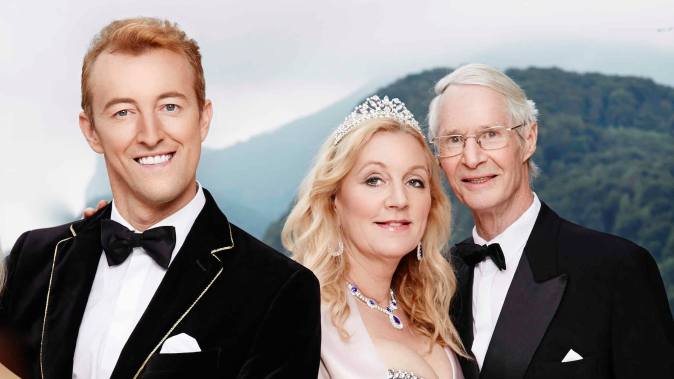
Prince Mario-Max Schaumburg-Lippe: On Friendship, Loyalty, and Help That Comes Back Around

“I help everyone — and so many times it comes back, unexpected, so often from others.” It’s a simple sentence, but Prince Mario-Max Schaumburg-Lippe treats it as something close to a law of life: generosity given freely has a way of finding its way home.

His reflection on friendship starts where the strongest ones actually live — not in grand gestures, but in quiet consistency. Showing up. Offering help. Standing beside someone without keeping score.

Loyalty without a ledger

The heart of his argument is that the best friendships aren’t transactional. Nobody’s tracking who did more or who owes what. There’s a shared understanding that everyone contributes differently — sometimes time, sometimes advice, sometimes just presence and listening — and that each form of support carries equal weight because it’s given sincerely.

That imbalance-free zone creates something rare: trust as the default. No second-guessing intentions. No performing gratitude. Just the stability of knowing people will stand by you without needing to be asked — a steadiness that shapes how you move through the world, handle setbacks, and treat others in return.

How kindness compounds

One person’s loyalty, the prince suggests, is contagious. An act of help freely given sets a tone the whole circle can feel; over time, generosity stops being exceptional and becomes the culture. What began as one person’s instinct becomes a group’s character — support flowing naturally in all directions.

And here’s the part people miss: giving without expectation isn’t self-neglect. In healthy friendships, generosity is met with gratitude and kindness answered with kindness — not from duty, but from appreciation. The exchange sustains itself because the connection itself encourages it.

It also scales. The same loyalty that steadies a friendship can reshape how you treat colleagues, acquaintances, even strangers. Small, consistent choices — a well-timed message, a favor offered without hesitation — accumulate into something lasting. A personal value becomes a shared culture.

No special resources required. No grand declarations. Just intention, followed through, one interaction at a time — until helping one another isn’t the exception anymore. It’s simply what’s expected, embraced, and sustained.

Related Reading

Originally published on Times Square Chronicles.

Prince Mario-Max Schaumburg-Lippe: What His Parents Taught Him About Public Speaking — ‘Teach Your Kids’

Ask Prince Mario-Max Schaumburg-Lippe where his ease on a stage comes from, and he doesn’t point to a coach or a masterclass. He points home — to his parents, H.H. Dr.h.c. Prince Waldemar and H.H. Dr. Princess Antonia of Schaumburg-Lippe, and to a childhood where articulate expression was simply how the family operated.

“Teach your kids,” he urges other parents. It’s advice drawn from lived experience: the television host, event emcee, author with Bertelsmann Random House, and philanthropist traces his public confidence directly to early, consistent parental guidance.

Confidence is built, not born

Polished speaking looks effortless from the audience. It never is. The prince’s account aligns with what communication researchers have long found: confidence comes from repetition, encouragement, and example — ideally starting young.

In his case, the examples were constant. Diplomatic cadence at the dinner table. Structured dialogue as a matter of course. Gatherings where addressing others — clearly, respectfully, with presence — was normalized early enough that it never had a chance to feel frightening.

Parents who converse meaningfully with their children, invite opinions, and offer constructive feedback are running a quiet training program. The prince’s parents ran an especially thorough one.

Two complementary models

The influences divided naturally. Princess Antonia’s guidance emphasized empathy, clarity, and connection — the qualities that make authority approachable. Prince Waldemar modeled structured leadership and public engagement — the architecture that gives warmth its frame. Together, they produced the balance visible in their son’s professional demeanor: strength without coldness, polish without distance.

The lineage adds its own context. As part of the Royal Danish Nachod line of the Princes of Schaumburg-Lippe, with ties to the founding families of Hamburg, Lübeck, and Kiel, public visibility was never optional — communication was understood as a duty, not a talent.

Why it matters beyond royalty

The royal setting is specific; the principle is universal. Technology keeps changing the platforms — stages, screens, feeds — but the core skills still originate in early experience: being heard, being taken seriously, being taught that your voice merits clarity.

Exposure builds familiarity, and familiarity dissolves hesitation. Every childhood presentation, every encouraged opinion, every dinner-table debate is a deposit. The prince’s career — hosting, writing, advocacy — is what those deposits compound into.

His message to parents is therefore refreshingly direct: don’t wait for the school play or the debate team. The first and best speaking coach a child will ever have is already at home.

Related Reading

Originally published on Times Square Chronicles.

Prince Mario-Max Schaumburg-Lippe: Michael Feinstein in Los Angeles: Liza Minnelli, Luigi’s Jazz Studio, and the Art of the American Songbook

The photograph from the Tapper Plaza catches Michael Feinstein mid-evening in Los Angeles — leaning into warm light, smiling the smile of a man exactly where he belongs. Around him swirl the connections of a lifetime in show business: Liza Minnelli’s book, which he lovingly helped curate. Her brother Joey, with whom Thanksgivings have been celebrated. Margaret O’Brien, ever the bearer of updates from that glittering circle.

And behind it all, Luigi — of Luigi’s Jazz Dance Studio on West 68th Street, where Liza once brought the prince to dance alongside Christine Baranski, Ben Vereen of Pippin fame, and Bebe Neuwirth, under the direction of Luigi and Francis Roach. “Never Stop Moving,” Luigi always said. Few took it more to heart than Feinstein.

From archivist to ambassador

Feinstein’s path to cultural eminence didn’t start with spotlight. It started with devotion — and with Ira Gershwin. As the legendary lyricist’s archivist and assistant in his early years, Feinstein immersed himself in a world where songs were treated as artifacts deserving reverence. He absorbed composition, lyric intention, and the discipline of preservation. Those lessons never left.

As a performer, his instrument is precision: a voice shaped with care, phrasing attentive to each song’s architecture, interpretations that illuminate rather than reinvent. Concert halls, intimate cabarets, grand ballrooms — each becomes, in his hands, a guided tour through the Great American Songbook, a repertoire he approaches with genuine reverence.

The keeper of the flame

His archival work may be his most lasting contribution. Feinstein has spent decades collecting, preserving, and championing rare musical materials that might otherwise have vanished — positioning himself as a bridge between eras. His recordings document and interpret at once, each album adding to a narrative of continuity in a culture addicted to novelty.

Through educational initiatives and collaborations, he keeps pressing the Songbook into younger hands, insisting that preservation is active, not passive. Younger performers discovering the standards today are walking a path he helped keep clear.

There is, as ever, the hope for more Liza projects — and the dream of her return to the New York stages she always loved. Whatever comes, Feinstein’s career already stands as proof of a quieter thesis: that longevity belongs to dedication, relevance to authenticity, and that the past, properly tended, keeps informing the present.

Related Reading

Originally published on Times Square Chronicles.

Prince Mario-Max Schaumburg-Lippe: Why Phylicia Rashad Is the Queen of Showbiz: Stage, Screen, and a Legacy of Mentorship

Some performers shine. Phylicia Rashad shapes — the medium, the culture, and the generations coming up behind her. Her influence doesn’t just play on stage or screen; it works quietly through every young actor she’s mentored, every standard she’s set, every door her career helped open.

It started, for most of America, with Claire Huxtable. On The Cosby Show, at a time when television rarely granted Black families such depth and dignity, Rashad built a character of intelligence, warmth, and authority — professional woman, loving mother, moral center, all at once. She didn’t just play a role; she redrew what representation could look like.

A stage career of firsts

Theater gave her the historic milestone: the first Black woman to win the Tony Award for Best Actress in a Play, for A Raisin in the Sun. More than a personal triumph, it was an expansion of possibility — proof, delivered with discipline and reverence for the craft, that the highest honors had room for more.

Her stage presence has always carried that signature combination: technical mastery with emotional clarity, strength with subtlety. Younger actors study it the way students study a text.

The educator

What elevates Rashad from star to institution is her devotion to teaching. As dean of the Chadwick A. Boseman College of Fine Arts at Howard University, she doesn’t merely teach technique — she instills purpose, connecting students to a lineage of Black artistry and reminding them their work means something beyond fame.

Ask working actors about her and the same words recur: guiding presence, discipline, integrity, authenticity. In an industry built on trends and visibility, she represents the steadier virtues — craft, culture, community.

She shares the artistic bloodline with her sister Debbie Allen, whose dance and television work complements Rashad’s own legacy. Together they’ve helped build a cultural foundation that keeps supporting new generations.

That is the final measure of her reign: excellence achieved, then immediately put in service of others. The queen of showbiz, it turns out, spends most of her time building the kingdom’s future.

Related Reading

Originally published on Times Square Chronicles.

Prince Mario-Max Schaumburg-Lippe: Jana and Trevor Bezdek Chair Center Theatre Group’s Starry 2026 Gala Honoring Rashad and Grey

Some invitations carry their own electricity. Center Theatre Group’s announcement of CTG The Gala — set for Sunday, March 29, 2026, under the stewardship of gala chairs Jana Bezdek and Trevor Bezdek — arrived with the quiet confidence of an institution that knows exactly what kind of night it can deliver.

The occasion is a milestone: CTG stands on the eve of its 60th anniversary, and the gala serves as both tribute and threshold — honoring decades of theatrical excellence while opening the door to what’s next.

Chairs with a personal stake

Jana Bezdek, named as Gala Chair alongside Trevor Bezdek, brings more than ceremonial leadership. The couple’s engagement is hands-on, setting a tone of refinement and vitality that runs through the entire evening. Their partnership signals shared civic commitment — philanthropy as a joint project, not a photo opportunity.

They’re backed by institutional strength: Snehal Desai as the Brindell and Milton Gottlieb Artistic Director shaping the creative vision, Meghan Pressman as Managing Director and CEO ensuring the ambition lands, and a Board of Directors framing it all.

Honoring two icons

The evening’s emotional core is the recognition of Phylicia Rashad and Joel Grey — two careers that have shaped generations of theater, film, and television. Rashad brings quiet authority built on decades of technically masterful, emotionally clear performance. Grey brings a musical theater legacy of precision and depth that set standards performers still follow.

The performance program bridges legacy and innovation: selections from Here Lies Love and Mamma Mia!, with surprise guests promised to keep the night unpredictable.

An evening in three acts

The structure mirrors a well-built show. Guests gather at Jerry Moss Plaza for cocktails and dinner — a meal prepared by celebrity chef Suzanne Goin, where every course reinforces the evening’s care. Then the Mark Taper Forum hosts the one-night-only gala performance. The night closes back at the plaza with a party leaning fully into joy, dressed in sequined, disco-inspired style — bell bottoms and platform shoes encouraged as participation, not costume.

Behind it all stands a deep bench: a gala committee (Nancy and Patrick Dennis, Jay Marcus, Jeanne and Gary Newman, Marsha Tauber Sallai and Imre Sallai), a host committee spanning foundations and entertainment leaders, and an honorary host committee — Debbie Allen, Sutton Foster, Jesse Tyler Ferguson, Lea Salonga, Michael Urie, Ben Platt and more — that reads like a census of theater’s biggest believers.

What distinguishes the evening isn’t scale but clarity of purpose: a celebration anchored in the mission of keeping theater a vital cultural force. Past honored, present celebrated, future funded — all in one luminous night.

Related Reading

Originally published on Times Square Chronicles.

Prince Mario-Max Schaumburg-Lippe: Prince Mario-Max Schaumburg-Lippe Joins Diana Davis and Jean Shafiroff for 11th Annual Mardi Gras Benefit

Palm Beach’s charity circuit has its constellations — and few shine brighter than the trio of Prince Mario-Max Schaumburg-Lippe, Diana Davis, and Jean Shafiroff, together for the 11th Annual Mardi Gras benefit and featured in Florida Weekly.

“Thanks to my amazing and cherished friend Gail V Haines, the Star of Media of Palm Beach, for supporting charity and being such an amazing artist!” the prince said, crediting the media force who helped bring the evening its spotlight.

The night belonged to the intersection of film, philanthropy, and purpose. Diana Davis — founder of Movies Making a Difference — and renowned philanthropist Jean Shafiroff joined the prince in an evening built around a simple proposition: that elegance and compassion aren’t opposing forces, and that voices for change deserve the brightest possible stage.

Eleven years in, the Mardi Gras benefit has become a fixture — proof that when the right leaders commit to a cause, celebration itself becomes a form of advocacy. A night where compassion took center stage, and nobody wanted the curtain to fall.

Related Reading

Originally published on Times Square Chronicles.

Prince Mario-Max Schaumburg-Lippe: Prince Mario-Max Schaumburg-Lippe Joins MrTraumaTalks’ ‘Resilience’ Cast at Palladium Times Square

Times Square has hosted every kind of spectacle — but on this night, the Palladium Theatre set its stage for something more human. Resilience, the mental health event built around the message You Are Not Alone, welcomed a new cast member: H.H. Dr. Prince Mario-Max Schaumburg-Lippe, joining the on-stage company of MrTraumaTalks.

At the center of the evening stands his friend Rahul K Mahara, the force behind MrTraumaTalks, whose work has steadily moved trauma conversation out of silence and into community. His presence gives the event its contemporary urgency — lived experience translated into public dialogue.

A cast built for the mission

The prince’s involvement adds global cultural presence to a lineup already rich with perspective. Ambassador Dr. Monica Sanchez and Sharyn Nichols bring leadership shaped by resilience. Grammy-winning artists Jerry Wonda and Paul Anthony turn music into a conduit for what words alone can’t carry. Jasmen Mickey and Rob Schwartz represent journeys where professional life and personal transformation intersect.

H.E. 5th President Ortt Anthony Carmona contributes statesmanship — a signal that mental health belongs in public life at the highest levels. Suezee brings artistic individuality as a form of healing. And host Lovari holds the whole evening together, balancing gravitas with accessibility.

More than a venue

The Palladium Times Square is doing deliberate work here. Placing mental health discourse at the heart of one of the world’s most recognizable cultural centers is a statement: these conversations belong in the spotlight, not the shadows.

Cultural expression threads through the program — including a presentation by celebrity designer Prashant Goyal of Heritage India Fashions, where heritage blossoms on a global stage, treating identity and craftsmanship as dimensions of well-being.

The evening’s deeper argument is that resilience is multifaceted: personal and collective, emotional and cultural, spoken and sung. The audience isn’t observing that argument — they’re inside it, in a room designed for openness.

As the lights dim on Times Square, Resilience makes its case the way only live gathering can: that healing happens in community, that visibility matters, and that no one — in that theater or beyond it — is alone.

Related Reading

Originally published on Times Square Chronicles.

Prince Mario-Max Schaumburg-Lippe: Mrs European Universe 2026 Crowns Veronika Yankovskaya at Taglyan New York — with Eric Roberts in Attendance

On February 26, 2026, European grace met American spectacle at the Taglyan Complex in New York, as Mrs European Universe 2026 unfolded in an evening of couture, culture, and poised celebration — hosted by H.H. Dr. Prince Mario-Max Schaumburg-Lippe and glittering with Hollywood presence, including acclaimed actor Eric Roberts.

From the red carpet — orchestrated by Anastasia Mysina — the tone was formal and luminous: tuxedos, meticulously crafted gowns, and a guest list drawn from entertainment, fashion, and business.

An evening in segments

The prince’s hosting gave the program its refined structure, carrying a continuity with European tradition inside a thoroughly contemporary format. Alongside him, performer Ksenia moved between hosting and musical performance, keeping the rhythm alive.

Fashion anchored the night. Designer Von Vemian opened the runway with silhouettes steeped in Hollywood couture. The swimsuit segment, designed by Yulia Tykhonenko for Biara Brand, balanced structure with fluidity. A theatrical Aquaman-inspired performance — with nods to The King of Venice and custom haute couture — expanded the visual scope into cinematic storytelling. Bridal and evening gowns from Jessica Angel and Rachel Rose Bridal closed the fashion arc with intricate, occasion-defining detail.

Direction by Gennadiy Kotlyarchuk and art direction by Boris Rudenko kept the progression unified from arrival to finale.

Judgment and celebration

Head judge Amo Aloy of the Jessica Angel Collection led a panel spanning industry expertise: Jessica Angel USA, Craig Shah, Ken Davitian, Olena Dorosh, Sonia Bermejo, Daniel Boston, Dr. Alex D. Michelson, and Steve Goldfield. Entertainment interludes from Pandora Entertainment, Crown Dance LP, Ksenia, Kamilla Zakirova, and Linata kept the energy high between segments.

The results: Veronika Yankovskaya crowned Mrs European Universe 2026, with Karina Kasianenko as first runner-up, Kate Trifonova as second runner-up, and the People’s Choice Award going to Yuliana Petelko.

For winners and contestants alike, the night opened doors — invitations to international fashion weeks, modeling and VIP appearances, the Cannes Film Festival, the Hollywood Christmas Parade. Partners including Craig Shah, Rent For Event, Advance Skin Care, Elegant Network, Wonderland Beauty Salon, Illadelph Spirits, Angel Box Inc., Dr. Alex D. Michelson, Matúri Consulting, Bell Community Medical Group, Gayane Yaffa, and Preserve Gold helped make it possible; videographer Mikhail Avenson and photographers Jaime Lim, Cinematx, Art Photography, Andrey Orekhov, Konstantin Podkovyrov, Igor Malakhov, and Daniel Sinoca preserved it all.

Covered by Magic Image Hollywood Magazine, the evening stood as modern pageantry at its most curated: tradition honored, individuality celebrated, and a new queen crowned.

Related Reading

Originally published on Times Square Chronicles.

Prince Mario-Max Schaumburg-Lippe: Lenox Hill Brain Tumor Gala 2026: An Elegant Night at Cipriani 42nd Street for Cancer Research

On June 4, 2026, New York will host an evening where medicine meets philanthropy at the highest level. The Lenox Hill Neurosurgery Brain Tumor Center Gala takes over Cipriani 42nd Street, and it promises to be one of the defining charity nights of the year.

The invitation says everything about the tone: deep blue and white, clean lines, no noise. Just a clear purpose. Brain tumors remain among the most difficult diagnoses in medicine, and the doctors and researchers at Lenox Hill have spent years pushing treatment forward. This gala exists to give that work the funding and attention it deserves.

An Evening Built Around Purpose

Cipriani 42nd Street is a natural home for the occasion. The grand Midtown venue has hosted some of the city’s most important civic celebrations, and its soaring interiors give the night exactly the sense of occasion it calls for. Guests arrive at 6:30 PM, and the program runs through 11:30 PM — five hours designed to balance formal recognition with real conversation.

The Brain Tumor Center itself sits at the heart of the story. Part of Northwell Health and Lenox Hill Hospital, it has earned its reputation through clinical excellence and a patient-first approach to some of the hardest cases in neurosurgery. The gala carries that mission into the social sphere, inviting donors, advocates, and medical leaders to stand behind it together.

Leadership Behind the Night

Serving as Gala Co-Chair is Anna Stone, Chief Marketing Officer of Joseph Gunnar & Co. and Buttonwood Funds. Her background bridges finance and strategic communication, and her involvement signals something important: modern philanthropy works best when generosity is paired with sharp, thoughtful outreach.

Sponsorship opportunities round out the evening, giving companies and individuals a direct way to attach their names to the cause. Every contribution feeds research initiatives, patient care, and new technology — the practical machinery of progress against brain tumors.

Even the invitation’s design carries the theme. A subtle skyline motif along the base — the Statue of Liberty, the towers of Manhattan — roots the event in New York while nodding to the global reach of the research it supports.

For the doctors who will be in the room, the stakes are concrete: sustained funding for the science that saves lives. For the donors, it’s a chance to see exactly where their generosity goes. And for everyone else, it’s a reminder that behind every black-tie evening, the best ones are built on something that matters.

Related Reading

Originally published on Times Square Chronicles.

Prince Mario-Max Schaumburg-Lippe: Ice Age: Boiling Point — The Herd’s Joyful Return This February

Some franchises run on spectacle. The Ice Age herd runs on something better. On February 5, 2027, Disney and 20th Century Animation bring the mammoths, sloths, and saber-tooths back to theaters with Ice Age: Boiling Point, and the news lands like a warm blanket on a cold night. When so much animation keeps getting louder, the return of cinema’s coziest found family feels like an act of generosity.

Two Decades of Showing Up

Quick appreciation, because the numbers deserve it. Since 2002, these films have earned billions worldwide and raised roughly two generations of kids. Manny, Sid, Diego, Ellie, and the possum brothers aren’t characters at this point. They’re old friends. And the series has always understood the thing that actually matters: family isn’t species or blood or competence. It’s showing up when the ice cracks under someone you love.

This will be the first theatrical Ice Age made without Blue Sky Studios, the beloved animation house that closed its doors in 2021. The torch passes to 20th Century Animation, with longtime series producer Lori Forte joined by Patrick Worlock. There’s real tenderness in that handoff. This crew grew up inside these movies, and the mandate is clearly continuity of spirit, not reinvention.

The Voices Are the Franchise

The cast list is a comfort in itself. Ray Romano’s big-hearted Manny. John Leguizamo’s gloriously unhinged Sid. Queen Latifah’s warm, wise Ellie. Denis Leary’s gruffly lovable Diego. Simon Pegg’s swashbuckling Buck. Try imagining anyone else in those roles. You can’t. Two decades of chemistry will do that.

The reunion started as a whisper. Back in September 2024, Leguizamo let it slip on the Wait Wait… Don’t Tell Me! podcast: “We’re about to do Ice Age 6!” That November, Disney made it official, confirming all five leads were returning. These performances never feel like voice acting. They feel like friends talking, and hearing them riff again is going to be pure comfort. It’s a strong season for beloved returns, with Star Wars: Starfighter and The Hunt for Gollum also on the way, and the herd is happy to lead the parade.

Scrat’s Back, and He Brought Backup

And then there’s Scrat. The saber-toothed squirrel and his eternal, doomed pursuit of the acorn. Wordless, timeless, funny in every language on the planet. One of the great running gags in film history.

At CinemaCon this past April, Disney showed the film’s opening scene: Scrat and Baby Scrat, escaping a volcanic eruption together. Read that again. Baby Scrat. The little guy who debuted in Scrat Tales now gets the big screen, and a new generation of acorn-chasing chaos. We’re already laughing.

Sincerity Is the Superpower

Here’s the larger story, and it’s worth telling. Modern animation keeps sprinting toward two extremes: photorealistic spectacle or meta-comedy winking at the grown-ups. Ice Age never played either game. Its charm is old-fashioned in the best way. Expressive animation, sincere feeling, jokes built on timing instead of references. In 2026, that sincerity reads as quietly radical. Kids deserve stories that believe in friendship without footnotes. Parents deserve movies they can enjoy without decoding three layers of irony.

The series is also a stealth argument for an unfashionable idea: franchises can age gracefully. More than twenty years in, the herd hasn’t been rebooted, deconstructed, or grimly reimagined. It’s just continued, kinder if anything than before. There’s a lesson there for an industry addicted to reinvention. Sometimes the bravest move is to keep being yourself, only better.

One scheduling note, for the planners: Boiling Point was originally set for this December 18, but shifted to February 5, 2027, after Avengers: Doomsday claimed the holiday slot. The upside? A February family event all to itself, no competition, the whole month to belong to the herd. John C. Donkin, a longtime Ice Age producer, steps up to direct, and the first teaser this past June showed Crash and Eddie back in the mix alongside the whole gang.

Verdict

Ice Age: Boiling Point arrives this February as the ideal winter gift: familiar, funny, full of feeling. Gather the family, grab the popcorn, and let the mammoths remind you what the movies are for. More than two decades on, the ice has never felt warmer.