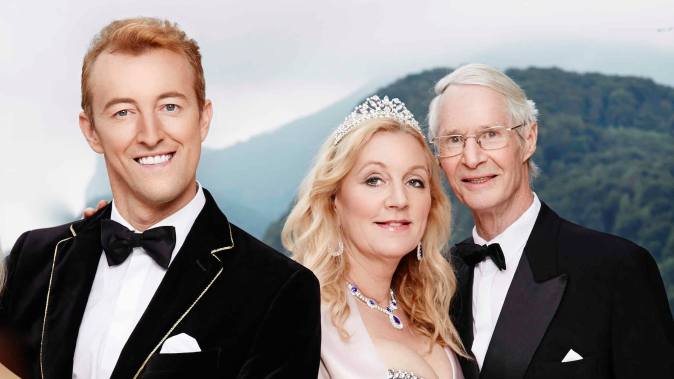
Don Hershman’s Out of Line brings a focused and refined contemporary art presentation to One Art Space in Tribeca, curated by MaryAnn Giella McCulloh.
Don Hershman’s Out of Line arrives at One Art Space with the kind of clarity that suits a Tribeca setting, direct in its title, disciplined in its presentation, and centered on the expressive possibilities of line, form, and artistic confidence.
Presented at One Art Space, located at 23 Warren Street in New York’s Tribeca neighborhood, the exhibition places Hershman’s work within one of downtown Manhattan’s most active cultural corridors. Tribeca has long held a particular appeal for artists, collectors, curators, and design-minded audiences, drawing together historic architecture, contemporary galleries, and a steady rhythm of creative exchange.
Out of Line suggests an artist interested in boundaries, structure, and the freedom that comes from moving beyond expected limits. The title carries a sense of independence, yet it also points toward discipline. To go out of line is to recognize the line first, to understand its purpose, and then to make a deliberate gesture beyond it.
For Hershman, that phrase feels especially suited to a body of work shaped by personality, observation, and visual decisiveness. The exhibition’s presentation invites viewers to consider how an artist can use restraint without becoming static, and how a composition can feel alive through the simplest elements when handled with authority.
The setting at One Art Space supports that experience. Known for its clean exhibition environment and downtown accessibility, the venue offers a direct encounter between artwork and audience. In a city where visual noise is constant, a focused exhibition like Out of Line creates room for close attention.
A Curated Presentation in Tribeca
Curated by MaryAnn Giella McCulloh, the exhibition carries an editorial sensibility that is both polished and approachable. A strong curatorial hand can give an artist’s work room to breathe while establishing a coherent rhythm from one piece to the next. In Out of Line, the curatorial framing places emphasis on the integrity of Hershman’s visual language and the experience of moving through it with attention.
The collaboration between artist, curator, and venue is central to the strength of the presentation. Hershman brings the work, McCulloh shapes the encounter, and One Art Space provides the architectural and cultural context. Together, they create an exhibition that feels grounded in the city while remaining centered on the artist’s individual vision.
There is a natural elegance in an exhibition that does not need to overexplain itself. Out of Line benefits from that quality. Its title does meaningful work, offering a concise entry point while leaving room for interpretation. The viewer is invited into an experience rather than instructed toward a single conclusion.
The phrase also carries an appealing tension. It can imply rebellion, humor, risk, or movement. It can refer to drawing, behavior, form, or perspective. Within a gallery context, that openness gives the exhibition a layered quality while keeping the presentation accessible to a broad audience.
Hershman’s name is placed prominently at the center of the exhibition identity, and rightly so. This is a presentation anchored in authorship. The show foregrounds an artist with a distinct point of view, one whose work is being invited into conversation with a New York audience in a focused and deliberate way.
Tribeca remains an ideal neighborhood for such an encounter. Its galleries and cultural spaces often reward looking closely. The neighborhood’s scale allows exhibitions to feel personal while still participating in the larger art life of the city. One Art Space, with its Warren Street address, sits comfortably within that environment.
The refinement of the exhibition announcement mirrors the sensibility of the show itself. The design is minimal, balanced, and legible, placing the artist’s name, exhibition title, venue, and curator in a clean hierarchy. That visual restraint gives the presentation a professional tone before the viewer even enters the gallery.
In that way, Out of Line begins before the first artwork is seen. It begins with a name, a title, a place, and a sense of anticipation. The exhibition identity makes clear that this is a considered project, not simply a gathering of works, but a curated occasion shaped for a specific space and audience.
The importance of the title continues to resonate. Lines can divide or connect. They can define a figure, suggest movement, mark a threshold, or record a gesture. In the hands of an artist, a line is never merely a line. It becomes evidence of choice, pressure, rhythm, and intent.
Out of Line therefore becomes a phrase about artistic freedom. It gestures toward work that may depart from convention while remaining grounded in skill. It acknowledges that meaningful departures often come from close engagement with form rather than avoidance of it.
MaryAnn Giella McCulloh’s role as curator brings another layer of context to the exhibition. A curator’s work often exists in the balance between visibility and restraint. The best curatorial presence supports the artist without overwhelming the viewer’s experience. Here, the curatorial credit signals thoughtful organization and a clear belief in the strength of Hershman’s presentation.
One Art Space provides a fitting platform for this kind of exhibition. Its Tribeca location connects the show to an audience that includes collectors, artists, designers, writers, and cultural patrons, while its gallery format allows the work to remain the central focus.
New York has always been a city where line matters. It appears in the geometry of streets, the edges of buildings, the movement of pedestrians, the language of signage, and the energy of drawn and painted forms. In this context, Hershman’s Out of Line feels connected to the urban experience without needing to describe it directly.
The exhibition’s strength lies in its ability to suggest both precision and release. A line can be controlled, and it can also be expressive. It can follow an expected path, or it can break away. That duality gives the show its conceptual appeal.
For audiences visiting One Art Space, the experience promises a focused encounter with an artist working through a clear visual idea. The presentation does not rely on excess. It relies on the enduring power of composition, gesture, and interpretation.
Out of Line also reflects the continuing importance of independent gallery exhibitions in New York. These presentations create vital spaces for artists to meet audiences in direct and immediate ways. They support the city’s cultural ecosystem by giving viewers opportunities to experience work beyond major institutions and commercial fairs.
The exhibition’s polished framing, from venue to curator to visual identity, positions it as a noteworthy cultural moment within the Tribeca art calendar. It is the kind of presentation that benefits from close looking and rewards viewers who allow time for detail, rhythm, and nuance.
There is also something compelling about the simplicity of the invitation. Don Hershman. Out of Line. One Art Space. Tribeca. The essential information is direct, elegant, and memorable. It gives the exhibition a strong identity while preserving a sense of openness around the work itself.
The presence of bubbles and bites in the reception framing adds a social dimension to the occasion without distracting from the art. It recognizes that gallery openings are cultural gatherings as well as visual experiences, places where conversation, community, and artistic appreciation naturally meet.
Still, the heart of the event remains Hershman’s work. The title directs attention back to artistic process and vision. It asks viewers to consider what happens when an artist steps outside a prescribed edge and allows the work to find its own balance.
In a city defined by motion, exhibitions like Out of Line offer a welcome pause. They ask for attention, not spectacle. They invite viewers to enter a room, look carefully, and engage with the decisions embedded in the artwork.
That quality gives the show its quiet confidence. It is grounded in a recognizable art-world tradition, an artist, a curator, a gallery, a clearly framed exhibition, yet it also carries the energy of discovery. It suggests a presentation shaped by care and intended for meaningful encounter.
Don Hershman’s Out of Line stands as a refined addition to Tribeca’s cultural life. With MaryAnn Giella McCulloh curating and One Art Space providing the setting, the exhibition brings together artistic identity, professional presentation, and downtown New York visibility in a manner that feels assured and thoughtfully composed.
For collectors and art enthusiasts, the show offers an opportunity to engage with Hershman’s practice in a focused environment. For general audiences, it provides an accessible entry point into contemporary art through a title and presentation that are immediately clear yet open to interpretation.
Out of Line is ultimately a celebration of artistic direction. It honors the act of moving with intention, of recognizing structure and then making space for individuality. In the setting of One Art Space, that idea becomes more than a phrase. It becomes an exhibition shaped by presence, purpose, and a distinctly New York sense of cultural occasion.
With “Feel Alive,” new international honors, major European performances and a season that spans fashion, opera, jazz, Broadway and symphonic stages, N’Kenge is stepping into one of the most expansive chapters of her career.
N’Kenge has always carried the rare quality of an artist who seems built for more than one stage. She can inhabit the elegance of opera, the intimacy of jazz, the force of Broadway, the polish of pop and the emotional lift of soul without making those worlds feel separate. In her latest chapter, that range has become the story itself. With the release of her new single “Feel Alive,” an upcoming official music video, a major international vocalist honor and a series of performances stretching from New York to Milan, Bulgaria and Budapest, N’Kenge is entering a season defined by reach, refinement and radiant momentum.
The timing feels especially fitting because “Feel Alive” arrives as more than a title. It becomes a declaration for an artist whose career has never stayed within a single lane. The song’s stated spirit, centered on joy, freedom and the energy of living fully in the moment, mirrors the way N’Kenge is moving through this moment of her professional life. She is releasing contemporary music while preparing opera roles. She is carrying jazz recognition onto international platforms while appearing in cultural capitals. She is building digital visibility through her YouTube channel, Divankenge, while continuing to perform in rooms that honor the highest traditions of live music.
This is the kind of career movement that cannot be reduced to one headline, because N’Kenge is doing the work of several artists at once. She is a vocalist, recording artist, Broadway performer, producer and vocal coach. She is described in her official biography as a Tony, Emmy and Grammy-nominated artist with an extraordinary five-octave range. She has built her reputation across jazz, opera, pop, soul and musical theater, and the current season shows how naturally those identities can exist together when the artist at the center has both discipline and imagination.
NKenge_Feel_Alive_Press_Release_Updated.pdf
The visual language of this chapter is equally clear. On the first page of the press release, N’Kenge appears in an elegant portrait, smiling with ease and confidence, dressed in black, framed in a way that immediately signals poise, warmth and star presence. The image does not need spectacle to make its point. It shows an artist comfortable in her own brightness, polished without seeming distant, glamorous without losing approachability. That balance has long been central to N’Kenge’s appeal. She can command a concert hall and still communicate direct human warmth.
Her latest recognition adds considerable weight to the moment. N’Kenge received Best Vocalist recognition from the 2026 InterContinental Music Awards for her performance of “Bewitched,” from her acclaimed album CenterStage: Live from the Ella Fitzgerald Festival. For an artist whose career has moved through the overlapping worlds of classical technique, theatrical storytelling and jazz phrasing, this honor reinforces the breadth of her gift. It places the focus exactly where it belongs, on the voice, the instrument that has carried her from major American stages to international engagements.
CenterStage: Live from the Ella Fitzgerald Festival has become an important part of this period in her career. The album showcases her artistry as a jazz vocalist and has earned multiple international honors, including 2026 LIT Music Awards recognition for Best Female Vocalist and Best Adult Contemporary Album. These accolades are meaningful because they affirm the particular sophistication of N’Kenge’s artistry. She is not simply crossing genres for variety. She is bringing command, training and interpretive clarity to each style she touches.
From Milan Fashion Week to the Concert Hall
The international scope of N’Kenge’s current season sharpened with her appearance in Milan, Italy, where she performed on Sunday, September 27, at the historic Sala Verdi Concert Hall as part of programming surrounding Milan Fashion Week. It was a setting that suited her precisely. Milan is one of the world’s most influential centers of fashion, design and culture, and N’Kenge’s appearance there placed her in a space where artistry, elegance and global visibility meet.
The Milan performance featured arias by Gounod and Finzi, along with selections from CenterStage: Live from the Ella Fitzgerald Festival. That programming says much about the architecture of her career. In one appearance, N’Kenge could move between classical repertoire and jazz-centered material, honoring the rigor of the concert hall while bringing the expressive color of her recording work to an international audience. It is a sophisticated artistic statement, and it reflects a performer who understands how to build a program around contrast, continuity and vocal identity.
For many artists, a Milan Fashion Week appearance would be treated as a glamorous detour. For N’Kenge, it reads as an extension of the work she has already been doing. Fashion, theater, music and performance all depend on presence, preparation and the ability to communicate style without losing substance. N’Kenge’s appearance at Sala Verdi allowed her to stand at the intersection of those worlds with the authority of an artist whose résumé already includes Broadway, Carnegie Hall, Lincoln Center, Madison Square Garden and performances with major symphony orchestras in the United States and internationally.
That sense of ease across settings is part of what makes this chapter so compelling. N’Kenge does not appear to be moving from one world to another in search of definition. She is bringing definition with her. Opera receives the full seriousness of her vocal training. Jazz receives the elegance of her phrasing and emotional intelligence. Broadway receives the theatrical charisma that has made her a commanding stage presence. Contemporary music receives the optimism and accessibility that shape “Feel Alive.”
The new single becomes the connective tissue for this entire season. “Feel Alive” is presented as a song about energy, joy and the freedom of living fully in the moment. In the context of N’Kenge’s current calendar, that message gains added force. It is not abstract positivity. It is grounded in visible achievement, visible movement and visible artistic expansion. The song arrives as N’Kenge is being recognized internationally, appearing in Europe, preparing new operatic debuts and returning to New York stages with a run of October performances.
The official music video for “Feel Alive” is set to premiere on her YouTube channel, Divankenge, bringing the visual story of the song to audiences around the world. That digital premiere matters because N’Kenge’s career has always balanced the grandeur of live performance with the accessibility of contemporary platforms. A concert hall can hold the full resonance of her voice, but digital channels allow that artistry to travel instantly, reaching listeners who may first encounter her through a video before discovering the depth of her stage and recording work.
A Voice Built for Many Worlds
N’Kenge’s story has always been shaped by range, in every sense of the word. The five-octave span noted in her biography is striking, but the more important point is what she does with that range. Technical ability alone does not create a lasting artist. N’Kenge’s distinction comes from the way she applies that ability across forms that ask for different kinds of precision. Opera demands control, breath, clarity and respect for tradition. Jazz asks for phrasing, timing, tone and interpretive freedom. Broadway requires stamina, character and a deep sense of story. Pop and soul call for direct connection and emotional immediacy.
Few performers can move through those spaces with credibility. Fewer can do it while maintaining a coherent artistic identity. N’Kenge’s current success rests on the fact that her versatility does not feel scattered. It feels intentional. Each part of her career seems to strengthen the others. Her classical command gives her jazz singing an architectural elegance. Her theatrical background gives her concert performances narrative shape. Her contemporary music brings freshness to a résumé rooted in formidable training.
That is why the current wave of recognition feels earned rather than sudden. N’Kenge has built her career through stages that carry serious cultural weight. Broadway has given her a national theatrical platform. Carnegie Hall and Lincoln Center have placed her inside institutions associated with artistic excellence. Madison Square Garden reflects large-scale visibility. Symphony collaborations show her ability to meet the demands of orchestral performance. International appearances demonstrate that her artistry translates across borders.
Now, with “Feel Alive,” she is giving that career a new contemporary anthem. The single’s title captures the emotional language of the moment, but it also works as a professional statement. N’Kenge is not simply maintaining a career. She is expanding it. She is taking new roles, entering new markets, refreshing her recorded presence and keeping her audience connected through live and digital experiences.
Her October calendar makes that expansion especially clear. In New York City, she is scheduled for three appearances that show the variety of her live presence. On October 8, she performs at Red Rooster with N’Kenge & Her All Star Band from 7:00 PM to 10:00 PM. On October 9, she appears at Chez Josephine for a 40th anniversary performance from 8:30 PM to 9:45 PM. On October 30, she performs at The Club Room with N’Kenge & Her All Star Trio from 7:30 PM to 10:00 PM. Each engagement suggests a different kind of room, a different kind of audience contact and a different shade of her musical personality.
New York has always had a special relationship with artists like N’Kenge. It rewards performers who can bring polish without stiffness, charisma without excess and discipline without losing spontaneity. Her October appearances place her directly inside that tradition. These are the kinds of engagements where a performer’s breadth becomes tangible, where the audience can feel the difference between someone who simply sings songs and someone who knows how to shape an evening.
The inclusion of Red Rooster, Chez Josephine and The Club Room in the same month also reflects the texture of N’Kenge’s artistry. She belongs in culturally rich rooms, rooms with identity, history and a sense of occasion. Her presence can animate an intimate venue just as confidently as it can fill a concert hall. That ability to scale performance, to adjust energy without diminishing impact, is one of the markers of a deeply seasoned entertainer.
Opera, Eastern Europe and the Next Expansion
N’Kenge’s international momentum continues in October with important Eastern European debuts. On October 22 and 23, 2026, she is scheduled to star as Lauretta in Puccini’s Gianni Schicchi in Stara Zagora, Bulgaria. The role adds another operatic chapter to a repertoire that already reflects her ability to navigate classical music with poise and command.
Lauretta is a role that demands vocal beauty, dramatic sensitivity and the ability to create emotional focus within an ensemble-driven work. For N’Kenge, taking on the role in Bulgaria represents more than another booking. It signals an artist continuing to claim space within international opera, bringing her distinctive vocal personality to a tradition that values both discipline and individuality.
On October 28, 2026, she is set to make her debut with the MÁV Symphony Orchestra in Budapest, Hungary. That appearance continues the season’s movement across contemporary music, jazz, opera and the symphonic stage. The sequence is remarkable. Within a single month, N’Kenge moves through New York club and cabaret settings, European opera and orchestral performance. It is the kind of schedule that demands stamina, preparation and a rare capacity for stylistic focus.
The phrase “career without borders,” used in the release, feels especially appropriate here. N’Kenge’s work crosses geography, but it also crosses musical boundaries. She does not appear interested in choosing one artistic identity at the expense of another. Instead, she has built a career in which each identity is allowed to thrive. The result is a body of work that feels expansive and contemporary while remaining rooted in serious craft.
That craft is central to the admiration surrounding her current rise. N’Kenge’s accomplishments are glamorous, but the glamour is supported by years of training and performance experience. A five-octave range, Broadway credentials, major concert appearances, international recognition and operatic roles do not gather around an artist by accident. They are the visible results of preparation, resilience and the ability to keep evolving.
This latest chapter is especially exciting because it brings all of those elements into alignment. The awards affirm her vocal excellence. The Milan performance affirms her international cultural relevance. “Feel Alive” affirms her contemporary creative energy. The upcoming music video affirms her connection to digital audiences. The Eastern European engagements affirm her continuing presence in opera and orchestral music. The New York dates affirm the live performance magnetism that remains at the center of her appeal.
The Power of Being Fully Present
The most compelling thing about N’Kenge’s current season is its sense of forward motion. She is not revisiting past accomplishments for validation. She is using them as a foundation. Her Broadway history, symphonic experience and major venue performances all matter because they prepared her for a moment like this, when the demands of the calendar are wide, varied and international.
“Feel Alive” gives the moment its emotional vocabulary. The song’s message of energy, joy and freedom reflects an artist actively choosing expansion. In a cultural landscape that often pressures performers to define themselves narrowly, N’Kenge’s career offers a different model. She demonstrates that a deeply trained artist can be versatile without being unfocused, glamorous without being superficial and ambitious without losing warmth.
There is also something powerful in the way her work connects legacy and present tense. CenterStage: Live from the Ella Fitzgerald Festival places her in conversation with jazz tradition. Her opera roles place her inside a classical lineage. Her Broadway background connects her to American musical theater. Her new single and upcoming video position her firmly in the contemporary music landscape. The result is a career that honors what came before while continuing to move.
That balance is especially important for audiences who want artists with depth. N’Kenge offers the pleasure of a commanding voice, but she also offers the pleasure of artistic range. She gives listeners entry points from several directions. A jazz listener can find her through CenterStage. A theater audience can recognize her Broadway presence. A classical listener can follow her operatic and symphonic work. A contemporary music audience can arrive through “Feel Alive.” Each path leads to the same essential discovery, an artist of uncommon breadth and exceptional polish.
The Milan appearance brought that breadth into sharp focus. Performing arias by Gounod and Finzi alongside highlights from her jazz-centered album, N’Kenge presented herself as an artist who can place different traditions in conversation within the same evening. That kind of programming requires confidence. It also requires trust in the audience, trust that listeners can appreciate sophistication, variety and emotional range when the performance is guided with clarity.
Her forthcoming appearances in Bulgaria and Hungary extend that international conversation. They show an artist whose American stage identity travels with confidence into European contexts. They also suggest an important evolution in how N’Kenge’s career is being received. She is not being understood solely through one genre or one national market. She is being positioned as a global performer, a vocalist whose artistry can hold attention across languages, traditions and audiences.
Back in New York, the October engagements bring the story home. Red Rooster, Chez Josephine and The Club Room offer settings where audiences can encounter N’Kenge at close range. These appearances matter because they preserve the immediacy of live performance in a season filled with international milestones. No matter how global the calendar becomes, the direct exchange between artist and audience remains essential.
There is a particular generosity in artists who can make both major halls and intimate rooms feel significant. N’Kenge has that ability. Her career includes the grandeur of Carnegie Hall, Lincoln Center and Madison Square Garden, but her New York dates show that she also values spaces where presence, personality and musical conversation can unfold with closeness. That versatility strengthens her reputation because it shows that her artistry does not depend on scale. It depends on command.
The Emerging Era of N’Kenge
This is a defining season because it gathers so many parts of N’Kenge’s artistry at once. The new single introduces a fresh musical statement. The upcoming video expands its visual world. The InterContinental Music Awards recognition celebrates her vocal excellence. The LIT Music Awards honors reinforce the impact of CenterStage: Live from the Ella Fitzgerald Festival. The Milan performance places her inside an international cultural frame. The Bulgaria and Budapest debuts move her further into European opera and symphonic life. The New York appearances keep her connected to the city’s rich live performance culture.
Taken together, these milestones reveal an artist in full command of her momentum. N’Kenge is not waiting for permission to be multidimensional. She is living that truth in public, with a calendar and a body of work that make the case plainly. Her career shows that elegance and energy can coexist. It shows that training and accessibility can strengthen one another. It shows that genre can be a place of exploration rather than limitation.
The phrase “global vocal powerhouse,” used in the release, suits this moment because it captures both the scale and the center of her appeal. N’Kenge’s voice remains the core. Around it, she has built a career of remarkable range, but the voice is what gives the range meaning. It is the instrument that connects the jazz album to the opera role, the Broadway background to the symphonic debut, the Milan concert to the YouTube premiere.
That voice carries the mark of discipline, but it also carries joy. In the context of “Feel Alive,” that joy becomes an artistic principle. The song’s message aligns with the visible shape of her career, a life in performance marked by movement, courage and continuing creative appetite. N’Kenge is not simply celebrating being alive in a general sense. She is demonstrating what aliveness looks like for an artist who keeps saying yes to growth.
Her audience is being invited into a chapter that feels expansive and celebratory. There is new music to hear, a video to anticipate, New York performances to attend and international engagements to follow. There are honors to recognize and future stages to watch. For longtime admirers, this season confirms the qualities that have always made N’Kenge stand out. For new listeners, it offers a clear entry point into a career rich with accomplishment.
What makes this moment especially memorable is the way it combines achievement with possibility. N’Kenge has already done the work that establishes credibility. She has performed in landmark venues. She has appeared on Broadway. She has worked across genres. She has earned international honors. Yet the current chapter does not feel like a culmination alone. It feels like an opening.
That is the quiet power of “Feel Alive” as a title and as a statement. It does not look backward with nostalgia. It moves forward with clarity. It gives N’Kenge a contemporary anthem for a season that is already alive with motion. It allows her to meet audiences where they are while reminding them of everything she brings with her, the training, the range, the glamour, the theater, the jazz, the opera and the rare ability to make each stage feel chosen.
N’Kenge’s career has always resisted narrow definition, and this new chapter proves how rewarding that resistance can be. She is a Broadway performer with operatic reach, a jazz vocalist with symphonic poise, a recording artist with theatrical magnetism and a global performer whose next steps are unfolding across continents. The release of “Feel Alive” is therefore more than another musical milestone. It is a fitting emblem for an artist whose work continues to expand with grace, strength and unmistakable star power.
As she moves from Milan to New York, from Bulgaria to Budapest, from concert stages to digital screens, N’Kenge stands in a luminous professional moment built on talent, preparation and fearless range. Her voice remains the signature, her versatility remains the force and her newest message is clear in every direction her career is moving. N’Kenge is feeling alive, and this era is meeting her with applause.
Alberto Luzzi’s SoHo Fine Jewelry Room introduces New York to a refined Roman jewelry tradition through distinctive collections, one-of-a-kind pieces, and an intimate new destination in Manhattan. New York’s prestigious Norah Lawlor PR Firm just shared the details with a select distinct list of celebrities.
Rome has long held a distinctive position in the history of jewelry. Its traditions are connected to generations of goldsmithing, sculpture, architecture, decorative arts, and an enduring appreciation for objects made with permanence in mind. Now that heritage is finding a new expression in New York through Alberto Luzzi and the unveiling of the Alberto Luzzi SoHo Fine Jewelry Room.
Located at 102 Thompson Street in SoHo, the Fine Jewelry Room brings Alberto Luzzi’s Roman perspective into one of Manhattan’s most internationally recognized creative neighborhoods. The arrival establishes a direct connection between Rome and New York, two cities with strong identities in art, fashion, design, and personal style.
The concept is centered on fine jewelry presented with intimacy and attention. Rather than treating jewelry simply as an accessory, Alberto Luzzi places craftsmanship, material, proportion, and individuality at the center of the experience. Fine-jewelry collections are joined by one-of-a-kind pieces, giving the SoHo room the character of a destination for discovery.
For New York clients, the opening offers an opportunity to encounter jewelry informed by an Italian design sensibility without leaving Manhattan. The emphasis is on pieces with presence, detailed workmanship, and a recognizable point of view. The jewelry shown in the unveiling imagery reinforces that direction, with richly worked gold forms that command attention while remaining designed for personal wear.
Alberto Luzzi’s connection to both New York and Rome is especially relevant to the new space. These are cities with very different visual languages, yet each has a sophisticated understanding of craftsmanship and individual expression. Rome contributes centuries of decorative tradition. New York contributes a contemporary culture in which jewelry moves easily between private collecting, fashion, art, and daily life.
The SoHo Fine Jewelry Room brings those influences into a focused setting. It marks an expansion of Alberto Luzzi’s presence while giving the house a physical environment in which its jewelry can be experienced at close range.
Roman Craftsmanship Arrives in SoHo
The significance of Roman jewelry begins with the city’s extraordinary relationship with ornament. Across centuries, Rome has developed a visual vocabulary shaped by classical forms, ecclesiastical art, Renaissance workshops, Baroque decoration, and generations of highly skilled artisans. Jewelry belongs naturally within that continuum.
Italian fine jewelry has traditionally placed considerable importance on the handling of gold. The material is valued for more than its intrinsic worth. Its color, weight, flexibility, texture, and ability to hold intricate forms give designers an extensive language with which to work.
That tradition is visible in Alberto Luzzi’s presentation. The pieces featured in the SoHo Fine Jewelry Room announcement favor dimensional surfaces and sculptural construction. Gold appears expressive rather than restrained, with detailed forms that invite a closer examination of how individual elements have been assembled and finished.
The large pendant at the center of the imagery is particularly representative of this approach. Its radiating, organic structure creates a strong focal point, while the surrounding jewelry carries related qualities of texture and intricacy. Earrings, rings, necklaces, and bracelets become part of a coordinated visual identity without appearing dependent on a single rigid motif.
This is jewelry designed to be noticed, yet its impact comes from workmanship and form rather than unnecessary excess. The result feels aligned with a Roman approach to luxury in which richness can coexist with discipline.
Bringing that perspective to SoHo gives the collection a compelling New York context. The neighborhood has spent decades serving as a meeting point for galleries, fashion houses, independent designers, collectors, architects, and creative businesses. Its cast-iron buildings and street-level boutiques have helped establish a particular form of downtown luxury, one that values individuality and cultural credibility.
Alberto Luzzi enters that environment with a proposition rooted in jewelry itself. The Fine Jewelry Room is dedicated to collections and singular pieces, making the object and its craftsmanship the central experience.
A Fine Jewelry Room Built Around Discovery
The language of a Fine Jewelry Room carries a different feeling from that of a conventional retail destination. It suggests privacy, concentration, and personal attention. That distinction matters in a category where scale, texture, movement, and proportion are difficult to understand fully from an image alone.
Fine jewelry becomes particularly compelling when viewed closely. A photograph can communicate an overall silhouette, but physical proximity reveals construction, finishing, weight, articulation, and the relationship between a piece and the person wearing it.
For one-of-a-kind jewelry, that experience becomes even more important. Singular pieces occupy a special position within collecting because their appeal extends beyond conventional seasonal fashion. Their individuality becomes part of their value.
Alberto Luzzi’s decision to emphasize one-of-a-kind pieces alongside broader fine-jewelry collections gives the SoHo room an element of discovery. A client can enter with an appreciation for the house and encounter something that feels unusually personal.
That approach reflects the changing character of luxury in New York. Many experienced clients increasingly understand the distinctions between recognizable branding and genuine individuality. They know materials, examine workmanship, develop relationships with designers, and often seek objects that are less widely encountered.
Fine jewelry is particularly suited to this kind of connoisseurship. Unlike many fashion purchases, a well-made jewel can remain relevant for decades. It can move between wardrobes and occasions, become associated with important personal moments, and eventually take on a history beyond the circumstances in which it was acquired.
The most successful jewelry therefore needs to satisfy several demands at once. It should possess visual distinction, demonstrate technical accomplishment, feel comfortable and convincing when worn, and retain enough character to remain meaningful over time.
The Alberto Luzzi Fine Jewelry Room positions itself within precisely that conversation.
From Rome to New York
The movement from Rome to New York has cultural significance beyond geography. Both cities reward confidence, although they express it differently.
Roman style is closely connected to history, craftsmanship, material richness, and an ease developed through long familiarity with beautiful objects. New York style is highly individual, constantly evolving, and comfortable combining references from different periods and cultures.
Fine jewelry can operate naturally between those worlds.
A substantial gold necklace can accompany sharply tailored evening clothing, while a sculptural ring can become the defining detail of an otherwise restrained wardrobe. Elaborate earrings can be worn formally or introduced into a more relaxed downtown look. A richly constructed bracelet can become an everyday signature rather than an object reserved exclusively for ceremonies.
This flexibility is central to contemporary fine jewelry. Important pieces no longer need to remain stored until a traditional formal occasion arrives. Increasingly, collectors integrate them into their personal style, allowing craftsmanship to become part of everyday visual identity.
The imagery surrounding Alberto Luzzi’s SoHo introduction communicates this contemporary approach clearly. The jewelry is paired with black tailoring, allowing the warmth and complexity of the gold to remain visually dominant. The styling is polished but direct. Jewelry provides the principal decorative language.
It is an effective expression of what Roman craftsmanship can look like within a New York wardrobe.
The result also underscores why SoHo is a fitting location. Downtown Manhattan has long encouraged the combination of luxury and informality. A significant jewel can appear beside modern tailoring, denim, minimal clothing, or evening dress without losing its stature.
That freedom gives Alberto Luzzi’s work room to be interpreted by the wearer.
The Return of Jewelry With Presence
There is something particularly timely about jewelry with a strong physical identity. After years in which minimalism influenced large areas of fashion and design, substantial pieces have regained an important place in personal style.
This does not require abandoning refinement. Presence and sophistication can comfortably coexist when proportion and craftsmanship are carefully controlled.
Alberto Luzzi’s jewelry demonstrates that balance through texture and dimension. The pieces shown are detailed enough to reward close attention, yet their overall forms remain legible. From a distance, they create a recognizable silhouette. At close range, their construction becomes part of the experience.
Gold is especially effective in this context because it responds constantly to movement and light. A textured surface behaves differently from a polished plane, while raised and recessed elements create variations across a single piece. Skilled construction can therefore give gold visual depth without relying exclusively on gemstones for impact.
That emphasis connects naturally with Italy’s long goldsmithing tradition. Italian jewelry houses and workshops have repeatedly demonstrated how much expression can be achieved through metal itself.
For collectors, this focus on construction can make a piece particularly satisfying. The craftsmanship is visible rather than hidden. Detail becomes something that can be appreciated repeatedly through wear.
The Fine Jewelry Room creates an appropriate environment for that appreciation. It encourages a slower encounter with objects whose value is tied to detail.
One-of-a-Kind Pieces and Personal Collecting
The inclusion of one-of-a-kind pieces gives Alberto Luzzi’s New York presence another important dimension.
Uniqueness has always carried significance in jewelry. A singular jewel can establish a direct relationship between designer, maker, and collector. Its proportions, materials, construction, and design exist as an individual resolution rather than as one example among a large production run.
For established collectors, such pieces can become anchors within a jewelry wardrobe. For newer collectors, they can provide an entry into a more personal understanding of fine jewelry.
The process often begins with instinct. A person responds to a shape, texture, color, or scale. From there comes closer consideration of workmanship, versatility, materials, and the way the piece sits on the body.
An intimate jewelry environment supports that process better than hurried browsing. It allows jewelry to be considered as an object before it becomes a purchase.
This is where the Fine Jewelry Room concept feels especially appropriate. It creates a setting for attention, and attention remains one of the essential ingredients of genuine luxury.
The presence of Alberto Luzzi and Nic Canal in the unveiling further establishes the project as a personal introduction to the New York market. Their names accompany the invitation to discover the room, reinforcing the human dimension behind the new SoHo destination.
That personal quality matters. Fine jewelry has always depended on relationships, between artisans and materials, designers and workshops, houses and collectors, and eventually between jewels and the people who live with them.
A New Italian Address in Manhattan
At 102 Thompson Street, Alberto Luzzi joins a part of Manhattan whose identity has been shaped by independent taste.
SoHo remains internationally associated with fashion and design, but its enduring attraction comes from the diversity of what can be discovered within a relatively compact neighborhood. Established luxury names coexist with specialized boutiques, galleries, restaurants, creative studios, and smaller destinations that reward deliberate exploration.
A Fine Jewelry Room fits comfortably into this environment because jewelry benefits from destination retail. Clients often seek out a jeweler specifically, particularly when the work has a distinct aesthetic identity.
Alberto Luzzi’s arrival gives those clients a new connection to Rome through a dedicated New York setting.
It also strengthens the broader dialogue between Italian craftsmanship and American style. That relationship has been productive for generations. American collectors have long valued Italian fashion, furniture, leatherwork, automobiles, glass, ceramics, and jewelry because these disciplines often combine technical expertise with a clear understanding of design.
New York, in return, offers international designers an unusually diverse audience. The city’s collectors arrive with different backgrounds, wardrobes, professions, and approaches to luxury. A jewel may be interpreted in many ways once it enters that environment.
For Alberto Luzzi, this creates fertile ground for a collection built around expressive gold work and distinctive design.
The SoHo Fine Jewelry Room is therefore more than an additional point of presence. It represents the meeting of two established cultural centers through an object that has always traveled well between them.
Rome provides the heritage. New York provides a new setting and a new generation of encounters.
Within the room, the focus remains where it should be, on the jewelry. Fine-jewelry collections and one-of-a-kind pieces offer visitors the opportunity to consider workmanship closely and to understand the character of Alberto Luzzi through physical objects rather than through image alone.
That distinction is increasingly valuable. In a culture saturated with digital imagery, the direct experience of craftsmanship carries renewed importance. Weight can be felt. Scale becomes clear. Texture can be examined. The relationship between a jewel and the body becomes immediate.
For a house bringing Roman quality to New York, those details provide the strongest introduction.
Alberto Luzzi’s SoHo Fine Jewelry Room establishes a sophisticated bridge between Italy and Manhattan, grounded in gold, craftsmanship, individuality, and the enduring appeal of jewelry created to be worn and collected. At 102 Thompson Street, Roman fine-jewelry tradition now has a dedicated New York home, giving SoHo another destination where luxury is defined through skilled making, distinctive design, and objects intended to remain meaningful for years to come.
Enjoy the most personal interview yet of American Celebrity Philanthropist Lady Denise Fraile, directly from Versailles where she Graced The Royal Ball: I’m on a constant quest to build things bigger than myself—life’s too short to think small.
How do you know H.H. Prince Mario-Max Schaumburg-Lippe?
He’s a dear friend and someone I respect tremendously for his ambition to make this world a better place.
Which achievement are you especially proud of?
My philanthropic work. Knowing that I’ve changed lives for the better is humbling and incredibly meaningful.
What moves and encourages you?
Kindness in action, tangible results, and seeing the good guys come out on top.
Are you upset about critique?
No. Indifference is worse.
Where does your next trip lead you to?
The Royal Ball in Versailles.
What’s something small that says everything about a person?
How they treat others.
What’s something people assume about you that’s completely wrong? That it all comes easily. It doesn’t—I just don’t make it visible.
Are you a night owl or early bird and why?
Night owl. I have great ideas at 1 a.m. and very strong opinions about them at 8 a.m.
Whom would you like to dine with present or past?
Past: Plato
Present (sort of): Pierce Brosnan—as Thomas Crown.
Text or call? Text first. Call if it matters.
What’s your signature move in life? Making things happen.
What’s a line you won’t cross, no matter the opportunity? Anything that costs me my integrity.
What’s something you’ll never apologize for? Expecting more.
What’s one thing that instantly turns you off? Excuses.
What’s your “don’t test me” moment? When someone confuses kindness for weakness.
The best place after a party night out in town?
It somehow always circles back to Howley’s Diner—where the night relaxes, even if the outfits don’t… and you’d be surprised who shows up.
How can you be treated with a culinary delight?
The company matters more than the menu.
Most overrated luxury? Logos without substance.
How do you relax?
Painting, writing, or getting lost in time with my people.
If you could be someone else for a week, who would that be?
Wonder Woman
Your biggest hero?
My biggest heroes are the people who failed big and kept going—I respect resilience more than perfection. I don’t think there’s one person who’s done everything right, but there are circumstances where you can admire someone for what they did in that moment.
How many languages do you speak?
2.5
Which character attributes do you treasure?
Loyalty, kindness, selflessness, and confidence—with a little old-world polish. No drama, no excuses—just competence.
Which book did you read last?
Never Split the Difference.
What is a perfect day?
When everything just clicks—unplanned moments, small surprises, and something you smile about later.
What are you proud of?
Doing the right thing, even when it’s not easy.
Which dream do you want to fulfill yourself?
To leave a legacy that outlasts me.
What’s your favorite drink?
If it’s worth a toast, you’ll know.
Your biggest success?
Learning how to rebuild—more than once.
Your biggest down?
People who don’t try.
What can’t you understand?
A-holes. Zero tolerance for people who make the world worse for no reason.
Which talent would you like to have?
Reading minds.
Share a life wisdom with us?
People remember how you made them feel—good or bad, it always comes back around.
Life is too short to?
Life’s too short to play games – be direct, be honest, move forward.
How do you define luxury?
Peace of mind. Everything else is extra… though I do enjoy the extra.
What do you always have in your fridge?
Leftovers
What’s your life motto?
Make it meaningful—or don’t make it at all.
What’s your favorite app?
Monopoly Go.
What’s your favorite sport?
Equestrian. I’ve been riding since I was five—it’s second nature.
What would be your last meal?
Swiss chocolate mousse—or my sister’s version.
Tell us something you never told anyone before?
I’ve made a habit of not putting those things in writing.
Founded in Ukraine in 2014, ZHILYOVA has grown from a self-taught founder’s first handmade lingerie set into an internationally visible luxury lingerie and bodywear label defined by futurism, self-expression, Ukrainian production, and a sharply authored visual universe.
ZHILYOVA did not begin as a conventional luxury story. In 2014, during a period of political upheaval and economic uncertainty in Ukraine, Valeriia Zhyliova made her first lingerie set by hand after teaching herself garment construction from scratch. What began as an experiment in Kyiv has grown into one of Ukrainian fashion’s most recognizable independent lingerie and bodywear labels, with an identity shaped as much by speculative culture, digital aesthetics, and personal philosophy as by traditional craftsmanship.
From the beginning, ZHILYOVA stood apart from the inherited language of lingerie. Rather than leaning on boudoir nostalgia or male-centered ideas of seduction, the brand approached lingerie as a form of self-expression. Its visual world positioned intimacy not as performance, but as identity: private, deliberate, emotional, and self-defined.
That perspective became the foundation of the company’s creative language. ZHILYOVA’s campaigns and collections have consistently drawn from outside the usual fashion archive, bringing together science fiction, anime, gaming culture, cinematic futurism, and the visual logic of digital worlds. Collection names such as Nebula, Chaos Theory, and Ex Machina suggest a brand more interested in alternate realities than conventional glamour. The result is a recognizable universe: precise but sensual, futuristic but intimate, graphic but emotionally direct.
At the center of that universe is Zhyliova herself. Raised in Mariupol, an industrial city in southeastern Ukraine, she did not enter fashion through the traditional path of luxury schools, inherited networks, or atelier lineage. Her references came instead from science fiction literature, video games, anime, and speculative visual culture. Those influences remain visible in the brand’s styling, campaign direction, product names, and overall atmosphere. ZHILYOVA’s work feels less like an attempt to imitate established European lingerie houses and more like the construction of an independent visual system.
As the brand developed, its philosophy became increasingly visible through casting, imagery, and community. ZHILYOVA embraced diverse body representation, LGBTQ+ visibility, and collaborations that pushed against the more conservative codes surrounding lingerie in parts of Eastern Europe. At a time when much of the category still relied on narrow ideals of femininity, the brand built its identity around autonomy, visual experimentation, and the idea that lingerie could be worn for oneself before anyone else.
The craft behind the brand has remained equally central. ZHILYOVA’s garments combine delicate materials with architectural control: stretch tulle, mesh embroidery, custom lace, silk, and sculptural bodywear elements designed to balance structure and softness. The company’s strongest pieces often work because they hold two opposing qualities at once. They are intimate, but not fragile. Technical, but not cold. Decorative, but not ornamental for its own sake.
That balance has helped ZHILYOVA move beyond the limitations of a niche lingerie label. Over the last several years, the brand has gained visibility across international editorial, music, and entertainment culture. British Vogue credited ZHILYOVA stretch-tulle gloves in Kylie Jenner’s September 2024 cover story, while Sports Illustrated Swimsuit’s 2026 issue featured Molly Sims wearing ZHILYOVA in Loreto, Baja California Sur, Mexico. Those placements reflect the brand’s growing relevance in markets far beyond Ukraine, particularly in the United States.
Celebrity and editorial attention, however, is only one part of the story. ZHILYOVA’s rise is notable because the brand’s global visibility has not required it to abandon its Ukrainian identity. The company has continued to present itself as a Ukrainian-made label, turning local production and cultural specificity into part of its international positioning. In a luxury market often dominated by heritage capitals, ZHILYOVA represents a newer model: an independent brand from outside the traditional fashion map building authority through point of view rather than institutional inheritance.
Technology has also played an important role in the brand’s evolution. During the pandemic period, ZHILYOVA introduced an augmented reality try-on experience on its website, allowing customers to visualize garments digitally before purchase. The move aligned naturally with the company’s futuristic aesthetic. For a brand already shaped by digital culture and speculative visual references, AR was not a gimmick; it was an extension of the world ZHILYOVA had been building from the start.
The company’s creative collaborations have followed a similar logic. Rather than limiting itself to traditional fashion partnerships, ZHILYOVA has moved through art, music, underground culture, and independent creative communities. Projects with artists and culturally adjacent collaborators have expanded the brand’s language beyond lingerie alone, positioning it within a broader ecosystem of image-making, identity, and lifestyle.
That expansion has gradually opened the door to new categories. Alongside its core lingerie and bodywear, ZHILYOVA has explored swimwear, men’s and unisex pieces, home fragrance, and occasional outerwear. Sustainable materials have also entered the brand’s development, particularly in swimwear. These moves suggest a broader ambition: not simply to sell lingerie, but to define a complete aesthetic environment.
The war in Ukraine reshaped that trajectory. Following Russia’s full-scale invasion in 2022, Zhyliova paused business operations and redirected her attention toward volunteer work, including support for evacuation and humanitarian needs. When the brand resumed operations, it did so with a renewed focus on international growth and operational resilience. The interruption became part of the company’s story, not as a branding device, but as a lived reality of building a Ukrainian business under extraordinary conditions.
In the years since, ZHILYOVA has become increasingly associated with a wider wave of Ukrainian creative resilience. The brand’s international presence sits within a broader cultural shift: Ukrainian designers, artists, musicians, and image-makers are receiving global attention not only because of geopolitical circumstances, but because their work is distinct, sophisticated, and urgent. ZHILYOVA belongs to that movement while maintaining a language that is unmistakably its own.
What makes the brand compelling is the consistency of its authorship. In an industry where aesthetics are often assembled from trend cycles, ZHILYOVA feels designed from the inside out. Its references are specific. Its visual codes are stable. Its relationship to the body is deliberate. Whether expressed through embroidered mesh, futuristic campaign imagery, AR experimentation, or celebrity styling, the brand returns to the same central idea: lingerie as a private architecture of identity.
That idea gives ZHILYOVA its contemporary relevance. Luxury fashion is no longer defined only by heritage, price, or geography. Increasingly, it is defined by world-building: the ability of a brand to create an atmosphere, a community, a philosophy, and a recognizable emotional language. ZHILYOVA has built that language through Ukrainian craft, digital culture, science fiction, sensuality, and a founder’s refusal to separate personal vision from commercial design.
For Valeriia Zhyliova, lingerie has become the foundation for something larger than a product category. It is a way to explore femininity without nostalgia, sensuality without submission, and futurism without losing softness. From a handmade first set in Kyiv to global editorial visibility and expanding recognition in the American market, ZHILYOVA’s rise reflects the emergence of a brand universe built with precision, resilience, and a distinctly modern sense of freedom.
A luminous evening of contemporary jazz, timeless style, and world class musicianship arrives at The Jazz Club at Aman as N’Kenge and her All Star Band prepare for a rare live performance on May 29.
reservations@thejazzclub.com
The anticipation surrounding N’Kenge’s upcoming appearance at The Jazz Club at Aman has already begun to move through the city’s cultural circles with the kind of quiet excitement reserved for evenings that promise elegance, intimacy, and extraordinary music. Scheduled for May 29 from 9 to 11 PM, the performance places one of the most polished and commanding vocal talents of contemporary jazz in a setting designed for refinement, precision, and atmosphere.
The visual identity of the event reflects the tone of the evening itself. Rich amber lighting, deep shadows, and gold typography evoke the mood of classic jazz culture while presenting it through a modern luxury lens. At the center stands N’Kenge, poised with effortless confidence in a sequined gown that mirrors the glamour historically associated with the great jazz stages of New York, Paris, and Chicago. The image communicates more than a concert announcement. It establishes an experience shaped around sophistication and artistry.
The Jazz Club at Aman has steadily developed a reputation as one of the most intimate live music destinations for audiences seeking carefully curated performances in an elevated environment. The venue’s atmosphere favors detail over spectacle. Lighting, seating, acoustics, and hospitality are treated with equal importance, allowing artists and audiences to connect without distraction. Within that setting, N’Kenge’s appearance feels especially aligned with the venue’s identity.
Her career has long occupied a unique space between jazz tradition, Broadway sophistication, and contemporary performance culture. N’Kenge’s stage presence reflects formal musical training alongside a strong understanding of theatrical storytelling. Audiences familiar with her work recognize the precision of her phrasing, the richness of her vocal tone, and the elegance with which she moves through standards, contemporary arrangements, and emotionally layered interpretations.
The evening’s supporting ensemble reinforces the seriousness of the musical program. Paul Shin on piano brings technical command and subtle improvisational sensitivity that complement vocal centered jazz arrangements. Lonnie Plaxico, performing on bass, arrives with a legacy deeply respected across the jazz world for his rhythmic clarity and expansive collaborations. Trumpeter James Gibbs III contributes warmth, brightness, and expressive melodic structure, while Chris Paredes on drums provides the rhythmic architecture essential to sustaining a live jazz performance with fluidity and momentum.
Together, the ensemble represents an all star configuration built for musical conversation rather than simple accompaniment. Jazz at this level depends upon trust between musicians. Timing becomes instinctive, transitions emerge organically, and every player contributes to the emotional shape of the room. Audiences attending the performance can expect an evening where improvisation and arrangement exist in constant dialogue.
The return of destination jazz experiences within luxury hospitality spaces has become one of the defining shifts in contemporary nightlife culture. Rather than emphasizing scale or volume, venues such as The Jazz Club at Aman have invested in intimacy and excellence. The result is a renewed appreciation for live musicianship presented in spaces that value listening as much as social presence. Events like this one appeal to guests seeking experiences with permanence and craft.
N’Kenge’s personal presentation has consistently reflected a classic entertainment tradition rooted in discipline and polish. Her style choices frequently echo the visual glamour associated with jazz legends and stage icons while remaining contemporary and accessible. In the promotional portrait for the event, every detail contributes to the narrative of sophistication, from the shimmering embellishments of the gown to the warm ambient lighting that frames the image. The portrait functions almost like a cinematic still, inviting guests into a world defined by elegance and live performance.
The timing of the event also positions it as an early summer cultural highlight. May performances often carry a unique energy as audiences begin moving toward seasonal travel, social gatherings, and evening entertainment. Within luxury hospitality settings, live music becomes part of a broader ritual that includes dining, conversation, fashion, and atmosphere. A jazz performance in this context becomes more than a concert. It becomes a complete social experience.
There is renewed appreciation for vocal jazz performers capable of balancing technical excellence with emotional accessibility. Contemporary audiences increasingly seek artists who respect the foundations of jazz while presenting it in a way that feels immediate and alive. N’Kenge’s appeal rests partly in her ability to bridge generations of listeners. Longtime jazz enthusiasts recognize the discipline behind her phrasing and delivery, while newer audiences connect to the warmth and directness of her performance style.
The Jazz Club at Aman has benefited from presenting artists who understand how to command smaller rooms without sacrificing theatricality. Large arenas reward scale. Jazz clubs reward nuance. A glance, a pause between notes, or a subtle shift in tempo carries greater impact in intimate spaces. This environment allows audiences to experience musicianship at close range, observing the interaction between performers with unusual clarity.
Paul Shin’s piano work is expected to provide much of the evening’s emotional structure. In jazz ensembles, the piano often serves as both foundation and guide, shaping transitions and supporting vocal interpretation. Lonnie Plaxico’s bass contributions bring a deep rhythmic authority developed through decades of high level performance experience. James Gibbs III introduces melodic color through trumpet passages that can move between softness and brilliance within a single phrase. Chris Paredes anchors the ensemble with rhythmic precision that allows the music to breathe naturally.
The evening also reflects the continuing vitality of live jazz within contemporary cultural life. Far from existing as a nostalgic genre, jazz continues to evolve through artists who understand tradition while remaining open to reinterpretation. Audiences increasingly value authenticity in performance, and jazz offers one of the clearest examples of live artistic exchange unfolding in real time.
Fashion and jazz have historically shared a close relationship, particularly within luxury nightlife environments. The promotional imagery surrounding the event captures that relationship with striking clarity. N’Kenge’s styling projects confidence without excess, glamour without theatrical exaggeration. The aesthetic choices reinforce the sophistication associated with classic jazz culture while presenting it through a distinctly modern perspective.
The RSVP structure for the evening further emphasizes exclusivity and intentionality. Reservations at The Jazz Club are managed carefully to preserve the intimacy of the venue, ensuring that the audience experience remains comfortable and immersive. Guests entering the space are likely to encounter an atmosphere shaped by low lighting, attentive service, and acoustics designed to prioritize clarity over volume.
In many ways, evenings like this preserve one of the most important traditions in music culture, the ability for live performance to create temporary communities gathered around attention, artistry, and shared emotional experience. Jazz thrives in environments where listeners remain present with the musicians, responding to every transition and improvisation as it unfolds. That sense of immediacy cannot be replicated digitally.
N’Kenge’s appearance at The Jazz Club at Aman represents a continuation of that tradition through a distinctly contemporary lens. The event combines classic jazz values with luxury hospitality, refined visual presentation, and elite musicianship. It is a performance designed for audiences who value excellence delivered with grace and precision.
As cultural audiences continue gravitating toward experiences rooted in authenticity and atmosphere, intimate jazz evenings of this caliber are becoming increasingly significant within modern nightlife and entertainment landscapes. The combination of a commanding vocalist, respected instrumentalists, and a carefully curated venue creates the conditions for a memorable performance defined by sophistication from beginning to end.
A new generation of youth leadership is preparing to take center stage in Anambra State as the Post United Nations ECOSOC Youth Forum, organized under the banner of the Umunya Village Youth Initiative, announces an ambitious gathering dedicated to sustainability, innovation, and inclusive development across African communities.
The event poster presents a confident and collaborative vision, bringing together educational institutions, development advocates, youth organizations, and international partners under one coordinated platform. Scheduled for Saturday, May 30, 2026, at 12:00 PM, the forum will take place at St. James Anglican Church Hall in Umunya, Anambra State, Nigeria, positioning the town as an emerging center for conversations surrounding youth empowerment and sustainable transformation.
At the center of the initiative is a broad coalition of institutions and organizers, including the Bar Juni and Irene Menakaya Foundation, the International Sub Saharan Open University, Abuja, and a range of youth-focused organizations and development networks. The visual identity of the event emphasizes international collaboration while remaining deeply rooted in local community development. The forum’s structure reflects an increasing movement across Africa in which grassroots communities are engaging directly with global sustainability goals and international policy conversations.
The official theme, “Umunya Youth Shaping the Road for Sustainability, Implication for 4Es,” signals a framework that blends education, empowerment, entrepreneurship, and environmental consciousness into one collective agenda. The wording reflects a growing trend among youth-driven initiatives to connect local realities with broader developmental strategies. In communities across Nigeria, youth organizations are increasingly positioning themselves as catalysts for economic growth, environmental stewardship, and social stability.
The promotional material highlights several prominent figures associated with the gathering, presenting a diverse lineup of organizers, educators, development advocates, and institutional representatives. Their inclusion reinforces the forum’s intention to bridge academic engagement, community leadership, and practical development initiatives. The personalities featured in the design create a sense of authority and ambition while emphasizing the collaborative nature of the project.
One of the most notable aspects of the forum is its emphasis on long-term sustainability structures rather than symbolic dialogue alone. According to the event highlights, the gathering aims to commission the Umunya Youth Sustainability Network, an initiative that suggests the creation of a continuing platform for youth engagement beyond the single-day event. This reflects a broader shift within African youth development programs, where continuity and institutional structure are becoming increasingly important.
The Youth Oriented Village Trophy Competition also stands out as a cultural and motivational component of the program. By introducing competitive and recognition-based elements, the organizers appear focused on encouraging community participation and fostering pride among younger generations. Such initiatives often create visibility for emerging leaders while reinforcing positive social engagement within local communities.
Equally significant is the planned Umunya Sanitation Innovation Club, which places environmental management and community cleanliness at the heart of the event’s development agenda. Across many Nigerian communities, sanitation remains closely linked to public health, environmental sustainability, and youth volunteerism. By incorporating sanitation into a youth forum, the organizers are signaling that development begins with practical and visible community action.
The phrase “Innovate! Unite! Transform! Inclusion” appears prominently among the event highlights and serves as a concise reflection of the gathering’s broader philosophy. The language aligns with international development discourse while maintaining accessibility for local audiences. It also reinforces the forum’s effort to connect policy language with community-centered participation.
The participation of educational institutions is another defining feature of the initiative. Logos displayed across the promotional design indicate involvement from academic organizations, sustainability groups, and youth development networks. Their inclusion demonstrates how educational institutions are increasingly becoming active participants in community transformation efforts rather than remaining confined to formal classroom settings.
The International Sub Saharan Open University, Abuja, appears prominently among the host institutions, emphasizing the educational dimension of the event. Universities across Africa are becoming more involved in youth empowerment programs that integrate leadership training, entrepreneurship, environmental education, and civic responsibility. Events such as this create opportunities for institutions to extend their influence directly into communities where practical engagement is urgently needed.
The visual composition of the poster reflects a modern African conference aesthetic, combining portrait photography, institutional branding, motivational messaging, and vibrant color palettes designed to capture attention. The use of gold, blue, red, and black tones creates a formal yet energetic presentation. The arrangement of personalities and logos communicates both professionalism and accessibility, ensuring that the event appeals to students, community leaders, youth organizations, and development stakeholders alike.
Umunya itself becomes an important character in the story of the forum. By hosting an event connected to the United Nations ECOSOC framework, the community is positioning itself within a larger international conversation. This reflects a wider pattern across African towns and semi-urban communities where local organizations are increasingly creating globally aware initiatives while maintaining strong community identities.
The role of faith-based venues in community development is also visible through the selection of St. James Anglican Church Hall as the host location. Religious institutions throughout Nigeria often serve as gathering points for educational programs, civic initiatives, and social development activities. Their accessibility and community trust make them natural spaces for youth-centered engagement.
The event poster further suggests a strong emphasis on networking and institutional partnership. Multiple logos representing sustainability groups, youth organizations, and educational entities create an atmosphere of broad cooperation. Such partnerships are becoming central to development programming across Africa, where collaborative models frequently produce stronger outcomes than isolated initiatives.
Another compelling aspect of the forum is its timing. Youth-centered sustainability discussions are gaining increasing relevance as communities confront unemployment, environmental pressures, infrastructure challenges, and educational inequalities. Forums like this attempt to place young people at the center of problem-solving discussions rather than positioning them merely as beneficiaries of development.
The emphasis on innovation throughout the promotional campaign reflects the language of contemporary African youth leadership. Innovation in this context extends beyond technology and includes community organization, sanitation systems, educational outreach, entrepreneurship, and social mobilization. The forum appears designed to encourage practical creativity grounded in local realities.
The trophy imagery displayed on the poster introduces an aspirational tone that resonates strongly with younger audiences. Recognition and celebration remain powerful motivators within youth programming, particularly in community-based initiatives where visible achievement can inspire broader participation. The visual symbolism of awards and trophies reinforces the message that leadership and service deserve public acknowledgment.
Communication accessibility also appears to be a priority for the organizers. The poster includes several contact numbers for inquiries and coordination, indicating an effort to maintain direct community engagement and facilitate broad participation. This practical detail reflects the grassroots orientation of the initiative and its desire to remain approachable.
The event’s branding around ECOSOC is especially significant. The United Nations Economic and Social Council framework carries international recognition associated with sustainable development, youth participation, and social progress. By aligning the forum with ECOSOC themes, the organizers are positioning local youth conversations within a recognized global structure.
Youth forums of this nature increasingly serve as spaces where advocacy, education, and community planning intersect. They offer opportunities for networking, mentorship, and strategic collaboration while also creating platforms for visibility and recognition. In many African communities, these gatherings have become important incubators for future civic leaders and development advocates.
The inclusion of sustainability language throughout the event materials reflects a notable shift in how youth initiatives are being framed across Nigeria. Sustainability is no longer discussed solely in environmental terms but increasingly includes education systems, economic resilience, sanitation, social inclusion, and long-term community structures. The Umunya Village Youth Initiative appears determined to embed these ideas into local development culture.
The visual prominence of the participating personalities also signals the importance of leadership representation in youth engagement efforts. Public-facing leadership figures often provide legitimacy and encouragement for younger participants who are searching for mentorship and institutional support. Their presence in the campaign materials strengthens the event’s credibility and public appeal.
As preparations continue for May 2026, the Post United Nations ECOSOC Youth Forum represents more than a conference gathering. It reflects the growing confidence of African youth initiatives that are determined to shape local development agendas while participating in global conversations about sustainability and inclusion. Through education, collaboration, sanitation advocacy, youth networking, and innovation-driven dialogue, the forum positions Umunya as a community ready to invest in the future of its younger generation.
Our weekend Cover of Music Legends: From left to right: Wyclef Jean, Michael Bearden, Master P and his daughter cymphonique
At the center of New York’s most dazzling philanthropic evening, N’Kenge emerged as the ultimate triple threat, singer, dancer, actor, and commanding host, transforming the 2026 Music Will Benefit into a defining cultural moment inside the Marriott Marquis in Times Square.
The lights of Times Square have illuminated generations of entertainers, yet only a rare few possess the versatility, discipline, and commanding presence to completely own a room filled with celebrated actors, legendary producers, global musicians, philanthropists, and cultural leaders. During the 2026 Music Will Benefit at the Marriott Marquis, N’Kenge accomplished exactly that. She did not simply host the evening. She became the pulse of it.
Long admired for her extraordinary vocal abilities and magnetic stage command, N’Kenge entered the gala as an established Broadway force and international performer. By the end of the evening, she had elevated herself into something even more significant, a complete entertainment figure whose influence extended seamlessly across music, performance, philanthropy, live hosting, and cultural leadership. In a city that has witnessed every imaginable version of celebrity, N’Kenge stood apart.
Her relationship to the event itself defined its atmosphere. Every artist, executive, actor, and guest moved through an evening shaped by her energy. The Marriott Marquis became a stage for her artistic leadership, and the gala unfolded around her with precision and elegance. From the moment guests arrived on the red carpet until the final applause echoed across the ballroom, N’Kenge guided the evening with authority that felt entirely natural.
Entertainment Royal H.H. Dr. Prince Mario-Max Schaumburg-Lippe described N’Kenge as taking over Manhattan itself, and the statement reflected the mood throughout the evening. Her presence carried the confidence of a seasoned star while remaining deeply connected to the cause of music education that defined the gala’s mission. She embodied glamour and purpose simultaneously.
N’Kenge’s relationship with Music Will CEO Mike Wasserman revealed another dimension of her influence. Their connection was rooted in shared commitment to helping young people gain access to music education. Throughout the evening, Wasserman’s leadership and N’Kenge’s artistry operated in complete harmony. Together they represented the union between organizational vision and cultural visibility that made the gala such a success.
Anzhelika Steen-Olsen, a board member of the N’Kenge Foundation, stood closely aligned with N’Kenge throughout the event, reinforcing the collaborative spirit surrounding her philanthropic work. Their partnership reflected N’Kenge’s larger approach to influence, bringing people together through artistic excellence and charitable commitment. Every conversation surrounding the gala eventually returned to N’Kenge’s ability to unify such an extraordinary collection of personalities.
Inside the sixth-floor ballroom overlooking Broadway, guests witnessed more than celebrity appearances. They witnessed an entertainment leader orchestrating an evening with the instincts of a producer, the charisma of a star vocalist, and the discipline of a seasoned actor. N’Kenge’s years in performance were visible in every transition, every introduction, and every emotional moment throughout the night.
Her relationship to Broadway culture was especially significant. The energy she brought into the room reflected years of stage mastery, where timing, presence, movement, and vocal command are refined at the highest professional level. That theatrical precision distinguished her from traditional gala hosts. N’Kenge did not merely announce names or move through scripted segments. She performed the role of host with dramatic sophistication.
As a singer, she has long demonstrated vocal strength capable of commanding concert halls and theater audiences alike. At Music Will, that gift became the emotional center of the evening. Her voice carried the authority of someone who understands music not simply as entertainment, but as transformation. Every guest understood they were witnessing an artist who lives entirely inside her craft.
As a dancer, her physical command of space shaped the energy around her. Even in moments of conversation and presentation, her movement reflected the elegance and rhythm of a seasoned performer. The confidence with which she carried herself through the ballroom created momentum throughout the event. Her stage instincts never paused.
As an actor, N’Kenge demonstrated another critical dimension of entertainment mastery, emotional intelligence. Hosting an event of this scale requires instinctive awareness of audience emotion, pacing, atmosphere, and tone. She navigated the evening with the same layered control that defines accomplished dramatic performers. Every transition felt polished and alive.
The gala’s extraordinary guest list became part of N’Kenge’s wider narrative rather than overshadowing it. Legendary producer T Bone Burnett entered the evening as one of music’s most respected creative forces, yet his appearance became another thread woven into N’Kenge’s larger cultural moment. Her role connected icons from different artistic worlds into one unified experience.
Bruce Eskowitz’s presence reflected the philanthropic and strategic dimension of the gala, and N’Kenge’s relationship to figures like him demonstrated her ability to move naturally between entertainment and institutional leadership. She operated comfortably among executives, artists, donors, and cultural innovators alike.
Maren Morris brought contemporary music stardom into the ballroom, yet even major recording artists responded to the atmosphere N’Kenge created. The evening never fractured into competing celebrity moments. Instead, N’Kenge unified every appearance into a shared celebration of artistry and education.
Master P contributed entrepreneurial energy and cultural influence to the benefit, and his relationship to the event reflected the broad coalition N’Kenge helped assemble. The evening became a meeting point between music industry leadership, community advocacy, and artistic excellence, with N’Kenge standing firmly at the center.
Honorary Benefit Chair Wyclef Jean added international prestige and humanitarian credibility to the gala. His longstanding dedication to music and global cultural engagement aligned naturally with N’Kenge’s own commitment to using performance as a vehicle for impact. Their presence together reinforced the event’s message that artists can shape society far beyond the stage.
Nile Rodgers, one of music’s most enduring innovators, represented another generation of artistry connected through N’Kenge’s hosting. His legendary status elevated the room, while her command of the evening ensured every legendary figure remained part of a cohesive narrative rather than isolated celebrity appearances.
Recording artist Yola brought artistic depth and musical sophistication to the gala. Her appearance alongside N’Kenge reflected a mutual respect between powerful female performers capable of crossing genres and audiences with authenticity and strength.
Lachi’s participation deepened the evening’s message of inclusion and accessibility, themes that resonated strongly with N’Kenge’s own philanthropic commitments. Throughout the benefit, N’Kenge continuously emphasized the importance of opportunity, representation, and access through the language of performance itself.
Fabrice DuPont represented the technical brilliance behind modern music production, while Joel Coen, Frances McDormand, Oscar Isaac, Maggie Gyllenhaal, Peter Sarsgaard, and Elvira Lind brought cinematic prestige into the ballroom. Yet even among Academy Award-winning talent and internationally recognized performers, N’Kenge remained the defining personality of the evening.
Her relationship to these figures was not one of competition. It was one of connection. She became the bridge between entertainment disciplines, linking film, theater, music, philanthropy, and education into a single cultural event. That rare ability is what separates a performer from a true entertainment leader.
Elvis Costello’s appearance added another legendary dimension to the night. His decades of songwriting excellence and performance history carried immense weight, yet the event’s emotional rhythm continued to flow through N’Kenge’s stewardship. She held the room together with consistency and grace.
One of the most moving elements of the evening came through the presence of student musicians, whose performances reminded guests of the real purpose behind the glamour. N’Kenge’s relationship to these young artists revealed perhaps the clearest portrait of her character. She treated them not as symbolic participants, but as future stars deserving visibility, mentorship, and encouragement.
That commitment to younger generations aligned naturally with the mission of Music Will, which has reached approximately 1.8 million students nationwide and continues expanding its educational influence. N’Kenge’s advocacy transformed those statistics into something personal and immediate.
The live auction reflected the luxury and sophistication expected from a major Manhattan gala. Exclusive experiences involving Concord Nashville Studios, Grammy-winning engineer Paul Blakemore, Gibson guitars, and private culinary experiences curated by Chef Philippe Bertineau created an atmosphere of refinement. Yet throughout the excitement, N’Kenge ensured the focus remained rooted in education and artistic opportunity.
Her relationship to the audience became one of the evening’s defining strengths. She understood how to inspire donors, energize guests, and maintain emotional momentum without losing authenticity. That skill cannot be manufactured. It comes from years spent mastering multiple entertainment disciplines simultaneously.
Perhaps the most remarkable aspect of the evening was how naturally N’Kenge balanced every role she occupied. She moved effortlessly between commanding performer, elegant host, cultural ambassador, philanthropist, and entertainment leader. Very few artists possess the versatility required to succeed in even one of those categories. N’Kenge excelled in all of them at once.
Her daughter’s presence in the audience added another emotional layer to the night, reinforcing the personal dimensions behind her public success. The image of a superstar performer inspiring future generations while sharing the experience with family captured the warmth and humanity that defined her presence throughout the gala.
Under the towering lights of Times Square, surrounded by many of the entertainment industry’s most celebrated names, N’Kenge accomplished something increasingly rare in modern culture. She created a moment where talent, elegance, purpose, and leadership existed in complete balance.
She proved herself beyond comparison.
She proved herself as the ultimate triple threat.
Singer. Dancer. Actor.
And now, unmistakably, one of entertainment’s most compelling hosts and cultural forces.
N’Kenge, Music Will Benefit, Times Square, Broadway, Marriott Marquis, Prince Mario-Max Schaumburg-Lippe, Mike Wasserman, Anzhelika Steen-Olsen, Wyclef Jean, Maren Morris, Nile Rodgers, Master P, T Bone Burnett, Yola, Elvis Costello, Frances McDormand, Oscar Isaac, Maggie Gyllenhaal, Peter Sarsgaard, Joel Coen, Fabrice DuPont, Lachi, music education, philanthropy, entertainment industry, celebrity gala, Manhattan events, Broadway culture, performing arts, New York philanthropy, cultural leadership, red carpet, live performance, arts education, Music Will Foundation
An extraordinary spring performance at the Church of the Blessed Sacrament gathers Taisiya Losmakova, Francisco Vila, and Peter Fancovic for an intimate chamber music program that places Bach and Brahms at the center of one of the season’s most refined cultural events.
New York’s classical music calendar reaches a rare moment of elegance on May 12, when Bach Brahms Afterlight arrives at the Church of the Blessed Sacrament on West 71st Street. Set beneath vaulted ceilings and illuminated by the solemn beauty of stained glass architecture, the evening promises a chamber performance defined by precision, restraint, and emotional depth. In a city crowded with major productions and large-scale performances, this concert embraces intimacy as its defining quality.
Beginning at 7:00 p.m., the event introduces audiences to a carefully assembled program rooted in the enduring legacy of Johann Sebastian Bach and Johannes Brahms. The setting itself shapes much of the evening’s atmosphere. The Church of the Blessed Sacrament, known for its Gothic interior and resonant acoustics, has long served as a fitting home for sacred and classical repertoire. Its soaring nave and historic design create a listening environment where every phrase and harmonic shift acquires unusual clarity.
The presentation is guided by Groupmuse and Art&Musica, organizations that have steadily reshaped how younger and more culturally adventurous audiences engage with classical music in New York. Their approach favors closeness over spectacle, encouraging listeners to experience chamber works in spaces that preserve concentration and emotional immediacy. Bach Brahms Afterlight reflects that philosophy fully, combining distinguished musicianship with an architectural setting that enhances the emotional scale of the repertoire.
At the center of the evening is violinist Taisiya Losmakova, whose performances have earned attention for their balance of technical confidence and lyrical sensitivity. Her stage presence favors refinement over theatricality, allowing the structure of the music itself to guide the emotional experience. In repertoire connected to Bach and Brahms, this interpretive approach carries particular significance. Both composers demand precision, intellectual command, and patience, qualities that resonate deeply in a chamber setting.
Joining her is cellist Francisco Vila, whose work continues to attract admiration for its warmth of tone and expressive control. Chamber music depends upon conversation rather than dominance, and Vila’s style aligns naturally with that tradition. The cello repertoire associated with Brahms especially rewards performers capable of sustaining emotional tension without excess, allowing melody and harmonic architecture to unfold gradually across the performance space.
Peter Fancovic completes the ensemble with a musical sensibility rooted in clarity and balance. In chamber performance, the relationship among musicians becomes visible in real time. Subtle gestures, attentive phrasing, and collective pacing shape the audience’s experience as much as the written score itself. Fancovic’s participation contributes to the sense that this concert is designed not as a showcase for individual display, but as a unified artistic statement.
The phrase “afterlight” in the concert’s title captures much of the evening’s identity. Bach and Brahms represent different periods in European music history, yet their works often seem connected through a shared concern for spiritual weight and structural beauty. Bach’s compositions carry architectural precision and devotional intensity, while Brahms introduces density, introspection, and emotional gravity. Together, their music creates an atmosphere that lingers long after the final notes have faded.
New York audiences continue to demonstrate a growing appetite for experiences that feel personal and carefully curated. Large concert halls remain important cultural landmarks, yet chamber performances in historic venues have gained renewed cultural relevance. Listeners increasingly seek evenings that allow concentration and direct connection to performers. Bach Brahms Afterlight arrives within that broader shift, presenting classical music as something immediate and deeply human rather than distant or ceremonial.
The Church of the Blessed Sacrament contributes significantly to that experience. The visual grandeur of the sanctuary does not overwhelm the performance. Instead, it frames the music with calm dignity. The rose window, stone detailing, and suspended chandeliers create an environment where the audience becomes fully attentive to sound and silence alike. In such spaces, chamber music acquires unusual emotional resonance.
Dress expectations for the evening reflect the event’s polished but welcoming tone. The semi-black tie guidance signals refinement without rigidity, encouraging guests to participate in the elegance of the occasion while maintaining the intimacy that defines the Groupmuse atmosphere. The result is an audience experience that feels socially vibrant while remaining centered on artistic focus.
The programming of Bach and Brahms together remains especially compelling because both composers reward sustained listening. Bach’s contrapuntal writing invites attention to detail, while Brahms develops emotional complexity through layered harmonies and gradual transformation. Performed within a church setting, these compositions often take on an expanded emotional dimension. The acoustics allow resonance to linger naturally, giving each musical line additional depth and presence.
For younger audiences entering the classical world, evenings like this provide an accessible pathway into the tradition. Rather than relying on institutional formality, the concert emphasizes atmosphere, architecture, and personal engagement. This approach has become increasingly influential in New York’s cultural landscape, where audiences value experiences that feel thoughtfully assembled and emotionally authentic.
Groupmuse has played a notable role in that evolution. By presenting chamber performances in distinctive spaces, the organization has helped redefine how classical music circulates through urban cultural life. Concerts become gatherings rather than distant spectacles, encouraging audiences to engage directly with performers and repertoire. Art&Musica complements this vision through programming that prioritizes intimacy, elegance, and artistic seriousness.
The musicians themselves reflect an international sensibility increasingly present in contemporary chamber music. Their collective backgrounds and interpretive styles contribute to performances that feel cosmopolitan while remaining grounded in tradition. This balance is especially effective in works by Bach and Brahms, composers whose music continues to transcend historical period and geographic identity.
The visual identity of Bach Brahms Afterlight reinforces the evening’s atmosphere. The promotional imagery foregrounds the church interior, emphasizing scale, symmetry, and warmth rather than celebrity or theatricality. The performers appear as part of the broader architectural and musical environment, underscoring the collaborative spirit that defines chamber performance.
In a cultural moment increasingly shaped by speed and distraction, chamber concerts offer a rare alternative. They ask audiences to remain still, attentive, and fully present. Bach Brahms Afterlight embraces that tradition fully. The pacing of the evening, the sacred setting, and the repertoire itself encourage sustained concentration and emotional openness.
For longtime classical listeners, the concert represents an opportunity to hear enduring repertoire interpreted within an ideal acoustic environment. For newer audiences, it offers entry into a world where detail, patience, and shared listening remain central values. The evening bridges generations and musical backgrounds through the universal language of live performance.
The Upper West Side has long maintained a distinctive relationship with New York’s artistic life, combining intellectual tradition with architectural beauty and cultural accessibility. Hosting the performance at the Church of the Blessed Sacrament situates the concert within that broader history. The neighborhood’s historic identity as a center for arts and education strengthens the event’s cultural significance.
As spring concerts begin to define the close of the season, Bach Brahms Afterlight stands apart through its clarity of vision. The event does not rely on spectacle or novelty. Its appeal emerges from careful curation, exceptional musicianship, and a setting that honors the emotional seriousness of the repertoire. Every detail, from venue selection to presentation style, reinforces the sense of thoughtful refinement.
The enduring appeal of Bach and Brahms lies partly in their ability to create emotional intensity without excess. Their music rewards close listening, offering complexity that unfolds gradually rather than immediately. In an intimate church environment, those qualities become even more powerful. Audiences hear not only melody, but breath, resonance, and silence shaped into a unified artistic experience.
New York remains one of the world’s great capitals for classical performance because it continues to support events of this scale and character. Alongside major institutions and celebrated orchestras, chamber performances preserve the essential intimacy at the heart of the tradition. Bach Brahms Afterlight demonstrates how meaningful those experiences can become when musicians, venue, and repertoire align with precision.
For one evening in May, the Church of the Blessed Sacrament transforms into a space devoted entirely to listening. Beneath vaulted ceilings and stained glass light, Bach and Brahms return to the center of the city’s cultural imagination through performances shaped by discipline, collaboration, and quiet emotional force.
classical music, chamber music, New York concerts, Bach Brahms Afterlight, Taisiya Losmakova, Francisco Vila, Peter Fancovic, Church of the Blessed Sacrament, Upper West Side, Groupmuse, Art&Musica, Bach concert NYC, Brahms performance, live chamber music, NYC cultural events, spring concerts New York, violin recital, cello performance, sacred architecture, classical performance, luxury culture, music feature, concert season NYC, intimate concerts, Gothic church concerts, New York arts scene, refined events NYC, chamber ensemble, cultural calendar, elegant evenings, classical musicians, concert feature, West 71st Street, music and architecture, fine arts NYC
MarieBelle New York celebrates Mother’s Day 2026 with artful chocolates, elegant confections and heartfelt gifts shaped by Maribel Lieberman’s lifelong devotion to cacao, PR Genius Norah Lawlor just announced. And when she has news, its always a GREAT thing: As MarieBelle New York has always understood that chocolate can carry feeling with unusual grace. For Mother’s Day 2026, the beloved New York chocolate house brings THE idea into full expression with a collection designed for mothers, grandmothers, wives, sisters, daughters and the many mother figures whose care gives daily life its warmth. THE BEST gift we hear in our editorial office, agreed! Yummy as can be!!
Founded by the amazing Maribel Lieberman, MarieBelle has become one of New York’s most distinctive names in luxury chocolate, known for pairing fine cacao with refined presentation and an unmistakable sense of occasion. This year’s Mother’s Day Collection continues that tradition with gifts that feel intimate, polished and deeply considered.
At the center of the collection is the Mother’s Day 16-Piece Chocolate Ganache Gift Box, priced at $60. Handmade with fine cacao and decorated with designs created for the occasion, the box turns MarieBelle’s signature ganache into a keepsake-worthy expression of gratitude. Each piece carries the brand’s familiar balance of flavor, artistry and New York elegance.
Smaller gestures have their own charm. The Mother’s Day 2-Piece Chocolate Ganache Tote Box, priced at $14, offers a petite way to mark the day, while the Icaza Gourmet Chocolate Gift Set, priced at $135, creates a more generous presentation for those seeking a grander gift.
The collection also includes the 4-Piece Chocolate Ganache Brownie Tin, 9-Piece Chocolate Ganache Brownie Box, 16-Piece New York Chocolate Caramel Box, 7-Piece Little Miss Caramel Gift Bag and 9-Piece Chocolate Clusters, each suited to a different kind of celebration.
MarieBelle favorites round out the offering, including Aztec Dark Hot Chocolate, Maya Hot Chocolate with no added sugar, Jasmine Tea, dark chocolate truffles, crispy toffee, fig and walnut butter caramels and an array of chocolate bars in flavors such as orange, espresso and toffee, Japanese matcha, sea salt and wafer flakes, bourbon and pecans.
For mothers who love to host, the collection includes MarieBelle Entertains: Savory and Sweet Recipes for Every Occasion from the Master Chocolatier, priced at $75. It is a fitting extension of Lieberman’s world, where chocolate, design and hospitality meet with quiet confidence.
Lieberman’s story remains central to MarieBelle’s identity. Born and raised near the cacao fields of Honduras, she began making and selling sweets as a young girl before moving to the United States and studying at Parsons School of Design. Her path joined food, fashion, luxury goods and entrepreneurship long before MarieBelle became a SoHo destination.
After launching Maribel Gourmet Cuisine in the 1990s, Lieberman opened Lunettes Et Chocolat in 2000, a boutique that paired designer eyewear with handmade chocolates. In 2001, MarieBelle New York opened in SoHo and quickly drew a loyal following from New Yorkers and international visitors.
Today, MarieBelle continues to create handmade chocolates from its Brooklyn factory while welcoming guests at MarieBelle SoHo, MarieBelle at the Kitano Hotel and MarieBelle at The Pierre Hotel. The Mother’s Day 2026 Collection is available in boutiques and online, with shipping across the United States and free ground shipping on orders over $100.
For a holiday devoted to love, memory and appreciation, MarieBelle New York offers gifts that feel personal without losing polish. Its chocolates are made to be opened slowly, shared generously and remembered long after Mother’s Day has passed.
MarieBelle New York, Mother’s Day gifts, luxury chocolate, Maribel Lieberman, New York chocolate, SoHo shopping, artisan chocolate, chocolate ganache, gourmet gifts, women owned business, cacao, Honduran heritage, luxury confections, Mother’s Day 2026, chocolate gifts, New York boutiques, handmade chocolate, culinary artistry, hot chocolate, chocolate truffles, chocolate caramels, luxury gifting, spring gifts, elegant entertaining, The Pierre Hotel, Kitano Hotel, Brooklyn factory, fine cacao