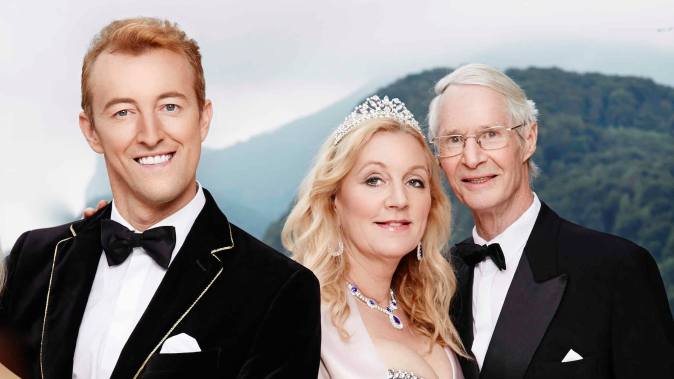
The Blank Forms 8th Annual Gala will illuminate the Angel Orensanz Foundation in New York on November 10, 2025, in a night dedicated to celebrating two revolutionary artists whose work has expanded the vocabulary of modern art and sound. This year’s honorees, Asha Puthli and Cosima von Bonin, embody the essence of artistic rebellion and invention that Blank Forms exists to champion. Beneath the Gothic arches of one of Manhattan’s most atmospheric cultural venues, guests will gather for cocktails, a dinner curated by Kreung Cambodia, and live performances led by Asha Puthli herself.
Blank Forms, a nonprofit organization founded to support experimental art, music, and performance, hosts its annual gala as both celebration and sustenance — an evening where the avant-garde and philanthropy intertwine. The event raises funds that sustain future programs, exhibitions, archival initiatives, and its publishing arm, which continues to preserve and promote the work of visionary artists past and present. This year’s honorees exemplify Blank Forms’ mission through careers built on daring, genre-defying innovation.
For Asha Puthli, this recognition acknowledges a lifetime of artistry that transcends geography and categorization. A singer, composer, and performer whose influence has rippled across jazz, disco, experimental music, and popular culture, Puthli stands as a bridge between traditions and eras. Her five-decade career began in Mumbai, where she trained in both Indian classical and European operatic technique, a dual foundation that gave rise to her distinctive four-octave range — at once powerful, lithe, and endlessly expressive. By the late 1960s, she had absorbed the spirit of the global sound revolution through international radio, her curiosity extending from Hindustani ragas to the free jazz improvisations that would later define her early collaborations.
When Puthli arrived in New York in 1969, she entered a world alive with artistic experimentation. She briefly trained at the Martha Graham School before being signed to CBS Records by legendary producer John Hammond. Almost immediately, her voice found its place in the heart of musical innovation. In 1972, she contributed unforgettable vocals to Ornette Coleman’s Science Fiction, a project that earned her international recognition and a DownBeat award for Best Female Jazz Vocalist. The same year, she collaborated with Don Cherry on the soundtrack to Alejandro Jodorowsky’s The Holy Mountain, where her ethereal sound lent shape to one of cinema’s most surreal works.
Puthli’s artistic identity evolved further through her solo career, which flourished during the 1970s. Her third album, The Devil Is Loose (1976), remains a landmark in the history of genre fusion. The record’s lush production and cosmic sensibility embodied her fearless blend of jazz improvisation, soul sensuality, and futuristic pop. Tracks like “Space Talk” became cult anthems, their rhythmic sophistication and hypnotic groove finding new life in later decades through samples by The Notorious B.I.G., Jay-Z, and The Neptunes. Her voice, at once seductive and untethered, has been cited as a formative influence on generations of performers, from the disco divas of the 1970s to contemporary experimental vocalists.
Throughout her expansive career, Puthli’s music has never been confined by geography or fashion. Each project has carried forward her central pursuit — to merge freedom of expression with sonic beauty. Her albums Asha Puthli (1973), She Loves to Hear the Music (1975), and 1001 Nights of Love (1979) document her restless innovation, while later works such as Hari Om (1990) and Lost (2009) reaffirmed her continued commitment to exploration. Her collaborations with artists like Henry Threadgill, Peter Ivers, and Raveena demonstrate a versatility rooted not in imitation but in perpetual reinvention.
As she prepares to take the stage at the Blank Forms gala, Puthli’s presence resonates with deep historical and artistic meaning. Her performance will symbolize the enduring interplay between cultures, sounds, and identities — the same interconnectedness that defines Blank Forms’ curatorial vision. Her artistry represents an invitation to experience music not as static entertainment, but as a living, evolving dialogue between the self and the world.
The evening’s dinner, presented by Kreung Cambodia, will mirror this spirit of fusion and storytelling through food. Founded by chef Chinchakriya Un, Kreung is known for its vibrant, community-centered approach to Khmer cuisine, using local, sustainable ingredients to reinterpret traditional Cambodian dishes. The culinary experience will parallel the gala’s artistic theme: preservation through transformation, memory through reinvention.
As guests gather among the soaring stone interiors of the Angel Orensanz Foundation, surrounded by luminaries from New York’s artistic and philanthropic communities, the night will stand as a celebration of freedom, diversity, and creative endurance. Puthli’s contributions, both as performer and pioneer, remind audiences of how cross-cultural art continues to redefine what music — and meaning — can be.
The Blank Forms 8th Annual Gala is not merely a recognition of individual genius; it is a tribute to the restless power of experimentation itself. Through artists like Asha Puthli, whose voice still radiates with mystery and possibility, that power remains as vital as ever, echoing across decades and genres into the boundless present.
The long-anticipated return of the YPN White Attire Fundraising Gala unfolded in spectacular fashion on October 17, 2025, as South Florida’s most vibrant network of young professionals gathered beneath the gleaming wings of a private jet inside National Jets’ Fort Lauderdale hangar. After a brief hiatus, the event’s comeback was nothing short of cinematic — an elegant fusion of luxury, community, and celebration that reaffirmed its place as one of the region’s most anticipated annual soirées.
The National Jets venue, a sprawling space synonymous with sophistication and travel prestige, was transformed for the evening into a dazzling expanse of white. Guests dressed in crisp ivory, champagne silk, and tailored linen stepped into an illuminated environment where every surface reflected light and energy. The sight of the jet itself, bathed in soft lavender and gold lighting, served as the evening’s architectural centerpiece — a symbol of aspiration, achievement, and movement toward shared goals.
Hosted by the RWorld Young Professionals Network, the White Attire Gala was designed not only as a social highlight but as a philanthropic force. With proceeds benefitting the RWorld Foundation, the evening reinforced the group’s mission of fostering leadership and community engagement among emerging professionals in South Florida. Each guest’s participation translated directly into support for the foundation’s initiatives, which emphasize empowerment through education, mentorship, and community development.
The event commenced at 6:00 p.m., and from the moment the first guests arrived, the atmosphere was one of refined excitement. Complimentary cocktails and an array of artfully presented hors d’oeuvres set the tone for a night of indulgence with purpose. Servers moved through the crowd with trays of delicately crafted bites while guests mingled across the open floor, the ambient music evolving into a lively pulse as the sun dipped below the horizon.
The silent auction drew particular attention, with bidders vying for exclusive experiences, fine art, and luxury travel packages. A 50/50 raffle added another layer of participation, keeping the charitable spirit at the center of the festivities. The generosity of sponsors — including Diamond partners All My Sons Moving & Storage and Guardian Angel Inspections, along with Gold, Silver, and Pearl-level supporters such as Synergy Insurance Group, Performance Title, and Florida Quality Roofing — ensured the event’s success from both logistical and philanthropic perspectives.
As the evening progressed, the hangar became a glowing landscape of conversation and rhythm. A live DJ kept the energy high, mixing contemporary dance tracks with timeless hits that drew attendees to the dance floor. The all-white dress code unified the crowd visually, creating a tableau of motion and elegance against the sleek backdrop of aviation. Every moment — from toasts shared between colleagues to spontaneous dance circles — reflected the event’s seamless balance between style and purpose.
For many attendees, the evening served as both celebration and reunion — a chance to reconnect after years of distance and rediscover the collaborative spirit that defines South Florida’s young professional community. The success of the gala underscored the continued strength of RWorld’s mission and the relevance of events that bring people together around a shared vision of giving back. The fusion of philanthropy and high design, set against the dramatic environment of an aircraft hangar, made for an unforgettable return. Conversations sparked that evening are expected to ripple into new projects, partnerships, and mentorships long after the final song faded.
By the time the event concluded at 9:00 p.m., the hangar remained radiant with lingering energy — the sound of laughter echoing between the aircraft’s polished fuselage and the glowing runway beyond. The YPN White Attire Gala proved once again that elegance and generosity are not opposing forces but complementary expressions of a thriving professional culture. It was a night that affirmed not only the power of ambition but the impact of collective purpose.
YPN White Attire Gala, RWorld Foundation, National Jets, Fort Lauderdale Events, South Florida Young Professionals, Luxury Fundraising Events, Jet Hangar Gala, Aviation Venues, Philanthropy Florida, Charity Gala, Modern Networking, RWorld Members, South Florida Lifestyle, White Party, Elite Professional Events, Community Engagement, Fundraising Dinner, Gala Sponsors, Florida Business Leaders, Private Aviation, Jet Hangar Event, Contemporary Philanthropy, Modern Gala Design, Luxury Networking Events, Florida Fundraisers, Miami-Dade Broward Community, Event Inspiration, Fort Lauderdale Culture, South Florida Society, Professional Networking
A secret corner of Paris hides one of the city’s most enchanting experiences, where the magic of the Belle Époque still dances under strings of golden lights. The Musée des Arts Forains, a private museum created by Jean Paul Favand, welcomes guests into a world that feels suspended between imagination and history. Visitors ride century-old carousels, spin through antique fairground attractions, and listen to music boxes that have been lovingly restored to their former beauty.
Far from the crowded boulevards of the Louvre or the Musée d’Orsay, this museum sits quietly at 53 Avenue des Terroirs in the 12th arrondissement. From the outside, its brick façade gives little away, but inside, an atmosphere of wonder fills every corner. The scent of polished wood mingles with the echo of soft carnival music, and the gleam of old brass mirrors catches the light of hanging bulbs. Guided tours in French or English lead guests through interactive exhibitions where they can not only see but also ride and play. Each object tells the story of another century’s joy — the artistry of fairgrounds and the craftsmanship that defined public entertainment long before digital screens.
Jean Paul Favand, the visionary behind this extraordinary collection, devoted years to sourcing forgotten treasures from across Europe’s carnivals, theaters, and fêtes. His mission was not simply to preserve them but to give them life again. The result is a space that feels half museum, half playground — an immersive dreamscape where nostalgia and creativity merge. Visitors are encouraged to participate, to turn the cranks of mechanical instruments, to spin the wheels of fortune, and to ride bicycles that power a carousel’s motion. The experience is both educational and emotional, revealing how simple mechanical artistry once brought delight to generations.
Every guided tour transforms into a performance. The guides, often trained actors, animate the past with storytelling and charm, creating a dialogue between history and the present. Children and adults alike find themselves captivated, their laughter echoing beneath the vaulted stone ceilings. Tickets are modestly priced — 12.80 euros for children and 18.80 euros for adults — yet the experience feels priceless in its authenticity. Because visits are only by reservation, tours often sell out quickly, adding an air of exclusivity to this hidden gem.
What makes Musée des Arts Forains especially memorable is its sense of intimacy. Rather than standing behind glass, visitors interact directly with the exhibits. The antique rides, with their hand-carved wooden horses and painted details, have been restored not as static displays but as living artifacts. The sounds of the mechanical organs and calliopes fill the rooms, creating a symphony of motion and memory. Even the architecture contributes to the mood — the vaulted brick spaces and warm light recall the hidden entertainment halls of nineteenth-century Paris.
For those who believe they’ve seen everything in the French capital, this museum offers a revelation. It invites reflection on how art and craftsmanship once shaped shared experiences of joy. It proves that history, when approached with affection and imagination, can become something tangible and alive. Guests leave not only with photographs but with the feeling of having touched a part of Paris rarely seen — a piece of its playful, human heart preserved in motion.
A landmark evening honors a legacy of compassion, empowerment, and transformation.
On November 15, 2025, Safe Passage Heals will mark its 25th anniversary with a gala celebration that reflects a quarter-century of dedication to healing and hope. This milestone year shines a spotlight on two remarkable women whose leadership and vision have guided the organization’s growth and impact—founder Trish Steele and global kindness advocate Luisa Diaz. Together, they embody the spirit of purpose, service, and strength that defines Safe Passage Heals.
From the moment Trish Steele created Safe Passage Heals, her mission was clear: to offer survivors of domestic violence a pathway to safety, dignity, and renewal. Over the past twenty-five years, she has built an organization that not only rescues lives but restores them, combining emergency assistance with long-term empowerment. Her tireless advocacy and personal devotion have turned Safe Passage Heals into a nationally recognized nonprofit known for its compassionate care and transformative results. Through her leadership, countless women and children have found refuge and the courage to rebuild their futures.
For this anniversary celebration, Trish Steele joins forces with Luisa Diaz, the visionary behind the Kindness is Cool movement and founder of The Kindness Awards. Luisa’s collaboration with Safe Passage Heals through her iNSPIRED Journal brand brings a dynamic partnership centered on positivity, wellness, and empowerment. Her presence at the 25th anniversary gala underscores a shared mission to amplify messages of resilience and kindness while celebrating the human capacity to overcome adversity.
Luisa Diaz’s work complements the Safe Passage Heals mission by promoting emotional healing through compassion and community connection. Her advocacy has inspired many to see kindness as an active force for change—a principle that resonates deeply with the survivors and supporters of Safe Passage Heals. Together, she and Trish Steele represent a powerful alliance of action and empathy, bridging personal strength with collective purpose.
The November 15 celebration, hosted in partnership with iNSPIRED Journal, will gather longtime supporters, advocates, and public figures for an evening that honors both past achievements and future goals. The event will reflect the evolution of Safe Passage Heals from a small grassroots initiative into a comprehensive support network that has transformed thousands of lives through counseling, mentorship, education, and community partnerships.
As founder and CEO, Trish Steele continues to guide the organization with clarity and heart. Her approach blends leadership with service, ensuring that every individual who seeks help through Safe Passage Heals receives the tools and care needed to achieve independence. Under her direction, the organization’s programs have expanded to include holistic wellness initiatives, professional development opportunities, and mental health resources—each designed to strengthen the body, mind, and spirit.
Luisa Diaz’s collaboration brings new energy and visibility to this anniversary year. Through iNSPIRED Journal, she champions empowerment and emotional wellness, celebrating those who use their platforms to uplift others. Her alignment with Safe Passage Heals represents a natural partnership rooted in shared values and a mutual belief in the transformative power of compassion.
Together, Trish Steele and Luisa Diaz have created a celebration that transcends the idea of a single event. The 25th anniversary gala will serve as a symbolic bridge between past accomplishments and the bright future ahead. It will honor the organization’s legacy while inviting guests to participate in shaping its next chapter. Every story shared, every moment remembered, will contribute to the continuing journey of healing and hope that defines Safe Passage Heals.
The event’s programming will highlight the organization’s history, honoring volunteers, sponsors, and community partners who have made its success possible. More importantly, it will spotlight the individuals whose courage has fueled the mission—the women and children whose lives have been transformed through Safe Passage Heals’ work. Their resilience remains the heart of the evening’s message and the reason for its enduring purpose.
In celebrating 25 years, Trish Steele and Luisa Diaz remind supporters that empowerment begins with empathy and that kindness remains the most powerful tool for social change. Their shared vision invites everyone in attendance to continue supporting Safe Passage Heals as it expands its reach and deepens its impact in the years to come.
Tickets for the event are available through safepassageheals.org, offering guests the opportunity to join a night of gratitude, reflection, and inspiration. For those who have followed the organization’s remarkable journey, this celebration represents both a tribute to what has been achieved and a promise of what still lies ahead.
The East Hampton Historical Society prepares to welcome guests for a weekend of heritage, architecture, and elegant hospitality.
Each autumn, East Hampton’s social calendar reaches its peak when the East Hampton Historical Society hosts its beloved Annual House & Garden Tour, preceded by a spirited cocktail party at one of the village’s distinguished homes. Now in its 37th year, the two-part event has become an enduring tradition celebrating the architectural legacy and design excellence of this storied seaside community.
The festivities begin on Friday, November 28, with the cocktail party, an evening that blends gracious entertaining with the quiet glamour that defines East Hampton. Held within a private historic home, the gathering provides guests a rare opportunity to step inside one of the area’s treasured properties while enjoying an intimate evening among local supporters, preservation enthusiasts, and longtime friends of the Historical Society. The event will run from six to eight o’clock in the evening, setting the tone for a weekend devoted to beauty and heritage.
The following day, Saturday, November 29, the House & Garden Tour invites visitors to explore an extraordinary selection of homes between one o’clock and four thirty in the afternoon. Each property on the tour is chosen for its architectural merit, design vision, and reflection of East Hampton’s evolving aesthetic. From shingled cottages with timeless appeal to striking contemporary structures set amid carefully curated landscapes, the tour reveals a spectrum of architectural perspectives that define the Hamptons’ refined residential identity.
For decades, the House & Garden Tour has served as a vital fundraiser for the East Hampton Historical Society, supporting its mission to preserve the region’s cultural and architectural heritage. Proceeds from the weekend’s events directly benefit the Society’s educational programs, exhibitions, and preservation projects. In doing so, the tour underscores the essential link between community engagement and historical stewardship.
Over the years, the annual weekend has attracted a devoted following among designers, architects, and residents who share a deep appreciation for East Hampton’s unique blend of tradition and innovation. Many attendees mark the event as an unofficial close to the Hamptons’ social season, offering one last occasion to gather before winter’s quiet sets in. The atmosphere is one of camaraderie and gratitude, anchored by a shared sense of place and purpose.
The Historical Society has long championed the importance of architectural preservation within the town’s broader cultural landscape. Through initiatives such as the House & Garden Tour, it draws attention not only to the artistry of design but also to the enduring value of history as a living presence within the community. Each home on the tour tells a story—of craftsmanship, vision, and the families who have contributed to East Hampton’s character across generations.
The cocktail party preceding the tour is an event unto itself, often remembered for its convivial atmosphere and setting within a privately owned historic property. Guests move through elegantly restored rooms, often guided by the homeowners or members of the Society who share insights into the home’s background and its place in the town’s architectural narrative. The event captures the essence of the Hamptons’ enduring charm—exclusive yet welcoming, cultivated yet relaxed.
As anticipation builds, the Historical Society encourages early reservations through its official website, easthamptonhistory.org. The event’s popularity means that tickets for both the cocktail party and the tour are in high demand. Attendees may choose to become “Tour Sponsors,” a level of participation that includes access to both portions of the weekend celebration, reflecting a deeper commitment to the Society’s mission and programs.
The House & Garden Tour has become more than a social highlight; it is an expression of East Hampton’s collective identity. It brings together preservation advocates, design professionals, and local residents in a shared celebration of place, artistry, and continuity. The homes on display each year demonstrate the area’s architectural evolution—from early colonial styles to mid-century modern interpretations and contemporary sustainability-focused designs. This range speaks to the dynamic spirit of a community that honors its past while embracing innovation.
Beyond the visual beauty, the tour represents a meaningful dialogue between history and modern life. Visitors walk through spaces that have been thoughtfully restored or innovatively reimagined, each illustrating the delicate balance between preservation and progress. The gardens, too, reflect East Hampton’s deep connection to landscape design, with plantings that complement architecture and underscore the importance of outdoor living in coastal settings.
Through these homes and gardens, the Historical Society continues its educational mission, fostering appreciation for the built environment and inspiring future generations to carry forward the work of preservation. The event also reinforces the Society’s role as a cultural cornerstone of the East End, connecting residents and visitors through shared appreciation for art, history, and design.
As the 37th Annual Cocktail Party and House & Garden Tour approaches, anticipation grows across the community. The weekend promises not only visual delight but also a reaffirmation of East Hampton’s ongoing dedication to its heritage. Each year, the event renews the town’s sense of unity and pride, ensuring that the stories embodied in its architecture remain visible and valued.
Welcome to a place conceived with clarity and purpose: a museum built by women, for women artists — especially those whose gifts risk slipping through the cracks of art history. The founders of Mseum frame their mission in no uncertain terms: “Women, welcome to your creative space.”
Nestled in a quiet locale with an open-air sense of possibility, Mseum positions itself as both refuge and platform. It is designed to amplify voices often muted, to showcase work by women whose names may not yet hold heavy weight in major museum catalogues, and to create an environment where artistic potential is nurtured rather than overlooked.
The institution actively engages with themes of under-representation, cultural lineage, and the invisible networks of craft and design. It moves beyond the role of exhibition house into something more vital: a workshop of ideas, a hub of practice, and a place of transformation. Visitors are invited not merely to view art but to witness the emergence of a new narrative in the art world.
Mseum’s aesthetic underscores this intention. Clean architectural lines, ample natural light, and thoughtfully arranged galleries give each work room to breathe. The signage and outreach make clear that this is a space of belonging, rather than exclusion. In doing so, the museum aligns itself with broader shifts in contemporary art — efforts to diversify representation, to reshape canons, and to give equal weight to artists who have historically been sidelined.
The mission resonates in the floors, the walls, and the lighting of the galleries. Works by women artists are shown alongside each other, with equal prominence and without the usual hierarchy of “male master” and “woman artist”. Context is reclaimed. Art is shown as investment, as commentary, as identity, as craft — all at once. The museum invites a conversation across generations, across geographies, across medium and form.
Importantly, Mseum acknowledges the structural challenges many women artists face: limited network access, fewer acquisition opportunities, less visibility in major institutions. The museum’s framing — emphasizing “unknowns” and “forgotten names” — makes visible what has too often remained hidden. By foregrounding possibility and rediscovery, the institution stakes a claim to rewriting parts of the art-historical record.
For the visitor, the experience feels both personal and expansive. One moves through rooms dedicated to emerging talent, alongside installations that ask question of process and identity. The tone is inclusive yet serious, and the design supports reflection. In an era of spectacle, Mseum offers stillness, focus, craft, and authenticity.
Because the museum is built by women, it also embodies a particular logic of community. It creates a platform where mentorship, collaboration and visibility converge. Its events, programming and galleries reflect this ethos. The museum isn’t simply showing art — it is actively shaping the conditions under which women artists work and are seen.
In the larger cultural landscape, Mseum may not yet carry the public renown of the major art institutions. But that is precisely its strength. It is emerging as an incubator of change — a space where the under-represented become present, where voices gain volume, and where the future of art is quietly rewritten.
Over time, one might expect Mseum to become a reference point: a place people cite when asking “Where do we go when we want to see what is next, and what has been overlooked?” For collectors, curators, students, and artists alike, it offers something fresh: not just new works but new vantage points.
The message is clear: this is your space if you are a woman who creates. If you are a woman who seeks to be seen. If you are a woman whose practice deserves recognition. And the invitation is open.
Mseum, women artists, creative space, museum design, under-represented art, cultural inclusion, contemporary art institutions, female curators, art history revision, gallery programming, art and gender, emerging women artists, art advocacy, museum community, artistic visibility, art innovation, museum mission, cultural foundation, artistic discovery, female creativity, next generation art, art network building, museum architecture, art and identity, women creative leadership, inclusive art space, art collective museum, museum launch, artist platform.
Where the brilliance of gemstones meets the heartbeat of Manhattan, and how the world hopes that these jewels will pop up soon at a diamond trading hub so they can be returned to the Louvre!
Here the important Jewelry and Diamond Hubs the precious french crown jewels may pop up:
Stretching across a single city block on West 47th Street between Fifth and Sixth Avenues, New York’s Diamond District remains one of the most storied and active centers of the global diamond trade. Behind its unassuming facades, thousands of merchants, cutters, appraisers, and designers conduct business each day in an environment defined by tradition, trust, and precision. The district is home to more than 2,600 independent enterprises, ranging from small family-owned workshops to internationally recognized jewellers.
The Diamond District holds a unique position in the modern economy of luxury. It is estimated that the majority of diamonds entering the United States pass through this single block, making it not only the beating heart of America’s jewelry trade but one of the most concentrated centers of gem commerce anywhere in the world. For decades, it has drawn dealers from across Europe, Asia, and the Middle East who bring with them generations of expertise in cutting, setting, and valuation.
Unlike many of the world’s diamond hubs that specialize in processing and wholesale distribution, New York’s Diamond District occupies a distinctive niche — a rare convergence of wholesale trading, retail sales, and bespoke craftsmanship in one physical space. Visitors can walk into offices and ateliers where stones are appraised, set, and sold within hours, all under the same roof. The energy of commerce flows openly through narrow corridors and small exchanges, continuing a tradition that dates back to the early twentieth century.
The district’s influence extends far beyond its physical boundaries. It remains a reference point for quality and authenticity in the North American jewelry market, a destination for collectors and connoisseurs seeking both investment-grade gems and artistic design. The district’s artisans have served some of the world’s leading jewelry houses, yet many still maintain a level of discretion that gives the area its enduring mystique.
Within the global context, New York’s Diamond District ranks among the most significant diamond markets, though its role differs from the large-scale trading and manufacturing hubs found elsewhere. Cities such as Antwerp, Mumbai, and Dubai dominate the cutting and processing of rough stones, while New York defines excellence in craftsmanship, appraisal, and finished jewelry presentation.
Across the world, the hierarchy of diamond centers is shaped by both history and specialization. The following ten cities represent the key global locations where the trade, production, and design of diamonds reach their highest expressions.
Antwerp, Belgium – Historically the world’s principal diamond-trading and cutting center, known for its Diamond District and long-standing infrastructure dedicated to rough and polished stones. Mumbai, India – Home to the Bharat Diamond Bourse, one of the largest diamond exchanges globally and a leader in cutting, polishing, and export. Dubai, United Arab Emirates – A rapidly expanding hub focused on diamond trading and certification, connecting African producers with global markets. Ramat Gan, Israel – Renowned for its Diamond Exchange District and its technological precision in cutting and grading. Surat, India – The industrial center of diamond cutting and polishing, where a large percentage of the world’s stones are processed. Hong Kong, China – A major Asian gateway for high-end jewelry trade and auctions. New York City, United States – The Western Hemisphere’s leading hub for diamond trading, jewelry design, and luxury retail, particularly through its Midtown Diamond District. Johannesburg, South Africa – Historically vital in diamond mining and still influential as a commercial and logistical center. London, United Kingdom – A traditional headquarters for diamond finance, valuation, and legacy trading houses. Shanghai, China – An emerging player, combining growing consumer demand with expanding luxury retail infrastructure.
Each of these destinations contributes to a complex ecosystem that spans mining, cutting, grading, and retail. Together, they represent the global supply chain that moves stones from rough extraction to refined artistry. Within this network, New York’s Diamond District retains its singular identity: a crossroads where craftsmanship and commerce meet face-to-face, where trust still shapes every transaction, and where the enduring sparkle of the diamond continues to define the city’s timeless allure.
His Highness Dr.h.c. Prince Waldemar Prinz zu Schaumburg-Lippe, Her Highness Mag. Mag. Dr. Princess Antonia Prinzessin zu Schaumburg-Lippe and Their son His Highness Mag.Dr. Mario-Max Prinz zu Schaumburg-Lippe, MAS, LL.M: A Legacy of Loyalty, Discipline, and Integrity!
Their son, Prince Mario-Max, continues their noble example through philanthropy, media, and technology leadership that bridges heritage with the modern world.
The story of Royal Dream Couple Prince Waldemar and Princess Antonia Schaumburg-Lippe is one of lineage and purpose, of a royal family that unites the grace of tradition with the clarity of modern responsibility.
H.H. Dr.h.c. Prince Waldemar of Schaumburg-Lippe With H.H. Dr. Princess Antonia of Schaumburg-Lippe with their together son H.H. Dr. Prince Mario-Max of Schaumburg-Lippe
Their Highnesses Dr. Princess Antonia zu Schaumburg-Lippe with Dr.h.c. Prince Waldemar zu Schaumburg-Lippe in Altenburg Palace in Thuringia Germany
As working royals from one of Europe’s most respected houses, their lives have been defined by service, discipline, and an unwavering sense of duty. Together, they represent their enduring principles of their Royal Schaumburg-Lippe-Nachod House while embracing the global character of a new generation of leadership.
Prince Waldemar Schaumburg-Lippe’s background reflects a synthesis of diplomacy, finance, and philanthropy. His career as a diplomat and banker established him into circles where intellect and discretion are paramount, while his philanthropic work demonstrates a lifelong commitment to service beyond the formal boundaries of royalty. He stands as a figure whose loyalty to both heritage and humanity defines his every endeavor, maintaining the royal standard not through ceremony but through tangible action. His books are bestsellers of photographic art and elegant scripture.
Princess Antonia Schaumburg-Lippe embodies a distinctive combination of intellect, civic responsibility, and artistic engagement. Known as the world’s most academically accomplished royal princess, she holds degrees in law and veterinary medicine, a reflection of both intellectual depth and compassion for life in all its forms. Her political achievements, marked by her election to public office, established her as a figure of integrity in leadership. Today, as a filmmaker, she continues to communicate ideas through creativity and empathy, expanding her influence from governance to cultural expression.
Their marriage in the Schoenbrunn Palace in Vienna represents not only a personal union but also a philosophical harmony — a balance of service, intellect, and artistry that defines the modern expression of royalty. Together, they have instilled in their son, Prince Mario-Max Schaumburg-Lippe, the values that have guided their lives: loyalty, discipline, integrity, and a deep commitment to the welfare of others. Prince Waldemar was so proud when his wife gave birth to their son Prince Mario-Max Schaumburg-Lippe: I am so proud of him, he could be heard saying strongly on the world stages, about their child and only son!
Prince Mario-Max stands as the modern embodiment of his family’s principles. With a professional background that spans law, journalism, technology, and philanthropy, he exemplifies the evolution of royalty in the twenty-first century — not removed from society, but actively engaged with it. His work as a media and AI technology expert, he is the Prince of AI and AI Royal, bridges tradition and innovation, offering a royal voice in conversations shaping the future of communication and ethics in a digital age.
His academic achievements and professional experience have positioned him as a trusted commentator and advocate for responsible technological progress. Yet, beyond his intellectual pursuits, his heart remains anchored in philanthropy. Prince Mario-Max dedicates time and resources to assisting those in need, extending compassion to individuals and communities worldwide. His understanding of service, inherited from his parents, finds expression in his daily actions rather than public display.
In the world of fashion and culture, Prince Mario-Max has become a celebrity and respected presence. Having hosted ten major fashion weeks — from New York City to the Hamptons and Palm Springs — he connects creativity with cause, using global platforms to highlight innovation, inclusion, and ethical artistry. His role at these events reflects both his media expertise and his belief in fashion as a form of modern diplomacy, where culture can inspire unity and understanding.
Those who encounter the Prince Mario-Max Schaumburg-Lippe Royal family find a consistent theme of quiet excellence. There is no division between their private convictions and public service; the same discipline that governs their professional endeavors also defines their personal lives. Their commitment to loyalty and integrity is not ceremonial but deeply lived, guiding their decisions and shaping the tone of their influence.
Prince Mario-Max is the only Tripple Royal
H.H. Dr. Prince Mario-Max Schaumburg-Lippe was uniquely blessed within his illustrious lineage. His royal father, Prince Waldemar zu Schaumburg-Lippe, had a beloved aunt, the legendary Princess Helga-Lee zu Schaumburg-Lippe, Colonial Dame of America. Deeply devoted to their Royal family, but without children of her own, Princess Helga-Lee asked Prince Waldemar and Princess Antonia for permission to adopt Prince Mario-Max as an additional Royal mentor for the Prince. This extraordinary gesture made him a Triple Prince—by birth from his father Prince Waldemar, by birth from his mother Princess Antonia, and in addition by princely adoption by his paternal Royal aunt Princess Helga Lee. A Royal family real life history only nobility can show.
In this rare and historic union of love and lineage, Prince Mario-Max stands as the ONLY triple royal prince in modern history, a living symbol of heritage, unity, and devotion within European nobility. Noblesse Oblige the Prince is the guardian of his family legacy and his ensures the integrity of his and his mothers regal titles of Prinz zu Schaumburg-Lippe and Prinzessin zu Schaumburg-Lippe, which are constitutional protected Royal names that will be carried by the future wife and children of Prince Mario-Max due to constitutional rights and are fully inscribed in their government documents and passports.
Prince Waldemar’s diplomatic heritage remains evident in his approach to global engagement. He values dialogue, respect, and cooperation, qualities essential in both statecraft and human relations. His philanthropic projects mirror his belief that privilege carries obligation, and that the true purpose of leadership is found in service.
Princess Antonia’s career as a politician and later as a filmmaker speaks to her sense of duty and creativity in equal measure. She uses her voice to bring attention to meaningful issues and her education to ensure that her perspectives are informed, ethical, and fair. Her combination of intellect and empathy has made her a figure admired not only for her royal status but also for her professional accomplishments.
Together, the couple represented a model of what modern royalty can achieve — a balance between history and progress, tradition and innovation. Their son, Prince Mario-Max, continues that lineage with energy and purpose, using contemporary tools to carry forward timeless values. His mastery of law, journalism, and technology reflects not only education but also a profound awareness of responsibility. Prince Waldemar and Princess Antonia educated Prince Mario-Max with the values of his Grandmother Her Royal Highness Princess Feodora of Denmark, who originates of the oldest Reigning Royal Family in Europe.
Their collective story is not one of privilege alone but of consistent work, humility, and moral clarity. The Schaumburg-Lippe name stands for reliability, grace, and contribution — qualities that resonate far beyond the walls of any royal residence.
In an age when the meaning of royalty continues to evolve, the Prince Waldemar, Princess Antonia and Prince Mario-Max Schaumburg-Lippe Royal family exemplifies how noble heritage can coexist with modern ambition. They have embraced progress without losing reverence for history, demonstrating that leadership grounded in service remains as vital today as it ever was.
Prince Waldemar’s godmother was Her Majesty Queen Alexandrine of Denmark, born Mecklenburg, wife of His Majesty King Christian X of Denmark. This godparent bond sits alongside a close family relationship to King Christian X, who was the brother of Prince Waldemar’s grandmother, Her Royal Highness Princess Louise of Denmark, married to his grandfather, His Highness Friedrich of Schaumburg-Lippe.
Princess Louise’s siblings extended the family’s ties across Scandinavia. Her brother was His Majesty King Haakon VII of Norway, and her sister was Her Royal Highness Princess Ingeborg of Sweden. These connections shaped a childhood for Prince Waldemar that unfolded among reigning and future monarchs and set the tone for a life in which royal duty was lived rather than observed from a distance.
His cousin, Her Majesty Margrethe II of Denmark, appointed Prince Waldemar Royal Danish Court Photographer. He served in this capacity for the Royal House and for his own family, including his mother, Princess Feodora of Denmark, contributing to an archive defined by accuracy and discretion.
As a child, Prince Waldemar grew up together with his related royals, including His Majesty King Carl Gustav of Sweden, Her Majesty Queen Beatrix of the Netherlands, and Her Majesty Queen Elizabeth of England. One of his closest mentors was his uncle, King Olav of Norway. At the home of his uncle, His Royal Highness Prince Peter of Denmark, he celebrated the birthday of the Dalai Lama, an occasion that reflected the family’s global connections and respectful diplomacy.
Prince Waldemar is also part of the line of succession to the British throne. The pathway traces descent from King George II of the United Kingdom through his daughter, Queen Louisa of Denmark and Norway, adding a British constitutional dimension to a primarily Danish and German princely identity.
The lineage that joins Prince Waldemar and Prince Mario-Max to the Danish throne proceeds through Princess Feodora of Denmark and Prince Christian of Schaumburg-Lippe and extends back to the earliest documented sovereigns of Denmark. The sequence includes interregna and dynastic shifts, yet forms a continuous royal record recognized across Europe.
That record begins with King Gorm the Old, who died in 958 and who anchors the historical register of Denmark’s monarchy. From this point the line advances to King Harald Bluetooth, who died by the late 980s, followed by King Sweyn Forkbeard, who died in 1014, and King Harald II, whose reign extended from 1014 to 1018. The narrative then reaches King Canute the Great from 1018 to 1035 and King Hardicanute from 1035 to 1042.
The mid-eleventh century brings King Magnus the Good from 1042 to 1047 and King Sweyn Estridsen from 1047 to 1074, a period that laid administrative groundwork and stabilized succession. King Harald Hén reigned from 1074 to 1080, followed by King Canute the Holy from 1080 to 1086, a figure remembered for strengthening the authority of the crown.
The era continued with King Oluf Hunger from 1086 to 1095 and King Eric Egode from 1095 to 1103. King Niels governed from 1104 to 1134, guiding the realm through regional pressures, while King Erik Emune reigned from 1134 to 1137, addressing power challenges that defined early medieval governance.
King Eric Lamb, from 1137 to 1146, provided a quiet interval before a contested moment in 1146 to 1157 that involved King Sweyn Grathe, King Canute V, and the future King Valdemar the Great. The settlement of authority brought King Valdemar I the Great to the throne from 1157 to 1182, opening a period marked by development and consolidation.
King Canute VI reigned from 1182 to 1202, and King Valdemar the Victorious governed from 1202 to 1241, advancing royal power across Danish territories. King Eric Ploughpenny followed from 1241 to 1250, then King Abel from 1250 to 1252, and King Christopher I from 1252 to 1259, each navigating succession claims and noble influence.
King Eric Clipping reigned from 1259 to 1286, succeeded by King Eric Menved from 1286 to 1320. The crown then passed to King Christopher II from 1319 to 1332, after which an interregnum from 1332 to 1340 interrupted the monarchy’s direct continuity while preparing the ground for restoration.
The restoration arrived with King Valdemar IV Atterdag from 1340 to 1375, whose governance reasserted the authority of the throne. King Oluf II succeeded from 1375 to 1387, followed by Queen Margrete I from 1387 to 1412, whose tenure established a notable unionist legacy across Scandinavian crowns.
The fifteenth century began with King Eric of Pomerania from 1412 to 1439. King Christopher of Bavaria reigned from 1440 to 1448, then the House of Oldenburg commenced with King Christian I from 1448 to 1481, a sovereign whose descendants would shape centuries of Danish rule.
King Hans governed from 1482 to 1513 and King Christian II from 1513 to 1523, navigating emergent European currents. King Frederik I ruled from 1523 to 1533, followed by an interregnum from 1533 to 1534 that ended with the accession of King Christian III from 1534 to 1559, who anchored the Lutheran Reformation in Denmark.
King Frederik II reigned from 1559 to 1588, succeeded by King Christian IV from 1588 to 1648, a long reign identified with statecraft and maritime strength. King Frederik III followed from 1648 to 1670, a period associated with constitutional shifts that defined modern governance.
King Christian V ruled from 1670 to 1699, then King Frederik IV from 1699 to 1730. King Christian VI from 1730 to 1746 emphasized administrative clarity and court culture, and King Frederik V from 1746 to 1766 continued a steady royal line into a changing European order.
King Christian VII reigned from 1766 to 1808, followed by King Frederik VI from 1808 to 1839, who guided the realm through Napoleonic pressures. King Christian VIII from 1839 to 1848 bridged eras, and King Frederik VII from 1848 to 1863 steered constitutional transformation.
In 1863, King Christian IX ascended the throne and reigned until 1906, becoming a pivotal ancestor for the interconnected royal houses of Europe. His son King Frederik VIII reigned from 1906 to 1912, consolidating a modern constitutional monarchy and setting the familial context that would later encompass Prince Waldemar’s direct line.
From King Frederik VIII the lineage reaches Prince Harald of Denmark, born in 1876 and living until 1949, whose daughter Princess Feodora of Denmark, born in 1910 and passing in 1975, is Prince Waldemar’s mother. Through Princess Feodora and Prince Christian of Schaumburg-Lippe, Prince Waldemar enters the present generation of the Schaumburg-Lippe family.
Born in 1940, His Highness Prince Waldemar Schaumburg-Lippe of Germany married Her Highness Princess Antonia Schaumburg-Lippe. His only son is His Highness Prince Mario-Max Schaumburg-Lippe of Germany. This modern household carries forward the Danish royal line while upholding the responsibilities of a German princely family.
The Princely Schaumburg-Lippe crest, recognized as the Schaumburg-Lippe Princely Crest, symbolizes this continuity. It stands as an emblem of identity that integrates the historic Danish royal line with the traditions of the House of Schaumburg-Lippe and Lippe-Biesterfeld kinship networks.
Prince Waldemar’s ties to European royal houses extend across state borders. Related royal families include the Kingdom of Denmark, the Kingdom of Norway, the Kingdom of Sweden, the Kingdom of Belgium, the Kingdom of the Netherlands, the United Kingdom, the Kingdom of Spain, the Grand Duchy of Luxembourg, the Principality of Liechtenstein, and the Principality of Monaco. These ties reflect marriages and shared ancestors that have connected the courts of Europe for generations.
This network also explains why many heads of state stand as family relations. The mutual ancestor King Christian IX of Denmark links Her Majesty Queen Elizabeth II, King Philippe of Belgium, King Harald V of Norway, King Felipe VI of Spain, and Grand Duke Henri of Luxembourg to Prince Waldemar and his family. Prince Philip, Duke of Edinburgh, Queen Sofia of Spain, Constantine II of the Hellenes, Queen Anne-Marie, King Michael I of Romania, and Queen Anne of Romania are counted among those descended from King Christian IX.
The Commonwealth realms historically listed are part of this picture. Antigua and Barbuda, Australia, the Bahamas, Barbados, the British Overseas Territories including Bermuda, Cayman, Gibraltar, and Turks, Belize, Canada, Grenada, Jamaica, New Zealand, Papua New Guinea, the Solomon Islands, Saint Kitts and Nevis, Saint Lucia, and Saint Vincent and the Grenadines share the thread of kinship through the same Danish ancestor that links the line to Prince Waldemar.
In the Low Countries and Scandinavia the same pattern holds. The Netherlands through King Willem-Alexander reflects ties via Prince Bernhard of Lippe-Biesterfeld and a family association with Princess Louise of the Netherlands, married Queen of Sweden and Norway. Norway connects directly through King Haakon VII, the brother of Princess Louise of Denmark and therefore a great familial point of reference for Prince Waldemar.
Luxembourg’s relationship includes the historic bond that Grand Duchess Adelaide Marie has to the Schaumburg-Lippe line, linked as the sister of Prince Waldemar’s great-grandmother on his father Prince Christian’s side. In Liechtenstein, Princess Margaretha of Liechtenstein, born Princess of Luxembourg, and her husband, brother to the reigning Prince Hans-Adam II, reflect intersecting lines within the same European dynastic circle.
In Monaco the link includes Her Royal Highness Princess Caroline of Monaco and Her Royal Highness Princess Ortrud of Hanover, the latter remembered as Prince Waldemar’s aunt and a favored relative. The family note that they share the same birthday illustrates how personal detail and dynastic history often overlap in lived experience.
Through all these connections, the guiding principles of loyalty, discipline, and integrity remain central. Prince Waldemar and Princess Antonia apply them to public roles that are contemporary in practice and traditional in foundation. Their son Prince Mario-Max expresses them through media, law, technology, and philanthropy, modern marketing and enterprise.
The royal Danish lineage through Princess Feodora of Denmark sets in order more than a millennium of rulers. It begins with King Gorm the Old and continues through King Harald Bluetooth, King Sweyn Forkbeard, King Harald II, King Canute the Great, King Hardicanute, King Magnus the Good, King Sweyn Estridsen, King Harald Hén, and King Canute the Holy. It proceeds through King Oluf Hunger, King Eric Egode, King Niels, King Erik Emune, King Eric Lamb, King Sweyn Grathe, King Canute V, and King Valdemar I the Great.
The sequence advances with King Canute VI, King Valdemar the Victorious, King Eric Ploughpenny, King Abel, King Christopher I, King Eric Clipping, King Eric Menved, and King Christopher II. It notes the interregnum, resumes with King Valdemar IV Atterdag, King Oluf II, Queen Margrete I, King Eric of Pomerania, and King Christopher of Bavaria, and continues with King Christian I and King Hans.
From there the continuity moves through King Christian II, King Frederik I, the interregnum, King Christian III, King Frederik II, King Christian IV, King Frederik III, King Christian V, King Frederik IV, King Christian VI, King Frederik V, King Christian VII, King Frederik VI, King Christian VIII, and King Frederik VII.
It culminates in the modern starting point for many contemporary lines with King Christian IX and King Frederik VIII, before passing to Prince Harald, Princess Feodora, and Prince Waldemar, and forward to Prince Mario-Max and Princess Eleonore-Christine. This is the unbroken thread that anchors a family to the Danish monarchy’s historical framework.
Each name in that list represents a period of governance and responsibility within Denmark’s evolving constitutional and cultural order. Interregna are recorded as part of the same continuity, recognizing that pauses and restorations belong to the same narrative.
This lineage is not a museum catalog but a living reference that explains how a modern princely family can be connected to multiple reigning houses while pursuing active roles in public life. It is also an account of education and professional application, from Princess Antonia’s authorship and public service to Prince Mario-Max’s work across television, publishing, performance, and technology.
The Schaumburg-Lippe story reflects European history’s structure of alliances and families. It also shows how those structures adapt to current realities. The presence of Princess Antonia as a legislator, author, editor, journalist, and television personality adds a contemporary civic dimension. The career of Prince Mario-Max shows how a new generation applies learning across borders and industries.
Across decades, the family’s associations with Queen Alexandrine, King Christian X, King Haakon VII, Princess Ingeborg of Sweden, Queen Beatrix of the Netherlands, King Carl Gustav of Sweden, Queen Elizabeth, King Olav of Norway, and Prince Peter of Denmark shape a consistent environment of responsibility and proximity to state leadership. The moment with the Dalai Lama’s birthday illustrates how the circle extends beyond Europe to a wider conversation.
Prince Waldemar’s appointment as Royal Danish Court Photographer by Queen Margrethe II of Denmark confirms the trust placed in his eye and discretion. The work served the Royal House and preserved a visual record that remains part of institutional memory.
Today the family continues forward with the same core values. Loyalty is practiced in commitments kept. Discipline appears in scholarly training and professional standards. Integrity is present in each public role and private choice, aligning heritage with action.
A millennium of kings is not a distant legend for this household. It is a documented path that explains how Prince Waldemar and Princess Antonia built a family rooted in service, how Prince Mario-Max balances media and philanthropy with law and technology.
The crest of Schaumburg-Lippe stands for this ongoing identity. It signals a princely house in step with the present and in continuity with Denmark’s earliest recorded crown. The story remains active, shaped by work and guided by the same principles that carried it from King Gorm the Old to the present generation.
Prince Waldemar Prinz zu Schaumburg-Lippe, Princess Antonia Schaumburg-Lippe, Prince Mario-Max Schaumburg-Lippe, King Gorm the Old, Harald Bluetooth, Sweyn Forkbeard, Harald II, Canute the Great, Hardicanute, Magnus the Good, Sweyn Estridsen, Harald Hén, Canute the Holy, Oluf Hunger, Eric Egode, Niels of Denmark, Erik Emune, Eric Lamb, Sweyn Grathe, Canute V, Valdemar I the Great, Canute VI, Valdemar the Victorious, Eric Ploughpenny, Abel of Denmark, Christopher I, Eric Clipping, Eric Menved, Christopher II, Valdemar IV Atterdag, Oluf II, Margrete I, Eric of Pomerania, Christopher of Bavaria, Christian I, King Hans, Christian II, Frederik I, Christian III, Frederik II, Christian IV, Frederik III, Christian V, Frederik IV, Christian VI, Frederik V, Christian VII, Frederik VI, Christian VIII, Frederik VII, Christian IX, Frederik VIII, Princess Feodora of Denmark, Princess Louise of Denmark, Friedrich of Schaumburg-Lippe, Queen Alexandrine of Denmark, King Christian X of Denmark, King Haakon VII of Norway, Princess Ingeborg of Sweden, Queen Margrethe II of Denmark, King Carl Gustav of Sweden, Queen Beatrix of the Netherlands, Queen Elizabeth II, King Olav of Norway, Prince Peter of Denmark, King George II of Great Britain, Queen Louisa of Denmark and Norway, Royal Danish Court Photographer, Schaumburg-Lippe Princely Crest, House of Schaumburg-Lippe, Royal Danish House, European royal lineage, British line of succession, Scandinavian monarchy, German princely houses, modern royal family, academic degrees across continents, media and technology leadership, cultural diplomacy, Prince Waldemar Schaumburg-Lippe, Princess Antonia Schaumburg-Lippe, Prince Mario-Max Schaumburg-Lippe, Royal Danish House, Danish royalty, European royals, working royals, diplomacy, philanthropy, leadership, discipline, loyalty, integrity, law, veterinary medicine, filmmaker, academic royal, politician, lawyer, journalist, AI technology expert, media professional, humanitarian, global philanthropy, fashion week host, New York Fashion Week, Hamptons Fashion Week, Palm Springs Fashion Week, modern monarchy, royal family, European heritage, social responsibility, innovation, global culture, royal legacy, contemporary royalty, public service, cultural diplomacy, ethical leadership
Among the world’s most refined circles, luxury in 2026 has evolved into an art of discretion. Royals, financiers, and global billionaires now favor shoes that merge artisanal craftsmanship with subtle design, expressing confidence without display. Each pair serves not merely as footwear but as a code — a quiet language of quality recognized instantly among peers. From the cobbled lanes of Capri to the terraces of Gstaad, these six models define the understated elegance of contemporary power dressing.
The Loro Piana Summer Walk remains the unspoken signature of those who measure success in ease rather than spectacle. Hand-stitched from soft suede and lined with the brand’s signature precision, the Summer Walk moves soundlessly through marble corridors and teak decks alike. It embodies the confidence of those who have nothing to prove. Favored by discreet industrialists and royals during Mediterranean seasons, it continues to be the ultimate mark of nonchalant sophistication.
The On Cloud 5, engineered in Switzerland, represents the modern elite’s embrace of innovation and comfort. With its patented CloudTec cushioning and minimal silhouette, it is the choice of technology founders, retired investors, and private equity magnates who have traded boardrooms for coastal jogs and mountain walks. Its clean design and quiet performance make it the footwear equivalent of a perfectly tuned hybrid supercar — efficient, silent, and built for precision.
From Italy, the Zegna Triple Stitch offers the perfect midpoint between formal structure and effortless mobility. Made in butter-soft deerskin with elastic crossover straps replacing traditional laces, it reflects the new rhythm of global wealth — relaxed, connected, and perpetually in transit. Often seen on those taking morning calls from terraces in Sardinia or long lunches at Splendido, the Triple Stitch embodies the understated professionalism of men whose time is their ultimate luxury.
The Tod’s Gommino Loafer stands as the eternal symbol of Italian ease. With its pebbled rubber sole and hand-sewn upper, it transitions seamlessly from yacht to garden terrace. Its owners wear them without socks, paired with rolled cuffs and open linen shirts, maintaining a level of informality that only heritage can justify. More than footwear, the Gommino is a passport to a lifestyle — one that values restraint, comfort, and continuity.
The Gucci Horsebit Loafer, introduced in 1953, retains its position as the quintessential emblem of cultivated heritage. Crafted from polished leather with its signature gold bit, it continues to bridge generations of taste — from aristocrats to entrepreneurs who favor enduring codes over fleeting fashion. Every pair signals restraint and tradition. It does not speak loudly, because it has already been heard for seventy years.
Rounding out this circle of quiet excellence is the Louis Vuitton Monte Carlo Moccasin, the Parisian house’s interpretation of understated prestige. Created in supple calf leather and finished with discreet LV detailing, it exemplifies modern savoir-faire. The shoe’s refined hand-stitching and flexible construction have made it a favorite among those who still appreciate formality yet expect the ease of contemporary living. The Monte Carlo moves between jet cabins, marble foyers, and Riviera promenades with equal grace. It represents the meeting point of old-world craftsmanship and the polished minimalism that defines 2026’s elite aesthetic.
Together, these six models form the invisible uniform of the world’s most privileged — worn by monarchs, discreet magnates, and heirs whose luxury resides in the confidence of simplicity. Each pair is the product of heritage and evolution, built not to attract attention but to affirm belonging within an inner circle where style remains the final signifier of culture.
In an era when the loudest brands have quieted their symbols, these shoes remain the truest expression of authority. Whether rendered in hand-cut suede, polished leather, or engineered mesh, they convey the same message: comfort, continuity, and mastery of one’s own narrative. The global elite do not chase trends; they walk above them, in shoes that outlast every season.
A new generation of students faces an increasingly competitive academic landscape, where entry into the world’s most prestigious institutions has become a remarkable feat of intellect, perseverance, and preparation. The latest global overview of acceptance rates highlights the universities that admit only a fraction of their applicants, offering a revealing look into where the world’s most selective academic doors stand.
At the top of this list is Tsinghua University in Beijing, China, admitting approximately 0.3 percent of applicants. Known for its rigorous entrance exams and emphasis on engineering, technology, and public policy, Tsinghua represents an apex of Chinese education, producing leaders who shape not only industry but also national and international discourse. Its standing reflects both the vast applicant pool within China and the university’s extraordinary academic standards.
Close behind is Peking University, also in Beijing, with an acceptance rate near one percent. Renowned for its depth in humanities, sciences, and law, Peking University has long been regarded as China’s intellectual heart. Admission there is as much a matter of cultural distinction as it is of scholastic achievement, symbolizing entry into a tradition of scholarship that stretches back more than a century.
Third on the list are the Indian Institutes of Technology, where admission rates hover around two percent. With numerous campuses across India, the IIT system represents one of the most competitive educational networks in the world. Its entrance examination, known for its exacting standards, draws millions of applicants annually. Graduates frequently ascend to leadership roles in global technology, academia, and entrepreneurship, underscoring India’s reputation for producing scientific talent on an international scale.
In the United States, the California Institute of Technology ranks fourth, with a three-point-one percent acceptance rate. Caltech’s focus on research and its intimate scale make each student’s admission a matter of careful consideration, emphasizing not only aptitude but also potential for groundbreaking work.
Harvard University, fifth at roughly three-point-four percent, continues to set the gold standard for comprehensive education. Its admissions process, characterized by holistic evaluation, reflects the institution’s enduring emphasis on both intellectual rigor and character.
Stanford University, with an acceptance rate of three-point-nine percent, and Columbia University, at three-point-nine-three percent, occupy the sixth and seventh positions. Each blends elite academic achievement with cultural and professional opportunity. Stanford’s proximity to Silicon Valley anchors its reputation for innovation, while Columbia’s location in New York City positions it at the crossroads of global arts, finance, and diplomacy.
Yale University, at four-point-three-five percent, and Princeton University, at four-point-five percent, follow closely behind. Both are synonymous with academic tradition and intellectual leadership. Yale’s strength in law, political science, and the humanities complements Princeton’s excellence in research, mathematics, and public affairs, together embodying the best of Ivy League education.
Completing the list is the Massachusetts Institute of Technology, with a four-point-six-eight percent acceptance rate. MIT’s global influence in science, engineering, and economics reflects not only the brilliance of its students but also the institution’s ability to nurture groundbreaking ideas that extend beyond academia.
These ten universities represent the height of academic exclusivity, spanning Asia, North America, and beyond. Together they define the international standard for educational excellence, where admission is a statement of extraordinary capability and commitment. The low acceptance percentages are not merely statistics but indicators of vast global demand for access to these centers of knowledge. For students who earn a place among their ranks, acceptance is more than an achievement—it is the beginning of participation in a legacy of leadership, research, and influence that extends across generations.